Adhyaya 12
The Birth of Mahārāja Parīkṣit and Prophecies of His Greatness
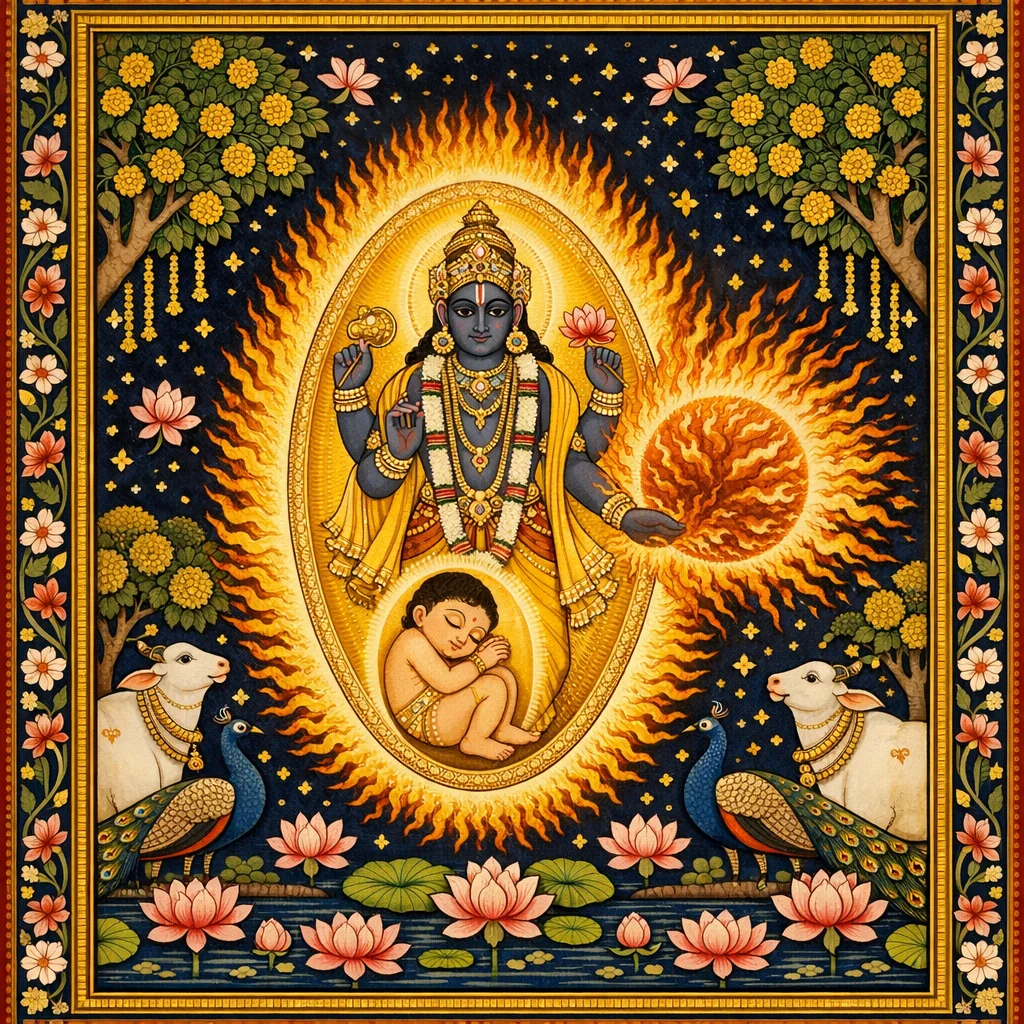
In reply to Śaunaka, Sūta links Yudhiṣṭhira’s postwar rule—rich in charity and Kṛṣṇa-centered detachment—to the miraculous survival and birth of Parīkṣit. While in Uttarā’s womb, the child is scorched by Aśvatthāmā’s brahmāstra, yet directly beholds the Supreme Lord in a minute four-armed form that quenches the weapon’s radiance. When the Lord vanishes, auspicious signs appear and Parīkṣit is born; Yudhiṣṭhira performs the jāta-karma and gives lavish gifts, and the brāhmaṇas proclaim him “protected by Viṣṇu.” They foretell his kingly virtues by comparing him to ideal rulers (Rāma, Ikṣvāku, Śibi, Bharata, and others), and also predict his death by Takṣaka due to a brāhmaṇa’s son—leading to his renunciation and surrender, culminating in his inquiry to Śukadeva, Vyāsa’s son. The chapter then looks ahead: Yudhiṣṭhira plans the aśvamedha to atone for the war, wealth is gathered, sacrifices are performed with Kṛṣṇa present, and finally the Lord departs for Dvārakā, setting the stage for separation and Kali’s approach.
Shlokas
Verse 1
शौनक उवाच अश्वत्थाम्नोपसृष्टेन ब्रह्मशीर्ष्णोरुतेजसा । उत्तराया हतो गर्भ ईशेनाजीवित: पुन: ॥ १ ॥
Śaunaka said: Uttarā’s womb was devastated by the dreadful, invincible brahmāstra released by Aśvatthāmā, yet Mahārāja Parīkṣit was saved by the Supreme Lord.
Verse 2
तस्य जन्म महाबुद्धे: कर्माणि च महात्मन: । निधनं च यथैवासीत्स प्रेत्य गतवान् यथा ॥ २ ॥
How was the great emperor Parīkṣit—so highly intelligent and a great devotee—born from that womb? How did his death occur, and what destination did he attain after leaving this world?
Verse 3
तदिदं श्रोतुमिच्छामो गदितुं यदि मन्यसे । ब्रूहि न: श्रद्दधानानां यस्य ज्ञानमदाच्छुक: ॥ ३ ॥
We all, with reverence, wish to hear about him to whom Śukadeva Gosvāmī bestowed transcendental knowledge. If you deem it fitting, please speak to us on this matter.
Verse 4
सूत उवाच अपीपलद्धर्मराज: पितृवद् रञ्जयन् प्रजा: । नि:स्पृह: सर्वकामेभ्य: कृष्णपादानुसेवया ॥ ४ ॥
Śrī Sūta Gosvāmī said: Dharmarāja Yudhiṣṭhira maintained everyone with generosity, pleasing the citizens just like his father. By constant service to the lotus feet of Lord Śrī Kṛṣṇa, he was free from personal ambition and from all sense gratification.
Verse 5
सम्पद: क्रतवो लोका महिषी भ्रातरो मही । जम्बूद्वीपाधिपत्यं च यशश्च त्रिदिवं गतम् ॥ ५ ॥
News of Mahārāja Yudhiṣṭhira’s riches, the sacrifices granting higher destinations, his queen, his valiant brothers, his vast lands, his sovereignty over Jambūdvīpa, and his fame reached even the celestial worlds.
Verse 6
किं ते कामा: सुरस्पार्हा मुकुन्दमनसो द्विजा: । अधिजह्रुर्मुदं राज्ञ: क्षुधितस्य यथेतरे ॥ ६ ॥
O brāhmaṇas, the King’s opulence was so alluring that even heaven’s denizens longed for it; yet, his mind absorbed in Mukunda’s service, nothing satisfied him but service to the Lord—just as only food can satisfy the hungry.
Verse 7
मातुर्गर्भगतो वीर: स तदा भृगुनन्दन । ददर्श पुरुषं कञ्चिद्दह्यमानोऽस्त्रतेजसा ॥ ७ ॥
O son of Bhṛgu, when the heroic child Parīkṣit lay in his mother Uttarā’s womb, burning from the brahmāstra’s heat, he beheld a divine Person approaching him—the Supreme Lord Himself.
Verse 8
अङ्गुष्ठमात्रममलं स्फुरत्पुरटमौलिनम् । अपीव्यदर्शनं श्यामं तडिद्वाससमच्युतम् ॥ ८ ॥
He was only thumb-high, yet wholly pure and transcendental—Śyāma Acyuta of exquisite beauty—wearing lightning-yellow garments and a blazing golden helm, as the child beheld Him.
Verse 9
श्रीमद्दीर्घचतुर्बाहुं तप्तकाञ्चनकुण्डलम् । क्षतजाक्षं गदापाणिमात्मन: सर्वतोदिशम् । परिभ्रमन्तमुल्काभां भ्रामयन्तं गदां मुहु: ॥ ९ ॥
The Lord appeared splendid with four long arms, molten-gold earrings, and eyes blood-red with wrath. Holding His club, He moved about in every direction, whirling it again and again around Himself like a blazing meteor.
Verse 10
अस्त्रतेज: स्वगदया नीहारमिव गोपति: । विधमन्तं सन्निकर्षे पर्यैक्षत क इत्यसौ ॥ १० ॥
The Lord, wielding His own mace, dispelled the blazing force of the brahmāstra, as the sun dries up a drop of dew. The child watched Him nearby, wondering, “Who is He?”
Verse 11
विधूय तदमेयात्मा भगवान्धर्मगुब् विभु: । मिषतो दशमासस्य तत्रैवान्तर्दधे हरि: ॥ ११ ॥
Having brushed away that power, Bhagavān Hari—the immeasurable Supersoul, protector of dharma and all-pervading—vanished at once on that very spot, before the gaze of the ten-month-old child.
Verse 12
तत: सर्वगुणोदर्के सानुकूलग्रहोदये । जज्ञे वंशधर: पाण्डोर्भूय: पाण्डुरिवौजसा ॥ १२ ॥
Thereafter, as all auspicious signs unfolded and the planets rose favorably, the heir of Pāṇḍu’s line was born—mighty in prowess, as if Pāṇḍu had appeared again.
Verse 13
तस्य प्रीतमना राजा विप्रैर्धौम्यकृपादिभि: । जातकं कारयामास वाचयित्वा च मङ्गलम् ॥ १३ ॥
Delighted by the birth of Mahārāja Parīkṣit, King Yudhiṣṭhira arranged the purificatory birth rite. Learned brāhmaṇas, led by Dhaumya and Kṛpa, recited auspicious hymns.
Verse 14
हिरण्यं गां महीं ग्रामान् हस्त्यश्वान्नृपतिर्वरान् । प्रादात्स्वन्नं च विप्रेभ्य: प्रजातीर्थे स तीर्थवित् ॥ १४ ॥
Upon the birth of his son, the king—knowing the proper time, place, and manner of charity—gave the brāhmaṇas, at the fitting holy place, gold, cows, land, villages, elephants, horses, and fine grains.
Verse 15
तमूचुर्ब्राह्मणास्तुष्टा राजानं प्रश्रयान्वितम् । एष ह्यस्मिन् प्रजातन्तौ पुरूणां पौरवर्षभ ॥ १५ ॥
The learned brāhmaṇas, pleased by the King’s charity, addressed him with reverence: “O best of the Pauravas, this son is surely in the line of descent of the Pūrus.”
Verse 16
दैवेनाप्रतिघातेन शुक्ले संस्थामुपेयुषि । रातो वोऽनुग्रहार्थाय विष्णुना प्रभविष्णुना ॥ १६ ॥
By irresistible divine ordinance, when this spotless son was doomed to destruction, Lord Viṣṇu—almighty and all-pervading—restored him, to bestow His favor upon you.
Verse 17
तस्मान्नाम्ना विष्णुरात इति लोके भविष्यति । न सन्देहो महाभाग महाभागवतो महान् ॥ १७ ॥
Therefore this child will be known in the world as Viṣṇurāta, “protected by the Lord.” O most fortunate one, there is no doubt he will become a foremost devotee, endowed with every noble quality.
Verse 18
श्रीराजोवाच अप्येष वंश्यान् राजर्षीन् पुण्यश्लोकान् महात्मन: । अनुवर्तिता स्विद्यशसा साधुवादेन सत्तमा: ॥ १८ ॥
The noble King asked: “O great souls, will he follow the path of the saintly royal sages of this exalted dynasty—renowned for piety, celebrated for deeds, and praised by the sādhus?”
Verse 19
ब्राह्मणा ऊचु: पार्थ प्रजाविता साक्षादिक्ष्वाकुरिव मानव: । ब्रह्मण्य: सत्यसन्धश्च रामो दाशरथिर्यथा ॥ १९ ॥
The brāhmaṇas said: “O son of Pṛthā, in protecting and sustaining the people he will be like Ikṣvāku, son of Manu. And in upholding brahminical principles—especially truthfulness to his vow—he will be like Lord Rāma, the son of Daśaratha.”
Verse 20
एष दाता शरण्यश्च यथा ह्यौशीनर: शिबि: । यशो वितनिता स्वानां दौष्यन्तिरिव यज्वनाम् ॥ २० ॥
This child will be a generous giver of charity and a protector of those who take shelter, like the renowned King Śibi of Uśīnara. And he will spread the name and fame of his dynasty, like Bharata, the son of Mahārāja Duṣyanta.
Verse 21
धन्विनामग्रणीरेष तुल्यश्चार्जुनयोर्द्वयो: । हुताश इव दुर्धर्ष: समुद्र इव दुस्तर: ॥ २१ ॥
Among great bowmen, this child will stand foremost, equal to both Arjunas. He will be irresistible like fire and unpassable like the ocean.
Verse 22
मृगेन्द्र इव विक्रान्तो निषेव्यो हिमवानिव । तितिक्षुर्वसुधेवासौ सहिष्णु: पितराविव ॥ २२ ॥
This child will be mighty like a lion and worthy of shelter like the Himālaya. He will be forbearing like the earth and tolerant like his parents.
Verse 23
पितामहसम: साम्ये प्रसादे गिरिशोपम: । आश्रय: सर्वभूतानां यथा देवो रमाश्रय: ॥ २३ ॥
In equanimity this child will be like his grandfather Yudhiṣṭhira (or like Brahmā). In gracious munificence he will be like Girīśa Śiva, lord of Kailāsa. And he will be a refuge for all beings, like Bhagavān Nārāyaṇa, the shelter even of Goddess Lakṣmī.
Verse 24
सर्वसद्गुणमाहात्म्ये एष कृष्णमनुव्रत: । रन्तिदेव इवोदारो ययातिरिव धार्मिक: ॥ २४ ॥
This child will follow in the footsteps of Lord Śrī Kṛṣṇa in the glory of all saintly virtues. In magnanimity he will be like King Rantideva, and in dharma he will be like Mahārāja Yayāti.
Verse 25
धृत्या बलिसम: कृष्णे प्रह्राद इव सद्ग्रह: । आहर्तैषोऽश्वमेधानां वृद्धानां पर्युपासक: ॥ २५ ॥
This child will be patient like Mahārāja Bali and steadfastly devoted to Lord Śrī Kṛṣṇa like Mahārāja Prahlāda. He will perform many Aśvamedha sacrifices and reverently serve the aged and experienced.
Verse 26
राजर्षीणां जनयिता शास्ता चोत्पथगामिनाम् । निग्रहीता कलेरेष भुवो धर्मस्य कारणात् ॥ २६ ॥
This child will be the progenitor of kings who are sage-like, and he will chastise those who stray onto wrongful paths. For the peace of the world and the protection of dharma, he will curb the quarrelsome of the age of Kali.
Verse 27
तक्षकादात्मनो मृत्युं द्विजपुत्रोपसर्जितात् । प्रपत्स्यत उपश्रुत्य मुक्तसङ्ग: पदं हरे: ॥ २७ ॥
Hearing that his death will come by the bite of Takṣaka, the serpent sent by a brāhmaṇa’s son, he will become free from all material attachment and surrender at the lotus feet of Bhagavān Śrī Hari, taking shelter of Him.
Verse 28
जिज्ञासितात्मयाथार्थ्यो मुनेर्व्याससुतादसौ । हित्वेदं नृप गङ्गायां यास्यत्यद्धाकुतोभयम् ॥ २८ ॥
O King, after inquiring into true self-knowledge from the great sage, the son of Vyāsadeva, he will renounce everything, go to the bank of the Gaṅgā, and surely attain a fearless state of life.
Verse 29
इति राज्ञ उपादिश्य विप्रा जातककोविदा: । लब्धापचितय: सर्वे प्रतिजग्मु: स्वकान् गृहान् ॥ २९ ॥
Thus the brāhmaṇas, expert in the birth rites and in astrological knowledge, instructed King Yudhiṣṭhira about the future course of his child. Then, having been richly rewarded, they all returned to their respective homes.
Verse 30
स एष लोके विख्यात: परीक्षिदिति यत्प्रभु: । पूर्वं दृष्टमनुध्यायन् परीक्षेत नरेष्विह ॥ ३० ॥
He would become renowned in the world as Parīkṣit, “the examiner,” for, ever contemplating the divine Person he had seen before birth, he would search for Him by examining all men here.
Verse 31
स राजपुत्रो ववृधे आशु शुक्ल इवोडुप: । आपूर्यमाण: पितृभि: काष्ठाभिरिव सोऽन्वहम् ॥ ३१ ॥
The royal prince quickly flourished, like the moon waxing day by day in the bright fortnight; nurtured by his guardian grandfathers with every facility, he grew stronger with each passing day.
Verse 32
यक्ष्यमाणोऽश्वमेधेन ज्ञातिद्रोहजिहासया । राजा लब्धधनो दध्यौ नान्यत्र करदण्डयो: ॥ ३२ ॥
At that time King Yudhiṣṭhira considered performing the Aśvamedha to cast off the sin incurred by fighting his own kinsmen, yet he grew anxious for wealth, for there were no surplus funds beyond fines and taxes.
Verse 33
तदभिप्रेतमालक्ष्य भ्रातरोऽच्युतचोदिता: । धनं प्रहीणमाजह्रुरुदीच्यां दिशि भूरिश: ॥ ३३ ॥
Understanding the king’s heartfelt wish, his brothers—urged on by the infallible Acyuta, Śrī Kṛṣṇa—brought back abundant riches from the northern quarter, the treasure left by King Marutta.
Verse 34
तेन सम्भृतसम्भारो धर्मपुत्रो युधिष्ठिर: । वाजिमेधैस्त्रिभिर्भीतो यज्ञै: समयजद्धरिम् ॥ ३४ ॥
With that wealth Dharmaputra Yudhiṣṭhira gathered the requisites and performed three Aśvamedha sacrifices; still fearful after the battle of Kurukṣetra, the pious king satisfied Lord Hari, the Supreme Personality, by those yajñas.
Verse 35
आहूतो भगवान् राज्ञा याजयित्वा द्विजैर्नृपम् । उवास कतिचिन्मासान् सुहृदां प्रियकाम्यया ॥ ३५ ॥
Invited by Mahārāja Yudhiṣṭhira to the sacrifices, Lord Bhagavān Śrī Kṛṣṇa had the rites performed by qualified twice-born brāhmaṇas; then, to please His relatives and well-wishers, He stayed there for a few months.
Verse 36
ततो राज्ञाभ्यनुज्ञात: कृष्णया सह बन्धुभि: । ययौ द्वारवतीं ब्रह्मन् सार्जुनो यदुभिर्वृत: ॥ ३६ ॥
Thereafter, with King Yudhiṣṭhira’s permission, Lord Śrī Kṛṣṇa departed for Dvārakā with Draupadī and the other relatives, accompanied by Arjuna and surrounded by the Yadus, O brāhmaṇa.
Frequently Asked Questions
Bhāgavatam 1.12 describes the unborn child seeing the Lord personally enter and neutralize the brahmāstra’s radiation—likened to the sun evaporating dew—demonstrating Bhagavān’s direct poṣaṇa: protection that overrides even “invincible” weapons when a devotee’s destiny serves dharma.
He was called Parīkṣit because, having seen the Lord in the womb, he later examined people everywhere seeking that very Person he had witnessed before birth; the name encodes his lifelong contemplative orientation toward Bhagavān.
Learned brāhmaṇas skilled in astrology and birth rites foretold his virtues by analogies to ideal kings and devotees, and they also predicted that his death would occur by the bite of a snakebird (Takṣaka) sent due to a brāhmaṇa’s son—an event that would catalyze his renunciation and surrender to Bhagavān through hearing from Śukadeva.
He sought expiation for the violence of fighting relatives and to re-establish dharma through Vedic sacrifice; the narrative emphasizes that even amid immense opulence, his satisfaction rests in service to Kṛṣṇa, and the yajña is framed as devotionally aligned governance rather than mere imperial display.