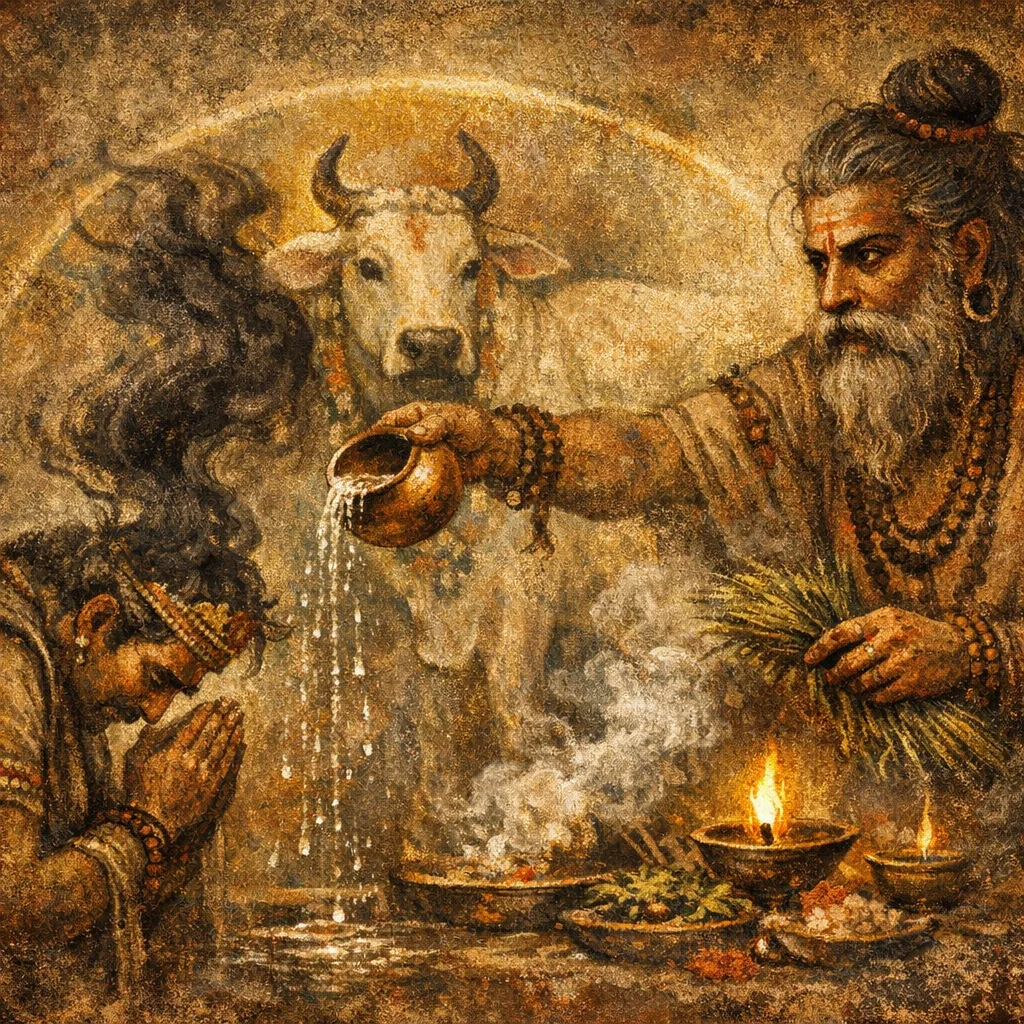
Sukta 18
Rishi: Atharvanic seer tradition (hymn-level attribution varies)
Devata: Brahman (sacral law) / Devāḥ as witnesses
Chandas: Anuṣṭubh
Mantras
Mantra 1
ब्रह्मरावी नैतां ते देवा अददुस्तुभ्यं नृपते अत्तवे । मा ब्राह्मणस्य राजन्य गां जिघत्सो अनाद्याम्
Brahman-proclaiming is the voice: the Gods gave not this unto thee, O Lord of men, for eating. O royal man, crave not to devour the Brahman’s cow—she is not for food.
Mantra 2
अक्षद्रुग्धो राजन्यः पाप आत्मपराजितः । स ब्राह्मणस्य गामद्यादद्य जीवानि माश्वः
Dice-ruined is the royal man—evil, self-overthrown: let him eat the Brahman’s cow; but may I live this day—let not the horse (of mine) be harmed.
Mantra 3
आविष्टिताघविषा पृदाकूरिव चर्मणा । सा ब्राह्मणस्य राजन्य तृष्टैषा गौरनाद्या
Enwrapped with evil poison, as with a leopard’s hide for covering—this cow, O Rajanya, is thirsting: this is the Brahmin’s cow, not to be eaten.
Mantra 4
निर्वै क्षत्रं नयति हन्ति वर्चोऽग्निरिवारब्धो वि दुनोति सर्वम्। यो ब्राह्मणं मन्यते अन्नमेव स विषस्य पिबति तैमातस्य
Verily it leads his kṣatra forth, it smites his splendour; like fire once seized and kindled it shakes all asunder. He who deems the Brahmin to be but food—he drinks of poison, of Taimāta’s bane.
Mantra 5
य एनं हन्ति मृदुं मन्यमानो देवपीयुर्धनकामो न चित्तात्। सं तस्येन्द्रो हृदयेऽग्निमिन्धे उभे एनं द्विष्टो नभसी चरन्तम्
Whoso smites him, deeming him gentle—god-drinker, wealth-desirer, yet void of understanding—Indra kindles fire within that man’s heart; hated, he wanders through the two heavens.
Mantra 6
न ब्राह्मणो हिंसितव्यो३ऽग्निः प्रियतनोरिव । सोमो ह्यऽस्य दायाद इन्द्रो अस्याभिशस्तिपाः
The Brahmin must not be harmed—(he is) as fire with body beloved. For Soma is his heir, and Indra is his warder against imprecation.
Mantra 7
शतापाष्ठां नि गिरति तां न शक्नोति निःखिदम्। अन्नं यो ब्रह्मणां मल्वः स्वाद्व१द्मीति मन्यते
He swallows the hundred-barbed thing, and cannot cast it forth again. The Malva who thinks, ‘Sweetly I eat the Brahmins’ food’—
Mantra 8
जिह्वा ज्या भवति कुल्मलं वाङ्नाडीका दन्तास्तपसाभिदिग्धाः । ते भिर्ब्रह्मा विध्यति देवपीयून् हृद्बलैर्धनुर्भिर्देवजूतैः
The tongue becometh bowstring; the sheath is formed; Speech is the tube, the teeth are arrows, whetted and anointed with ardour. With these shafts the Brahman pierceth the god-portion’s spoilers, with heart-made strengths, with bows by Gods impelled.
Mantra 9
तीक्ष्णेषवो ब्राह्मणा हेतिमन्तो यामस्यन्ति शरव्यां३ न सा मृषा । अनुहाय तपसा मन्युना चोत दूरादव भिन्दन्त्येनम्
Sharp-arrowed are the Brahmans, weapon-bearing: they speed the arrow-flight; it is not vain. Pursuing him with ardour and with wrath, yea even from afar they cleave him down.
Mantra 10
ये सहस्रमराजन्नासन् दशशता उत। ते ब्राह्मणस्य गां जग्ध्वा वैतहव्याः पराभवन्
Though they were a thousand, kingless, yea ten hundreds besides—those Vaitahavyas, having devoured the Brahman’s cow, were brought to overthrow.
Mantra 11
गौरेव तान् हन्यमाना वैतहव्याँ अवातिरत्। ये केसरप्राबन्धायाश्चरमाजामपेचिरन्
Like a cow, smiting them, she bore the Vaitahavyas down—those who had driven off the last goat of her, the tuft-bound (marked) one.
Mantra 12
एकशतं ता जनता या भूमिर्व्यऽधूनुत । प्रजां हिंसित्वा ब्राह्मणीमसंभव्यं पराभवन्
A hundred were they, that folk whom Earth shook off and cast away: having wronged the people, having violated the Brahman woman, they fell to ruin—an end not to be endured.
Mantra 13
देवपीयुश्चरति मर्त्येषु गरगीर्णो भवत्यस्थिभूयान्। यो ब्राह्मणं देवबन्धुं हिनस्ति न स पितृयाणमप्येति लोकम्
The godly draught moves abroad among mortals: he who hath swallowed poison becometh bone-exceeding, a mere frame. Whoso smiteth the Brahman, the Gods’ own kinsman, he goeth not—no, not at all—unto the world that is reached by the Fathers’ path.
Mantra 14
अग्निर्वै नः पदवायः सोमो दायाद उच्यते । हन्ताभिशस्तेन्द्रस्तथा तद् वेधसो विदुः
Agni, forsooth, is our guide upon the path; Soma is called the heir and rightful claimant. Indra is the slayer of the imprecation: thus have the wise ordainers known that truth.
Mantra 15
इषुरिव दिग्धा नृपते पृदाकूरिव गोपते । सा ब्राह्मणस्येषुर्घोरा तया विध्यति पीयतः
Like a poison-smeared arrow, O lord of men; like a spotted beast, O lord of kine—such is the Brahman’s dreadful arrow: therewith he pierceth him that swelleth in pride.
Frequently Asked Questions
It prevents a king or powerful person from confiscating, slaughtering, or eating a Brahmin’s cow by declaring it taboo (anādyā) and spiritually dangerous.
These images make the prohibition emotionally forceful: the act is framed as self-destructive, as if the property itself carries venomous consequences for the violator.
It functions as both: primarily shāntika (to avert disorder by restraint and restitution), but it uses abhicāra-like punitive threat (the Brahmin’s ‘arrow’) to deter wrongdoing.