Srimad Bhagavatam
श्रीमद्भागवतम्
The Beautiful Narrative of the Supreme
The ripened fruit of Vedic literature — a sacred journey through creation, devotion, and the divine pastimes of Lord Krishna.
Start ReadingAbout This Book
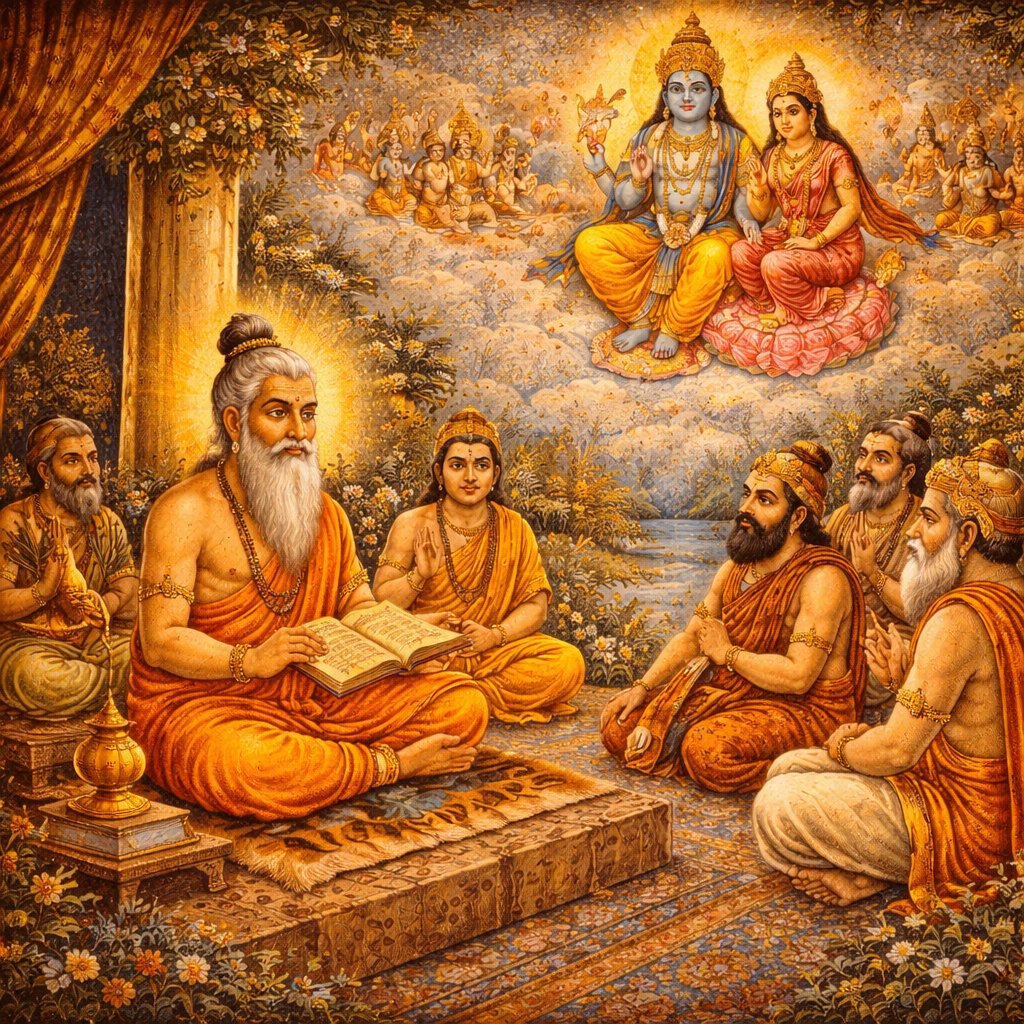
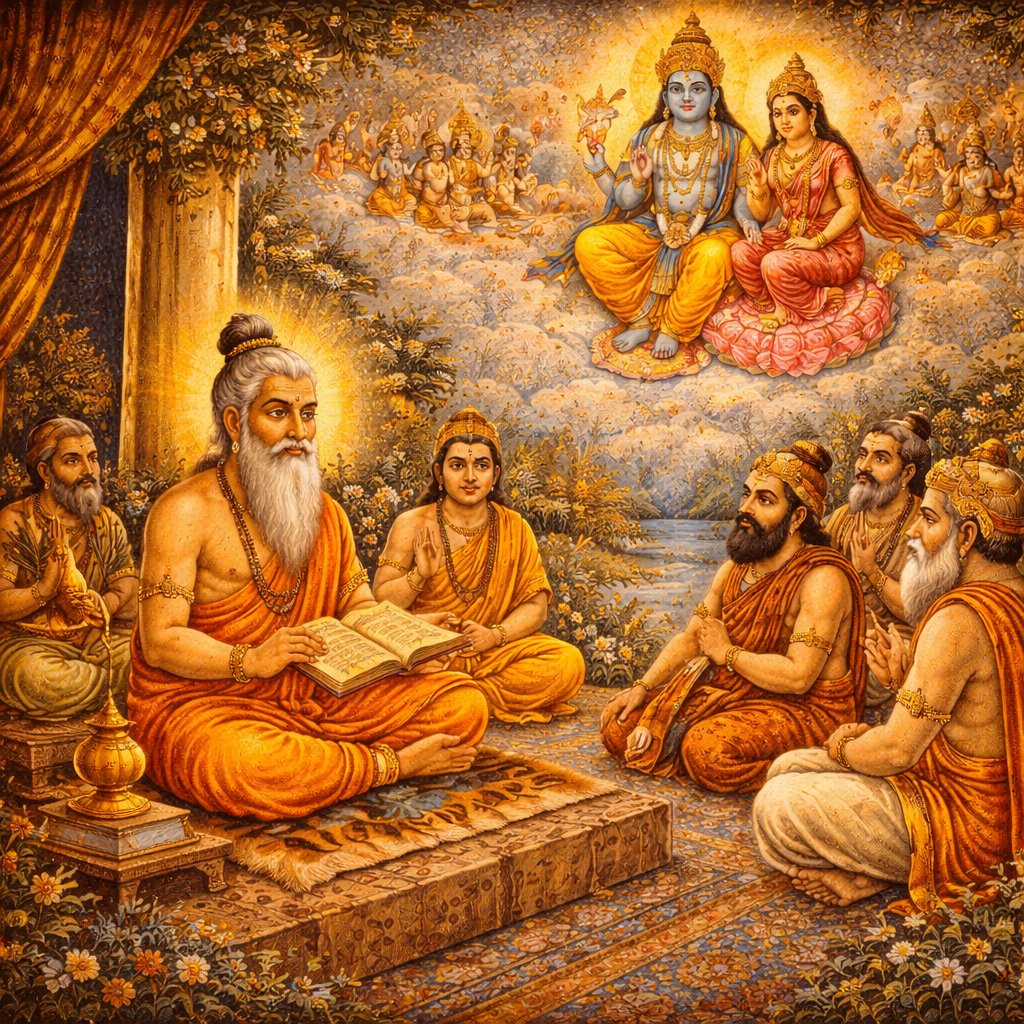
The Srimad Bhagavatam (Bhagavata Purana) is regarded as the most important of the eighteen Mahapuranas and the crown jewel of Vedic literature. Spoken by Shukadeva Gosvami to King Parikshit in the last seven days of his life, it encompasses 14,015 verses across 12 Skandhas (cantos). From the nature of the cosmos to the intimate pastimes of Lord Krishna, it is the complete science of God, devotion, and liberation.
How This Book Is Organised
The Srimad Bhagavatam unfolds progressively across twelve cantos.
Skandhas
Twelve cantos of the text
Adhyayas
Chapters within each Skandha
Shlokas
Verses read one by one
Available Reading Features
This edition of the Srimad Bhagavatam on Vedapath includes:

Original Sanskrit verses (Devanagari)

Transliteration for guided reading

Word-by-word synonyms and meanings

Clear, faithful translations and purports

Bhakti rasa, Krishna lila, and theological enrichments
Skandhas of the Srimad Bhagavatam
The Srimad Bhagavatam is traditionally divided into twelve Skandhas (cantos).
Each Skandha explores a distinct dimension of divine knowledge and devotion.
Canto 1: Creation Impetus, Sūta’s Narration, and the Foundation of Bhāgavata Dharma
Creation Impetus, Suta's Narration
This Skandha opens the Bhagavatam with Suta Gosvami narrating to the sages at Naimisharanya. It introduces the purpose of the text, the glory of devotion, and the context of Parikshit's curse.
Canto 2: The Cosmic Manifestation and the Science of God (Bhagavata as the Supreme Hearing)
Cosmic Manifestation
Shukadeva begins instructing King Parikshit on the nature of the Supreme, the universal form (Virat-rupa), and the process of cosmic creation and dissolution.
Canto 3: Vidura’s Pilgrimage, Uddhava’s Counsel, and the Groundwork for Kapila’s Sāṅkhya
The Status Quo
Describes the creation by Brahma, the appearance of the Varaha avatara, the Kumaras, Kapila's Sankhya philosophy, and the account of cosmic maintenance.
The Canto of Dynasties, Dharma, and the Rise of Sacred Lineages
Creation of the Fourth Order
Narrates the story of Daksha, Dhruva's penance, and the tale of King Prithu -- illustrating the principles of devotion, determination, and righteous rule.
The Cosmic Order of Bhū-maṇḍala and Exemplars of Devotional Governance
Creative Impetus
Describes the cosmography of the universe, the story of Rishabhadeva and Bharata, and the structure of the planetary systems and hells.
Canto 6 — Atonement, the Holy Name, and the Supremacy of Bhakti over Karma
Prescribed Duties
Contains the stories of Ajamila's deliverance, Daksha's prayers, Vritra's devotion, and the Maruts -- emphasizing the power of the holy name and devotional surrender.
Canto 7 — The Science of Devotion Through Prahlāda and the Lord’s Apparent Partiality
The Science of God
Centers on the story of Prahlada and Narasimha -- the supreme demonstration of divine protection of the devotee and the destruction of demoniac pride.
Canto 8 — Manvantara Narratives and the Lord’s Protection of Devotees
Withdrawal of Cosmic Creations
Narrates the churning of the ocean (Samudra Manthana), the Gajendra-moksha, the Vamana avatara, and the Matsya avatara during the cosmic deluge.
Canto 9 — Dynasties of Kings (Vaṁśānucarita) and the Preservation of Dharma
Liberation
Traces the dynasties of the Sun and Moon -- the lineages of Rama, the Yadavas, and other great kings, leading up to the appearance of Krishna.
The Tenth Canto: Kṛṣṇa-līlā (The Divine Pastimes of Śrī Kṛṣṇa)
Summum Bonum -- Krishna's Pastimes
The heart of the Bhagavatam -- narrating the birth, childhood, youth, and divine pastimes (lilas) of Lord Krishna in Vrindavan, Mathura, and Dvaraka.
Canto 11 — Uddhava-gītā, the Lord’s final pastimes, and the Yadu dynasty’s withdrawal
General History
Contains the Uddhava Gita -- Krishna's final teachings to Uddhava on devotion, knowledge, renunciation, and the nature of the self before departing.
Canto 12 — The Age of Kali and the Concluding Teachings
The Age of Deterioration
Describes the degradations of Kali Yuga, the future kings, the recension of the Vedas, and the ultimate message of the Bhagavatam as the essence of all Vedanta.