Adhyaya 68
Parṇāda’s Report; Bāhuka’s Counsel; Damayantī’s Strategic Svayaṃvara Message (अध्याय ६८)
Upa-parva: Nala–Damayantī Upākhyāna (Tale of Nala and Damayantī)
Bṛhadaśva recounts how the Brahmin Parṇāda, after a long interval, returns and reports to Damayantī that he delivered her words in Ayodhyā to King Ṛtupārṇa, who remained outwardly silent. A private disclosure follows: Ṛtupārṇa’s attendant named Bāhuka—described as a deformed, short-armed sūta skilled in swift charioteering and refined cooking—reacts with visible grief and questions Parṇāda’s welfare. Bāhuka articulates an ethical defense of the noble wife: even if misfortune has come, a kulastrī protects herself through truth and self-control and should not direct anger toward a husband who is confused, displaced from happiness, and struggling for survival. Parṇāda relays this to Damayantī, who, tearful, consults her mother and plans a controlled retrieval strategy: she will dispatch the Brahmin Sudeva to Ṛtupārṇa with a message that Damayantī will hold a renewed svayaṃvara imminently, timed precisely, because Nala’s status is unknown. The chapter closes with Sudeva delivering Damayantī’s statement to Ṛtupārṇa, establishing a time-sensitive narrative trigger intended to draw the concealed Nala (as Bāhuka) into decisive action.
Chapter Arc: विदर्भ-राज भीम, पुत्री दमयन्ती के लुप्त हो जाने पर, आशा की अंतिम डोर पकड़कर ब्राह्मणों को चारों दिशाओं में नल और दमयन्ती की खोज हेतु भेजते हैं—और पुरस्कार की घोषणा करते हैं। → धन-दान और प्रतिज्ञा से प्रेरित ब्राह्मण निकल पड़ते हैं। उन्हीं में सुदेव नामक द्विज चेदि-नरेश के भवन में पहुँचता है, जहाँ पुण्याहवाचन/उत्सव-समारोह के बीच उसकी दृष्टि एक असाधारण, पर अत्यन्त मलिन, कृश और शोकाकुल स्त्री पर पड़ती है। वह संकेतों से अनुमान करता है कि यह दमयन्ती ही हो सकती है। → सुदेव दमयन्ती को निकट से देखता है—उसकी शोभा धूम-जाल से ढकी अग्नि-प्रभा-सी, और उसकी दशा उस पद्मिनी-सी जो हाथियों से रौंदी गई हो। पहचान का क्षण भीतर ही भीतर घटता है: ‘यह भैमी है’—और उसी पहचान के साथ करुणा चरम पर पहुँचती है। → दमयन्ती/राजमाता के प्रश्न पर सुदेव बैठकर यथातथ्य वृत्तान्त कहता है—विदर्भ में राजा भीम का संदेश, खोज का प्रयोजन, और नल-दमयन्ती के मिलन हेतु प्रयत्न। साथ ही, खोज में सफलता पर घोषित दान-पुरस्कार (गोधन, धन, अग्रहार/ग्राम) का भी उल्लेख होता है, जिससे कार्य की गंभीरता और राजकीय संकल्प स्पष्ट होता है। → दमयन्ती की पहचान और सुदेव का वृत्तान्त सामने आ चुका है—अब प्रश्न यह है कि चेदि-राज के बीचोबीच फँसी दमयन्ती तक विदर्भ का संदेश कैसे पहुँचेगा, और नल तक पहुँचने का मार्ग कैसे खुलेगा।
Shlokas
Verse 1
/ आल “+(>9) #:६.# #2 5-7 अष्टषष्टितमो< ध्याय: विदर्भराजका नल-दमयन्तीकी खोजके लिये ब्राह्मणोंको भेजना, सुदेव ब्राह्णका चेदिराजके भवनमें जाकर मन- ही-मन दमयन्तीके गुणोंका चिन्तन और उससे भेंट करना ब॒हदश्व उवाच हृतराज्ये नले भीम: सभार्ये च वन॑ गते । द्विजान् प्रस्थापयामास नलदर्शनकाड्क्षया,बृहदश्व मुनि कहते हैं--राजन! राज्यका अपहरण हो जानेपर जब राजा नल पत्नीसहित वनमें चले गये, तब विदर्भनरेश भीमने नलका पता लगानेके लिये बहुत-से ब्राह्मणोंको इधर-उधर भेजा
Bṛhadaśva said: “O King, when Nala had been deprived of his kingdom and had gone to the forest together with his wife, Bhīma, the ruler of Vidarbha, longing to obtain sight of Nala (i.e., to find him and learn his whereabouts), dispatched Brahmins in various directions.”
Verse 2
संदिदेश च तान् भीमो वसु दत्त्वा च पुष्कलम् | मृगयध्वं नलं चैव दमयन्तीं च मे सुताम्,राजा भीमने प्रचुर धन देकर ब्राह्मणोंको यह संदेश दिया--“आपलोग राजा नल और मेरी पुत्री दमयन्तीकी खोज करें
Bhimā, after giving them abundant wealth, sent those brāhmaṇas with this charge: “Seek out King Nala, and also my daughter Damayantī.” The act underscores a king’s duty to employ rightful means—generosity, respectful delegation, and urgent care—to restore what has been lost and to protect familial and social order.
Verse 3
अस्मिन् कर्मणि सम्पन्ने विज्ञाते निषधाधिपे । गवां सहस्रं दास्यामि यो वस्तावानयिष्यति,“निषधनरेश नलका पता लग जानेपर जब यह कार्य सम्पन्न हो जायगा, तब मैं आपलोगोंमेंसे जो भी नल-दमयन्तीको यहाँ ले आयेगा, उसे एक हजार गौएँ दूँगा
Bṛhadaśva said: “When this task has been successfully completed and the lord of Niṣadha has been identified, I will grant a thousand cows to whichever of you brings Nala and Damayantī here.”
Verse 4
अग्रहारांश्व॒ दास्यामि ग्राम॑ं नगरसम्मितम् । न चेच्छक्याविहानेतुं दमयन्ती नलो5पि वा
Bṛhadaśva said: “I will grant you tax-free estates, and even a village comparable to a city in prosperity. But if Damayantī—or even Nala—cannot be brought here, then (these rewards will not avail / the task cannot be fulfilled).”
Verse 5
इत्युक्तास्ते ययु्ष्टा ब्राह्मणा: सर्वतो दिशम्,राजाके ऐसा कहनेपर वे सब ब्राह्मण बड़े प्रसन्न होकर सब दिशाओंमें चले गये और नगर तथा राष्ट्रोमें पत्नीसहित निषधनरेश नलका अनुसंधान करने लगे; परंतु कहीं भी वे नल अथवा भीमकुमारी दमयन्तीको नहीं देख पाते थे। तदनन्तर सुदेव नामक ब्राह्मणने पता लगाते हुए रमणीय चेदिनगरीमें जाकर वहाँ राजमहलमें विदर्भकुमारी दमयन्तीको देखा
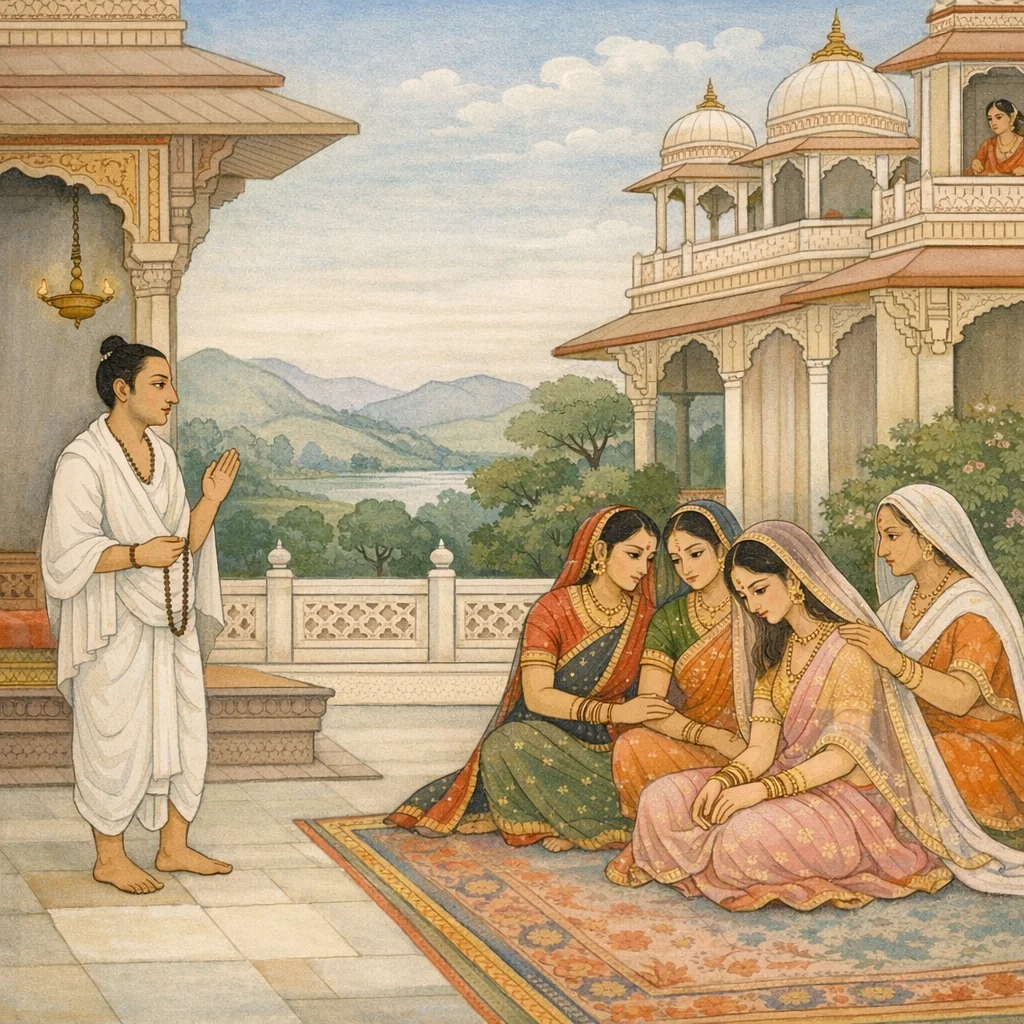
Bṛhadaśva said: When the king had spoken thus, those brāhmaṇas—well-disposed and pleased—set out in every direction. They searched through towns and kingdoms for Nala, the Niṣadha king, who had been reduced to poverty and was accompanied by his wife. Yet nowhere could they find either Nala or Damayantī, the daughter of Bhīma. After that, a brāhmaṇa named Sudeva, continuing the search, went to the lovely city of the Cedis; there, in the royal palace, he saw Damayantī, the princess of Vidarbha.
Verse 6
पुरराष्ट्राणि चिन्वन्तो नैषधं सह भार्यया । नैव क्वापि प्रपश्यन्ति नलं वा भीमपुत्रिकाम्,राजाके ऐसा कहनेपर वे सब ब्राह्मण बड़े प्रसन्न होकर सब दिशाओंमें चले गये और नगर तथा राष्ट्रोमें पत्नीसहित निषधनरेश नलका अनुसंधान करने लगे; परंतु कहीं भी वे नल अथवा भीमकुमारी दमयन्तीको नहीं देख पाते थे। तदनन्तर सुदेव नामक ब्राह्मणने पता लगाते हुए रमणीय चेदिनगरीमें जाकर वहाँ राजमहलमें विदर्भकुमारी दमयन्तीको देखा
Bṛhadaśva said: Searching through cities and kingdoms for the Niṣadha king together with his wife, they could not find anywhere either Nala or Bhīma’s daughter (Damayantī). The verse underscores the earnestness of the search and the moral urgency of restoring a separated couple to safety and rightful order, yet also the painful reality that sincere effort may meet uncertainty before success arrives.
Verse 7
ततश्रैदिपुरीं रम्यां सुदेवो नाम वै द्विज: । विचिन्वानो5थ वैदर्भीमपश्यद् राजवेश्मनि,राजाके ऐसा कहनेपर वे सब ब्राह्मण बड़े प्रसन्न होकर सब दिशाओंमें चले गये और नगर तथा राष्ट्रोमें पत्नीसहित निषधनरेश नलका अनुसंधान करने लगे; परंतु कहीं भी वे नल अथवा भीमकुमारी दमयन्तीको नहीं देख पाते थे। तदनन्तर सुदेव नामक ब्राह्मणने पता लगाते हुए रमणीय चेदिनगरीमें जाकर वहाँ राजमहलमें विदर्भकुमारी दमयन्तीको देखा
Bṛhadaśva said: Then the brahmin named Sudeva, while searching, came to the lovely city of Cedi and there, within the royal palace, he saw the princess of Vidarbha (Damayantī). The episode underscores the steady, dutiful effort of the brahmins who, acting on the king’s request, roam through lands and cities to reunite the separated couple—showing perseverance, loyalty, and compassionate service in the face of misfortune.
Verse 8
पुण्याहवाचने राज्ञ: सुनन्दासहितां स्थिताम् । मन्दं प्रख्यायमानेन रूपेणाप्रतिमेन ताम्,वह राजाके पुण्याहवाचनके समय सुनन्दाके साथ खड़ी थी। उसका अनुपम रूप (मैलसे आवृत होनेके कारण) मन्द-मन्द प्रकाशित हो रहा था, मानो अग्निकी प्रभा धूमसमूहसे आवृत हो रही हो। विशाल नेत्रोंवाली उस राजकुमारीको अधिक मलिन और दुर्बल देख उपर्युक्त कारणोंसे उसकी पहचान करते हुए सुदेवने निश्चय किया कि यह भीमकुमारी दमयन्ती ही है
Bṛhadaśva said: At the time of the king’s auspicious proclamation, she stood there together with Sunandā. Her incomparable beauty was only faintly showing, as though the radiance of fire were veiled by a mass of smoke. Seeing that large-eyed princess grown more soiled and weakened, Sudeva—reasoning from these signs—became certain that she was indeed Damayantī, the princess of Bhīma.
Verse 9
निबद्धां धूमजालेन प्रभामिव विभावसो: । तां समीक्ष्य विशालाक्षीमधिकं मलिनां कृशाम् | तर्कयामास भैमीति कारणैरुपपादयन्,वह राजाके पुण्याहवाचनके समय सुनन्दाके साथ खड़ी थी। उसका अनुपम रूप (मैलसे आवृत होनेके कारण) मन्द-मन्द प्रकाशित हो रहा था, मानो अग्निकी प्रभा धूमसमूहसे आवृत हो रही हो। विशाल नेत्रोंवाली उस राजकुमारीको अधिक मलिन और दुर्बल देख उपर्युक्त कारणोंसे उसकी पहचान करते हुए सुदेवने निश्चय किया कि यह भीमकुमारी दमयन्ती ही है
Bṛhadaśva said: Seeing her—like the radiance of fire veiled by a net of smoke—her beauty bound and dimmed by grime, that large-eyed woman now especially soiled and emaciated, he reasoned it out and, supporting his conclusion with signs, determined: “This is Bhīmī (Damayantī).” Ethically, the verse highlights careful discernment: identity is not judged by outward decline alone, but established through attentive observation and rational inference amid suffering.
Verse 10
युदेव उवाच यथेयं मे पुरा दृष्टा तथारूपेयमज़ना । कृतार्थो<स्म्यद्य दृष्टवेमां लोककान्तामिव श्रियम्,सुदेव मन-ही-मन बोले--मैंने पहले जिस रूपमें इस कल्याणमयी राजकन्याको देखा है, वैसी ही यह आज भी है। लोककमनीय लक्ष्मीकी भाँति इस भीमकुमारीको देखकर आज मैं कृतार्थ हो गया हूँ
Yudeva said: “Just as I saw this maiden earlier, so does she appear even now in the same form. Today I feel my purpose fulfilled on seeing her—like beholding Śrī (Fortune) herself, beloved of the world.” In context, the speaker expresses reverent admiration for the princess’s auspicious presence, framing beauty not as mere desire but as a sign of благоприятность (śubha) and a cause for gratitude and restraint within dharma.
Verse 11
पूर्णचन्द्रनिभां श्यामां चारुवृत्तपयो धराम् | कुर्वन्ती प्रभया देवीं सर्वा वितिमिरा दिश:,यह श्यामा युवती पूर्ण चन्द्रमाके समान कान्तिमती है। इसके स्तन बड़े मनोहर हैं। यह देवी अपनी प्रभासे सम्पूर्ण दिशाओंको आलोकित कर रही है
Yudhiṣṭhira said: “She is dark-hued, radiant like the full moon, and endowed with beautifully rounded breasts. Like a goddess, by her own splendor she makes all the directions free of darkness.”
Verse 12
चारुपग्रविशालाक्षीं मन्मथस्य रतीमिव । इष्टों समस्तलोकस्य पूर्णचन्द्रप्रभामिव,उसके बड़े-बड़े नेत्र मनोहर कमलोंकी शोभाको लज्जित कर रहे हैं। यह कामदेवकी रति-सी जान पड़ती है। पूर्णिमाके चन्द्रमाकी चाँदनीके समान यह सब लोगोंके लिये प्रिय है
Yudhiṣṭhira said: “She is lovely in form, with broad, beautiful eyes—like Rati, the beloved of Manmatha. Dear to all people, she shines like the radiance of the full moon.” In context, the verse uses elevated similes to mark extraordinary beauty and social auspiciousness, while also hinting at the ethical tension of desire and admiration that must be governed by dharma.
Verse 13
विदर्भसरसस्तस्माद् दैवदोषादिवोद्धताम् । मलपड्कानुलिप्ताजुीं मृणालीमिव चोद्धृताम्,विदर्भरूपी सरोवरसे यह कमलिनी मानो प्रारब्धके दोषसे निकाल ली गयी है। इसके मलिन अंग कीचड़ लिपटी हुई नलिनीके समान प्रतीत होते हैं। यह उस पूर्णिमाकी रजनीके समान जान पड़ती है, जिसके चन्द्रमापर मानो राहुने ग्रहण लगा रखा हो। पति-शोकसे व्याकुल और दीन होनेके कारण यह सूखे जल-प्रवाहवाली सरिताके समान प्रतीत होती है
Yudhiṣṭhira said: “From that lake of Vidarbha she seems, as it were, to have been torn out by a fault of destiny—like a lotus-stalk pulled up, its limbs smeared with mud and mire. Thus does she appear: wrenched from her proper place, sullied by suffering, and made pitiable by the force of adverse fate.”
Verse 14
पौर्णमासीमिव निशां राहुग्रस्तनिशाकराम् । पतिशोकाकुलां दीनां शुष्कस्रोतां नदीमिव,विदर्भरूपी सरोवरसे यह कमलिनी मानो प्रारब्धके दोषसे निकाल ली गयी है। इसके मलिन अंग कीचड़ लिपटी हुई नलिनीके समान प्रतीत होते हैं। यह उस पूर्णिमाकी रजनीके समान जान पड़ती है, जिसके चन्द्रमापर मानो राहुने ग्रहण लगा रखा हो। पति-शोकसे व्याकुल और दीन होनेके कारण यह सूखे जल-प्रवाहवाली सरिताके समान प्रतीत होती है
Yudhiṣṭhira said: “She appears like a full-moon night whose moon has been seized by Rāhu—its radiance eclipsed. Stricken by grief for her husband, distressed and forlorn, she seems like a river whose current has dried up.” The verse uses layered similes to portray a virtuous woman’s inner collapse under separation and sorrow, evoking compassion and underscoring the ethical duty to protect the afflicted.
Verse 15
विध्वस्तपर्णकमलां वित्रासितविहंगमाम् | हस्तिहस्तपरामृष्टां व्याकुलामिव पद्मिनीम्,इसकी दशा उस पुष्करिणीके समान दिखायी देती है, जिसे हाथियोंने अपने शुण्डदण्डसे मथ डाला हो तथा जो नष्ट हुए पत्तोंवाले कमलसे युक्त हो एवं जिसके भीतर निवास करनेवाले पक्षी अत्यन्त भयभीत हो रहे हों। यह दुःखसे अत्यन्त व्याकुल-सी प्रतीत हो रही है
Yudhiṣṭhira said: “Her condition appears like that of a lotus-pond whose lotus-leaves have been shattered, whose birds are terrified, and which has been churned and struck by the trunks of elephants—restless and distressed, as though overwhelmed by sorrow.”
Verse 16
सुकुमारी सुजाताज़ीं रत्नगर्भगृहोचिताम् । दह्यमानामिवार्केण मृणालीमिव चोद्धृताम्,मनोहर अंगोंवाली यह सुकुमारी राजकन्या उन महलोंमें रहनेयोग्य है, जिनका भीतरी भाग रत्नोंका बना हुआ है। (इस समय दुः:खने इसे ऐसा दुर्बल कर दिया है कि) यह सरोवरसे निकाली और सूर्यकी किरणोंसे जलायी हुई कमलिनीके समान प्रतीत हो रही है
Yudhiṣṭhira said: “She is delicate and well-born, fit to dwell in palaces whose inner chambers are inlaid with jewels. Yet now, consumed as though by the sun’s heat, she appears like a lotus-stalk pulled up from the lake—withered by suffering.”
Verse 17
रूपौदार्यगुणोपेतां मण्डनाहाममण्डिताम् । चन्द्रलेखामिव नवां व्योम्नि नीलाभ्रसंवृताम्,यह रूप और उदारता आदि गुणोंसे सम्पन्न है। शृंगार धारण करनेके योग्य होनेपर भी यह शंंगारशून्य है, मानो आकाशमें मेघोंकी काली घटासे आवृत नूतन चन्द्रकला हो
Yudhiṣṭhira said: “She is endowed with beauty, nobility, and other virtues; though worthy of adornment, she remains unadorned—like a fresh crescent moon in the sky, veiled by a dark mass of clouds.”
Verse 18
कामभोगै: प्रियैहीनां हीनां बन्धुजनेन च । देहं संधारयन्तीं हि भर्तृदर्शनकाड्क्षया,यह राजकन्या प्रिय कामभोगोंसे वंचित है। अपने बन्धुजनोंसे बिछुड़ी हुई है और पतिके दर्शनकी इच्छासे अपने (दीन-दुर्बल) शरीरको धारण कर रही है
Yudhiṣṭhira said: “She is deprived of the beloved pleasures of love and comfort; she is also separated from her own kinsfolk. Yet, sustained only by the longing to behold her husband, she continues to bear this frail body.”
Verse 19
भर्ता नाम पर नार्या भूषणं भूषणैर्विना । एषा हि रहिता तेन शोभमाना न शोभते,वास्तवमें पति ही नारीका सबसे श्रेष्ठ आभूषण है। उसके होनेसे वह बिना आभूषणोंके सुशोभित होती है; परंतु यह पतिरूप आभूषणसे रहित होनेके कारण शोभामयी होकर भी सुशोभित नहीं हो रही है
Yudhiṣṭhira said: “A husband is truly a woman’s highest ornament—surpassing all other adornments. With him, she shines even without jewelry; but deprived of that ornament of a husband, though she may appear radiant, she does not truly seem adorned.”
Verse 20
दुष्करं कुरुते5त्यन्तं हीनो यदनया नल: । धारयत्यात्मनो देहं न शोकेनापि सीदति,इससे विलग होकर राजा नल यदि अपने शरीरको धारण करते हैं और शोकसे शिथिल नहीं हो रहे हैं तो यह समझना चाहिये कि वे अत्यन्त दुष्कर कर्म कर रहे हैं
Yudhiṣṭhira said: “If King Nala, though separated from her and reduced to a wretched state, still sustains his own body and does not collapse even under grief, then one must understand that he is performing something exceedingly difficult—enduring sorrow with steadfast self-control.”
Verse 21
इमामसितकेशान्तां शतपत्रायतेक्षणाम् | सुखारहा दुःखितां दृष्टवा ममापि व्यथते मन:,काले-काले केशों और कमलके समान विशाल नेत्रोंसे सुशोभित इस राजकन्याको, जो सदा सुख भोगनेके ही योग्य है, दुःखित देखकर मेरे मनमें भी बड़ी व्यथा हो रही है
Yudhiṣṭhira said: “Seeing this princess—her hair dark and lovely, her eyes wide like a hundred-petalled lotus—now fallen into sorrow though she is fit only for happiness, my own heart too is pained.”
Verse 22
कदा नु खलु दुःखस्य पारं यास्यति वै शुभा । भर्तु: समागमात् साध्वी रोहिणी शशिनो यथा,जैसे रोहिणी चन्द्रमाके संयोगसे सुखी होती है, उसी प्रकार यह शुभलक्षणा साध्वी राजकुमारी अपने पतिके समागमसे (संतुष्ट हो) कब इस दुःखके समुद्रसे पार हो सकेगी
Yudhiṣṭhira said: “When indeed will this auspicious, virtuous princess cross to the far shore of her sorrow? Just as Rohiṇī finds joy in union with the Moon, so too may this chaste lady find relief and fulfillment through reunion with her husband.”
Verse 23
अस्या नून॑ पुनर्लाभान्नैषध: प्रीतिमेष्यति । राजा राज्यपरिश्रष्ट: पुनर्लब्ध्वा च मेदिनीम्,जैसे कोई राजा एक बार अपने राज्यसे च्युत होकर फिर उसी राज्यभूमिको प्राप्त कर लेनेपर अत्यन्त आनन्दका अनुभव करता है, उसी प्रकार पुनः इसके मिल जानेपर निषधनरेश नलको निश्चय ही बड़ी प्रसन्नता होगी
Yudhiṣṭhira said: “Surely, upon regaining her, the king of Niṣadha (Nala) will be filled with joy—just as a ruler, once fallen away from his kingdom, feels profound happiness when he wins back the very earth of his realm.”
Verse 24
तुल्यशीलवयोयुक्तां तुल्याभिजनसंवृताम् । नैषधो<हति वैदर्भी तं चेयमसितेक्षणा,विदर्भकुमारी दमयन्ती राजा नलके समान शील और अवस्थासे युक्त है, उन्हींके तुल्य उत्तम कुलसे सुशोभित है। निषधनरेश नल विदर्भकुमारीके योग्य हैं और यह कजरारे नेत्रोंवाली वैदर्भी नलके योग्य है
Yudhiṣṭhira said: “She is endowed with character and youth equal to his, and she is graced with a lineage equal to his. The king of Niṣadha, Nala, is truly worthy of the princess of Vidarbha; and this dark-eyed princess of Vidarbha is worthy of Nala.” In this reflection, the speaker frames marriage as an ethical harmony of virtues and social standing, emphasizing suitability grounded in character rather than mere desire.
Verse 25
युक्त तस्याप्रमेयस्य वीर्यसत्त्ववतो मया । समाश्चासयितुं भार्या पतिदर्शनलालसाम्,राजा नलका पराक्रम और धैर्य असीम है। उनकी यह पत्नी पतिदर्शनके लिये लालायित और उत्कण्ठित है, अतः मुझे इससे मिलकर इसे आश्वासन देना चाहिये
Yudhiṣṭhira said: “It is fitting for me to go to that immeasurable king, endowed with valor and steadfastness, and to reassure his wife, who longs intensely for the sight of her husband. Since King Nala’s prowess and patience are boundless, I should meet her and give her comfort.”
Verse 26
अहमाश्वासयाम्येनां पूर्णचन्द्रनिभाननाम् । अदृष्टपूर्वा दुःखस्य दु:खार्ता ध्यानतत्पराम्,इस पूर्णचन्द्रमुखी राजकुमारीने पहले कभी दुःखको नहीं देखा था। इस समय दुःखसे आतुर हो पतिके ध्यानमें परायण है, अतः मैं इसे आश्वासन देनेका विचार कर रहा हूँ
Yudeva said: “I shall console her—this princess whose face is like the full moon. She has never before encountered sorrow; now, stricken by grief, she remains wholly intent on meditation upon her husband. Therefore I intend to give her reassurance.”
Verse 27
बृहदश्च उवाच एवं विमृश्य विविधै: कारणैर्लक्षणैश्न ताम् । उपागम्य ततो भैमीं सुदेवो ब्राह्म॒णोडब्रवीत्,बृहदश्वच मुनि कहते हैं--युधिष्ठिर! इस प्रकार भाँति-भाँतिके कारणों और लक्षणोंसे दमयन्तीको पहचानकर और अपने कर्तव्यके विषयमें विचार करके सुदेव ब्राह्मण उसके समीप गये और इस प्रकार बोले--'विदर्भराजकुमारी! मैं तुम्हारे भाईका प्रिय सखा सुदेव हूँ। महाराज भीमकी आज्ञासे तुम्हारी खोज करनेके लिये यहाँ आया हूँ
Bṛhadaśva said: Having thus reflected in many ways—by various reasons and identifying marks—and having recognized Bhīmī (Damayantī), the brāhmaṇa Sudeva approached her and spoke. The episode underscores careful discernment before action: once he is ethically certain of her identity and of his duty, he moves from deliberation to compassionate, purposeful speech in service of Bhīma’s command and Damayantī’s welfare.
Verse 28
अहं सुदेवो वैदर्भि भ्रातुस्ते दयित: सखा । भीमस्य वचनादू् राज्ञस्त्वामन्वेष्टमिहागत:,बृहदश्वच मुनि कहते हैं--युधिष्ठिर! इस प्रकार भाँति-भाँतिके कारणों और लक्षणोंसे दमयन्तीको पहचानकर और अपने कर्तव्यके विषयमें विचार करके सुदेव ब्राह्मण उसके समीप गये और इस प्रकार बोले--'विदर्भराजकुमारी! मैं तुम्हारे भाईका प्रिय सखा सुदेव हूँ। महाराज भीमकी आज्ञासे तुम्हारी खोज करनेके लिये यहाँ आया हूँ
Bṛhadaśva said: “O princess of Vidarbha, I am Sudeva, the beloved friend of your brother. By the command of King Bhīma, I have come here to search for you.”
Verse 29
कुशली ते पिता राज्ञि जननी भ्रातरश्न ते । आयुष्मन्तौ कुशलिनौ तत्रस्थौ दारकौ च तौ,“निषधदेशकी महारानी! तुम्हारे पिता, माता और भाई सब सकुशल हैं और कुण्डिनपुरमें जो तुम्हारे बालक हैं, वे भी कुशलसे हैं
Bṛhadaśva said: “O queen of the Niṣadha land, your father is well; your mother and your brothers too are safe. And those two children of yours who remain there are long-lived and in good health.”
Verse 30
त्वत्कृते बन्धुवर्गाश्न॒ गतसत्त्वा इवासते । अन्वेष्टारो ब्राह्मणाश्व भ्रमन्ति शतशो महीम्,“तुम्हारे बन्धु-बान्धव तुम्हारी ही चिन्तासे मृतक-तुल्य हो रहे हैं। (तुम्हारी खोज करनेके लिये) सैकड़ों ब्राह्मण इस पृथ्वीपर घूम रहे हैं
Because of you, your kinsmen sit as if life has left them—worn down by anxiety and grief. And in the effort to find you, hundreds of brāhmaṇas are wandering across the earth as searchers. The speech underscores the moral weight of one person’s disappearance: private suffering spreads outward into communal distress, and society mobilizes—especially those regarded as trustworthy and capable—to restore what has been lost.
Verse 31
बृहृदश्च उवाच अभिज्ञाय सुदेवं त॑ं दमयन्ती युधिष्ठिर । पर्यपृच्छत तान् सर्वान् क्रमेण सुहृृद: स्वकान्,बृहदश्व मुनि कहते हैं--युधिष्ठिर! सुदेवको पहचानकर दमयन्तीने क्रमश: अपने सभी सगे-सम्बन्धियोंका कुशल समाचार पूछा
Bṛhadaśva said: “O Yudhiṣṭhira, recognizing that man as Sudeva, Damayantī then in due order inquired after the welfare of all her own well-wishing kinsmen.”
Verse 32
रुरोद च भृशं राजन् वैदर्भी शोककर्शिता । दृष्टवा सुदेवं सहसा क्षातुरिष्टं द्विजोत्तमम्,राजन! अपने भाईके प्रिय मित्र द्विजश्रेष्ठ सुदंवको सहसा आया देख दमयन्ती शोकसे व्याकुल हो फूट-फ़ूटकर रोने लगी। भारत! तदनन्तर उसे सुदेवके साथ एकान्तमें बात करती तथा रोती देख सुनन्दा शोकसे व्याकुल हो उठी
Bṛhadaśva said: “O King, the princess of Vidarbha, worn down by grief, burst into bitter weeping. The moment she suddenly saw Sudeva—the foremost of Brahmins, dear to her brother and a trusted friend—her sorrow overflowed.”
Verse 33
रुदतीं तामथो दृष्टवा सुनन्दा शोककर्शिता । सुदेवेन सहैकान्ते कथयन्तीं च भारत,राजन! अपने भाईके प्रिय मित्र द्विजश्रेष्ठ सुदंवको सहसा आया देख दमयन्ती शोकसे व्याकुल हो फूट-फ़ूटकर रोने लगी। भारत! तदनन्तर उसे सुदेवके साथ एकान्तमें बात करती तथा रोती देख सुनन्दा शोकसे व्याकुल हो उठी
Seeing her weeping, Sunandā—worn down by grief—became deeply distressed, O Bhārata, as she observed Damayantī speaking privately with Sudeva. The scene underscores the ethical weight of loyal companionship: a friend’s sorrow is not merely witnessed but shared, and private counsel in crisis becomes a necessary refuge for the afflicted.
Verse 34
जनि>यै कथयामास सैरन्ध्री रोदितीति च । ब्राह्मणेन सहागम्य तां वेद यदि मन्यसे,उसने अपनी मातासे जाकर कहा--'माँ! सैरन्ध्री एक ब्राह्मणसे मिलकर बहुत रो रही है। यदि तुम ठीक समझो तो इसका कारण जाननेकी चेष्टा करो”
Having learned of it, he went and reported: “Mother, the maid Sairandhrī is weeping greatly, having met with a brāhmaṇa. If you think it proper, try to find out the reason.” The speech reflects a careful, dharma-minded approach: before acting, one should inquire into another’s distress with discretion and compassion.
Verse 35
अथ चेदिपते्माता राज्ञश्नान्त:ःपुरात् तदा । जगाम यत्र सा बाला ब्राह्मणेन सहाभवत्,तदनन्तर चेदिराजकी माता उस समय अन्तःपुरसे निकलकर उसी स्थानपर गयीं, जहाँ राजकन्या दमयन्ती ब्राह्मणके साथ खड़ी थी
Then, at that time, the mother of the king of Cedi came out from the inner palace and went to the place where the young princess was standing together with the Brahmin. In the unfolding of the story, this movement signals the entry of an elder royal authority into a delicate situation involving a disguised visitor and a vulnerable young woman—an ethical moment where protection, propriety, and discernment are expected from those in power.
Verse 36
ततः सुदेवमानाय्य राजमाता विशाम्पते । पप्रच्छ भार्या कस्येयं सुता वा कस्य भाविनी,युधिष्ठिर! तब राजमाताने सुदेवको बुलाकर पूछा--“विप्रवर! जान पड़ता है, तुम इसे जानते हो। बताओ, यह सुन्दरी युवती किसकी पत्नी अथवा किसकी पुत्री है? यह सुन्दर नेत्रोंवाली सुन्दरी अपने भाई-बन्धुओं अथवा पतिसे किस प्रकार विलग हुई है? यह सती- साध्वी नारी ऐसी दुरवस्थामें क्यों पड़ गयी?
Then the queen-mother, O lord of the people, had Sudeva brought before her and questioned him: “O best of brāhmaṇas, it seems you know her. Tell me—whose wife is this, or whose daughter is she, O Yudhiṣṭhira? How has this beautiful, lotus-eyed woman become separated from her kinsmen or from her husband? Why has this faithful and virtuous lady fallen into such a wretched condition?”
Verse 37
कथं च नष्टा ज्ञातिभ्यो भर्तुर्वा वामलोचना । त्वया च विदिता विप्र कथमेवंगता सती,युधिष्ठिर! तब राजमाताने सुदेवको बुलाकर पूछा--“विप्रवर! जान पड़ता है, तुम इसे जानते हो। बताओ, यह सुन्दरी युवती किसकी पत्नी अथवा किसकी पुत्री है? यह सुन्दर नेत्रोंवाली सुन्दरी अपने भाई-बन्धुओं अथवा पतिसे किस प्रकार विलग हुई है? यह सती- साध्वी नारी ऐसी दुरवस्थामें क्यों पड़ गयी?
Bṛhadaśva said: “How has this doe-eyed woman become separated from her kinsmen or from her husband? And since you, O brāhmaṇa, seem to know her, tell us: how has this virtuous lady come to be in such a condition, O Yudhiṣṭhira?”
Verse 38
एतदिच्छाम्यहं श्रोतुं त्वत्त: सर्वमशेषत: । तत्त्वेन हि ममाचक्ष्व पृच्छन्त्या देवरूपिणीम्,“ब्रह्मन्! इस देवरूपिणी नारीके विषयमें यह सारा वृत्तान्त मैं पूर्णरूपसे सुनना चाहती हूँ। मैं जो कुछ पूछती हूँ, वह मुझे ठीक-ठीक बताओ”
Bṛhadaśva said: “I wish to hear all of this from you, completely and without omission. Tell me the truth of it clearly, for I am asking about that woman who bears a divine form.”
Verse 39
एवमुक्तस्तया राजन् सुदेवो द्विजसत्तम: । सुखोपविष्ट आचष्ट दमयन्त्या यथातथम्,राजन्! राजमाताके इस प्रकार पूछनेपर वे द्विजश्रेष्ठ सुदेव सुखपूर्वक बैठकर दमयन्तीका यथार्थ वृत्तान्त बताने लगे
O King, thus addressed by her, Sudeva—the foremost among Brahmins—sat down at ease and began to relate, truthfully and in due order, the full account concerning Damayantī. The scene underscores the ethical weight of accurate testimony: a learned person is expected to speak calmly, clearly, and without distortion when questioned about another’s fate.
Verse 46
ज्ञातमात्रेडपि दास्यामि गवां दशशतं धनम् | “साथ ही जीविकाके लिये अग्रहार (करमुक्त भूमि) दूँगा और ऐसा गाँव दे दूँगा, जो आयमें नगरके समान होगा। यदि नल-दमयन्तीमेंसे किसी एकको या दोनोंको ही यहाँ ले आना सम्भव न हो सके तो केवल उनका पता लग जानेपर भी मैं एक हजार गोधन दान करूँगा'
Bṛhadaśva said: “Even if I learn only their whereabouts, I will give as a reward a thousand head of cattle as wealth.” In context, this is a public pledge of generosity meant to spur diligent searching for Nala and Damayantī: the ethical emphasis lies on honoring one’s word and using rightful wealth to support a just aim—reuniting the separated and relieving suffering.
Verse 68
इति श्रीमहा भारते वनपर्वणि नलोपाख्यानपर्वणि दमयन्तीसुदेवसंवादे अष्टषष्टितमो<5 ध्याय:,इस प्रकार श्रीमह्ा भारत वनपर्वके अन्तर्गत नलोपाख्यानपर्वमें दमयन्ती-युदेव- संवादविषयक अरसठवाँ अध्याय पूरा हुआ
Thus, in the Mahābhārata, within the Vana Parva, in the Nalopākhyāna section, the sixty-eighth chapter—concerning the dialogue between Damayantī and Sudeva—comes to an end. The colophon marks the completion of this episode, framing the narrative as a moral and emotional passage within the forest-exile context, where fidelity, perseverance, and right conduct are tested through separation and recognition.
Frequently Asked Questions
Whether Damayantī should respond with anger toward a husband who has effectively abandoned her, or interpret the abandonment through the lens of misfortune and diminished agency, maintaining ethical restraint while seeking reunion.
The chapter advances a disciplined ethic of response: adversity does not justify uncontrolled resentment; instead, truthfulness, self-protection, and measured action can coexist with grief and uncertainty.
No explicit phalaśruti appears here; the meta-function is practical and narrative—demonstrating how ethical speech and strategic messaging operate as instruments for restoring order and enabling recognition within the larger upākhyāna.