Adhyaya 41
Śiva Grants the Pāśupata Astra (Pāśupata-Śastra Upadeśa) | शिवेन पाशुपतास्त्रदानम्
Upa-parva: Kirātārjunīya Episode (Śiva–Arjuna Encounter and Astra-Upadeśa)
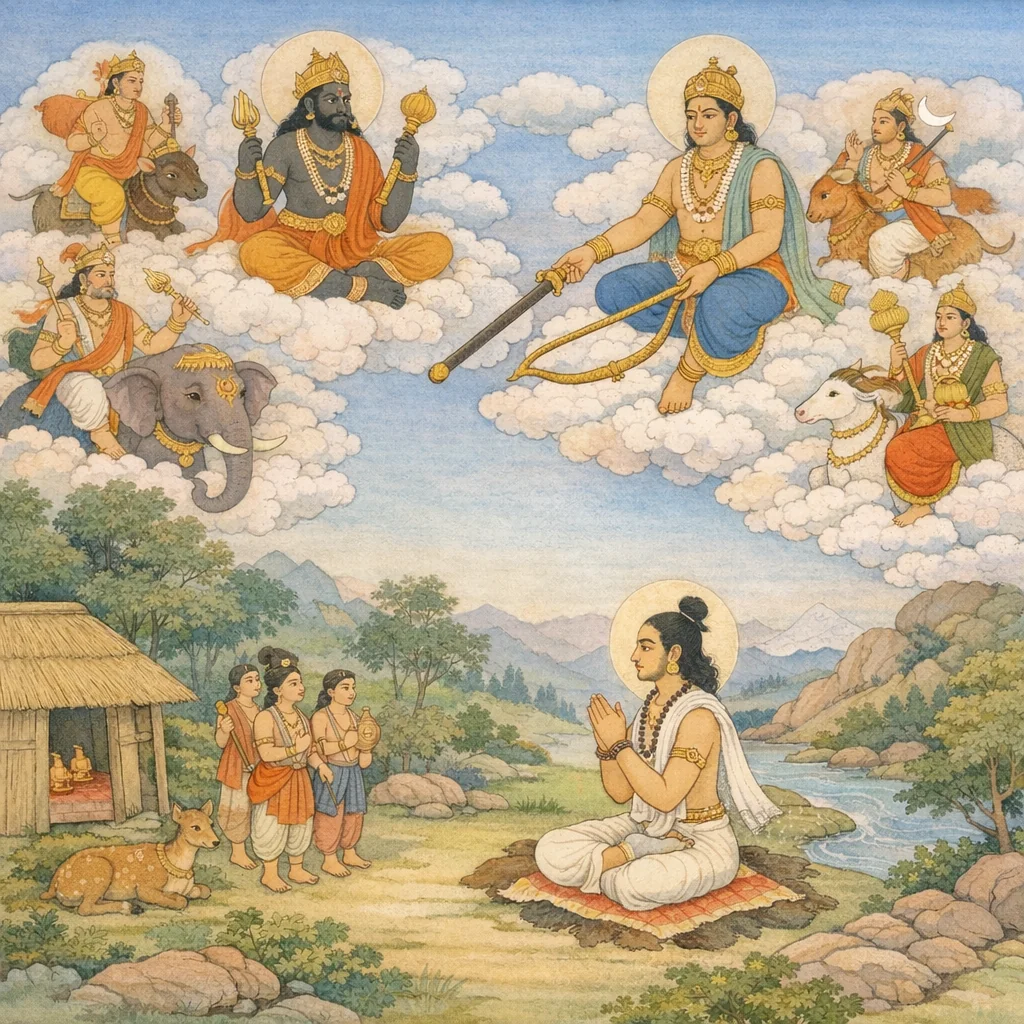
This chapter records a formal bestowal and doctrinal framing of the Pāśupata astra. Śiva addresses Arjuna by recalling a primordial identity association with Nara-Nārāyaṇa and situates their shared tejas as world-sustaining. He identifies the Gāṇḍīva as Arjuna’s rightful weapon and reaffirms inexhaustible quivers, then invites Arjuna to request a boon. Arjuna petitions for the formidable Pāśupata—also characterized through the epithet Brahmaśiras—described as cosmically destructive if deployed at the wrong scale. Śiva consents while emphasizing exclusivity of knowledge (even major deities are said not to know it fully), and issues an explicit operational ethic: it must not be released rashly, as misapplication could endanger the entire world-order. The transmission is portrayed as confidential instruction, after which omens occur—earth tremors and celestial sounds—while gods and adversarial beings witness the weapon’s fiery, personified presence near Arjuna. The chapter closes with purification motifs (removal of inauspiciousness by divine touch), Śiva’s permission for Arjuna’s onward ascent, and Śiva’s departure with Umā, leaving Arjuna empowered yet constrained by rule-governed responsibility.
Chapter Arc: महादेव के साक्षात् दर्शन-स्पर्श से अभिभूत अर्जुन अपने सौभाग्य पर विस्मित होकर आत्मगौरव और कृतज्ञता के बीच ठहर जाता है। → उसी दिव्य क्षण में दिक्पाल/लोकपाल एक-एक कर प्रकट होते हैं—यम, वरुण आदि—और अर्जुन की असाधारण नियति (नर-स्वरूप) का संकेत देकर उसे दिव्यास्त्रों के योग्य ठहराते हैं। → लोकपाल अर्जुन को दिव्यास्त्र प्रदान करते हैं और अंततः इन्द्र का आदेश आता है—अर्जुन को स्वर्ग चलकर आगे की सिद्धि और अस्त्र-विद्या प्राप्त करनी है; साथ ही भविष्य के महासंग्राम में भीष्म-कर्ण आदि के वध/विजय की दिशा का संकेत मिलता है। → अस्त्र-प्राप्ति से कृतार्थ होकर अर्जुन ‘पूर्ण-मानस’ होता है; देवता सम्मानपूर्वक यथागत लौटते हैं और अर्जुन का तप-यात्रा-मार्ग अब स्वर्गगमन की ओर मुड़ जाता है। → इन्द्र के आदेश के बाद प्रश्न शेष रहता है—स्वर्ग में अर्जुन को कौन-सी दिव्य शिक्षा/परीक्षा मिलेगी और यह वरदान कुरुक्षेत्र के भाग्य को कैसे पलटेगा?
Shlokas
Verse 1
हि न () है >> >> एकचत्वारिशो< ध्याय: अर्जुनके पास दिक्पालोंका आगमन एवं उन्हें दिव्यास्त्र- प्रदान तथा इन्द्रका उन्हें स्वर्गमें चलनेका आदेश देना वैशम्पायन उवाच तस्य सम्पश्यतस्त्वेव पिनाकी वृषभध्वज: । जगामादर्शन॑ भानुलोंकस्येवास्तमीयिवान्,वैशम्पायनजी कहते हैं--जनमेजय! अर्जुनके देखते-देखते पिनाकधारी भगवान् वृषभध्वज अदृश्य हो गये, मानो भुवनभास्कर भगवान् सूर्य अस्त हो गये हों
Vaiśampāyana said: While Arjuna was still watching, the Pināka-bearing Lord, whose banner bears the bull, vanished from sight—like the radiant sun sinking into the western horizon. The moment underscores the divine’s freedom to appear and withdraw at will, leaving the hero to proceed with steadiness and reverence rather than attachment to the vision itself.
Verse 2
ततोअर्जुन: परं चक्रे विस्मयं परवीरहा । मया साक्षान्महादेवो दृष्ट इत्येव भारत,भारत! तदनन्तर शत्रुवीरोंका संहार करनेवाले अर्जुनको यह सोचकर बड़ा आश्चर्य हुआ कि आज मुझे महादेवजीका प्रत्यक्ष दर्शन प्राप्त हुआ है
Then Arjuna, the slayer of hostile heroes, was filled with profound wonder, thinking, “O Bhārata, I have truly beheld Mahādeva face to face.” The moment underscores how direct encounter with the divine can humble even the mightiest warrior and reorient strength toward reverence and righteous purpose.
Verse 3
धन्यो<स्म्यनुगृहीतो5स्मि यन्मया ःयम्बको हर: । पिनाकी वरदो रूपी दृष्ट: स्पृष्टश्न पाणिना,मैं धन्य हूँ! भगवान्का मुझपर बड़ा अनुग्रह है कि त्रिनेत्रधारी, सर्वपापहारी एवं अभीष्ट वर देनेवाले पिनाक-पाणि भगवान् शंकरने मूर्तिमान् होकर मुझे दर्शन दिया और अपने करकमलोंसे मेरे अंगोंका स्पर्श किया
Vaiśampāyana said: “Blessed am I, truly favored, for I have beheld Tryambaka—Hara, the wielder of the Pināka—manifest in visible form. The gracious giver of boons not only granted me his sight, but also touched me with his own hand.”
Verse 4
कृतार्थ चावगच्छामि परमात्मानमाहवे । शत्रृंश्न विजितान् सर्वान् निर्वृत्तं च प्रयोजनम्,आज मैं अपने-आपको परम कृतार्थ मानता हूँ, साथ ही यह विश्वास करता हूँ कि महासमरमें अपने समस्त शत्रुओंपर विजय प्राप्त करूँगा। अब मेरा अभीष्ट प्रयोजन सिद्ध हो गया
Verse 5
इत्येवं चिन्तयानस्य पार्थस्यामिततेजस: । ततो वैदूर्यवर्णाभो भासयन् सर्वतो दिश: । यादोगणवृत: श्रीमानाजगाम जलेश्वर:,इस प्रकार चिन्तन करते हुए अमित तेजस्वी कुन्तीकुमार अर्जुनके पास जलके स्वामी श्रीमान् वरुणदेव जल-जन्तुओंसे घिरे हुए आ पहुँचे। उनकी अंगकान्ति वैदूर्यमणिके समान थी और वे सम्पूर्ण दिशाओंको प्रकाशित कर रहे थे
As Pārtha (Arjuna), of immeasurable splendor, continued reflecting in this way, the lord of the waters—Varuṇa—arrived before him, surrounded by hosts of aquatic beings. Radiant like the blue vaidūrya gem, he illuminated all directions, marking a divine response to the hero’s inward deliberation and the moral weight of his situation.
Verse 6
नागैन्दिनदीभिश्र दैत्यै: साध्यैश्व दैवतै: । वरुणो यादसां भर्ता वशी तं देशमागमत्,नागों, नद और नदियोंके देवताओं, दैत्यों तथा साध्यदेवताओंके साथ जल-जन्तुओंके स्वामी जितेन्द्रिय वरुणदेवने उस स्थानको अपने शुभागमनसे सुशोभित किया
Vaiśampāyana said: Accompanied by the lordly Nāgas, the rivers and their presiding deities, the Daityas, and the Sādhyas among the gods, Varuṇa—master of the aquatic beings and self-controlled—came to that place, gracing it by his auspicious arrival.
Verse 7
अथ जाम्बूनदवपुर्विमानेन महार्चिषा । कुबेर: समनुप्राप्तो यक्षैरनुगत: प्रभु:,तदनन्तर स्वर्णके समान शरीरवाले भगवान् कुबेर महातेजस्वी विमानद्वारा वहाँ आये। उनके साथ बहुत-से यक्ष भी थे
Vaiśampāyana said: Then the lord Kubera arrived there, attended by Yakṣas, coming in a radiant aerial chariot and possessing a body of golden splendor. The scene marks the entry of a divine guardian of wealth and order, whose presence signals authority, protection, and the disciplined power that accompanies rightful sovereignty.
Verse 8
विद्योतयन्निवाकाशमद्भुतोपमदर्शन: । धनानामीशथ्चर: श्रीमानर्जुन॑ द्रष्ठटमागत:,वे अपने तेजसे आकाशमण्डलको प्रकाशित-से कर रहे थे। उनका दर्शन अद्भुत एवं अनुपम था। परम सुन्दर श्रीमान् धनाध्यक्ष कुबेर अर्जुनको देखनेके लिये वहाँ पधारे थे
Vaiśampāyana said: As though lighting up the sky with his own radiance, wondrous and incomparable to behold, the illustrious Kubera—the lord of treasures, moving at will—came there to see Arjuna. The scene underscores how divine authority and prosperity are portrayed as subordinate to dharma: even the guardian of wealth approaches the disciplined hero with respect, recognizing the moral power born of austerity and right conduct.
Verse 9
तथा लोकान्तकृच्छीमान् यम: साक्षात् प्रतापवान् | मर्त्यमूर्तिधरै: सार्थ पितृभिलोॉकभावनै:,इसी प्रकार समस्त जगत्का अन्त करनेवाले श्रीमान् प्रतापी यमराजने प्रत्यक्षरूपमें वहाँ दर्शन दिया। उनके साथ मानव-शरीरधारी विश्वभावन पितृगण भी थे
Then Yama himself—glorious, mighty, and the bringer of the world’s end—appeared there in visible form. He was accompanied by the Pitṛs, beneficent sustainers of the worlds, who had assumed human bodies.
Verse 10
दण्डपाणिरचिन्त्यात्मा सर्वभूतविनाशकृत् । वैवस्वतो धर्मराजो विमानेनावभासयन्,उनके हाथमें दण्ड शोभा पा रहा था। सम्पूर्ण भूतोंका विनाश करनेवाले अचिन्त्यात्मा सूर्यपुत्र धर्मराज अपने (तेजस्वी) विमानसे तीनों लोकों, गुह्यकों, गन्धर्वों तथा नागोंको प्रकाशित कर रहे थे। प्रलयकाल उपस्थित होनेपर दिखायी देनेवाले द्वितीय सूर्यकी भाँति उनकी अद्भुत शोभा हो रही थी
Vaiśaṃpāyana said: With a staff in his hand, of inconceivable nature and the agent of the destruction of all beings, Vaivasvata—Yama, the King of Dharma—shone forth from his celestial chariot, illuminating all around. His wondrous splendor was like that of a second sun appearing at the time of cosmic dissolution, a vision that underscores the inevitability of moral order and the inescapable reach of death’s justice.
Verse 11
त्रींललोकान् गुह्ुकांश्वैव गन्धर्वाश्व॒ सपन्नगान् । द्वितीय इव मार्तण्डो युगान्ते समुपस्थिते,उनके हाथमें दण्ड शोभा पा रहा था। सम्पूर्ण भूतोंका विनाश करनेवाले अचिन्त्यात्मा सूर्यपुत्र धर्मराज अपने (तेजस्वी) विमानसे तीनों लोकों, गुह्यकों, गन्धर्वों तथा नागोंको प्रकाशित कर रहे थे। प्रलयकाल उपस्थित होनेपर दिखायी देनेवाले द्वितीय सूर्यकी भाँति उनकी अद्भुत शोभा हो रही थी
Vaiśaṃpāyana said: Like a second sun appearing at the end of an age, he shone forth, illuminating the three worlds—along with the Guhyakas, the Gandharvas, and the serpent beings. With his staff gleaming in his hand, the Sun-born Dharmarāja appeared as an unfathomable power capable of bringing all creatures to dissolution, his radiance spreading from his splendid aerial car.
Verse 12
ते भानुमन्ति चित्राणि शिखराणि महागिरे: । समास्थायार्जुनं तत्र ददृशुस्तपसान्वितम्
Vaiśaṃpāyana said: Having reached the radiant, wondrous peaks of the great mountain, they saw Arjuna there—steadfast and endowed with austerity—absorbed in his disciplined practice. The scene underscores how inner strength and righteous purpose are forged through tapas (self-restraint) before one can meet the demands of dharma.
Verse 13
उन सब देवताओंने उस महापर्वतके विचित्र एवं तेजस्वी शिखरोंपर पहुँचकर वहाँ तपस्वी अर्जुनको देखा ।। ततो मुहूर्ताद् भगवानैरावतशिरोगत:ः । आजगाम रहेन्द्राण्या शक्र: सुरगणैर्वृत:
Soon after, Śakra (Indra), the illustrious lord of the gods, arrived—seated upon the head/back of Airāvata and surrounded by hosts of devas. The scene underscores divine recognition of disciplined tapas: Arjuna’s austerity draws the attention of heaven itself, suggesting that power sought through self-restraint and right purpose is ethically superior to power seized through impulse or pride.
Verse 14
तत्पश्चात् दो ही घड़ीके बाद भगवान् इन्द्र इन्द्राणीके साथ ऐरावतकी पीठपर बैठकर वहाँ आये। देवताओंके समुदायने उन्हें सब ओरसे घेर रखा था ।। पाण्डुरेणातपत्रेण प्रियमाणेन मूर्थनि । शुशुभे तारकाराज: सितमभ्रमिव स्थित:,उनके मस्तकपर श्वेत छत्र तना हुआ था, जिससे वे शुभ्र वर्णके मेघखण्डसे आच्छादित चन्द्रमाके समान सुशोभित हो रहे थे। बहुत-से तपस्वी-ऋषि तथा गन्धर्वगण उनकी स्तुति करते थे। वे उस पर्वतके शिखरपर आकर ठहर गये, मानो वहाँ सूर्य प्रकट हो गये हों
Then, after the lapse of two ghaṭikās, the blessed Indra arrived there, seated upon Airāvata with Indrāṇī at his side. A host of gods surrounded him on every side. With a white parasol held above his head, Indra shone like the lord of stars—the moon—standing amid a pale bank of cloud. Many ascetic seers and the Gandharvas praised him with hymns. He came to rest upon the mountain peak, as though the sun itself had manifested there—an image of divine authority arriving to uphold cosmic order.
Verse 15
संस्तूयमानो गन्धर्वैर्क्षिभिश्न तपोधनै: । शूडूं गिरे: समासाद्य तस्थौ सूर्य इवोदित:,उनके मस्तकपर श्वेत छत्र तना हुआ था, जिससे वे शुभ्र वर्णके मेघखण्डसे आच्छादित चन्द्रमाके समान सुशोभित हो रहे थे। बहुत-से तपस्वी-ऋषि तथा गन्धर्वगण उनकी स्तुति करते थे। वे उस पर्वतके शिखरपर आकर ठहर गये, मानो वहाँ सूर्य प्रकट हो गये हों
Praised by the Gandharvas and by ascetic seers rich in austerity, he reached the peak of the mountain Śūḍu and stood there—radiant, as though the sun itself had risen upon that summit. The scene underscores how spiritual merit and righteous presence draw reverence from both celestial beings and disciplined sages.
Verse 16
अथ मेघस्वनो धीमान् व्याजहार शुभां गिरम् यम: परमधर्मज्ञो दक्षिणां दिशमास्थित:,तदनन्तर मेघके समान गम्भीर स्वरवाले परम धर्मज्ञ एवं बुद्धिमान् यमराज दक्षिण दिशामें स्थित हो यह शुभ वचन बोले--
Then Yama—the supremely discerning knower of dharma—wise and deep-voiced like a thundercloud, stationed in the southern quarter, spoke auspicious words. The scene underscores the moral gravity of what is about to be taught or judged, for Yama’s presence signals an ethical reckoning aligned with cosmic order.
Verse 17
अर्जुनार्जुन पश्यास्मॉललोकपालान् समागतान् | दृष्टिं ते वितरामो5द्य भवानहति दर्शनम्,अर्जुन! हम सब लोकपाल यहाँ आये हुए हैं। तुम हमें देखो। हम तुम्हें दिव्य दृष्टि देते हैं। तुम हमारे दर्शनके अधिकारी हो। तुम महामना एवं महाबली पुरातन महर्षि नर हो। तात! ब्रह्माजीकी आज्ञासे तुमने मानव-शरीर ग्रहण किया है
Vaiśampāyana said: “Arjuna, Arjuna—behold us, the guardians of the worlds, assembled here. Today we grant you divine sight, for you are worthy to behold us. See us now: all the Lokapālas have come. You have the right to this vision. You are the ancient great seer Nara—noble in mind and mighty in strength. Dear one, by Brahmā’s command you have assumed a human body.”
Verse 18
पूर्वर्षिरमितात्मा त्वं नरो नाम महाबल: । नियोगाद् ब्रह्मणस्तात मर्त्यतां समुपागत:,अर्जुन! हम सब लोकपाल यहाँ आये हुए हैं। तुम हमें देखो। हम तुम्हें दिव्य दृष्टि देते हैं। तुम हमारे दर्शनके अधिकारी हो। तुम महामना एवं महाबली पुरातन महर्षि नर हो। तात! ब्रह्माजीकी आज्ञासे तुमने मानव-शरीर ग्रहण किया है
Vaiśampāyana said: “You are the ancient seer, of boundless spirit—Nara by name, mighty in strength. By Brahmā’s commission, dear one, you have entered the state of mortality. Arjuna, all of us guardians of the worlds have come here. Behold us. We grant you divine sight; you are worthy to receive our vision. You are the great-souled, great-powered primordial sage Nara. By Brahmā’s command you have assumed a human body.”
Verse 19
त्वया च वसुसम्भूतो महावीर्य: पितामह: । भीष्म: परमधर्मात्मा संसाध्यक्ष रणेडनघ,कर्णश्न सुमहावीर्यस्त्वया वध्यो धनंजय । “अनघ! वसुओंके अंशसे उत्पन्न महापराक्रमी और परम धर्मात्मा पितामह भीष्मको तुम संग्राममें जीत लोगे। भरद्वाजपुत्र द्रोणाचार्यके द्वारा सुरक्षित क्षत्रिय-समुदाय भी, जिसका स्पर्श अग्निके समान भयंकर है, तुम्हारे द्वारा पराजित होगा। कुरुनन्दन! मानव- शरीरमें उत्पन्न हुए महाबली दानव तथा निवातकवच नामक दैत्य भी तुम्हारे हाथसे मारे जायँगे। धनंजय! सम्पूर्ण जगत्को उष्णता प्रदान करनेवाले मेरे पिता भगवान् सूर्यदेवके अंशसे उत्पन्न महापराक्रमी कर्ण भी तुम्हारा वध्य होगा
Vaiśampāyana said: “Blameless one, in battle you will overcome the grandsire Bhīṣma—born from the Vasus, of immense prowess, and steadfast in supreme righteousness. And you, Dhanaṃjaya, will also be the slayer of Karṇa, a warrior of extraordinary might.”
Verse 20
क्षत्रं चाग्निसमस्पर्श भारद्वाजेन रक्षितम् | दानवाश्च महावीर्या ये मनुष्यत्वमागता:
Vaiśampāyana said: “And the Kṣatra power—untouchable like fire—was safeguarded by Bhāradvāja. And there were also mighty Dānavas who had come to the state of being human.”
Verse 21
निवातकवचाश्नैव दानवा: कुरुनन्दन । पितुर्ममांशो देवस्य सर्वलोकप्रतापिन:
Vaiśampāyana said: “O delight of the Kurus, those Dānavas known as the Nivātakavacas—mighty and well-armoured—were also (there). They were, as it were, a portion of my father, the god whose splendour overawes all the worlds.”
Verse 22
अंशाश्च क्षितिसम्प्राप्ता देवदानवरक्षसाम्,'शत्रुओंका संहार करनेवाले कुन्तीकुमार! देवताओं, दानवों तथा राक्षसोंके जो अंश पृथ्वीपर उत्पन्न हुए हैं, वे युद्धमें तुम्हारे द्वारा मारे जाकर अपने कर्मफलके अनुसार यथोचित गति प्राप्त करेंगे
Vaiśampāyana said: O son of Kuntī, destroyer of enemies—those portions (incarnate shares) of gods, Dānavas, and Rākṣasas who have come down to the earth will, when slain by you in battle, attain the destinies appropriate to them, in accordance with the fruits of their own deeds. The statement frames the coming violence not as personal hatred but as a cosmic settling of moral accounts, where each being meets the consequence suited to its conduct.
Verse 23
त्वया निपातिता युद्धे स्वकर्मफलनिर्जिताम् । गतिं प्राप्स्यन्ति कौन्तेय यथास्वमरिकर्षण,'शत्रुओंका संहार करनेवाले कुन्तीकुमार! देवताओं, दानवों तथा राक्षसोंके जो अंश पृथ्वीपर उत्पन्न हुए हैं, वे युद्धमें तुम्हारे द्वारा मारे जाकर अपने कर्मफलके अनुसार यथोचित गति प्राप्त करेंगे
Vaiśampāyana said: O son of Kuntī, subduer of foes—those who fall in battle by your hand will attain the destined course of existence they have earned through the fruits of their own deeds. In this vision of war, your action is presented not as personal vengeance but as an instrument through which beings meet the appropriate outcome shaped by their karma.
Verse 24
अक्षया तव कीर्तिश्व लोके स्थास्यति फाल्गुन । त्वया साक्षान्महादेवस्तोषितो हि महामृथे,'फाल्गुन! संसारमें तुम्हारी अक्षय कीर्ति स्थापित होगी। तुमने यहाँ महासमरमें साक्षात् महादेवजीको संतुष्ट किया है
Vaiśampāyana said: “Phālguna, your fame will stand in this world as imperishable. For here, in the great battle, you have truly pleased Mahādeva himself face to face.”
Verse 25
लघ्वी वसुमती चापि कर्तव्या विष्णुना सह । गृहाणास्त्रं महाबाहो दण्डमप्रतिवारणम् । अनेनास्त्रेण सुमहत् त्वं हि कर्म करिष्यसि,“महाबाहो! भगवान् श्रीकृष्णके साथ मिलकर तुम्हें इस पृथ्वीका भार भी हलका करना है, अतः यह मेरा दण्डास्त्र ग्रहण करो। इसका वेग कहीं भी कुण्ठित नहीं होता। इसी अस्त्रके द्वारा तुम बड़े-बड़े कार्य सिद्ध करोगे”
Vaiśampāyana said: “O mighty-armed one, together with Viṣṇu (Śrī Kṛṣṇa) you must lighten the burden of the earth. Therefore accept this Daṇḍa-weapon—its force cannot be checked anywhere. By this weapon you will indeed accomplish very great deeds.”
Verse 26
वैशम्पायन उवाच प्रतिजग्राह तत् पार्थो विधिवत् कुरुनन्दन: । समन्त्र॑ सोपचारं च समोक्षविनिवर्तनम्,वैशम्पायनजी कहते हैं--जनमेजय! कुरुनन्दन कुन्तीकुमार अर्जुनने विधिपूर्वक मन्त्र, उपचार, प्रयोग और उपसंहारसहित उस अस्त्रको ग्रहण किया
Vaiśampāyana said: Then Pārtha Arjuna, the delight of the Kurus, duly received that weapon—complete with its mantra, the prescribed ritual observances, its proper application, and the correct method of withdrawal. The episode underscores that power is to be accepted only through disciplined procedure and ethical restraint, not as mere force.
Verse 27
ततो जलधरश्यामो वरुणो यादसां पति: । पश्चिमां दिशमास्थाय गिरमुच्चारयन् प्रभु:,इसके बाद जल-जन्तुओंके स्वामी मेघके समान श्यामकान्तिवाले प्रभावशाली वरुण पश्चिम दिशामें खड़े हो इस प्रकार बोले--
Then Varuṇa—dark-hued like a rain-cloud, the mighty lord of aquatic beings—took his stand facing the western quarter and, in authority, began to speak.
Verse 28
पार्थ क्षत्रियमुख्यस्त्वं क्षत्रधर्मे व्यवस्थित: । पश्य मां पृथुताम्राक्ष वरुणो5स्मि जलेश्वर:,'पर्थ! तुम क्षत्रियोंमें प्रधान एवं क्षत्रिय-धर्ममें स्थित हो। विशाल तथा लाल नेत्रोंवाले अर्जुन! मेरी ओर देखो। मैं जलका स्वामी वरुण हूँ
Vaiśampāyana said: “O Pārtha, you are foremost among kṣatriyas, firmly established in the kṣatriya code of duty. Look upon me, O wide, copper-red–eyed Arjuna: I am Varuṇa, lord of the waters.”
Verse 29
मया समुद्यतान् पाशान् वारुणाननिवारितान् । प्रतिगृह्लीष्व कौन्तेय सरहस्यनिवर्तनम्,“कुन्तीकुमार! मेरे दिये हुए इन वरुण-पाशोंको रहस्य और उपसंहारसहित ग्रहण करो। इनके वेगको कोई भी रोक नहीं सकता
Vaiśampāyana said: “O son of Kuntī, accept from me these Varuṇa-nooses, already set in readiness and irresistible in their force. Receive them together with their secret method and the proper means of withdrawal, so that power is held with restraint and used with discernment.”
Verse 30
एभिस्तदा मया वीर संग्रामे तारकामये । दैतेयानां सहस्नाणि संयतानि महात्मनाम्,“वीर! मैंने इन पाशोंद्वारा तारकामय संग्राममें सहस्रों महाकाय दैत्योंको बाँध लिया था
Vaiśaṃpāyana said: “O hero, in that starry, wondrous battle, by means of these very bonds I once restrained thousands of the Daityas—mighty-souled and of vast power.” The line underscores the speaker’s prior mastery in war and the ethical idea that even formidable foes can be checked through skill and rightful means rather than mere slaughter.
Verse 31
तस्मादिमान् महासत्त्व मत्प्रसादसमुत्थितान् । गृहाण न हि ते मुच्येदन््तको5प्याततायिन:,“अतः महाबली पार्थ! मेरे कृपाप्रसादसे प्रकट हुए इन पाशोंको तुम ग्रहण करो। इनके द्वारा आक्रमण करनेपर मृत्यु भी तुम्हारे हाथसे नहीं छूट सकती
Therefore, O great-souled one, accept these nooses that have arisen through my gracious favor. For even Death himself, should he come as an aggressor, would not escape from you (once bound by them).
Verse 32
अनेन वत्वं यदास्त्रेण संग्रामे विचरिष्यसि । तदा निःक्षत्रिया भूमिर्भविष्यति न संशय:,“इस अस्त्रके द्वारा जब तुम संग्रामभूमिमें विचरण करोगे, उस समय यह सारी वसुन्धरा क्षत्रियोंसे शून्य हो जायगी, इसमें संशय नहीं है”
Vaiśampāyana said: “When you roam the battlefield wielding this weapon, then the earth will become bereft of kṣatriyas—of that there is no doubt.” The line underscores the terrifying moral weight of extraordinary arms: their use does not merely win a fight but threatens the very social order by annihilating the warrior class entrusted with protection.
Verse 33
वैशम्पायन उवाच ततः कैलासनिलयो धनाध्यक्षो5भ्यभाषत । दत्तेष्वस्त्रेषु दिव्येषु वरुणेन यमेन च,वैशम्पायनजी कहते हैं--जनमेजय! वरुण और यमके दिव्यास्त्र प्रदान कर चुकनेपर कैलासनिवासी धनाध्यक्ष कुबेरने कहा--“महाबली बुद्धिमान् पाण्डुनन्दन! मैं भी तुमपर प्रसन्न हूँ। तुम अपराजित वीर हो। तुमसे मिलकर मुझे बड़ी प्रसन्नता हुई है”
Vaiśampāyana said: Then Kubera, the lord of wealth who dwells on Mount Kailāsa, spoke. After the divine weapons had been bestowed by Varuṇa and by Yama, Kubera addressed the Pāṇḍu-born hero with approval—declaring his pleasure at meeting him and acknowledging his unconquerable valor. The scene underscores that power is to be received through rightful merit and divine sanction, not seized through arrogance.
Verse 34
प्रीतो5हमपि ते प्राज्ञ पाण्डवेय महाबल । त्वया सह समागम्य अजितेन तथैव च,वैशम्पायनजी कहते हैं--जनमेजय! वरुण और यमके दिव्यास्त्र प्रदान कर चुकनेपर कैलासनिवासी धनाध्यक्ष कुबेरने कहा--“महाबली बुद्धिमान् पाण्डुनन्दन! मैं भी तुमपर प्रसन्न हूँ। तुम अपराजित वीर हो। तुमसे मिलकर मुझे बड़ी प्रसन्नता हुई है”
Vaiśampāyana said: “O wise and mighty son of Pāṇḍu, I too am pleased with you. Meeting you—who are unconquered—has likewise brought me great satisfaction.”
Verse 35
सव्यसाचिन् महाबाहो पूर्वदेव सनातन । सहास्माभिर्भवाउ्छान्त: पुराकल्पेषु नित्यश:,“सव्यसाचिन्! महाबाहो! पुरातन देव! सनातनपुरुष! पूर्वकल्पोंमें मेरे साथ तुमने सदा तपके द्वारा परिश्रम उठाया है। नरश्रेष्ठ) आज तुम्हें देखकर यह दिव्यास्त्र प्रदान करता हूँ। महाबाहो! इसके द्वारा तुम दुर्जय मानवेतर प्राणियोंको भी जीत लोगे
Vaiśampāyana said: “O Savyasācin, mighty-armed one—ancient god, eternal being! In former aeons you have always endured austerities and exertion together with us. Therefore, seeing you today, I bestow upon you this divine weapon. By its power, O mighty-armed hero, you will conquer even those beings who are not human and are otherwise hard to overcome.”
Verse 36
दर्शनात् ते व्िदं दिव्यं प्रदिशामि नरर्षभ । अमनुष्यान् महाबाहो दुर्जयानपि जेष्यसि,“सव्यसाचिन्! महाबाहो! पुरातन देव! सनातनपुरुष! पूर्वकल्पोंमें मेरे साथ तुमने सदा तपके द्वारा परिश्रम उठाया है। नरश्रेष्ठ) आज तुम्हें देखकर यह दिव्यास्त्र प्रदान करता हूँ। महाबाहो! इसके द्वारा तुम दुर्जय मानवेतर प्राणियोंको भी जीत लोगे
Vaiśampāyana said: “Because you have come into my sight, O bull among men, I bestow upon you this divine weapon. Mighty-armed one, by it you will conquer even those non-human beings who are otherwise hard to overcome.”
Verse 37
मत्तश्वैव भवानाशा गृल्लात्वस्त्रमनुत्तमम् | अनेन त्वमनीकानि धार्तराष्ट्रस्य धक्ष्यसि,“तुम मुझसे शीघ्र ही इस अत्युत्तम अस्त्रको ग्रहण कर लो। तुम इसके द्वारा दुर्योधनकी सारी सेनाओंको जलाकर भस्म कर डालोगे
Vaiśampāyana said: “Let you quickly receive from me this unsurpassed weapon. By means of it you will burn to ashes the battle-formations of Dhṛtarāṣṭra’s son.” The line underscores the grave moral tension of war: extraordinary power is offered with the promise of decisive destruction, raising the implicit question of restraint and righteous use of force.
Verse 38
तदिदं प्रतिगृह्नीष्व अन्तर्धानं प्रियं मम । ओजस्तेजोद्युतिकरं प्रस्वापनमरातिनुत्,“यह मेरा परम प्रिय अन्तर्धान नामक अस्त्र है। इसे ग्रहण करो। यह ओज, तेज और कान्ति प्रदान करनेवाला, शत्रुसेनाकों सुला देनेवाला और समस्त वैरियोंका विनाश करनेवाला है
Vaiśampāyana said: “Receive this—my dearly cherished weapon called Antardhāna (Invisibility). It bestows vigor, fiery power, and radiance; it can cast hostile forces into sleep and brings the foes’ strength to ruin.” In the epic’s moral frame, such gifts are not mere instruments of violence but responsibilities: power is entrusted to the worthy so that it may be used with restraint, for protection, and in alignment with dharma rather than pride or cruelty.
Verse 39
महात्मना शड्करेण त्रिपुरं निहतं यदा । तदैतदस्त्र॑ निर्मुक्ते येन दग्धा महासुरा:,“परमात्मा शंकरने जब त्रिपुरासुरके तीनों नगरोंका विनाश किया था, उस समय इस अस्त्रका उनके द्वारा प्रयोग किया गया था; जिससे बड़े-बड़े असुर दग्ध हो गये थे
Vaiśampāyana said: When the great-souled Śaṅkara destroyed Tripura, it was with this very missile, once released, by which the mighty Asuras were burned to ashes. The verse recalls a paradigmatic act of divine intervention: overwhelming power is portrayed as legitimate when directed toward the removal of destructive forces that threaten cosmic and moral order.
Verse 40
इस प्रकार श्रीमह्या भारत वनपवके अन्तर्गत कैरातपर्वमें शिवप्रस्थानविषयक चालीसवाँ अध्याय पूरा हुआ,त्वदर्थमुद्यतं चेद॑ मया सत्यपराक्रम । त्वमहों धारणे चास्य मेरुप्रतिमगौरव 'सत्यपराक्रमी और मेरुके समान गौरवशाली पार्थ! तुम्हारे लिये यह अस्त्र मैंने उपस्थित किया है। तुम इसे धारण करनेके योग्य हो”
Vaiśampāyana said: Thus ends the fortieth chapter in the Kirāta section of the Vana Parva of the revered Mahābhārata, concerning Arjuna’s setting forth to seek Śiva. O Partha, whose valor is true and steadfast, whose dignity is like Mount Meru—this weapon has been readied and presented by me for your sake. You are indeed fit to bear it. The passage underscores that power is not granted merely for conquest, but entrusted to one whose character and discipline can sustain its weight.
Verse 41
ततोडर्जुनो महाबाहुर्विधिवत् कुरुनन्दन: । कौबेरमधिजग्राह दिव्यमस्त्र महाबल:,तब कुरुकुलका आनन्द बढ़ानेवाले महाबाहु महाबली अर्जुनने कुबेरके उस “अन्तर्धान! नामक दिव्य अस्त्रको ग्रहण किया इति श्रीमहाभारते वनपर्वणि कैरातपर्वणि देवप्रस्थाने एकचत्वारिंशो 5ध्याय: ।। ४१ || इस प्रकार श्रीमह्ाभारत वनपर्वके अन्तर्गत कैरातपर्वमें देवप्रस्थानविषयक इकतालीसवाँ अध्याय पूरा हुआ
Then Arjuna, the mighty-armed delight of the Kuru line, duly and according to prescribed rite accepted from Kubera a divine weapon—an extraordinary power meant for righteous use and disciplined restraint.
Verse 42
ततो<ब्रवीद् देवराज: पार्थमक्लिष्टकारिणम् । सान्त्वयःश्लक्ष्णया वाचा मेघदुन्दुभिनि:स्वन:,तदनन्तर देवराज इन्द्रने अनायास ही महान् कर्म करनेवाले कुन्तीकुमार अर्जुनको मीठे वचनोंद्वारा सान्त्वना देते हुए मेघ और दुन्दुभिके समान गम्भीर स्वरसे कहा--
Verse 43
कुन्तीमातर्महाबाहो त्वमीशान: पुरातन: । परां सिद्धिमनुप्राप्त: साक्षाद् देवगतिं गत:,“महाबाहु कुन्तीकुमार! तुम पुरातन शासक हो। तुम्हें उत्तम सिद्धि प्राप्त हुई है। तुम साक्षात् देवगतिको प्राप्त हुए हो
Vaiśampāyana said: “O mighty-armed son of Kuntī, you are an ancient lord and ruler. You have attained the highest perfection; indeed, you have directly reached the divine state.”
Verse 44
देवकार्य तु सुमहत् त्वया कार्यमरिंदम । आरोढ्व्यस्त्वया स्वर्ग: सज्जीभव महाद्युते,'शत्रुदमन! तुम्हें देवताओंका बड़ा भारी कार्य सिद्ध करना है। महाद्युते! तैयार हो जाओ तुम्हें स्वर्गलोकमें चलना है
Vaiśaṃpāyana said: “O subduer of foes, a very great task for the gods must be accomplished by you. O mighty one, make yourself ready—you are to ascend to heaven.”
Verse 45
रथो मातलिसंयुक्त आगन्ता त्वत्कृते महीम् तत्र ते5हं प्रदास्यामि दिव्यान्यस्त्राणि कौरव,“मातलिके द्वारा जोता हुआ दिव्य रथ तुम्हें लेनेके लिये पृथ्वीपर आनेवाला है। कुरुनन्दन! वहीं (स्वर्गमें) मैं तुम्हें दिव्यास्त्र प्रदान करूँगा”
Vaiśampāyana said: “A celestial chariot, yoked with Mātali as its charioteer, will come down to the earth for your sake. There, O scion of the Kurus, I shall bestow upon you the divine weapons.” The verse frames the gaining of power as something granted under rightful guidance and purpose, not as mere personal ambition.
Verse 46
तान् दृष्टवा लोकपालांस्तु समेतान् गिरिमूर्थनि । जगाम विस्मयं धीमान् कुन्तीपुत्रो धनंजय:,उस पर्वतशिखरपर एकत्र हुए उन सभी लोक-पालोंका दर्शन करके परम बुद्धिमान् धनंजयको बड़ा विस्मय हुआ
Vaiśampāyana said: Seeing those Lokapālas assembled together upon the mountain’s summit, the wise son of Kuntī—Dhanañjaya (Arjuna)—was struck with profound wonder. The moment underscores how the presence of cosmic guardians can humble even the most capable hero, reminding him that human prowess stands within a larger moral and divine order.
Verse 47
ततोडर्जुनो महातेजा लोकपालान् समागतान् | पूजयामास विधिवद् वाग्भिरद्धि: फलैरपि,तत्पश्चात् महातेजस्वी अर्जुनने वहाँ पधारे हुए लोकपालोंका मीठे वचन, जल और फलोंके द्वारा भी विधिपूर्वक पूजन किया
Then Arjuna, radiant with great energy, duly honored the assembled guardians of the worlds. In accordance with proper custom, he worshipfully received them with courteous words, with water for hospitality, and with fruits—showing disciplined respect to divine authority and to the ethics of welcoming guests.
Verse 48
ततः प्रतिययुर्देवा: प्रतिमान्य धनंजयम् । यथागतेन विबुधा: सर्वे काममनोजवा:,इसके बाद इच्छानुसार मनके समान वेगवाले समस्त देवता अर्जुनके प्रति सम्मान प्रकट करके जैसे आये थे वैसे ही चले गये
Then the gods, having duly honored Dhanañjaya (Arjuna), departed again. All those celestial beings—moving with a speed as swift as thought—went away just as they had come, in accordance with their own will.
Verse 49
ततोडर्जुनो मुर्दं लेभे लब्धास्त्र: पुरुषर्षभ: । कृतार्थमथ चात्मानं स मेने पूर्णणमानसम्,तदनन्तर देवताओंसे दिव्यास्त्र प्राप्त करके पुरुषोत्तम अर्जुनको बड़ी प्रसन्नता हुई; उन्होंने अपने-आपको कृतार्थ एवं पूर्णमनोरथ माना
Then Arjuna, that bull among men, having obtained the divine weapons, felt his head held high with honor. He regarded himself as having fulfilled his purpose, and his mind as completely satisfied—seeing the gods’ favor and the disciplined pursuit of power as crowned with success.
Verse 213
कर्णश्न सुमहावीर्यस्त्वया वध्यो धनंजय । “अनघ! वसुओंके अंशसे उत्पन्न महापराक्रमी और परम धर्मात्मा पितामह भीष्मको तुम संग्राममें जीत लोगे। भरद्वाजपुत्र द्रोणाचार्यके द्वारा सुरक्षित क्षत्रिय-समुदाय भी, जिसका स्पर्श अग्निके समान भयंकर है, तुम्हारे द्वारा पराजित होगा। कुरुनन्दन! मानव- शरीरमें उत्पन्न हुए महाबली दानव तथा निवातकवच नामक दैत्य भी तुम्हारे हाथसे मारे जायँगे। धनंजय! सम्पूर्ण जगत्को उष्णता प्रदान करनेवाले मेरे पिता भगवान् सूर्यदेवके अंशसे उत्पन्न महापराक्रमी कर्ण भी तुम्हारा वध्य होगा
Vaiśampāyana said: “O Dhanaṃjaya, even Karṇa of immense valor will be slain by you. O sinless one, you will conquer in battle the grandsire Bhīṣma—supremely righteous and of great prowess—who was born from a portion of the Vasus. The host of kṣatriyas protected by Droṇācārya, son of Bharadvāja—terrible to touch like fire—will also be defeated by you. O delight of the Kurus, mighty Dānavas born in human bodies, and the Daityas called Nivātakavacas, will be killed by your hand. And Karṇa too—born from a portion of Sūrya, my father, the blessed Sun-god who gives heat to the whole world—will be destined to fall to you.”
Frequently Asked Questions
The risk is misuse of an overwhelmingly potent astra: Śiva states it must not be released impulsively or by an insufficiently qualified agent, because disproportionate deployment could destabilize or devastate the world-order.
Capability requires governance: the highest power is legitimate only when paired with restraint, secrecy, and situational appropriateness, making ethical control a prerequisite to strategic effectiveness.
Yes, indirectly: the text signals the weapon’s exceptional status through exclusivity claims (even major deities do not fully know it), confidential pedagogy, and cosmic omens—functioning as a narrative certification that comprehension and use demand elevated qualification.