Adhyaya 314
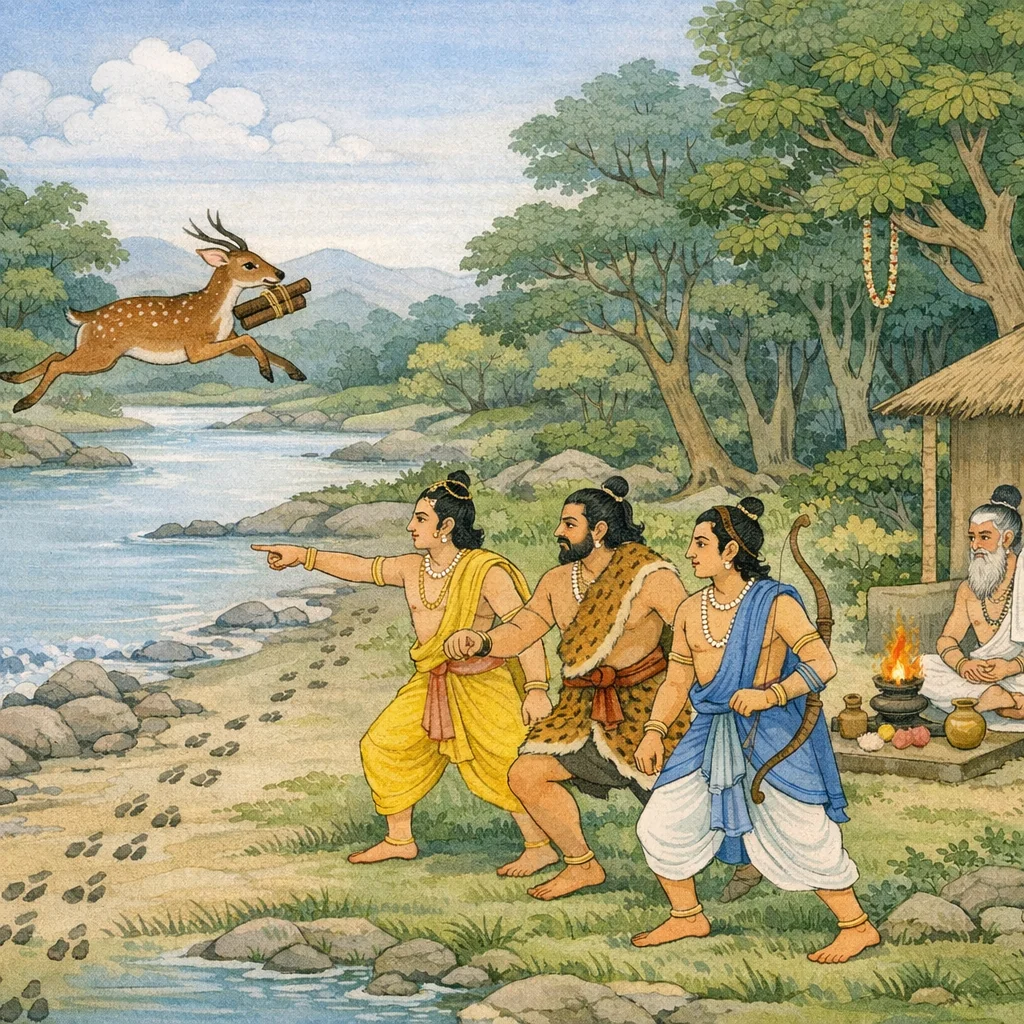
Chapter Arc: After Draupadī’s abduction and the crushing strain that follows, Yudhiṣṭhira leads his brothers away from Kāmyaka and returns again to the pleasant yet deceptive refuge of Dvaita forest, rich with roots, fruits, and many-hued trees. → In the hermitage-life of the exiles—disciplined, dharma-minded, and intent on serving brāhmaṇas—an urgent domestic crisis erupts: a brāhmaṇa’s araṇi (fire-drill) and mantha (churning-stick) have been left on a tree; a great deer, rubbing its horn, gets them snagged and bolts away. If the implements are not recovered, the agnihotra will fail. → The Pāṇḍavas track the deer by its footprints, driven not by sport but by the fear of a sacred rite being interrupted; the chase becomes a test of vigilance and responsibility under exile’s fatigue. → They pause to assess the pursuit and the lapse that allowed the loss; Nakula, burning with shame and impatience, speaks up to the eldest, insisting that in their lineage dharma is never drowned by negligence and that loss through idleness is intolerable. → Nakula’s sharp words hang in the air—will the brothers renew the pursuit with renewed discipline, and will the brāhmaṇa’s ritual be saved in time?
Shlokas
Verse 1
/ (दाक्षिणात्य अधिक पाठके १६३ “लोक मिलाकर कुल ४३ ३ “लोक हैं) गदर #<(>9) #::.# #2 5-7 (आरणेयपर्व) एकादशाधिकत्रिशततमो< ध्याय: ब्राह्मगकी अरणि एवं मन्थन-काष्ठका पता लगानेके लिये पाण्डवोंका मृगके पीछे दौड़ना और दुःखी होना जनमेजय उवाच एवं ह्वतायां भारयायां प्राप्प क्लेशमनुत्तमम् | प्रतिपद्य तत: कृष्णां किमकुर्वत पाण्डवा:,जनमेजयने पूछा--ब्रह्मन! इस प्रकार अपनी पत्नी द्रौपदीका अपहरण होनेपर अत्यन्त क्लेश उठाकर पाण्डवोंने जब उन्हें पुनः प्राप्त कर लिया, उसके बाद उन्होंने क्या किया?
Janamejaya said: “O Brahmin, when their wife had been abducted and the Pāṇḍavas had endured unsurpassed anguish, and then regained Kṛṣṇā (Draupadī), what did the Pāṇḍavas do thereafter?”
Verse 2
वैशम्पायन उवाच एवं ह्वतायां कृष्णायां प्राप्प क्लेशमनुत्तमम् । विहाय काम्यकं राजा सह भ्रातृभिरच्युत:,वैशम्पायनजीने कहा--राजन! पूर्वोक्त प्रकारसे द्रौपदीका हरण होनेपर भारी क्लेश उठानेके बाद जब पाण्डवोंने उन्हें पा लिया, तब धर्मसे कभी च्युत न होनेवाले राजा युधिष्ठिर अपने भाइयोंके साथ काम्यकवन छोड़कर पुनः रमणीय द्वैतवनमें ही चले आये। वहाँ स्वादिष्ट फल-मूलोंकी बहुतायत थी तथा बहुत-से विचित्र वृक्ष उस वनकी शोभा बढ़ाते थे
Vaiśampāyana said: When Kṛṣṇā (Draupadī) had thus been carried off, the king—steadfast, never swerving from dharma—after enduring unsurpassed anguish and then recovering her, left the Kāmyaka forest together with his brothers and returned again to the delightful Dvaita forest.
Verse 3
पुनर्द्धतवनं रम्यमाजगाम युधिष्ठिर: । स्वादुमूलफलं रम्यं विचित्रबहुपादपम्,वैशम्पायनजीने कहा--राजन! पूर्वोक्त प्रकारसे द्रौपदीका हरण होनेपर भारी क्लेश उठानेके बाद जब पाण्डवोंने उन्हें पा लिया, तब धर्मसे कभी च्युत न होनेवाले राजा युधिष्ठिर अपने भाइयोंके साथ काम्यकवन छोड़कर पुनः रमणीय द्वैतवनमें ही चले आये। वहाँ स्वादिष्ट फल-मूलोंकी बहुतायत थी तथा बहुत-से विचित्र वृक्ष उस वनकी शोभा बढ़ाते थे
Vaiśampāyana said: Yudhiṣṭhira returned once more to the delightful Dvaitavana. It was a charming forest, rich in sweet roots and fruits and adorned with many kinds of wondrous trees—an apt refuge for a king who, even amid hardship, does not fall away from dharma.
Verse 4
अनुभुक्तफलाहारा: सर्व एव मिताशना: । न्यवसन् पाण्डवास्तत्र कृष्णया सह भार्यया,वहाँ सब पाण्डव अपनी पत्नी द्रौपदीके साथ केवल फलाहार करके परिमित भोजनपर जीवन-निर्वाह करते हुए रहते थे
Vaiśampāyana said: There the Pāṇḍavas lived together with their wife Kṛṣṇā (Draupadī), sustaining themselves on fruits already obtained and eating only in measured quantity—enduring hardship with restraint and discipline during their forest life.
Verse 5
वसन् द्वैतवने राजा कुन्तीपुत्रो युधिष्ठिर: । भीमसेनोथ्डर्जुनश्वैव माद्रीपुत्रो च पाण्डवौ,द्वैतवनमें रहते समय कुन्तीपुत्र राजा युधिष्ठिर, भीमसेन, अर्जुन तथा माद्रीकुमार नकुल-सहदेव--इन सभी शत्रुसंतापी संयम-नियम-परायण धर्मात्मा पाण्डवोंने एक दिन एक ब्राह्मणके लिये पराक्रम करते हुए महान् क्लेश उठाया, परंतु उसका भावी परिणाम सुखमय ही हुआ
Vaiśaṃpāyana said: While dwelling in the Dvaitavana forest, King Yudhiṣṭhira, son of Kuntī—together with Bhīmasena, Arjuna, and the two sons of Mādrī, the Pāṇḍavas—lived in disciplined restraint. In the course of their forest life, they once undertook a deed of valor for the sake of a brāhmaṇa, enduring severe hardship; yet the destined outcome of that effort proved ultimately auspicious.
Verse 6
ब्राह्मणार्थे पराक्रान्ता धर्मात्मानो यतव्रता: । क्लेशमार्च्छन्त विपुलं सुखोदर्क परंतपा:,द्वैतवनमें रहते समय कुन्तीपुत्र राजा युधिष्ठिर, भीमसेन, अर्जुन तथा माद्रीकुमार नकुल-सहदेव--इन सभी शत्रुसंतापी संयम-नियम-परायण धर्मात्मा पाण्डवोंने एक दिन एक ब्राह्मणके लिये पराक्रम करते हुए महान् क्लेश उठाया, परंतु उसका भावी परिणाम सुखमय ही हुआ
Vaiśampāyana said: For the sake of a brāhmaṇa, those righteous-souled Pāṇḍavas—disciplined and steadfast in their vows—exerted themselves in valor and endured great hardship; yet, O scorcher of foes, its outcome was destined to be happiness.
Verse 7
तस्मिन् प्रतिवसन्तस्ते यत् प्रापु: कुरुसत्तमा: । वने क्लेशं सुखोदर्क तत् प्रवक्ष्यामि ते शूणु,राजन! उस वनमें रहते हुए उन कुरुश्रेष्ठ पाण्डवोंने जो भविष्यमें सुख देनेवाला क्लेश उठाया, उसका वर्णन करता हूँ, सुनो--
Vaiśampāyana said: “O king, listen. I shall relate what hardships those foremost of the Kurus—the Pāṇḍavas—endured while dwelling in that forest, hardships whose outcome would later ripen into happiness.”
Verse 8
अरणीसहितं मन्थं ब्राह्मणस्य तपस्विन: । मृगस्य घर्षमाणस्य विषाणे समसज्जत,एक तपस्वी ब्राह्मणका (रस्सीमें बँधा) अरणीसहित मन्थनकाष्ठ एक वृक्षमें रंगा था; वहीं एक मृग आकर उस वृक्षसे अपना शरीर रगड़ने लगा। उस समय वे दोनों काष्ठ उस मृगके सींगमें अटक गये
Vaiśampāyana said: The churning-stick together with its araṇi (fire-drill set), belonging to an ascetic brāhmaṇa, became caught on the antlers of a deer as it rubbed itself. Thus, the sacred implements meant for disciplined ritual practice were inadvertently entangled through the deer’s unknowing action—setting the scene for a moral test about care, responsibility, and non-harm.
Verse 9
तदादाय गतो राजंस्त्वरमाणो महामृगः । आश्रमान्तरित: शीघ्रं प्लवमानो महाजव:,राजन! उन काष्ठोंको लेकर वह महामृग बड़ी उतावलीसे भागा और बड़े वेगसे चौकड़ी भरता हुआ शीघ्र ही आश्रमसे ओझल हो गया
Vaiśampāyana said: “O King, having seized those pieces of wood, the great deer hurried away. Bounding swiftly with tremendous speed, it quickly vanished from sight beyond the hermitage.”
Verse 10
द्वियमाणं तु तं दृष्टवा स विप्र: कुरुसत्तम । त्वरितो5भ्यागमत् तत्र अग्निहोत्रपरीप्सया,कुरुश्रेष्ठ! उस ब्राह्मणने जब देखा कि मृग मेरी अरणी और मथानीको लेकर तेजीसे भागा जा रहा है, तब वह अन्निहोत्रकी रक्षाके लिये तुरंत वहीं (पाण्डवोंके आश्रममें) आया
Vaiśampāyana said: O best of the Kurus, when that brāhmaṇa saw it being carried off, he hurriedly came there, intent on safeguarding his agnihotra—his sacred household fire-rite—so that his religious duty would not be disrupted.
Verse 11
अजातशत्रुमासीनं भ्रातृभि: सहितं वने । आगम्य ब्राह्मणस्तूर्ण संतप्तश्वेदमब्रवीत्,वनमें भाइयोंके साथ बैठे हुए अजातशत्रु युधिष्ठिरके पास तुरंत आकर संतप्त हुए उस ब्राह्मणने इस प्रकार कहा--
Vaiśampāyana said: In the forest, Ajātaśatru (Yudhiṣṭhira) was seated together with his brothers. A brāhmaṇa, arriving there in haste—distressed and sweating—addressed him with these words, setting in motion an appeal to righteous kingship and compassionate duty.
Verse 12
अरणीसहितं मन्थं समासक्तं वनस्पतौ | मृगस्य घर्षमाणस्य विषाणे समसज्जत,“राजन! मैंने अपनी अरणी और मथानी एक वृक्षपर रख दी थी। एक मृग वहाँ आकर उस वृक्षसे शरीर रगड़ने लगा और उसके सींगमें वे दोनों काष्ठ फँस गये। वह महान् मृग उन काष्ठोंको लेकर बड़ी उतावलीके साथ भाग गया है और अत्यन्त वेगवान् होनेके कारण चौकड़ी भरता हुआ शीघ्र ही आश्रमसे बहुत दूर निकल गया है
Vaiśampāyana said: “O King, I had set my fire-drill—both the araṇī sticks and the churning staff—against a tree. Just then a deer came and began rubbing its body on that tree; the implements became caught upon its horn.”
Verse 13
तमादाय गतो राजंस्त्वरमाणो महामृग: । आश्रमात् त्वरित: शीघ्रं प्लवमानो महाजव:,“राजन! मैंने अपनी अरणी और मथानी एक वृक्षपर रख दी थी। एक मृग वहाँ आकर उस वृक्षसे शरीर रगड़ने लगा और उसके सींगमें वे दोनों काष्ठ फँस गये। वह महान् मृग उन काष्ठोंको लेकर बड़ी उतावलीके साथ भाग गया है और अत्यन्त वेगवान् होनेके कारण चौकड़ी भरता हुआ शीघ्र ही आश्रमसे बहुत दूर निकल गया है
Vaiśampāyana said: “O King, that great deer, in great haste, seized them and ran off. Swiftly leaving the hermitage behind, it bounded away at tremendous speed.”
Verse 14
तस्य गत्वा पद राजन्नासाद्य च महामृगम् । अन्निहोत्र न लुप्पेत तदानयत पाण्डवा:,“महाराज युधिष्ठिर! तथा वीर पाण्डवो। तुम सब लोग उसके पदचिह्लोंको देखते हुए उस महामृगके पास पहुँचो और वे दोनों काष्ठ ले आओ, जिससे मेरा अग्निहोत्रकर्म लुप्त न हो'
Vaiśaṃpāyana said: “O King! Follow its tracks, reach that great deer, and bring it back, O Pāṇḍavas, so that my agnihotra rite may not lapse.” The request frames the pursuit not as sport but as a duty to preserve a sacred daily obligation.
Verse 15
ब्राह्मणस्य वच: श्रुत्वा संतप्तो5थ युधिष्ठिर: । धनुरादाय कौन्तेय: प्राद्रवद् भ्रातृभि: सह,ब्राह्यणकी बात सुनकर कुन्तीनन्दन युधिष्ठिर बहुत दुःखी हुए और मृगका पता लगानेके लिये वे धनुष लेकर भाइयोंसहित दौड़े
Hearing the Brahmin’s words, Yudhiṣṭhira was deeply distressed. Then the son of Kuntī took up his bow and, together with his brothers, ran forth to track down the deer—moved by a sense of responsibility to set right the harm done and to uphold dharma toward the Brahmin.
Verse 16
सन्नद्धा धन्विन: सर्वे प्राद्रवन् नरपुड़रवा: । ब्राह्मणार्थे यतन्तस्ते शीघ्रमन््वगमन् मृगम्
Vaiśampāyana said: All those foremost of men, armed and bearing bows, rushed forth. Striving for the sake of the brāhmaṇa, they swiftly pursued the deer.
Verse 17
वे सभी नरश्रेष्ठ कवच बाँध एवं कमर कसकर धनुष लिये आश्रमसे दौड़े और ब्राह्मणकी कार्यसिद्धिके लिये प्रयलमशील होकर तीव्र गतिसे मृगका पीछा करने लगे ।। कर्णिनालीकनाराचानुत्सूजन्तो महारथा: । नाविध्यन् पाण्डवास्तत्र पश्यन्तो मृगमन्तिकात्,कुछ दूर जानेपर उन्हें वह मृग अपने पास ही दिखायी दिया। तब वे महारथी पाण्डव कर्णि, नालीक और नाराच नामक बाण उसपर छोड़ने लगे; किंतु वे देखते हुए भी वहाँ उस मृगको बींध न सके
Vaiśampāyana said: All those foremost of men, having fastened on their armor and tightened their girdles, took up their bows and rushed out from the hermitage. Striving to accomplish the Brahmin’s purpose, they pursued the deer at great speed. Then those great chariot-warriors, the Pāṇḍavas, loosed karṇi-, nālīka-, and nārāca-arrows; yet, though the deer appeared close before their very eyes, they could not pierce it. After they had gone some distance, the deer still seemed to remain near them; and again they shot, but even while seeing it clearly, they failed to strike—suggesting a deceptive, uncanny quarry and foreshadowing that mere martial prowess does not always secure a righteous aim.
Verse 18
तेषां प्रयतमानानां नादृश्यत महामृगः । अपश्यन्तो मृगं शान्ता दुःखं प्राप्ता मनस्विन:,घोर प्रयत्न करनेपर भी वह महामृग उनके हाथ न लगा; सहसा अदृश्य हो गया। मृगको न देखकर वे मनस्वी वीर हतोत्साह और दुःखी हो गये
Vaiśaṃpāyana said: Though they strove with grim effort, that great deer was no longer to be seen—it vanished from their sight. When they could not find the animal, those resolute heroes, their ardor checked, fell into distress and sorrow.
Verse 19
शीतलच्छायमागम्य न्यग्रोधं गहने वने । क्षुत्पिपासापरीताज्: पाण्डवा: समुपाविशन्,तत्पश्चात् उस गहन वनमें भूख-प्याससे पीड़ित अंगोंवाले पाण्डव एक शीतल छायावाले बरगदके पास आकर बैठ गये
Vaiśampāyana said: Reaching a banyan tree whose shade was cool, deep within a dense forest, the Pāṇḍavas—overcome by hunger and thirst—sat down there. The scene underscores the austerity of exile: even the righteous are tested by bodily need, and endurance becomes part of their dharma.
Verse 20
तेषां समुपविष्टानां नकुलो दुःखितस्तदा । अब्रवीद् भ्रातरं श्रेष्ठममर्षात् कुरुनन्दनम्,उनके बैठ जानेपर नकुल अत्यन्त दुःखी हो अमर्षमें आकर बड़े भाई कुरुनन्दन युधिष्ठिरसे इस प्रकार बोले---
Vaiśaṃpāyana said: When they had all sat down, Nakula, overwhelmed with sorrow, spoke in a surge of indignation to his eldest brother—Yudhiṣṭhira, the delight of the Kurus. The moment signals a moral tension: grief turns into righteous anger, and a younger brother challenges the elder’s stance, testing patience, restraint, and the demands of dharma within the family.
Verse 21
नास्मिन् कुले जातु ममज्ज धर्मों न चालस्यथादर्थलोपो बभूव । अनुत्तरा: सर्वभूतेषु भूय: सम्प्राप्ता: सम: संशयं किनु राजन्,“राजन! हमारे कुलमें कभी आलस्यवश धर्मका लोप नहीं हुआ; अर्थका भी कभी नाश नहीं हुआ। हमने किसी भी प्राणीके प्रार्थना करनेपर कभी उसे कोरा जवाब नहीं दिया-- निराश नहीं किया। फिर भी हम धर्मसंकटमें कैसे पड़ गये?”
Vaiśampāyana said: “In our lineage, dharma has never sunk into decline, not even once; nor has there ever been loss of wealth through sloth. Moreover, whenever any living being approached us, we did not send them away with an empty refusal—we did not leave them hopeless. Even so, O King, how have we come to be caught in a crisis of dharma—how can there be any doubt about our righteousness?”
Verse 310
इस प्रकार श्रीमह्याभारत वनपर्वके अन्तर्गत कुण्डलाहरणपर्वमें कवच-कुण्डलदानविषयक तीन सौ दसवाँ अध्याय पूरा हुआ
Thus ends the three-hundred-and-tenth chapter of the Vana Parva of the sacred Mahābhārata, within the section called the ‘Kuṇḍalāharaṇa Parva’, dealing with the giving away of the armor and earrings. The narrator marks the completion of this episode, highlighting the moral weight of a gift made at great personal cost and the narrative transition it creates.
Verse 311
इति श्रीमहाभारते वनपर्वणि आरणेयपर्वणि मृगान्वेषणे एकादशाधिकत्रिशततमो<ध्याय:
Thus, in the Śrī Mahābhārata, within the Vana Parva—specifically the Āraṇeya section—ends the chapter entitled “The Search for the Deer,” being the three-hundred-and-eleventh chapter. This is a colophon marking the close of a narrative unit, situating the episode within the forest-exile context where conduct (dharma) is tested amid hardship and pursuit.