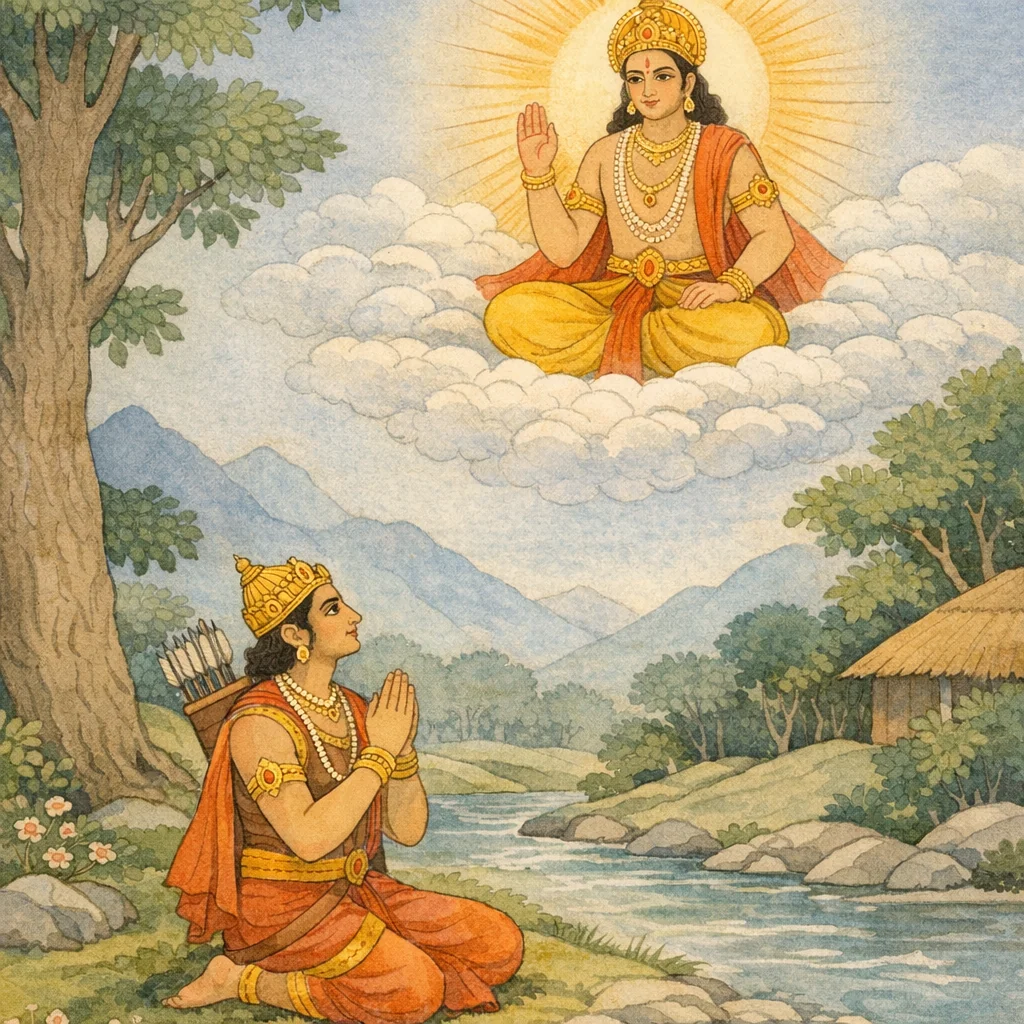
Adhyaya 305
Chapter Arc: वन-प्रवास की पृष्ठभूमि में एक दिव्य संवाद खुलता है—सूर्यदेव अपने पुत्र कर्ण को सावधान करते हैं कि इन्द्र छल से उसके जन्मजात कवच-कुण्डल हरने आएँगे, क्योंकि अर्जुन के हित की रक्षा करनी है। → कर्ण अपनी अटूट भक्ति और कृतज्ञता प्रकट करता है—स्त्री, पुत्र, मित्र, देह से भी अधिक प्रिय उसे ‘गोपते’ सूर्य हैं—पर साथ ही वह दान-धर्म की प्रतिज्ञा से बँधा है: याचक को खाली नहीं लौटाएगा, चाहे याचक स्वयं इन्द्र ही क्यों न हों। सूर्य उसे उपाय बताते हैं—दान तो करो, पर ‘नियम’ रखो: कुण्डल-कवच के बदले इन्द्र से एक अचूक शक्ति (शक्ति-अस्त्र) माँगो, जिससे वह रण में शत्रुओं का संहार कर सके। → निर्णय का शिखर तब आता है जब कर्ण स्पष्ट करता है कि अर्जुन-भय की बात सुनकर भी वह विचलित नहीं—वह अर्जुन-तुल्य वीर को भी रण में जीतने का संकल्प लेता है, और साथ ही सूर्य की आज्ञा के अनुसार इन्द्र को दान देने के लिए ‘शक्ति’ प्राप्त करने की योजना पर दृढ़ हो जाता है। → सूर्यदेव नियमपूर्वक दान की मर्यादा स्थापित कराते हैं—कर्ण इन्द्र को कुण्डल देगा, पर बदले में विजय-हेतु शक्ति लेगा। यह संतुलन कर्ण के दान-धर्म और आत्मरक्षा/रणनीति—दोनों को एक साथ साधता है। सूर्यदेव उपदेश देकर अंतर्धान हो जाते हैं। → कर्ण स्वप्न/संकेत को सत्य मानकर इन्द्र की प्रतीक्षा करने लगता है—अब प्रश्न यह है कि इन्द्र किस रूप में आएँगे, और कर्ण का दान-धर्म उसे किस मूल्य पर शक्ति दिलाएगा।
Shlokas
Verse 1
अऑड आटर (0) है ० द्र्याधेकत्रिशततमो< ध्याय: सूर्य-कर्ण-संवाद, सूर्यकी आज्ञाके अनुसार कर्णका इन्द्रसे शक्ति लेकर ही उन्हें कुण्डल और कवच देनेका निश्चय कर्ण उवाच भगवन्तमहं भक्तो यथा मां वेत्थ गोपते । तथा परमतिग्मांशो नास्त्यदेयं कथंचन,कर्णने कहा--सूर्यदेव! मैं आपका अनन्य भक्त हूँ, जैसा कि आप भी मुझे जानते हैं। प्रचण्डरश्मे! आपके लिये किसी प्रकार कुछ भी अदेय नहीं है
Karna said: “O revered Lord, I am your devoted worshipper, as you yourself know me, O Lord of the cows (protector of beings). Therefore, O supremely fierce-rayed one, for your sake there is nothing whatsoever that I would refuse to give.”
Verse 2
नमे दारा न मे पुत्रा न चात्मा सुहदो नच | तथेष्टा वै सदा भकत्या यथा त्वं गोपते मम,स्त्री, पुत्र, सुहृद् और अपना शरीर भी मुझे वैसा प्रिय नहीं है, जैसे आप हैं। किरणोंके स्वामी सूर्यदेव! सदा आप ही मेरे भक्तिभावके आश्रय हैं
Karna said: “Neither my wives, nor my sons, nor my own body, nor even my friends are as dear to me as you are. O Lord of the rays, Sun-god—ever are you the refuge and object of my devotion.”
Verse 3
इष्टानां च महात्मानो भक्तानां च न संशय: । कुर्वन्ति भक्तिमिष्टां च जानीषे त्वं च भास्कर,प्रभाकर! आप भी जानते ही हैं कि महात्मा पुरुष भी अपने प्रिय भक्तोंपर पूर्ण स्नेह रखते हैं, इसमें संदेह नहीं है
Karna said: “There is no doubt that even great-souled men cherish deep affection for those devotees who are dear to them. They return love with love; you too know this well, O Bhāskara, O Prabhākara (Sun).”
Verse 4
इष्टो भक्तश्न मे कर्णो न चान्यद् दैवतं दिवि | जानीत इति वै कृत्वा भगवानाह मद्धितम्,आपको यह मालूम है कि कर्ण मेरा प्रिय भक्त है और वह स्वर्गके दूसरे किसी भी देवताको (अपने इष्टरूपमें नहीं जानता है, यही समझकर आप मुझे मेरे हितका उपदेश कर रहे हैं
“Karna is dear to me and is my devoted worshipper; he recognizes no other deity in heaven as his chosen Lord. Knowing this, the Blessed One spoke to me counsel intended for my welfare.”
Verse 5
भूयश्व शिरसा याचे प्रसाद्य च पुन: पुन: । इति ब्रवीमि तिग्मांशो त्वं तु मे क्षन्तुमहसि,प्रचण्ड किरणोंवाले देव! मैं पुन. आपके चरणोंमें मस्तक रखकर, आपको प्रसन्न करके बारंबार क्षमायाचना करता हूँ। इस समय मैं जो कुछ कहता हूँ, उसके लिये आप मुझे क्षमा करें
Again and again I bow my head and beg—seeking to win your favor and repeatedly asking pardon. Thus I speak, O sharp-rayed one; you should forgive me for what I am about to say. The verse frames the speaker’s words as morally risky or potentially offensive, and therefore preceded by humility, reverence, and a request for forbearance.
Verse 6
बिभेमि न तथा मृत्योर्यथा बिभ्येडनृतादहम् । विशेषेण द्विजातीनां सर्वेषां सर्वदा सताम्
Karna said: “I do not fear death as much as I fear falsehood. Above all, I am especially afraid of speaking untruth before the ever-righteous twice-born—those who are virtuous at all times.”
Verse 7
यच्च मामात्थ देव त्वं पाण्डवं फाल्गुनं प्रति,देव! आपने पाण्डुनन्दन अर्जुनसे जो मेरे लिये डरकी बात बतायी है, उसके लिये आपके मनमें कोई दुःख और संताप नहीं होना चाहिये। भास्कर! मैं कार्तवीर्य अर्जुनके समान पराक्रमी अर्जुनको युद्धमें अवश्य जीत लूँगा
Karna said: “O divine one, as for what you have told me concerning the Pandava Phalguna (Arjuna)—the warning that I should fear him—let there be no sorrow or anguish in your mind on my account. O Sun-god, I will surely defeat in battle that Arjuna, whose prowess is like that of Kartavīrya Arjuna.”
Verse 8
व्येतु संतापजं दुःखं तव भास्कर मानसम् | अर्जुनप्रतिमं चैव विजेष्यामि रणेडर्जुनम्,देव! आपने पाण्डुनन्दन अर्जुनसे जो मेरे लिये डरकी बात बतायी है, उसके लिये आपके मनमें कोई दुःख और संताप नहीं होना चाहिये। भास्कर! मैं कार्तवीर्य अर्जुनके समान पराक्रमी अर्जुनको युद्धमें अवश्य जीत लूँगा
Karna said: “O Bhāskara, let the sorrow born of anxiety depart from your mind. O divine one, I shall surely defeat in battle that Arjuna—mighty like Arjuna (Kārtavīrya)—despite the fear you have expressed on my behalf.”
Verse 9
तवापि विदितं देव ममाप्यस्त्रबलं महत् । जामदग्न्यादुपात्तं यत्र तथा द्रोणान्महात्मन:,देव! मेरे पास भी अस्त्रोंका जो महान् बल है। इसे आप भी जानते हैं। मैंने जमदग्निनन्दन परशुराम तथा महात्मा द्रोणाचार्यसे अस्त्रविद्या सीखी है
Karna said: “O lord, you too know well the great power of weapons that I possess. It is a mastery I acquired from Jamadagni’s son, Paraśurāma, and likewise from the noble Droṇa.” In this exchange, Karna asserts his martial legitimacy and training lineage, appealing to recognized authorities in arms to justify confidence in his prowess and standing in the coming conflict.
Verse 10
इदं त्वमनुजानीहि सुरश्रेष्ठ ब्रतं मम । भिक्षते वज्िणे दद्यामपि जीवितमात्मन:,सुरश्रेष्ठ! यह जो मेरा दान देनेका व्रत है, उसके लिये आप भी मुझे आज्ञा दीजिये, जिससे मैं याचक बनकर आये हुए इन्द्रको अपने प्राणतक दे सकूँ
Karna said: “O best of the gods, grant me permission for this vow of mine. If the thunderbolt-bearer comes as a supplicant, I would give him even my own life.” Here Karna frames generosity as a binding ethical commitment: his identity and honor rest on never refusing a petitioner, even when the request threatens his survival and the balance of power in the coming war.
Verse 11
सूर्य उवाच यदि तात ददास्येते वज्िणे कुण्डले शुभे । त्वमप्येनमथो ब्रूया विजयार्थ महाबलम्
Sūrya said: “If, dear son, you will give these auspicious earrings to Vajrin (Indra), then you too should address him—mighty as he is—with the request that it be for the sake of victory.”
Verse 12
अवध्यो हासि भूतानां कुण्डला भ्यां समन्वित:,कर्ण! इन दोनों कुण्डलोंसे युक्त रहनेपर तुम सभी प्राणियोंके लिये अवध्य बने रहोगे। वत्स! दानवसूदन इन्द्र युद्धमें अर्जुनके द्वारा तुम्हारा विनाश चाहते हैं। इसीलिये वे तुम्हारे दोनों कुण्डलोंको हर लेनेकी इच्छा करते हैं
Verse 13
अर्जुनेन विनाशं हि तव दानवसूदन: । प्रार्थयानो रणे वत्स कुण्डले ते जिहीर्षति,कर्ण! इन दोनों कुण्डलोंसे युक्त रहनेपर तुम सभी प्राणियोंके लिये अवध्य बने रहोगे। वत्स! दानवसूदन इन्द्र युद्धमें अर्जुनके द्वारा तुम्हारा विनाश चाहते हैं। इसीलिये वे तुम्हारे दोनों कुण्डलोंको हर लेनेकी इच्छा करते हैं
Sūrya said: “O Karṇa, my dear child—so long as you remain adorned with these two earrings, you will be invulnerable to all beings. But Dānavasūdana (Indra), seeking your destruction in battle through Arjuna, desires to take away your earrings.”
Verse 14
स त्वमप्येनमाराध्य सूनृताभि: पुनः पुनः । अभ्यर्थयेथा देवेशममोघार्थ पुरन्दरम्,अतः तुम भी उनकी आराधना करके बारंबार मीठे वचन बोलकर देवेश्वर इन्द्रसे किसी अमोघ अस्त्रके लिये प्रार्थना करना
“So you too should worship him, and again and again address him with gentle, truthful words. Then you should petition the Lord of the gods—Purandara (Indra)—for an unfailing, effective divine weapon.”
Verse 15
अमोधां देहि मे शक्तिममित्रविनिबर्हिणीम् । दास्यामि ते सहस्राक्ष कुण्डले वर्म चोत्तमम्,तुम उनसे कहना--'सहस्राक्ष! मैं आपको अपने शरीरका उत्तम कवच और दोनों कुण्डल दे दूँगा, परंतु आप भी मुझे अपनी वह अमोघ शक्ति प्रदान कीजिये, जो शत्रुओंका संहार करनेवाली है'
Sūrya said: “Grant me your unfailing weapon-power, O Sahasrākṣa, the force that crushes enemies. In return, I shall give you my two earrings and my finest body-armor.” In this exchange, the narrative foregrounds a hard ethical tension: even divine gifts and protections become negotiable when the demands of conflict and the calculus of victory press upon one’s sense of duty.
Verse 16
इत्येव नियमेन त्वं दद्या: शक्राय कुण्डले । तया त्वं कर्ण संग्रामे हनिष्यसि रणे रिपून्,इसी शर्तके साथ तुम इन्द्रको अपने कुण्डल देना। कर्ण! उस शक्तिके द्वारा तुम युद्धमें अपने शत्रुओंको मार डालोगे
“Only on this condition should you give your earrings to Śakra (Indra). With that divine power, O Karṇa, you will be able in battle to strike down your enemies in the fight.”
Verse 17
नाहत्वा हि महाबाहो शत्रूनेति करं पुनः । सा शक्तिर्देवराजस्य शतशो5थ सहस्रश:,महाबाहो! देवराज इन्द्रकी वह शक्ति युद्धमें सैकड़ों-हजारों शत्रुओंका वध किये बिना पुनः हाथमें लौटकर नहीं आती
Sūrya said: “O mighty-armed one, that spear does not return again to the hand without first slaying enemies. Such is the weapon of the king of the gods: it comes back only after it has struck down foes—by the hundreds, even by the thousands.”
Verse 18
(कर्णस्तु बुबुधे राजन् स्वप्रान्ते प्रवदन्निव । प्रतिबुद्धस्तु राधेय: स्वप्न॑ संचिन्त्य भारत ।। चकार निश्चयं राजन् शक्त्यर्थ वदतां वर: । यदि मामिन्द्र आयाति कुण्डलार्थ परंतप: ।। शक््त्या तस्मै प्रदास्यामि कुण्डले वर्म चैव ह । स कृत्वा प्रातरुत्थाय कार्याणि भरतर्षभ ।। ब्राह्मणान् वाचयित्वाथ यथाकार्यमुपाक्रमत् | विधिना राजशार्दूल मुहूर्तमजपत् ततः ।।) राजन! स्वप्नके अन्तमें कुछ बोलता हुआ-सा कर्ण जाग उठा। भारत! जगनेपर वक्ताओंमें श्रेष्ठ राधानन्दन कर्णने स्वप्नका चिन्तन करके शक्तिके लिये इस प्रकार निश्चय किया, “यदि शत्रुओंको संताप देनेवाले इन्द्र कुण्डलके लिये मेरे पास आ रहे हैं तो मैं शक्ति लेकर ही उन्हें कुण्डल और कवच दूँगा।' भरतश्रेष्ठ! ऐसा निश्चय करके कर्ण प्रातःकाल उठा और आवश्यक कार्य करके ब्राह्मणोंसे स्वस्तिवाचन कराकर यथासमय संध्योपासन आदि कार्य करने लगा। नृपश्रेष्ठ] फिर उसने विधिपूर्वक दो घड़ीतक जप किया ।। ततः सूर्याय जप्यान्ते कर्ण: स्वप्न न्यवेदयत्,तदनन्तर जपके अनन््तमें कर्णने भगवान् सूर्यसे स्वप्नका वृत्तान्त निवेदन किया। उसने जो कुछ देखा था तथा रातमें उन दोनोंमें जैसी बातें हुई थीं, उन सबको कर्णने क्रमश: उनसे ठीक-ठीक कह सुनाया
Vaiśaṃpāyana said: “O King, Karṇa awoke as though speaking at the end of a dream. When he had fully roused himself, Rādheya—foremost among speakers—reflected on the dream and formed a resolve concerning the Śakti: ‘If Indra, tormentor of foes, comes to me seeking my earrings, then only after securing the Śakti will I give him the earrings and the armor.’ Having made this decision, O bull among the Bharatas, Karṇa rose at dawn, completed his necessary duties, had the brāhmaṇas recite auspicious benedictions, and began his rites at the proper time. Then, O tiger among kings, he performed japa according to rule for a muhūrta; and at the end of his recitation to Sūrya, Karṇa reported the dream to the Sun.”
Verse 19
यथादृष्टं यथातत्त्वं यथोक्तमुभयोर्निशि । तत् सर्वमानुपूर्व्यण शशंसास्मै वृषस्तदा,तदनन्तर जपके अनन््तमें कर्णने भगवान् सूर्यसे स्वप्नका वृत्तान्त निवेदन किया। उसने जो कुछ देखा था तथा रातमें उन दोनोंमें जैसी बातें हुई थीं, उन सबको कर्णने क्रमश: उनसे ठीक-ठीक कह सुनाया
Vaiśampāyana said: Then Vṛṣa (Karna) related to him, in proper sequence, everything exactly as it had been seen, as it truly was, and as it had been spoken between the two of them during the night—thus faithfully reporting the entire account.
Verse 20
तच्छुत्वा भगवान् देवो भानु: स्वभनुसूदन: । उवाच त॑ तथेत्येव कर्ण सूर्य: स्मयन्निव,राहुका संहार करनेवाले भगवान् सूर्यदेवने यह सब सुनकर कर्णसे मुसकराते हुए-से कहा--“तुमने जो कुछ देखा है, वह सब ठीक है”
Hearing all that, the blessed god Bhānu—the Sun, the slayer of (the demon) Svarbhānu—addressed Karṇa with a faint, knowing smile, saying, “So be it; what you have perceived is indeed correct.”
Verse 21
ततस्तत्त्वमिति ज्ञात्वा राधेय: परवीरहा । शक्तिमेवाभिकाड्क्षन् वै वासवं प्रत्यपालयत्
Vaiśaṃpāyana said: Then, having understood the truth of the matter, Rādheya—slayer of enemy-heroes—continued to wait for Vāsava, intent only on obtaining the spear. The verse highlights a warrior’s calculated patience: once he recognizes the reality behind events, he restrains immediate action and fixes his will on a single decisive weapon, even as the moral weight of such single-minded ambition looms in the background.
Verse 66
प्रदाने जीवितस्यापि न मे<त्रास्ति विचारणा । मैं मृत्युसे भी उतना नहीं डरता जितना झूठसे डरता हूँ। विशेषत: सदा समस्त सज्जन ब्राह्मगोंको उनके माँगनेपर अपने प्राण देनेमें भी मुझे कोई सोच-विचार नहीं हो सकता
Karna said: “Even when it comes to giving away my very life, there is no room in me for hesitation here. I fear falsehood more than death; therefore, if worthy brāhmaṇas ask, I cannot deliberate—even my life is to be given.”
Verse 116
नियमेन प्रदद्यां ते कुण्डले वै शतक्रतो । सूर्य बोले--तात! यदि तुम इन्द्रको ये दोनों सुन्दर कुण्डल दे रहे हो तो तुम भी उन महाबली इन्द्रसे अपनी विजयके लिये कोई अस्त्र माँग लेना और उनसे स्पष्ट कह देना कि देवराज! मैं एक शर्तके साथ ये दोनों कुण्डल आपको दे सकता हूँ
Sūrya said: “O son, if you are giving these two beautiful earrings to Indra, the lord of the gods, then you should also, in a proper and binding manner, ask that mighty Indra for a weapon to secure your victory. Tell him plainly: ‘O Devarāja, I can give you these two earrings only on this condition.’”
Verse 176
वैशम्पायन उवाच एवमुक््त्वा सहस्रांशु: सहसान्तरधीयत । वैशम्पायनजी कहते हैं--जनमेजय! ऐसा कहकर सूर्यदेव सहसा वहीं अन्तर्धान हो गये
Vaiśampāyana said: Having spoken thus, Sahasrāṃśu (the Sun-god) suddenly vanished from that very place. The narration underscores the authority of a divine utterance—once the counsel or boon is delivered, the deity withdraws, leaving the human recipient to act responsibly upon what has been revealed.
Verse 302
तब शत्रुओंका संहार करनेवाला राधानन्दन कर्ण उस स्वप्नकी घटनाको यथार्थ जानकर शक्ति प्राप्त करनेकी ही अभिलाषा ले इन्द्रकी प्रतीक्षा करने लगा ।। इति श्रीमहाभारते वनपर्वणि कुण्डलाहरणपर्वणि सूर्यकर्णसंवादे दयधिकत्रिशततमो<ध्याय:
Then Karna, the son of Radha and a slayer of foes, understood the dream’s event as a true portent. With his mind fixed solely on gaining the divine weapon (śakti), he began to wait for Indra’s arrival. Thus ends, in the Mahabharata’s Vana Parva, in the section on the taking of the earrings, within the dialogue between Surya and Karna, Chapter 305.