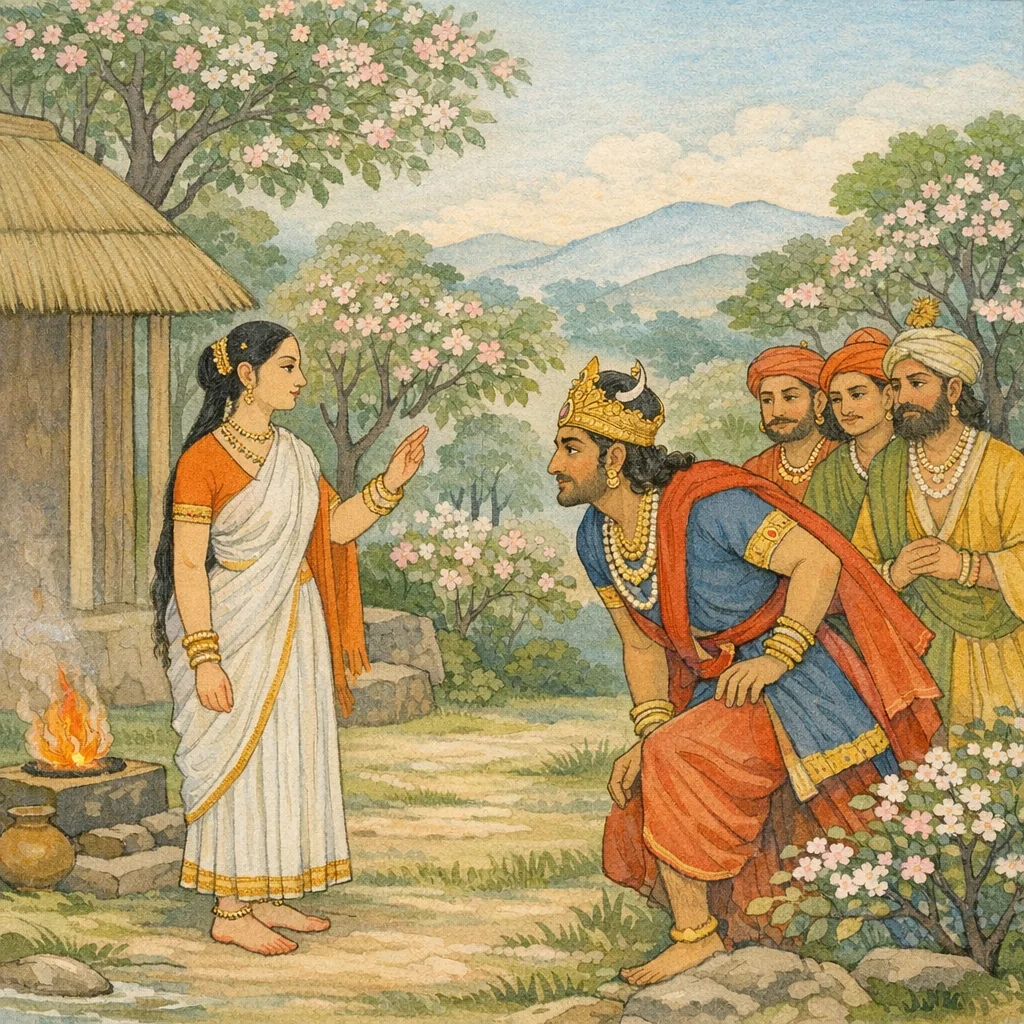
Adhyaya 268
अङ्गददूतवाक्यं लङ्काप्राकारभेदनं च (Angada’s Embassy and the Breach of Laṅkā’s Ramparts)
Upa-parva: Rāmopākhyāna (The Rāma Narrative as an Exemplum)
Mārkaṇḍeya describes the operational setting: Rāma encamps his forces in a resource-rich forest while Rāvaṇa institutes fortified preparations in Laṅkā, detailing engineered defenses—deep moats with aquatic threats, multiple perimeter trenches, reinforced walls and gate-structures, and projectile engines. Aṅgada approaches the gate as an envoy, enters the hostile court-space amid large assemblies, and delivers Rāma’s message: restitution of Jānakī (Sītā), critique of misrule and prior abuses, and a warning that continued wrongdoing will culminate in punitive consequences. Rāvaṇa reacts with anger; attendants attempt to seize Aṅgada, who escapes by forceful movement and returns to report. Thereafter, coordinated action begins: the vānaras press the fortifications, damage pillars and devices, and a mixed engagement unfolds near the ramparts. Rāma and Lakṣmaṇa are portrayed directing targeted strikes against defenders in strong positions. After a successful, advantage-gaining clash, a tactical withdrawal is ordered, indicating disciplined command-and-control rather than uncontrolled pursuit.
Chapter Arc: वैशम्पायन जनमेजय को स्मरण कराते हैं कि कोटिकास्य-आश्रम में द्रौपदी के साथ जिन-जिस राजाओं की भेंट और वार्ता हुई, उनमें एक प्रसंग विशेष उभरता है—सौवीर-नरेश जयद्रथ का आगमन और उसकी दृष्टि का डगमगाना। → कोटिकास्य की बातें सुनकर जयद्रथ शैब्य से द्रौपदी के विषय में पूछता है—उसकी अनुपम शोभा, स्त्रियों में प्रधानता, और यह कि ऐसा सौंदर्य देखकर मन कैसे न मोहित हो। वह द्रौपदी को देखने की इच्छा प्रकट करता है। शैब्य/कोटिकास्य उसे आश्रम की ओर ले जाते हैं; जयद्रथ अपने छह भाइयों सहित सातवाँ बनकर पवित्र आश्रम में प्रवेश करता है, पर भीतर कामना और अधिकार-बोध की छाया बढ़ती जाती है। → आश्रम में जयद्रथ द्रौपदी से संवाद करता है; द्रौपदी उसे अतिथि-धर्म के अनुसार पाद्य-आसन आदि देने को कहती/व्यवस्थित करती है, पर साथ ही स्पष्ट करती है कि वह पाण्डवों की पत्नी है। जब जयद्रथ अपनी इच्छा/प्रलोभन को न्यायोचित ठहराने लगता है, द्रौपदी कठोर वाणी में उसे रोकती है—‘महाबाहो, ऐसा मत कहो; यह न्याय्य नहीं; तुम बुद्धि से नहीं समझ रहे। तुम पाण्डवों और धृतराष्ट्रों की कनिष्ठ बहन दुःशला के पति हो—राजकुलोद्वह होकर पर-स्त्री पर दृष्टि कैसे?’ → द्रौपदी का प्रतिवाद जयद्रथ के प्रस्ताव/दुराशय को धर्म-आधारित सीमा में बाँध देता है—वह उसे उसके कुल, संबंध और मर्यादा का स्मरण कराकर अतिथि-धर्म और स्त्री-धर्म दोनों की रक्षा करती है। संवाद में द्रौपदी की निर्भीकता और नीति-प्रज्ञा स्थापित होती है। → जयद्रथ का मन अभी भी मोहित है; द्रौपदी की फटकार के बाद भी उसके भीतर का अहं और काम शांत होगा या वह मर्यादा तोड़ेगा—यह तनाव अगले प्रसंग की ओर धकेलता है।
Shlokas
Verse 1
वैशम्पायनजी कहते हैं--भारत! पूर्वोक्त प्रकारसे रथपर बैठे हुए उन सब राजाओंके पास जाकर कोटिकास्थने द्रौपदीके साथ उसकी जो-जो बातें हुई थीं, वे सब कह सुनायीं,इस प्रकार श्रीमहाभारत वनपववके अन्तर्गत द्रौपदीहरणपर्वरें जयद्रथद्रौपदीसंवादविषयक दो सौ सरसठवाँ अध्याय पूरा हुआ ॥/ २६७ ॥। (दाक्षिणात्य अधिक पाठके ४ श्लोक मिलाकर कुल २४ श्लोक हैं) #::73:.8 #पड- (0) हि 2 7 अष्टषष्ट्यथिकद्विशततमो< ध्याय: टद्रोपदीका जयद्रथको फटकारना और जयद्रथद्वारा उसका अपहरण वैशम्पायन उवाच सरोषरागोपहतेन बल्गुना सरागनेत्रेण नतोन्नत भ्रुवा । मुखेन विस्फूर्य सुवीरराष्ट्रपं ततोडब्रवीत् त॑ द्रुपदात्मजा पुन:
Vaiśampāyana said: With her voice shaken by anger and passion, her eyes reddened, and her brows alternately lowered and raised, the daughter of Drupada—her face quivering—spoke again to that king of a land of mighty warriors. The scene frames Draupadī’s moral protest: her indignation is not mere emotion, but a forceful assertion of dharma against a ruler’s abuse of power.
Verse 2
कोटिकास्यवच: श्रुत्वा शैब्यं सौवीरको<ब्रवीत् । यदा वाचं व्याहरन्त्यामस्यां मे रमते मनः
Hearing the words of Koṭikāsya, the king of Sauvīra addressed Śaibya: “Whenever she speaks in this manner, my mind takes delight in her words.”
Verse 3
सीमन्तिनीनां मुख्यायां विनिवृत्त: कथं भवान् । एतां दृष्ट्वा स्त्रियो मेडन्या यथा शाखामृगस्त्रिय:
Vaiśampāyana said: “How is it that you have turned back from the foremost among women? On seeing her, the women of the Meḍa country are stirred and drawn after her—like the females of tree-dwelling deer.”
Verse 4
प्रतिभान्ति महाबाहो सत्यमेतद् ब्रवीमि ते । दर्शनादेव हि मनस्तया मे5पहतं भूशम्
Vaiśampāyana said: “O mighty-armed one, these things appear to me clearly; I tell you this truth. Indeed, from the very moment I beheld her, my mind has been utterly struck and overwhelmed by her.”
Verse 5
तां समाचक्ष्व कल्याणीं यदि स्याच्छैब्य मानुषी । कोटिकास्यकी बात सुनकर सौवीरनरेश जयद्रथने उससे कहा--“शैब्य! सुन्दरियोंमें सर्वश्रेष्ठ वह युवती जब तुमसे बातचीत कर रही थी, उस समय मेरा मन उसीमें लगा हुआ था। तुम उसे साथ लिये बिना कैसे लौट आये? महाबाहो! मैं तुमसे यह सच कहता हूँ इसे देखकर मुझे दूसरी स्त्रियाँ ऐसी जान पड़ती हैं मानो बंदरियाँ हों। उसने दर्शनमात्रसे ही मेरे मनको अच्छी तरह हर लिया है। शैब्य! यदि वह मानवी हो तो उस कल्याणीके विषयमें ठीक-ठीक बताओ” ।। २--४ $ ।। कोटिक उवाच एषा वै द्रौपदी कृष्णा राजपुत्री यशस्विनी,तया समेत्य सौवीर सौवीराभिमुखो व्रज । कोटिक बोला--सौवीरनरेश! यह यशस्विनी राजकुमारी ट्रुपदपुत्री कृष्णा ही है, जो पाँचों पाण्डवोंकी अत्यन्त आदरणीया महारानी है। कुन्तीके सभी पुत्र इसे प्यार करते हैं। यह सती-साध्वी देवी अपने पतियोंके लिये बड़े सम्मानकी वस्तु है। तुम उससे मिलकर सौवीरदेशकी राह लो
Koṭika said: “This indeed is Draupadī—Kṛṣṇā, the illustrious princess. Having met with her, O king of Sauvīra, proceed on your way facing toward Sauvīra.” (Implicit in the context: she is the revered queen of the Pāṇḍavas; recognizing her status, one should restrain desire and depart respectfully.)
Verse 6
पज्चानां पाण्डुपुत्राणां महिषी सम्मता भृशम् | सर्वेषां चैव पार्थानां प्रिया बहुमता सती
She is held in very high esteem as the chief queen of the five sons of Pāṇḍu; and indeed, among all the Pārthas she is beloved, greatly honored, and revered as a virtuous woman. The verse underscores the ethical ideal that true regard is grounded not merely in status, but in recognized integrity and faithful conduct.
Verse 7
वैशग्पायन उवाच एवमुक्त: प्रत्युवाच पश्यामि द्रौपदीमिति
Vaiśaṃpāyana said: Thus addressed, he replied, “I see Draupadī.” The line underscores a moment of direct testimony—an ethical pivot where a speaker affirms what he has personally perceived, grounding the narrative in witnessed truth rather than rumor or conjecture.
Verse 8
स प्रविश्याश्रम॑ पुण्यं सिंहगोष्ठ वको यथा,येषां कुशलकामासि ते5पि कच्चिदनामया: । उसने अपने छ: भाइयोंके साथ स्वयं सातवाँ बनकर द्रौपदीके पवित्र आश्रममें प्रवेश किया, मानो कोई भेड़िया सिंहकी माँदमें घुसा हो। वहाँ जाकर उसने द्रौपदीसे इस प्रकार कहा--“वरारोहे! तुम कुशलसे हो न? तुम्हारे पति नीरोग तो हैं न? इनके सिवा और जिन लोगोंको तुम सकुशल देखना चाहती हो, वे सभी स्वस्थ तो हैं न?
Having entered that holy hermitage—like a wolf slipping into a lion’s den—he addressed Draupadī with feigned courtesy: “O fair-hipped lady, are you well? Are your husbands free from illness? And besides them, are all those whom you wish to see safe and thriving also healthy?” The verse underscores how polite speech can mask hostile intent, heightening the ethical tension between outward civility and inward malice.
Verse 9
आत्मना सप्तम: कृष्णामिदं वचनमत्रवीत् । कुशल ते वरारोहे भर्तारस्ते5प्यनामया:
Vaiśaṃpāyana said: Then the seventh (of the speakers), speaking in his own person, addressed Kṛṣṇā with these words: “O fair-hipped lady, are you well? And are your husbands also safe and free from illness?”
Verse 10
द्रौपहुुवाच अपि ते कुशलं राजन् राष्ट्र कोशे बले तथा,द्रौपदी बोली--राजन्! तुम स्वयं सकुशल हो न? तुम्हारे राज्य, खजाना और सैनिक तो कुशलसे हैं न? समृद्धिशाली शिबि, सौवीर, सिन्धु तथा अन्य जो-जो प्रदेश तुम्हारे अधिकारमें आ गये हैं, उन सबकी प्रजाका तुम धर्मपूर्वक पालन तो करते हो न?
Draupadī said: “O King, are you yourself well? And is all well in your realm—your treasury and your military strength too?” Her inquiry frames kingship as a moral trust: the ruler’s personal welfare is inseparable from the orderly condition of the state, its resources, and its protective power, all to be maintained in accordance with dharma.
Verse 11
कच्चिदेक: शिबीनाब्यान् सौवीरान् सह सिन्धुभि: । अनुतिष्ठसि धर्मेण ये चान्ये विजितास्त्वया,द्रौपदी बोली--राजन्! तुम स्वयं सकुशल हो न? तुम्हारे राज्य, खजाना और सैनिक तो कुशलसे हैं न? समृद्धिशाली शिबि, सौवीर, सिन्धु तथा अन्य जो-जो प्रदेश तुम्हारे अधिकारमें आ गये हैं, उन सबकी प्रजाका तुम धर्मपूर्वक पालन तो करते हो न?
Vaiśaṃpāyana said: “Are you, standing firm and undivided in purpose, governing in accordance with dharma the Śibi people, the Sauvīras together with the Sindhus, and all other lands that have been conquered by you?” The question underscores the ethical duty of a ruler: conquest is not validated by power alone, but by righteous protection and just administration of the newly acquired subjects.
Verse 12
कौरव्य: कुशली राजा कुन्तीपुत्रो युधिष्ठिर: । अहं च भ्रातरश्नास्य यांश्वान्यान् परिपृच्छसि
Vaiśaṃpāyana said: “O scion of the Kurus, King Yudhiṣṭhira, the son of Kuntī, is well. I too, and his brothers, and all the others about whom you inquire, are safe.”
Verse 13
जयद्रथ उवाच एहि मे रथमारोह सुखमाप्न॒हि केवलम्
Jayadratha said, “Come—mount my chariot. By doing so, you will attain comfort alone (without hardship).” In context, this is a seductive assurance meant to entice compliance by promising immediate ease, contrasting with the dharmic demand for restraint and respect toward another’s autonomy.
Verse 14
गतश्रीकांक्ष्युतान् राज्यात् कृपणान् गतचेतस: । अरण्यवासिन: पार्थान् नानुरोदधुं त्वमहसि
Jayadratha said: “You ought not to plead with the Pārthas—men who have fallen from royal fortune, been driven from their kingdom, become wretched and dispirited, and now live in the forest.”
Verse 15
नैव प्राज्ञा गतश्रीकं भर्तारमुपयुञ्जते । युञ्जानमनुयुञ्जीत न श्रिय: संक्षये वसेत्
Jayadratha said: “A wise woman does not attach herself to a husband whose fortune has departed. Rather, she should align herself with one who is actively striving; she should not remain where prosperity is in decline.”
Verse 16
जयद्रथने कहा--आओ चलो, मेरे रथपर बैठो और अखण्ड सुखका उपभोग करो। अब पाण्डवोंके पास धन नहीं रहा। उनका राज्य छीन लिया गया। वे दीन और उत्साहहीन हो गये हैं। अब इन वनवासी कुन्तीपुत्रोंका अनुसरण करना तुम्हें शोभा नहीं देता। विदुषी स्त्रियाँ निर्धन पतिकी उपासना नहीं करती हैं। स्वामीके पास जबतक लक्ष्मी रहे, तभीतक उसके साथ रहना चाहिये। जब उसकी सम्पत्ति नष्ट हो जाय, तो वहाँ कदापि न रहे ।। १३ -7१५ || श्रिया विहीना राष्ट्राच्च विनष्टा: शाश्वती: समा: । अलं ते पाण्डुपुत्राणां भक्त्या क्लेशमुपासितुम्,पाण्डव सदाके लिये श्रीहीन तथा राज्यश्रष्ट हो गये हैं। अब तुम्हें पाण्डवोंके प्रति भक्ति रखकर कष्ट भोगनेकी आवश्यकता नहीं है
Jayadratha said: “Come—mount my chariot and enjoy unbroken pleasure. The Pāṇḍavas have no wealth now; their kingdom has been taken away, and they have become wretched and dispirited. It does not befit you to follow these sons of Kuntī who live as forest-dwellers. Wise women, he claims, do not serve a husband who is destitute: one should remain with a lord only so long as Fortune stays with him; when his prosperity is destroyed, one should not stay there at all. The Pāṇḍu princes, he adds, have been bereft of royal splendor and sovereignty for many years—there is no need for you to endure hardship out of devotion to them.”
Verse 17
भार्या मे भव सुश्रोणि त्यजैनान् सुखमाप्न॒हि । अखिलान् सिन्धुसौवीरानाप्ठुहि त्वं मया सह,सुन्दरि! तुम मेरी भार्या बन जाओ। इन पाण्डवोंको छोड़ दो और मेरे साथ रहकर सुख भोगो। मेरे साथ रहनेसे तुम्हें सम्पूर्ण सिन्धु और सौवीरदेशका राज्य प्राप्त होगा, तुम महारानी बनोगी
Jayadratha said: “Become my wife, O fair-hipped lady. Abandon these Pāṇḍavas and attain happiness. Living with me, O beautiful one, you will obtain the entire realms of Sindhu and Sauvīra and enjoy the status of a queen.” In the narrative, this is a coercive, desire-driven proposal that violates the ethical boundaries of marriage and consent, setting Jayadratha in opposition to dharma and foreshadowing the consequences of abducting Draupadī.
Verse 18
वैशम्पायन उवाच इत्युक्ता सिन्धुराजेन वाक््यं हृदयकम्पनम् | कृष्णा तस्मादपाक्रामद् देशात् सभ्रुकुटीमुखी,वैशम्पायनजी कहते हैं--जनमेजय! सिन्धुराज जयद्रथके मुखसे यह हृदय कँपा देनेवाली बात सुनकर ट्रुपदकुमारी कृष्णा उस स्थानसे दूर हट गयी। उसके मुखपर रोष छा गया और उसकी भौंहें तन गयीं
Vaiśampāyana said: When she heard from the Sindhu king those words that made the heart tremble, Kṛṣṇā (Draupadī) withdrew from that place. Her face tightened with anger, her brows drawn together—signaling indignation at the affront and the moral danger implicit in his speech.
Verse 19
अवमत्यास्य तद् वाक्यमाक्षिप्य च सुमध्यमा । मैवमित्यब्रवीत् कृष्णा लज्जस्वेति च सैन्धव,उसके इस प्रस्तावका तिरस्कार करके सुन्दरी द्रौपदीने उसे कड़ी फटकार सुनायी और बोली--'खबरदार, फिर कभी ऐसी बात मुखसे मत निकालना। सिन्धुराज! तुम्हें लज्जा आनी चाहिये थी
Verse 20
सा काड्क्षमाणा भर्तृणामुपयातमनिन्दिता । विलोभयामास पर वाक्यैर्वाक्यानि युड्जती,पतिव्रता द्रौपदी चाहती थी कि मेरे पति अभी यहाँ आ जायँ। अत: वह जयद्रथसे वाद- विवाद करती हुई उसे बातोंमें फँसाये रखनेकी चेष्टा करने लगी
Draupadī, the blameless and devoted wife, longing for her husbands to arrive, began to keep the other man engaged—stringing words against words—using persuasive speech so as to detain him. The scene underscores her steadfast fidelity and quick moral intelligence: she seeks protection without surrendering to fear, using speech as a means to uphold dharma in a moment of danger.
Verse 63
तया समेत्य सौवीर सौवीराभिमुखो व्रज । कोटिक बोला--सौवीरनरेश! यह यशस्विनी राजकुमारी ट्रुपदपुत्री कृष्णा ही है, जो पाँचों पाण्डवोंकी अत्यन्त आदरणीया महारानी है। कुन्तीके सभी पुत्र इसे प्यार करते हैं। यह सती-साध्वी देवी अपने पतियोंके लिये बड़े सम्मानकी वस्तु है। तुम उससे मिलकर सौवीरदेशकी राह लो
Having met with her, O king of Sauvīra, proceed facing toward Sauvīra—take the road to your own country after paying her due regard. The instruction underscores proper conduct: one should honor a virtuous and revered lady—especially one held in esteem by the righteous—before continuing one’s journey.
Verse 76
पति: सौवीरसिन्धूनां दुष्टभावो जयद्रथ: । वैशम्पायनजी कहते हैं--राजन्! कोटिकास्यके ऐसा कहनेपर सौवीर और सिन्धु आदि देशोंके स्वामी जयद्रथने मनमें दुर्भावना लेकर उसे उत्तर दिया--'अच्छा, मैं भी द्रौपदीसे मिल लेता हूँ”
Vaiśampāyana said: Jayadratha, the ruler of the Sauvīras and the Sindhus, harbored a wicked intention. In response, he spoke with corrupt resolve—implying that he too would seek an illicit encounter with Draupadī. The verse highlights how lust and malice distort judgment and lead a king away from dharma.
Verse 93
येषां कुशलकामासि ते5पि कच्चिदनामया: । उसने अपने छ: भाइयोंके साथ स्वयं सातवाँ बनकर द्रौपदीके पवित्र आश्रममें प्रवेश किया, मानो कोई भेड़िया सिंहकी माँदमें घुसा हो। वहाँ जाकर उसने द्रौपदीसे इस प्रकार कहा--“वरारोहे! तुम कुशलसे हो न? तुम्हारे पति नीरोग तो हैं न? इनके सिवा और जिन लोगोंको तुम सकुशल देखना चाहती हो, वे सभी स्वस्थ तो हैं न?
Vaiśaṃpāyana said: “Are those for whose welfare you are concerned also free from illness and safe?” (In the narrative context, the intruder enters Draupadī’s sacred hermitage with his six brothers—making himself the seventh—like a wolf slipping into a lion’s den, and addresses Draupadī with feigned courtesy: asking after her well-being, the health of her husbands, and the safety of all others she wishes to see secure.)
Verse 123
पाद्य॑ प्रतिगृहाणेदमासनं च नृपात्मज । मेरे पति कुरुकुलरत्न कुन्तीकुमार राजा युधिष्ठिर सकुशल हैं। मैं, उनके चारों भाई तथा अन्य जिन लोगोंके विषयमें तुम पूछ रहे हो, वे सब कुशलसे हैं। राजकुमार! यह पैर धोनेके लिये जल है, इसे ग्रहण करो और यह आसन है, इसपर बैठो
Vaiśaṃpāyana said: “Prince, accept this water for washing your feet, and accept this seat. My husband—Yudhiṣṭhira, the Kuntī-born king, jewel of the Kuru line—is safe and well. I too, his four brothers, and all the others about whom you ask are likewise in good health. Take this water for the washing of your feet, and sit here upon this seat.”
Verse 267
(द्रौपदु॒वाच नैवं वद महाबाहो न्याय्य॑ं त्वं न च बुध्यसे ।। पाण्डूनां धार्तराष्ट्राणां स््वसा चैव कनीयसी । दुःशला नाम तस्यास्त्वं भर्ता राजकुलोद्वह ।। मम भ्राता च न्याय्येन त्वया रक्ष्या महारथ । धर्मिष्ठानां कुले जातो न धर्म त्वमवेक्षसे ।। द्रौपदी बोली--महाबाहो! ऐसी पापकी बात न बोलो। कौन-सा कार्य धर्मके अनुकूल और न्यायसंगत है, इसका तुम्हें ज्ञान नहीं है। तुम धृतराष्ट्रपुत्रों तथा पाण्डवोंकी छोटी बहन दुःशलाके पति हो। महारथी राजकुमार! इस नातेसे न््यायतः तुम मेरे भाई हो; अतः तुम्हें मेरी रक्षा करनी चाहिये। तुम्हारा जन्म तो धर्मात्माओंके कुलमें हुआ है, परंतु तुम्हारी दृष्टि धर्मकी ओर नहीं है ।। वैशम्पायन उवाच इत्युक्त: सिन्धुराजो5थ वाक्यमुत्तरमब्रवीत् | वैशम्पायनजी कहते हैं--द्रौपदीके ऐसा कहनेपर सिन्धुराज जयद्रथने उसे इस प्रकार उत्तर दिया। जयद्रथ उवाच रज्ञां धर्म न जानीषे स्त्रियो रत्नानि चैव हि । साधारणानि लोके5स्मिन् प्रवदन्ति मनीषिण: ।।) जयद्रथ बोला--कृष्णे! तुम राजाओंका धर्म नहीं जानती। मनीषी पुरुषोंका कथन है कि इस संसारमें स्त्रियाँ तथा रत्न सर्वसाधारणकी वस्तुएँ हैं ।। इति श्रीमहाभारते वनपर्वणि द्रौपदीहरणपर्वणि जयद्रथद्रौपदीसंवादे सप्तषष्ट्यधिकद्धिशततमो<5 ध्याय:
Jayadratha said: “Kṛṣṇā (Draupadī), you do not understand the dharma of kings. For the wise declare that in this world women and jewels are ‘common’—objects open to appropriation.” (Within the narrative, this is Jayadratha’s unethical rebuttal to Draupadī’s appeal to kinship and protection: he attempts to justify abduction by invoking a corrupt, self-serving notion of ‘royal custom,’ directly contradicting the protective duty central to kṣatriya-dharma.)
Frequently Asked Questions
The tension lies between diplomatic restraint (honoring envoy procedure and offering a path to restitution) and the necessity of coercive enforcement when the offender rejects norms, escalates hostility, and persists in unlawful possession.
Legitimate action is shown as sequential: articulate the grievance, offer correction, and only then employ organized force—paired with disciplined tactics (reporting, coordination, and withdrawal) rather than impulsive violence.
No explicit phalaśruti appears in the provided chapter unit; its function is primarily exemplum and strategic-ethical narration within Mārkaṇḍeya’s embedded account.