Adhyaya 246
मुद्गलोपाख्यानम् — व्रीहिद्रोणदानं, दुर्वाससः परीक्षा, स्वर्गगुणप्रश्नः (Mudgala Episode: Rice-measure Charity, Durvāsas’ Test, Inquiry on Heaven)
Upa-parva: Mudgala-ākhyāna (Atithi-dharma and Dāna-śuddhi Episode)
Yudhiṣṭhira asks how the “vrīhi-droṇa” (a measured quantity of rice) was relinquished by a great soul, to whom it was given, and by what proper procedure. Vyāsa narrates Mudgala, a dharmic ascetic at Kurukṣetra living by śiloñcha/ūñcha (gleaning), maintaining a household while practicing austerity and hospitality. Mudgala performs darśa and paurṇamāsa observances and sustains himself from remnants after offerings and guests. His rice-store astonishingly increases through repeated guest-encounters, framed as the moral economy of non-envious giving. Indra is said to accept a share at each ritual interval. Durvāsas arrives in an erratic, harsh manner, declaring hunger; Mudgala welcomes him with water and food and offers his hard-earned meal with full faith. Durvāsas consumes everything, smears himself with leftovers, and departs; he returns repeatedly (six times), each time consuming all, while Mudgala remains free of anger, envy, humiliation, or agitation. Observing Mudgala’s unblemished mind, Durvāsas praises him as unparalleled in generosity and self-mastery, enumerating virtues such as endurance, sense-control, truth, compassion, and calm. A divine messenger arrives with a celestial vehicle, inviting Mudgala to ascend bodily to heaven earned by deeds. Mudgala, however, requests an informed account of the qualities, practices, pleasures, and defects of heaven, asking the messenger to speak truthfully so he may decide accordingly.
Chapter Arc: राजन्! केवल चार पाण्डव रणभूमि में डटे हैं, और उनके सामने सहस्रों गन्धर्व—अद्भुत असमान युद्ध का उद्घोष होता है। → गन्धर्व शत-शत करके टूट पड़ते हैं; कर्ण और धार्तराष्ट्रों के रथ छिन्न-भिन्न किए जा चुके हैं, और अब वही प्रचण्ड वेग पाण्डवों की ओर मुड़ता है। पाण्डव शरवर्षा से प्रत्याघात करते हैं, पर गन्धर्वों की संख्या और मायावी गति भय बढ़ाती है। → अर्जुन क्रोध में दिव्य महास्त्रों का उपक्रम करता है—उड़ते गन्धर्वों को शरजाल से रोकता है, और अदृश्य होकर प्रहार करने वालों को भी मन्त्र-प्रयुक्त दिव्यास्त्रों से बेध देता है। → अर्जुन के दिव्यास्त्रों के सामने गन्धर्वों की गति रुकती है; पाण्डवों का प्रतिरोध स्थिर हो जाता है और गन्धर्व-बल का उन्माद टूटने लगता है। → गन्धर्व-पराभव की दिशा स्पष्ट होते हुए भी, यह प्रश्न शेष रहता है कि इस संघर्ष का परिणाम कौरव-पक्ष (विशेषतः दुर्योधन-कर्ण) के मान-अपमान और आगे के वैर को किस रूप में भड़काएगा।
Shlokas
Verse 1
इस प्रकार श्रीमह्ााभारत वनपर्वके अन्तर्गत घोषयात्रापर्वमें पाण्डव-यन्धर्वयुद्धाविषयक दो सौ चौवालीसवाँ अध्याय पूरा हुआ ॥/ २४४ ॥। हि >> आय न () आज आप पज्चचत्वारिशर्दाधिकद्विशततमो< ध्याय: पाण्डवोंके द्वारा गन्धवोकी पराजय वैशम्पायन उवाच ततो दिव्यास्त्रसम्पन्ना गन्धर्वा हेममालिन: । विसृजन्त: शरान् दीप्तान् समन्तात् पर्यवारयन्,वैशम्पायनजी कहते हैं--जनमेजय! तदनन्तर दिव्यास्त्रोंसे सम्पन्न सुवर्णमालाधारी गन्धर्वोने तेजोमय बाणोंकी वर्षा करते हुए चारों ओरसे पाण्डवोंको घेर लिया
Vaiśampāyana said: Then the Gandharvas, equipped with celestial weapons and adorned with golden garlands, began releasing blazing arrows and surrounded the Pāṇḍavas on all sides. The scene signals a sudden reversal of advantage: prowess and confidence must yield to vigilance and restraint when confronted by opponents possessing superior, divinely empowered force.
Verse 2
चत्वार: पाण्डवा वीरा गन्धर्वाश्षन सहस्रश: । रणे संन्यपतन् राज॑स्तदद्भुतमिवाभवत्,राजन! वीर पाण्डव केवल चार थे, परंतु उस रणभूमिमें हजारों गन्धर्व उनपर एक साथ टूट पड़े थे। यह एक अद्भुत-सी बात थी
Vaiśampāyana said: “O King, the four heroic Pāṇḍavas were confronted in battle by Gandharvas in their thousands, who rushed upon them all at once. It seemed a wondrous and astonishing sight.”
Verse 3
यथा कर्णस्य च रथो धार्तराष्ट्रस्य चो भयो: । गन्धर्व: शतशश्खछिन्नौ तथा तेषां प्रचक्रिरे,गन्धरवोने जैसे कर्ण तथा दुर्योधन दोनोंके रथोंको छिन्न-भिन्न करके उनके सैकड़ों टुकड़े कर दिये थे, उसी प्रकार वे पाण्डवोंके रथोंको भी टूक-टूक कर देनेकी चेष्टामें लग गये
Verse 4
तान् समापततो राजन् गन्धर्वाञ्छतशो रणे | प्रत्यगृह्नन् नरव्याप्रा: शरवर्षैरनेकश:,राजन्! रणभूमिमें सैकड़ों गन्धरवॉकोी अपने ऊपर आक्रमण करते देख नरश्रेष्ठ पाण्डवोंने बार-बार बाणोंकी झड़ी लगाकर उन सबको रोक दिया
Vaiśampāyana said: “O King, as hundreds of Gandharvas rushed forward in battle, the foremost of men (the Pāṇḍavas) checked their assault again and again, showering them with countless volleys of arrows.”
Verse 5
ते कीर्यमाणा: खगमा: शरवर्षै: समन्तत: । न शेकुः पाण्डुपुत्राणां समीपे परिवर्तितुम्,सब ओरसे बाणोंकी वर्षाका लक्ष्य होनेके कारण वे आकाशचारी गन्धर्व पाण्डवोंके समीप जानेका साहस न कर सके
Vaishampayana said: Those sky-ranging Gandharvas, being struck on all sides by a rain of arrows, could not muster the courage to wheel about or come near the sons of Pandu. The scene underscores how disciplined valor and righteous resolve, when firmly held, can check even proud celestial opponents.
Verse 6
अभिवक्षुद्धानभिक्रुद्धों गन्धर्वानर्जुनस्तदा | लक्षयित्वाथ दिव्यानि महास्त्राण्युपचक्रमे,उस समय गन्धर्वोको क्रोधमें भरे हुए देख अर्जुनने भी कुपित होकर महान् दिव्यास्त्रोंका प्रयोग आरम्भ किया
Vaiśampāyana said: Seeing the Gandharvas inflamed with anger, Arjuna too became wrathful; and, taking aim, he began to employ mighty celestial weapons. The episode underscores how quickly conflict escalates when anger is met with anger, and how the use of extraordinary power in a heated moment carries grave moral weight.
Verse 7
सहस््राणां सहस्राणि प्राहिणोद् यमसादनम् | आग्नेयेनार्जुन: संख्ये गन्धर्वाणां बलोत्कट:,वे अत्यन्त बलवान् थे। उन्होंने उस युद्धमें आग्नेयास्त्रका प्रयोग करके दस लाख गन्धर्वोंकी यमलोक पहुँचा दिया
Vaiśampāyana said: In that battle, Arjuna—mighty in strength—using the Agneya weapon, dispatched thousands upon thousands of Gandharvas to Yama’s abode. The passage underscores the terrible efficiency of divine weaponry in war and the grave moral weight carried by a warrior’s sanctioned use of overwhelming force.
Verse 8
तथा भीमो महेष्वास: संयुगे बलिनां वर: । गन्धर्वा्छितशो राजज्जघान निशितै: शरै:,राजन! इसी प्रकार बलवानोंमें श्रेष्ठ महाधनुर्धर भीमसेनने अपने तीक्ष्ण सायकोंद्वारा सैकड़ों गन्धर्वोको मार गिराया
Vaiśampāyana said: “So too, Bhīma—mighty-armed and a master archer, foremost among the strong in battle—O King, struck down the Gandharvas by the hundreds with his keen, razor-pointed arrows.” The verse highlights Bhīma’s formidable prowess in a chaotic encounter, where decisive force is employed to protect one’s side and meet aggression with disciplined martial response.
Verse 9
माद्रीपुत्रावपि तथा युध्यमानौ बलोत्कटौ | परिगृह्माग्रतो राजन् जघ्नतु: शतश: परान्,उत्कट बलशाली माद्रीकुमार नकुल और सहदेवने भी युद्धमें तत्पर हो सैकड़ों शत्रुओंको आगेसे पकड़कर मार डाला
Vaiśampāyana said: “O King, Madri’s two sons also—fierce in strength and fully engaged in battle—seized the foes in front of them and struck down the enemy in their hundreds.”
Verse 10
ते वध्यमाना गन्धर्वा दिव्यैरस्त्रैर्महारथै: । उत्पेतु: खमुपादाय धृतराष्ट्रसुतांस्तत:,महारथी पाण्डवोंके चलाये दिव्यास्त्रोंकी मार खाकर गन्धर्व धृतराष्ट्रके पुत्रोंको लिये- दिये आकाशमें उड़ गये
Vaiśampāyana said: Struck down by the celestial weapons of the great chariot-warriors, the Gandharvas rose up into the sky, carrying away the sons of Dhṛtarāṣṭra. The episode underscores how arrogance and unrighteous conduct can lead to sudden humiliation, while prowess without restraint becomes a force that exposes moral failure.
Verse 11
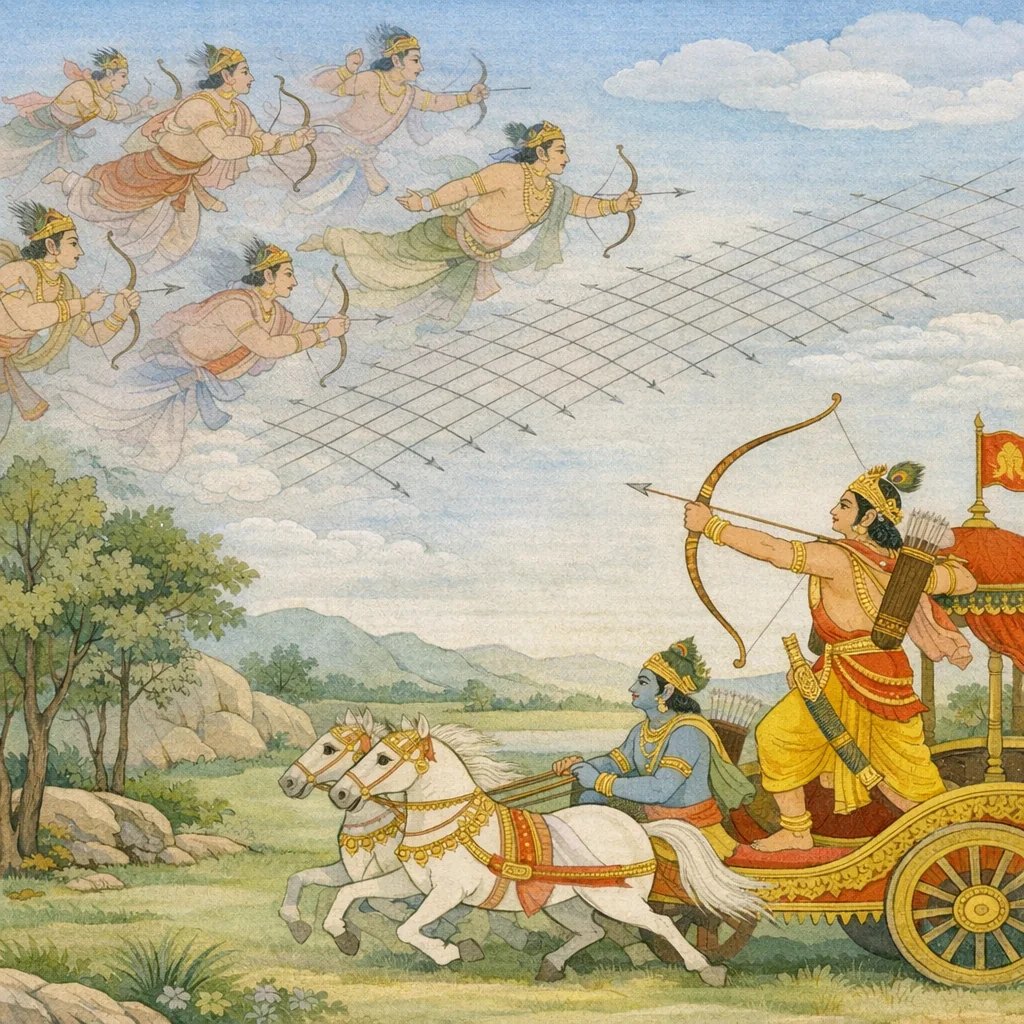
स तानुत्पतितान् दृष्टवा कुन्तीपुत्रो धनंजय: । महता शरजालेन समन्तात् पर्यवारयत्,कुन्तीनन्दन अर्जुनने उन्हें आकाशमें उड़ते देख चारों ओर बाणोंका विस्तृत जाल-सा फैलाकर गन्धर्वोको घेरेमें डाल दिया
Vaiśampāyana said: Seeing those Gandharvas spring up and take to the sky, Arjuna—the son of Kuntī, famed as Dhanañjaya—cast a vast net of arrows on every side and hemmed them in. The scene underscores disciplined force: martial skill is used not for reckless slaughter, but to restrain and control opponents within the bounds of duty.
Verse 12
ते बद्धा: शरजालेन शकुन्ता इव पञ्जरे | ववर्षुरर्जुनं क्रोधाद् गदाशक्त्यृष्टिवृष्टिभि:,उस जालनमें वे उसी प्रकार बँँध गये, जैसे पिंजड़ेमें पक्षी। अतः वे अत्यन्त कुपित होकर अर्जुनपर गदा, शक्ति और ऋष्टि आदि अस्त्र-शस्त्रोंकी वर्षा करने लगे
Vaiśampāyana said: Caught fast in Arjuna’s net of arrows like birds trapped in a cage, they—burning with anger—pelted Arjuna with a shower of weapons, hurling maces, spears, and lances. The scene underscores how frustration and wounded pride can drive warriors to reckless escalation, even when skill and circumstance have already turned against them.
Verse 13
गदाशव्त्यूष्टिवृष्टीस्ता निहत्य परमास्त्रवित् । गात्राणि चाहनद् भल्ल्लैर्गन्धर्वाणां धनंजय:,तब उत्तम अस्त्रोंके ज्ञाता अर्जुन उनकी गदा, शक्ति तथा ऋष्टि आदि अस्त्र-शस्त्रोंकी वर्षाका निवारण करके भल्ल नामक बाणोंद्वारा गन्धर्वोके अंगोंपरप आघात करने लगे
Verse 14
शिरोभि: प्रपतद्धिश्व॒ चरणैर्बाहुभिस्तथा । अभ्मवृष्टिरिवाभाति परेषामभवद् भयम्,गन्धर्वोंके मस्तक, बाहु तथा पैर कट-कटकर इस प्रकार गिरने लगे मानो पत्थरोंकी वर्षा हो रही हो। इससे शत्रुओंको बड़ा भय होने लगा
Vaiśampāyana said: Heads, feet, and arms fell down in every direction; it looked as though a shower of stones were raining. Seeing this dreadful carnage, fear arose in the hearts of the opposing warriors.
Verse 15
ते वध्यमाना गन्धर्वा: पाण्डवेन महात्मना । भूमिष्ठमन्तरिक्षस्था: शरवर्षैरवाकिरन्,महात्मा पाण्डुनन्दन अर्जुनके बाणोंसे घायल होकर आकाशमें स्थित हुए गन्धर्वोने पृथ्वीपर खड़े हुए अर्जुनपर बाणोंकी वर्षा प्रारम्भ की
Vaiśaṃpāyana said: Struck and pressed hard by the great-souled Pāṇḍava, the Gandharvas rose into the sky; from the air they poured down a rain of arrows upon Arjuna as he stood firm upon the earth. The scene underscores a warrior’s steadiness under assault and the escalation that follows when pride and resistance meet in battle.
Verse 16
तेषां तु शरवर्षाणि सव्यसाची परंतप: । अस्त्रै: संवार्य तेजस्वी गन्धर्वान् प्रत्यविध्यत,तेजस्वी परंतप सव्यसाचीने अपने अस्त्रोंद्वारा गन्धर्वोकी बाणवर्षाका निवारण करके उन्हें फिरसे घायल कर दिया
But Arjuna—ambidextrous and a scorcher of foes—checked their showers of arrows with his own celestial weapons; then, blazing with prowess, he struck the Gandharvas back again, wounding them in return. The episode underscores disciplined force: protection and restraint first, retaliation only as a measured response in battle.
Verse 17
स्थूणाकर्णन्द्रजालं च सौरं चापि तथार्जुन: । आग्नेयं चापि सौम्यं च ससर्ज कुरुनन्दन:,कुरुकुलका आनन्द बढ़ानेवाले अर्जुनने स्थूणाकर्ण, इन्द्रजाल, सौर, आग्नेय तथा सौम्य नामक दिव्यास्त्रोंका प्रयोग किया
Vaiśampāyana said: Arjuna, the delight of the Kuru line, then unleashed a succession of divine missiles—named Sthūṇākarṇa, Indrajāla, Saura, Āgneya, and Saumya—displaying disciplined mastery of celestial weapons in the unfolding contest of power.
Verse 18
ते दह्यमाना गन्धर्वा: कुन्तीपुत्रस्य सायकै: । दैतेया इव शक्रेण विषादमगमन् परम्,कुन्तीकुमारके उन सायकोंसे गन्धर्व उसी प्रकार दग्ध होने लगे, जैसे इन्द्रके बाणोंद्वारा दैत्य। इससे उनको बड़ा विषाद हुआ
Vaiśampāyana said: Scorched by the arrows of Kuntī’s son, the Gandharvas began to burn—just as the Daityas are seared by Indra’s shafts. Overwhelmed by that assault, they fell into profound dejection. The verse underscores how superior prowess, when met with resistance, can break the pride of even celestial beings and turn confidence into despair.
Verse 19
ऊर्ध्वमाक्रममाणाश्ष शरजालेन वारिता: । विसर्पमाणा भल्लैक्ष वार्यन्ते सव्यसाचिना,जब वे ऊपरकी ओर उड़ने लगते तब अर्जुनके बाणोंके जालसे उनकी गति रुक जाती थी, और जब इधर-उधर भागने लगते तब सव्यसाची अर्जुनके भलल नामक बाण उन्हें आगे बढ़नेसे रोकते थे
Vaiśampāyana said: Whenever they tried to rise upward, their movement was checked by a net of arrows; and when they attempted to scatter and flee in different directions, Arjuna—called Savyasācin—held them back with his bhalla arrows. Thus, by disciplined skill rather than reckless slaughter, he controlled their escape on every side.
Verse 20
गन्धर्वास्त्रासितान् दृष्टवा कुन्तीपुत्रेण भारत । चित्रसेनो गदां गृह सव्यसाचिनमाद्रवत्,भारत! इस प्रकार कुन्तीकुमारके द्वारा गन्धर्वोंको त्रस्त हुआ देख गन्धर्वराज चित्रसेनने गदा लेकर सव्यसाची अर्जुनपर आक्रमण किया
Vaiśampāyana said: “O Bhārata, seeing the Gandharvas thrown into panic by Kuntī’s son, the Gandharva-king Citrasena seized his mace and charged straight at Arjuna, the ambidextrous archer.”
Verse 21
हाथमें गदा लिये बड़े वेगसे युद्धके लिये आते हुए चित्रसेनकी उस गदाके, जो सब-की- सब लोहेकी बनी हुई थी, अर्जुनने अपने बाणोंद्वारा सात टुकड़े कर दिये
Vaiśampāyana said: As Citrasena rushed forward at great speed for battle, mace in hand—an all-iron weapon—Arjuna, with his arrows, shattered that mace into seven pieces. The episode underscores disciplined martial skill used to neutralize a threat swiftly, minimizing prolonged violence by disabling the weapon rather than pursuing needless slaughter.
Verse 22
स गदां बहुधा दृष्ट्वा कुत्तां बाणैस्तरस्विना । संवृत्य विद्यया55त्मानं योधयामास पाण्डवम्,वेगशाली अर्जुनके बाणोंसे अपनी गदाके अनेक टुकड़े हुए देख चित्रसेन अन्तर्धानविद्याद्वार अपने आपको छिपाकर उन पाण्डुकुमारके साथ युद्ध करने लगे
Seeing his mace shattered into many pieces by the swift, forceful arrows, Citraseṇa concealed himself by means of a power of invisibility and continued to fight with the Pāṇḍava (Arjuna). The episode underscores how prowess in arms is matched by the use—and misuse—of extraordinary powers, raising an implicit ethical contrast between open combat and concealed, deceptive tactics.
Verse 23
अस्त्राणि तस्य दिव्यानि सम्प्रयुक्तानि सर्वश: । दिव्यैरस्त्रैस्तदा वीर: पर्यवारयदर्जुन:,उस समय उन्होंने जिन-जिन दिव्यास्त्रोंका प्रयोग किया, उन सबको वीर अर्जुनने अपने दिव्य अस्त्रोंद्वारा शान्त कर दिया
Vaiśampāyana said: When his celestial weapons were unleashed in every possible way, the heroic Arjuna, at that moment, neutralized them all by countering with his own divine missiles—showing disciplined mastery rather than reckless destruction.
Verse 24
स वार्यमाणस्तैरस्त्रैरर्जुनेन महात्मना । गन्धर्वराजो बलवान् माययान्तर्हितस्तदा,महात्मा अर्जुनके उन अस्त्रोंसे रोके जानेपर बलवान गन्धर्वराज मायासे अदृश्य हो गये
Vaiśampāyana said: Though checked by those missiles of the great-souled Arjuna, the mighty king of the Gandharvas then vanished from sight by means of his magical power—showing that prowess is not only in weapons, but also in mastery of illusion and strategy.
Verse 25
अन्तरहितं तमालक्ष्य प्रहरन्तमथार्जुन: । ताडयामास खरदररैर्दिव्यास्त्रप्रतिमन्त्रिते:,उन्हें अदृश्य होकर प्रहार करते देख अर्जुनने दिव्यास्त्रोंद्वारा अभिमन्त्रित किये हुए आकाशचारी बाणोंसे बींध डाला
Seeing him become invisible and still striking, Arjuna counterattacked, piercing him with swift, sky-ranging arrows that had been empowered by the mantras of divine weapons—meeting hidden aggression with disciplined, consecrated force rather than panic or cruelty.
Verse 26
अन्तर्धानवधं चास्य चक्रे क्रुद्धो$र्जुनस्तदा । शब्दवेधं समाश्रित्य बहुरूपो धनंजय:,(रणभूमिमें सब ओर विचरनेके कारण) उस समय अर्जुन अनेक रूप धारण किये हुए जान पड़ते थे। उन्होंने कुपित होकर शब्दवेधका सहारा ले चित्रसेनकी अन्तर्धानरूप मायाको भी नष्ट कर दिया
Verse 27
स वध्यमानस्तैरस्त्रैरर्जुनेन महात्मना । ततो<स्य दर्शयामास तदा55त्मानं प्रिय: सखा,चित्रसेन अर्जुनके प्यारे सखा थे। उन्होंने महात्मा अर्जुनके बाणोंसे अत्यन्त घायल होनेपर अपने-आपको उनके सामने प्रकट कर दिया
Vaiśampāyana said: As he was being struck down by the weapons of the great-souled Arjuna, his dear friend Citrasena then revealed himself before Arjuna. The episode underscores that even in combat, recognition of relationship and restraint can arise—violence gives way to disclosure and the possibility of right conduct once identity and intent are made clear.
Verse 28
चित्रसेनस्तथोवाच सखायं युधि विद्धि माम् चित्रसेनमथालक्ष्य सखायं युधि दुर्बलम्,संजहूु: प्रद्गुतानश्वाञ्छरवेगान् धनूंषि च । चित्रसेनने उनसे कहा--'कुन्तीनन्दन! इस युद्धमें मुझे तुम अपना सखा चित्रसेन समझो।” यह सुनकर अर्जुनने चित्रसेनकी ओर दृष्टिपात किया। अपने सखाको युद्धमें अत्यन्त दुर्बल हुआ देख पाण्डवप्रवर अर्जुनने अपने धनुषपर प्रकट किये हुए उस दिव्यास्त्रका उपसंहार कर दिया। अर्जुनको अपना अस्त्र समेटते देख सब पाण्डवोंने भी दौड़ते हुए घोड़ोंको रोक लिया तथा वेगपूर्वक छूटनेवाले बाणों और धनुषोंका संचालन भी बंद कर दिया
Vaiśampāyana said: Then Citrasena spoke, “O son of Kuntī, in this battle know me as your friend—Citrasena.” Hearing this, Arjuna looked toward Citrasena. Seeing his friend become exceedingly weakened in the fight, the foremost of the Pāṇḍavas withdrew the divine weapon he had manifested upon his bow. When Arjuna was seen drawing back his weapon, all the Pāṇḍavas too reined in their charging horses and ceased the swift discharge of arrows and the use of their bows—choosing restraint once the truth of friendship was recognized.
Verse 29
संजहारास्त्रमथ तत् प्रसृष्टं पाण्डवर्षभ: । दृष्टवा तु पाण्डवा: सर्वे संह्ृतास्त्रं धनंजयम्
Vaiśampāyana said: Then the bull among the Pāṇḍavas withdrew that weapon which he had released. Seeing Dhanaṃjaya restrain and recall the missile, all the Pāṇḍavas looked on—recognizing in his self-control the ethical mastery that prevents power from becoming mere destruction.
Verse 30
चित्रसेनश्व॒ भीमश्षु सव्यसाची यमावपि । पृष्टवा कौशलमन्योन्यं रथेष्वेवावतस्थिरे,तत्पश्चात् गन्धर्वराज चित्रसेन, भीमसेन, अर्जुन और नकुल-सहदेव सब लोग परस्पर कुशल-समाचार पूछकर अपने रथोंमें ही बैठे रहे
Vaiśampāyana said: Then Citraseṇa, Bhīma, the ambidextrous Arjuna, and the twin brothers (Nakula and Sahadeva) exchanged inquiries after one another’s welfare; having thus observed the courtesies of peace, they remained seated in their chariots. The moment underscores restrained conduct and mutual respect even amid tense encounters, where proper greeting and concern for well-being serve as a dharmic prelude to whatever action may follow.
Verse 231
तस्याभिपतततस्तूर्ण गदाहस्तस्य संयुगे । गदां सर्वायसी पार्थ: शरैश्षिच्छेद सप्तधा
Vaiśaṃpāyana said: As that mace-wielding warrior rushed swiftly forward in the thick of battle, Pārtha (Arjuna) cut his entirely iron mace into seven pieces with his arrows—an act that displays disciplined skill and measured force amid the chaos of combat.
Verse 245
इति श्रीमहाभारते वनपर्वणि घोषयात्रापर्वणि गन्धर्वपराभवे पजञ्चचत्वारिंशदधिकद्धिशततमो<5 ध्याय:
Thus ends, in the Śrī Mahābhārata, within the Vana Parva, in the section concerning the cattle-expedition (Ghoṣa-yātrā), in the episode of the Gandharvas’ defeat, the two-hundred-and-forty-fifth chapter. This is a colophon marking the close of the chapter and situating it within the larger narrative arc, where pride and aggression are checked by a superior force, underscoring the ethical lesson that power without restraint invites humiliation and correction.
Verse 293
संजहूु: प्रद्गुतानश्वाञ्छरवेगान् धनूंषि च । चित्रसेनने उनसे कहा--'कुन्तीनन्दन! इस युद्धमें मुझे तुम अपना सखा चित्रसेन समझो।” यह सुनकर अर्जुनने चित्रसेनकी ओर दृष्टिपात किया। अपने सखाको युद्धमें अत्यन्त दुर्बल हुआ देख पाण्डवप्रवर अर्जुनने अपने धनुषपर प्रकट किये हुए उस दिव्यास्त्रका उपसंहार कर दिया। अर्जुनको अपना अस्त्र समेटते देख सब पाण्डवोंने भी दौड़ते हुए घोड़ोंको रोक लिया तथा वेगपूर्वक छूटनेवाले बाणों और धनुषोंका संचालन भी बंद कर दिया
Vaiśampāyana said: They checked the horses that had surged forward and also restrained the bows and the weapons moving with the speed of arrows. Then Citraseṇa addressed him: “Son of Kuntī, in this battle regard me as your friend Citraseṇa.” Hearing this, Arjuna looked toward Citraseṇa; and seeing his friend become exceedingly weakened in the fight, the foremost of the Pāṇḍavas withdrew (recalled) that divine missile which he had manifested upon his bow. When Arjuna was seen drawing back his weapon, all the Pāṇḍavas too, running up, reined in their galloping horses and ceased the forceful discharge and handling of arrows and bows—choosing restraint out of regard for friendship and propriety amid combat.
Verse 2415
इस प्रकार श्रीमहाभारत वनपर्वके अन्तर्गत घोषयात्रापर्वमें गन्धर्वपराजयविषयक दो सौ पैंतालीसवाँ अध्याय पूरा हुआ
Thus concludes the two-hundred and forty-fifth chapter of the Ghoṣa-yātrā sub-episode within the Vana Parva of the Śrī Mahābhārata, dealing with the defeat of the Gandharvas. The closing formula marks the completion of this narrative unit and signals a transition, reminding the listener that events unfold within an ordered textual and moral framework where outcomes (such as defeat) are presented as meaningful consequences within the epic’s larger ethical vision.
Frequently Asked Questions
Whether one should prioritize a guest’s need over one’s own survival resources, and whether generosity retains value when repeatedly exploited—resolved here through steadfast hospitality grounded in non-reactive equanimity.
Ethical excellence is measured by inner disposition: giving that is labor-earned, non-envious, and free from anger or self-display is portrayed as spiritually potent, integrating ritual observance with practical compassion and self-mastery.
Yes: despite receiving a direct invitation to ascend, Mudgala requests a candid account of svarga’s guṇas and doṣas, implying that informed discernment (viveka) should guide even meritorious destinations.