Adhyaya 222
द्रौपदी–सत्यभामा संवादः (Draupadī and Satyabhāmā on ethical household conduct)
Upa-parva: Draupadī–Satyabhāmā Saṃvāda (Discourse on conjugal ethics and household governance)
Vaiśaṃpāyana narrates a meeting where Draupadī and Satyabhāmā sit together in a cordial setting. Satyabhāmā privately asks Draupadī how she maintains the Pandavas’ affection and compliance, explicitly inquiring about vows, austerities, ritual baths, mantras, medicines, and other techniques. Draupadī rebukes the premise, refusing to endorse ‘asat-strī’ practices, and argues that a husband who suspects mantra-based control becomes distressed rather than peaceful. She warns of the dangers of clandestine powders and poisons and of the social harms attributed to such conduct. Draupadī then enumerates her method: abandoning ego, desire, and anger; practicing careful speech and demeanor; prioritizing service and attentiveness; observing domestic discipline (timely food, cleanliness, hospitality); honoring elders (especially Kuntī); and maintaining detailed oversight of resources, guests, and staff. She portrays household stability as achieved through tireless, transparent duty and respectful comportment. Satyabhāmā, hearing the dharma-consistent explanation, apologizes for her teasing inquiry and affirms Draupadī’s conduct.
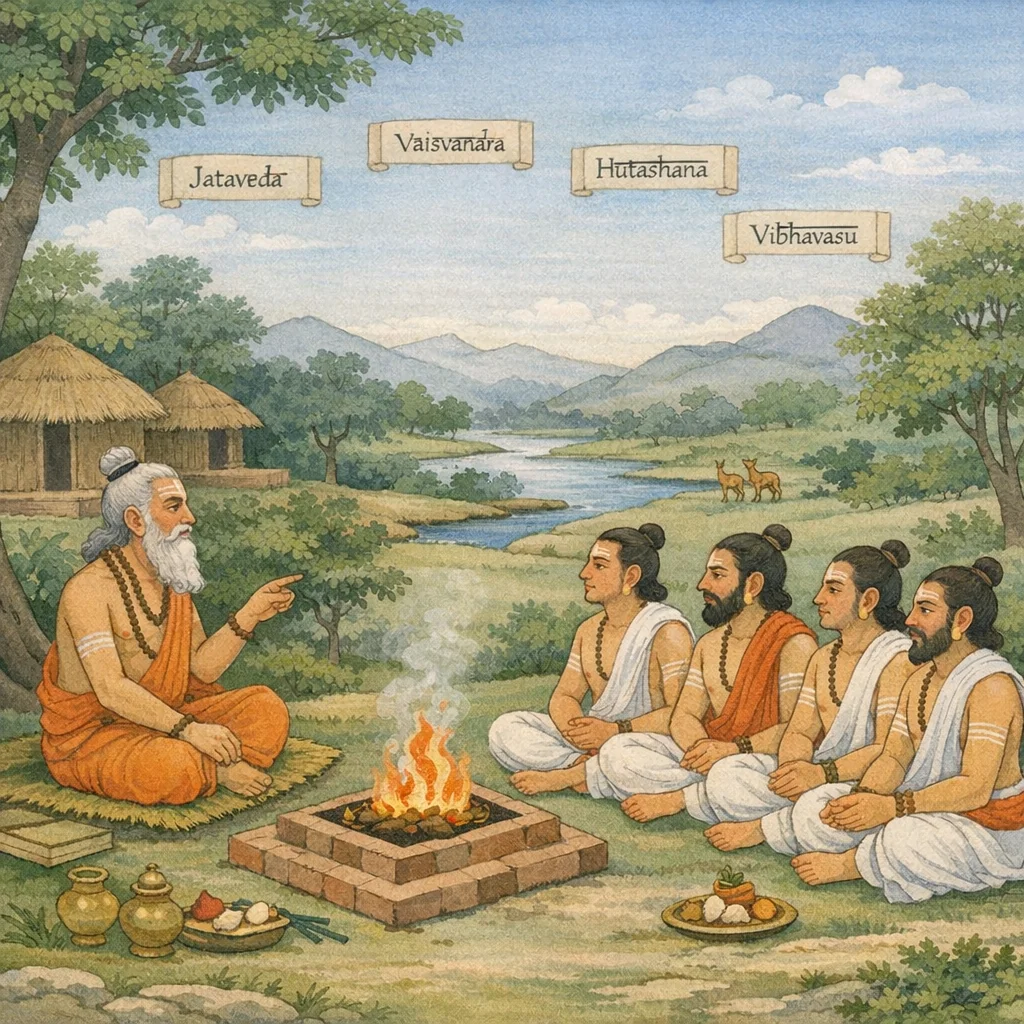
Chapter Arc: मार्कण्डेय के वचन से कथा एक अनोखे ‘यज्ञ-विश्व’ में प्रवेश करती है—जहाँ अग्नि केवल ज्वाला नहीं, देव-स्वरूप नामों और विधानों का जीवित जाल है; भूर्-भुवः-स्वः आदि महाव्याहृतियों से ध्यान-मन्त्र का आरम्भ होता है। → अग्नियों के अनेक नाम, वंश-परम्परा और यज्ञ-प्रयोग क्रमशः खुलते हैं—‘शिव’ नामक अग्नि शक्तिपूजा में रत, ‘शम्भु’ और ‘आवसथ्य’ जैसे गृह्य-अग्नि-स्वरूप, दर्श-पौर्णमास, आग्रयण आदि कर्मों में किस अग्नि को हवि मिले—यह सूक्ष्म विधान कथा को गहन बनाता है; साथ ही चेतावनी आती है कि गृहस्थ अग्नियों का दावानल से संसर्ग हो जाए तो प्रायश्चित्त-इष्टि आवश्यक है। → विधि का शिखर उस क्षण पर आता है जब प्रायश्चित्त और ‘स्विष्टकृत्’ की परम भूमिका प्रतिपादित होती है—यज्ञ की त्रुटि को ‘स्विष्ट’ बनाकर पूर्ण करने वाला अग्नि-तत्त्व ही रक्षक है; ‘विश्वपति’ नामक अग्नि को वेदों में ‘सम्पूर्ण जगत् का पति’ कहे जाने का उल्लेख इस अध्याय का दार्शनिक उत्कर्ष बनता है। → अग्नि-नामों, उनके कर्म-क्षेत्र और शुद्धि-विधानों का संहिताबद्ध निष्कर्ष देकर मार्कण्डेय आंगिरसोपाख्यान के इस खण्ड को पूर्ण करते हैं—यज्ञ की शुद्धि, नाम-स्मरण और नियत हवि-समर्पण से लोक-व्यवस्था टिकती है। → आंगिरसोपाख्यान की अगली कड़ी में अग्नि-परम्परा/विधान का विस्तार आगे बढ़ने का संकेत रहता है।
Shlokas
Verse 1
हि >> मय न [हुक आज अप > भू:, भुवः, स्वः, महः, जनः--ये पाँच महाव्याहतियाँ हैं। ध्यानके लिये मन्त्रप्रयोग इस प्रकार है--'* भूरजन्नमग्नये पृथिव्यै स्वाहा इत्यादि। एकविशर्त्याधिकद्विशततमो< ध्याय: अग्निस्वरूप तप और भानु (मनु)-की संततिका वर्णन मार्कण्डेय उवाच गुरुभिरनियमैर्युक्तो भरतो नाम पावक: । अग्नि: पुष्टिमतिर्नाम तुष्ट: पुष्टिं प्रयच्छति । भरत्येष प्रजा: सर्वास्ततो भरत उच्यते,मार्कण्डेयजी कहते हैं--युथिष्ठिर! पूर्वोक्त भरत नामक अग्नि (जो शंयुके पौत्र और ऊर्जके पुत्र हैं) गुरुतर नियमोंसे युक्त हैं। वे संतुष्ट होनेपर पुष्टि प्रदान करते हैं, इसलिये उनका एक नाम 'पुष्टिमति” भी है। समस्त प्रजाका भरण-पोषण करते हैं, इसलिये उन्हें भरत कहते हैं
Mārkaṇḍeya said: “There is a sacred Fire known as Bharata, disciplined by weighty restraints and strict observances. He is also called Puṣṭimati, for when he is pleased he bestows nourishment and prosperity. Because he sustains all creatures, he is therefore called ‘Bharata’—the one who bears and supports the peoples.”
Verse 2
अग्निर्यश्न शिवो नाम शक्तिपूजापरश्न सः | दुःखार्तानां च सर्वेषां शिवकृत् सततं शिव:,'शिव” नामसे प्रसिद्ध जो अग्नि हैं, वे शक्तिकी आराधनामें लगे रहते हैं। समस्त दुःखातुर मनुष्योंका सदा ही शिव (कल्याण) करते हैं, इसलिये उन्हें 'शिव” कहते हैं
Mārkaṇḍeya said: “That Fire who is renowned by the name ‘Śiva’ is ever devoted to the worship of Śakti. He continually brings welfare to all who are afflicted by sorrow; therefore he is called ‘Śiva’—the beneficent one.”
Verse 3
तपसस्तु फल दृष्टवा सम्प्रवृद्धं तपो महत् | उद्धर्तुकामो मतिमान् पुत्रो जज्ञे पुरंदर:,तप (पाञ्चजन्य)-का तपस्याजनित फल (ऐश्वर्य) बढ़कर महान् हो गया है, यह देख उसे प्राप्त करनेकी इच्छासे मानो बुद्धिमान् इन्द्र ही पुरंदर नामसे उनके पुत्र होकर प्रकट हुए
Markandeya said: Seeing that the fruit of the austerities had grown exceedingly great, the wise Purandara (Indra), desiring to appropriate or carry it away, was born as their son—appearing under the name Purandara. The passage underscores how the power generated by tapas can attract even the gods, and how divine intervention may arise from desire for that accumulated spiritual merit.
Verse 4
* ऊष्मा चैवोष्मणो जज्ञे सोडग्निधूतस्य लक्ष्यते अग्निश्चापि मनुर्नाम प्राजापत्यमकारयत्,उन्हीं पांचजन्यसे “ऊष्मा” नामक अग्निका प्रादुर्भाव हुआ। जो समस्त प्राणियोंके शरीरमें ऊष्मा (गर्मी)-के द्वारा परिलक्षित होते हैं तथा तपके जो “मनु” नामक अग्निस्वरूप पुत्र हैं, उन्होंने 'प्राजापत्य” यज्ञ सम्पन्न कराया था
Mārkaṇḍeya said: From the very principle of heat (ūṣman) there arose the fire named Ūṣmā, perceived as the bodily warmth present in all living beings. And there was also Agni called Manu—an ascetic, fire-natured son—who performed the Prajāpatya sacrifice. The passage links cosmic fire with the inner heat that sustains life, and presents sacrificial duty as a disciplined, generative act aligned with Prajāpati’s order.
Verse 5
शम्भुमग्निमथ प्राहुब्राह्मिणा वेदपारगा: । आवसथशथ्यं द्विजा: प्राहुर्दीप्तमरग्निं महाप्रभम्,वेदोंके पारंगत दिद्वान् ब्राह्मण “शम्भु' तथा “आवसथ्य” नामक अग्निको देदीप्यमान तथा महान् तेज: पुछ्जसे सम्पन्न बताते हैं
Mārkaṇḍeya said: The Brāhmaṇas who had mastered the Vedas declared that there is a sacred fire named Śambhu; and the twice-born also spoke of another fire called Āvasathya—blazing, and endowed with great splendor. The passage underscores how Vedic learning preserves and transmits the names and sanctity of ritual fires, treating them as venerable presences rather than mere physical flame.
Verse 6
ऊर्जस्करान् हव्यवाहान् सुवर्णसदृशप्रभान् । ततस्तपो हाजनयत् पज्च यज्ञसुतानिह,इस प्रकार जिन्हें यज्ञमें सोमकी आहुति दी जाती है, ऐसे पाँच पुत्रोंको तपने पैदा किया। वे सब-के-सब सुवर्ण-सदृश कान्तिमान, बल और तेजकी प्राप्ति करानेवाले तथा देवताओंके लिये हविष्य पहुँचानेवाले हैं
Mārkaṇḍeya said: “Then that austerity brought forth here five sons of the sacrifice—radiant like gold, bestowing strength and vigor, and serving as bearers of the oblation for the gods.” The passage frames tapas (disciplined ascetic power) as a creative, morally charged force that generates agents sustaining the reciprocal order between humans and deities through yajña.
Verse 7
प्रशान्तेअग्निर्महाभाग परिश्रान्तो गवां पति: । असुरान् जनयन् घोरानू् मर्त्याश्चवैव पृथग्विधान्,महाभाग! अस्तकालमें परिश्रमसे थके-माँदे सूर्यदेव (अग्निमें प्रविष्ट होनेके कारण) अग्निस्वरूप हो जाते हैं।* भयंकर असुरों तथा नाना प्रकारके मरणधर्मा मनुष्योंको उत्पन्न करते हैं। (उन्हें भी तपकी ही संततिके अन्तर्गत माना गया है)
Mārkaṇḍeya said: “O noble one, when the lord of the cattle—wearied by his toil—has grown calm, he becomes fire. From that state he brings forth dreadful Asuras and also many kinds of mortal human beings. Thus even terrifying and perishable births are traced back to the same cosmic austerity and transformation, reminding us that power and exhaustion, creation and destruction, arise within a single moral order.”
Verse 8
तपसश्च मनु पुत्र भानुं चाप्यड्रिरा: सृजत् । बृहद्धानु तु त॑ प्राहुब्राह्मिणा वेदपारगा:,तपके मनु (प्रजापति) स्वरूप पुत्र भानु नामक अग्निको अंगिराने भी (अपना प्रभाव अर्पित करके) नूतन जीवन प्रदान किया है। वेदोंके पारगामी विद्वान ब्राह्मण भानुको ही “बृहद्धानु' कहते हैं
Mārkaṇḍeya said: “By the power of austerity, O son of Manu, Aṅgiras also brought forth Bhānu (Agni) and endowed him with renewed potency. The learned Brāhmaṇas who have crossed to the far shore of the Vedas call that Bhānu by the name ‘Bṛhaddhānu.’”
Verse 9
भानोर्भार्या सुप्रजा तु बृहद्धासा तु सूर्यजा । असूजेतां तु षट् पुत्रान् शृणू तासां प्रजाविधिम्,भानुकी दो पत्नियाँ हुईं--सुप्रजा और बृहद्धासा। इनमें बृहद्धासा सूर्यकी कन्या थी। इन दोनोंने छः पुत्रोंको जन्म दिया। इनके द्वारा जो संतानोंकी सृष्टि हुई, उसका वर्णन सुनो
Mārkaṇḍeya said: “Bhānu had two wives—Suprajā and Bṛhaddhāsā; and Bṛhaddhāsā was the daughter of Sūrya. From these two were born six sons. Now listen as I describe the manner in which their descendants were brought forth.”
Verse 10
दुर्बलानां तु भूतानामसून् यः सम्प्रयच्छति । तमनग्निं बलदं प्राहुः प्रथमं भानुतः सुतम्,जो दुर्बल प्राणियोंको प्राण एवं बल प्रदान करते हैं, उन्हें 'बलद' नामक अग्नि बताया जाता है। ये भानुके प्रथम पुत्र हैं
Mārkaṇḍeya said: “That divine Fire who bestows life-breath and strength upon weakened beings is known as Balada, the ‘Giver of Strength.’ He is declared to be the first-born son of Bhānu (the Sun).”
Verse 11
यः प्रशान्तेषु भूतेषु मन्युर्भवति दारुण: । अग्नि: स मन्युमान्नाम द्वितीयो भानुत: सुत:,जो शान्त प्राणियोंमें भयंकर “क्रोध” बनकर प्रकट होते हैं, वे 'मन्युमान्” नामक अग्नि भानुके द्वितीय पुत्र हैं
Markandeya said: “That fierce wrath which arises even among beings who are otherwise calm—know that to be a form of Fire. He is called Manyumān, the second son of Bhānu.” The verse frames anger as a destructive, quasi-cosmic force that can erupt even in peaceful hearts, warning that such passion should be recognized and restrained rather than indulged.
Verse 12
दर्शे च पौर्णमासे च यस्येह हविरुच्यते । विष्णु्नामेह यो<ग्निस्तु धृतिमान्नाम सोडज्लिरा:,यहाँ जिनके लिये दर्श तथा पौर्णमास यागोंमें हविष्य-समर्पणका विधान पाया जाता है, उन अग्निका नाम “विष्णु” है। वे “अंगिरा” गोत्रीय माने गये हैं। उन्हींका दूसरा नाम “धृतिमान' अग्नि है (ये भानुके तीसरे पुत्र हैं)
Markandeya said: ‘That sacred fire for whom, in this world, the offering of oblations is prescribed at the new-moon (Darśa) and full-moon (Paurṇamāsa) rites is known here by the name “Viṣṇu.” He is regarded as belonging to the lineage of Aṅgiras, and he is also called “Dhṛtimān,” the steadfast one.’
Verse 13
३ इन्द्रेण सहितं यस्य हविराग्रयणं स्मृतम् । अग्निराग्रयणो नाम भानोरेवान्वयस्तु सः
Mārkaṇḍeya said: “He whose first offering of oblation is remembered as being made together with Indra is called ‘Agni-Āgrayaṇa’; and his lineage is indeed traced from Bhānu (the Sun).”
Verse 14
इन्द्रसहित जिनके लिये आग्रयण (नूतन अद्नद्वारा सम्पन्न होनेवाले यज्ञ) कर्ममें हविष्य- अर्पणका विधान है, वे “आग्रयण' नामक अग्नि भानुके ही (चौथे) पुत्र हैं ।। चातुर्मास्येषु नित्यानां हविषां योनिरग्रह: । चतुर्भि: सहित: पुत्रैर्भानोरेवान्वय: स्तुभ:,चातुर्मास्य यज्ञोंमें नित्य विहित आग्नेय आदि आठ हविष्योंके जो उद्धवस्थान हैं, उनका नाम “अग्रह' है। (वे ही वैश्वदेव पर्वमें प्रधान विश्वदेव नामक अग्नि हैं--से भानुके पाँचवें पुत्र हैं) 'स्तुभ” नामक अग्नि भी भानुके ही पुत्र हैं। पहले कहे हुए चार पुत्रोंके साथ जो ये अग्रह (वैश्वदेव) और स्तुभ हैं, इन्हें मिलाकर भानुके छ: पुत्र हैं
Mārkaṇḍeya said: In the Cāturmāsya sacrifices, the established (nitya) oblations have a source called Agraha. And Stubha too belongs to the lineage of Bhānu: together with Bhānu’s four previously mentioned sons, Agraha and Stubha are counted among his offspring. The passage situates these ritual fires and oblations within the ordered framework of Vedic duty, emphasizing that sacrificial practice is not arbitrary but grounded in named, lineage-linked principles that sustain cosmic and social order (dharma).
Verse 15
निशा त्वजनयत् कन्यामग्नीषोमाबुभौ तथा । मनोरेवाभवद् भार्या सुषुवे पडच पावकान्,मनु (भानु)-की ही एक तीसरी पत्नी थी, जिसका नाम था निशा। उसने एक कन्या और दो पुत्रों-को जन्म दिया। (कन्याका नाम “रोहिणी” तथा) पुत्रोंके नाम थे--अग्नि और सोम, इनके सिवा, निशाने पाँच अग्निस्वरूप पुत्र और भी उत्पन्न किये। (जिनके नाम क्रमश: इस प्रकार हैं--वैश्वानर, विश्वपति, सब्निहित, कपिल और अग्रणी)
Markandeya said: Niśā bore a daughter, and likewise two sons—Agni and Soma. She also became the wife of Manu and gave birth to five sons of fiery nature. The passage situates these births within a genealogical-sacral frame, presenting cosmic forces (fire and moon) as embodied in progeny, and implying that lineage and marital order are upheld as part of dharma.
Verse 16
पूज्यते हविषाग्रयेण चातुर्मास्येषु पावक: । पर्जन्यसहित: श्रीमाननिनेर्वेश्वानरस्तु सः,चातुर्मास्य यज्ञोंमें प्रधान हविष्यद्वारा पर्जन्यसहित जिनकी पूजा की जाती है, वे कान्तिमान् वैश्वानर नामक अग्नि (मनुके प्रथम पुत्र) हैं
Mārkaṇḍeya said: In the Cāturmāsya seasonal rites, the sacred Fire is worshipped with the foremost oblation. That radiant one, worshipped together with Parjanya (the rain-bearing power), is Vaiśvānara—Agni, the illustrious son of Anini. The verse situates ritual reverence within the moral order: honoring Fire and Rain together affirms reciprocity between human sacrifice and the sustaining forces of nature.
Verse 17
अस्य लोकस्य सर्वस्य य: प्रभु: परिपठ्यते । सोअन्निर्विश्वपतिर्नाम द्वितीयो वै मनो: सुत:
Mārkaṇḍeya said: “He who is recited and remembered as the lord of this entire world—he is named Anirviśvapati, and he is indeed the second son of Manu.”
Verse 18
कन्या सा रोहिणी नाम हिरण्यकशिपो: सुता
Mārkaṇḍeya said: “That maiden was named Rohiṇī; she was the daughter of Hiraṇyakaśipu.”
Verse 19
कर्मणासौ बभौ भार्या स वह्नि: स प्रजापति: । मनुकी कन्या भी *स्विष्टकृत” ही मानी गयी है। उसका नाम रोहिणी है; वह मनुकी कुमारी पुत्री किसी अशुभ कर्मके कारण हिरण्यकशिपुकी पत्नी हुई थी। वास्तवमें “मनु” ही वह्नि है और वे ही 'प्रजापति' कहे गये हैं ।। १८ $ ।। प्राणानाश्रित्य यो देहं प्रवर्तयति देहिनाम् । तस्य संनिहितो नाम शब्दरूपस्य साधन:,जो देहधारियोंके प्राणोंका आश्रय लेकर उनके शरीरको कार्यमें प्रवृत्त करते हैं, उनका नाम है, 'संनिहित” अग्नि। ये मनुके तीसरे पुत्र हैं। इनके द्वारा शब्द तथा रूपको ग्रहण करनेमें सहायता मिलती है
Mārkaṇḍeya said: That divine principle which, relying upon the vital breaths, sets the bodies of embodied beings into activity is called Saṃnihita (the ‘Indwelling’ Fire). He is a means for the apprehension and functioning of sound and form—thus explaining how life, perception, and action are sustained through an inner, regulating presence.
Verse 20
शुक्लकृष्णगतिर्देवो यो बिभर्ति हुताशनम् । अकल्मष: कल्मषाणां कर्ता क्रोधाश्रितस्तु सः,जो दीप्तिमान् महापुरुष, शुक्ल और कृष्ण गतिके आधार हैं, जो अग्निका धारण- पोषण करते हैं, जिनमें किसी प्रकारका कल्मष अर्थात् विकार नहीं है तथापि जो समस्त विकारस्वरूप जगतके कर्ता हैं, यति लोग जिनको सदा महर्षि कपिलके नामसे कहा करते हैं, जो सांख्ययोगके प्रवर्तक हैं वे क्रोधस्वरूप अग्निके आश्रय कपिल नामक अनिन हैं। (ये मनुके चौथे पुत्र हैं)
Mārkaṇḍeya said: “That divine being who is the course and support of both the bright and the dark paths, who bears and sustains the sacred fire, who is himself stainless yet becomes the maker of all that is tainted—he abides in wrath as fire. He is the radiant Great Person, known among ascetics as the sage Kapila, the promulgator of Sāṅkhya and Yoga.”
Verse 21
कपिलं परमर्षि च यं प्राहुर्यतय: सदा । अग्नि: स कपिलो नाम सांख्ययोगप्रवर्तक:,जो दीप्तिमान् महापुरुष, शुक्ल और कृष्ण गतिके आधार हैं, जो अग्निका धारण- पोषण करते हैं, जिनमें किसी प्रकारका कल्मष अर्थात् विकार नहीं है तथापि जो समस्त विकारस्वरूप जगतके कर्ता हैं, यति लोग जिनको सदा महर्षि कपिलके नामसे कहा करते हैं, जो सांख्ययोगके प्रवर्तक हैं वे क्रोधस्वरूप अग्निके आश्रय कपिल नामक अनिन हैं। (ये मनुके चौथे पुत्र हैं)
Mārkaṇḍeya said: The ascetics ever speak of him as Kapila, the supreme seer. He is Agni himself—known by the name Kapila—the one who set in motion the path of Sāṅkhya and Yoga. Though stainless and beyond all taint, he becomes the source through which the manifold world of transformations is brought forth; thus the sages revere him as the fiery foundation of disciplined knowledge and self-mastery.
Verse 22
अग्र॑ यच्छन्ति भूतानां येन भूतानि नित्यदा । कर्मस्विह विचित्रेषु सो5ग्रणीर्वद्विरुच्यते,मनुष्य आदि समस्त भूत-प्राणी सर्वदा भाँति-भाँतिके कर्मोमें जिनके द्वारा सब भूतोंके लिये अन्नका अग्रभाग अर्पण करते हैं वे अग्रणी नामक अग्नि (मनुके पाँचवें पुत्र) कहलाते हैं
Markandeya said: “He by whom, in the varied duties performed here, the foremost portion of food is continually offered for the sake of all beings—so that beings are sustained—he is celebrated as ‘Agraṇī’ (the Leader).” In this context, Agraṇī is identified as the fire-deity associated with the offering of the first share, and is also remembered in the genealogical tradition as a son of Manu.
Verse 23
इमानन्यान् समसृजत् पावकान् प्रथितान् भुवि । अन्निहोत्रस्य दुष्टस्य प्रायश्षित्तार्थमुल्वणान्,मनुने अग्निहोत्र कर्ममें की हुई त्रुटिके प्रायश्चित्त [समाधान)-के लिये इन लोकविख्यात तेजस्वी अग्नियोंकी सृष्टि की, जो पूर्वोक्त अग्नियोंसे भिन्न हैं
Verse 24
संस्पृशेयुर्यदान्योन्यं कथज्चिद् वायुनाग्नय: । इष्टिरष्टाकपालेन कार्या वै शुचये5ग्नये,यदि किसी प्रकार हवाके चलनेसे अग्नियोंका परस्पर स्पर्श हो जाय तो अष्टाकपाल (आठ कपालोंमें- संस्कारपूर्वक तैयार किये हुए) पुरोडाशके द्वारा शुचि नामक अग्निके लिये इष्टि करनी (आहुति देनी) चाहिये
Mārkaṇḍeya said: “If, by some chance, the sacred fires come into contact with one another due to the movement of the wind, then one should perform an iṣṭi-offering for the fire called Śuci, using an eight-pot (aṣṭākapāla) puroḍāśa. Thus the ritual order is restored and the sanctity of the fires is preserved.”
Verse 25
दक्षिणानिनिर्यदा द्वाभ्यां संसजेत तदा किल | इष्टिरष्टाकपालेन कार्या वै वीतयेडग्नये,जब दक्षिणाग्निका गार्हपत्य तथा हवनीय नामक दो अग्नियोंसे संसर्ग हो जाय, तब मिट्टीके आठ पुरवोंमें संस्कारपूर्वक तैयार किये हुए पुरोडाशद्वारा “वीति” नामक अग्निके लिये आहुति देनी चाहिये
Mārkaṇḍeya said: “When the Dakṣiṇāgni (the southern sacrificial fire) happens to come into contact with the other two fires, then—so it is prescribed—one should perform an iṣṭi: an offering prepared in eight earthen dishes, and make the oblation to the fire called Vīti. The teaching underscores that even in ritual contingencies, one must respond with disciplined, rule-governed action rather than negligence, thereby preserving sacred order (dharma) through careful atonement and correct procedure.”
Verse 26
यद्यग्नयो हि स्पृश्येयुर्निवेशस्था दवाग्निना । इष्टिरष्टाकपालेन कार्या तु शुचयेडग्नये,यदि गृहस्थित अग्नियोंका दावानलसे संसर्ग हो जाय तो मिट्टीके आठ पुरवोंमें संस्कृत चरुद्वारा शुचि नामक अग्निको आहुति देनी चाहिये
Markandeya said: If the household fires, established in their proper place, should come into contact with a forest conflagration, then an expiatory offering is to be performed—an iṣṭi using an eight-pot (aṣṭākapāla) earthen vessel—making oblations of the consecrated porridge (caru) to Agni under the epithet Śuci (“the Pure”). The teaching underscores that when sacred domestic rites are disturbed by external calamity, one should restore ritual purity through prescribed, disciplined action rather than neglecting dharma in times of disruption.
Verse 27
अग्निं रजस्वला वै स्त्री संस्पृशेदग्निहोत्रिकम् । इष्टिरष्टाकपालेन कार्या वसुमते5ग्नये,यदि अनि्निहोत्र सम्बन्धी अग्निको कोई रजस्वला स्त्री छू दे तो वसुमान् अग्निके लिये मिट्टीके आठ पुरवोंमें संस्कृत चरुद्वारा आहुति देनी चाहिये
Mārkaṇḍeya said: If a menstruating woman should touch the sacred fire connected with the Agnihotra rite, then an expiatory oblation is to be performed—an iṣṭi offering prepared in an eight-shard earthen vessel—dedicated to Agni as Vasumat. The rule underscores the ritual ethic of preserving the purity and continuity of household sacrificial fire, prescribing a specific corrective act rather than mere blame.
Verse 28
मृत: श्रूयेत यो जीव: परेयु: पशवो यदा । इष्टिरशकपालेन कार्या सुरभिमतेडग्नये,यदि किसी प्राणीका मृत्युसूचक विलाप आदि सुनायी दे अथवा कुक्कुर आदि पशु उस अग्निका स्पर्श कर लें, उस दशामें मिट्टीके आठ पुरवोंमें संस्कृत पुरोडाशद्वारा सुरभिमान् नामक अग्निकी प्रसन्नताके लिये होम करना चाहिये
Mārkaṇḍeya said: “If one hears a living being’s death-omen—such as wailing and the like—or if animals such as dogs come into contact with that sacred fire, then, in that condition, an expiatory offering should be performed: an iṣṭi with a puroḍāśa prepared on eight earthen dishes, as a homa to propitiate Agni known as ‘Surabhimān.’”
Verse 29
आर्तों न जुहुयादनिंे त्रिरात्र॑ यस्तु ब्राह्मण: । इष्टिरष्टाकपालेन कार्या स्वादुत्तराग्नये,जो ब्राह्मण किसी पीड़ासे आतुर होकर तीन राततक अनिनिहोत्र न करे, उसे मिट्टीके आठ पुरवोंमें संस्कृत चरुके द्वारा “उत्तरर नामक अग्निको आहुति देनी चाहिये
Mārkaṇḍeya said: If a brāhmaṇa, distressed by suffering, fails to offer oblations into the sacred fire for three nights, then he should perform an expiatory iṣṭi: an offering prepared in an eight-shard earthen vessel, and present the consecrated oblation to the fire known as “Uttara.” The teaching emphasizes that even when hardship disrupts daily sacred duties, one should restore ritual order through prescribed atonement rather than abandon discipline.
Verse 30
दर्श च पौर्णमासं च यस्य तिछेत् प्रतिष्ठितम् । इष्टिरष्टाकपालेन कार्या पथिकृतेडग्नये
Mārkaṇḍeya said: “For one who has duly established the observances of the new-moon and full-moon rites, an offering should be performed with an oblation prepared in eight potsherds, dedicated to Agni as the protector of travellers. Thus, even a journey is placed under sacred order—so that movement through the world is guided by discipline, reverence, and the wish to cause no harm.”
Verse 31
जिसका चालू किया हुआ दर्श और पौर्णमास याग बीचमें ही बंद हो जाय अथवा बिना आहुति किये ही रह जाय, उसे “पथिकृत” नामक अग्निके लिये मिट्टीके आठ पुरवोंमें संस्कृत चरुके द्वारा होम करना चाहिए ।। सूतिकाग्निर्यदा चाग्निं संस्पृशेदग्निहोत्रिकम् । इष्टिरष्टाकपालेन कार्या चाग्निमतेडग्नये,जब सूतिकागृहकी अग्नि, अग्निहोत्रकी अग्निका स्पर्श कर ले, तब मिट्टीके आठ पुरवोंमें संस्कृत पुरोडाशद्वारा 'अग्निमान” नामक अग्निको आहुति देनी चाहिये
Mārkaṇḍeya said: When the fire kept in the lying-in chamber (the sūtikā-fire) comes into contact with the householder’s Agnihotra fire, an expiatory offering should be performed for the fire called “Agnimat,” using an oblation prepared as an eight-pot (aṣṭākapāla) rite. The teaching underscores ritual responsibility: when sacred fires are disturbed, one should restore order through prescribed atonement rather than neglecting the breach.
Verse 173
ततः स्विष्ट॑ भवेदाज्यं स्विष्टकृत् परमस्तु सः । जो वेदोंमें सम्पूर्ण जगत॒के पति” कहे गये हैं, वे विश्वपति नामक अग्नि मनुके द्वितीय पुत्र हैं। उन्हींके प्रभावसे हविष्यकी सुन्दरभावसे आहुति-क्रिया सम्पन्न होती है; अतः वे परम स्विष्टकृत् (उत्तम अभीष्टकी पूर्ति करनेवाले) कहे जाते हैं
Markandeya said: “Thereafter the clarified butter becomes truly ‘well-offered’; for he is the supreme Sviṣṭakṛt—the divine fulfiller who perfects the sacrifice. By his power the oblation is carried out in a beautiful and proper manner; therefore he is praised as the highest accomplisher of the desired rite and its fruit.”
Verse 220
इस प्रकार श्रीमह्या भारत वनपवकि अन्तर्गत मार्कण्डेयसमास्यापर्वमें आंगिरसोपाख्मानविषयक दो सौ बीसवाँ अध्याय पूरा हुआ
Thus ends the two-hundred-and-twentieth chapter of the Mahābhārata’s Vana Parva, within the Markandeya-Samāsya section, dealing with the Āṅgirasa narrative. This closing colophon signals the completion of a unit of teaching and storytelling, marking a pause for reflection on the moral and spiritual import of the episode just narrated.
Verse 221
इति श्रीमहा भारते वनपर्वणि मार्कण्डेयसमास्यापर्वणि आंगिरसोपाख्याने एकविंशत्यधिकद्वधिशततमो<5 ध्याय:,इस प्रकार श्रीमहाभारत वनपर्वके अन्तर्गत मार्कण्डेययमास्यापर्वमें आंगिरसोपाख्यानविषयक दो सौ इक्कीसवाँ अध्याय पूरा हुआ
Markandeya said: “Thus ends, in the Mahābhārata’s Vana Parva, within the Markandeya-samāsya section, the narrative known as the Āṅgirasa Upākhyāna—this being the two-hundred-and-twenty-first chapter.” In other words, this colophon formally closes the chapter, signaling the completion of the episode and inviting the listener to retain its ethical import as part of the forest-book’s instruction on dharma through exemplary tales.
Frequently Asked Questions
The dilemma concerns whether relational influence should be sought through covert techniques (mantras, medicines, coercive stratagems) or through ethically transparent conduct; Draupadī treats the former as corrosive to trust and peace within intimate life.
Sustainable concord arises from self-governance and service: controlling anger and desire, speaking carefully, honoring elders, maintaining hospitality and cleanliness, and managing resources responsibly—thereby making trust, not fear, the basis of stability.
No formal phalaśruti is stated; the closure functions as ethical validation through Satyabhāmā’s acknowledgment and apology, marking the discourse as dharma-consistent and socially commendable rather than ritually reward-framed.