Adhyaya 186
Yugapramāṇa–Kaliyuga-lakṣaṇa–Pralaya-kathā (Markandeya’s Account of Yugas, Kali Signs, and Dissolution)
Upa-parva: Mārkaṇḍeya–Yugānta–Pralaya Saṃvāda (Discourse on Yugas and Dissolution)
Vaiśaṃpāyana reports that Yudhiṣṭhira respectfully questions the renowned sage Mārkaṇḍeya, praising his extraordinary longevity and his proximity to Brahmā during cosmic dissolution. Mārkaṇḍeya begins by saluting the eternal Puruṣa (identified through Vaiṣṇava imagery) and outlines the canonical yuga measures: Kṛta (4,000 years) with sandhyā and sandhyāṃśa (each 400), Tretā (3,000) with 300+300, Dvāpara (2,000) with 200+200, and Kali (1,000) with 100+100—forming the 12,000-year cycle (dvādaśasāhasrī). He then describes late-Kali societal inversions and degradations as precursors of dissolution. The pralaya sequence follows: prolonged drought, seven suns drying waters, the saṃvartaka fire and winds consuming realms, then immense clouds flooding the earth for twelve years. In the one-ocean state, Mārkaṇḍeya wanders alone until he sees a divine child on a vast nyagrodha; invited, he enters the child’s mouth and beholds the entire cosmos within the divine body, later emerging and questioning the meaning of this māyā as the deity responds soothingly.
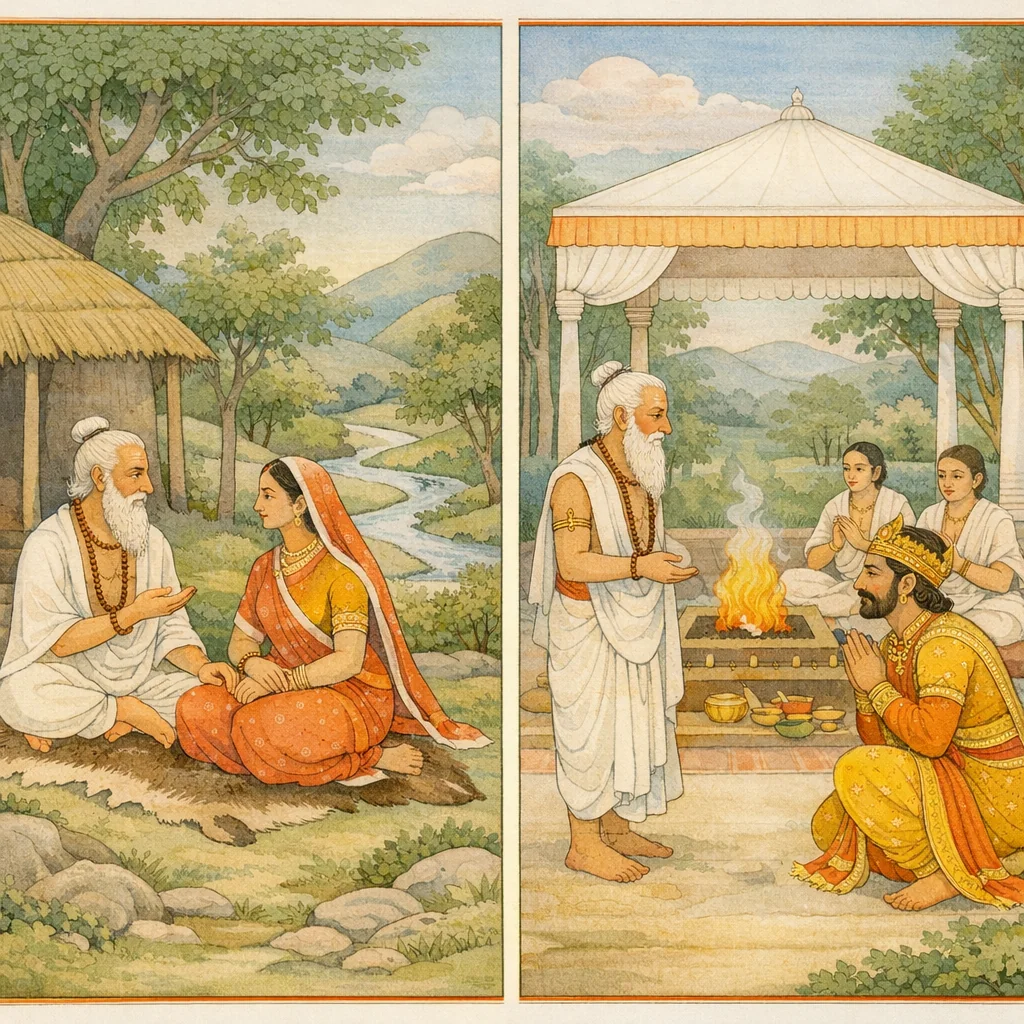
Chapter Arc: मार्कण्डेय ऋषि ब्राह्मण-धर्म की महिमा का प्रसंग उठाते हैं—और बताते हैं कि महात्मा अत्रि धन-प्राप्ति के हेतु एक असाधारण मार्ग चुनते हैं, जिससे धर्म का सूक्ष्म अर्थ प्रकट हो। → अत्रि वन में तप के लिए जाने का निश्चय करते हैं और पत्नी तथा पुत्रों से विचार-विमर्श करते हैं। गृहस्थ-धर्म, अर्थ-प्राप्ति और तपस्या—इन तीनों के बीच उचित मार्ग को लेकर मतभेद/उपदेश का तीखापन उभरता है; ‘तुम परम धर्म नहीं जानते’ जैसे वाक्य (V18) से तनाव तीव्र होता है। → संशय-च्छेदन के लिए सनत्कुमार का आवाहन/उपदेश (V24) और राजधर्म का तेजस्वी प्रतिमान—‘जैसे सूर्य तम का नाश करता है, वैसे राजा अधर्म का’ (V30)—इन वचनों से धर्म का निर्णायक स्वरूप स्पष्ट होता है: ब्राह्मण-धर्म, राजधर्म और यज्ञ-धर्म परस्पर पूरक हैं। → उपदेश से मार्ग निश्चित होता है। अत्रि शीघ्र वैन्य के यज्ञ में जाते हैं, यज्ञायतन में पहुँचकर राजा की स्तुति करते हैं और मंगल-वचनों से सम्मानपूर्वक अर्थ/दान का याचना-प्रसंग साधते हैं (V123)। → अत्रि के स्तवन के बाद यज्ञ-सभा में दान/प्रतिदान और धर्म-प्रतिष्ठा का परिणाम आगे के प्रसंग की ओर संकेत करता है।
Shlokas
Verse 1
(दाक्षिणात्य अधिक पाठके १६३ “लोक मिलाकर कुल २४३ श्लोक हैं) गदर #< (9) #::.# #2 5-7 पज्चाशीर्त्याधिकशततमो< ध्याय: ब्राह्मगकी महिमाके विषयमें अत्रिमुनि तथा राजा पृथुकी प्रशंसा मार्कण्डेय उवाच भूय एव महाभाग्यं ब्राह्मणानां निबोध मे । वैन्यो नामेह राजर्षिरश्वमेधाय दीक्षित:,मार्कण्डेयजी कहते हैं--राजन! ब्राह्मणोंका और भी माहात्म्य मुझसे सुनो। पूर्वकालमें वेनके पुत्र राजर्षि पृथुने, जो यहाँ वैन्यके नामसे प्रसिद्ध थे, किसी समय अश्वमेधयज्ञकी दीक्षा ली
Mārkaṇḍeya said: “O noble king, hear from me once more the great fortune and exalted status of the brāhmaṇas. In former times, the royal sage Pṛthu—the son of Vena, renowned here by the name Vainya—undertook the consecration for an Aśvamedha sacrifice.”
Verse 2
तमत्रिर्गन्तुमारेभे वित्तार्थमिति नः श्रुतम् । भूयो<र्थ नानुरुध्यत् स धर्मव्यक्तिनिदर्शनात्,उन दिनों महात्मा अत्रिने धन माँगनेकी इच्छासे उनके पास जानेका विचार किया, यह बात हमारे सुननेमें आयी है; परंतु ऐसा करनेसे उनको अपना धर्मात्मापन प्रकट करना पड़ता। इसलिये फिर उन्होंने धनके लिये अनुरोध नहीं किया
Mārkaṇḍeya said: “We have heard that the sage Atri set out to go to him with the aim of obtaining wealth. Yet, because such a request would have served as a public display of his own righteousness, he did not press again for money.”
Verse 3
स विचिन्त्य महातेजा वनमेवान्वरोचयत् | धर्मपत्नीं समाहूय पुत्रांश्रेदमुवाच ह,महातेजस्वी अत्रिने मन-ही-मन कुछ सोच-विचारकर (तपस्याके लिये) वनमें ही जानेका निश्चय किया और अपनी धर्मपत्नी तथा पुत्रोंको बुलाकर इस प्रकार कहा --
After reflecting, the mighty and radiant one resolved that the forest alone was to be his chosen path (for austerity). Summoning his lawful wife and his sons, he spoke to them as follows—signaling a deliberate turn from household life toward disciplined renunciation in the pursuit of dharma.
Verse 4
प्राप्स्पयाम: फलमत्यन्तं बहुलं निरुपद्रवम् । अरण्यगमन् क्षिप्रं रोचतां वो गुणाधिकम्,“हमलोग वनमें रहकर (तपद्दारा) धर्मका बहुत अधिक उपद्रवशून्य फल पा सकते हैं। अतः शीघ्र वनमें चलनेका विचार तुम सब लोगोंको रुचिकर होना चाहिये; क्योंकि ग्राम्य- जीवनकी अपेक्षा वनमें रहना अधिक लाभप्रद है”
Mārkaṇḍeya said: “By dwelling in the forest and practicing austerity, we can attain a supremely great reward—abundant and free from disturbance. Therefore, let the thought of going quickly to the forest be pleasing to you all, for life in the forest is more beneficial than a village-bound way of living.”
Verse 5
त॑ भार्या प्रत्युवाचाथ धर्ममेवानुतन्वती । वैन्यं गत्वा महात्मानमर्थयस्व धनं बहु,अत्रिकी पत्नी भी धर्मका ही अनुसरण करनेवाली थी। उसने यज्ञ-यागादिके रूपमें धर्मके ही विस्तारपर दृष्टि रखकर पतिको उत्तर दिया--'प्राणनाथ! आप धर्मात्मा राजा वैन्यके पास जाकर अधिक धनकी याचना कीजिये
Then his wife—ever intent on extending and upholding dharma—replied: “Go to the great-souled King Vainya and request abundant wealth.” In her counsel, material means are sought not for indulgence but as support for righteous duties and religious works.
Verse 6
स ते दास्यति राजर्षियजमानोडर्थितो धनम् । तत आदाय विष्रषषे प्रतिगृह्य धनं बहु,वे राजर्षि इन दिनों यज्ञ कर रहे हैं, अत: इस अवसरपर यदि आप उनसे माँगेंगे तो वे आपको अधिक धन देंगे। ब्रह्मर्ष! वहाँसे प्रचुर धन लाकर भरण-पोषण करनेयोग्य इन पुत्रोंको बाँट दीजिये; फिर इच्छानुसार वनको चलिये। धर्मज्ञ महात्माओंने यही परम धर्म बताया है!
Mārkaṇḍeya said: “That royal sage, now engaged as a sacrificer, will give you wealth when you ask. Therefore, O brahmin-seer, accept abundant riches from him; having brought it back, distribute it to these sons who are fit to be maintained, and then go to the forest as you wish. The wise, who know dharma, have declared this to be the highest course of righteousness.”
Verse 7
भृत्यान् सुतान् संविभज्य ततो व्रज यथेप्सितम् । एष वै परमो धर्मों धर्मविद्धिरुदाहृत:,वे राजर्षि इन दिनों यज्ञ कर रहे हैं, अत: इस अवसरपर यदि आप उनसे माँगेंगे तो वे आपको अधिक धन देंगे। ब्रह्मर्ष! वहाँसे प्रचुर धन लाकर भरण-पोषण करनेयोग्य इन पुत्रोंको बाँट दीजिये; फिर इच्छानुसार वनको चलिये। धर्मज्ञ महात्माओंने यही परम धर्म बताया है!
Mārkaṇḍeya said: “Having first made a proper distribution for your dependants and your sons, then depart as you wish. This indeed is the highest dharma, as proclaimed by those who truly know dharma.”
Verse 8
अत्रिर॒वाच कथितो मे महाभागे गौतमेन महात्मना । वैन्यो धर्मार्थसंयुक्त: सत्यव्रतसमन्वित:,अत्रि बोले--महाभागे! महात्मा गौतमने मुझसे कहा है कि “वेनपुत्र राजा पृथु धर्म और अर्थके साधनमें संलग्न रहते हैं। वे सत्यव्रती हैं!
Atri said: “O noble lady, the great-souled Gautama has told me about this: King Pṛthu, the son of Vena, is devoted to the pursuit of dharma and artha, and he is steadfast in a vow of truth.”
Verse 9
द्वेष्टार: किंतु नः सन्ति वसन्तस्तत्र वै द्विजा: | यथा मे गौतम: प्राह ततो न व्यवसाम्यहम्,परंतु एक बात विचारणीय है। वहाँ उनके यज्ञमें जितने ब्राह्मण रहते हैं, वे सभी मुझसे द्वेष रखते हैं, यही बात गौतमने भी कही है। इसीलिये मैं वहाँ जानेका विचार नहीं कर रहा हूँ
Verse 10
तत्र सम वाचं कल्याणीं धर्मकामार्थसंहिताम् । मयोक्तामन्यथा ब्रूयुस्ततस्ते वै निरर्थिकाम्,यदि मैं वहाँ जाकर धर्म, अर्थ और कामसे युता कल्याणमयी वाणी भी बोलूँगा तो वे उसे धर्म और अर्थके विपरीत ही बतायेंगे; निरर्थक सिद्ध करेंगे
There, even if I were to speak a balanced and auspicious speech—one grounded in dharma, artha, and kāma—yet they would twist my words into something else; and thus, indeed, they would render my statement futile and without effect.
Verse 11
गमिष्यामि महाप्राज्ञे रोचते मे वचस्तव । गाश्च मे दास्यते वैन्य: प्रभूतं चार्थसंचयम्,तथापि महाप्राज्ञे! मैं वहाँ अवश्य जाऊँगा, मुझे तुम्हारी बात ठीक जँचती है। राजा पृथु मुझे बहुत-सी गौएँ तो देंगे ही, पर्याप्त धन भी देंगे
Mārkaṇḍeya said: “I shall go, O great sage; your words please me and seem fitting. King Vainya (Pṛthu) will indeed grant me many cows, and also an ample store of wealth.”
Verse 13
अत्रिर॒वाच राजन् धन्यस्त्वमीशश्व भुवि त्वं प्रथमो नूप:,अत्रि बोले--राजन! तुम इस भूतलके सर्वप्रथम राजा हो; अतः धन्य हो, सब प्रकारके ऐश्वर्यसे सम्पन्न हो
Atri said: “O King, you are truly blessed. You are a sovereign on this earth, the foremost among rulers; therefore you are fortunate and endowed with every kind of prosperity and lordly power.”
Verse 14
स्तुवन्ति त्वां मुनिगणास्त्वदन्यो नास्ति धर्मवित् | तमब्रवीदृषि: क्रुद्धो वचनं वै महातपा:,महर्षिंगण तुम्हारी स्तुति करते हैं। तुम्हारे सिवा दूसरा कोई नरेश धर्मका ज्ञाता नहीं है। उनकी यह बात सुनकर महातपस्वी गौतम मुनिने कुपित होकर कहा
The assemblies of sages praise you, declaring that apart from you there is no other knower of dharma. Hearing these words, the great ascetic sage—angered—addressed him in reply. The passage highlights how public acclaim about one’s righteousness can provoke a stern ethical response from a true ascetic, setting the stage for a corrective speech on what dharma really demands.
Verse 15
गौतम उवाच मैवमत्रे पुनर्ब्रूया न ते प्रज्ञा समाहिता । अत्र नः प्रथमं स्थाता महेन्द्रो वै प्रजापति:,गौतम बोलें--अत्रे! फिर कभी ऐसी बात मुँहसे न निकालना। तुम्हारी बुद्धि एकाग्र नहीं है। यहाँ हमारे प्रथम प्रजापतिके रूपमें साक्षात् इन्द्र उपस्थित हैं
Gautama said: “Atri, do not ever speak like this again. Your understanding is not steady or well-collected. Here among us stands Mahendra himself—Indra—present as the foremost Prajāpati.”
Verse 16
अथात्रिरपि राजेन्द्र गौतम॑ प्रत्यभाषत । अयमेव विधाता हि यथैवेन्द्र: प्रजापति: । त्वमेव मुहासे मोहाजन्न प्रज्ञानं तवास्ति ह,राजेन्द्र! तब अत्रिने भी गौतमको उत्तर देते हुए कहा--'मुने! ये पृथु ही विधाता हैं, ये ही प्रजापति इन्द्रके समान हैं। तुम्हीं मोहसे मोहित हो रहे हो; तुम्हें उत्तम बुद्धि नहीं प्राप्त है!
Then Atri, too, addressed Gautama: “O king, this very Pṛthu is indeed the Ordainer—like Indra, like Prajāpati. But you are the one being deluded by confusion; true discernment is not present in you.”
Verse 17
गौतम उवाच जानामि नाहं मुहयामि त्वमेवात्र विमुहते । स्तौषि त्वं दर्शनप्रेप्सू राजानं जनसंसदि,गौतम बोले--मैं नहीं मोहमें पड़ा हूँ, तुम्हीं यहाँ आकर मोहित हो रहे हो। मैं खूब समझता हूँ, तुम राजासे मिलनेकी इच्छा लेकर ही भरी सभामें स्वार्थवश उनकी स्तुति कर रहे हो
Gautama said: “I understand; I am not deluded. It is you who, having come here, are falling into confusion. Seeking an audience, you are praising the king in the public assembly—driven by your own interest.”
Verse 18
न वेत्थ परमं धर्म न चावैषि प्रयोजनम् । बालस्त्वमसि मूढश्न वृद्ध: केनापि हेतुना,उत्तम धर्मका तुम्हें बिलकुल ज्ञान नहीं है। तुम धर्मका प्रयोजन भी नहीं समझते हो। मेरी दृष्टिमें तुम मूढ हो, बालक हो; किसी विशेष कारणसे बूढ़े बने हुए हो अर्थात् केवल अवस्थासे बूढ़े हो
Gautama said: “You do not know the highest dharma, nor do you understand its purpose. In my view you are foolish—still a child; you have become ‘old’ only for some incidental reason, that is, old merely in years, not in wisdom.”
Verse 19
विवदन्तौ तथा तौ तु मुनीनां दर्शने स्थितौ । ये तस्य यज्ञे संवृत्तास्तेडपृच्छन्त कथं त्विमौ,मुनियोंके सामने खड़े होकर जब वे दोनों इस प्रकार विवाद कर रहे थे, उस समय उन्हें देखकर जिनका यज्ञमें पहलेसे वरण हो चुका था, वे ब्राह्मण पूछने लगे--'ये दोनों कैसे लड़ रहे हैं?
Verse 20
प्रवेश: केन दत्तो5यमुभयोर्वैन्यसंसदि । उच्चै: समभिभाषन्तौ केन कार्येण घिष्ठितौ
Gautama said: “By whom has this entry been granted to him in the assembly of the descendants of Vena? And for what purpose have the two of them come here, speaking loudly and addressing the court with such insistence?”
Verse 21
ततः परमधर्मात्मा काश्यप: सर्वधर्मवित् । विवादिनावनुप्राप्ती तावुभौ प्रत्यवेदयत्
Then Kāśyapa—supremely righteous and fully conversant with dharma—on the arrival of the two disputants, addressed them both, setting the stage for a fair hearing and a dharma-guided resolution.
Verse 22
“किसने इन दोनोंको महाराज पृथुके यज्ञमण्डपमें घुसने दिया है? ये दोनों जोर-जोरसे बातें करते और झगड़ते यहाँ किस कामसे खड़े हैं? उस समय परम धर्मात्मा एवं सम्पूर्ण धर्मोंके ज्ञाता कणादने सब सदस्योंको बताया कि ये दोनों किसी विषयको लेकर परस्पर विवाद कर रहे हैं और उसीके निर्णयके लिये यहाँ आये हैं" ।। अथाब्रवीत् सदस्यांस्तु गौतमो मुनिसत्तमान् | आवयोव्यद्वितं प्रश्न शूणुत द्विजसत्तमा:,तब गौतमने सदस्यरूपसे बैठे हुए उन श्रेष्ठ मुनियोंसे कहा--*श्रेष्ठ ब्राह्मणो! हम दोनोंके प्रश्षको आपलोग सुनें। अत्रिने राजा पृथुकी विधाता कहा है। इस बातको लेकर हम दोनोंमें महान् संशय एवं विवाद उपस्थित हो गया है।” यह सुनकर वे महात्मा मुनि उक्त संशयका निवारण करनेके लिये तुरंत ही धर्मज्ञ सनत्कुमारजीके पास दौड़े गये। उन महातपस्वीने इनकी सब बातें यथार्थरूपसे सुनकर उनसे यह धर्म एवं अर्थयुक्त वचन कहा --
Then Gautama addressed the eminent sages seated as members of the assembly: “O best of Brahmins, please hear the question that has arisen between the two of us. Atri has declared that King Pṛthu is the ‘Vidhātā’ (the Ordainer/Creator). On this point a great doubt and dispute has arisen between us.” Hearing this, the great sages hastened to the dharma-knowing Sanatkumāra to have the uncertainty resolved; after listening carefully, the ascetic spoke words grounded in both righteousness and sound reasoning.
Verse 23
वैन्यं विधातेत्याहात्रिरत्र नौ संशयो महान् | श्रुत्वैव तु महात्मानो मुनयो<शभ्यद्रवन् द्रुतम्,तब गौतमने सदस्यरूपसे बैठे हुए उन श्रेष्ठ मुनियोंसे कहा--*श्रेष्ठ ब्राह्मणो! हम दोनोंके प्रश्षको आपलोग सुनें। अत्रिने राजा पृथुकी विधाता कहा है। इस बातको लेकर हम दोनोंमें महान् संशय एवं विवाद उपस्थित हो गया है।” यह सुनकर वे महात्मा मुनि उक्त संशयका निवारण करनेके लिये तुरंत ही धर्मज्ञ सनत्कुमारजीके पास दौड़े गये। उन महातपस्वीने इनकी सब बातें यथार्थरूपसे सुनकर उनसे यह धर्म एवं अर्थयुक्त वचन कहा --
Gautama said: “Atri has declared that Vainya (Pṛthu) is the ‘Vidhātṛ’ (ordainer/creator). On this point, between the two of us, a great doubt and dispute has arisen.” Hearing this, the high-souled sages at once hurried away, intent on removing the uncertainty by seeking authoritative clarification from the knower of dharma.
Verse 24
सनत्कुमारं धर्मज्ञ संशयच्छेदनाय वै | स च तेषां वच: श्रुत्वा यथातत्त्वं महातपा: । प्रत्युवाचाथ तानेवं धर्मार्थसहितं वच:,तब गौतमने सदस्यरूपसे बैठे हुए उन श्रेष्ठ मुनियोंसे कहा--*श्रेष्ठ ब्राह्मणो! हम दोनोंके प्रश्षको आपलोग सुनें। अत्रिने राजा पृथुकी विधाता कहा है। इस बातको लेकर हम दोनोंमें महान् संशय एवं विवाद उपस्थित हो गया है।” यह सुनकर वे महात्मा मुनि उक्त संशयका निवारण करनेके लिये तुरंत ही धर्मज्ञ सनत्कुमारजीके पास दौड़े गये। उन महातपस्वीने इनकी सब बातें यथार्थरूपसे सुनकर उनसे यह धर्म एवं अर्थयुक्त वचन कहा --
Gautama said: “For the sake of cutting through their doubt, they approached Sanatkumāra, the knower of dharma. And that great ascetic, having heard their words exactly as they were, replied to them with a statement that was aligned with both righteousness and practical good.”
Verse 25
सनत्कुमार उवाच ब्रह्म क्षत्रेण सहित क्षत्रं च ब्रह्मणा सह । संयुक्तौ दहत: शत्रून् वनानीवाग्निमारुती,सनत्कुमार बोले--ब्राह्मण क्षत्रियसे और क्षत्रिय ब्राह्मणसे संयुक्त हो जायेँ तो वे दोनों मिलकर शत्रुओंको उसी प्रकार दग्ध कर डालते हैं, जैसे अग्नि और वायु परस्पर सहयोगी होकर कितने ही वनोंको भस्म कर डालते हैं। राजा धर्मरूपसे विख्यात है। वही प्रजापति, इन्द्र, शुक्राचार्य, धाता और बृहस्पति भी है
Sanatkumāra said: When the spiritual authority of the brāhmaṇa stands united with the governing power of the kṣatriya—and when the kṣatriya in turn is joined with the brāhmaṇa—then, acting together, they burn down enemies, just as fire and wind, cooperating, can consume entire forests. The teaching underscores that righteous rule is strongest when power is guided by wisdom and restraint, and wisdom is supported by disciplined protection.
Verse 26
राजा वै प्रथितो धर्म: प्रजानां पतिरेव च । स एव शक्र: शुक्रश्न स धाता च बृहस्पति:,सनत्कुमार बोले--ब्राह्मण क्षत्रियसे और क्षत्रिय ब्राह्मणसे संयुक्त हो जायेँ तो वे दोनों मिलकर शत्रुओंको उसी प्रकार दग्ध कर डालते हैं, जैसे अग्नि और वायु परस्पर सहयोगी होकर कितने ही वनोंको भस्म कर डालते हैं। राजा धर्मरूपसे विख्यात है। वही प्रजापति, इन्द्र, शुक्राचार्य, धाता और बृहस्पति भी है
Sanatkumāra said: “The king is renowned as Dharma itself and is truly the lord and protector of the people. In him are embodied the powers of Prajāpati (the progenitor), Śakra (Indra, the wielder of sovereignty), Śukra (the preceptor of polity), Dhātā (the cosmic ordainer), and Bṛhaspati (the priestly wisdom of right counsel).” The ethical point is that kingship, when rightly exercised, is not mere force but a concentrated form of moral order, guardianship, and wise governance for the welfare of subjects.
Verse 27
प्रजापतिर्विराट् सम्राट् क्षत्रियो भूपतिर्नप: । य एशि: स्तूयते शब्दै: कस्तं नार्चितुमहति,जिस राजाकी प्रजापति, विराट, सम्राट, क्षत्रिय, भूषपति, नृप आदि शब्दोंद्वारा स्तुति की जाती है, उसकी पूजा कौन नहीं करेगा? पुरायोनि (प्रथम कारण), युधाजित् (संग्रामविजयी), अभिया (रक्षाके लिये सर्वत्र गमन करनेवाला), मुदित (प्रसन्न), भव (ईश्वर), स्वर्णेता (स्वर्गकी प्राप्ति करानेवाला), सहजित् (तत्काल विजय करनेवाला) तथा बश्रु (विष्णु)--इन नामोंद्वारा राजाका वर्णन किया जाता है। राजा सत्यका कारण, प्राचीन बातोंको जाननेवाला तथा सत्यधर्ममें प्रवृत्ति करानेवाला है। अधर्मसे डरे हुए ऋषियोंने अपना ब्राह्मबल भी क्षत्रियोंमें स्थापित कर दिया था
Sanatkumāra said: “He is called by the titles ‘Prajāpati’, ‘Virāṭ’, ‘Samrāṭ’, ‘Kṣatriya’, ‘Bhūpati’, and ‘Nṛpa’—the sovereign who upholds and orders the world. When a king is praised and recognized through such names, who would not deem him worthy of honor and worship? For the king is presented as the visible support of social order: the one who protects, conquers in battle, and sustains dharma, so that truth and right conduct may stand firm.”
Verse 28
पुरायोनिर्युधाजिच्च अभिया मुदितो भव: । स्वर्णेता सहजिद् बश्रुरिति राजाभिधीयते,जिस राजाकी प्रजापति, विराट, सम्राट, क्षत्रिय, भूषपति, नृप आदि शब्दोंद्वारा स्तुति की जाती है, उसकी पूजा कौन नहीं करेगा? पुरायोनि (प्रथम कारण), युधाजित् (संग्रामविजयी), अभिया (रक्षाके लिये सर्वत्र गमन करनेवाला), मुदित (प्रसन्न), भव (ईश्वर), स्वर्णेता (स्वर्गकी प्राप्ति करानेवाला), सहजित् (तत्काल विजय करनेवाला) तथा बश्रु (विष्णु)--इन नामोंद्वारा राजाका वर्णन किया जाता है। राजा सत्यका कारण, प्राचीन बातोंको जाननेवाला तथा सत्यधर्ममें प्रवृत्ति करानेवाला है। अधर्मसे डरे हुए ऋषियोंने अपना ब्राह्मबल भी क्षत्रियोंमें स्थापित कर दिया था
Sanatkumāra said: The king is spoken of by these exalted names—‘Prime Cause’ (the first source), ‘Victor in battle’, ‘Fearless protector who moves everywhere for safeguarding’, ‘Joyful’, ‘Lord’, ‘Bestower of heaven’, ‘Instant conqueror’, and ‘Viṣṇu’. Who, then, would not honor and worship that ruler whom people praise with titles such as Prajāpati, Virāṭ, Samrāṭ, Kṣatriya, Bhūṣapati, and Nṛpa? The king is presented as a foundation of truth, a knower of ancient tradition, and one who impels society toward truthful dharma; therefore even sages, fearing adharma, are said to have entrusted their brahmanical power into the kṣatriya order for the protection of righteousness.
Verse 29
सत्ययोनि: पुराविच्च सत्यधर्मप्रवर्तक: । अधमददृषयो भीता बल क्षत्रे समादधन्,जिस राजाकी प्रजापति, विराट, सम्राट, क्षत्रिय, भूषपति, नृप आदि शब्दोंद्वारा स्तुति की जाती है, उसकी पूजा कौन नहीं करेगा? पुरायोनि (प्रथम कारण), युधाजित् (संग्रामविजयी), अभिया (रक्षाके लिये सर्वत्र गमन करनेवाला), मुदित (प्रसन्न), भव (ईश्वर), स्वर्णेता (स्वर्गकी प्राप्ति करानेवाला), सहजित् (तत्काल विजय करनेवाला) तथा बश्रु (विष्णु)--इन नामोंद्वारा राजाका वर्णन किया जाता है। राजा सत्यका कारण, प्राचीन बातोंको जाननेवाला तथा सत्यधर्ममें प्रवृत्ति करानेवाला है। अधर्मसे डरे हुए ऋषियोंने अपना ब्राह्मबल भी क्षत्रियोंमें स्थापित कर दिया था
Sanatkumāra said: “The king is the very source of truth, a knower of what is ancient, and one who sets the practice of truthful dharma in motion. When the seers, frightened at the sight of adharma, sought protection, they even placed their spiritual power in the Kṣatriya order.”
Verse 30
आदित्यो दिवि देवेषु तमो नुदति तेजसा । तथैव नृपतिर्भूमावधर्मनुदते भूशम्,जैसे देवलोकमें सूर्य अपने तेजसे सम्पूर्ण अन्धकारका नाश करता है, उसी प्रकार राजा इस पृथ्वीपर रहकर अधर्मोंको सर्वथा हटा देता है
Sanatkumāra said: “As the Sun in heaven, among the gods, drives away darkness by its radiance, so too a king, dwelling upon the earth, forcefully dispels adharma. The ruler’s true splendor is not mere power, but the active removal of injustice and moral disorder from the realm.”
Verse 31
ततो राज्ञ: प्रधानत्वं शास्त्रप्रामाण्यदर्शनात् । उत्तर: सिद्धयते पक्षो येन राजेति भाषितम्,अतः शास्त्र-प्रमाणपर दृष्टिपात करनेसे राजाकी प्रधानता सूचित होती है। इसलिये जिसने राजाको प्रजापति बतलाया है, उसीका पक्ष उत्कृष्ट सिद्ध होता है
Therefore, on seeing that the śāstras are authoritative, the king’s pre-eminence is established. Hence the opposing view is confirmed as the stronger one—namely, the position of him who has declared, ‘he is called a king.’
Verse 32
मार्कण्डेय उवाच ततः स राजा संहृष्ट: सिद्धे पक्षे महामना: । तमत्रिमब्रवीत् प्रीत: पूर्व येनाभिसंस्तुत:
Mārkaṇḍeya said: Then that king, delighted and great-souled, when his cause had been successfully established, spoke with affection to Atri—the very sage by whom he had earlier been praised and commended.
Verse 33
यस्मात् पूर्व मनुष्येषु ज्यायांसं मामिहाब्रवी: । सर्वदेवैश्व विप्रर्षे सम्मितं श्रेष्ठमेव च
Markandeya said: “Because, earlier among men, you addressed me here as one superior (in age and wisdom); and, O brahmin-seer, you also declared me to be approved by all the gods and indeed the best.”
Verse 34
तस्मात् तेऊहं प्रदास्यामि विविध वसु भूरि च । दासीसहसं श्यामानां सुवस्त्राणामलंकृतम्
“Therefore, I shall bestow upon you abundant and varied wealth, and also a thousand maidservants—dark-complexioned, well-clad, and adorned.”
Verse 35
दशकोटीर्हिरिण्यस्य रुक्मभारांस्तथा दश । एतद् ददामि वितप्रर्षे सर्वज्ञस्त्वं मतो हि मे
Mārkaṇḍeya said: “Ten crores of gold, and likewise ten loads of refined gold—this I give to you, O ascetic of the sacred fig-tree. For in my judgment you are truly all-knowing.”
Verse 36
३२--३५ ।। तदत्रिन्यायतः सर्व प्रतिगृह्मा भिसत्कृत: । प्रत्युज्जगाम तेजस्वी गृहानेव माहतपा:,तब महान् तपस्वी और तेजस्वी अत्रि मुनि राजासे समादृत हो न्यायपूर्वक मिले हुए उस सम्पूर्ण धनको लेकर अपने घरको चले गये
Then the great ascetic Atri—honoured with due respect—accepted all of that wealth in accordance with proper custom and justice, and the radiant sage departed for his own dwelling. The passage underscores that even in receiving gifts, one should act by established right conduct, without greed or impropriety.
Verse 37
प्रदाय च धन प्रीत: पुत्रेभ्य: प्रयतात्मवान् । तप: समभिसंधाय वनमेवान्वपद्यत,फिर मनपर संयम रखनेवाले वे महामुनि पुत्रोंको प्रसन्नतापूर्वक वह सारा धन बाँटकर तपस्याका शुभ संकल्प मनमें लेकर वनमें ही चले गये
Having gladly distributed his wealth to his sons, that great sage—self-controlled and disciplined—formed the auspicious resolve to undertake austerities and withdrew into the forest itself. The verse highlights the ethical ideal of renunciation after fulfilling household duties: giving without attachment, then turning the mind toward spiritual practice.
Verse 123
एवमुक्त्वा जगामाशु वैन्ययज्ञं महातपा: । गत्वा च यज्ञायतनमत्रिस्तुष्टाव तं नूपम् १२ ।। वाक्यैर्मड्गलसंयुक्तैे: पूजयानो<ब्रवीद् वच: । ऐसा कहकर महातपस्वी अत्रि शीघ्र ही राजा पृथुके यज्ञमें गये। यज्ञमण्डपमें पहुँचकर उन्होंने उस राजाका मांगलिक वचनोंद्वारा स््तवन किया और उनका समादर करते हुए इस प्रकार कहा
Having spoken thus, the great ascetic Atri swiftly went to the Vainya sacrifice. Reaching the sacrificial enclosure, he praised that king with auspicious words; and, honoring him with due reverence, he then addressed him. The passage underscores the ethical decorum of approaching power through blessing, respect, and truthful speech rather than coercion.
Verse 184
इस प्रकार श्रीमह्ाभारत वनपर्वके अन्तर्गत मार्कण्डेययमास्यापर्वमें ब्राह्मणमाहात्म्यवर्णणविषयक एक सौ चौरासीवाँ अध्याय पूरा हुआ
Thus ends the one hundred and eighty-fourth chapter of the Markandeya Samasya sub-section within the Vana Parva of the Śrī Mahābhārata, a chapter devoted to describing the greatness and sanctity of the brāhmaṇa—underscoring the ethical ideal that reverence for learning, self-restraint, and dharma sustains society even amid hardship.
Verse 185
इति श्रीमहाभारते वनपर्वणि मार्कण्डेयसमास्यापर्वणि ब्राह्मणमाहात्म्ये पज्चाशीत्यधिकशततमो< ध्याय:,इस प्रकार श्रीमहाभारत वनपर्वके अन्तर्गत मार्कण्डेयसमास्यापर्वमें ब्राह्मणमाहात्म्यविषयक एक सौ पचासीवाँ अध्याय पूरा हुआ
Thus, in the Śrī Mahābhārata, within the Vana Parva—specifically in the Markandeya-Samāsya sub-section—ends the one-hundred-and-eighty-fifth chapter, dealing with the greatness and sanctity of the brāhmaṇa. The closing formula signals the completion of a discourse that frames ethical order (dharma) through reverence for spiritual learning, restraint, and the social-religious responsibilities embodied by the brāhmaṇa ideal.
Frequently Asked Questions
The chapter frames a governance-and-conduct dilemma under historical pessimism: how to sustain truthful, disciplined action when time itself (Kali) appears to normalize deception, role-confusion, and institutional decay.
Ethics is anchored in a larger ontology of kāla and the divine: social disorder is contextualized within cyclic time, while the ‘world within the divine body’ motif teaches humility about perception and steadiness in dharma despite impermanence.
No explicit phalaśruti formula appears in the provided passage; the meta-function is archival and instructional—positioning yuga knowledge and pralaya imagery as interpretive tools for understanding dharma, suffering, and cosmic order.