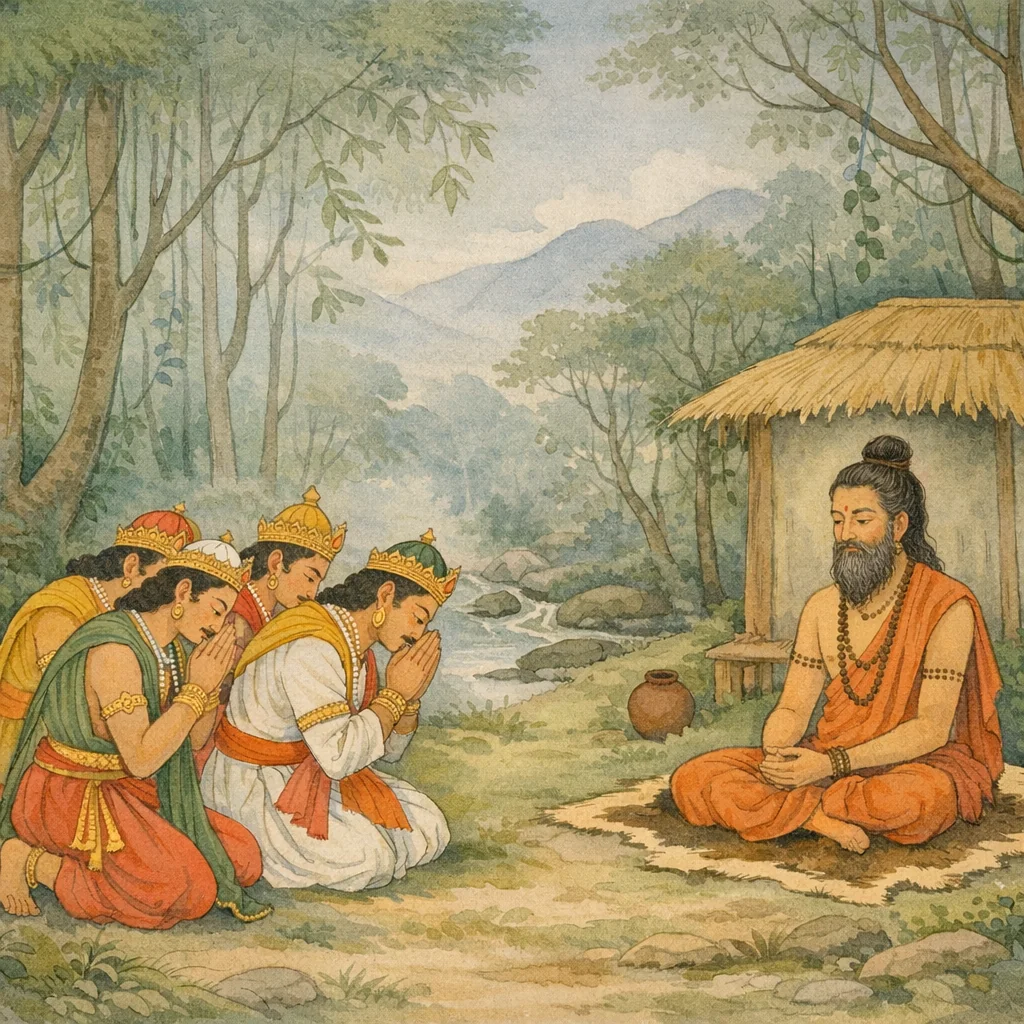
Adhyaya 185
Manoḥ Carita (The Account of Manu Vaivasvata and the Mātsyaka Flood Narrative)
Upa-parva: Mārkaṇḍeya–Samvāda (Mātsyaka Ākhyāna / Manus-carita Episode)
Vaiśaṃpāyana reports that a Pāṇḍava asks Mārkaṇḍeya to relate Manu Vaivasvata’s career. Mārkaṇḍeya describes Manu’s extraordinary tapas at Badarī—rigorous ascetic posture and prolonged discipline. A small fish approaches, fearing predation, and requests protection; Manu compassionately shelters it in a jar. As the fish grows, Manu successively transfers it to a larger pond, then to the Gaṅgā, and finally to the ocean, where it remains benign and pleasing despite immense size. The fish then discloses an imminent pralaya that will inundate the world and instructs Manu to build a strong boat, equip it with a binding rope, embark with the Saptarṣis, and load securely stored seeds of living beings. When the flood arrives and all directions vanish into water, the horned fish appears; Manu fastens the rope to its horn, and the fish tows the boat for many years to a Himalayan summit. The sages bind the boat there; the peak becomes known as Naubandhana. The fish reveals a creator identity (Prajāpati/Brahmā) and charges Manu with re-creating beings and worlds, promising clarity through tapas. The fish disappears; Manu undertakes further austerity and begins creation. The chapter closes with a phalaśruti: hearing this Mātsyaka/Manu narrative is presented as purificatory and conducive to well-being and heavenly attainment.
Chapter Arc: पाण्डुसुत महात्मा मार्कण्डेय से तपस्वी, स्वधर्मपरायण ब्राह्मण के माहात्म्य का रहस्य पूछते हैं—कि कैसे तपोबल पाप-भय को भी हर लेता है। → मार्कण्डेय हैहयवंशी परपुरंजय नामक रूपवान, बलवान राजकुमार की कथा छेड़ते हैं, जो मृगया करते-करते वन में एक मुनि के निकट पहुँचता है। आगे चलकर अनेक राजा/क्षत्रिय एक महात्मा मुनि से लज्जित होकर कहते हैं कि ‘कर्मदोष’ से उनसे ब्राह्मण-हिंसा हो गई है—और वे सत्क्रिया के अधिकारी नहीं रहे। → मुनि (अरिष्टनेमि/विप्रर्षि) उन्हें चुनौती देते हैं—‘कैसे ब्राह्मण मारा गया? कहाँ है वह? मेरे तपोबल को देखो।’ राजागण स्वप्नवत् मोह में, लज्जा और ग्लानि से भरकर ब्राह्मण को खोजने लगते हैं; तपस्या का तेज उनके अपराध-बोध को उजागर कर देता है और भय का बंधन ढीला पड़ता है। → मुनि ईर्ष्यारहित राजाओं को संक्षेप में उपदेश देते हैं कि वे संगठित होकर लौटें—‘पाप से भय मत करो’; तप, सत्य और ब्राह्मण-सम्मान की शरण में प्रायश्चित्त का मार्ग खुलता है।
Shlokas
Verse 1
हि आय न [हुक हि 7 2 चतुरशीरत्याधेकशततमो< ध्याय: तपस्वी तथा स्वधर्मपरायण ब्राह्मुणोंका माहात्म्य वैशम्पायन उवाच मार्कण्डेयं महात्मानमूचु: पाण्डुसुतास्तदा । माहात्म्यं द्विजमुख्यानां श्रोतुमिच्छाम कथ्यताम्,वैशम्पायनजी कहते हैं--जनमेजय! उस समय पाण्घुपुत्रोंने महात्मा मार्कण्डेयजीसे कहा--'मुने! हम श्रेष्ठ ब्राह्मणोंका माहात्म्य सुनना चाहते हैं, आप उसका वर्णन कीजिये'
Vaiśampāyana said: Then the sons of Pāṇḍu addressed the great-souled sage Mārkaṇḍeya: “We wish to hear of the greatness of the foremost among the twice-born (brāhmaṇas). Please relate it to us.”
Verse 2
एवमुक्त: स भगवान् मार्कण्डेयो महातपा: । उवाच सुमहातेजा: सर्वशास्त्रविशारद:,उनके ऐसा कहनेपर महातपस्वी, महान् तेजस्वी और सम्पूर्ण शास्त्रोंके निपुण विद्वान् भगवान् मार्कण्डेयने इस प्रकार कहा
Thus addressed, the venerable sage Mārkaṇḍeya—of great austerity, radiant spiritual power, and mastery of all sacred disciplines—responded. The narrative signals that a weighty, authoritative instruction is about to be given, grounded in tapas, learning, and dharmic insight.
Verse 3
मार्कण्डेय उवाच हैहयानां कुलकरो राजा परपुरंजय: । कुमारो रूपसम्पन्नो मृगयां व्यचरद् बली,मार्कण्डेयजी बोले--हैहयवंशी क्षत्रियोंकी वंशपरम्पराको बढ़ानेवाला राजा परपुरंजय, जो अभी कुमारावस्थामें था, बड़ा ही सुन्दर और बलवान था, एक दिन वनमें हिंसक पशुओंको मारनेके लिये गया
Mārkaṇḍeya said: “There was a king named Parapuraṃjaya, a founder and upholder of the Haihaya line. Though still a young prince, he was handsome and strong. One day he went out into the forest on a hunt, intent on bringing down fierce beasts.”
Verse 4
चरमाणस्तु सो5रण्ये तृणवीरुत्समावृते | कृष्णाजिनोत्तरासजुूं ददर्श मुनिमन्तिके,तृण और लताओंसे भरे हुए उस वनमें घूमते-घूमते उस राजकुमारने एक मुनिको देखा, जो काले हिंसक पशुके चर्मकी ओढ़नी ओडढ़े थोड़ी ही दूरपर बैठे थे
As he wandered through that forest thickly overgrown with grasses and creepers, the prince caught sight, not far away, of a sage seated nearby, wearing an upper garment of black antelope skin—an image of austere restraint amid the wild growth.
Verse 5
स तेन निहतो<रण्ये मन्यमानेन वै मृगम् । व्यथित: कर्म तत् कृत्वा शोकोपहतचेतन:,राजकुमारने उन्हें हिंसक पशु ही समझा और उस वनमें अपने बाणोंसे उन्हें मार डाला। अज्ञानवश यह पापकर्म करके वह राजकुमार व्यथित हो शोकसे मूर्च्छित हो गया
Thinking him to be a wild beast, he shot and killed him there in the forest. Having committed that deed, the prince was shaken with remorse; his mind, overwhelmed by grief, sank into a swoon.
Verse 6
जगाम हैहयानां वै सकाशं प्रथितात्मनाम् । राज्ञां राजीवनेत्रो5सौ कुमार: पृथिवीपति: । तेषां च तद् यथावृत्तं कथयामास वै तदा,तत्पश्चात् होशमें आकर वह सुविख्यात हैहयवंशी राजाओंके पास गया। वहाँ पृथ्वीका पालन करनेवाले उस कमलनयन राजकुमारने उन सबके सामने इस दुर्घटनाका यथावत् समाचार कहा
Then that lotus-eyed prince—destined to be a protector of the earth—went to the presence of the famed Haihaya kings. There, before them, he faithfully recounted the entire incident exactly as it had occurred, choosing truthful report and proper procedure over haste or concealment.
Verse 7
त॑ चापि हिंसितं तात मुनिं मूलफलाशिनम् । श्र॒त्वा दृष्टवा च ते तत्र बभूवुर्दीनमानसा:,तात! फल-मूलका आहार करनेवाले एक मुनिकी हिंसा हो गयी, यह सुनकर और देखकर वे सभी क्षत्रिय मन-ही-मन बहुत दुःखी हुए
Markandeya said: “Dear child, when they heard—and also saw—that a sage who lived only on roots and fruits had been harmed, those kṣatriyas there became inwardly distressed and heavy-hearted. The sight and report of violence against an austere, harmless ascetic stirred their conscience and sorrow.”
Verse 8
कस्यायमिति ते सर्वे मार्गमाणास्ततस्तत: । जम्मुश्नारिष्टनेम्नो5थ ताकक्ष्यस्याश्रममज्जसा,फिर वे सब-के-सब जहाँ-तहाँ यह पता लगाते हुए कि ये मुनि किसके पुत्र हैं, शीघ्र ही कश्यप-नन्दन अरिष्टनेमिके आश्रमपर गये
All of them, repeatedly searching here and there and asking, “Whose son is this?”, quickly made their way to the hermitage of the sage Āriṣṭanemi, the son of Kaśyapa, in the Jambū region—seeking clarity about the ascetic’s lineage and identity.
Verse 9
तेडभिवाद्य महात्मानं तं मुनिं नियतव्रतम् । तस्थु: सर्वे स तु मुनिस्तेषां पूजामथाहरत्,वहाँ नियमपूर्वक उत्तम व्रतका पालन करनेवाले उन महात्मा मुनिको प्रणाम करके वे सब खड़े हो गये। तब मुनिने उनके लिये अर्घ्य आदि पूजन-सामग्री अर्पित की
Having respectfully saluted that great-souled sage, a strict observer of vowed discipline, they all stood before him. The sage, in turn, accepted their act of reverence and proceeded to honor them with the customary offerings such as arghya, thus upholding the ethics of hospitality and mutual respect between guests and ascetics.
Verse 10
ते तमूचुर्महात्मानं न वयं सत्क्रियां मुने । त्वत्तोर्ड्: कर्मदोषेण ब्राह्मणो हिंसितो हि न:,यह देखकर उन्होंने उन महात्मासे कहा--“मुने! हम अपने दूषित कर्मके कारण आपसे सत्कार पानेयोग्य नहीं रह गये हैं। हमसे एक ब्राह्मणकी हत्या हो गयी है”
They said to that great-souled sage: “O muni, we are no longer fit to receive honour or hospitality from you, for our actions have been tainted. Through a fault in our conduct, a brāhmaṇa has been slain by us.”
Verse 11
तानब्रवीत् स विप्रर्षि: कथं वो ब्राह्मणो हत: । क्व चासौ ब्रूत सहिता: पश्यध्वं मे तपोबलम्,यह सुनकर उन ब्रह्मर्षिने कहा--“आपलोगोंसे ब्राह्मणकी हत्या कैसे हुई? और वह मरा हुआ ब्राह्मण कहाँ है? बताइये। फिर सब लोग एक साथ मेरी तपस्याका बल देखियेगा'
Hearing their account, the brahmarṣi said to them: “How did a brāhmaṇa come to be slain by you? And where is that brāhmaṇa now? Tell me. Then, all of you together, behold the power born of my austerities.” The verse frames the killing of a brāhmaṇa as a grave moral rupture and introduces ascetic power as a means to investigate, judge, and potentially remedy the wrongdoing.
Verse 12
ते तु तत् सर्वमखिलमाख्यायास्मै यथातथम् | नापश्यंस्तमृषिं तत्र गतासुं ते समागता:,उनके इस प्रकार पूछनेपर क्षत्रियोंने मुनिके वधका सारा समाचार उनसे ठीक-ठीक कह सुनाया और उन्हें साथ लेकर सभी उस स्थानपर आये जहाँ मुनिकी हत्या हुई थी। किंतु उन्होंने वहाँ मरे हुए मुनिकी लाश नहीं देखी
But they, having related to him the entire matter in full, exactly as it had happened, came together to that very spot. Yet there they did not see the sage—now lifeless—where they had gathered, for his body was nowhere to be found.
Verse 13
अन्वेषमाणा: सव्रीडा: स्वप्रवद्धतचेतना: । तानब्रवीत् तत्र मुनिस्ताक्ष्य: परपुरंजय,फिर तो वे लज्जित होकर इधर-उधर उसकी खोज करने लगे। स्वप्नकी भाँति उनकी चेतना लुप्त-सी हो गयी। तब मुनिवर अरिष्टनेमिने उनसे कहा--“परपुरंजय! तुम लोगोंने जिसे मार डाला था, वह यही ब्राह्मण तो नहीं है? राजाओ! यह मेरा तपोबलसम्पन्न पुत्र है!
Ashamed, they began searching for him here and there, their awareness dulled as if in a dream. Then the sage there addressed them: “O conquerors of enemy cities—was it not this very brāhmaṇa whom you struck down? O kings, this is my son, endowed with the power of austerity.”
Verse 14
स्यादयं ब्राह्मण: सो5थ युष्माभियों विनाशित: । पुत्रो हयं मम नृपास्तपोबलसमन्वित:,फिर तो वे लज्जित होकर इधर-उधर उसकी खोज करने लगे। स्वप्नकी भाँति उनकी चेतना लुप्त-सी हो गयी। तब मुनिवर अरिष्टनेमिने उनसे कहा--“परपुरंजय! तुम लोगोंने जिसे मार डाला था, वह यही ब्राह्मण तो नहीं है? राजाओ! यह मेरा तपोबलसम्पन्न पुत्र है!
Mārkaṇḍeya said: “Could it be that this is the very brāhmaṇa whom you have destroyed? O kings, this is my son, endowed with the strength born of austerity.” The statement confronts the rulers with the moral weight of their act—warning that violence against the innocent, especially a brāhmaṇa, rebounds as shame and spiritual peril, and that ascetic power stands as a counterforce to royal might.
Verse 15
ते च दृष्टवैव तमृषिं विस्मयं परमं गता: । महदाश्चर्यमिति वै ते ब्रुवाणा महीपते,राजन्! उन महर्षिको जीवित हुआ देख वे सभी क्षत्रिय बड़े विस्मित हुए और कहने लगे 'यह तो बड़े आश्चर्यकी बात है”
Seeing that sage alive, the kṣatriyas were seized by the greatest astonishment. Addressing the king, they exclaimed, “Indeed, this is a great marvel!” The moment underscores reverence for ascetic power and the recognition that spiritual attainment can transcend ordinary expectations about life and death.
Verse 16
मृतो हायमुपानीत: कथं जीवितमाप्तवान् । किमेतत् तपसो वीर्य येनायं जीवित: पुनः,“ये मरे हुए मुनि यहाँ कैसे लाये गये और किस प्रकार इन्हें जीवन मिला? क्या यह तपस्याकी ही शक्ति है, जिससे फिर ये जीवित हो गये?
Mārkaṇḍeya said: “This one was dead—how was he brought here, and how did he regain life? Is it the potency of austerity that has done this, by which he has been made alive again?”
Verse 17
श्रोतुमिच्छामहे विप्र यदि श्रोतव्यमित्युत । स तानुवाच नास्माकं मृत्यु: प्रभवते नूपा:,“ब्रह्म! हम यह सब रहस्य सुनना चाहते हैं। यदि सुननेयोग्य हो तो कहिये'। तब महर्षिने उन क्षत्रियोंसे कहा--“राजाओ! हम लोगोंपर मृत्युका वश नहीं चलता”
“O brāhmaṇa, we wish to hear it—if indeed it is fit to be heard,” they said. Markandeya then replied to those kings: “O rulers, death holds no dominion over us.” The statement underscores the ascetic’s spiritual mastery and the ethical idea that one who is established in brahmanical austerity and truth is not shaken by fear of mortality.
Verse 18
कारणं व: प्रवक्ष्यामि हेतुयोगसमासत: । (मृत्यु: प्रभवने येन नास्माकं नृपसत्तमा: । शुद्धाचारा अनलसा: संध्योपासनतत्परा: ।। शुद्धान्ना: शुद्धसुधना ब्रह्म॒चर्यव्रतान्विता: ।) सत्यमेवाभिजानीमो नानृते कुर्महे मन: । स्वधर्ममनुतिष्ठामस्तस्मान्मृत्युभयं न न:,“इसका क्या कारण है? यह मैं तर्क और युक्तिके साथ संक्षेपसे बता रहा हूँ। श्रेष्ठ नूपतिगण! हमलोगोंपर मृत्युका प्रभाव क्यों नहीं पड़ता--यह बताते हैं, सुनिये--हम शुद्ध आचार-विचारसे रहते हैं, आलस्यसे रहित हैं, प्रतिदिन संध्योपासनके परायण रहते हैं, शुद्ध अन्न खाते हैं और शुद्ध रीतिसे न्यायपूर्वक धनोपार्जन करते हैं; यही नहीं हमलोग सदा ब्रह्मचर्यव्रतके पालनमें लगे रहते हैं। हमलोग केवल सत्यको ही जानते हैं। कभी झूठमें मन नहीं लगाते और सदा अपने धर्मका पालन करते रहते हैं। इसलिये हमें मृत्युसे भय नहीं है
Mārkaṇḍeya said: “I shall tell you the reason, briefly, with its logic and supporting grounds. O best of kings, hear why death does not gain mastery over us: our conduct is pure; we are free from sloth; we are devoted to the daily worship at the twilight rites; we eat pure food and acquire wealth by clean and righteous means; moreover, we are steadfast in the vow of brahmacarya. We recognize only truth; we do not set our minds upon falsehood. We continually uphold our own dharma—therefore we have no fear of death.”
Verse 19
यद् ब्राह्मणानां कुशलं तदेषां कथयामहे । नैषां दुश्चरितं ब्रूमस्तस्मान्मृत्युभयं न न:,'ब्राह्मणोंके जो शुभ कर्म हैं, उन्हींकी हम चर्चा करते हैं। उनके दोषोंका बखान नहीं करते हैं। इसलिये हमें मृत्युसे भय नहीं है। हम अतिथियोंको अन्न और जलसे तृप्त करते हैं। हमारे ऊपर जिनके भरण-पोषणका भार है, उन्हें हम पूरा भोजन देते हैं और उन्हें भोजन करानेसे बचा हुआ अन्न हम स्वयं भोजन करते हैं, अतः हमें मृत्युसे भय नहीं है
Mārkaṇḍeya said: “We speak only of what is auspicious and commendable in the brāhmaṇas; we do not proclaim their misdeeds. Therefore, we have no fear of death.”
Verse 20
अतिथीनन्नपानेन भृत्यानत्यशनेन च । सम्भोज्य शेषमश्नीमस्तस्मान्मृत्युभयं न न:,'ब्राह्मणोंके जो शुभ कर्म हैं, उन्हींकी हम चर्चा करते हैं। उनके दोषोंका बखान नहीं करते हैं। इसलिये हमें मृत्युसे भय नहीं है। हम अतिथियोंको अन्न और जलसे तृप्त करते हैं। हमारे ऊपर जिनके भरण-पोषणका भार है, उन्हें हम पूरा भोजन देते हैं और उन्हें भोजन करानेसे बचा हुआ अन्न हम स्वयं भोजन करते हैं, अतः हमें मृत्युसे भय नहीं है
Mārkaṇḍeya said: “We satisfy our guests with food and water, and we fully feed those dependents whose maintenance rests upon us. After feeding them, we ourselves eat only what remains. Therefore, we have no fear of death.”
Verse 21
शान्ता दान्ता: क्षमाशीलास्तीर्थदानपरायणा: । पुण्यदेशनिवासाच्च तस्मान्मृत्युभयं न नः । तेजस्विदेशवासाच्च तस्मान्मृत्युभयं न न:,“हम सदा शम, दम, क्षमा, तीर्थ-सेवन और दानमें तत्पर रहनेवाले हैं तथा पवित्र देशमें निवास करते हैं। इसलिये भी हमें मृत्युसे भय नहीं है। इतना ही नहीं हमलोग तेजस्वी पुरुषोंके देशमें निवास करते हैं अर्थात् सत्पुरुषोंक समीप रहा करते हैं। इस कारणसे भी हमें मृत्युसे भय नहीं होता है
Mārkaṇḍeya said: “We are tranquil and self-restrained, patient and forbearing, devoted to pilgrimage and to giving. And because we dwell in a holy land, we have no fear of death. Moreover, we live in a land of the spiritually radiant—meaning we keep company with the virtuous. For that reason too, death holds no terror for us.”
Verse 22
एतदू वै लेशमात्र व: समाख्यातं विमत्सरा: । गच्छध्वं सहिता: सर्वे न पापाद् भयमस्ति व:,/ईर्ष्यरहित राजाओ! ये सब बातें मैंने तुम्हें संक्षेपसे सुनायी हैं। अब तुम सब लोग एक साथ यहाँसे जाओ, तुम्हें ब्रह्महत्याके पापसे भय नहीं रहा”
Markandeya said: “O kings free from envy, I have related to you only a small portion of that account, in brief. Now all of you may depart together from here; there is no longer any fear for you from the sin (incurred) through brahma-slaughter.”
Verse 23
एवमस्त्विति ते सर्वे प्रतिपूज्य महामुनिम् । स्वदेशमगमन् हृष्टा राजानो भरतर्षभ
Markandeya said: “So be it,” replied all those kings. Having duly honored the great sage, they departed joyfully for their own realms, O best of the Bharatas. The passage underscores the ethical closure of a counsel or boon: agreement is sealed through reverence to the wise, and rulers return to their duties with renewed clarity and contentment.
Verse 184
भरतश्रेष्ठल यह सुनकर उन हैहयवंशी क्षत्रियोंने 'एवमस्तु/ कहकर महामुनि अरिष्टनेमिका सम्मान एवं पूजन किया और प्रसन्न होकर अपने स्थानको चले गये ।। इति श्रीमहाभारते वनपर्वणि मार्कण्डेयसमास्यापर्वणि ब्राह्मणमाहात्म्यक थने चतुरशीत्यधिकशततमो<ध्याय:
Markandeya said: “O best of the Bharatas, hearing this, those Kshatriyas of the Haihaya line replied, ‘So be it.’ They then honored and worshipped the great sage Ariṣṭanemi, and, satisfied in heart, departed for their own dwellings. Thus ends, in the Mahābhārata’s Vana Parva, within the Markandeya-samāsya section, the narration on the greatness of Brahmins, the 184th chapter.”
Frequently Asked Questions
The ethical pivot is whether to extend protection to a vulnerable being without certainty of benefit; Manu’s choice to shelter the ‘small fish’ models non-instrumental compassion that later yields critical guidance for collective survival.
Disciplined practice (tapas) and compassionate stewardship enable preparedness in systemic crisis; the narrative frames catastrophe as cyclical (pralaya) and emphasizes preservation (seeds, sages, vessel) as the bridge from dissolution to orderly regeneration.
Yes. The closing verses characterize the Mātsyaka/Manu account as ‘sarva-pāpa-hara’ (purificatory) and state that one who regularly hears it attains happiness, fulfilled aims, and heavenly ascent—functioning as an internal endorsement of the narrative’s soteriological value.