Adhyaya 165
अर्जुनस्य निवातकवचवधाय नियोगः (Arjuna’s commissioning for the Nivātakavacas)
Upa-parva: Nivātakavaca-yuddha Upākhyāna (Arjuna’s commission against the Nivātakavacas)
Arjuna reports a dialogue in which Indra (Harivāhana, Balavṛtrahā) affirms Arjuna’s present invincibility in combat even relative to divine hosts, praising his vigilance, skill, truthfulness, sense-control, and brahminical reverence. Indra enumerates Arjuna’s completed acquisition of fifteen astras and emphasizes technical completeness: correct application (prayoga), withdrawal (upasaṃhāra), repetition/return (āvṛtti), expiatory procedure (prāyaścitta), and comprehensive countermeasures (pratighāta). He then assigns a guru-artha mission: to defeat the Nivātakavaca dānavas—three krores of equal form, strength, and radiance—dwelling in a fortified oceanic region. Indra equips Arjuna with a divine chariot driven by Mātali, a crown and ornaments, impenetrable armor, and the re-strung Gāṇḍīva; the devas assemble, inquire, and then praise Arjuna by analogizing him to Indra’s earlier victories over notable adversaries using the same chariot. Finally, Arjuna receives the Devadatta conch and departs armed and armored toward the dānava stronghold with intent for strategic engagement.
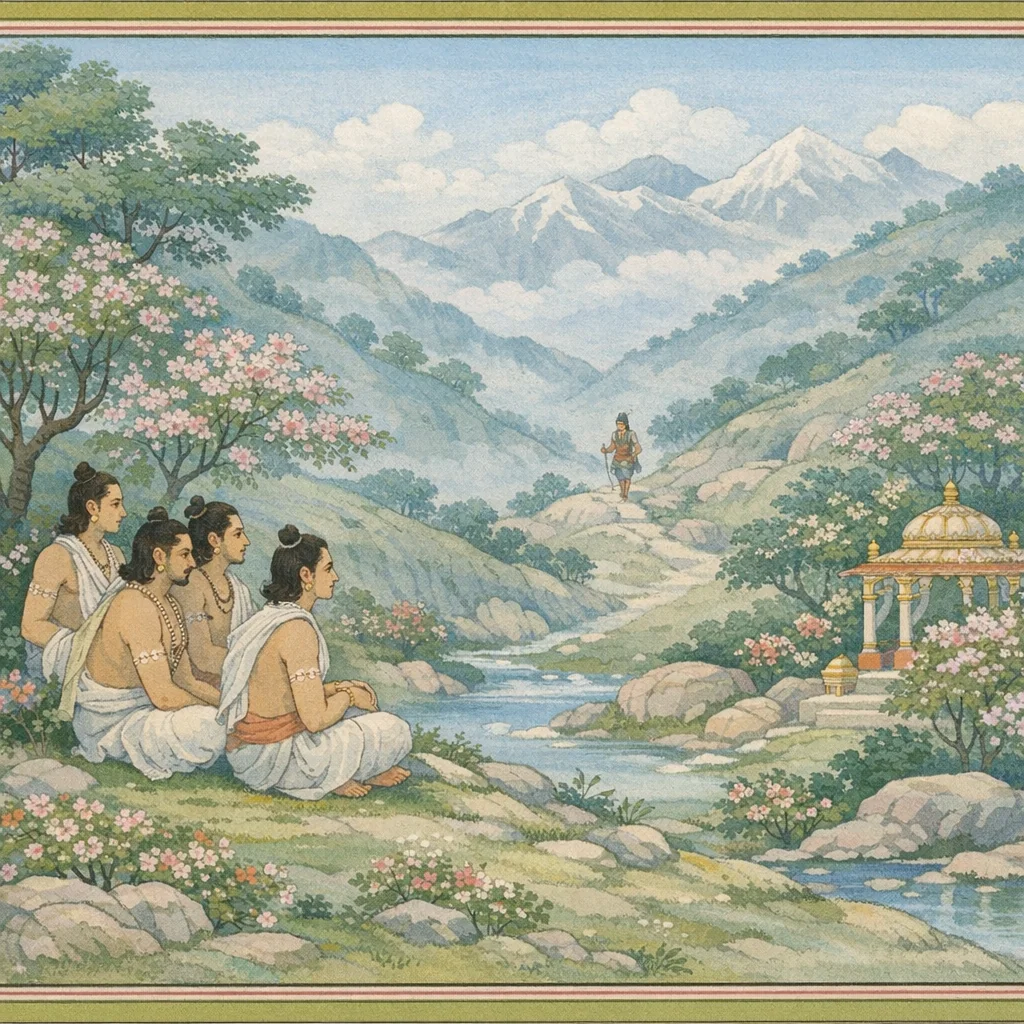
Chapter Arc: गन्धमादन के दिव्य शिखरों पर निवास करते पाण्डवों के हृदय में एक ही उत्कण्ठा धधकती है—अर्जुन कहाँ है, और क्या वह देवों से वह सामर्थ्य लेकर लौटेगा जो आने वाले संकटों को झेल सके? → उसी पर्वत-प्रदेश का वर्णन फैलता है—पुष्पों से लदे वृक्ष, मणि-बिखरे क्रीडास्थल, कुबेर-सम वैभव, और सूर्य के उदय-अस्त का अद्भुत दर्शन; इस स्वर्ग-सदृश शान्ति के भीतर पाण्डवों की प्रतीक्षा और भी तीव्र हो उठती है। गन्धर्व-संघ और महर्षि भी उन तेजस्वी, सत्य-धृति-प्रधान वीरों के पास आते-जाते हैं, मानो प्रकृति और देव-लोक स्वयं इस प्रतीक्षा का साक्षी हो। → अर्जुन का दिव्य-यात्रा-वृत्तान्त निर्णायक रूप से प्रकट होता है—इन्द्र-भवन में पाँच वर्ष निवास कर, सहस्राक्ष इन्द्र से समस्त दिव्यास्त्र प्राप्त कर, शतक्रतु को प्रणाम कर, प्रदक्षिणा करके, हर्षित-प्रहृष्ट अर्जुन गन्धमादन की ओर लौट पड़ता है। → देवों की अनुमति और दिव्यास्त्रों की सिद्धि के साथ अर्जुन का लौटना पाण्डवों की आशा को ठोस आधार देता है—अब उनका तपोवन-जीवन केवल सहनशीलता नहीं, भविष्य की तैयारी बन जाता है। → अर्जुन के आगमन के साथ यह प्रश्न हवा में ठहरता है—वह कौन-कौन से अस्त्र लाया है, और क्या पाण्डव उन्हें धर्म-सीमा में रहकर ही प्रयोग कर पाएँगे?
Shlokas
Verse 1
/ हि >> न [हुक है 7 चतुःषष्ट्यधिकशततमो< ध्याय: पाण्डवोंकी अर्जुनके लिये उत्कण्ठा और अर्जुनका आगमन वैशम्पायन उवाच तस्मिन् नगेन््द्रे वसतां तु तेषां महात्मनां सद्व्र॒तमास्थितानाम् | रति: प्रमोदश्च॒ बभूव तेषा- माकाड्क्षतां दर्शनमर्जुनस्य,वैशम्पायनजी कहते हैं--जनमेजय! उस पर्वतराज गन्धमादनपर उत्तम व्रतका आश्रय ले निवास करते हुए अर्जुनके दर्शनकी इच्छा रखनेवाले महामना पाण्डवोंके मनमें अत्यन्त प्रेम और आनन्दका प्रादुर्भाव हुआ
Vaiśampāyana said: While those great-souled Pāṇḍavas were dwelling on that king of mountains, steadfast in their noble vows, a deep affection and gladness arose in them, for they longed to behold Arjuna. Their disciplined life in exile is shown not as mere hardship, but as a dharmic resolve sustained by love, hope, and fidelity to one another.
Verse 2
तान् वीर्ययुक्तान् सुविशुद्धकामां- स्तेजस्विन: सत्यधृतिप्रधानान् । सम्प्रीयमाणा बहवो5भिजग्मु- ग्गन्धर्वसड्घाश्न महर्षयश्नल,वे सब-के-सब बड़े पराक्रमी थे। उनकी कामनाएँ अत्यन्त विशुद्ध थीं। वे तेजस्वी तो थे ही, सत्य और धैर्य उनके प्रधान गुण थे; अतः बहुतसे गन्धर्व तथा महर्षिगण उनसे प्रेमपूर्वक मिलने-जुलनेके लिये आने लगे
Vaiśampāyana said: Seeing those heroes endowed with valor—whose desires were wholly pure, who were radiant, and for whom truthfulness and steadfastness were foremost virtues—many companies of Gandharvas and great seers, moved by affection and admiration, came to meet and associate with them.
Verse 3
त॑ पादपै: पुष्पधरैरुपेतं नगोत्तमं प्राप्प महारथानाम् | मनः:प्रसाद: परमो बभूव यथा दिवं प्राप्प मरुदगणानाम्,वह श्रेष्ठ पर्वत विकसित वृक्षावलियोंसे विभूषित था। वहाँ पहुँच जानेसे महारथी पाण्डवोंके मनमें बड़ी प्रसन्नता रहने लगी। ठीक उसी तरह, जैसे मरुद्गणोंको स्वर्गलोकमें पहुँचनेपर प्रसन्नता होती है
Vaiśampāyana said: The foremost of mountains, adorned with flowering trees, was reached by those great chariot-warriors. On arriving there, a supreme serenity arose in the hearts of the Pāṇḍavas—just as the hosts of the Maruts feel joy upon attaining heaven.
Verse 4
मयूरहंसस्वननादितानि पुष्पोपकीर्णानि महाचलस्य । शृज्भाणि सानूनि च पश्यमाना गिरे: परं हर्षमवाप्य तस्थु:,उस महान् पर्वतके शिखर मयूरों और हंसोंके कलनादसे गूँजते रहते थे। वहाँ सब ओर सुन्दर पुष्प व्याप्त हो रहे थे। उन मनोहर शिखरोंको देखते हुए पाण्डवलोग बड़े हर्षके साथ वहाँ रहने लगे
Vaiśampāyana said: The lofty mountain’s peaks and ridges resounded with the calls of peacocks and swans, and were strewn all around with blossoms. Beholding those enchanting heights, the Pāṇḍavas were filled with great joy and chose to remain there. The scene underscores how, amid exile and hardship, the mind can regain steadiness and hope through the restorative order of nature, supporting endurance in dharma.
Verse 5
साक्षात् कुबेरेण कृताश्च तस्मिन् नगोत्तमे संवृतकूलरोधस: । कादम्बकारण्डवहंसजुष्टा: पद्माकुला: पुष्करिणीरपश्यन्,उस श्रेष्ठ शैलपर साक्षात् भगवान् कुबेरने अनेक सुन्दर सरोवर बनवाये थे, जो कमल- समूहसे आच्छादित रहते थे। उनके जल शैवाल आदिसे ढके होते थे और उन सबमें हंस, कारण्डव आदि पक्षी सानन्द निवास करते थे। पाण्डवोंने उन सरोवरोंको देखा
Vaiśampāyana said: On that foremost mountain they saw lotus-filled lakes, their banks and channels well contained, which had been fashioned directly by Kubera himself. Covered with aquatic growth and thronged with swans, kādamba-ducks, and kāraṇḍava birds, those delightful waters came into the Pāṇḍavas’ sight—signs of divine prosperity and a landscape shaped by righteous guardianship rather than human conquest.
Verse 6
क्रीडाप्रदेशां श्ष समृद्धरूपान् सुचित्रमाल्यावृतजातशो भान् । मणिप्रकीर्णाक्ष मनोरमांश्न॒ यथा भवेयुर्धनदस्य राज्ञ:
Vaiśampāyana said: They saw splendid pleasure-grounds, rich in beauty, adorned with exquisitely variegated garlands and radiant in many ways, and charming to the eye as though they belonged to Kubera, the lord of wealth. The description underscores how extraordinary and almost otherworldly the setting was, evoking the opulence associated with the divine guardian of riches.
Verse 7
धनाध्यक्ष राजा कुबेरके लिये जैसे होने चाहिये, वैसे ही समृद्धिशाली क्रीडा-प्रदेश वहाँ बने हुए थे। विचित्र मालाओंसे समावृत होनेके कारण उनकी शोभा बहुत बढ़ गयी थी। उनको मणि तथा रत्नोंसे अलंकृत किया गया था, जिससे वे क्रीड़ा-स्थल मनको मोहे लेते थे।। अनेकवर्णश्न सुगन्धिशभिश्न महाद्रुमै: संततमभ्रजालै: । तपःप्रधाना: सततं चरन्तः शज्रं गिरेश्चिन्तयितुं न शेकु: ७ ।। अनेक वर्णवाले विशाल सुगन्धित वृक्षों तथा मेघसमूहोंसे व्याप्त उस पर्वतशिखरपर विचरते हुए सदा तपस्यामें ही संलग्न रहनेवाले पाण्डव उस पर्वतकी महत्ताका चिन्तन नहीं कर पाते थे
Vaiśaṃpāyana said: On that mountain-crest, thickly covered with great trees of many hues and rich fragrance, and continually overcast with masses of clouds, the Pāṇḍavas—ever moving about yet always intent on austerity—were unable to dwell upon or fully grasp the mountain’s vast grandeur. The verse underscores how disciplined focus on tapas can eclipse even the mind’s attraction to extraordinary splendor.
Verse 8
स्वतेजसा तस्य नगोत्तमस्य महौषधीनां च तथा प्रभावात् । विभक्तभावो न बभूव कश्रि- दहोनिशानां पुरुषप्रवीर,वीरवर जनमेजय! पर्वतराज गन्धमादनके अपने तेजसे तथा वहाँकी तेजस्विनी महौषधियोंके प्रभावसे वहाँ सदा प्रकाश व्याप्त रहनेके कारण दिन-रातका कोई विभाग नहीं हो पाता था
Vaiśampāyana said: O best of men, O heroic Janamejaya—by the innate radiance of that foremost of mountains and by the potency of the mighty, luminous herbs that grew there, the region was suffused with constant light; therefore no distinction between day and night could be perceived. The passage underscores how extraordinary natural sanctity and power can suspend ordinary measures of time, marking the place as fit for ascetic endeavor and divine encounter.
Verse 9
यमास्थित: स्थावरजड़मानि विभावसुर्भावयतेडमितौजा: । तस्योदयं चास्तमनं च वीरा- स्तत्र स्थितास्ते ददृशुर्नसिंहा:,जिन भगवान् सूर्यका आश्रय लेकर अमित तेजस्वी अग्निदेव सम्पूर्ण स्थावर-जंगम प्राणियोंका पोषण करते हैं, उनके उदय और अस्तकी लीलाको पुरुषसिंह वीर पाण्डव वहाँ रहकर स्पष्ट देखते थे
Vaiśampāyana said: Resting upon him (the Sun) as his support, the mighty, radiant Fire-god sustains and ripens all beings—both the moving and the unmoving, even those that seem inert. And those heroic Pāṇḍavas, lion-like among men, dwelling there, clearly beheld the Sun’s daily rising and setting. The passage underscores the ordered rhythm of nature and the sustaining interdependence of cosmic powers, inviting steadiness and reverence amid hardship.
Verse 10
रवेस्तमिस्रागमनिर्गमांस्ते तथोदयं चास्तमनं च वीरा: । समावृता: प्रेक्ष्य तमोनुदस्य गभस्तिजालै: प्रदिशों दिशश्ष॒,वे वीर पाण्डव वहाँसे अन्धकारके आगमन और निर्गमनको अन्धकारविनाशक भगवान् सूर्यके उदय और अस्तकी लीलाको तथा उनके किरणसमूहोंसे व्याप्त हुई सम्पूर्ण दिशाओं और विदिशाओंको देखकर स्वाध्यायमें संलग्न रहते थे। सदा शुभकर्मोंके अनुष्ठानमें तत्पर रहकर प्रधानरूपसे धर्मका ही आश्रय लेते थे। उनका आचार-व्यवहार अत्यन्त पवित्र था। वे सत्यमें स्थित होकर सत्यव्रतरपरायण महारथी अर्जुनके आगमनकी प्रतीक्षा करते थे
Vaiśampāyana said: Those heroic Pāṇḍavas, observing the coming and going of darkness, and the sunrise and sunset of the darkness-dispelling Sun, beheld all the directions and intermediate quarters flooded with his nets of rays. In that disciplined rhythm of day and night, they remained devoted to study and to auspicious conduct, taking refuge chiefly in dharma, their behavior purified and steady in truth, as they awaited the arrival of the great chariot-warrior Arjuna, steadfast in vows of truth.
Verse 11
स्वाध्यायवन्त: सततक्रियाश्र धर्मप्रधानाश्न शुचिव्रताश्न । सत्ये स्थितास्तस्य महारथस्य सत्यव्रतस्यथागमनप्रतीक्षा:,वे वीर पाण्डव वहाँसे अन्धकारके आगमन और निर्गमनको अन्धकारविनाशक भगवान् सूर्यके उदय और अस्तकी लीलाको तथा उनके किरणसमूहोंसे व्याप्त हुई सम्पूर्ण दिशाओं और विदिशाओंको देखकर स्वाध्यायमें संलग्न रहते थे। सदा शुभकर्मोंके अनुष्ठानमें तत्पर रहकर प्रधानरूपसे धर्मका ही आश्रय लेते थे। उनका आचार-व्यवहार अत्यन्त पवित्र था। वे सत्यमें स्थित होकर सत्यव्रतरपरायण महारथी अर्जुनके आगमनकी प्रतीक्षा करते थे
They were devoted to self-study and constantly engaged in prescribed rites, taking dharma as their chief support and observing pure vows. Established in truth, they waited for the arrival of that great chariot-warrior—Arjuna—who was steadfast in the vow of truth.
Verse 12
इहैव हर्षोउस्तु समागतानां क्षिप्रं कृतास्त्रेण धनंजयेन । इति ब्रुवन्त: परमाशिषणस्ते पार्थास्तपोयोगपरा बभूवु:,“इस पर्वतपर आये हुए हम सब लोगोंको यहीं अस्त्रविद्या सीखकर पधारे हुए अर्जुनके दर्शनसे शीघ्र ही अत्यन्त हर्षकी प्राप्ति हो; इस प्रकार परस्पर शुभ-कामना प्रकट करते हुए वे सभी कुन्तीपुत्र तप और योगके साधनमें संलग्न रहते थे
Vaiśampāyana said: “May we, who have assembled here, quickly attain great joy right here by beholding Dhanañjaya (Arjuna), who has returned after mastering the science of weapons.” Speaking thus—exchanging the highest auspicious wishes among themselves—those sons of Pṛthā remained devoted to austerity and the discipline of yoga. The passage highlights a dharmic orientation: even while awaiting martial readiness, their inner life is anchored in self-restraint, spiritual practice, and mutual goodwill rather than impatience or pride.
Verse 13
दृष्टवा विचित्राणि गिरी वनानि किरीटिनं चिन्तयतामभीक्ष्णम् । बभूव रात्रि्दिवसश्च तेषां संवत्सरेणैव समानरूप:,उस पर्वतपर विचित्र वन-कुंजोंकी शोभा देखते और निरन्तर अर्जुनका चिन्तन करते हुए पाण्डवोंको एक दिन-रातका समय एक वर्षके समान प्रतीत होता था
Verse 14
यदैव धौम्यानुमते महात्मा कृत्वा जटां प्रत्रजित: स जिष्णु: । तदैव तेषां न बभूव हर्ष: कुतो रतिस्तद्वतमानसानाम्,जबसे धौम्य मुनिकी आज्ञा लेकर महामना अर्जुन सिरपर जटा धारण करके तपस्याके लिये प्रस्थित हुए थे, तभीसे उन पाण्डवोंके मनमें रंचमात्र भी हर्ष नहीं रह गया था। उनका मन निरन्तर अर्जुनमें ही लगा रहता था। ऐसी दशामें उन्हें सुख कैसे प्राप्त हो सकता था?
Vaiśampāyana said: When, with the sage Dhaumya’s consent, the great-souled Arjuna (Jiṣṇu) set out for austerities after adopting matted locks, from that very moment the Pāṇḍavas felt no joy at all. Their minds remained fixed on him; for those whose hearts are thus absorbed, how could any pleasure arise?
Verse 15
भ्रातुर्नियोगात् तु युधिष्ठिरस्य वनादसौ वारणमत्तगामी । यत् काम्यकात् प्रव्रजित: स जिष्णु- स्तदैव ते शोकहता बभूवु:,गजराजके समान मस्तानी चालसे चलनेवाले वे अर्जुन जब बड़े भाई युधिष्ठिरकी आज्ञा लेकर काम्यक वनसे प्रस्थित हुए थे, तभी समस्त पाण्डव शोकसे पीड़ित हो गये थे
Vaiśampāyana said: By the command of his elder brother Yudhiṣṭhira, that Jiṣṇu (Arjuna)—moving with the proud, unstoppable gait of an intoxicated lordly elephant—set out from the forest of Kāmyaka. At that very moment, all of them were struck down by grief, for duty required separation even among those bound by love and shared hardship.
Verse 16
तथैव तं चिन्तयतां सिताश्च- मस्त्रार्थिनं वासवमभ्युपेतम् । मासो<5थ कृच्छेण तदा व्यतीत- स्तस्मिन् नगे भारत भारतानाम्,जनमेजय! अस्त्रविद्याकी अभिलाषासे देवराज इन्द्रके समीप गये हुए श्वेतवाहन अर्जुनका चिन्तन करनेवाले पाण्डवोंका एक मास उस पर्वतपर बड़ी कठिनाईसे व्यतीत हुआ
Vaiśampāyana said: As the Pāṇḍavas continued to think of him—of the fair-complexioned Arjuna who had approached Vāsava (Indra) seeking divine weapons—one full month passed there upon that mountain, and it passed with great hardship, O Bhārata Janamejaya. The verse underscores their endurance and disciplined waiting while Arjuna pursues higher power for a righteous cause.
Verse 17
उषित्वा पञज्च वर्षाणि सहस्राक्षनिवेशने । अवाप्य दिव्यान्यस्त्राणि सर्वाणि विबुधेश्वरात्
Vaiśaṃpāyana said: Having dwelt for five years in the abode of Sahasrākṣa (Indra), and having obtained from the lord of the gods all the celestial weapons, (he returned/was prepared) with divine power secured through disciplined residence and divine instruction—an episode that frames martial capability as something to be earned through tapas, restraint, and rightful patronage rather than mere ambition.
Verse 18
आग्नेयं वारुणं सौम्यं वायव्यमथ वैष्णवम् | ऐन्द्रं पाशुपतं ब्राह्मंं पारमेष्ठ्यं प्रजापते:
Vaiśaṃpāyana said: “(He enumerated) the divine powers and weapons—those of Agni, Varuṇa, Soma, and Vāyu; then that of Viṣṇu; that of Indra; the Pāśupata (of Śiva); the Brahma-weapon; and the supreme, Prajāpati-born (Pārameṣṭhya) power.” In context, the verse underscores that true might in the epic is not merely physical strength but the disciplined, dharmic mastery of sacred forces, each tied to a cosmic guardian and therefore to responsibility in their use.
Verse 19
यमस्य धातु: सवितुस्त्वष्ट्वै श्रवणस्य च । तानि प्राप्प सहस्राक्षादभिवाद्य शतक्रतुम्
Vaiśampāyana said: Having obtained those boons from Sahasrākṣa (Indra), and having duly paid homage to Śatakratu (the lord of a hundred sacrifices), he also received the portions allotted from Yama, Savitṛ, Tvaṣṭṛ, and Śravaṇa (Kubera). The passage underscores the orderly bestowal of divine endowments—power is gained through rightful approach, reverence, and the sanctioned distribution of cosmic offices.
Verse 20
अनुज्ञातस्तदा तेन कृत्वा चापि प्रदक्षिणम् । आगच्छदर्जुन: प्रीतः प्रह्ृष्टो गन्धमादनम्
Vaiśampāyana said: Having then received his leave from him, and having also performed a respectful circumambulation, Arjuna—gladdened and filled with joy—set out and came to Gandhamādana. The passage underscores the ethic of humility and reverence toward one’s benefactor or elder: even after obtaining permission, Arjuna seals the encounter with a gesture of honor before proceeding on his righteous course.
Verse 164
इधर अर्जुनने इन्द्र-भवनमें पाँच वर्ष रहकर देवेश्वर इन्द्रसे सम्पूर्ण दिव्यास्त्र प्राप्त कर लिये। इस प्रकार अग्नि, वरुण, सोम, वायु, विष्णु, इन्द्र, पशुपति, ब्रह्मा, परमेष्ठी, प्रजापति, यम, धाता, सविता, त्वष्टा तथा कुबेरसम्बन्धी अस्त्रोंको भी देवेन्द्रसे ही प्राप्त करके उन्हें प्रणाम किया। तदनन्तर उनसे अपने भाइयोंके पास लौटनेकी आज्ञा पाकर उनकी परिक्रमा करके अर्जुन बड़े प्रसन्न हुए और हर्षोल्लासमें भरकर गन्धमादनपर आये ।। इति श्रीमहा भारते वनपर्वणि यक्षयुद्धपर्वण्यर्जुनाभिगमने चतुःषष्ट्यधिकशततमो<ध्याय:
Vaiśaṃpāyana said: Arjuna lived in Indra’s celestial abode for five years and received from Indra, lord of the gods, the complete set of divine weapons. In this way he obtained—through Devendra himself—missiles and weapons associated with Agni, Varuṇa, Soma, Vāyu, Viṣṇu, Indra, Paśupati, Brahmā, Parameṣṭhin, Prajāpati, Yama, Dhātā, Savitṛ, Tvaṣṭṛ, and Kubera, and he bowed to Indra in reverence. Thereafter, granted permission to return to his brothers, Arjuna circumambulated Indra in respect, became filled with joy and exhilaration, and came back to Gandhamādana. The episode underscores that power is to be sought through discipline and rightful authority, and that even the mightiest warrior remains bound to humility, gratitude, and duty toward family.
Frequently Asked Questions
The chapter frames a potential tension between capability and restraint: Arjuna is declared highly capable, yet the narrative insists that legitimate action must be mission-bound (guru-artha), procedurally correct, and governed by self-control rather than personal assertion.
Martial excellence is incomplete without ethical and technical governance—truthfulness, sense-control, and mastery over the full lifecycle of force (initiation, withdrawal, remediation, and counters) constitute the qualified use of power.
No explicit phalaśruti formula appears in this passage; its meta-function is implicit, positioning disciplined competence and sanctioned duty as the interpretive lens for subsequent events, thereby integrating action with a broader soteriological and ethical framework.