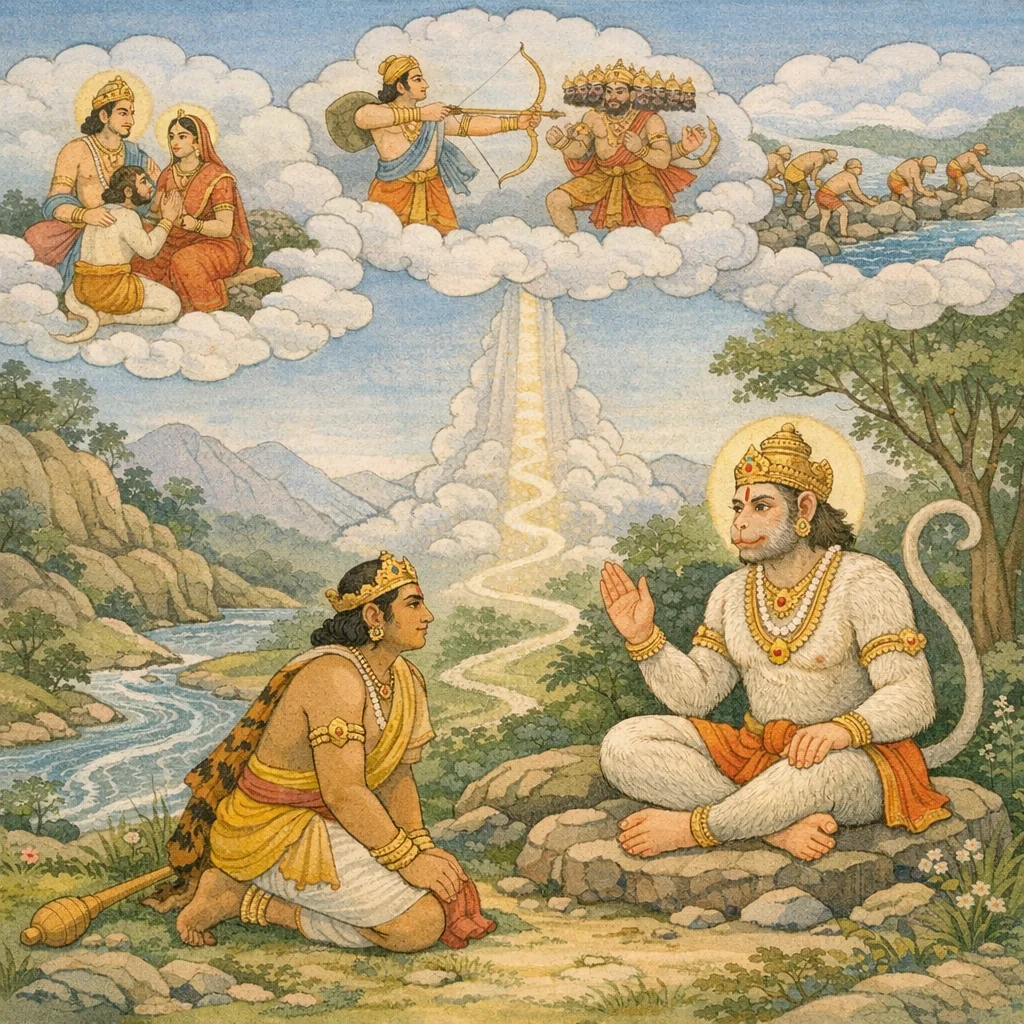
Adhyaya 149
अध्याय १४९ — हनूमतो महद्रूपदर्शनं तथा धर्म-नीति-उपदेशः (Hanūmān’s Vast Form and Instruction on Dharma–Statecraft)
Upa-parva: Saugnadhika-vana (Saugandhika Flower Episode) — Bhīma–Hanūmān Saṃvāda (embedded discourse)
Bhīma refuses to depart without seeing Hanūmān’s prior heroic manifestation; Hanūmān, smiling, reveals the immense form associated with the ocean-crossing, expanding until he covers the plantain grove and stands like a second mountain. Overwhelmed, Bhīma averts his gaze and acknowledges the immeasurable nature of Hanūmān’s power, praising that Hanūmān alone could have neutralized Rāvaṇa, but that such an act would have displaced Rāma’s renown. Hanūmān affirms this rationale and redirects Bhīma toward the Saugandhika path, advising safety, reverence to divine powers, and avoidance of rashness. The chapter then shifts into a structured ethical-political exposition: dharma arises from conduct (ācāra), is sustained by Veda and yajña, and society is maintained by the triad of knowledge systems—trayī (Vedic learning), vārttā (economy), and daṇḍanīti (governance). Varṇa duties are enumerated, with emphasis that Bhīma’s kṣatra-dharma is protection through disciplined restraint, informed counsel, intelligence gathering, and calibrated application of policy instruments.
Chapter Arc: तीर्थयात्रा के प्रसंग में भीम एक अद्भुत मार्ग पर पहुँचता है—ऐसा पथ जिसे मनुष्यों के लिए ‘अगम्य’ कहा गया है; वहीं महाबली हनुमान, भीम को रोकते हुए अपने रहस्य और मर्यादा का संकेत देते हैं। → भीम के भीतर जिज्ञासा और बल का उफान है, पर हनुमान स्पष्ट करते हैं कि यह देवसेवित दिव्य-पथ है, जहाँ मानुषों का गमन वर्जित है। भीम के आग्रह पर हनुमान संक्षेप में श्रीराम-चरित सुनाते हैं—राम-सुग्रीव मैत्री, वानरों की सेनाएँ, समुद्र-लांघन, सीता-दर्शन, रावण-वध और विभीषण का राज्याभिषेक—और इस कथा के साथ अपने ही पराक्रम व सेवा का स्मरण कराते हैं। → हनुमान का निर्णायक वचन—‘यह मार्ग मनुष्यों के लिए अगम्य है; मैंने इसे रोका है; यहाँ मानुष न जाए’—भीम के बल-गौरव पर धर्म-सीमा की कठोर रेखा खींच देता है, और रामकथा का तेज भीम के भीतर वीरता को विनय में ढाल देता है। → हनुमान राम के धर्म-कार्य की पूर्णता (रावण-वध, विभीषणाभिषेक) और उस वीर-चरित के दिव्य-गान (गन्धर्व-अप्सराओं द्वारा) का उल्लेख कर भीम को समझाते हैं कि कुछ पथ शक्ति से नहीं, मर्यादा से पार होते हैं; भीम को दिशा मिलती है कि पराक्रम का शिखर भी अनुशासन के अधीन है। → भीम के भीतर उठी नई आकांक्षा—क्या वह हनुमान की आज्ञा मानकर लौटेगा, या अपने स्वभावगत वेग को साधने की अग्नि-परीक्षा देगा? (अगले अध्याय की ओर संकेत)
Shlokas
Verse 1
हि आय न [हुक है अष्टचत्वारिशर्दाधिकशततमो< ध्याय: हनुमानजीका भीमसेनको संक्षेपसे श्रीरामका चरित्र सुनाना हनूमानुवाच हृतदार: सह श्रात्रा पत्नीं मार्गनू स राघव: । दृष्टवान् शैलशिखरे सुग्रीव॑ वानरर्षभम्,हनुमानजी कहते हैं--भीमसेन! इस प्रकार स्त्रीका अपहरण हो जानेपर अपने भाईके साथ उसकी खोज करते हुए श्रीरघुनाथजी जनस्थानसे आगे बढ़े। उन्होंने ऋष्यमूकपर्वतके शिखरपर रहनेवाले वानरराज सुग्रीवसे भेंट की
Hanuman said: “When his wife had been abducted, Raghava (Rama), together with his brother, set out in search of her. In the course of that search he saw, upon a mountain peak, Sugriva—the bull among monkeys.”
Verse 2
तेन तस्याभवत् सख्यं राघवस्य महात्मन: । स हत्वा वालिन राज्ये सुग्रीवमभिषिक्तवान्,वहाँ सुग्रीवके साथ महात्मा श्रीरघुनाथजीकी मित्रता हो गयी। तब उन्होंने वालीको मारकर किष्किन्धाके राज्यपर सुग्रीवका अभिषेक कर दिया
Vaiśampāyana said: By that encounter, a bond of friendship arose between the great-souled Rāghava and Sugrīva. Thereafter, having slain Vālin, Rāghava had Sugrīva consecrated as king over the realm—an act presented as restoring rightful order and alliance-based duty in the face of wrongful domination.
Verse 3
स राज्यं प्राप्य सुग्रीव: सीताया: परिमार्गणे | वानरान् प्रेषयामास शतशो5थ सहसत्रश:,राज्य पाकर सुग्रीवने सीताजीकी खोजके लिये सौ-सौ तथा हजार-हजार वानरोंकी टोली इधर-उधर भेजी
Having obtained the kingship, Sugrīva set about the search for Sītā. To locate her, he dispatched bands of vānaras in hundreds and in thousands in various directions—an example of a ruler turning authority into organized, purposeful service to a righteous cause.
Verse 4
ततो वानरकोटीभि: सहितो<हं नरर्षभ । सीतां मार्गन् महाबाहो प्रयातो दक्षिणां दिशम्,नरश्रेष्ठ॒ महाबाहो! उस समय करोड़ों वानरोंके साथ मैं भी सीताजीका पता लगाता हुआ दक्षिण दिशाकी ओर गया
Vaiśaṃpāyana said: “Then, accompanied by crores of monkeys, I too set out—O bull among men, O mighty-armed one—searching for Sītā, and proceeded toward the southern quarter. The episode underscores steadfast resolve and loyal service in a righteous mission: the search is undertaken not for conquest, but to restore what has been unjustly taken.”
Verse 5
ततः प्रवृत्ति: सीताया गृप्रेण सुमहात्मना । सम्पातिना समाख्याता रावणस्य निवेशने,तदनन्तर गृध्रजातीय महाबुद्धिमान् सम्पातिने सीताजीके सम्बन्धमें यह समाचार दिया कि वे रावणके नगरमें विद्यमान हैं
Then the great-souled vulture Sampāti reported the news concerning Sītā: that she was present in Rāvaṇa’s dwelling. In the narrative’s moral frame, this is a moment where truthful testimony and compassionate assistance become instruments of dharma—guiding the righteous toward the rescue of the innocent.
Verse 6
ततोऊहं कार्यसिद्धयर्थ रामस्याक्लिष्टकर्मण: । शतयोजनविस्तीर्णमर्णवं सहसा55प्लुत:,तब मैं अनायास ही महान् कर्म करनेवाले श्रीरघुनाथजीकी कार्यसिद्धिके लिये सहसा सौ योजन विस्तृत समुद्रको लाँध गया
Then I, for the successful accomplishment of Rāma’s purpose—Rāma whose deeds are unfaltering and unwearied—leapt at once across the ocean, a hundred yojanas in breadth. The passage highlights swift, selfless action undertaken to serve a righteous mission, where personal prowess is subordinated to the fulfillment of a just cause.
Verse 7
अहं स्ववीर्यादुत्तीर्य सागरं मकरालयम् । सुतां जनकराजस्य सीतां सुरसुतोपमाम्,भरतश्रेष्ठ) मगर और ग्राह आदिसे भरे हुए उस समुद्रको अपने पराक्रमसे पार करके मैं रावणके नगरमें देवकन्याके समान तेजस्विनी जनकराजनन्दिनी सीतासे मिला। रघुनाथजीकी प्रियतमा विदेहराजकुमारी सीता-देवीसे भेंट करके अट्टालिका, चहारदिवारी और नगर-द्वारसहित समूची लंकापुरीको जलाकर वहाँ श्रीराम-नामकी घोषणा करके मैं पुन: लौट आया
Vaiśampāyana said: “Relying on my own prowess, I crossed the ocean—the abode of makaras. There I met Sītā, the daughter of King Janaka, radiant like a celestial maiden.”
Verse 8
दृष्टवान् भरतश्रेष्ठ रावणस्य निवेशने । समेत्य तामहं देवीं वैदेहीं राघवप्रियाम्,भरतश्रेष्ठ) मगर और ग्राह आदिसे भरे हुए उस समुद्रको अपने पराक्रमसे पार करके मैं रावणके नगरमें देवकन्याके समान तेजस्विनी जनकराजनन्दिनी सीतासे मिला। रघुनाथजीकी प्रियतमा विदेहराजकुमारी सीता-देवीसे भेंट करके अट्टालिका, चहारदिवारी और नगर-द्वारसहित समूची लंकापुरीको जलाकर वहाँ श्रीराम-नामकी घोषणा करके मैं पुन: लौट आया
Vaiśampāyana said: “O best of the Bharatas, within Rāvaṇa’s abode I beheld and met that radiant lady Vaidehī—beloved of Rāghava.” The line underscores steadfast loyalty and righteous purpose: the meeting is not mere discovery, but a reaffirmation of fidelity and resolve in the face of coercion and adharma.
Verse 9
दग्ध्वा लड़कामशेषेण साट्टप्राकारतोरणाम् । प्रत्यागतश्वास्य पुनर्नाम तत्र प्रकाश्य वै,भरतश्रेष्ठ) मगर और ग्राह आदिसे भरे हुए उस समुद्रको अपने पराक्रमसे पार करके मैं रावणके नगरमें देवकन्याके समान तेजस्विनी जनकराजनन्दिनी सीतासे मिला। रघुनाथजीकी प्रियतमा विदेहराजकुमारी सीता-देवीसे भेंट करके अट्टालिका, चहारदिवारी और नगर-द्वारसहित समूची लंकापुरीको जलाकर वहाँ श्रीराम-नामकी घोषणा करके मैं पुन: लौट आया
Vaiśaṃpāyana said: “Having burned Laṅkā completely—together with its lofty ramparts, walls, and gateways—and having publicly proclaimed there the name of Rāma, I returned again.” The episode highlights steadfast devotion and disciplined courage: even in a mission involving force, the act is framed as service to a righteous cause and as a proclamation of the lord’s name rather than personal vengeance.
Verse 10
मद्वाक्यं चावधार्याशु रामो राजीवलोचन: । स बुद्धिपूर्व सैन्यस्य बद्ध्वा सेतुं महोदधौ,मेरी बात मानकर कमलनयन भगवान् श्रीरामने बुद्धिपूर्वक विचार करके सैनिकोंकी सलाहसे महासागर-पर पुल बँधवाया और करोड़ों वानरोंसे घिरे हुए वे महासमुद्रको पार करके लंकापर जा चढ़े। तदनन्तर वीरवर श्रीरामने उन समस्त राक्षसोंको मारकर युद्धमें समस्त लोकोंको रुलानेवाले राक्षसराज रावणको भी भाई, पुत्र और बन्धु-बान्धवोंसहित मार डाला
Vaiśampāyana said: Having quickly heeded my words, Rāma of lotus-like eyes, after prudent deliberation and in consultation with the army, caused a bridge to be built across the great ocean. Surrounded by countless vānaras, he crossed that vast sea and advanced upon Laṅkā. Thereafter, the foremost of heroes, Śrī Rāma, slew the rākṣasas in battle and also killed Rāvaṇa—the rākṣasa-king who made the worlds weep—together with his brothers, sons, and kinsmen. The passage highlights decisive leadership guided by counsel and intelligence, and the restoration of order through the defeat of oppressive power.
Verse 11
वृतो वानरकोटीभि: समुत्तीर्णो महार्णवम् । ततो रामेण वीरेण हत्वा तान् सर्वराक्षसान्,मेरी बात मानकर कमलनयन भगवान् श्रीरामने बुद्धिपूर्वक विचार करके सैनिकोंकी सलाहसे महासागर-पर पुल बँधवाया और करोड़ों वानरोंसे घिरे हुए वे महासमुद्रको पार करके लंकापर जा चढ़े। तदनन्तर वीरवर श्रीरामने उन समस्त राक्षसोंको मारकर युद्धमें समस्त लोकोंको रुलानेवाले राक्षसराज रावणको भी भाई, पुत्र और बन्धु-बान्धवोंसहित मार डाला
Vaiśampāyana said: Surrounded by crores of monkeys, he crossed the great ocean. Then the heroic Rāma, having slain all those rākṣasas, went on to destroy Rāvaṇa as well—together with his brothers, sons, and kinsmen—thus ending the terror that had made the worlds weep. The passage highlights disciplined counsel, purposeful action, and the ethical aim of removing oppressive violence rather than waging war for its own sake.
Verse 12
रणे तु राक्षसगणं रावणं लोकरावणम् । निशाचरेन्द्रं हत्वा तु सभ्रातृसुतबान्धवम्,मेरी बात मानकर कमलनयन भगवान् श्रीरामने बुद्धिपूर्वक विचार करके सैनिकोंकी सलाहसे महासागर-पर पुल बँधवाया और करोड़ों वानरोंसे घिरे हुए वे महासमुद्रको पार करके लंकापर जा चढ़े। तदनन्तर वीरवर श्रीरामने उन समस्त राक्षसोंको मारकर युद्धमें समस्त लोकोंको रुलानेवाले राक्षसराज रावणको भी भाई, पुत्र और बन्धु-बान्धवोंसहित मार डाला
In battle, having slain the host of Rākṣasas, Rāvaṇa—whose deeds made the worlds cry out—was also killed: the lord of the night-roamers, together with his brothers, sons, and kinsmen. The narrative underscores that overwhelming power and unrighteous aggression, even when supported by family and allies, culminate in ruin when confronted by steadfast, principled valor.
Verse 13
राज्येडभिषिच्य लड्कायां राक्षसेन्द्रे विभीषणम् । धार्मिक भक्तिमन्तं च भक्तानुगतवत्सलम्,तत्पश्चात् धर्मात्मा, भक्तिमान् तथा भक्तों और सेवकोंपर स्नेह रखनेवाले राक्षसराज विभीषणको लंकाके राज्यपर अभिषिक्त किया और खोयी हुई वैदिकी श्रुतिकी भाँति अपनी पत्नीका वहाँसे उद्धार करके महायशस्वी रघुनन्दन श्रीराम अपनी उस साध्वी पत्नीके साथ ही बड़ी उतावलीके साथ अपनी अयोध्यापुरीमें लौट आये। इसके बाद शत्रुओंको भी वशमें करनेवाले नृपश्रेष्ठ भगवान् श्रीराम अवधके राज्यसिंहासनपर आसीन हो उस अजेय अयोध्यापुरीमें रहने लगे। उस समय मैंने कमलनयन श्रीरामसे यह वर माँगा कि “शत्रुसूदन! जबतक आपकी यह कथा संसारमें प्रचलित रहे तबतक मैं अवश्य जीवित रहूँ"। भगवानने “तथास्तु” कहकर मेरी यह प्रार्थना स्वीकार कर ली
Vaiśampāyana said: Having consecrated Vibhīṣaṇa—lord of the Rākṣasas—in the sovereignty of Laṅkā, a righteous man, devoted, and tenderly protective of those who follow and serve him, the noble Rāghava then rescued his wife there, as though recovering a lost Vedic revelation. The greatly renowned Raghunandana Śrī Rāma returned with his chaste wife to Ayodhyā in eager haste. Thereafter, the best of kings, Bhagavān Śrī Rāma—who could subdue even enemies—sat upon the royal throne of Avadha and dwelt in that unconquerable city of Ayodhyā. At that time I asked the lotus-eyed Śrī Rāma for this boon: “O slayer of foes, so long as your story remains current in the world, may I surely remain alive.” The Lord accepted my prayer, saying, “So be it.”
Verse 14
ततः प्रत्याहता भार्या नष्टा वेदश्रुतिर्यथा । तयैव सहित: साध्व्या पत्न्या रामो महायशा:,तत्पश्चात् धर्मात्मा, भक्तिमान् तथा भक्तों और सेवकोंपर स्नेह रखनेवाले राक्षसराज विभीषणको लंकाके राज्यपर अभिषिक्त किया और खोयी हुई वैदिकी श्रुतिकी भाँति अपनी पत्नीका वहाँसे उद्धार करके महायशस्वी रघुनन्दन श्रीराम अपनी उस साध्वी पत्नीके साथ ही बड़ी उतावलीके साथ अपनी अयोध्यापुरीमें लौट आये। इसके बाद शत्रुओंको भी वशमें करनेवाले नृपश्रेष्ठ भगवान् श्रीराम अवधके राज्यसिंहासनपर आसीन हो उस अजेय अयोध्यापुरीमें रहने लगे। उस समय मैंने कमलनयन श्रीरामसे यह वर माँगा कि “शत्रुसूदन! जबतक आपकी यह कथा संसारमें प्रचलित रहे तबतक मैं अवश्य जीवित रहूँ"। भगवानने “तथास्तु” कहकर मेरी यह प्रार्थना स्वीकार कर ली
Then his wife—once cast away—was recovered, like the lost Vedic revelation (śruti) being regained. And the greatly renowned Rāma, accompanied by that very virtuous wife, was reunited with her and restored what had been lost, in a manner likened to the restoration of sacred knowledge.
Verse 15
गत्वा ततो5तित्वरित: स्वां पुरी रघुनन्दन: । अध्यावसत् ततो<योध्यामयोध्यां द्विषतां प्रभु:,तत्पश्चात् धर्मात्मा, भक्तिमान् तथा भक्तों और सेवकोंपर स्नेह रखनेवाले राक्षसराज विभीषणको लंकाके राज्यपर अभिषिक्त किया और खोयी हुई वैदिकी श्रुतिकी भाँति अपनी पत्नीका वहाँसे उद्धार करके महायशस्वी रघुनन्दन श्रीराम अपनी उस साध्वी पत्नीके साथ ही बड़ी उतावलीके साथ अपनी अयोध्यापुरीमें लौट आये। इसके बाद शत्रुओंको भी वशमें करनेवाले नृपश्रेष्ठ भगवान् श्रीराम अवधके राज्यसिंहासनपर आसीन हो उस अजेय अयोध्यापुरीमें रहने लगे। उस समय मैंने कमलनयन श्रीरामसे यह वर माँगा कि “शत्रुसूदन! जबतक आपकी यह कथा संसारमें प्रचलित रहे तबतक मैं अवश्य जीवित रहूँ"। भगवानने “तथास्तु” कहकर मेरी यह प्रार्थना स्वीकार कर ली
Vaiśampāyana said: Then, having gone with great haste to his own city, Rāma—the delight of the Raghu line—took up his residence in Ayodhyā. Thereafter that lord, who subdues even those who bear enmity, dwelt in unconquerable Ayodhyā, established in righteous rule. The passage also recalls his dharmic conduct: honoring devotion and service by installing Vibhīṣaṇa as king of Laṅkā, rescuing Sītā as one restores a lost Vedic tradition, and returning to Ayodhyā with urgency to re-establish order. It culminates in a boon sought from Rāma—that the narrator may live as long as this story remains current in the world—granted with the assurance, “So be it.”
Verse 16
ततः प्रतिष्ठितो राज्ये रामो नृपतिसत्तम: । वरं मया याचितो5सौ रामो राजीवलोचन:,तत्पश्चात् धर्मात्मा, भक्तिमान् तथा भक्तों और सेवकोंपर स्नेह रखनेवाले राक्षसराज विभीषणको लंकाके राज्यपर अभिषिक्त किया और खोयी हुई वैदिकी श्रुतिकी भाँति अपनी पत्नीका वहाँसे उद्धार करके महायशस्वी रघुनन्दन श्रीराम अपनी उस साध्वी पत्नीके साथ ही बड़ी उतावलीके साथ अपनी अयोध्यापुरीमें लौट आये। इसके बाद शत्रुओंको भी वशमें करनेवाले नृपश्रेष्ठ भगवान् श्रीराम अवधके राज्यसिंहासनपर आसीन हो उस अजेय अयोध्यापुरीमें रहने लगे। उस समय मैंने कमलनयन श्रीरामसे यह वर माँगा कि “शत्रुसूदन! जबतक आपकी यह कथा संसारमें प्रचलित रहे तबतक मैं अवश्य जीवित रहूँ"। भगवानने “तथास्तु” कहकर मेरी यह प्रार्थना स्वीकार कर ली
Then Rāma, the foremost of kings, became firmly established in his sovereignty. At that time I (Vaiśampāyana) asked a boon of that lotus-eyed Rāma: that as long as his sacred story continues to be current in the world, I too should surely remain alive. Rāma accepted this prayer, saying, “So be it.” The passage recalls Rāma’s righteous restoration of order—installing Vibhīṣaṇa on Laṅkā’s throne, rescuing Sītā, and returning to Ayodhyā—framing kingship as dharma-guided rule sustained by devotion and truthful remembrance.
Verse 17
यावद् राम कथेयं ते भवेल्लोकेषु शत्रुहन् । तावज्जीवेयमित्येवं तथास्त्विति च सो5ब्रवीत्,तत्पश्चात् धर्मात्मा, भक्तिमान् तथा भक्तों और सेवकोंपर स्नेह रखनेवाले राक्षसराज विभीषणको लंकाके राज्यपर अभिषिक्त किया और खोयी हुई वैदिकी श्रुतिकी भाँति अपनी पत्नीका वहाँसे उद्धार करके महायशस्वी रघुनन्दन श्रीराम अपनी उस साध्वी पत्नीके साथ ही बड़ी उतावलीके साथ अपनी अयोध्यापुरीमें लौट आये। इसके बाद शत्रुओंको भी वशमें करनेवाले नृपश्रेष्ठ भगवान् श्रीराम अवधके राज्यसिंहासनपर आसीन हो उस अजेय अयोध्यापुरीमें रहने लगे। उस समय मैंने कमलनयन श्रीरामसे यह वर माँगा कि “शत्रुसूदन! जबतक आपकी यह कथा संसारमें प्रचलित रहे तबतक मैं अवश्य जीवित रहूँ"। भगवानने “तथास्तु” कहकर मेरी यह प्रार्थना स्वीकार कर ली
Vaiśaṃpāyana said: “O Rāma, so long as your story continues to be told among the worlds, I wish to remain alive.” To this he replied, “So be it.” Thereafter, the righteous and devoted Rāghava—affectionate toward devotees and attendants—consecrated Vibhīṣaṇa, king of the Rākṣasas, to the sovereignty of Laṅkā. Then, having rescued his wife from there—like recovering a lost Vedic revelation—Śrī Rāma, the illustrious delight of the Raghu line, returned in great haste to Ayodhyā together with his chaste queen. After this, the Lord, the best of kings, capable of bringing even enemies under control, sat upon the royal throne of Ayodhyā and dwelt in that unconquerable city. At that time I asked the lotus-eyed Rāma for this boon: ‘O subduer of foes, as long as this account of yours remains current in the world, may I surely live.’ The Lord accepted my prayer, saying, ‘So be it.’
Verse 18
सीताप्रसादाच्च सदा मामिहस्थमरिंदम । उपतिष्ठन्ति दिव्या हि भोगा भीम यथेप्सिता:,शत्रुओंका दमन करनेवाले भीमसेन! श्रीसीताजीकी कृपासे यहाँ रहते हुए ही मुझे इच्छानुसार सदा दिव्य भोग प्राप्त हो जाते हैं
Vaiśaṃpāyana said: “O Bhīma, tamer of foes, by the gracious favor of Sītā, even while I remain here, celestial enjoyments and provisions come to me continually—appearing exactly as I wish.”
Verse 19
दशवर्षसहस्राणि दशवर्षशतानि च । राज्यं कारितवान् रामस्ततः स्वभवनं गत:,श्रीरामजीने ग्यारह हजार वर्षोतक इस पृथ्वीपर राज्य किया, फिर वे अपने परमधामको चले गये
Vaiśampāyana said: Rāma caused the kingdom to be governed for ten thousand years and a further hundred decades; thereafter he departed to his own divine abode. The verse underscores the ideal of righteous kingship—long, stable rule grounded in dharma—followed by a final renunciation of worldly sovereignty.
Verse 20
तदिहाप्सरसस्तात गन्धर्वाश्ष सदानघ । तस्य वीरस्य चरितं गायन्तो रमयन्ति माम्,निष्पाप भीम! इस स्थानपर गन्धर्व और अप्सराएँ वीरवर रघुनाथजीके चरित्रोंको गाकर मुझे आनन्दित करते रहते हैं
Vaiśampāyana said: “Here, dear child—O ever-sinless one—Apsarases and Gandharvas sing of that hero’s deeds and thereby delight me. O blameless Bhīma, in this very place the Gandharvas and Apsarases keep gladdening me by chanting the exploits of the foremost hero, Raghunātha.”
Verse 21
अयं च मार्गों मर्त्यानामगम्य: कुरुनन्दन । ततोऊहं रुद्धवान् मार्ग तवेमं देवसेवितम्,कुरुनन्दन! यह मार्ग मनुष्योंके लिये अगम्य है। अतः इस देवसेवित पथको मैंने इसीलिये तुम्हारे लिये रोक दिया था कि इस मार्गसे जानेपर कोई तुम्हारा तिरस्कार न कर दे या शाप न दे दे; क्योंकि यह दिव्य देवमार्ग है। इसपर मनुष्य नहीं जाते हैं। भारत! तुम जहाँ जानेके लिये आये हो वह सरोवर तो यहीं है
Vaiśaṃpāyana said: “This path is inaccessible to mortals, O delight of the Kurus. Therefore I had barred this god-frequented way for you—lest, by proceeding on it, you be slighted or cursed; for it is a divine road of the gods, not a route for human beings. O Bhārata, the lake you have come to seek is here itself.”
Verse 22
धर्षयेद् वा शपेद् वापि मा कश्चिदिति भारत । दिव्यो देवपथो होष नात्र गच्छन्ति मानुषा: । यदर्थमागतश्चासि अत एव सरश्न तत्,कुरुनन्दन! यह मार्ग मनुष्योंके लिये अगम्य है। अतः इस देवसेवित पथको मैंने इसीलिये तुम्हारे लिये रोक दिया था कि इस मार्गसे जानेपर कोई तुम्हारा तिरस्कार न कर दे या शाप न दे दे; क्योंकि यह दिव्य देवमार्ग है। इसपर मनुष्य नहीं जाते हैं। भारत! तुम जहाँ जानेके लिये आये हो वह सरोवर तो यहीं है
Vaiśaṃpāyana said: “O Bhārata, I barred this way so that no one might insult you or curse you. This is a divine path, a road frequented by the gods; human beings do not travel here. And the lake for which you have come, O joy of the Kurus, is right here.”
Verse 148
इति श्रीमहाभारते वनपर्वणि तीर्थयात्रापर्वणि लोमशतीर्थयात्रायां हनुमद्धीमसंवादे अष्टचत्वारिंशदधिकशततमो< ध्याय:,इस प्रकार श्रीमह्याभारत वनपर्वके अन्तर्गत तीर्थयात्रापर्वमें लोगशती र्थयात्राके प्रसंगमें हनुमानजी और भीमसेनका संवाद नामक एक सौ अड्भतालीसवाँ अध्याय पूरा हुआ
Thus, in the Śrī Mahābhārata, within the Vana Parva, in the section on pilgrimage (Tīrthayātrā Parva), in the episode of Lomasa’s pilgrimage narrative, the chapter entitled “The Dialogue of Hanumān and Bhīmasena” — the one hundred and forty-eighth — comes to an end. This colophon marks the close of the episode, framing it as a sacred travel-context teaching in which Bhīma’s encounter with Hanumān functions as moral instruction on strength disciplined by humility and dharma.
Frequently Asked Questions
The tension between capability and propriety: Bhīma confronts overwhelming power and must choose humility and disciplined conduct over impulsive assertion, while Hanūmān frames restraint as ethically necessary to preserve rightful credit and social order.
Dharma is sustained through disciplined conduct, informed counsel, and proportional governance; social stability depends on Vedic-ritual norms (trayī), economic maintenance (vārttā), and just discipline (daṇḍanīti), all applied without anger, greed, or partiality.
No explicit phalaśruti is stated; the chapter’s meta-function is pedagogical—embedding a normative primer on kingship, secrecy, adviser selection, and restraint within a revelatory encounter to anchor instruction in narrative authority.