Adhyaya 129
Plakṣāvataraṇa–Yamunā Tīrtha and Prajāpati’s Vedī (Kurukṣetra Threshold)
Upa-parva: Tīrtha-yātrā (Pilgrimage Catalogue) — Sarasvatī–Yamunā–Kurukṣetra Threshold Episode
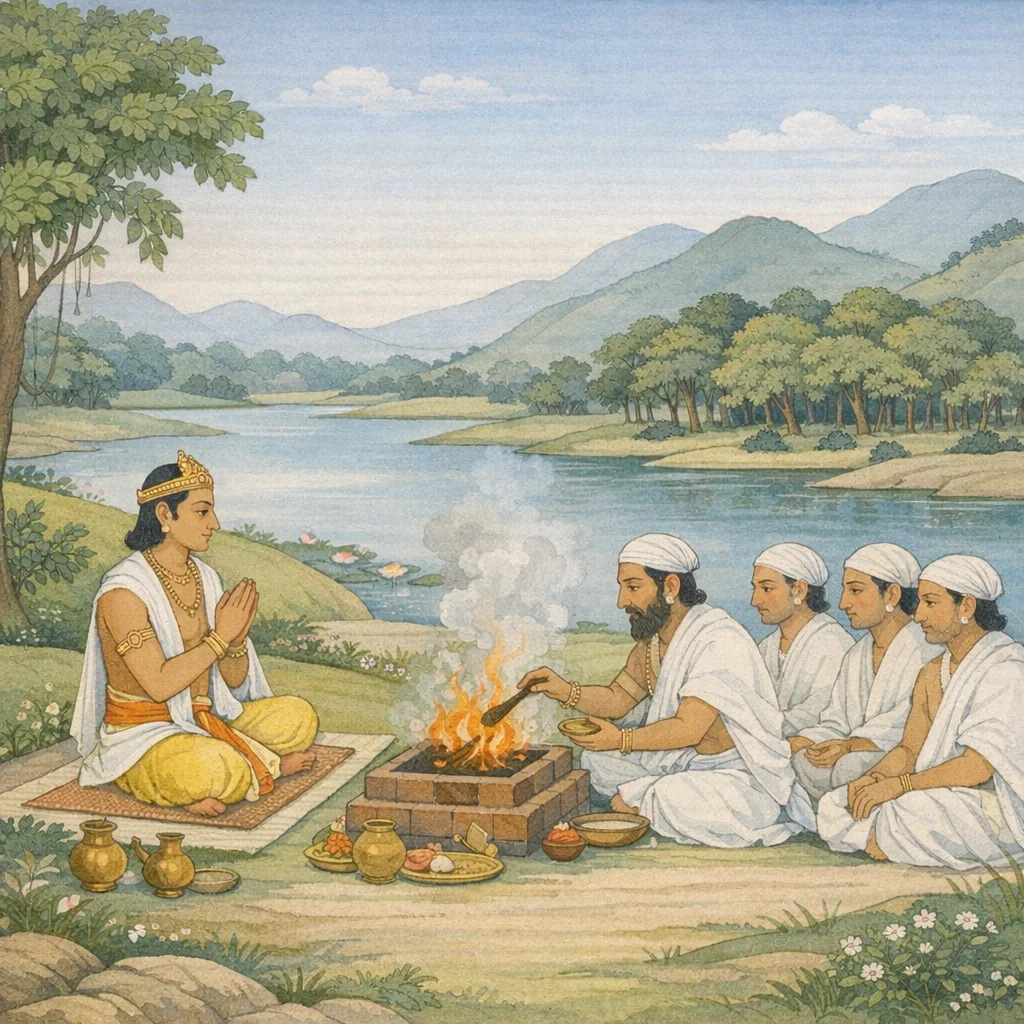
Lomāśa identifies a supremely meritorious region associated with ancient sacrifices: Prajāpati’s long sattras, Ambarīṣa Nābhāga’s attainment through yajña and tapas, and the famed ritual ground linked to Nāhuṣa and Yayāti. The landscape is described as marked by diverse fire-altars and sacrificial constructions, with named features and āśramas (including Nārāyaṇāśrama) indicated as stations of remembrance. The narration frames the locale as Plakṣāvataraṇa, a Yamunā tīrtha regarded by sages as a “gateway” (dvāra) to higher realms and to Kurukṣetra. Additional royal precedents are cited—Bharata’s aśvamedha and Marutta’s eminent sattra under Saṃvarta—underscoring a continuity between ritual patronage, moral authority, and sacred topography. After bathing, the Pāṇḍavas are praised by ṛṣis; Yudhiṣṭhira reports visionary perception of multiple worlds and a celestial chariot, which Lomāśa validates as a recognized effect of tapas and sanctified Sarasvatī proximity. The chapter closes by delimiting Prajāpati’s vedī as extending five yojanas around, associating the territory with Kuru’s yajña-oriented field and establishing the site’s ritual-historical centrality.
Chapter Arc: लोमश ऋषि कुरुनन्दन युधिष्ठिर को कुरुक्षेत्र के द्वार-तुल्य ‘प्लक्षप्र्रवण’ और उसके आसपास के तीर्थ-समूह का स्मरण कराते हैं—जहाँ भूमि स्वयं यज्ञ-वेदी की भाँति पवित्र मानी गई है। → तीर्थ-भूगोल के साथ-साथ ऋषि प्राचीन यज्ञों की परम्परा खोलते हैं: यमुना-तट पर नाभागपुत्र अम्बरीष का महान् यज्ञ, ययाति-वंश/नहुष-सम्बन्धी देश का उल्लेख, और ऋचीकनन्दन जमदग्नि के योगबल से पृथ्वी-पर्यटन की कथा—इन सब से यह बोध गहराता है कि यह क्षेत्र केवल स्थान नहीं, तप-यज्ञ की स्मृति-भूमि है। → पाँच योजन में फैली ‘प्रजापति की यज्ञवेदी’ का उद्घोष—और उसी पवित्र परिधि में अम्बरीष द्वारा यज्ञ-समाप्ति पर ऋत्विजों/सदस्यों को ‘दश पद्म’ दान देने का प्रसंग—अध्याय का शिखर बनता है, जहाँ दान, यज्ञ और क्षेत्र-शुद्धि एक ही दृश्य में एकत्र हो जाते हैं। → लोमश तीर्थ-माहात्म्य को स्थिर निष्कर्ष में बाँधते हैं: इस भूमि में स्नान, निवास और अनुष्ठान का फल परम्परा-सिद्ध है; राजधर्म का तेज यज्ञधर्म से पुष्ट होता है—युधिष्ठिर के लिए यह तीर्थ-यात्रा शोक-निवारण और धर्म-स्थापन का साधन है।
Shlokas
Verse 1
(दाक्षिणात्य अधिक पाठका ३ “लोक मिलाकर कुल २१३ “लोक हैं) कह. &+( 9) #2५:..# #2:5:.१ एकोनत्रिशर्दाधिकशततमो<् ध्याय: कुरुक्षेत्रके द्वारभूत प्लक्षप्र्रवण नामक यमुनातीर्थ एवं सरस्वतीतीर्थकी महिमा लोगश उवाच अस्मिन् किल स्वयं राजन्निष्टवान् वै प्रजापति: । सत्रमिष्टीकृतं नाम पुरा वर्षमहस्नरिकम्,लोमशजी कहते हैं--युधिष्ठिर! पूर्वकालमें यहाँ साक्षात् प्रजापतिने इष्टीकृत नामक सत्रका एक सहस्र वर्षोतक चालू रहनेवाला अनुष्ठान किया था
Lomaśa said: O King, it is said that in this very place, long ago, Prajāpati himself performed a sacrificial session called Iṣṭīkṛta, a rite that continued for a thousand years. The passage frames the tīrtha as sanctified not merely by geography but by exemplary, sustained sacred discipline—an ethical model of perseverance and reverence for ritual order.
Verse 2
अम्बरीषश्व नाभाग इष्टवान् यमुनामनु । यत्रेष्टवा दश पद्मानि सदस्येभ्योडभिसृष्टवान्
Lomaśa said: “Ambarīṣa and Nābhāga performed a sacrificial rite along the Yamunā. There, after completing the sacrifice, he distributed ten lotus(-like) gifts to the assembled officiants and participants. The passage highlights the dharmic ideal that sacrifice is fulfilled not merely by ritual, but by generous, orderly giving to those who uphold the rite.”
Verse 3
देशश्व नाहुषस्थायं यज्वन: पुण्यकर्मण:,कुन्तीनन्दन! यह नहुषकुमार ययातिका देश है, जो पुण्यकर्मा, याज्ञिक, महातेजस्वी और सार्वभौम सम्राट थे। वे सदा इन्द्रके साथ ईर्ष्या रखते थे। यहाँ यह उन्हींकी यज्ञभूमि है
Lomaśa said: “O son of Kuntī, this is the land associated with Nahusha’s line—belonging to Yayāti, the son of Nahusha—who was renowned for meritorious deeds, devoted to sacrifice, mighty in splendor, and a universal sovereign. Yet he continually harbored jealousy toward Indra. This very place is his sacrificial ground.”
Verse 4
सार्वभौमस्य कौन्तेय ययातेरमितौजस: । स्पर्धमानस्य शक्रेण तस्येदं यज्ञवास्त्विह,कुन्तीनन्दन! यह नहुषकुमार ययातिका देश है, जो पुण्यकर्मा, याज्ञिक, महातेजस्वी और सार्वभौम सम्राट थे। वे सदा इन्द्रके साथ ईर्ष्या रखते थे। यहाँ यह उन्हींकी यज्ञभूमि है
O son of Kuntī, this is the sacrificial ground of Yayāti, the mighty and universal sovereign. He lived in rivalry with Śakra (Indra); this very place here belonged to his sacrifice. The passage recalls how even a great king’s merit and power can be shadowed by jealousy toward the gods, and it frames the site as a moral reminder about envy and competitive pride.
Verse 5
पश्य नानाविधाकारैरग्निभिन्निचितां महीम् । मज्जन्तीमिव चाक्रान्तां ययातेर्यज्ञकर्मभि:,देखो, यहाँ अग्नियोंसे युक्त नाना प्रकारकी वेदियाँ हैं, जिनसे यह सारी भूमि व्याप्त हो रही है; मानो पृथ्वी ययातिके यज्ञकर्मोंसे आक्रान्त हो उनकी पुण्य-धारामें डूबी जा रही है
Verse 6
एषा शम्येकपत्रा या सरकं चैतदुत्तमम् | पश्य रामह्ददानेतान् पश्य नारायणाश्रमम्,यह एक पत्तेवाली शमीका अवशेष अंश है तथा यह उत्तम सरोवर है। देखो, ये परशुरामजीके कुण्ड हैं और यह नारायणाश्रम है
Lomaśa said: “Here is that śamī tree with a single leaf—this is its remaining fragment; and here is this excellent lake. Look—these are the sacred pools of Rāma (Paraśurāma). And look—this is Nārāyaṇa’s hermitage.”
Verse 7
एतच्चर्चीकपुत्रस्य योगैर्विचरतो महीम् । प्रसर्पणं महीपाल रौप्पायाममितौजस:,महाराज! योगशक्तिसे सारी पृथ्वीपर विचरनेवाले महातेजस्वी ऋचीकनन्दन जमदग्निका प्रसर्पण (घूमने-फिरनेका स्थान) तीर्थ है जो रौप्या नामक नदीके समीप सुशोभित है
O king, this is the sacred roaming-ground (prasarpana) of Jamadagni, the son of Ṛcīkī, a man of immeasurable energy, who—endowed with yogic power—used to wander over the earth. This tīrtha is beautifully situated near the river named Raupyā.
Verse 8
अन्रानुवंशं पठत: शृणु मे कुरुनन्दन । उलूखलैराभरणै: पिशाची यदभाषत,कुरुनन्दन! इस तीर्थके विषयमें एक परम्परा-प्राप्त कथाको सूचित करनेवाले कुछ श्लोक हैं जिन्हें मैं पढ़ता हूँ, तुम मेरे मुखसे सुनो--(प्राचीनकालकी बात है, कोई स्त्री अपने पुत्रके साथ इस तीर्थमें निवास करनेके लिये आयी थी, उससे) एक भयंकर पिशाचीने, जिसने ओखली-जैसे आभूषण पहन रखे थे, उन श्लोकोंको कहा था--
O joy of the Kurus, listen to me as I recite an ancient, lineage-based tradition. I shall read out the verses that were spoken here by a fearsome female goblin, adorned with ornaments like mortars—verses that point to an old, inherited account connected with this sacred ford.
Verse 9
युगन्धरे दधि प्राश्य उषित्वा चाच्युतस्थले । तद्वद् भूतलये स्नात्वा सपुत्रा वस्तुमरहसि,श्लोक (का भाव) इस प्रकार है--'अरी! तू युगन्धरमें दही खाकर- अच्युतस्थलमें निवास करकेः* और भूतलयमें नहाकरः यहाँ पुत्रसहित निवास करनेकी अधिकारिणी कैसे हो सकती है?
Lomasha said: “After eating curds at Yugandhara, after dwelling at Achyutasthala, and likewise after bathing at Bhūtalaya—how can you be fit to live here together with your son?” The remark is a sharp, moralizing rebuke: it questions her entitlement to remain in the present place, implying that her prior acts and associations at these sacred sites do not justify her current claim to residence and protection.
Verse 10
एकरात्रमुषित्वेह द्वितीयं यदि वत्स्यसि | एतद् वै ते दिवावृत्तं रात्रौ वृत्तमतोडन्यथा,(अच्छा, आयी है तो एक रात रह ले,) यदि एक रात यहाँ रह लेनेके पश्चात् दूसरी रातमें भी रहेगी तो दिनमें तो तेरा यह हाल है (आज दिनमें तो तुमको यह कष्ट दिया गया है) और रातमें तेरे साथ अन्यथा बर्ताव होगा (विशेष कष्ट दिया जायगा)'
“If you stay here for just one night, it is one thing; but if you choose to remain for a second night, then know this: what has happened to you by day is only this much—at night, however, you will be treated otherwise.” (The speaker warns that remaining longer will invite harsher, more dangerous treatment, implying an escalation of wrongdoing and threat.)
Verse 11
अद्य चात्र निवत्स्याम: क्षपां भरतसत्तम । द्वारमेतत् तु कौन्तेय कुरुक्षेत्रस्य भारत,भरतश्रेष्ठ! (इस किंवदन्तीके अनुसार किसीको भी यहाँ एक ही रात रहना चाहिये) अतः हमलोग केवल आजकी रातमें ही यहाँ निवास करेंगे। युधिष्ठिर! यह तीर्थ कुरुक्षेत्रका द्वार बताया गया है
Verse 12
अत्रैव नाहुषो राजा राजन् क्रतुभिरिष्टवान् । ययातिर्बहुरत्नौधैर्यत्रेन्द्रो मुदमभ्यगात्,राजन्! नहुषनन्दन राजा ययातिने यहीं प्रचुर रत्नराशिकी दक्षिणासे युक्त अनेक यज्ञोंद्वारा भगवानका यजन किया था। उन यज्ञोंमें इन्द्रको बड़ी प्रसन्नता हुई थी
Verse 13
एतत् प्लक्षावतरणं यमुनातीर्थमुत्तमम् । एतद् वै नाकपृष्ठस्य द्वारमाहुर्मनीषिण:,यह यमुनाजीका प्लक्षावतरण नामक उत्तम तीर्थ है। मनीषी पुरुष इसे स्वर्गलोकका द्वार बताते हैं
‘This is Plakṣāvataraṇa, the excellent sacred ford on the Yamunā. The wise declare this very place to be a gateway to the heavenly world.’ The statement elevates pilgrimage not as mere travel but as a disciplined approach to purity, restraint, and reverence—suggesting that access to higher realms is linked to right conduct and sanctified places.
Verse 14
अत्र सारस्वतैर्यज्नैरीजाना: परमर्षय: । यूपोलूखलिकास्तात गच्छन्त्यवभूथप्लवम्,यहीं यूप और ओखली आदि यज्ञ-साधनोंका संग्रह करनेवाले महर्षियोंने सारस्वत यज्ञोंका अनुष्ठान करके अवभृथ स्नान किया था
Here, the supreme sages, having performed the Sārasvata sacrifices, proceed—dear one—to the avabhṛtha bath, the concluding rite of a sacrifice. This place is remembered as a sacred ground where the implements of sacrifice such as the yūpa (sacrificial post) and the ulūkhala (mortar) were gathered and employed in Vedic ritual, emphasizing the completion of sacred duty through proper rites and purification.
Verse 15
अत्र वै भरतो राजा राजन् क्रतुभिरिष्टवान् हयमेधेन यज्ञेन मेध्यमश्वमवासृजत्,राजन! राजा भरतने धर्मपूर्वक वसुधाका राज्य पाकर यहीं बहुत-से यज्ञ किये थे और यहीं अश्वमेधयज्ञके उद्देश्यसे उन्होंने अनेक बार कृष्णमृगके समान रंगवाले यज्ञसम्बन्धी श्यामकर्ण अश्वकों भूतलपर भ्रमणके लिये छोड़ा था। नरश्रेष्ठ इसी तीर्थमें ऋषिप्रवर संवर्तसे सुरक्षित हो महाराज मरुत्तने उत्तम यज्ञका अनुष्ठान किया। राजेन्द्र! यहाँ स्नान करके शुद्ध हुआ मनुष्य सम्पूर्ण लोकोंको प्रत्यक्ष देखता है और पापसे मुक्त हो पवित्र हो जाता है; अतः तुम इसमें भी स्नान करो
Here, O king, King Bharata performed many sacrificial rites; for the Aśvamedha sacrifice he released a consecrated horse. Having righteously obtained sovereignty over the earth, Bharata carried out many sacrifices at this very place, and for the purpose of the Aśvamedha he repeatedly set free sacrificial horses—dark-hued like the black antelope, with dark ears—to wander upon the ground. O best of men, at this same sacred ford King Marutta, protected by the foremost sage Saṃvarta, completed an excellent sacrifice. O lord of kings, one who bathes here becomes purified: he beholds all worlds as if directly, is freed from sin, and becomes holy. Therefore you too should bathe here.
Verse 16
असकृत् कृष्णसारुजूं धर्मेणाप्य च मेदिनीम् । अन्रैव पुरुषव्याप्र मरुत्त: सत्रमुत्तमम्,राजन! राजा भरतने धर्मपूर्वक वसुधाका राज्य पाकर यहीं बहुत-से यज्ञ किये थे और यहीं अश्वमेधयज्ञके उद्देश्यसे उन्होंने अनेक बार कृष्णमृगके समान रंगवाले यज्ञसम्बन्धी श्यामकर्ण अश्वकों भूतलपर भ्रमणके लिये छोड़ा था। नरश्रेष्ठ इसी तीर्थमें ऋषिप्रवर संवर्तसे सुरक्षित हो महाराज मरुत्तने उत्तम यज्ञका अनुष्ठान किया। राजेन्द्र! यहाँ स्नान करके शुद्ध हुआ मनुष्य सम्पूर्ण लोकोंको प्रत्यक्ष देखता है और पापसे मुक्त हो पवित्र हो जाता है; अतः तुम इसमें भी स्नान करो
“Many times, O tiger among men, King Marutta performed here an excellent sacrificial session (satra), protected by the foremost sage Saṃvarta. And here, O king, the earth was also repeatedly enjoyed/ruled in accordance with dharma—so that (in connection with sacrifice) horses of dark ears, resembling the hue of the black antelope, were again and again released to roam upon the ground for the purpose of the Aśvamedha. By bathing here a man becomes purified: he beholds all the worlds as if directly, is freed from sin, and becomes holy. Therefore you too should bathe in this tīrtha.”
Verse 17
प्राप चैवर्षिमुख्येन संवर्तेनाभिपालित: । अत्रोपस्पृश्य राजेन्द्र सर्वाल्लोकान् प्रपश्यति । पूयते दुष्कृताच्चैव अत्रापि समुपस्पृश,राजन! राजा भरतने धर्मपूर्वक वसुधाका राज्य पाकर यहीं बहुत-से यज्ञ किये थे और यहीं अश्वमेधयज्ञके उद्देश्यसे उन्होंने अनेक बार कृष्णमृगके समान रंगवाले यज्ञसम्बन्धी श्यामकर्ण अश्वकों भूतलपर भ्रमणके लिये छोड़ा था। नरश्रेष्ठ इसी तीर्थमें ऋषिप्रवर संवर्तसे सुरक्षित हो महाराज मरुत्तने उत्तम यज्ञका अनुष्ठान किया। राजेन्द्र! यहाँ स्नान करके शुद्ध हुआ मनुष्य सम्पूर्ण लोकोंको प्रत्यक्ष देखता है और पापसे मुक्त हो पवित्र हो जाता है; अतः तुम इसमें भी स्नान करो
Lomaśa said: “Here King Marutta, protected by the foremost of sages, Saṁvarta, performed an excellent sacrifice. O best of kings, one who bathes at this sacred ford becomes purified; and, having performed the ritual ablution here, he beholds all the worlds directly. He is cleansed even of evil deeds. Therefore, O king, you too should bathe here.”
Verse 18
वैशम्पायन उवाच तत्र सभ्रातृकः स्नात्वा स्तूयमानो महर्षिभि: । लोमशं पाण्डवश्रेष्ठ इंदे वचनमब्रवीत्,वैशम्पायनजी कहते हैं--जनमेजय! तदनन्तर भाइयोंसहित स्नान करके महर्षियोंद्वारा प्रशंसित हो पाण्डवश्रेष्ठ युधिष्ठिरने लोमशजीसे इस प्रकार कहा--
Vaiśampāyana said: There, after bathing together with his brothers and being praised by the great seers, Yudhiṣṭhira—the foremost of the Pāṇḍavas—addressed Lomaśa with these words. The scene underscores the Pāṇḍavas’ disciplined conduct and reverence for sages, setting a dharmic tone before the ensuing counsel.
Verse 19
सर्वाल्लॉकान् प्रपश्यामि तपसा सत्यविक्रम । इहस्थ: पाण्डवश्रेष्ठं पश्यामि श्वेतवाहनम्,“मुनीश्वर! तपोबलसे सम्पन्न होनेके कारण वस्तुतः आप ही यथार्थ पराक्रमी हैं। आपकी कृपासे आज मैं इस प्लक्षावतरणके जलमें स्थित होकर सब लोकोंको प्रत्यक्ष देख रहा हूँ। यहींसे मुझे पाण्डवश्रेष्ठ श्वेतवाहन अर्जुन भी दिखायी देते हैं
Vaiśampāyana said: “O truly valiant one, whose prowess is grounded in truth—by the power of your austerities I can directly behold all the worlds. Standing here (in this very place), I also see the foremost of the Pāṇḍavas, Arjuna, he whose chariot is drawn by white steeds.”
Verse 20
लोगश उवाच एवमेतन्महाबाहो पश्यन्ति परमर्षय: । (इह स्नात्वा तपोयुक्तांस्त्रील्लॉकान् सचराचरान्) सरस्वतीमिमां पुण्यां पुण्यैकशरणावृताम्,लोमशजीने कहा--महाबाहो! तुम ठीक कहते हो। यहाँ स्नान करके तपःशक्तिसम्पन्न श्रेष्ठ ऋषिगण इसी प्रकार चराचर प्राणियोंसहित तीनों लोकोंका दर्शन करते हैं। अब इस पुण्यसलिला सरस्वतीका दर्शन करो जो एकमात्र पुण्यका ही आश्रय लेनेवाले पुरुषोंसे घिरी हुई है
Lomaśa said: “So it is, O mighty-armed one. Here, after bathing, the supreme sages—endowed with the power of austerity—behold the three worlds together with all that moves and all that is unmoving. Now behold this holy Sarasvatī, a sacred stream, surrounded by those who take refuge in merit alone.”
Verse 21
नरश्रेष्ठ! इसमें स्नान करनेसे तुम्हारे सारे पाप धुल जायँगे। कुन्तीनन्दन! यहाँ अनेक देवर्षि, ब्रह्मर्षि तथा राजर्षियोंने सारस्वत यज्ञोंका अनुष्ठान किया है
“O best of men! By bathing here, all your sins will be washed away. O son of Kuntī! In this very place many divine seers, brahma-seers, and royal seers have performed the Sārasvata sacrifices.”
Verse 22
वेदी प्रजापतेरेषा समन््तात् पज्चयोजना । कुरोर्वे यज्ञशीलस्य क्षेत्रमेतन्न्महात्मन:,यह सब ओर पाँच योजन फैली हुई प्रजापतिकी यज्ञवेदी है। यही यज्ञपरायण महात्मा राजा कुरुका क्षेत्र है
Lomaśa said: “This is Prajāpati’s sacrificial altar, extending five yojanas in every direction. This very land is the sacred field of the great-souled King Kuru, renowned for his steadfast devotion to sacrifice.” The statement frames Kurukṣetra not merely as geography but as a consecrated moral space shaped by righteous ritual and public-spirited kingship.
Verse 23
यत्र स्नात्वा नरश्रेष्ठ धूतपाप्मा भविष्यसि । इह सारस्वतैयय॑ज्ञैरिष्टवन्त: सुरर्षय: । ऋषयश्नैव कौन्तेय तथा राजर्षयोडपि च
“O best of men, by bathing at that place you will become cleansed of sin. Here, the divine seers have performed sacrifices in the Sarasvatī tradition; and so too, O son of Kuntī, have the sages and the royal seers.”
Verse 26
यज्ैश्न तपसा चैव परां सिद्धिमवाप सः | यहीं यमुनाके तटपर नाभागपुत्र अम्बरीषने भी यज्ञ किया था और यज्ञ पूर्ण होनेके पश्चात् सदस्योंको दस पद्म मुद्राएँ दान की थीं तथा यज्ञों और तपस्याद्वारा परम सिद्धि प्राप्त कर ली थीं
Through sacrificial rites and austerity he attained the highest spiritual accomplishment. On the bank of the Yamunā, O king, Nabhāga’s son Ambarīṣa too once performed a sacrifice; and when it was completed he bestowed upon the officiating priests ten padmas of coin as a gift. By sacrifice joined with self-discipline, he reached supreme perfection—showing that wealth gains ethical worth when offered in generosity and when yoked to inner restraint.
Verse 128
इस प्रकार श्रीमह्याभारत वनपर्वके अन्तर्गत तीर्थयात्रापर्वमें लोगशती र्थयात्राके प्रसंगमें जन्तूपाख्यानविषयक एक सौ अद्ठाईसवाँ अध्याय पूरा हुआ
Thus ends the one hundred and twenty-eighth chapter of the Mahabharata’s Vana Parva, within the Tirtha-yatra Parva, in the context of the pilgrimage to Logasha’s sacred ford, dealing with the narrative known as the Jantu-upakhyana. It serves as a formal colophon marking the completion of this unit of teaching and story within the larger pilgrimage discourse.
Verse 129
इति श्रीमहाभारते वनपर्वणि तीर्थयात्रापर्वणि लोमशतीर्थयात्रायामेकोनत्रिंशदधिकशततमो 5 ध्याय:,इस प्रकार श्रीमहाभारत वनपर्वके अन्तर्गत तीर्थयात्रापर्चमें लोमशतीर्थयात्राविषयक एक सौ उनतीसवाँ अध्याय पूरा हुआ
Thus, in the Śrī Mahābhārata, within the Vana Parva, in the Tīrtha-yātrā Parva, in the section describing Lomaśa’s pilgrimage to sacred fords, the one hundred and twenty-ninth chapter concludes. The colophon marks the completion of this unit of teaching and narration, framing the pilgrimage as a dharmic practice—remembering sacred places and the merits associated with them—before the story proceeds onward.
Frequently Asked Questions
The chapter stages a practical dharma-choice: whether exile is merely loss or a disciplined opportunity for purification and lawful preparation; the Pāṇḍavas are guided to interpret hardship through observance, remembrance of exemplars, and restraint rather than grievance.
Sacred space is treated as ethical pedagogy: tīrthas encode precedents of yajña, tapas, and dāna, teaching that legitimate power and inner clarity arise from sustained discipline and accountable action, not from status alone.
Yes, implicitly: bathing/approaching the Sarasvatī–Yamunā tīrtha complex is said to cleanse demerit and enable extraordinary perception (“seeing worlds”), functioning as a merit-claim that frames the chapter’s geography as soteriologically meaningful.