Adhyaya 111
Nāvyāśrama-nirmāṇa and Ṛśyaśṛṅga’s Distraction (नाव्याश्रमनिर्माणम्—ऋश्यशृङ्गस्य विचलनम्)
Upa-parva: Ṛśyaśṛṅgopākhyāna (Episode of Ṛśyaśṛṅga and the Courtesan’s Stratagem)
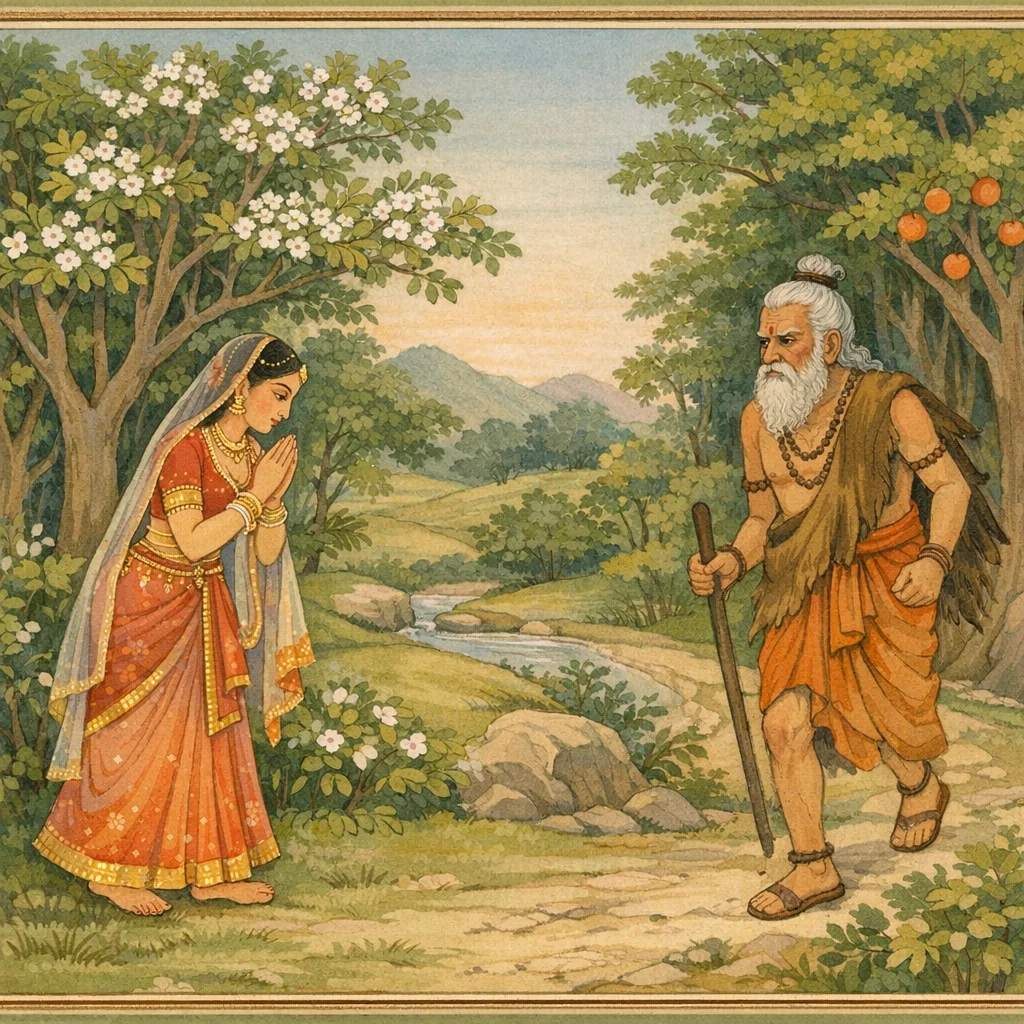
Lomāśa describes how a woman, acting to accomplish a royal purpose, constructs a visually persuasive “boat-hermitage” adorned with artificial trees bearing varied flowers and fruits. She anchors it near Kāśyapa’s hermitage and, finding an opportunity, approaches Ṛśyaśṛṅga, greeting him with conventional inquiries about the welfare of ascetics, the abundance of roots and fruits, the progress of tapas, and the performance of svādhyāya. Ṛśyaśṛṅga responds with hospitality, offering pādya and forest fruits, and asks about her āśrama and observances; she replies with an invented custom that excludes salutations and foot-water, subtly normalizing non-ascetic etiquette. She then replaces his simple offerings with costly foods, garlands, bright garments, and refined drinks, engaging him in play and tactile closeness. After repeatedly stimulating his attention, she departs under the pretext of agnihotra, leaving Ṛśyaśṛṅga emotionally unsettled and inwardly absorbed. Shortly after, Vibhāṇḍaka returns, observes his son’s altered state, and questions him by referencing lapses in ritual preparation and household implements used in sacrifice—treating disrupted practice as evidence of a deeper disturbance.
Chapter Arc: Lomasha’s tale turns to a delicate snare: a veśyā arrives at the forest hermitage, speaking like a devotee, yet carrying the city’s art of temptation meant to unsettle the innocent ṛṣi-sons. → She transforms the very look of the āśrama—artificial trees laden with many flowers and fruits, sweet wish-fulfilling produce, creepers and shrubs—making the ascetic space resemble a pleasure-grove; then she greets Ṛṣyaśṛṅga with honeyed questions about the welfare of tapasvins and the abundance of roots and fruits, masking seduction as courtesy. → Vibhaṇḍaka Kāśyapa suddenly appears—radiant, disciplined, absorbed in svādhyāya and samādhi—and at once perceives a change in his son: ‘You are not as before… why this dejection, who has come here today?’ The father’s sharp intuition collides with the hidden intrusion. → The chapter closes with Vibhaṇḍaka confronting the altered mood of Ṛṣyaśṛṅga and demanding the truth, bringing the veśyā’s covert operation into the open as a crisis within the hermitage. → Whether Ṛṣyaśṛṅga will confess, and how Vibhaṇḍaka will respond to the first breach of his son’s sheltered world, hangs in the air.
Shlokas
Verse 1
अऑड टर (0) है 7 7 एकादरशाधिकशततमोड< ध्याय: वेश्याका ऋष्यशृंगको लुभाना और विभाण्डक मुनिका आश्रमपर आकर अपने पुत्रकी चिन्ताका कारण पूछना लोगश उवाच सातु नाव्याश्रमं चक्रे राजकार्यार्थसिद्धये । संदेशाच्चैव नृपते: स्वबुद्धया चैव भारत,लोमशजी कहते हैं--भरतनन्दन! उस वेश्याने राजाकी आज्ञाके अनुसार और अपनी बुद्धिसे भी उनका कार्य सिद्ध करनेके लिये नावपर एक सुन्दर आश्रम बनाया
Lomaśa said: “O Bhārata, she then fashioned a hermitage upon a boat, in order to accomplish the king’s purpose. Acting both on the king’s message and on her own judgment, she set about fulfilling his design.”
Verse 2
नानापुष्पफलैव॑क्षै: कृत्रिमैरुपशोभितै: । नानागुल्मलतोपेतै: स्वादुकामफल प्रदै:,वह आश्रम भाँति-भाँतिके पुष्प और फलोंसे सुशोभित कृत्रिम वृक्षोंसे घिरा हुआ था। उन वृक्षोंपर नाना प्रकारके गुल्म और लतासमूह फैले हुए थे और वे वृक्ष स्वादिष्ट एवं वांछनीय फल देनेवाले थे
Lomaśa said: “That hermitage was encircled by artificial trees, beautifully adorned with flowers and fruits of many kinds. Over those trees spread diverse shrubs and creepers, and they yielded fruits that were sweet and desirable.”
Verse 3
अतीव रमणीयं तदतीव च मनोहरम् । चक्रे नाव्याश्रमं रम्यमद्भुतोपमदर्शनम्,उन वृक्षोंक कारण वह आश्रम अत्यन्त रमणीय और परम मनोहर दिखायी देता था। वेश्याने उस नावपर जिस सुन्दर आश्रमका निर्माण किया था, वह देखनेमें अद्भुत-सा था
“It was exceedingly delightful—indeed, utterly enchanting to behold. There, upon the boat, a charming hermitage was fashioned, whose appearance seemed wondrous beyond compare.”
Verse 4
ततो निबध्य तां नावमदूरे काश्यपाश्रमात् | चारयामास पुरुषैर्विहारं तस्य वै मुने:,तदनन्तर उसने अपनी उस नावको काश्यप गोत्रीय विभाण्डक मुनिके आश्रमसे थोड़ी ही दूरपर बाँध दिया और गुप्तचरोंको भेजकर यह पता लगा लिया कि इस समय विभाण्डक मुनि अपनी कुटियासे बाहर गये हैं
Verse 5
ततो दुहितरं वेश्यां समाधायेतिकार्यताम् । दृष्टवान्तरं काश्यपस्य प्राहिणोद् बुद्धिसम्मताम्,तदनन्तर विभाण्डक मुनिको दूर गया देख उस वेश्याने अपनी परम बुद्धिमती पुत्रीको जो उसीकी भाँति वेश्यावृति अपनाये हुए थी, कर्तव्यकी शिक्षा देकर मुनिके आश्रमपर भेजा
Verse 6
सा तत्र गत्वा कुशला तपोनित्यस्य संनिधौ | आश्रमं तं समासाद्य ददर्श तमृषे: सुतम्,वह भी कार्यसाधनमें कुशल थी। उसने वहाँ जाकर निरन्तर तपस्यामें लगे रहनेवाले ऋषिकुमार ऋष्यशुंगके समीप उस आश्रममें पहुँचकर उनको देखा
She went there, being skilled and purposeful in accomplishing her task. Reaching the hermitage and coming into the presence of the ascetic who was ever engaged in austerities, she saw the sage’s son there—R̥ṣyaśṛṅga—living in constant penance. The scene underscores how worldly strategy can approach even a life of strict discipline, testing the boundaries between innocence, duty, and temptation.
Verse 7
वेश्योवाच कच्चिन्मुने कुशलं तापसानां कच्चिच्च वो मूलफल प्रभूतम् । कच्चिद् भवान् रमते चाश्रमे<स्मिं- स्त्वां वै द्रष्ट साम्प्रतमागतो5स्मि,'तत्पश्चात्' वेश्याने कहा--मुने! तपस्वीलोग कुशलसे तो हैं न? आपलोगोंको पर्याप्त फल-मूल तो मिल जाते हैं न? आप इस आश्रममें प्रसन्न तो हैं न? मैं इस समय आपके दर्शनके लिये ही यहाँ आयी हूँ
The Vaiśyā said: “O sage, are the ascetics here faring well? And do you have an ample supply of roots and fruits? Are you content in this hermitage? I have come here now specifically to see you.”
Verse 8
कच्चित् तपो वर्धते तापसानां पिता च ते कच्चिदहीनतेजा: । कच्चित् त्वया प्रीयते चैव विप्र कच्चित् स्वाध्याय: क्रियते चर्ष्यशुड्र,क्या तपस्वीलोगोंकी तपस्या उत्तरोत्तर बढ़ रही है? आपके पिताका तेज क्षीण तो नहीं हो रहा है? ब्रह्मन! आप मजेमें हैं न? ऋष्यशृंगजी! आपके स्वाध्यायका क्रम चल रहा है न?
Lomaśa said: “Does the austerity of the ascetics continue to grow from day to day? And is your father’s spiritual radiance undiminished? O brāhmaṇa, are you content and well? O Ṛṣyaśṛṅga, does your discipline of sacred study still proceed without interruption?”
Verse 9
ऋष्यशुड्र उवाच ऋद्धया भवाउ्ज्योतिरिव प्रकाशते मन्ये चाहं त्वामभिवादनीयम् । पाद्यं वै ते सम्प्रदास्यामि कामाद् यथाधर्म फलमूलानि चैव,ऋष्यशृंग बोले--ब्रह्मम! आप अपनी समृद्धिसे ज्योतिकी भाँति प्रकाशित हो रहे हैं। मैं आपको अपने लिये वन्दनीय मानता हूँ और स्वेच्छासे धर्मके अनुसार आपके लिये पाद्य- अर्घ्य एवं फल-मूल अर्पण करता हूँ
Rishyaśṛṅga said: “By your prosperity you shine like a light. I regard you as one worthy of reverent greeting. Therefore, of my own free will, I shall offer you the water for washing the feet, and—according to dharma—fruits and roots as well.”
Verse 10
कौश्यां बृष्यामास्स्व यथोपजोषं कृष्णाजिनेनावृतायां सुखायाम् । क्व चाश्रमस्तव किं नाम चेदं व्रतं ब्रह्मं श्वरसि हि देववत् त्वम्,इस कुशासनपर आप सुखलपूर्वक बैठें। इसपर काला मृगचर्म बिछाया गया है, इसलिये इसपर बैठनेमें आराम रहेगा। आपका आश्रम कहाँ है? और आपका नाम क्या है? ब्रह्मन! आप देवताके समान यह किस व्रतका आचरण कर रहे हैं?
R̥śyaśṛṅga said: “Sit here comfortably on this kuśa-seat, covered with a black antelope-skin, so that it will be pleasant to sit upon. Where is your hermitage? What is your name? And what is this sacred observance you are practicing, O brāhmaṇa? You appear radiant and self-controlled like a god.”
Verse 11
वेश्योवाच ममाश्रम: काश्यपपुत्र रम्य- स्त्रियोजनं शैलमिमं परेण । तत्र स्वधर्मो नाभिवादन मे न चोदकं पाद्यमुपस्पृशामि,वेश्या बोली--काश्यपनन्दन! मेरा आश्रम बड़ा मनोहर है। वह इस पर्वतके उस पार तीन योजनकी दूरीपर स्थित है। वहाँ मेरा जो अपना धर्म है उसके अनुसार आपको मेरा अभिवादन (प्रणाम) नहीं करना चाहिये। मैं आपके दिये हुए अर्घ्य और पाद्यका स्पर्श नहीं करूँगी
The Vaiśyā said: “O son of Kaśyapa, my hermitage is delightful. It lies three yojanas away, beyond this mountain. There, according to the rule of conduct that is mine, you should not offer me salutations; nor will I touch the water for offering and the water for washing the feet that you present.”
Verse 12
भवता नाभिवाद्यो5हमभिवाद्यों भवान् मया । व्रतमेतादृशं ब्रह्मन् परिष्वज्यो भवान् मया,मैं आपके लिये वन्दनीय नहीं हूँ। आप ही मेरे वन्दनीय हैं। ब्रह्मन! मेरा यह नियम है, जिसके अनुसार मुझे आपका आलिंगन करना चाहिये
“I am not one who should be saluted by you; rather, you are the one to be saluted by me. O Brahmin, such is my vow: that I should embrace you.”
Verse 13
ऋष्यशुड्र उवाच फलानि पक््वानि ददानि ते*हं भल्लातकान्यामलकानि चैव । करूषकाणीड्गुदधन्वनानि पिप्पलानां कामकारं कुरुष्व,ऋष्यशृंगने कहा--ब्रह्मन! मैं तुम्हें पके फल दे रहा हूँ। ये भिलावा, आँवले, करूषक (फालसा), इंगुद (हिंगोट), धन्वन (धामिन) और पीपलके फल प्रस्तुत हैं--इन सबका इच्छानुसार उपयोग कीजिये
Ṛṣyaśuḍra said: “O Brahmin, I offer you ripe fruits—bhallātaka and āmalaka, as well as karūṣaka, iṅguda, dhanvana, and the fruits of the pippala. Use them as you wish.”
Verse 14
लोगश उवाच सा तानि सर्वाणि विवर्जयित्वा भक्ष्याण्यनहाणि ददौ ततो<स्य । तान्यृष्यशुड्रस्य महारसानि भृशं सुरूपाणि रुचिं ददुर्हि,लोमशजी कहते हैं--राजन्! तदनन्तर वेश्याने उन सब फलोंको छोड़कर स्वयं ऋष्यशूंगको अत्यन्त सुन्दर और अमूल्य भक्ष्य पदार्थ (फल आदि) दिये। उन परम सरस फलोंने उनकी रुचिको बढ़ाया
Lomaśa said: “O King, then she set aside all those other fruits and offered him exquisite, priceless delicacies. Those richly flavored and exceedingly beautiful fruits delighted Ṛṣyaśṛṅga and heightened his taste and desire.”
Verse 15
ददौ च माल्यानि सुगन्धवन्ति चित्राणि वासांसि च भानुमन्ति । पेयानि चाग्रयाणि ततो मुमोद चिक्रीड चैव प्रजहास चैव,साथ ही सुगन्धित मालाएँ तथा विचित्र एवं चमकीले वस्त्र प्रदान किये। इतना ही नहीं, उसने मुनिकुमारको अच्छी श्रेणीके पेय पिलाये जिससे वे बहुत प्रसन्न हुए। वे उसके साथ खेलने और जोर-जोरसे हँसने लगे। वेश्या ऋष्यशृंगके पास ही गेंद खेलने लगी। वह अपने अंगोंको मोड़ती हुई फलोंके भारसे लदी लताकी भाँति झुक जाती और ऋष्यशुंग मुनिको बार-बार अपने अंकमें भर लेती थी। साथ ही अपने अंगोंसे उनके अंगोंको इस प्रकार दबाती मानो उनके भीतर समा जायगी
Lomaśa said: “She gave them fragrant garlands and variegated, shining garments. She also offered them choice drinks; delighted by this, they became cheerful, played with her, and laughed aloud.” In the wider episode, these gifts and pleasures function as deliberate temptation, illustrating how sensory allure can be used to unsettle ascetic restraint and divert one from dharma through attachment and desire.
Verse 16
सा कन्दुकेनारमतास्य मूले विभज्यमाना फलिता लतेव । गात्रैश्न गात्राणि निषेवमाणा समाश्लिषच्चासकृदृष्यशूड्रम्,साथ ही सुगन्धित मालाएँ तथा विचित्र एवं चमकीले वस्त्र प्रदान किये। इतना ही नहीं, उसने मुनिकुमारको अच्छी श्रेणीके पेय पिलाये जिससे वे बहुत प्रसन्न हुए। वे उसके साथ खेलने और जोर-जोरसे हँसने लगे। वेश्या ऋष्यशृंगके पास ही गेंद खेलने लगी। वह अपने अंगोंको मोड़ती हुई फलोंके भारसे लदी लताकी भाँति झुक जाती और ऋष्यशुंग मुनिको बार-बार अपने अंकमें भर लेती थी। साथ ही अपने अंगोंसे उनके अंगोंको इस प्रकार दबाती मानो उनके भीतर समा जायगी
At the foot of his hermitage she sported with a ball. Bending and swaying like a creeper weighed down with ripe fruit, she kept pressing her limbs against his, and again and again embraced the sage-boy Ṛśyaśṛṅga. The scene underscores how sensual display and physical intimacy are used as deliberate instruments to unsettle an ascetic’s restraint, raising an ethical tension between outward allure and inner self-mastery.
Verse 17
सर्जानशोकांस्तिलकांभश्व वृक्षान् सुपुष्पितानवनाम्यावभज्य । विलज्जमानेव मदाभिभूता प्रलोभयामास सुतं महर्षे:,वहाँ शाल, अशोक और तिलकके वृक्ष खूब फूले हुए थे। उनकी डालियोंको झुकाकर वह मदोन्मत्त वेश्या लज्जाका नाट्य-सा करती हुई महर्षिके उस पुत्रको लुभाने लगी
Verse 18
अथर्ष्यशूड़ूं विकृतं समीक्ष्य पुन: पुनः पीड्य च कायमस्य । अवेक्ष्यमाणा शनकैर्जगाम कृत्वाग्निहोत्रस्य तदापदेशम्,ऋष्यशृंगकी आकृतिमें किंचित् विकार देखकर उसने बार-बार उनके शरीरको आलिंगनके द्वारा दबाया और अग्निहोत्रका बहाना बनाकर वह उनके द्वारा देखी जाती हुई धीरे-धीरे वहाँसे चली गयी
Seeing that Ṛṣyaśṛṅga’s appearance had altered slightly, she repeatedly pressed his body in embrace. Then, while he watched her, she slowly departed, making the pretext of attending to the agnihotra—thus continuing her calculated seduction under the cover of ritual duty.
Verse 19
तस्यां गतायां मदनेन मत्तो विचेतनश्वाभवदृष्यशृड्रः । तामेव भावेन गतेन शून्ये विनि:श्वसन्नार्तरूपो बभूव,उसके चले जानेपर उसके अनुरागसे उन्मत्त मुनिकुमार ऋष्यशृंग अचेत-से हो गये। उस निर्जन स्थानमें उनकी मनोवृति उसीकी ओर लगी रही और वे लंबी साँस खींचते हुए अत्यन्त व्यथित हो उठे
When she had gone, Ṛṣyaśṛṅga—intoxicated by Kāma’s power—became as if senseless. In that now-empty, lonely place his mind remained fixed on her alone; sighing deeply, he was overcome with visible anguish. The episode underscores how attachment can cloud discernment and disturb inner steadiness, even in one trained in ascetic restraint.
Verse 20
ततो मुहूर्ताद्धरिपिड्जनलाक्ष: प्रवेष्टितो रोमभिरानखाग्रात् । स्वाध्यायवान् वृत्तसमाधियुक्तो विभाण्डक: काश्यप: प्रादुरासीत्,तदनन्तर दो घड़ीके बाद हरे-पीले नेत्रोंवाले काश्यपनन्दन विभाण्डक मुनि वहाँ आ पहुँचे। वे सिरसे लेकर पैरोंके नखोंतक रोमावलियोंसे भरे हुए थे। महात्मा विभाण्डक स्वाध्यायशील, सदाचारी तथा समाधिनिष्ठ महर्षि थे
Then, after a short while, Vibhāṇḍaka—Kāśyapa’s son—appeared there, his eyes tawny-green. His body was covered with hair from head to the very tips of his nails. A great sage, he was devoted to Vedic self-study, steadfast in right conduct, and established in meditative absorption—his presence itself embodying disciplined ascetic virtue.
Verse 21
सो<पश्यदासीनमुपेत्य पुत्र ध्यायन्तमेक॑ विपरीतचित्तम् । विनि:श्वसन्तं मुहुरूर्ध्वदृष्टिं विभाण्डक: पुत्रमुवाच दीनम्,निकट आनेपर उन्होंने अपने पुत्रको अकेला उदासीन भावसे चिन्तामग्न होकर बैठा देखा। उसके चित्तकी दशा विपरीत थी। वह बार-बार ऊपरकी ओर दृष्टि किये उच्छवास ले रहा था। इस दयनीय दशामें पुत्रको देखकर विभाण्डक मुनिने पूछा--“तात! आज तुम अग्निकुण्डमें समिधाएँ क्यों नहीं रख रहे हो! क्या तुमने अग्निहोत्र कर लिया? खुक्ु और खुवा आदि यज्ञपात्रोंको भलीभाँति शुद्ध करके रखा है न? कहीं ऐसा तो नहीं हुआ कि तुमने हवनके लिये दूध देनेवाली गायका बछड़ा खोल दिया हो जिससे वह सारा दूध पी गया हो। बेटा! आज तुम पहले-जैसे दिखायी नहीं देते। किसी भारी चिन्तामें निमग्न हो, अपनी सुध-बुध खो बैठे हो। क्या कारण है जो आज तुम अत्यन्त दीन हो रहे हो। मैं तुमसे पूछता हूँ, बताओ, आज यहाँ कौन आया था?”
Approaching, he saw his son sitting alone, sunk in thought, his mind turned contrary to its usual calm. The boy kept sighing again and again, his gaze repeatedly lifting upward. Seeing his son in this pitiable state, the sage Vibhāṇḍaka addressed him: “My child, why are you not placing the fuel-sticks into the sacred fire today? Have you performed the Agnihotra? Have you kept the ritual vessels—such as the ladles and cups—properly cleansed? Or did you perhaps loosen the calf of the milch-cow so that it drank up all the milk meant for the offering? You do not look as you did before. You seem overwhelmed by some heavy worry, as if you have lost your self-possession. Tell me—why are you so downcast today? I ask you: who came here today?”
Verse 22
न कल्प्यन्ते समिथ: कि नु तात कच्चिद्धुतं चाग्निहोत्रं त्वयाद्य । सुनिर्णिक्त ख्ुक्खुवं होमधेनु: कच्चित् सवत्साद्य कृता त्वया च,निकट आनेपर उन्होंने अपने पुत्रको अकेला उदासीन भावसे चिन्तामग्न होकर बैठा देखा। उसके चित्तकी दशा विपरीत थी। वह बार-बार ऊपरकी ओर दृष्टि किये उच्छवास ले रहा था। इस दयनीय दशामें पुत्रको देखकर विभाण्डक मुनिने पूछा--“तात! आज तुम अग्निकुण्डमें समिधाएँ क्यों नहीं रख रहे हो! क्या तुमने अग्निहोत्र कर लिया? खुक्ु और खुवा आदि यज्ञपात्रोंको भलीभाँति शुद्ध करके रखा है न? कहीं ऐसा तो नहीं हुआ कि तुमने हवनके लिये दूध देनेवाली गायका बछड़ा खोल दिया हो जिससे वह सारा दूध पी गया हो। बेटा! आज तुम पहले-जैसे दिखायी नहीं देते। किसी भारी चिन्तामें निमग्न हो, अपनी सुध-बुध खो बैठे हो। क्या कारण है जो आज तुम अत्यन्त दीन हो रहे हो। मैं तुमसे पूछता हूँ, बताओ, आज यहाँ कौन आया था?”
Lomaśa said: “Dear child, why are the kindling-sticks not being set in order for the fire? Have you performed the Agnihotra today? Have you thoroughly cleansed and kept ready the ritual vessels—such as the khukku and the khuvā? And have you made sure the milk-giving cow meant for the offering has not been left with her calf, so that the calf might drink all the milk? You do not look as you usually do—your mind seems burdened. Tell me: who has come here today?”
Verse 23
न वै यथापूर्वमिवासि पुत्र चिन्तापरक्षासि विचेतनश्न । दीनो>तिमात्र त्वमिहाद्य किं नु पृच्छामि त्वां क इहाद्यागतो5भूत्,निकट आनेपर उन्होंने अपने पुत्रको अकेला उदासीन भावसे चिन्तामग्न होकर बैठा देखा। उसके चित्तकी दशा विपरीत थी। वह बार-बार ऊपरकी ओर दृष्टि किये उच्छवास ले रहा था। इस दयनीय दशामें पुत्रको देखकर विभाण्डक मुनिने पूछा--“तात! आज तुम अग्निकुण्डमें समिधाएँ क्यों नहीं रख रहे हो! क्या तुमने अग्निहोत्र कर लिया? खुक्ु और खुवा आदि यज्ञपात्रोंको भलीभाँति शुद्ध करके रखा है न? कहीं ऐसा तो नहीं हुआ कि तुमने हवनके लिये दूध देनेवाली गायका बछड़ा खोल दिया हो जिससे वह सारा दूध पी गया हो। बेटा! आज तुम पहले-जैसे दिखायी नहीं देते। किसी भारी चिन्तामें निमग्न हो, अपनी सुध-बुध खो बैठे हो। क्या कारण है जो आज तुम अत्यन्त दीन हो रहे हो। मैं तुमसे पूछता हूँ, बताओ, आज यहाँ कौन आया था?”
“My son, you are not at all as you were before. You seem wholly taken over by anxious thought, as if your awareness has slipped away. Why are you so exceedingly downcast today? I ask you plainly—who has come here today?”
Verse 111
इति श्रीमहाभारते वनपर्वणि तीर्थयात्रापर्वणि लोमशतीर्थयात्रायामृष्यशूड्रोपाख्याने एकादशाधिकशततमो< ध्यायय:
Thus ends, in the Śrī Mahābhārata, within the Vana Parva, in the section on the pilgrimage to sacred fords (Tīrtha-yātrā Parva), in the account of Lomaśa’s pilgrimage, in the episode known as the “Tale of the Sage and the Śūdra,” the one-hundred-and-eleventh chapter. This is a colophon marking the close of a narrative unit, situating the teaching within the ethical frame of pilgrimage, discourse, and exempla used to illuminate dharma.
Verse 190
इस प्रकार श्रीमह्याभारत वनपर्वके अन्तर्गत तीर्थयात्रापर्वमें लोगशती र्थयात्राके प्रसंगमें ऋष्यशूंगोपाख्यानविषयक एक सौ दसवाँ अध्याय पूरा हुआ
Thus, in the sacred Mahābhārata, within the Vana Parva, in the section on the pilgrimage to holy places (Tīrthayātrā Parva), in the context of Logaśa’s pilgrimage narrative, the one-hundred-and-tenth chapter—dealing with the episode of Ṛṣyaśṛṅga—comes to its conclusion. The line functions as a formal colophon, marking the completion of a thematic unit and underscoring the didactic framing of pilgrimage and exemplary narratives as vehicles for dharma.
Verse 1191
इस प्रकार श्रीमह्ााभारत वनपर्वके अन्तर्गत तीर्थयात्रापर्वमें लोमशतीर्थयात्राके प्रसंगमें ऋष्यशूंगोपाख्यानविषयक एक सौ ग्यारहवाँ अध्याय पूरा हुआ
Thus ends the one hundred and eleventh chapter of the Mahābhārata’s Vana Parva, within the Tīrtha-yātrā Parva, in the context of Lomāśa’s pilgrimage narrative, dealing with the episode of Ṛṣyaśṛṅga. The chapter’s conclusion signals a transition: the sacred journey continues, and the listener is invited to carry forward the ethical resonance of the tale—how purity of conduct, disciplined life, and the power of righteous influence can shape events and restore order.
Frequently Asked Questions
The chapter tests how ascetic discipline responds to unfamiliar social stimuli: hospitality and curiosity are legitimate, yet they become vectors through which sense-pleasure and attachment can unsettle vowed stability.
Ethical steadiness is shown as procedural and embodied: regular ritual action, guarded perception, and truthful social framing protect tapas, while engineered environments and gift-lures can erode discernment.
No explicit phalaśruti appears in the provided verses; the meta-commentary functions implicitly by treating disrupted agnihotra preparation and altered demeanor as narrative evidence of inner deviation from disciplined practice.