Adhyaya 98
दुःशासननिग्रहः—द्रोणधृष्टद्युम्नयुद्धप्रसङ्गः (Rebuke of Duḥśāsana; Context of the Droṇa–Dhṛṣṭadyumna Combat)
Upa-parva: Droṇa–Pāñcāla Saṅgrāma (Tactical Engagements with the Pāñcālas)
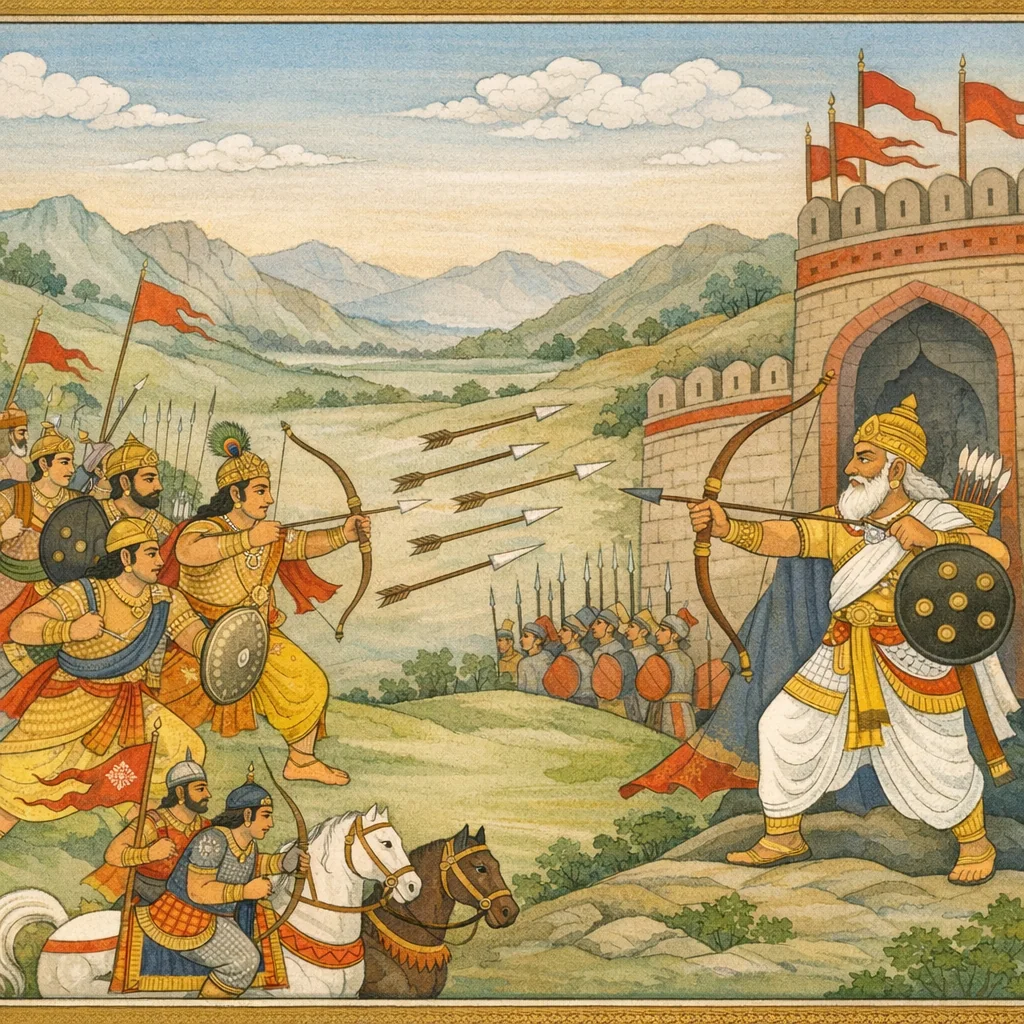
Saṃjaya narrates that Droṇa (Bhāradvāja) sees Duḥśāsana’s chariot nearby and interrogates the apparent retreat of Kaurava elements, questioning the safety of the king and Jayadratha. Droṇa delivers a sustained admonition: Duḥśāsana’s status as royal brother and mahāratha obligates him to resist fear; earlier acts—especially the dice-game aggression and the affliction of Draupadī—are presented as causal seeds of present danger, likened to serpent-like arrows returning as consequence. Droṇa argues that if flight is the chosen policy, then conciliation and surrender of sovereignty to Yudhiṣṭhira would be more coherent than continued escalation. He urges Duḥśāsana to regain resolve and engage Sātyaki, warning that a leader’s retreat destabilizes the entire force. Duḥśāsana, silent, proceeds with a large contingent and fights Yuyudhāna (Sātyaki). The narrative then shifts to Droṇa’s own offensive: he penetrates Pāñcāla formations, inflicts heavy losses, and is met by Vīraketu, whom Droṇa strikes down. Further Pāñcāla princes attack and are neutralized. Dhṛṣṭadyumna, enraged, confronts Droṇa; despite heavy arrow-covering, Droṇa remains composed, is struck hard, briefly falters, and Dhṛṣṭadyumna attempts a decisive close assault. Droṇa recovers, employs close-range (āsanna-yodhī) “vaitastika” arrows, disrupts Dhṛṣṭadyumna’s attempt, and re-stabilizes his formation; the Pāṇḍavas do not succeed in defeating him in this engagement.
Chapter Arc: संजय राजन् को ‘आश्चर्य’ संग्राम सुनाते हैं—कुरु और पाण्डव पक्ष के प्रधान वीरों के बीच एक-एक कर द्वन्द्व-युद्धों की ज्वाला भड़क उठती है। → व्यूह के द्वार पर स्थित द्रोणाचार्य के पास पहुँचकर पाण्डवगण उनके द्रोणानीक को भेदने/विचलित करने के लिए आक्रमण करते हैं; द्रोण भी अपने व्यूह की रक्षा करते हुए यश-लालसा में प्रचण्ड प्रतिरोध खड़ा करते हैं। इसी बीच अनेक मोर्चों पर समानान्तर द्वन्द्व आरम्भ होते हैं—विराट का प्रहार, सात्यकि पर बाण-वर्षा, और युधिष्ठिर का शल्य से सामना। → युधिष्ठिर और मद्रराज शल्य का ‘अत्यद्भुत’ युद्ध चरम पर पहुँचता है—युधिष्ठिर शल्य को पचास बाणों से विद्ध कर पुनः सात बाणों से और घायल करते हैं; दोनों का संग्राम शम्बरासुर-इन्द्र के प्राचीन युद्ध के तुल्य बताया जाता है। → द्वन्द्व-युद्धों की यह कड़ी निर्णायक परिणाम के बिना भीषणता को स्थापित करती है: द्रोण का व्यूह स्थिर रहता है, पाण्डवों का दबाव बना रहता है, और कई मोर्चों पर वीरों की क्षमता-सीमा परखी जाती है। सात्यकि बुरी तरह बिंधकर क्षणिक मूर्च्छा की ओर जाते हैं—युद्ध का पलड़ा डगमगाने लगता है। → क्रोधमूल वैर की ‘अग्नि’ को कौरव-पुत्रों द्वारा सुरक्षित रखने का संकेत भविष्य की और अधिक दाहक हिंसा का पूर्वाभास देता है—अगला प्रहार किस पर टूटेगा?
Shlokas
Verse 1
पम्प छा अर: षण्णवतितमो< ध्याय: दोनों पक्षोंके प्रधान वीरोंका दन्द्ध-युद्ध संजय उवाच राजन संग्राममाश्चर्य श्रुणु कीर्तयतो मम । कुरूणां पाण्डवानां च यथा युद्धमवर्तत,संजय कहते हैं--राजन्! कौरवों और पाण्डवोंमें जिस प्रकार युद्ध हुआ था, उस आश्चर्यमय संग्रामका मैं वर्णन करता हूँ, ध्यान देकर सुनिये--
Sanjaya said: O King, listen attentively as I recount this wondrous battle—how the war unfolded between the Kurus and the Pandavas. In this narration, the marvel is not mere spectacle: it is the grave display of human resolve, duty, and ruin as both sides’ foremost heroes meet in decisive combat.
Verse 2
भारद्वाजं समासाद्य व्यूहस्य प्रमुखे स्थितम् । अयोधयन् रणे पार्था द्रोणानीकं॑ बिभित्सव:,व्यूहके द्वारपर खड़े हुए द्रोणाचार्यके पास आकर पाण्डवगण उनकी सेनाके व्यूहका भेदन करनेकी इच्छासे रणक्षेत्रमें उनके साथ युद्ध करने लगे
Sañjaya said: Approaching Bhāradvāja’s son (Droṇa) who stood at the very front of the battle-formation, the sons of Pṛthā engaged him in combat on the field, intent on breaking through Droṇa’s army and piercing the array.
Verse 3
रक्षमाण: स्वकं व्यूहं दोणो5पि सह सैनिकै: । अयोधयदू रणे पार्थान् प्रार्थयानो महद् यश:,द्रोणाचार्य भी महान् यशकी अभिलाषा रखकर अपने व्यूहकी रक्षा करते हुए बहुत-से सैनिकोंको साथ लेकर समरांगणमें कुन्तीपुत्रोंके साथ युद्धमें संलग्न हो गये
Sañjaya said: Guarding his own battle-formation, Droṇa too—accompanied by his troops—engaged the sons of Pṛthā in combat on the battlefield, driven by the desire for great renown. The verse highlights how, amid the demands of strategy and duty, the pursuit of fame also becomes a powerful motive in war.
Verse 4
विन्दानुविन्दावावन्त्यौ विराट दशभि: शरै: । आजल्नतुः सुसंक्रुद्धौं तव पुत्रहितैषिणौं,आपके पुत्रका हित चाहनेवाले अवन्तीके राजकुमार विन्द और अनुविन्दने अत्यन्त कुपित हो राजा विराटको दस बाण मारे
Sañjaya said: Vindā and Anuvindā, the princes of Avanti, fiercely enraged and intent on your son’s welfare, struck King Virāṭa with ten arrows.
Verse 5
विराटश्न महाराज तावुभौ समरे स्थितौ । पराकान्तौ पराक्रम्य योधयामास सानुगौ,महाराज! राजा विराटने भी समरभूमिमें अनुचरोंसहित खड़े हुए उन दोनों पराक्रमी वीरोंके साथ पराक्रमपूर्वक युद्ध किया
Sañjaya said: O great king, Virāṭa too, standing firm in the battle, fought those two mighty warriors with full valor, engaging them forcefully while supported by his attendants and followers. The scene underscores the kṣatriya duty of steadfast resistance in war, where courage is exercised not for personal gain but to uphold one’s side and protect one’s people.
Verse 6
तेषां युद्धं समभवद् दारुणं शोणितोदकम् । सिंहस्य द्विपमुख्याभ्यां प्रभिन्नाभ्यां यथा वने,जैसे वनमें सिंहका दो मदस्रावी महान् हाथियोंके साथ युद्ध हो रहा हो, उसी प्रकार विराट और विन्द-अनुविन्दमें बड़ा भयंकर संग्राम होने लगा, जहाँ पानीकी तरह खून बहाया जा रहा था
Verse 7
बाह्लीकं रभसं युद्धे याज्ञसेनिर्महाबल: । आजल्ने विशिखैस्ती&णैघोरै मर्मास्थिभेदिभि:
Sañjaya said: In the fury of battle, the mighty Yājñaseni struck down Bāhlīka with sharp, dreadful arrows that pierced vital points and shattered bone—an image of war’s ruthless momentum, where valor and duty are enacted through lethal skill.
Verse 8
महाबली शिखण्डीने युद्धस्थलमें वेगशाली बाह्लीकको मर्मस्थानों और हड्डियोंको विदीर्ण कर देनेवाले भयंकर तीखे बाणोंद्वारा गहरी चोट पहुँचायी ।। बाह्लीको याज्ञसेनिं तु हेमपुड्खै: शिलाशितै: । आजयचघान भृशं क्रुद्धो नवभिर्नतपर्वभि:,इससे बाह्लीक अत्यन्त कुपित हो उठे। उन्होंने शानपर तेज किये हुए सुवर्णमय पंखसे युक्त और झुकी हुई गाँठवाले नौ बाणोंद्वारा शिखण्डीको घायल कर दिया
Sañjaya said: Then Bāhlīka, enraged, struck Yājñaseni (Śikhaṇḍī) fiercely in the battle with nine arrows—stone-whetted, razor-sharp, and fitted with golden fletching—each with bent joints. The exchange shows how, in the fury of war, prowess and anger drive warriors to target vital points, intensifying the cycle of retaliation on the battlefield.
Verse 9
तद् युद्धमभवद् घोरं शरशक्तिसमाकुलम् | भीरूणां त्रासजननं शूराणां हर्षवर्धनम्,उन दोनोंके उस युद्धने बड़ा भयंकर रूप धारण किया। उसमें बाणों और शक्तियोंका ही अधिक प्रहार हो रहा था। वह भीरु पुरुषोंके हृदयमें भय और शूरवीरोंके हृदयमें हर्षकी वृद्धि करनेवाला था
Verse 10
ताभ्यां तत्र शरैर्मुक्तिरन्तरिक्षं दिशस्तथा । अभवत् संवृतं सर्व न प्राज्ञायत किंचन,उन दोनों भाइयोंके छोड़े हुए बाणोंसे वहाँ आकाश और दिशाएँ--सब कुछ व्याप्त हो गया। कुछ भी सूझ नहीं पड़ता था
Sañjaya said: From the arrows released there by those two brothers, the sky and the directions alike became completely veiled. Nothing at all could be clearly perceived—such was the blinding press of weapons in that moment of war.
Verse 11
शैब्यो गोवासनो युद्धे काश्यपुत्र॑ महारथम् । ससैन्यो योधयामास गज: प्रतिगजं यथा,शिवबिदेशीय गोवासनने सेनासहित सामने जा काशिराजके महारथी पुत्रके साथ रणक्षेत्रमें उसी प्रकार युद्ध किया, जैसे एक हाथी अपने प्रतिद्वन्द्दी दूसरे हाथीके साथ युद्ध करता है
Sañjaya said: In the battle, Śaibya Govāsana, together with his troops, engaged the great chariot-warrior—the son of Kāśyapa—in combat, like one elephant fighting a rival elephant. The verse underscores the sheer force and parity of the duel: two powerful champions meeting head-on amid the larger violence of war.
Verse 12
बाह्लीकराज: संक्रुद्धो द्रौषपदेयान् महारथान् । मन: पज्चेन्द्रियाणीव शुशुभे योधयन् रणे,क्रोधमें भरे हुए बाह्लीकराज महारथी द्रौपदीपुत्रोंके साथ रणक्षेत्रमें युद्ध करते हुए उसी प्रकार शोभा पाने लगे, जैसे मन पाँचों इन्द्रियोंसे युद्ध करता हुआ सुशोभित होता है
Sañjaya said: Enraged, the king of Bāhlīka fought the great chariot-warriors—the sons of Draupadī—upon the battlefield. As he battled, he shone with a fierce splendor, likened to the mind striving against the five senses: a moral image of inner governance mirrored in outer war, where mastery and wrath contend for rule.
Verse 13
अयोधयंस्ते सुभृशं तं शरौचै: समन्ततः । इन्द्रियार्था यथा देहं शश्वद् देहवतां वर,देहधारियोंमें श्रेष्ठ महाराज! द्रौपदीके पुत्र भी चारों ओरसे बाणसमूहोंकी वर्षा करते हुए वहाँ बाह्नीकराजके साथ उसी प्रकार बड़े वेगसे युद्ध करने लगे, जैसे इन्द्रियोंके विषय शरीरके साथ सदा जूझते रहते हैं
Sañjaya said: They assailed him fiercely from every side with torrents of arrows. O best of embodied kings, the sons of Draupadī fought there with great speed against the Bāhlīka king, just as the objects of the senses ceaselessly contend with the embodied self—pressing in from all directions and testing one’s mastery and restraint amid conflict.
Verse 14
वार्ष्णेयं सात्यकि युद्धे पुत्रो द:ःशासनस्तव । आजलस्ने सायकैस्ती &णैर्नवर्भिर्नतपर्वभि:,आपके पुत्र दुःशासनने युद्धस्थलमें झुकी हुई गाँठवाले नौ तीखे बाणोंद्वारा वृष्णिवंशी सात्यकिको घायल कर दिया
Sanjaya said: In the thick of battle, your son Duḥśāsana struck Sātyaki of the Vṛṣṇi line with nine sharp arrows, their joints bent downward, wounding him. The episode underscores how the war’s momentum is driven by relentless martial skill and retaliatory intent, where prowess is repeatedly used to injure even renowned warriors, tightening the cycle of violence rather than restoring dharma.
Verse 15
सो5तिविद्धों बलवता महेष्वासेन धन्विना । ईषन्मूर्च्छां जगामाशु सात्यकि: सत्यविक्रम:,बलवान् एवं महान् धनुर्धर दुःशासनके बाणोंसे अत्यन्त बिंध जानेके कारण सत्यपराक्रमी सात्यकिको तुरंत ही थोड़ी-सी मूर्च्छा आ गयी
Sañjaya said: Pierced again and again by the powerful archer, that great bowman, Sātyaki—whose valor is true—quickly fell into a slight swoon. Even amid the fury of battle, the verse underscores how bodily limits can momentarily overtake even the steadfast, without negating their dharma-bound resolve to continue the fight.
Verse 16
समाश्वस्तस्तु वार्ष्णेयस्तव पुत्र महारथम् | विव्याध दशभिस्तूर्ण सायकै: कड्कपत्रिभि:,थोड़ी देरमें स्वस्थ होनेपर सात्यकिने आपके महारथी पुत्र दुःशासनको कंककी पाँखवाले दस बाणोंद्वारा तुरंत ही घायल कर दिया
Sañjaya said: Regaining his composure, the Vārṣṇeya warrior Sātyaki swiftly pierced your son’s great chariot-fighter (Duḥśāsana) with ten arrows, feathered with heron-plumes. The verse underscores how, in the heat of war, a momentary recovery of steadiness (self-control) immediately turns into decisive, violent action—skill and speed serving the grim momentum of battle rather than restraint.
Verse 17
तावन्योन्यं दृढं विद्धावन्योन्यशरपीडितौ । रेजतु: समरे राजन् पुष्पिताविव किंशुकौ,राजन! वे दोनों एक-दूसरेके बाणोंसे पीड़ित और अत्यन्त घायल हो समरांगणमें दो खिले हुए पलाशके वृक्षोंकी भाँति शोभा पाने लगे
Sañjaya said: O King, the two of them, each firmly pierced by the other and tormented by the other’s arrows, shone on the battlefield—like two kiṃśuka (palāśa) trees in full bloom. Even amid mutual wounding, their warrior-splendour and steadfastness stood out, presenting the stark ethical tension of heroic endurance within the violence of war.
Verse 18
अलम्बुषस्तु संक्रुद्ध: कुन्तिभोजशरार्दित: । अशोभत भृशं लक्ष्म्या पुष्पाढ्य इव किंशुक:,राजा कुन्तिभोजके बाणोंसे पीड़ित हो अत्यन्त क्रोधमें भरा हुआ राक्षस अलम्बुष फूलोंसे लदे हुए पलाश वृक्षके समान एक विशेष शोभासे सम्पन्न दिखायी देने लगा
Sañjaya said: Alambuṣa, enraged and pierced by the arrows of Kuntibhoja, shone with a fierce, striking splendor—like a kiṃśuka (flame-of-the-forest) tree laden with blossoms. The verse frames a grim battlefield irony: even under pain and violence, wrath can make a warrior appear radiant, though that radiance is born of destructive passion rather than virtue.
Verse 19
कुन्तिभोजं ततो रक्षो विद्ध्व बहुभिरायसै: । अनदद् भैरवं नादं वाहिन्या: प्रमुखे तव,फिर राक्षसने बहुत-से लोहेके बाणोंद्वारा राजा कुन्तिभोजको घायल करके आपकी सेनाके प्रमुख भागमें बड़ी भयंकर गर्जना की
Sañjaya said: Then that rākṣasa, having pierced King Kuntibhoja with many iron arrows, let out a dreadful roar in the very forefront of your army—an act meant to spread terror and break the enemy’s resolve amid the chaos of battle.
Verse 20
ततस्तौ समरे शूरो योधयन्तौ परस्परम् । ददृशु: सर्वसैन्यानि शक्रजम्भौ यथा पुरा
Sañjaya said: Then those two heroes, locked in combat and striking one another in the thick of battle, were beheld by all the armies—like Indra and Jambha of old. The scene underscores how war elevates individual prowess into a spectacle for the many, while also reminding that even famed, god-like duels arise within the larger moral burden of collective destruction.
Verse 21
तदनन्तर सम्पूर्ण सेनाएँ पूर्वकालमें एक-दूसरेसे युद्ध करनेवाले इन्द्र और जम्भासुरके समान समरांगणमें परस्पर जूझते हुए उन दोनों शूरवीरोंको देखने लगीं ।। शकुनिं रभसं युद्धे कृतवैरं च भारत । माद्रीपुत्री च संरब्धौ शरैश्वार्दयतां भूशम्,भारत! क्रोधमें भरे हुए दोनों माद्रीकुमारोंने पहलेसे वैर बाँधनेवाले और युद्धमें वेगपूर्वक आगे बढ़नेवाले शकुनिको अपने बाणोंसे अत्यन्त पीड़ित किया
Sanjaya said: Thereafter the entire armies, like Indra and the demon Jambha of old locked in mutual combat, watched those two heroes grappling with each other on the battlefield. O Bharata, the two sons of Madri, inflamed with wrath, fiercely tormented Shakuni with their arrows—Shakuni who had long nursed enmity and who, in the press of battle, was charging forward with impetuous force. The scene underscores how accumulated hostility and anger drive warriors into escalating violence, drawing the whole host into witness of a conflict fueled as much by past grievance as by present duty.
Verse 22
तुमुलः स महान् राजन् प्रावर्तत जनक्षय: । त्वया संजनितो>त्यर्थ कणेन च विवर्धित:,राजन्! इस प्रकार वह महाभयंकर जनसंहार चालू हो गया, जिसकी परिस्थितिको आपने ही उत्पन्न किया है और कर्णने उसे अत्यन्त बढ़ावा दिया है
Sañjaya said: O King, that vast and tumultuous slaughter of men began—an exceedingly dreadful destruction whose conditions were set in motion by you, and which Karṇa then intensified to an extreme degree. The verse underscores the moral weight of leadership: war’s catastrophe is not merely an event on the battlefield but the ripening of choices and provocations for which rulers and chief agents bear responsibility.
Verse 23
रक्षितस्तव पुत्रैश्न क्रोधमूलो हुताशन: । य इमां पृथिवीं राजन् दग्धुं सर्वा समुद्यत:,महाराज! आपके पुत्रोंने उस क्रोधमूलक वैरकी आगको सुरक्षित रखा है, जो इस सारी पृथ्वीको भस्म कर डालनेके लिये उद्यत है
Sañjaya said: O King, your sons have preserved and kept alive that fire whose very root is wrath—an enmity-born blaze—now poised to burn this entire earth to ashes. The warning is clear: when anger is protected and nurtured as policy, it grows into a consuming force that destroys not only enemies but the whole realm and its moral order.
Verse 24
शकुनि: पाण्डुपुत्राभ्यां कृत: स विमुख: शरै: । न सम जानाति कर्तुाव्यं युद्धे किंचित् पराक्रमम्,पाण्डुकुमार नकुल और सहदेवने अपने बाणोंद्वारा शकुनिको युद्धसे विमुख कर दिया। उस समय उसे युद्धविषयक कर्तव्यका ज्ञान न रहा और न कुछ पराक्रमका ही भान हुआ
Sañjaya said: Struck by the arrows of the two sons of Pāṇḍu, Nakula and Sahadeva, Śakuni was driven back from the fight. In that moment he no longer discerned what ought to be done in battle, nor did he retain any sense of valor—his judgment and resolve were shaken under the force of their assault.
Verse 25
विमुखं चैनमालोक्य माद्रीपुत्रो महारथौ | ववर्षतु: पुनर्बाणैर्यथा मेघौ महागिरिम्,उसे युद्धसे विमुख हुआ देखकर भी महारथी माद्रीकुमार नकुल-सहदेव उसके ऊपर पुनः उसी प्रकार बाणोंकी वर्षा करने लगे, जैसे दो मेघ किसी महान् पर्वतपर जलकी धारा बरसा रहे हों
Sañjaya said: Seeing him turn away from the fight, the two great chariot-warriors—the sons of Mādrī—again showered him with arrows, just as two rain-clouds pour down torrents upon a mighty mountain. The image underscores the relentless momentum of battle: even a moment of withdrawal invites renewed assault, and prowess is measured by sustained pressure rather than mercy in the heat of war.
Verse 26
स वध्यमानो बहुभि: शरै: संनतपर्वभि: । सम्प्रायाज्जवनैरश्वैद्रोणानीकाय सौबल:,झुकी हुई गाँठवाले बहुत-से बाणोंकी मार खाकर सुबलपुत्र शकुनि वेगशाली घोड़ोंकी सहायतासे द्रोणाचार्यकी सेनाके पास जा पहुँचा
Sañjaya said: Though being struck down by many arrows with bent joints, Śakuni, the son of Subala, sped away with swift horses and reached the battle-array of Droṇa. The verse underscores a grim wartime ethic: even under heavy assault, a commander’s ally seeks refuge and regrouping within a stronger formation, prioritizing survival and tactical continuity over solitary valor.
Verse 27
घटोत्कचस्तथा शूरं राक्षसं तमलायुधम् | अभ्ययाद् रभसं युद्धे वेगमास्थाय मध्यमम्,इधर घटोत्कचने अपने प्रतिद्वन्द्दी शूर राक्षस अलायुधका जो युद्धमें बड़ा वेगशाली था, मध्यम वेगका आश्रय ले सामना किया
Sañjaya said: Ghaṭotkaca, in the same manner, advanced in battle against that heroic Rākṣasa Alāyudha. Though Alāyudha was exceedingly swift in combat, Ghaṭotkaca met him head-on, adopting a measured, middle pace—signaling controlled resolve rather than reckless fury amid the violence of war.
Verse 28
तयोर्युद्धे महाराज चित्ररूपमिवाभवत् | यादृशं हि पुरा वृत्तं रामरावणयोर्मुधे,महाराज! पूर्वकालमें श्रीराम और रावणके युद्धमें जैसी आश्चर्यजनक घटना घटित हुई थी, उसी प्रकार उन दोनों राक्षसोंका युद्ध भी विचित्र-सा ही हुआ
Sañjaya said: O King, their combat assumed a wondrous, many-hued character—just like that astonishing encounter of old, O Mahārāja, when Rāma and Rāvaṇa fought in battle. The scene recalled an earlier paradigm of war where extraordinary prowess and fateful enmity shaped the course of events.
Verse 29
ततो युधिष्रो राजा मद्रराजानमाहवे । विद्ध्वा पज्चाशता बाणै: पुनर्विव्याध सप्तभि:,तदनन्तर राजा युधिष्ठिरने युद्धमें मद्रराज शल्यको पचास बाणोंसे घायल करके पुनः सात बाणोंद्वारा उन्हें बीध डाला
Sañjaya said: Then King Yudhiṣṭhira, in the midst of battle, struck the king of Madra (Śalya) with fifty arrows, and again pierced him with seven more. The scene underscores the grim discipline of war: even a dharma-minded ruler is compelled to employ force decisively when duty and survival of his side demand it.
Verse 30
ततः प्रववृते युद्ध तयोरत्यद्धुतं नृप । यथा पूर्व महद् युद्ध शम्बरामरराजयो:,नरेश्वर! जैसे पूर्वकालमें शम्बरासुर और देवराज इन्द्रमें महान् युद्ध हुआ था, उसी प्रकार उस समय उन दोनोंमें अत्यन्त अद्भुत संग्राम होने लगा
Sañjaya said: Then, O king, a most wondrous battle arose between those two. It was like the great combat of old between the asura Śambara and the king of the gods, Indra—so extraordinary was their clash.
Verse 31
विविंशतिक्षित्रसेनो विकर्णश्र तवात्मज: । अयोधयन् भीमसेनं महत्या सेनया वृता:,आपके पुत्र विविंशति, चित्रसेन और विकर्ण--ये तीनों विशाल सेनाके साथ रहकर भीमसेनके साथ युद्ध करने लगे
Sañjaya said: Your sons—Viviṁśati, Citrasena, and Vikarṇa—though surrounded by a great host, engaged Bhīmasena in battle. The scene underscores the relentless escalation of war, where even numerical strength and protective formations are tested against a single formidable warrior’s resolve and prowess.
Verse 96
इति श्रीमहाभारते द्रोणपर्वणि जयद्रथवधपर्वणि द्वन्द्ययुद्धे षण्णवतितमो<ध्याय: ।। ९६ || इस प्रकार श्रीमह्माभारत द्रोणपर्वके अन्तर्गत जयद्रथवधपर्वमें द्द्धयुद्धविषयक छानबेवाँ अध्याय पूरा हुआ
Sañjaya said: “Thus, in the Śrī Mahābhārata, within the Droṇa Parva, in the sub-section concerning the slaying of Jayadratha, the ninety-sixth chapter—dealing with the theme of duel-combat—comes to its close.” This colophon marks a formal pause in the war narrative, underscoring how the epic frames violent events within ordered textual divisions, inviting reflection on duty, consequence, and the moral weight of combat.
Frequently Asked Questions
The dilemma centers on leadership accountability in crisis: whether self-preservation (retreat) can be justified when it predictably harms the collective, and how earlier unethical political actions constrain later moral and strategic options.
The chapter illustrates a causality-based ethic: harmful choices create future vulnerability, and effective leadership requires coherence between declared aims and conduct—either pursue reconciliation consistently or accept the burdens of kṣātra-duty without destabilizing others.
No explicit phalaśruti is stated here; the meta-level significance is implicit—this episode models how the epic ties moral causation (karma) to political-military outcomes, reinforcing the Mahābhārata’s broader didactic frame.