Adhyaya 84
अलम्बुस-वधः (The Neutralization of Alambusa)
Upa-parva: Ghaṭotkaca–Alambusa Māyā-yuddha (Strategic Engagement Episode)
Saṃjaya reports a retaliatory engagement in which Alambusa confronts Haiḍimba (Ghaṭotkaca) with sharp volleys, leading to a fearsome rākṣasa duel characterized by repeated māyā deployments. Ghaṭotkaca answers each displayed illusion with a counter-illusion, while Pāṇḍava leaders—angered by Alambusa’s resilience—advance in coordinated formation, enclosing and showering him with arrows. Alambusa briefly breaks the encirclement through astramāyā and strikes multiple Pāṇḍava figures, prompting concentrated return fire by Bhīma, Yudhiṣṭhira, Nakula, Sahadeva, and the Draupadeyas alongside Ghaṭotkaca. Under cumulative pressure, Alambusa is physically overpowered: Ghaṭotkaca lifts and repeatedly smashes him to the ground, likened to shattering a full pot on stone. The Pāṇḍavas exult and signal triumph, while Kaurava forces react with alarm at the fall of a formidable ally; the soundscape of conches, bowstrings, and cries is emphasized as a narrative marker of shifting momentum.
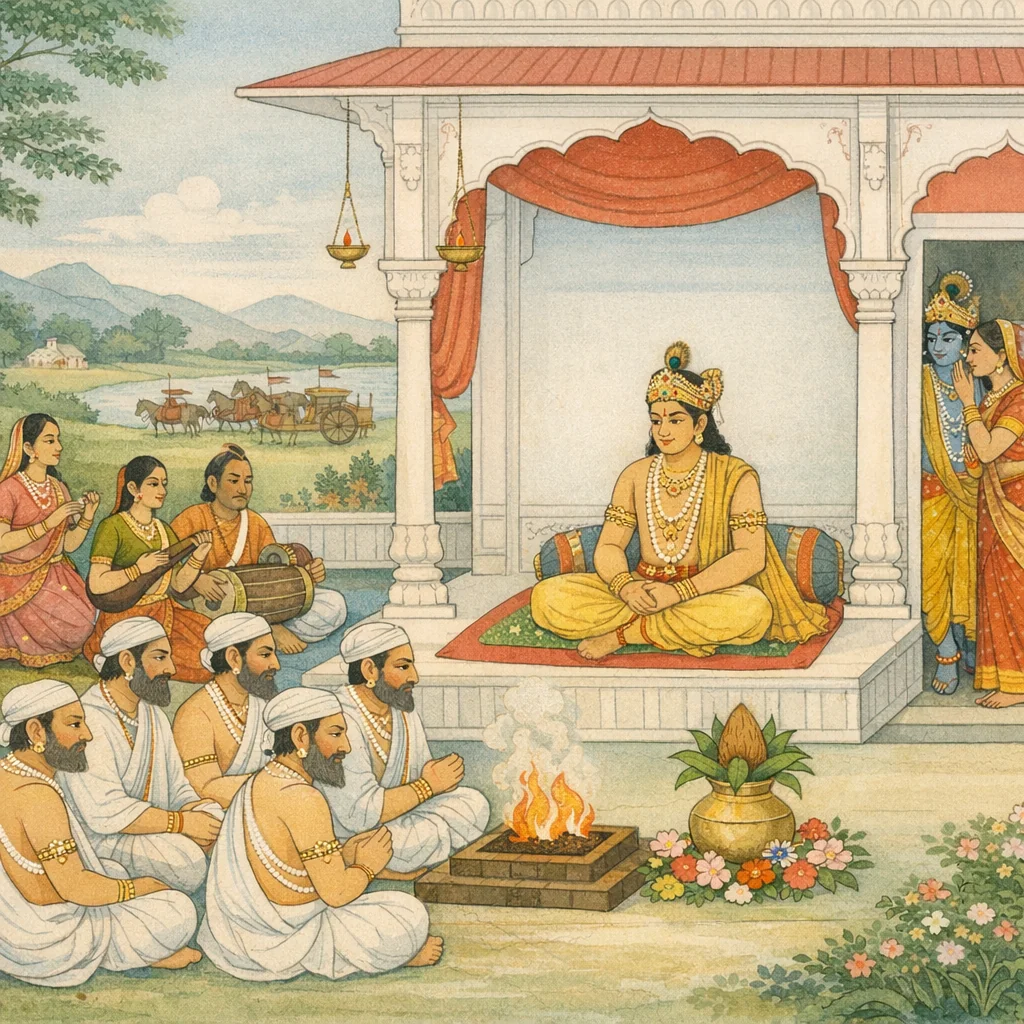
Chapter Arc: प्रातःकाल धर्मराज युधिष्ठिर स्नान-नित्यकर्म से निवृत्त होकर दान-विधान करते हैं, वस्त्राभूषण धारण कर सिंहासन पर आरूढ़ होते हैं; राजसभा में मंगल-गान, ताली-स्वर, नर्तक-गायक और कुरुवंश-स्तुति का मधुर कोलाहल उठता है। → युधिष्ठिर सत्पुरुषों के मार्ग का अनुसरण करते हुए जप (गायत्री) और अग्निशरण में विनीत भाव से प्रविष्ट होते हैं; सहस्रों जितेन्द्रिय, वेदव्रत-स्नात ब्राह्मणों का आगमन, स्वस्तिक-वर्धमान-नन्द्यावर्त, माल्य, जलकुम्भ और ज्वलित हुताशन जैसे शुभ-चिह्नों के साथ राजकीय अनुष्ठान का विस्तार होता है। बाहर रथों की नेमिघोष, अश्वों के खुरघोष और स्यन्दनों का महान् शब्द युद्ध-काल की पृष्ठभूमि में एक नई गति का संकेत देता है। → युधिष्ठिर ब्राह्मणों से स्वस्तिवाचन कराते हैं और प्रत्येक को सुवर्ण निष्क दान देते हैं—धर्म-राज्य की प्रतिष्ठा और संकट-काल में भी मर्यादा-पालन का चरम क्षण। उसी समय द्वारपाल के द्वारा केशव (कृष्ण) के आगमन का निवेदन होता है, जिससे सभा का ध्यान अनुष्ठान से नीति-निर्णय की ओर मुड़ जाता है। → धर्मराज द्वारपाल को आदेश देते हैं कि माधव का सत्कारपूर्वक स्वागत किया जाए और उन्हें अर्घ्य तथा परम उत्तम आसन प्रदान किया जाए—अतिथि-धर्म और राजधर्म का संयोजन। → कृष्ण के आगमन के साथ यह संकेत बनता है कि अब युद्ध-नीति, धृतराष्ट्र-पुत्रों के विरुद्ध उपाय, या द्रोण-वध/रणनीति पर निर्णायक परामर्श होने वाला है।
Shlokas
Verse 1
: द्रयशीतितमो< ध्याय: युधिष्ठटिरका प्रात:काल उठकर स्नान और नित्यकर्म आदिसे निवत्त हो ब्राह्मणोंको दान देना, वस्त्राभूषणोंसे विभूषित हो सिंहासनपर बैठना और वहाँ पधारे हुए भगवान् श्रीकृष्णका पूजन करना संजय उवाच तयो: संवदतोरेवं कृष्णदारुकयोस्तथा । सात्यगाद् रजनी राजन्नथ राजा<न्वबुध्यत,संजय कहते हैं--राजन्! इधर श्रीकृष्ण और दारुकमें पूर्वोक्त प्रकारसे बातें हो ही रही थीं कि वह रात बीत गयी। दूसरी ओर राजा युधिष्ठिर भी जाग गये
Sanjaya said: “O King, while Kṛṣṇa and Dāruka were conversing in this manner, the night passed away. Then, on the other side, King Yudhiṣṭhira awoke.” The verse quietly marks a transition from private counsel to the next day’s public, duty-bound actions—suggesting that even amid war, time moves inexorably and rulers must rise to their responsibilities.
Verse 2
पठन्ति पाणिस्वनिका मागधा मधुपर्किका: । वैतालिकाश्न सूताश्न तुष्टवुः पुरुषर्षभम्,उस समय हाथसे ताली देकर गीत गानेवाले तथा मांगलिक वस्तुओंको प्रस्तुत करनेवाले सूत, मागध और वैतालिक जन पुरुषश्रेष्ठ युधिष्ठिरकी स्तुति करने लगे
Sañjaya said: Those who sang while keeping time with hand-claps, along with the Māgadhas, the bearers of auspicious offerings (such as the madhuparka), the Vaitālikas, and the Sūtas, began to praise the bull among men—Yudhiṣṭhira. In that moment, public acclamation and ritual honor were offered to the king, affirming his rightful standing and the moral authority expected of a ruler even amid the pressures of war.
Verse 3
नर्तकाश्चाप्यनृत्यन्त जगुर्गीतानि गायका: । कुरुवंशस्तवार्थानि मधुरं रक्तकण्ठिन:,नर्तक नाचने और रागयुक्त कण्ठवाले गायक कुरुकुलकी स्तुतिसे युक्त मधुर गीत गाने लगे
Sañjaya said: Dancers too began to dance, and the singers sang songs—sweetly, with voices colored by melody—celebrating the Kuru lineage and praising you (Dhṛtarāṣṭra).
Verse 4
मृदज्भा झर्झरा भेरय: पणवानकगोमुखा: । आडब्बराश्न शड्खाश्न दुन्दुभ्यश्ष महास्वना:,भारत! सुशिक्षित एवं कुशल वादक अत्यन्त हर्षमें भरकर मृदंग, झाँझ, भेरी, पणव, आनक, गोमुख, आउडम्बर, शंख और बड़े जोरसे बजनेवाली दुन्दुभियाँ तथा दूसरे प्रकारके वाद्योंको भी बजाने लगे
Sañjaya said: Skilled musicians, filled with exhilaration, began to sound the mṛdaṅga drums, jharjharā cymbals, bhērī kettledrums, paṇava and ānaka drums, the gomukha horn, the āḍambara instrument, conch-shells, and great, thunder-voiced dundubhi war-drums. The swelling music marks the army’s rising ardor and the deliberate intensification of the war’s atmosphere, where collective emotion is stirred and directed toward battle.
Verse 5
एवमेतानि सर्वाणि तथान्यान्यपि भारत । वादयन्ति सुसंहृष्टा: कुशला: साधुशिक्षिता:,भारत! सुशिक्षित एवं कुशल वादक अत्यन्त हर्षमें भरकर मृदंग, झाँझ, भेरी, पणव, आनक, गोमुख, आउडम्बर, शंख और बड़े जोरसे बजनेवाली दुन्दुभियाँ तथा दूसरे प्रकारके वाद्योंको भी बजाने लगे
Sañjaya said: “Thus, O Bhārata, those instruments—and many others besides—were played. Skilled performers, well trained and expertly instructed, sounded them in great delight, filling the scene with the loud, festive music of war.”
Verse 6
समेघसमनिर्घोषो महान् शब्दो5स्पृशद् दिवम् । पार्थिवप्रवरं सुप्तं युधिष्ठिरमबोधयत्,वाद्योंका वह मेघके समान गम्भीर एवं महान् घोष आकाशतक फैल गया। उस ध्वनिने सोये हुए नृपश्रेष्ठ महाराज युधिष्ठिरको जगा दिया
Sañjaya said: A mighty sound, deep as the rumbling of cloud-laden skies, rose up and seemed to touch the very heavens. That resounding din awakened Yudhiṣṭhira, the foremost of kings, who had been asleep—signaling how the war’s instruments and omens intrude even upon a righteous ruler’s brief refuge in rest.
Verse 7
प्रतिबुद्ध: सुखं सुप्तो महाहें शयनोत्तमे । उत्थायावश्यकार्यार्थ ययौ स्नानगृहं नृूप:,बहुमूल्य एवं उत्तम शय्यापर सुखपूर्वक सोकर जगे हुए राजा युधिष्ठिर वहाँसे उठकर आवश्यक कार्यके लिये स्नान करने गये
Sañjaya said: Having awakened after sleeping comfortably on a most excellent and costly bed, the king rose and, to attend to necessary duties, went to the bathing chamber. The verse underscores disciplined routine and self-governance even amid the pressures of war—royal comfort does not excuse neglect of daily obligations.
Verse 8
ततः शुक्लाम्बरा: स्नातास्तरुणा: शतमष्ट च | स््नापका: काउ्चनै: कुम्भै: पूर्ण: समुपतस्थिरे,वहाँ स्नान करके श्वेत वस्त्र धारण किये हुए एक सौ आठ युवक सोनेके घड़ोंमें जल भरकर उन्हें नहलानेके लिये उपस्थित हुए
Sañjaya said: Then, after bathing and donning white garments, one hundred and eight young attendants came forward, standing ready with golden pitchers filled with water, prepared to perform the ceremonial bathing. The scene underscores disciplined service and ritual propriety maintained even amid the harsh moral pressures of war.
Verse 9
भद्रासने सूपविष्ट: परिधायाम्बरं लघु । सस्नौ चन्दनसंयुक्तै: पानीयैरभिमन्त्रितै:,उस समय एक हलका वस्त्र पहनकर राजा युधिष्छिर भद्रासन (चौकी)-पर बैठ गये और चन्दनयुक्त मन्त्रपूत जलसे स्नान करने लगे
Sañjaya said: Having seated himself comfortably on a bhadrāsana and wearing a light garment, King Yudhiṣṭhira began to bathe with water that had been sanctified by mantras and mixed with sandalwood—an act of ritual purification undertaken with restraint and reverence amid the pressures of war.
Verse 10
उत्सादित: कषायेण बलवडद्धिः सुशिक्षितै: । आप्लुत: साधिवासेन जलेन स सुगन्धिना,सबसे पहले बलवान् तथा सुशिक्षित पुरुषोंने सर्वोषधि आदिद्वारा तैयार किये हुए उबटनसे उनके शरीरको अच्छी तरह मला, फिर उन्होंने अधिवासित एवं सुगन्धित जलसे स्नान किया
Sañjaya said: Strong and well-trained attendants first rubbed him thoroughly with a medicinal decoction and cleansing paste prepared from herbs. Then they bathed him with water that had been steeped with fragrant substances and perfumed—an act of careful purification and dignified preparation amid the harshness of war.
Verse 11
राजहंसनिभं प्राप्य उष्णीषं शिथिलार्पितम् | जलक्षयनिमित्त॑ वै वेष्टयामास मूर्थनि,तत्पश्चात् राजहंसके समान सफेद ढीलीढाली पगड़ी लेकर माथेका जल सुखानेके लिये उसे मस्तकपर लपेट लिया
Sanjaya said: Having obtained a turban white like a royal swan and loosely arranged, he wrapped it around his head in order to dry off the water. In the midst of war’s harshness, the verse briefly turns to a simple, practical act—restoring composure and readiness through self-care rather than aggression.
Verse 12
हरिणा चन्दनेनाड्रमुपलिप्य महाभुज: । स्रग्वी चाक्लिष्टवसन: प्राड्मुख: प्राउजलि: स्थित:,फिर वे महाबाहु युधिष्ठिर अपने सारे अंगोंमें हरिचन्दनका अनुलेपन करके नूतन वस्त्र और पुष्पमाला धारण किये हाथ जोड़े पूर्वांभिमुख होकर बैठ गये
Sañjaya said: Having anointed his body with moist, yellow sandal-paste, that mighty-armed (king) stood adorned with a garland and clad in fresh, unsoiled garments. Facing east, with hands joined in reverence, he remained poised—signaling a deliberate turn toward ritual purity, self-restraint, and dharmic resolve amid the pressures of war.
Verse 13
जजाप जप्यं कौन्तेय: सतां मार्गमनुछित: । तत्राग्निशरणं दीप्तं प्रविवेश विनीतवत्,सत्पुरुषोंके मार्गपर चलनेवाले कुन्तीकुमार युधिष्ठिरने जपनेयोग्य गायत्री मनन््त्रका जप किया और प्रज्वलित अग्निसे प्रकाशित अग्निशालामें विनीतभावसे प्रवेश किया
Sañjaya said: Kuntī’s son Yudhiṣṭhira, steadfast in the path followed by the righteous, recited the sacred mantra fit for repetition; then, with humility, he entered the blazing fire-sanctuary, illumined by the kindled flames—acting in a manner befitting a disciplined and virtuous man.
Verse 14
समिद्धिः सपवित्राभिरग्निमाहुतिभिस्तथा । मन्त्रपूताभिररचिर त्वा निश्चक्राम गृहात् ततः,वहाँ पवित्री (कुशके दो पत्तों)-सहित समिधाओं तथा मन्त्रपूत आहुतियोंसे अग्निदेवकी पूजा करके वे उस अग्निहोत्रगृहसे बाहर निकले
Sañjaya said: Having kindled the sacred fire with fuel-sticks accompanied by pavitras (purifying kuśa-grass), and having offered oblations purified by mantra, he duly worshipped Agni; then he stepped out from that house (the fire-ritual chamber). The scene underscores the ethic that even amid the pressures of war, one should not abandon prescribed rites and inner purity, but act after consecrating one’s intention through disciplined worship.
Verse 15
द्वितीयां पुरुषव्याप्र: कक्ष्यां निर्गम्य पार्थिव: । ततो वेदविदो वृद्धानपश्यद् ब्राह्मणर्षभान्,फिर शिविरकी दूसरी ड्योढ़ी पार करके पुरुषसिंह राजा युधिष्िरने वेदवेत्ता वृद्ध ब्राह्मण-शिरोमणियोंको देखा
Sañjaya said: Having passed beyond the second enclosure, the king—lion among men—came out into the next precinct. There he beheld aged Brahmin sages, masters of the Vedas, eminent among their order—an image of learning and moral authority standing amid the turmoil of war.
Verse 16
दान्तान् वेदव्रतस्नातान् स्सनातानवभृथेषु च । सहस्रानुचरान् सौरान् सहस्र॑ चाष्ट चापरान्,वे सब-के-सब जितेन्द्रिय, वेदाध्ययनके व्रतमें निष्णात, यज्ञान्तस्नानसे पवित्र तथा सूर्यदेवके उपासक थे। वे संख्यामें एक हजार आठ थे और उनके साथ एक सहस्र अनुचर थे
Sañjaya said: “They were self-restrained—men who had completed the disciplines of Vedic study, and who had been purified by the concluding bath of sacrifice. Devotees of the Sun, they numbered one thousand and eight; and with them were a further thousand attendants.”
Verse 17
अक्षतै: सुमनोभिश्व वाचयित्वा महाभुज: । तान् द्विजान् मधुसर्पिरभभ्या फलै: श्रेष्ठे: सुमज्लै:
Sañjaya said: The mighty-armed one, having first honored the Brahmins with unbroken grains and fragrant flowers and having them recite auspicious benedictions, then worshipfully offered those twice-born guests the finest fruits—tokens of good fortune—together with honey and clarified butter. The scene underscores a dharmic ideal: even amid the pressures of war, one upholds reverence for sacred speech, hospitality, and the ethical duty to honor learned Brahmins before undertaking grave actions.
Verse 18
अलंकृतं चाश्वशतं वासांसीश श्र दक्षिणा:,इसके सिवा उन पाण्डुनन्दनने ब्राह्मणोंको सजे-सजाये सौ घोड़े, उत्तम वस्त्र, इच्छानुसार दक्षिणा और बछड़ोंसहित दूध देनेवाली बहुत-सी कपिला गौएँ दीं। उन गौओंके सींगोंमें सोने और खुरोंमें चाँदी मढ़े हुए थे। उन सबको देकर युधिष्ठिरने उन (गौओं एवं ब्राह्मणों)-की परिक्रमा की
Sañjaya said: The son of Pāṇḍu (Yudhiṣṭhira) bestowed upon the brāhmaṇas a hundred well-adorned horses, fine garments, and gifts of wealth according to their wish. He also gave many tawny, milk-yielding cows with calves—beautifully arrayed, their horns plated with gold and their hooves set with silver. Having given all this, Yudhiṣṭhira reverently circumambulated both the cows and the brāhmaṇas, affirming that even amid war, dharma is upheld through generosity and honor to the worthy.
Verse 19
तथा गा: कपिला दोग्ध्री: सवत्सा: पाण्डुनन्दन: । हेमशुज्रा रौप्यखुरा दत्त्वा चक्रे प्रदक्षिणम्,इसके सिवा उन पाण्डुनन्दनने ब्राह्मणोंको सजे-सजाये सौ घोड़े, उत्तम वस्त्र, इच्छानुसार दक्षिणा और बछड़ोंसहित दूध देनेवाली बहुत-सी कपिला गौएँ दीं। उन गौओंके सींगोंमें सोने और खुरोंमें चाँदी मढ़े हुए थे। उन सबको देकर युधिष्ठिरने उन (गौओं एवं ब्राह्मणों)-की परिक्रमा की
Sañjaya said: In the same manner, the son of Pāṇḍu (Yudhiṣṭhira) bestowed many tawny cows—milch cows with their calves—whose horns were plated with gold and whose hooves were plated with silver; and after giving them, he performed a reverential circumambulation. The act underscores royal responsibility in crisis: even amid war, he upholds dharma through generous, respectful gifting to Brahmins and by honoring the recipients and the gift as sacred.
Verse 20
स्वस्तिकान् वर्धमानांश्व नन्द्यावर्ताश्न काज्चनान् | माल्यं च जलकुम्भांश्व ज्वलितं च हुताशनम्,तत्पश्चात् सोनेके बने हुए स्वस्तिक, सिकोरे, बन्द मुहवाले अर्घपात्र, माला, जलसे भरे हुए कलश, प्रज्वलित अग्नि, अक्षतसे भरे हुए पूर्णपात्र, बिजौरा नीबू, गोरोचन, आभूषणोंसे विभूषित सुन्दरी कन्याएँ, दही, घी, मधु, जल, मांगलिक पक्षी तथा अन्यान्य भी जो प्रशस्त वस्तुएँ हैं, उन सबको देखकर और उनमेंसे कुछका स्पर्श करके कुन्तीनन्दन युधिष्ठिरने बाहरी ड्योढीमें प्रवेश किया
Sanjaya said: “There were auspicious emblems—svastikas, symbols of prosperity (vardhamānas), and golden nandyāvartas—along with garlands, water-filled jars, and a blazing sacred fire.” In this context, the verse signals the performance of auspicious rites and the careful observance of traditional omens before a significant royal action, underscoring the Mahābhārata’s ethical emphasis on proceeding with mindfulness, propriety, and dharmic decorum even amid the pressures of war.
Verse 21
पूर्णान्यक्षतपात्राणि रुचकं रोचनास्तथा । स्वलंकृता: शुभा: कन्या दधिसर्पिर्मधूदकम्,तत्पश्चात् सोनेके बने हुए स्वस्तिक, सिकोरे, बन्द मुहवाले अर्घपात्र, माला, जलसे भरे हुए कलश, प्रज्वलित अग्नि, अक्षतसे भरे हुए पूर्णपात्र, बिजौरा नीबू, गोरोचन, आभूषणोंसे विभूषित सुन्दरी कन्याएँ, दही, घी, मधु, जल, मांगलिक पक्षी तथा अन्यान्य भी जो प्रशस्त वस्तुएँ हैं, उन सबको देखकर और उनमेंसे कुछका स्पर्श करके कुन्तीनन्दन युधिष्ठिरने बाहरी ड्योढीमें प्रवेश किया
Sanjaya said: “There were vessels filled with unbroken grains, auspicious articles such as rucaka and gorocanā, and well-adorned, auspicious maidens bearing curd, ghee, honey, and water. Seeing these favorable signs and touching some of them as a blessing, Kuntī’s son Yudhiṣṭhira entered the outer gateway.”
Verse 22
मड़ल्यान् पक्षिणश्रैव यच्चान्यदपि पूजितम् | दृष्टवा स्पृष्टवा च कौन्तेयो बाह्यां कक्ष्यां ततो5गमत्,तत्पश्चात् सोनेके बने हुए स्वस्तिक, सिकोरे, बन्द मुहवाले अर्घपात्र, माला, जलसे भरे हुए कलश, प्रज्वलित अग्नि, अक्षतसे भरे हुए पूर्णपात्र, बिजौरा नीबू, गोरोचन, आभूषणोंसे विभूषित सुन्दरी कन्याएँ, दही, घी, मधु, जल, मांगलिक पक्षी तथा अन्यान्य भी जो प्रशस्त वस्तुएँ हैं, उन सबको देखकर और उनमेंसे कुछका स्पर्श करके कुन्तीनन्दन युधिष्ठिरने बाहरी ड्योढीमें प्रवेश किया
Sañjaya said: Having seen—and also touched—auspicious birds and other revered, propitious items set out for welcome, the son of Kuntī (Yudhiṣṭhira) then proceeded into the outer courtyard/anteroom. The scene underscores the customary invocation of good omens and purity at a threshold moment, as the king enters with mindful regard for auspiciousness amid the grave pressures of war.
Verse 23
ततस्तस्यां महाबाहोस्तिष्ठत: परिचारका: । सौवर्ण सर्वतोभद्रं मुक्तावैदूर्यमण्डितम्,उस डायोढ़ीमें खड़े हुए महाबाहु युधिष्ठिरके सेवकोंने उनके लिये सोनेका बना हुआ एक सर्वतोभद्र नामक श्रेष्ठ आसन दिया, जिसमें मुक्ता और वैदूर्यमणि जड़ी हुई थी। उसपर बहुमूल्य बिछौना बिछा हुआ था। उसके ऊपर सुन्दर चादर बिछायी गयी थी। वह दिव्य एवं समृद्धिशाली सिंहासन साक्षात् विश्वकर्माका बनाया हुआ था
Then, as the mighty-armed (king) stood there, his attendants brought him a golden seat of the ‘Sarvatobhadra’ type, adorned with pearls and vaidūrya gems. The scene underscores royal decorum and disciplined service even amid the strain of war—honoring rightful authority through orderly conduct rather than arrogance or excess.
Verse 24
परार्घ्यास्तरणास्तीर्ण सोत्तरच्छदमृद्धिमत् । विश्वकर्मकृतं दिव्यमुपजहुर्वरासनम्,उस डायोढ़ीमें खड़े हुए महाबाहु युधिष्ठिरके सेवकोंने उनके लिये सोनेका बना हुआ एक सर्वतोभद्र नामक श्रेष्ठ आसन दिया, जिसमें मुक्ता और वैदूर्यमणि जड़ी हुई थी। उसपर बहुमूल्य बिछौना बिछा हुआ था। उसके ऊपर सुन्दर चादर बिछायी गयी थी। वह दिव्य एवं समृद्धिशाली सिंहासन साक्षात् विश्वकर्माका बनाया हुआ था
Sañjaya said: They brought forth a splendid seat—rich and auspicious—spread with costly coverings and furnished with an upper cloth. That radiant, magnificent throne, fashioned by Viśvakarman himself, was presented as a mark of royal honor amid the grave circumstances of the war.
Verse 25
तत्र तस्योपविष्टस्य भूषणानि महात्मन: । उपाजहुर्महाहणि प्रेष्या: शुभ्रीाणि सर्वश:,वहाँ बैठे हुए महात्मा राजा युधिष्ठिरको उनके सेवकोंने सब प्रकारके उज्ज्वल एवं बहुमूल्य आभूषण भेंट किये
Sañjaya said: There, as that great-souled king sat, his attendants brought forth—on that momentous day—bright, splendid ornaments of every kind, presenting them to him. The scene underscores royal duty and dignity being outwardly affirmed even amid the strain of war.
Verse 26
मुक्ताभरणवेषस्य कौन्तेयस्य महात्मन: । रूपमासीन्महाराज द्विषतां शोकवर्धनम्,महाराज! मुक्तामय आभूषणोंसे विभूषित वेशवाले महात्मा कुन्तीनन्दनका स्वरूप उस समय शत्रुओंका शोक बढ़ा रहा था
Sañjaya said: “O King, the appearance of that great-souled son of Kuntī—adorned in a dress and ornaments of pearls—was, at that time, a cause that increased the grief of his enemies.”
Verse 27
चामरैश्वन्द्ररश्म्या भै्हेमदण्डै: सुशो भनै: । दोधूयमानै: शुशुभे विद्युद्धिरिव तोयद:,चन्द्रमाकी किरणोंके समान श्वेत तथा सुवर्णमय दण्डवाले सुन्दर शोभाशाली अनेक चँवर डुलाये जा रहे थे। उनसे राजा युधिष्ठिरकी वैसी ही शोभा हो रही थी, जैसे बिजलियोंसे मेघ सुशोभित होता है
Verse 28
संस्तूयमान: सूतैश्न वन्द्यमानश्न वन्दिभि: । उपगीयमानो गन्धर्वैरास्ते सम कुरुनन्दन:,उस समय सूतगण स्तुति करते थे, वन्दीजन वन्दना कर रहे थे और गन्धर्वगण उनके सुयशके गीत गाते थे। इन सबसे घिरे हुए युधिष्ठिर वहाँ सिंहासनपर विराजमान थे
Sañjaya said: At that time the Kuru prince (Yudhiṣṭhira) sat upon the throne, while bards (sūtas) praised him, panegyrists (vandins) offered salutations, and Gandharvas sang of his fame. The scene frames kingship as publicly accountable—honour is conferred not merely by power, but by reputation grounded in righteous conduct amid the burdens of war.
Verse 29
ततो मुहूर्तादासीत् तु स्यन्दनानां स्वनो महान् । नेमिघोषश्न रथिनां खुरघोषश्न वाजिनाम्,तदनन्तर दो ही घड़ीमें रथोंका महान् शब्द गूँज उठा। रथियोंके रथोंके पहियोंकी घरघराहट और घोड़ोंकी टापोंके शब्द सुनायी देने लगे
Sañjaya said: Then, after a short while, a great roar arose from the chariots. The rumbling of the wheels of the chariot-warriors and the pounding sound of the horses’ hooves became clearly audible—signaling the renewed surge of battle and the gathering momentum of armed action.
Verse 30
ह्रादेन गजघण्टानां शड्खानां निनदेन च । नराणां पदशब्दैश्व॒ कम्पतीव सम मेदिनी,हाथियोंके घंटोंकी घनघनाहट, शंखोंकी ध्वनि तथा पैदल चलनेवाले मनुष्योंके पैरोंकी धमकसे यह पृथ्वी काँपती-सी जान पड़ती थी
Sañjaya said: With the resounding clang of the elephants’ bells, the blare of conches, and the heavy footfall of marching men, the earth itself seemed to tremble—an ominous sign of the vast, relentless momentum of war and the suffering it unleashes.
Verse 31
ततः शुद्धान्तमासाद्य जानुभ्यां भूतले स्थित: । शिरसा वन्दनीयं तमभिवाद्य जनेश्वरम्,न्यवेदयद्धूषीकेशमुपयान्तं महात्मने । इसी समय कानोंमें कुण्डल पहने, कमरमें तलवार बाँधे और वक्ष:स्थलपर कवच धारण किये एक तरुण द्वारपालने उस ड्योढ़ीके भीतर प्रवेश करके धरतीपर दोनों घुटने टेक दिये और वन्दनीय महाराज युधिष्ठिरको मस्तक नवाकर प्रणाम किया। इस प्रकार सिरसे प्रणाम करके उसने धर्मपुत्र महात्मा युधिष्ठिरको यह सूचना दी कि भगवान् श्रीकृष्ण पधार रहे हैं
Sañjaya said: Then, having reached the inner apartments, he knelt on the ground on both knees. Bowing his head, he paid reverence to that venerable lord of men, King Yudhiṣṭhira, and respectfully informed the noble-hearted one that Hṛṣīkeśa (Śrī Kṛṣṇa) was approaching. The scene underscores courtly discipline and dharmic decorum: even amid the pressures of war, proper respect, truthful reporting, and reverence for righteous authority are maintained.
Verse 32
कुण्डली बद्धनिस्त्रिंश: संनद्धकवचो युवा । अभिप्रणम्य शिरसा द्वा:स्थो धर्मात्मजाय वै
Sañjaya said: A young doorkeeper, wearing earrings, with his sword fastened on, and clad in armor, bowed his head in reverence before Dharmarāja (Yudhiṣṭhira). The scene underscores disciplined conduct and proper deference even amid the pressures of war.
Verse 33
सोअब्रवीत् पुरुषव्याप्र: स्वागतेनैव माधवम्
Sañjaya said: Then that tiger among men addressed Mādhava, welcoming him with due courtesy—an act of respectful reception amid the harshness of the war narrative, signaling adherence to proper conduct even in conflict.
Verse 34
ततः प्रवेश्य वाष्णेयमुपवेश्य वरासने । पूजयामास विधिवद् धर्मराजो युधिष्िर:
Then Dharmarāja Yudhiṣṭhira brought Vāṣṇeya (Kṛṣṇa) inside, seated him upon an excellent throne, and honored him in due form—according to the prescribed rites—upholding the etiquette and righteousness befitting a king even amid the pressures of war.
Verse 81
इस प्रकार श्रीमहाभारत द्रोणपर्वके अन्तर्गत प्रतिज्ञापवरमें अर्जुनको पुनः पाशुपतासत्रकी प्राप्तिविषयक इक्यासीवाँ अध्याय पूरा हुआ
Sanjaya concludes: Thus, in the Śrī Mahābhārata, within the Droṇa Parva—specifically in the Pratijñā Parva—the eighty-first chapter comes to an end, recounting Arjuna’s renewed attainment of the Pāśupata weapon. The closing note underscores how divine power is framed as something regained through purpose and resolve, and how the epic’s war narrative continually ties martial capability to vows, responsibility, and the moral weight of one’s commitments.
Verse 82
तब द्वारपालने भगवान् श्रीकृष्णको भीतर ले आकर एक श्रेष्ठ आसनपर बैठा दिया। तत्पश्चात् धर्मराज युधिष्ठिरने स्वयं ही विधिपूर्वक उनका पूजन किया ।। इति श्रीमहाभारते द्रोणपर्वणि प्रतिज्ञापर्वणि युधिष्ठिरसज्जतायां दयशीतितमो<्ध्याय:
Then the gatekeeper brought Lord Śrī Kṛṣṇa inside and seated Him upon an excellent seat. After this, Dharmarāja Yudhiṣṭhira himself, following proper rites, offered Him worship—an act that upholds dharma even amid the pressures of war, honoring divine guidance and righteous hospitality.
Verse 176
प्रादात् काज्चनमेकैकं निष्कं विप्राय पाण्डव: । तब महाबाहु पाण्बुपुत्र युधिष्ठिरने अक्षत-फ़ूल देकर उन ब्राह्मणोंसे स्वस्तिवाचन कराया और उनमेंसे प्रत्येक ब्राह्मणको मधु, घी एवं श्रेष्ठ मांगलिक फलोंके साथ एक-एक स्वर्णमुद्रा प्रदान की
Sañjaya said: The Pāṇḍava (Yudhiṣṭhira), acting in accordance with dharma, bestowed upon each brāhmaṇa a single golden niṣka. By honoring the brāhmaṇas with auspicious offerings and gifts, he sought благessing and rightness of action even amid the pressures of war, affirming that righteous conduct and reverence for sacred speech should not be abandoned in crisis.
Verse 323
न्यवेदयद्धूषीकेशमुपयान्तं महात्मने । इसी समय कानोंमें कुण्डल पहने, कमरमें तलवार बाँधे और वक्ष:स्थलपर कवच धारण किये एक तरुण द्वारपालने उस ड्योढ़ीके भीतर प्रवेश करके धरतीपर दोनों घुटने टेक दिये और वन्दनीय महाराज युधिष्ठिरको मस्तक नवाकर प्रणाम किया। इस प्रकार सिरसे प्रणाम करके उसने धर्मपुत्र महात्मा युधिष्ठिरको यह सूचना दी कि भगवान् श्रीकृष्ण पधार रहे हैं
Sanjaya said: A young gatekeeper—wearing earrings, with a sword fastened at his waist and armor upon his chest—entered the inner gateway, knelt with both knees upon the ground, and bowed his head in reverence to the venerable King Yudhiṣṭhira. Having thus paid homage, he informed the righteous son of Dharma, the great-souled Yudhiṣṭhira, that Bhagavān Śrī Kṛṣṇa (Hṛṣīkeśa) was approaching. The scene underscores courtly discipline and the ethic of honoring the worthy, even amid the pressures of war.
Verse 3336
अर्घ्य चैवासनं चास्मै दीयतां परमार्चितम् । तब पुरुषसिंह युधिष्ठिरने द्वारपालसे कहा--“तुम माधवको स्वागतपूर्वक ले आओ और उन्हें अर्घ्य तथा परम उत्तम आसन अर्पित करो”
Sañjaya said: “Let him be offered the arghya (honor-water) and a seat, duly presented with the highest reverence.” The line underscores the dharmic duty of receiving a revered guest—especially Mādhava (Kṛṣṇa)—with formal hospitality even amid the pressures of war and counsel.
Frequently Asked Questions
The chapter juxtaposes individual-duel norms with the pragmatic shift to coalition encirclement when an opponent’s māyā-based resilience threatens broader force safety, raising the question of when collective necessity overrides single-combat ideals.
Capability alone is not decisive when opponents can adapt symmetrically; durable advantage emerges from coordination, tempo control, and converting a contested duel into a managed, collective solution.
No formal phalaśruti is stated here; the meta-commentary is implicit in Saṃjaya’s emphasis on sound, spectacle, and morale—signaling how narrative attention treats battlefield perception as consequential within the epic’s ethical-historical record.