Adhyaya 37
Droṇa-parva Adhyāya 37: Sañjaya’s Account of Abhimanyu’s Precision Disruption of a Chariot Contingent
Upa-parva: Abhimanyu’s Battlefield Exploits under Droṇa’s Command Context (Drona-parva episodic unit)
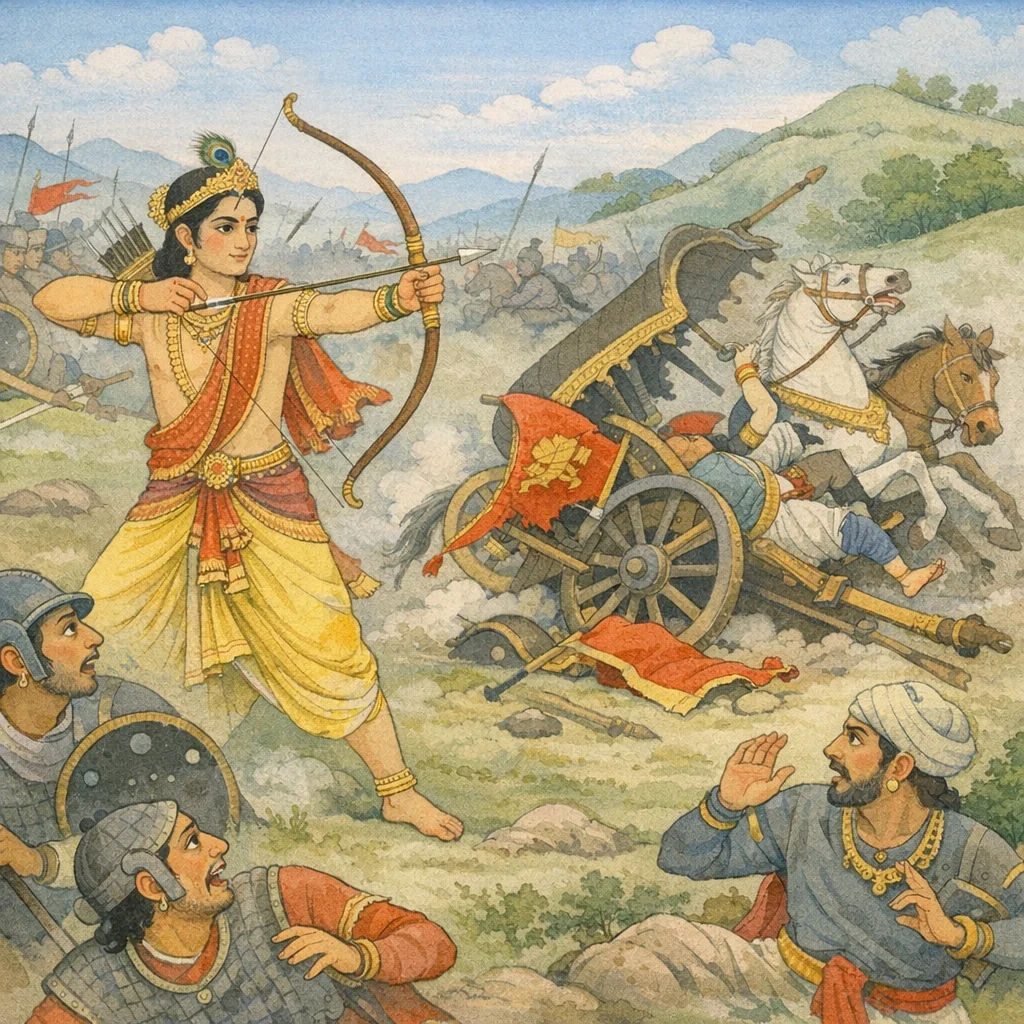
Dhṛtarāṣṭra asks which of his forces showered arrows upon Arjuna’s son. Sañjaya narrates Abhimanyu’s conspicuous battlefield performance against a chariot formation described as protected under Bhāradvāja’s oversight. After observing a leader (identified as Śalya’s younger brother) angered by prior setbacks, the opponent advances and strikes Abhimanyu and his charioteer, issuing a challenge. Abhimanyu responds not merely by returning fire but by systematically disabling the adversary’s operational components—targeting bodily points and, crucially, the chariot’s functional infrastructure: bow, horses, banner, parasol, reinsman, yoke-elements, quivers, and ancillary equipment—so rapidly that observers cannot track the sequence. The opponent collapses, ornaments and garments scattered, and accompanying followers flee in multiple directions. Onlookers acclaim Abhimanyu’s act; meanwhile, enraged troops surge forward with mixed arms (chariots, cavalry, elephants, infantry), accompanied by the acoustic markers of battle (bowstring snaps, hoof and wheel sounds, shouts). They threaten that he will not escape alive, but Abhimanyu, composed and almost smiling, counters by selectively wounding those who strike first, then escalates: he displays varied astras with increasing intensity, likened to the sun emerging after the rains. He releases large numbers of diverse arrow-types (kṣurapra, nārāca, bhalla, etc.), showering the chariot mass in full view of Bhāradvāja, causing the affected force to turn away under arrow-pressure.
Chapter Arc: रणभूमि में दुर्योधन को अभिमन्यु की ओर लौटते देख द्रोणाचार्य चौंक उठते हैं—क्योंकि ‘हमारे देखते-देखते’ वह युवक लक्ष्यभूत राजा तक पहुँचने लगा है; द्रोण का आदेश गूंजता है: कौरव-नरेश की रक्षा करो। → अभिमन्यु, तुम्हारे पुत्रों और कौरव-वीरों द्वारा घेरा जाकर भी, अपनी शिक्षित-यौवन-शक्ति का विराट प्रदर्शन करता है; कर्ण, अश्वत्थामा और कृतवर्मा एक साथ नाराच-वर्षा करते हैं, और समीपस्थ शल्य पर भी वह बाणों की झड़ी बरसाकर सेना में भय फैलाता है। → अश्मकपुत्र (द्रोणपक्ष का योद्धा) रथ-युद्ध में अभिमन्यु को रोकने का यत्न करता है, पर अभिमन्यु मुस्कराते हुए दस-दस बाणों से उसके घोड़े, सारथि, ध्वज, भुजाएँ, धनुष और अंततः मस्तक तक गिरा देता है—एक ही प्रवाह में प्रतिद्वन्द्वी की युद्ध-सम्पूर्णता को तोड़ देता है। → अश्मकपुत्र के वध से अभिमन्यु की कीर्ति और भी प्रज्वलित होती है; वह यज्ञाग्नि-सा घृतसिक्त तेज से दीप्त दिखता है—मानो देव, पितर, चारण, सिद्ध और यक्षगण उसकी रणयश-पूजा कर रहे हों। → कौरव-सेना में भय और क्रोध साथ-साथ उठते हैं—द्रोण के आदेश के बाद अब कौन-सा घेरा, कौन-सा प्रतिघात इस ‘अजेय-से’ प्रतीत होते बाल-वीर को रोकेगा?
Shlokas
Verse 1
/ (दाक्षिणात्य अधिक पाठका १ श्लोक मिलाकर कुल ४७ “लोक हैं।) ऑपन-आ प्रात बछ। अकाल सप्तत्रिशो5्ध्याय: अभिमन्युका पराक्रम, उसके द्वारा अश्मकपुत्रका वध, शल्यका मूर्च्छित होना और कौरव-सेनाका पलायन संजय उवाच तां प्रभग्नां चमूं दृष्टवा सौभद्रेणामितौजसा । दुर्योधनो भृशं क्रुद्ध: स्वयं सौभद्रमभ्ययात्,संजय कहते हैं--राजन्! अमिततेजस्वी सुभद्राकुमार अभिमन्युने कौरव-सेनाको मार भगाया है, यह देखकर अत्यन्त क्रोधमें भरा हुआ दुर्योधन स्वयं सुभद्राकुमारका सामना करनेके लिये आया
Sanjaya said: O King, seeing the Kaurava host shattered and driven back by Subhadrā’s son Abhimanyu of immeasurable prowess, Duryodhana—seized by intense anger—personally advanced to confront the son of Subhadrā. The verse highlights how, in war, wounded pride and rage can propel leaders into direct, risky action, intensifying the moral and strategic stakes of the battle.
Verse 2
ततो राजानमावृत्तं सौभद्रं प्रति संयुगे । दृष्टवा द्रोणो5ब्रवीद् योधान् परीप्सध्वं नराधिपम्,उस युद्धस्थलमें राजा दुर्योधनको अभिमन्युकी ओर लौटते देख द्रोणाचार्यने समस्त योद्धाओंसे कहा--'वीरो! कौरव-नरेशकी सब ओरसे रक्षा करो
Then, seeing King Duryodhana turning back toward Saubhadra (Abhimanyu) in the thick of battle, Droṇa addressed the warriors: “Protect the lord of men (our king) on all sides.” The verse highlights the commander’s immediate duty in war—securing the king—while also foreshadowing the concentrated pressure that will be brought to bear against Abhimanyu.
Verse 3
पुराभिमन्युर्लक्ष्यं न: पश्यतां हन्ति वीर्यवान् । तमाद्रवत मा भैष्ट क्षिप्रं रक्षत कौरवम्,“बलवान अभिमन्यु हमारे देखते-देखते अपने लक्ष्यभूत राजा दुर्योधनको पहले ही मार डालेगा; अतः तुम सब लोग दौड़ो, भय न करो, शीघ्र ही कुरुवंशी दुर्योधनकी रक्षा करो”
Sañjaya said: “Before our very eyes, the mighty Abhimanyu will strike down our marked target. Run at him—do not be afraid. Quickly protect the Kuru prince (Duryodhana).”
Verse 4
ततः कृतज्ञा बलिन: सुहदो जितकाशिन: । त्रास्यमाना भयाद् वीरं परिवद्रुस्तवात्मजम्,महाराज! तदनन्तर अस्त्र-शिक्षामें निपुण, बलवान, हितैषी और विजयशाली योद्धाओंने (रक्षाके लिये) आपके वीर पुत्रको चारों ओरसे घेर लिया; यद्यपि वे अभिमन्युके भयसे बहुत डरते थे
Sañjaya said: Thereafter, those warriors—grateful (for past favors), strong, well-disposed friends, and renowned for victory—though shaken with fear, surrounded your heroic son on all sides for his protection, O King, being greatly terrified of Abhimanyu. The scene underscores how loyalty and obligation can compel men to stand together even when fear threatens their courage.
Verse 5
द्रोणो द्रौणि: कृप: कर्ण: कृतवर्मा च सौबल: । बृहद्धलो मद्रराजो भूरिभ्भूरिश्रवा: शल:,द्रोण, अश्वत्थामा, कृपाचार्य, कर्ण, कृतवर्मा, सुबलपुत्र शकुनि, बृहद्वल, मद्रराज शल्य, भूरि, भूरिश्रवा, शल, पौरव तथा वृषसेन--ये अभिमन्युपर तीखे बाणोंकी वर्षा करने लगे। इन्होंने महान् बाण-वर्षद्वारा अभिमन्युको आच्छादित कर दिया
Sañjaya said: Droṇa, Droṇa’s son Aśvatthāmā, Kṛpa, Karṇa, Kṛtavarmā, and Saubala (Śakuni), along with Bṛhadbala, the king of Madra Śalya, Bhūri, Bhūriśravas, and Śala—these warriors began to shower Abhimanyu with a fierce rain of arrows, covering him over with their great missile-storm. The scene underscores the moral tension of the battle: many senior fighters concentrating force against a single youthful hero, where prowess and expediency press hard against ideals of fair combat.
Verse 6
पौरवो वृषसेनश्न विसृजन्त: शिताञ्छरान् | सौभद्रंं शरवर्षण महता समवाकिरन्,द्रोण, अश्वत्थामा, कृपाचार्य, कर्ण, कृतवर्मा, सुबलपुत्र शकुनि, बृहद्वल, मद्रराज शल्य, भूरि, भूरिश्रवा, शल, पौरव तथा वृषसेन--ये अभिमन्युपर तीखे बाणोंकी वर्षा करने लगे। इन्होंने महान् बाण-वर्षद्वारा अभिमन्युको आच्छादित कर दिया
Sañjaya said: Paurava and Vṛṣasena, releasing sharp arrows, showered Saubhadra (Abhimanyu) with a great rain of shafts, completely covering him. The scene underscores the grim ethics of war: a lone, valiant youth is overwhelmed by concentrated force, raising questions about fairness and the limits of kṣatriya conduct amid battlefield desperation.
Verse 7
सम्मोहयित्वा तमथ दुर्योधनममोचयन् । आस्याद् ग्रासमिवाक्षिप्तं ममृषे नार्जुनात्मज:
Sañjaya said: Having first bewildered him, they then released Duryodhana. But Arjuna’s son could not endure it—like a morsel snatched away from one’s very mouth—when the prize he had seized was suddenly taken from his grasp. The moment underscores how, in the heat of war, restraint and righteous purpose are tested by the surge of personal triumph and frustration.
Verse 8
इस प्रकार उसे मोहित करके इन वीरोंने दुर्योधनको छुड़ा लिया। तब मानो मुँहसे ग्रास छिन गया हो, यह मानकर अर्जुनकुमार अभिमन्यु इसे सहन न कर सका ।। ताञ्छरौघेण महता साश्वसूतान् महारथान् | विमुखीकृत्य सौभद्र: सिंहनादमथानदत्,अतः अपनी भारी बाण-वर्षासे उन महारथियोंको उनके सारथि और घोड़ोंसहित युद्धसे विमुख करके सुभद्राकुमारने सिंहके समान गर्जना की
Then Saubhadra (Abhimanyu), showering them with a mighty torrent of arrows, forced those great chariot-warriors—together with their horses and charioteers—to turn away from the fight; and having thus checked them, he roared aloud like a lion. In the ethical frame of the episode, Abhimanyu’s cry signals both righteous indignation at an unfair rescue of Duryodhana and the kṣatriya resolve to uphold honor in battle by meeting force with fearless prowess.
Verse 9
तस्य नादं ततः श्रुत्वा सिंहस्येवामिषैषिण: । नामृष्यन्त सुसंरब्धा: पुनद्रोणमुखा रथा:,मांस चाहनेवाले सिंहके समान अभिमन्युकी वह गर्जना सुनकर अत्यन्त क्रोधमें भरे हुए द्रोण आदि महारथी न सह सके
Sañjaya said: Hearing that roar, like that of a lion seeking its prey, the chariot-warriors—Drona at their head—were inflamed with fierce anger and could not endure it.
Verse 10
त एन॑ कोष्ठकीकृत्य रथवंशेन मारिष । व्यसृजन्निषुजालानि नानालिजड्रानि सड्घश:
Sañjaya said: “O dear sir, hemming him in as though enclosing him within a compartment, they—using the line of chariots as a barrier—released dense nets of arrows in volleys, of many kinds and patterns, in massed succession.”
Verse 11
आर्य! तब उन महारथियोंने रथसेनाद्वारा उसे कोष्ठमें आबद्ध-सा करके उसके ऊपर नाना प्रकारके चिह्नवाले समूह-के-समूह बाण बरसाने आरम्भ किये ।। तान्यन्तरिक्षे चिच्छेद पौत्रस्ते निशितै: शरैः । तांश्वैव प्रतिविव्याध तदद्भुतमिवाभवत्,परंतु आपके उस वीर पौत्रने अपने पैने बाणोंद्वारा शत्रुओंके उन सायकसमूहोंको आकाशमें ही काट दिया और उन सभी महारथियोंको घायल भी कर डाला-यह एक अद्भुत-सी बात हुई
Sañjaya said: O noble one, then those great chariot-warriors, hemming your grandson in as though within a confined enclosure by means of their chariot-formations, began to shower upon him volleys upon volleys of arrows marked with many different emblems. But your valiant grandson, with his keen shafts, cut those flights of missiles down in mid-air and in the same moment struck back and wounded those very warriors—an occurrence that seemed almost wondrous amid the grim logic of battle.
Verse 12
ततस्ते कोपितास्तेन शरैराशीविषोपमै: । परिवत्र॒र्जिघांसन्त: सौभद्रमपराजितम्,तब अभिमन्युसे चिढ़े हुए उन योद्धाओंने विषधर सर्पके समान भयंकर बाणोंद्वारा किसीसे परास्त न होनेवाले सुभद्राकुमारको मार डालनेकी इच्छा रखकर उसे घेर लिया
Sañjaya said: Enraged at him, they hemmed in Subhadrā’s son—unconquered in battle—assailing him with arrows as dreadful as venomous serpents, intent on killing him. The scene underscores how wrath in war can eclipse restraint and drive many to unite against a single heroic foe.
Verse 13
समुद्रमिव पर्यस्तं त्वदीयं तं बलार्णवम् | दधारैको<<र्जुनिर्बाणैवेलेव भरतर्षभ
Sañjaya said: “O bull among the Bharatas, your vast ocean-like host, though surging and spread out like the sea, was held back by Arjuna alone—checked by his arrows, just as the shoreline restrains the ocean.”
Verse 14
भरतश्रेष्ठ! उस समय जैसे सब ओरसे उछलते हुए समुद्रको तटभूमि रोक लेती है, उसी प्रकार आपके सैन्य-सागरको एकमात्र अर्जुनकुमारने आगे बढ़नेसे रोक दिया ।। शूराणां युध्यमानानां निघ्नतामितरेतरम् । अभिमन्यो: परेषां च नासीत् कश्चित् पराड्मुख:,उस समय एक-दूसरेपर प्रहार करते हुए युद्धपरायण विपक्षी वीरों तथा अभिमन्युमें कोई भी युद्धसे विमुख नहीं हुआ
Sañjaya said: O best of the Bharatas, at that time—just as the shoreline holds back the sea surging on all sides—so did Arjuna alone check the onward rush of your ocean-like host. And among the heroes on both sides, striking one another in the fury of battle—among Abhimanyu and his foes alike—not a single warrior turned his face away from the fight.
Verse 15
तस्मिंस्तु घोरे संग्रामे वर्तमाने भयंकरे । दुःसहो नवभिर्बाणैरभिमन्युमविध्यत
Sañjaya said: As that dreadful and terrifying battle raged on, Duḥsaha struck Abhimanyu with nine arrows—an act that intensifies the moral darkness of the day, as many warriors converge upon a single youthful hero in the press of war.
Verse 16
दुःशासनो द्वादशभि: कृप: शारद्वतस्त्रिभि: | द्रोणस्तु सप्तदशभि: शरैराशीविषोपमै:
Sañjaya said: Duḥśāsana was struck with twelve arrows; Kṛpa Śāradvata with three; and Droṇa with seventeen arrows—like venomous serpents in their deadly force. The verse underscores the escalating ferocity of the battle, where even renowned warriors are measured by the wounds they endure, and violence intensifies beyond restraint.
Verse 17
इस प्रकार वह भयंकर एवं घोर संग्राम चल रहा था। उसमें आपके पुत्र दुःसहने नौ, दुःशासनने बारह, शरद्वानके पुत्र कृपाचार्यने तीन और द्रोणाचार्यने विषधर सर्पके समान भयंकर सत्रह बाणोंसे अभिमन्युको बींध डाला ।। विविंशतिस्तु सप्तत्या कृतवर्मा च सप्तभि: । बृहद्धलस्तथाष्टाभिरश्वृत्थामा च सप्तभि:,इसी प्रकार विविंशतिने सत्तर, कृतवर्माने सात, बृहद्धलने आठ, अभश्वत्थामाने सात, भूरिश्रवाने तीन, मद्रराज शल्यने छः, शकुनिने दो और राजा दुर्योधनने तीन बाणोंसे अभिमन्युको घायल कर दिया
Sañjaya said: Thus that dreadful and savage battle raged on. In it, Duḥsaha struck Abhimanyu with nine arrows, Duḥśāsana with twelve, Kṛpa—the son of Śaradvat—with three, and Droṇa pierced him with seventeen fearsome shafts, like a venomous serpent. Likewise, Viviṁśati wounded him with seventy arrows, Kṛtavarmā with seven, Bṛhadbala with eight, Aśvatthāmā with seven, Bhūriśravas with three, Śalya the king of Madra with six, Śakuni with two, and King Duryodhana with three. The scene underscores the moral darkness of the moment: many renowned warriors converge upon a single youthful hero, turning prowess into collective cruelty amid the collapse of fair combat.
Verse 18
भूरिश्रवास्त्रिभिर्बाणि्मद्रेश: षड्भिराशुगै: । द्वाभ्यां शराभ्यां शकुनिस्त्रिभि्दुर्योधनो नृप:,इसी प्रकार विविंशतिने सत्तर, कृतवर्माने सात, बृहद्धलने आठ, अभश्वत्थामाने सात, भूरिश्रवाने तीन, मद्रराज शल्यने छः, शकुनिने दो और राजा दुर्योधनने तीन बाणोंसे अभिमन्युको घायल कर दिया
Sañjaya said: Bhūriśravas struck (Abhimanyu) with three arrows; the king of Madra, Śalya, with six swift shafts; Śakuni with two arrows; and King Duryodhana with three. Thus, amid the press of battle, many senior Kaurava warriors together wounded Abhimanyu—an image of war’s harsh ethic, where collective force is turned against a single heroic opponent.
Verse 19
सतुतान् प्रतिविव्याध त्रिभिस्त्रिभिरजिद्ागै: । नृत्यन्निव महाराज चापहस्त: प्रतापवान्,महाराज! उस समय धनुष हाथमें लिये प्रतापी अभिमन्युने जैसे नाच रहा हो, इस प्रकार सब ओर घूम-घूमकर उन सब महारथियोंको तीन-तीन बाणोंसे घायल कर दिया
Sañjaya said: O King, the mighty warrior, bow in hand, wheeled about on every side as though dancing, and struck the charioteers with three arrows each—swift, unerring shafts—thus wounding them amid the press of battle. The scene underscores disciplined valor: skill directed with purpose in war, where mastery over one’s body and weapon becomes a decisive moral and tactical force.
Verse 20
ततो$भिमन्यु: संक्रुद्धस्त्रास्यमानस्तवात्मजै: । विदर्शयन् वै सुमहच्छिक्षौरसकृतं बलम्
Sañjaya said: Then Abhimanyu, enraged as he was being harried by your sons, displayed a very great might—strength born of disciplined training and of his noble lineage—standing his ground amid the press of battle.
Verse 21
तब आपके सभी पुत्रोंने मिलकर अभिमन्युको त्रास देना आरम्भ किया, फिर तो वह क्रोधसे जल उठा और अपनी अस्त्र-शिक्षा तथा हृदयका महान् बल दिखाने लगा ।। गरुडानिलरंहोभिरययन्तुर्वाक्यकरैह्यै: । दान्तैरश्मकदायादस्त्वरमाणो हावारयत्
Sañjaya said: Then all your sons together began to harry Abhimanyu. Enraged, he blazed up and displayed both his mastery of weapons and the great strength of his heart. Swift as Garuḍa and the wind, he pressed on, and—hastening—he checked the onrush of the Aśmaka prince (the heir of the Aśmakas). The scene underscores how coordinated aggression can provoke a righteous fury, and how courage and disciplined skill can momentarily restrain even a larger hostile force.
Verse 22
तस्याभिमन्युर्दशभिह्यान् सूतं ध्वजं शरै:
Sañjaya said: Abhimanyu then struck his opponent’s charioteer and the chariot-banner with ten arrows, a swift act meant to unnerve the enemy and disrupt the chariot’s control amid the chaos of battle.
Verse 23
ततस्तस्मिन् हते वीरे सौभद्रेणाश्मकेश्वरे
Sañjaya said: Then, when that heroic lord of the Aśmakas had been slain by Saubhadra, the course of the battle shifted under the weight of that decisive fall—an event that underscores how, in war, the death of a single leader can alter the morale and conduct of entire forces, even as each side remains bound to its chosen duty.
Verse 24
संचचाल बलं॑ सर्व पलायनपरायणम् । सुभद्राकुमार अभिमन्युके द्वारा वीर अश्मक-राजकुमारके मारे जानेपर सारी सेना विचलित हो भागने लगी ।। तत:ः कर्ण: कृपो द्रोणो द्रौणिगान्धारराट्शल:
Sañjaya said: The entire host began to waver, turning its mind toward flight. When the heroic prince of Aśmaka was slain by Abhimanyu, the son of Subhadrā, the whole army was shaken and started to run. Then Karṇa, Kṛpa, Droṇa, Droṇa’s son (Aśvatthāmā), the king of Gāndhāra, and Śalya (came forward/are named as those who responded). The passage underscores how, in war, the fall of a single renowned warrior can collapse morale and tempt even disciplined forces toward panic—testing steadiness, duty, and leadership amid chaos.
Verse 25
शल्यो भूरिश्रवा: क्राथ: सोमदत्तो विविंशति: । वृषसेन: सुषेणश्च कुण्डभेदी प्रतर्दन:
Sañjaya said: Śalya, Bhūriśravā, Krātha, Somadatta, Viviṁśati, Vṛṣasena, Suṣeṇa, Kuṇḍabhedī, and Pratardana—these warriors were present among the combatants, named as notable figures in the unfolding battle. The verse functions as a roll-call of martial leaders, underscoring the scale of the conflict and the grave ethical weight borne by those who choose to fight in a war of kin.
Verse 26
वृन्दारको ललित्थश्न प्रबाहुर्दीर्धलोचन: । दुर्योधनश्व संक्रुद्ध: शरवर्षरवाकिरन्
Sañjaya said: Vṛndāraka, Lalitthaś, and Prabāhu of long eyes—along with Duryodhana, inflamed with anger—filled the field with the roar of a shower of arrows. The verse underscores how wrath in battle manifests as relentless violence, intensifying the conflict rather than restoring order.
Verse 27
तदनन्तर कर्ण, कृपाचार्य, द्रोणाचार्य, अश्वत्थामा, गान्धारराज शकुनि, शल, शल्य, भूरिश्रवा, क्राथ, सोमदत्त, विविंशति, वृषसेन, सुषेण, कुण्डभेदी, प्रतर्दन, वृन्दारक, ललित्थ, प्रबाहु, दीर्घलोचन तथा अत्यन्त क्रोधमें भरे हुए दुर्योधनने अभिमन्युपर बाणोंकी वर्षा आरम्भ कर दी ।। सो&5तिविद्धो महेष्वासैरभिमन्युरजिद्ागै: । शरमादत्त कर्णाय वर्मकायावभेदिनम्,इन महाथनुर्धर वीरोंके चलाये हुए बाणोंसे अत्यन्त घायल होकर अभिमन्युने कर्णको लक्ष्य करके एक ऐसा बाण हाथमें लिया, जो उसके कवच और कायाको विदीर्ण कर डालनेवाला था
Sañjaya said: Thereafter Karṇa, Kṛpa, Droṇa, Aśvatthāmā, Śakuni the king of Gāndhāra, Śala, Śalya, Bhūriśravas, Krātha, Somadatta, Viviṁśati, Vṛṣasena, Suṣeṇa, Kuṇḍabhedī, Pratardana, Vṛndāraka, Lalittha, Prabāhu, Dīrghalocana—and Duryodhana, seething with extreme wrath—began a shower of arrows upon Abhimanyu. Struck again and again by those great bowmen, Abhimanyu, though assailed by unconquered warriors, took up an arrow aimed at Karṇa—one capable of piercing both armor and body. The scene underscores the ethical tension of many renowned fighters concentrating force on a single youthful hero, while Abhimanyu’s response embodies steadfast valor under overwhelming pressure.
Verse 28
तस्य भित्त्वा तनुत्राणं देहं निर्भिद्य चाशुग: । प्राविशद् धरणीं वेगाद् वल्मीकमिव पन्नग:,जैसे सर्प बाँबीमें घुस जाता है, उसी प्रकार अभिमन्युका छोड़ा हुआ वह बाण कर्णके शरीर और कवचको विदीर्ण करके बड़े वेगसे धरतीमें समा गया
Sañjaya said: That swift arrow, having pierced his armour and then cleaving through his body, plunged with great force into the earth—like a serpent slipping into its anthill. The image underscores the ruthless momentum of battle: a weapon’s duty is fulfilled without pause, while the human cost is immediate and irreversible.
Verse 29
स तेनातिप्रहारेण व्यथितो विद्वलजन्निव । संचचाल रणे कर्ण: क्षितिकम्पे यथाचल:,जैसे भूकम्प होनेपर पर्वत भी हिलने लगता है, उसी प्रकार उस अत्यन्त गहरे आघातसे व्यथित एवं विद्वल-सा होकर कर्ण उस रणभूमिमें विचलित हो उठा
Sañjaya said: Struck by that exceedingly heavy blow, Karṇa was shaken and pained, appearing as though stunned. On the battlefield he reeled—like a mountain that trembles when the earth quakes. The verse underscores how even the mightiest warrior can be momentarily unsteadied by the force of karma unfolding in war, where pride and prowess meet the hard limits of the body.
Verse 30
तथान्यैर्निशितैर्बाणै: सुषेणं दीर्घलोचनम् । कुण्डभेदिं च संक्रुद्धस्त्रिभिस्त्रीनवधीद् बली,फिर बलवान् अभिमन्युने अत्यन्त कुपित होकर दूसरे तीन पैने बाणोंद्वारा सुषेण, दीर्घलोचन तथा कुण्डभेदी--इन तीन वीरोंको घायल कर दिया
Sañjaya said: Then, in fierce anger, the mighty Abhimanyu struck with other razor-sharp arrows, wounding Suṣeṇa, Dīrghalocana, and Kuṇḍabhedin—three warriors—each with a separate shaft. The scene underscores how wrath and martial skill, once unleashed in battle, rapidly multiply harm even among the brave.
Verse 31
कर्णस्तं पञ्चविंशत्या नाराचानां समार्पयत् । अश्वत्थामा च विंशत्या कृतवर्मा च सप्तभि:,तब कर्णने पचीस, अश्व॒त्थामाने बीस तथा कृतवर्माने सात नाराचोंद्वारा अभिमन्युको गहरी चोट पहुँचायी
Sañjaya said: Karṇa struck him with twenty-five nārāca arrows; Aśvatthāmā struck him with twenty; and Kṛtavarmā with seven. Thus, in the press of battle, Abhimanyu was assailed by many warriors at once—an image of war’s harsh momentum, where prowess is tested amid overwhelming, coordinated violence rather than a balanced contest.
Verse 32
स शराचितसर्वाड्ि: क्रुद्ध: शक्रात्मजात्मज: । विचरन् ददृशे सैन्ये पाशहस्त इवान्तक:,उस समय इन्द्रकुमार अर्जुनके पुत्र अभिमन्युके सम्पूर्ण अंगोंमें बाण-ही-बाण व्याप्त हो रहे थे, वह क्रोधमें भरे हुए पाशधारी यमराजके समान शत्रुसेनामें विचरता दिखायी देता था
Sañjaya said: Abhimanyu, the grandson of Indra’s son (Arjuna), his entire body bristling with arrows and inflamed with wrath, was seen moving through the enemy host like Antaka—Death himself—bearing the noose. The verse underscores a warrior’s fierce resolve amid suffering, while also foreshadowing the grim moral weight of slaughter in a war where dharma is under strain.
Verse 33
शल्यं च शरवर्षेण समीपस्थमवाकिरत् | उदक्रोशन्महाबाहुस्तव सैन्यानि भीषयन्,राजा शल्य अभिमन्युके पास ही खड़े थे, अतः वह महाबाहु वीर उनपर बाणोंकी वर्षा करने लगा। उसने आपकी सेनाको भयभीत करते हुए बड़े जोरसे गर्जना की
Sañjaya said: Seeing King Śalya standing close by, the mighty-armed warrior showered him with a rain of arrows. Roaring aloud, he struck terror into your troops, shaking their resolve amid the press of battle.
Verse 34
ततः स विद्धो<स्त्रविदा मर्मभिद्धिरजिदह्ागै: | शल्यो राजन् रथोपस्थे निषसाद मुमोह च,राजन! अस्त्रवेत्ता अभिमन्युके चलाये हुए मर्मभेदी बाणोंद्वारा घायल होकर राजा शल्य रथकी बैठकमें धम्मसे बैठ गये और मूर्छित हो गये
Sañjaya said: Then King Śalya, struck by the weapon-expert’s vital-piercing arrows—swift as serpents—collapsed onto the seat of his chariot, O King, and fell into a faint. The scene underscores how, in the chaos of war, even renowned warriors are rendered helpless when the body’s vulnerable points are expertly targeted.
Verse 35
तं हि दृष्टवा तथा विद्ध॑ सौभद्रेण यशस्विना । सम्प्राद्रवच्चमू: सर्वा भारद्वाजस्य पश्यत:,यशस्वी सुभद्राकुमारके द्वारा घायल किये हुए शल्यको इस प्रकार भय हुआ देख द्रोणाचार्यके देखते-देखते उनकी सारी सेना रणभूमिसे भाग चली
Sañjaya said: Seeing Śalya thus struck by the illustrious son of Subhadrā, the entire army broke and fled in panic from the battlefield—this happening before the very eyes of Bhāradvāja’s son (Droṇācārya). The scene underscores how, in war, the fall or fear of a renowned champion can swiftly collapse collective morale and discipline, regardless of numbers.
Verse 36
इस प्रकार श्रीमह्ाभारत द्रोणपर्वके अन्तर्गत अभिमनन््युवधपर्वमें आभिमन्युका पराक्रमविषयक छत्तीसवाँ अध्याय पूरा हुआ,सम्प्रेक्ष्य तं महाबाहुं रुक्मपुड्खै: समावृतम् । त्वदीया: प्रपलायन्ते मृगा: सिंहार्दिता इव महाबाहु शल्यको अभिमन्युके सुवर्णमय पंखवाले बाणोंसे व्याप्त हुआ देख आपके सभी सैनिक सिंहके सताये हुए मृगोंकी भाँति जोर-जोरसे भागने लगे
Sañjaya said: Seeing that mighty-armed Abhimanyu completely covered with arrows whose fletchings were of gold, your troops broke and fled in all directions—like deer scattered by a lion’s assault. The scene underscores how, in war, fear and morale can overturn numbers and formation, and how a single warrior’s valor can expose the ethical cost of surrounding and overwhelming a lone combatant.
Verse 37
स तु रणयशसाभिपूज्यमान: पितृसुरचारणसिद्धयक्षसंघै: । अवनितलगतैश्व भूतसड्चै- रतिविबभौ हुतभुग्यथा<55ज्यसिक्त:,देवताओं, पितरों, चारणों, सिद्धों तथा यक्षसमूहों एवं भूतलवर्ती भूतसमुदायोंसे प्रशंसित होकर युद्धविषयक सुयशसे प्रकाशित होनेवाला अभिमन्यु घृतकी धारासे अभिषिक्त हुए अग्निदेवके समान अत्यन्त शोभा पाने लगा ।। इति श्रीमहा भारते द्रोणपर्वणि अभिमन्युवधपर्वणि अभिमन्युपराक्रमे सप्तत्रिंशोडध्याय:
Sañjaya said: Thus Abhimanyu—honoured for his fame won in battle and praised by hosts of Pitṛs (ancestral spirits), gods, Cāraṇas, Siddhas, companies of Yakṣas, and even the multitudes of beings dwelling upon the earth—shone with surpassing splendour, like the Fire-god blazing when anointed with streams of clarified butter. Ethically, the verse frames Abhimanyu’s martial excellence as a radiance acknowledged across cosmic orders, underscoring how heroic conduct in a dharmic cause is imagined as receiving universal witness and acclaim, even as it stands on the brink of tragic sacrifice.
Verse 213
विव्याध दशभिर्बाणैस्तिष्ठ तिछेति चाब्रवीत् । इतनेमें ही अश्मकके पुत्रने सारथिके आदेशका पालन करनेवाले, गरुड और वायुके समान वेगशाली सुशिक्षित घोड़ोंद्वारा बड़ी तेजीसे वहाँ आकर अभिमन्युको रोका और दस बाण मारकर उसे घायल कर दिया, साथ ही इस प्रकार कहा--'अरे! खड़ा रह, खड़ा रह”
Sañjaya said: He pierced him with ten arrows and called out, “Stand! Stand!” In the rush of battle, the son of the Aśmaka king—arriving swiftly with well-trained horses as fast as Garuḍa and the wind, obedient to his charioteer’s command—checked Abhimanyu’s advance, wounded him with ten shafts, and challenged him to halt. The moment underscores the relentless, coordinated pressure placed upon a lone warrior in war, where skill and speed are used not for restraint but to stop and overpower an opponent.
Verse 226
बाहू धनु: शिरश्नोव्या स्मयमानो5 भ्यपातयत् | तब अभिमन्युने मुसकराकर अश्मकपुत्रके घोड़ों, सारथि, ध्वज, भुजाओं, धनुष तथा मस्तकको भी दस बाणोंसे पृथ्वीपर काट गिराया
Sañjaya said: Smiling, he struck down the arms, the bow, and even the head. Then Abhimanyu, with swift and decisive skill, cut down the Aśmaka prince’s horses, charioteer, banner, arms, bow, and head with ten arrows, casting them to the earth—an image of war’s ruthless precision where prowess is displayed without hesitation amid the collapse of life and honor on the battlefield.
Frequently Asked Questions
The chapter implicitly stages the tension between necessary force and controlled conduct: Abhimanyu escalates from measured engagement to severe suppression in response to a massed, threatening advance, raising the question of proportionality under collective retaliation.
Effectiveness is shown as systems-oriented skill: neutralizing mobility, signaling, and command functions can decisively alter outcomes, while composure under provocation prevents tactical errors during rapid escalation.
No explicit phalaśruti is presented in the supplied verses; the chapter functions primarily as descriptive reportage (Sañjaya’s narration) whose interpretive value arises from observed consequences—rout, acclaim, and retaliatory convergence—within the broader parva.