Adhyaya 35
द्रोणानीकाभिमुखगमनम् (Abhimanyu advances toward Droṇa’s host)
Upa-parva: Droṇānīka-praveśa (Abhimanyu’s assault on Droṇa’s formation) — Episode Unit
Sañjaya reports that Abhimanyu (Saubhadrā) hears Dharmarāja Yudhiṣṭhira’s instruction and orders his charioteer to drive toward Droṇa’s troops. The charioteer warns that an excessive burden has been placed upon Abhimanyu, noting Droṇa’s accomplished mastery of supreme weapons and urging deliberation before combat. Abhimanyu dismisses the caution with confident assertions of kṣatriya capacity, claiming readiness even against celestial-level opponents, and reiterates the command to advance without delay. The chariot team is urged forward; forces converge as Kauravas turn to meet him and Pāṇḍavas follow. Abhimanyu, described with exalted martial imagery, closes on leading mahārathas. A fierce engagement begins; amid tumultuous war-cries and instruments, Abhimanyu breaches the formation under Droṇa’s gaze. Encircled by combined arms (elephants, horses, chariots, infantry), he responds with rapid, precise archery, producing heavy casualties and disorder, with detailed inventories of weapons, armor, and battlefield ruin culminating in visible panic and flight among segments of the opposing side.
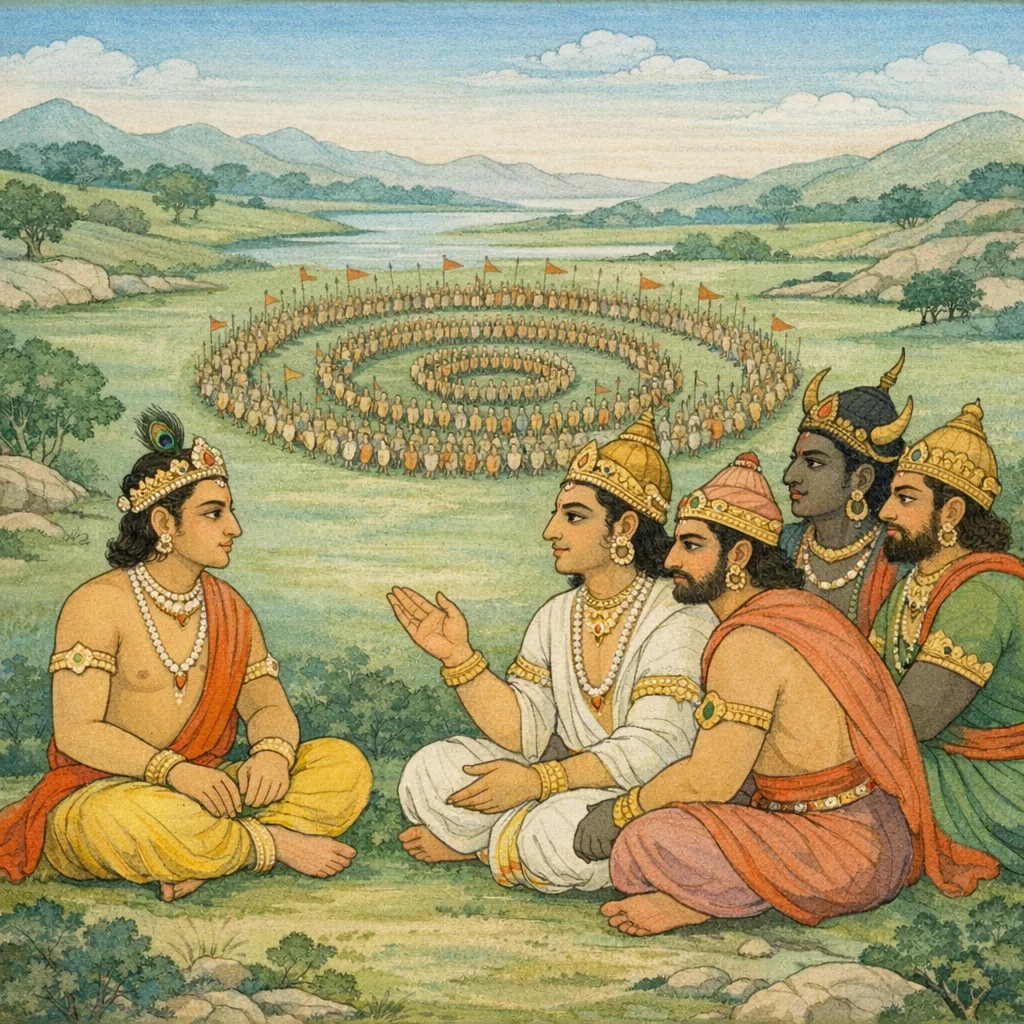
Chapter Arc: संजय धृतराष्ट्र को बतलाते हैं कि द्रोण द्वारा रक्षित, भेदना-दुष्कर व्यूह के सामने पाण्डव-सेना ठिठकती है—और उसी क्षण युधिष्ठिर की दृष्टि एक उपाय पर टिकती है। → सात्यकि, चेकितान, धृष्टद्युम्न, द्रुपद, धृष्टकेतु, घटोत्कच, द्रौपदेय, केकय, सृञ्जय आदि महारथियों की उपस्थिति के बावजूद द्रोण का क्रुद्ध अग्रगमन भय और विवशता बढ़ाता है; युधिष्ठिर बार-बार सोचते हैं कि इस ‘अनाधृष्य’ व्यूह को कैसे रोका जाए। → युधिष्ठिर अभिमन्यु से कहते हैं—‘योद्धाओं में श्रेष्ठ! व्यूह का द्वार भेदो; हम तुम्हारे पीछे-पीछे चलेंगे’; अभिमन्यु व्यूहभेदन के लिए प्रतिज्ञा-भाव से आगे बढ़ने को तैयार होता है, और पाण्डव-पक्ष की आशा एक ही रथ पर केन्द्रित हो जाती है। → अभिमन्यु को अग्रणी बनाकर व्यूहभेदन की योजना निश्चित होती है; पाण्डव-सेना का संकल्प संगठित होता है और रथ हाँके जाने का आदेश निकलता है। → अभिमन्यु व्यूह में प्रवेश करेगा—पर क्या वरिष्ठ रथी सचमुच उसके पीछे भीतर तक जा पाएँगे, या वह भीतर अलग-थलग पड़ जाएगा?
Shlokas
Verse 1
पम्प बछ। अंक पजञ्चत्रिशो<ड्ध्याय: युधिष्ठटिर और अभिमन्युका संवाद तथा व्यूहभेदनके लिये अभिमन्युकी प्रतिज्ञा संजय उवाच तदनीकमनाधृुष्यं भारद्वाजेन रक्षितम् | पार्था: समभ्यवर्तन्त भीमसेनपुरोगमा:,संजय कहते हैं--राजन! द्रोणाचार्यके द्वारा सुरक्षित उस दुर्धर्ष सेनाका भीमसेन आदि कुन्तीपुत्रोंने डटकर सामना किया
Sanjaya said: O King, the sons of Pṛthā, led by Bhīmasena, advanced resolutely to confront that formidable battle-array which was hard to assail and was being protected by Droṇa, the son of Bharadvāja. The verse highlights steadfast courage and collective duty in the face of a well-guarded enemy formation.
Verse 2
सात्यकिश्रेकितानश्च धृष्टद्युम्नश्न पार्षत: । कुन्तिभोज श्च विक्रान्तो टद्रपदश्च॒ महारथ:,सात्यकि, चेकितान, द्रुपदकुमार धृष्टद्युम्न, पराक्रमी कुन्तिभोज, महारथी द्रुपद, अभिमन्यु, क्षत्रधर्मा, शक्तिशाली बृहत्क्षत्र, चेदिराज धृष्टकेतु, माद्रीकुमार नकुल-सहदेव, घटोत्कच, पराक्रमी युधामन्यु, किसीसे परास्त न होनेवाला वीर शिखण्डी, दुर्धर्षवीर उत्तमौजा, महारथी विराट, क्रोधमें भरे हुए द्रौपदीपुत्र, बलवान् शिशुपालकुमार, महापराक्रमी केकयराजकुमार तथा सहस्रों सूंजयवंशी क्षत्रिय--ये तथा और भी अस्त्रविद्यामें पारंगत एवं रणदुर्मद बहुत-से शूरवीर अपने दलबलके साथ वहाँ उपस्थित थे। इन सबने युद्धकी अभिलाषासे द्रोणाचार्यपर सहसा धावा किया
Sañjaya said: Sātyaki and Cekitāna, and Dhṛṣṭadyumna the son of Pṛṣata, the valiant Kuntibhoja, and Drupada the great chariot-warrior—these foremost fighters were present there. In the ethical frame of the epic, their gathering signals the resolve of the Pāṇḍava side to uphold their chosen duty in war, rallying renowned allies to confront Droṇa’s formidable command.
Verse 3
आर्जुनि: क्षत्रधर्मा च बृहत्क्षत्रश्न वीर्यवान् । चेदिपो धृष्टकेतुश्न माद्रीपुत्रो घटोत्कच:,सात्यकि, चेकितान, द्रुपदकुमार धृष्टद्युम्न, पराक्रमी कुन्तिभोज, महारथी द्रुपद, अभिमन्यु, क्षत्रधर्मा, शक्तिशाली बृहत्क्षत्र, चेदिराज धृष्टकेतु, माद्रीकुमार नकुल-सहदेव, घटोत्कच, पराक्रमी युधामन्यु, किसीसे परास्त न होनेवाला वीर शिखण्डी, दुर्धर्षवीर उत्तमौजा, महारथी विराट, क्रोधमें भरे हुए द्रौपदीपुत्र, बलवान् शिशुपालकुमार, महापराक्रमी केकयराजकुमार तथा सहस्रों सूंजयवंशी क्षत्रिय--ये तथा और भी अस्त्रविद्यामें पारंगत एवं रणदुर्मद बहुत-से शूरवीर अपने दलबलके साथ वहाँ उपस्थित थे। इन सबने युद्धकी अभिलाषासे द्रोणाचार्यपर सहसा धावा किया
Sañjaya said: Arjuna—steadfast in the warrior’s code—along with the mighty Bṛhatkṣatra; Dhṛṣṭaketu, lord of Cedi; Ghaṭotkaca, son of Mādrī; Sātyaki; Cekitāna; Drupada’s son Dhṛṣṭadyumna; the valiant Kuntibhoja; the great chariot-warrior Drupada; Abhimanyu; the Mādrī-born twins Nakula and Sahadeva; the powerful Yudhāmanyu; Śikhaṇḍin, unconquered by any; the hard-to-face Uttamaujā; the great chariot-warrior Virāṭa; the sons of Draupadī, blazing with wrath; the strong son of Śiśupāla; the highly valorous princes of Kekaya; and thousands of Sṛñjaya-line kṣatriyas—these and many other heroes, masters of weapon-lore and intoxicated with the fury of battle, stood there with their own forces. Driven by the desire for war, they suddenly charged at Droṇācārya.
Verse 4
युधामन्युश्न विक्रान्त: शिखण्डी चापराजित: । उत्तमौजाश्र दुर्धर्षो विराटश्व॒ महारथ:,सात्यकि, चेकितान, द्रुपदकुमार धृष्टद्युम्न, पराक्रमी कुन्तिभोज, महारथी द्रुपद, अभिमन्यु, क्षत्रधर्मा, शक्तिशाली बृहत्क्षत्र, चेदिराज धृष्टकेतु, माद्रीकुमार नकुल-सहदेव, घटोत्कच, पराक्रमी युधामन्यु, किसीसे परास्त न होनेवाला वीर शिखण्डी, दुर्धर्षवीर उत्तमौजा, महारथी विराट, क्रोधमें भरे हुए द्रौपदीपुत्र, बलवान् शिशुपालकुमार, महापराक्रमी केकयराजकुमार तथा सहस्रों सूंजयवंशी क्षत्रिय--ये तथा और भी अस्त्रविद्यामें पारंगत एवं रणदुर्मद बहुत-से शूरवीर अपने दलबलके साथ वहाँ उपस्थित थे। इन सबने युद्धकी अभिलाषासे द्रोणाचार्यपर सहसा धावा किया
Sañjaya said: Yudhāmanyu, famed for his valor, and Śikhaṇḍī, unconquered in battle; the unassailable Uttamaujā; Virāṭa, a great chariot-warrior; Sātyaki and Cekitāna; Dhṛṣṭadyumna, the mighty prince of Drupada; Kuntibhoja the mahāratha; Drupada himself; Abhimanyu, steadfast in the kṣatriya code; the powerful Bṛhatkṣatra; Dhṛṣṭaketu, king of Cedi; the Mādrī-born twins Nakula and Sahadeva; and the heroic Ghaṭotkaca—along with thousands of brave Kṣatriyas of the Śūrajā lineage and many other warriors, masters of weapon-lore and intoxicated with the fury of battle—stood there with their own divisions. Driven by the desire to fight, they suddenly rushed upon Droṇācārya from all sides.
Verse 5
द्रौपदेयाश्व॒ संरब्धा: शैशुपालिश्न वीर्यवान् । केकयाश्व महावीर्या: सृञज्जयाश्व॒ सहस्रश:,सात्यकि, चेकितान, द्रुपदकुमार धृष्टद्युम्न, पराक्रमी कुन्तिभोज, महारथी द्रुपद, अभिमन्यु, क्षत्रधर्मा, शक्तिशाली बृहत्क्षत्र, चेदिराज धृष्टकेतु, माद्रीकुमार नकुल-सहदेव, घटोत्कच, पराक्रमी युधामन्यु, किसीसे परास्त न होनेवाला वीर शिखण्डी, दुर्धर्षवीर उत्तमौजा, महारथी विराट, क्रोधमें भरे हुए द्रौपदीपुत्र, बलवान् शिशुपालकुमार, महापराक्रमी केकयराजकुमार तथा सहस्रों सूंजयवंशी क्षत्रिय--ये तथा और भी अस्त्रविद्यामें पारंगत एवं रणदुर्मद बहुत-से शूरवीर अपने दलबलके साथ वहाँ उपस्थित थे। इन सबने युद्धकी अभिलाषासे द्रोणाचार्यपर सहसा धावा किया
Sañjaya said: The sons of Draupadī, inflamed with wrath, and the valiant son of Śiśupāla; the mighty princes of Kekaya; and thousands of the Sṛñjaya warriors—together with Sātyaki and Cekitāna; Dhṛṣṭadyumna, the son of Drupada; the powerful Kuntibhoja; the great charioteer Drupada; Abhimanyu; Bṛhatkṣatra; the Cedi king Dhṛṣṭaketu; the sons of Mādrī, Nakula and Sahadeva; Ghaṭotkaca; the heroic Yudhāmanyu; Śikhaṇḍī, unconquered by others; the hard-to-resist Uttamaujas; and the great charioteer Virāṭa—these and many other warriors, fully trained in the science of weapons and made reckless by the fury of battle, stood there with their own forces. Driven by the desire to fight, they all suddenly rushed upon Droṇa in the thick of combat, attacking him at once.
Verse 6
एते चान्ये च सगणा: कृतास्त्रा युद्धदुर्मदा: । समभ्यधावन् सहसा भारद्वाजं युयुत्सव:,सात्यकि, चेकितान, द्रुपदकुमार धृष्टद्युम्न, पराक्रमी कुन्तिभोज, महारथी द्रुपद, अभिमन्यु, क्षत्रधर्मा, शक्तिशाली बृहत्क्षत्र, चेदिराज धृष्टकेतु, माद्रीकुमार नकुल-सहदेव, घटोत्कच, पराक्रमी युधामन्यु, किसीसे परास्त न होनेवाला वीर शिखण्डी, दुर्धर्षवीर उत्तमौजा, महारथी विराट, क्रोधमें भरे हुए द्रौपदीपुत्र, बलवान् शिशुपालकुमार, महापराक्रमी केकयराजकुमार तथा सहस्रों सूंजयवंशी क्षत्रिय--ये तथा और भी अस्त्रविद्यामें पारंगत एवं रणदुर्मद बहुत-से शूरवीर अपने दलबलके साथ वहाँ उपस्थित थे। इन सबने युद्धकी अभिलाषासे द्रोणाचार्यपर सहसा धावा किया
Sañjaya said: “These warriors, and many others besides—each with his own troop—fully trained in the use of weapons and intoxicated with the ardor of battle, rushed all at once upon Bhāradvāja (Droṇa), eager to fight. In the moral atmosphere of the war, their charge reflects both the Kṣatriya impulse to confront a formidable foe and the tragic escalation in which prowess and battle-fury drive men toward acts that deepen the cycle of violence.”
Verse 7
समीपे वर्तमानांस्तान् भारद्वाजो$तिवीर्यवान् | असम्भ्रान्त: शरौघेण महता समवारयत्,भरद्वाजनन्दन द्रोणाचार्य बड़े पराक्रमी थे। शत्रुओंके आक्रमणसे उन्हें तनिक भी घबराहट नहीं हुई। उन्होंने अपने समीप आये हुए पाण्डव-वीरोंको बाणसमूहोंकी भारी वृष्टि करके आगे बढ़नेसे रोक दिया
Sañjaya said: The exceedingly mighty son of Bhāradvāja (Droṇa), unshaken and free from panic, checked those warriors who had come close by showering them with a great torrent of arrows, thereby halting their advance. The verse highlights steadiness of mind amid assault and the tactical use of force to restrain an oncoming enemy in the ethics-laden setting of war.
Verse 8
महौघ: सलिलस्येव गिरिमासाद्य दुर्भिदम् । द्रोणं ते नाभ्यवर्तन्त वेलामिव जलाशया:,जैसे दुर्भेद्य पर्वतके पास पहुँचकर जलका महान् प्रवाह अवरुद्ध हो जाता है तथा जिस प्रकार सम्पूर्ण जलाशय (समुद्र) अपनी तटभूमिको नहीं लाँघ पाते, उसी प्रकार वे पाण्डव- सैनिक द्रोणाचार्यके अत्यन्त निकट न पहुँच सके
Sañjaya said: Just as a mighty surge of water is checked when it reaches an unbreakable mountain, and just as the great reservoirs of water do not overstep their shoreline, so the Pāṇḍava warriors could not press in close to Droṇācārya. The image underscores how, in war, disciplined defense and a commander’s mastery can restrain even a powerful force—like nature itself held within lawful bounds.
Verse 9
पीड्यमाना: शरै राजन् द्रोणचापविनि:सृतै: । न शेकुः प्रमुखे स्थातुं भारद्वाजस्य पाण्डवा:,राजन! द्रोणाचार्यके धनुषसे छूटे हुए बाणोंसे अत्यन्त पीड़ित होकर पाण्डववीर उनके सामने नहीं ठहर सके
Sañjaya said: O King, tormented by the arrows released from Droṇa’s bow, the Pāṇḍava warriors could not hold their ground before Bhāradvāja’s son. The scene underscores how sheer martial mastery can overwhelm even the valiant, testing resolve amid the moral strain of war.
Verse 10
तदद्भुतमपश्याम द्रोणस्य भुजयोब्बलम् | यदेनं नाभ्यवर्तन्त पज्चाला: सृजजयै: सह,उस समय हमलोगोंने द्रोणाचार्यकी भुजाओंका वह अद्भुत बल देखा, जिससे कि सूंजयोंसहित सम्पूर्ण पांचालवीर उनके सामने टिक न सके
Sañjaya said: Then we beheld the wondrous might in Droṇa’s two arms—so great that the Pāñcāla warriors, even together with the Sṛñjayas, could not stand before him or turn back to face him. The scene underscores how, in war, disciplined mastery and command can overwhelm even a renowned collective force, reminding the listener that prowess without prudent strategy and moral steadiness falters against a superior leader.
Verse 11
तमायान्तमभिक्षुद्धं द्रोणं दृष्टवा युधिष्ठिर: । बहुधा चिन्तयामास द्रोणस्य प्रतिवारणम्,क्रोधमें भरे हुए उन्हीं द्रोणाचार्यको आते देख राजा युधिष्ठछिरने उन्हें रोकनेके उपायपर बारंबार विचार किया
Sañjaya said: Seeing Droṇa approaching in a fury, King Yudhiṣṭhira repeatedly reflected on how Droṇa might be checked—seeking a way to restrain him amid the moral strain of war, where stopping a revered teacher must be weighed against the duty to protect one’s own side.
Verse 12
अशक्यं तु तमन्येन द्रोणं मत्वा युधिष्ठिर: । अविषटहां गुरु भारं सौभद्रं समवासृजत्,इस समय द्रोणाचार्यका सामना करना दूसरेके लिये असम्भव जानकर युधिष्ठिरने वह दुःसह एवं महान् भार सुभद्राकुमार अभिमन्युपर रख दिया
Sañjaya said: Knowing that confronting Droṇa was impossible for anyone else, Yudhiṣṭhira placed that unbearable and weighty responsibility upon Saubhadra (Abhimanyu). The moment underscores the grim ethics of war: when duty demands resistance, leaders may be driven to entrust perilous tasks to the most capable—even when the burden is crushing.
Verse 13
वासुदेवादनवरं फाल्गुनाच्चामितौजसम् | अब्रवीत् परवीरघ्नमभिमन्युमिदं वच:,अमिततेजस्वी अभिमन्यु वसुदेवनन्दन श्रीकृष्ण तथा अर्जुनसे किसी बातमें कम नहीं था, वह शत्रुवीरोंका संहार करनेमें समर्थ था; अतः उससे युधिष्ठिरने इस प्रकार कहा --
Sañjaya said: Abhimanyu—unsurpassed by Vāsudeva (Kṛṣṇa) and endowed with might equal to Phālguna (Arjuna), a slayer of hostile heroes—was then addressed with these words (by Yudhiṣṭhira). The narrative underscores Abhimanyu’s dharmic role as a capable protector in a crisis of war, where responsibility is placed upon the worthy without diminishing reverence for elders and exemplars.
Verse 14
एत्य नो नार्जुनो गहेंद् यथा तात तथा कुरु । चक्रव्यूहस्य न वयं विद्यो भेदं कथंचन
Sañjaya said: “Let Arjuna come and lead us through, my dear one—do exactly as you have said. For we do not, in any way, know the method of breaking into the cakravyūha.”
Verse 15
“तात संशप्तकोंके साथ युद्ध करके लौटनेपर अर्जुन जिस प्रकार हमलोगोंकी निन््दा न करें (हमें असमर्थ न बतावें), वैसा कार्य करो। हमलोग तो किसी तरह भी चक्रव्यूहके भेदनकी प्रक्रियाको नहीं जानते हैं ।। त्वं वार्जुनो वा कृष्णो वा भिन्द्यात् प्रद्युम्न एव वा । चक्रव्यूहं महाबाहो पञचमो नोपपद्यते,“महाबाहो! तुम, अर्जुन, श्रीकृष्ण अथवा प्रद्युम्न--ये चार पुरुष ही चक्रव्यूहका भेदन कर सकते हो। पाँचवाँ कोई योद्धा इस कार्यके योग्य नहीं है
‘Dear one, act in such a way that when Arjuna returns after fighting alongside the Saṁsaptakas, he does not reproach us or declare us incapable. For we, in truth, do not know—by any means—the method of breaking the Cakra formation. O mighty-armed hero, only four can pierce that Cakra-vyūha: you, or Arjuna, or Kṛṣṇa, or Pradyumna. A fifth warrior fit for this task does not exist.’
Verse 16
अभिमन्यो वरं तात याचतां दातुमर्हसि । पितृणां मातुलानां च सैन्यानां चैव सर्वश:,“तात अभिमन्यु! तुम्हारे पिता और मामाके पक्षके समस्त योद्धा तथा सम्पूर्ण सैनिक तुमसे याचना कर रहे हैं। तुम्हीं इन्हें वर देनेके योग्य हो
Sañjaya said: “O dear Abhimanyu, you are worthy to grant a boon to those who are beseeching you—your father’s kinsmen and your maternal uncles’ side, and indeed the entire host of soldiers on every side.” The line underscores Abhimanyu’s moral stature: even amid war, the appeal is framed as a rightful request to one who has earned the authority to bestow favor through valor and integrity.
Verse 17
धनंजयो हि नस्तात गर्हयेदेत्य संयुगात् क्षिप्रमस्त्रं समादाय द्रोणानीकं विशातय,“तात! यदि हम विजयी नहीं हुए तो युद्धसे लौटनेपर अर्जुन निश्चय ही हमलोगोंको कोसेंगे, अतः शीघ्र अस्त्र लेकर तुम द्रोणाचार्यकी सेनाका विनाश कर डालो”
Sañjaya said: “Dear one, if we return from the battle without victory, Dhanañjaya (Arjuna) will surely reproach us. Therefore, quickly take up your weapon and shatter the army led by Droṇa.” The line frames the urgency of action in war through the lens of honor and accountability to a foremost warrior, where fear of blame becomes a spur to decisive violence.
Verse 18
अभिमनयुरवाच द्रोणस्य दृढमत्युग्रमनीकप्रवरं युधि | पितृणां जयमाकाडुृक्षन्नवगाहे5विलम्बितम्,अभिमन्युने कहा--महाराज! मैं अपने पितृ-वर्गकी विजयकी अभिलाषासे युद्धस्थलमें द्रोणाचार्यकी अत्यन्त भयंकर, सुदृढ़ एवं श्रेष्ठ सेनामें शीघ्र ही प्रवेश करता हूँ
Verse 19
उपदिष्टो हि मे पित्रा योगोडनीकविशातने । नोत्सहे हि विनिर्गन्तुमहं कस्यांचिदापदि,पिताजीने मुझे चक्रव्यूहको भेदनकी विधि तो बतायी है; परंतु किसी आपत्तिमें पड़ जानेपर मैं उस व्यूहसे बाहर नहीं निकल सकता
Sanjaya said: “My father did teach me the method of breaking the Cakravyūha—the formidable, wheel-like battle formation. Yet if I were caught in some crisis within it, I do not have the confidence to find my way back out.”
Verse 20
युधिष्ठिर उदाच भिन्ध्यनीकं युधां श्रेष्ठ द्वारं संजनयस्व न: । वयं त्वानुगमिष्यामो येन त्वं तात यास्यसि,युधिष्ठिर बोले-योद्धाओंमें श्रेष्ठ वीर! तुम व्यूहका भेदन करो और हमारे लिये द्वार बना दो! तात! फिर तुम जिस मार्गसे जाओगे, उसीके द्वारा हम भी तुम्हारे पीछे-पीछे चले चलेंगे
Yudhiṣṭhira said: “O best of warriors! Break through the enemy’s battle-array and create an opening for us. Dear one, by whatever path you proceed, we too shall follow close behind you.”
Verse 21
धनंजयसमं युद्धे त्वां वयं तात संयुगे । प्रणिधायानुयास्यामो रक्षन्त: सर्वतोमुखा:,बेटा! हमलोग युद्धस्थलमें तुम्हें अर्जुनके समान मानते हैं। हम अपना ध्यान तुम्हारी ही ओर रखकर सब ओरसे तुम्हारी रक्षा करते हुए तुम्हारे साथ ही चलेंगे
Sañjaya said: “Dear one, in the clash of battle we regard you as equal to Dhanañjaya (Arjuna). Fixing our attention upon you alone, we shall follow close behind, guarding you on every side.”
Verse 22
भीम उवाच अहं त्वानुगमिष्यामि धृष्टद्युम्नो5थ सात्यकि: । पज्चाला: केकया मत्स्यास्तथा सर्वे प्रभद्रका:,भीमसेन बोले--बेटा! मैं तुम्हारे साथ चलूँगा। धृष्टद्युम्न, सात्यकि, पांचालदेशीय योद्धा, केकय-राजकुमार, मत्स्य देशके सैनिक तथा समस्त प्रभद्रकगण भी तुम्हारा अनुसरण करेंगे
Bhīma said: “I will follow you. Dhṛṣṭadyumna, and Sātyaki as well; the Pāñcāla warriors, the Kekaya princes, the troops of Matsya, and all the Prabhadrakas too—everyone will march in your wake.” In the midst of war, Bhīma’s words affirm steadfast solidarity and shared responsibility: the righteous cause is upheld not by solitary heroism, but by coordinated commitment among allies.
Verse 23
सकृद् भिन्न त्वया व्यूहं तत्र तत्र पुन: पुनः । वयं प्रध्वंसयिष्यामो निघ्नमाना वरान् वरान्,तुम जहाँ-जहाँ एक बार भी व्यूह तोड़ दोगे, वहाँ-वहाँ हमलोग मुख्य-मुख्य योद्धाओंका वध करके उस व्यूहको बारंबार नष्ट करते रहेंगे
Bhima said: “Wherever you once break through the battle-formation, there and again and again we shall shatter it—cutting down the foremost champions as we go.”
Verse 24
अभिमन्युरुवाच अहमेतत् प्रवेक्ष्यामि द्रोणानीकं दुरासदम् । पतड़ इव संक्रुद्धो ज्वलितं जातवेदसम्,अभिमन्युने कहा--जैसे पतंग जलती हुई आगमें कूद पड़ता है, उसी प्रकार मैं भी कुपित हो द्रोणाचार्यके दुर्गम सैन्य-व्यूहमें प्रवेश करूँगा
Abhimanyu said: “I shall enter this formidable battle-array of Droṇa. Like a moth, enraged, plunging into the blazing fire, so will I, in wrath, force my way into Droṇa’s hard-to-assail formation.”
Verse 25
तत् कर्माद्य करिष्यामि हित॑ यद् वंशयोर्द्धयो: । मातुलस्य च यत् प्रीतिं करिष्यति पितुश्च मे,आज मैं वह पराक्रम करूँगा, जो पिता और माता दोनोंके कुलोंके लिये हितकर होगा तथा वह मामा श्रीकृष्ण तथा पिता अर्जुन दोनोंको प्रसन्न करेगा
Bhima declares that he will now perform a deed of valor that will serve the welfare of both lineages—his mother’s and his father’s—and that will bring joy to his maternal uncle Krishna as well as to his own father. The statement frames his impending action not as mere battlefield rage, but as a duty-bound act meant to uphold family honor and righteous purpose.
Verse 26
शिशुनैकेन संग्रामे काल्यमानानि संघश: । द्रक्ष्यन्ति सर्वभूतानि द्विषत्सैन्यानि वै मया,यद्यपि मैं अभी बालक हूँ तो भी आज समस्त प्राणी देखेंगे कि मैंने अकेले ही समूह- के-समूह शत्रुसैनिकोंका युद्धमें संहार कर डाला है
Bhīma declares that, though he is still but a boy, all beings will witness today how he alone will cut down the enemy’s forces in battle—slaying them in massed groups. The statement frames youthful vigor as a vow of righteous prowess, meant to inspire allies and intimidate aggressors amid the moral pressure of war.
Verse 27
नाहं पार्थेन जात: स्यां न च जात: सुभद्रया । यदि मे संयुगे कश्चिज्जीवितो नाद्य मुच्यते,यदि आज मेरे साथ युद्ध करके कोई भी सैनिक जीवित बच जाय तो मैं अर्जुनका पुत्र नहीं और सुभद्राकी कोखसे मेरा जन्म नहीं
Bhīma declares with a fierce vow that if even a single warrior who fights him today in battle escapes alive, then he would deny his own lineage—he would not be born of Pārtha (Arjuna) nor from Subhadrā. The statement heightens the ethical intensity of the moment: it is a warrior’s oath of uncompromising resolve, binding personal honor and family identity to the outcome of righteous combat.
Verse 28
यदि चैकरथेनाहं समग्रं क्षत्रमण्डलम् | न करोम्यष्टधा युद्धे न भवाम्यर्जुनात्मज:
Bhima declares a fierce vow: if, even while fighting from a single chariot, he does not shatter the entire circle of Kshatriya warriors into eight divisions on the battlefield, then he renounces the very identity of being Arjuna’s son. The utterance is a warrior’s oath meant to steel resolve and intimidate the enemy, yet it also reveals the ethical tension of war—where honor, lineage, and duty are invoked to justify extreme violence in the name of victory and protection of one’s side.
Verse 29
यदि मैं युद्धमें एकमात्र रथकी सहायतासे सम्पूर्ण क्षत्रियमण्डलके आठ टुकड़े न कर दूँ तो अर्जुनका पुत्र नहीं ।। युधिछिर उवाच एवं ते भाषमाणस्य बल॑ सौभद्र वर्धताम् यत् समुत्सहसे भेत्तुं द्रोणानीकं दुरासदम्,युधिष्ठिरने कहा--सुभद्रानन्दन! ऐसी ओजस्वी बातें कहते हुए तुम्हारा बल निरन्तर बढ़ता रहे; क्योंकि तुम द्रोणाचार्यके दुर्गम सैन्यमें प्रवेश करनेका उत्साह रखते हो
Yudhiṣṭhira said: “O Saubhadra (son of Subhadrā), as you speak such spirited words, may your strength ever increase—for you have the resolve to break into Droṇa’s army-formation, so difficult to assail.”
Verse 30
रक्षितं पुरुषव्याप्रैर्महेष्वासैर्महाबलै: । साध्यरुद्रमरुत्तुल्यैर्वस्वग्न्यादित्यविक्रमै:,द्रोणाचार्यकी सेना उन महाबली महाथनुर्धर पुरुषसिंह वीरों द्वारा सुरक्षित है, जो कि साध्य, रुद्र तथा मरुद्गणोंके समान बलवान् और वसु, अग्नि एवं सूर्यके समान पराक्रमी हैं
Yudhiṣṭhira said: “Droṇācārya’s army is well-guarded by mighty heroes—tiger-like men and great archers—whose strength is like that of the Sādhyas, Rudras, and Maruts, and whose valor rivals the Vasus, Agni, and the Sun. In such a field, mere confidence is not enough; discernment and steadfastness in dharma must guide our resolve.”
Verse 31
संजय उवाच तस्य तद् वचन श्रुत्वा स यन्तारमचोदयत् । सुमित्रा श्वान् रणे क्षिप्रं द्रोणानीकाय चोदय,संजय कहते हैं--राजन्! महाराज युधिष्ठिरका यह वचन सुनकर अभिमन्युने अपने सारथिको यह आज्ञा दी--'सुमित्र! तुम शीघ्र ही घोड़ोंको रणक्षेत्रमें द्रोणाचार्यकी सेनाकी ओर हाँक ले चलो
Sañjaya said: Hearing those words, he at once urged on his charioteer. “Sumitra, quickly drive the horses in the midst of battle—straight toward Droṇa’s army.” The moment underscores a warrior’s resolve to act decisively upon counsel, even when the path leads into the most formidable part of the enemy host.
Verse 35
इति श्रीमहाभारते द्रोणपर्वणि अभिमन्युवधपर्वणि अभिमन्युप्रतिज्ञायां पउ्चत्रिंशो 5 ध्याय:,इस प्रकार श्रीमहाभारत द्रोणपर्वके अन्तर्गत अभिमनन््युवधपर्वमें आभिमनन््युकी प्रतिज्ञाविषयक पैंतीसवाँ अध्याय पूरा हुआ
Sanjaya said: Thus, in the Śrī Mahābhārata, within the Droṇa Parva, in the section concerning the slaying of Abhimanyu, the thirty-fifth chapter—dealing with Abhimanyu’s vow—comes to an end. The colophon marks a pause in the war narrative, underscoring how solemn pledges and their consequences shape the ethical weight of the conflict.
Frequently Asked Questions
The tension lies between prudent restraint (evaluating force disparity and Droṇa’s expertise) and duty-driven action (executing Yudhiṣṭhira’s directive). The chapter stages an ethical choice about whether courage should be moderated by risk analysis when the mission’s stakes are framed as collective necessity.
The text foregrounds that counsel and capability must be weighed together: confidence can mobilize decisive action, but strategic environments can convert individual brilliance into systemic vulnerability when encirclement and massed response are likely.
No explicit phalaśruti formula appears in this excerpt. The chapter’s meta-level function is narrative and ethical: it demonstrates how war reporting (Sañjaya’s account) frames heroism, consequence, and the interpretive burden of leadership choices within the epic’s larger dharma inquiry.