Adhyaya 4
Bhīṣma Parva, Adhyāya 4 — Dhṛtarāṣṭra–Vyāsa Saṃvāda on Kāla and Jayalakṣaṇa (Signs of Victory)
Upa-parva: Nimitta-jaya-lakṣaṇa-vicāra (Omens and Signs of Victory) — within Bhīṣma Parva
Vaiśaṃpāyana narrates a reflective exchange in which the ascetic sage Vyāsa addresses Dhṛtarāṣṭra’s predicament. Vyāsa first articulates kāla (time) as a force that contracts and recreates worldly conditions, denying permanence and warning against the ethical degradation of kin-slaying framed as political necessity. Dhṛtarāṣṭra acknowledges knowledge yet admits confusion driven by self-interest, then requests a precise account of the signs that accompany impending victory in collective engagements. Vyāsa enumerates auspicious indicators: orderly sacrificial fire (bright, smokeless, right-curling flame), favorable sounds (conch, drums), auspicious bird-calls and flight patterns, favorable winds, pleasing sensory conditions, and—most prominently—troop morale and cohesion. He also describes the dynamics of rout and panic: once a formation is “split” (dīrṇa), fear propagates, and even large forces become hard to stabilize. The chapter concludes with a strategic-philosophical caution: numerical strength alone does not ensure victory; outcomes are unstable, contingent, and entwined with daiva (the beyond-human factor), so even victory may entail depletion.
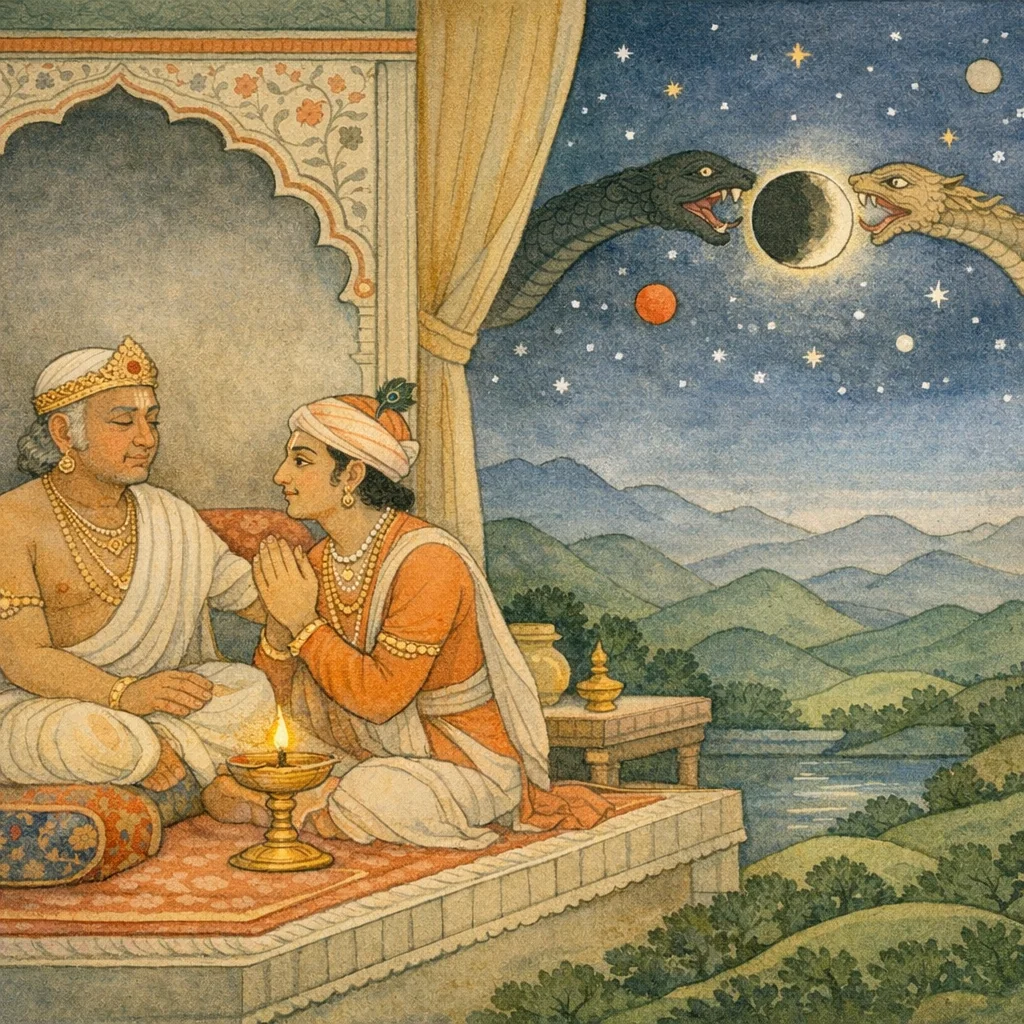
Chapter Arc: कुरुक्षेत्र के द्वार पर आकाश स्वयं भाषा बोल उठता है—राहु-केतु का एक ही राशि में आ जाना, सूर्य का तुला में होना, और अशुभ संकेतों की शृंखला; मानो युद्ध से पहले प्रकृति अंतिम चेतावनी दे रही हो। → धृतराष्ट्र, कुछ क्षण मौन रहकर बार-बार लंबी साँसें लेते हैं और संजय से पूछते हैं—ये उत्पात क्या कहते हैं? उसी प्रश्न के उत्तर में कथा युद्धभूमि से हटकर ‘भूमि’ और ‘भूत’ के व्यापक विधान पर फैलती है: स्थावर-जंगम का भेद, जंगम की योनियाँ, चौदह प्रकार के प्राणी, ग्राम्य और आरण्य पशुओं की गणना—और फिर उसी भूमि पर अधिकार के लिए राजाओं की अतृप्त लालसा। → वाक्य-शिखर यह उद्घोष बनता है: ‘भूमौ च जायते सर्वं… भूमि: प्रतिष्ठा भूतानां’ और फिर उसका कठोर निष्कर्ष—‘यस्य भूमिस्तस्य सर्वं… तत्रातिगृद्धा राजानो विनिधघ्नन्तीतरेतरम्’—जिसके पास भूमि, उसके पास सब; और उसी भूमि के लोभ में राजा एक-दूसरे का विनाश करते हैं। → अध्याय ज्ञान-गणना के रूप में स्थिर होता है—चर-अचर, अण्डज-स्वेदज-जरायुज, चौदह भेद, ग्राम्य-आरण्य पशुओं की सूची—और इस बोध पर टिकता है कि युद्ध का मूल केवल शस्त्र नहीं, ‘भूमि’ का आकर्षण है, जो समस्त प्राणियों की प्रतिष्ठा भी है और संघर्ष का कारण भी। → अशुभ संकेतों की छाया बनी रहती है—यदि भूमि ही सबका आधार है, तो उसी भूमि के लिए उठे शस्त्र किसका धर्म सिद्ध करेंगे और किसका विनाश?
Shlokas
Verse 1
- राहु और केतु सदा एक-दूसरेसे सातवीं राशिपर स्थित होते हैं, किंतु उस समय दोनों एक राशिपर आ गये थे; अतः महान् अनिष्टके सूचक थे। सूर्य तुलापर थे, उनके निकट राहुके आनेका वर्णन पहले आ चुका है; फिर केतुके वहाँ पहुँचनेसे महान् दुर्योग बन गया है। चतुथों5 ध्याय: धृतराष्ट्रके पूछनेपर संजयके द्वारा भूमिके महत्त्वका वर्णन वैशम्पायन उवाच एवमुक्क्त्वा ययौ व्यासो धृतराष्ट्राय धीमते । धृतराष्ट्रोडपि तच्छुत्वा ध्यानमेवान्वपद्यत,वैशम्पायनजी कहते हैं--जनमेजय! बुद्धिमान् राजा धृतराष्ट्रसे ऐसा कहकर महर्षि व्यासजी चले गये। धृतराष्ट्र भी उनके पूर्वोक्त वचन सुनकर कुछ कालतक उनपर सोच- विचार करते रहे
Vaiśampāyana said: Having spoken thus to the wise Dhṛtarāṣṭra, the sage Vyāsa departed. Dhṛtarāṣṭra too, on hearing those words, entered into contemplation, reflecting for some time on what had been said—an inward pause that hints at moral unease on the eve of the great conflict.
Verse 2
स मुहूर्तमिव ध्यात्वा विनि:श्वस्य मुहुर्मुहुः । संजयं संशितात्मानमपृच्छद् भरतर्षभ,भरतश्रेष्ठ) दो घड़ीतक सोचने-विचारनेके पश्चात् बारंबार लंबी साँस खींचते हुए उन्होंने विशुद्ध हृदयवाले संजयसे पूछा--
Vaiśampāyana said: After reflecting for what seemed like a moment, and repeatedly drawing deep, heavy breaths, the bull among the Bharatas questioned Sañjaya, whose mind was disciplined and steady—signaling the king’s inner strain as he turns to truthful counsel amid the moral weight of impending war.
Verse 3
इस प्रकार श्रीमह्याभारत भीष्मपर्वके अन्तर्गत जग्बूखण्डविनिर्माणपर्वमें अमंगलस्चक उत्पातों तथा विजययूचक लक्षणोंका वर्णनविषयक तीसरा अध्याय पूरा हुआ,संजयेमे महीपाला: शूरा युद्धाभिनन्दिन: । अन्योन्यमभिनिष्नन्ति शस्त्रैरुब्चावचैरिह “संजय! पृथ्वीका पालन करनेवाले ये शूरवीर नरेश इस भूमिके लिये ही अपना जीवन निछावर करके युद्धका अभिनन्दन करते और छोटे-बड़े अस्त्र-शस्त्रोंद्वारा एक-दूसरेपर घातक प्रहार करते हैं। इस भूतलके ऐश्वर्यको स्वयं ही चाहते हुए वे एक-दूसरेको सहन नहीं कर पाते हैं। परस्पर प्रहार करते हुए यमलोककी जनसंख्या बढ़ाते हैं, परंतु शान्त नहीं होते हैं। अतः मैं ऐसा मानता हूँ कि यह भूमि बहुसंख्यक गुणोंसे विभूषित है। इसलिये संजय! तुम मुझसे इस भूमिके गुणोंका ही वर्णन करो
Vyāsa said: “Sañjaya, these warrior-kings, protectors of the earth, delight in war and stake their very lives for the sake of this land. Here they strike one another down with weapons of every kind, great and small.” The verse frames the battlefield as a tragic contest for sovereignty: desire for earthly power drives rulers into mutual intolerance and relentless violence, raising grave ethical questions about ambition, kingship, and the cost of dominion.
Verse 4
पार्थिवा: पृथिवीहेतो: समभित्यज्य जीवितम् । न वा शाम्यन्ति निष्नन्तो वर्धयन्ति यमक्षयम्,“संजय! पृथ्वीका पालन करनेवाले ये शूरवीर नरेश इस भूमिके लिये ही अपना जीवन निछावर करके युद्धका अभिनन्दन करते और छोटे-बड़े अस्त्र-शस्त्रोंद्वारा एक-दूसरेपर घातक प्रहार करते हैं। इस भूतलके ऐश्वर्यको स्वयं ही चाहते हुए वे एक-दूसरेको सहन नहीं कर पाते हैं। परस्पर प्रहार करते हुए यमलोककी जनसंख्या बढ़ाते हैं, परंतु शान्त नहीं होते हैं। अतः मैं ऐसा मानता हूँ कि यह भूमि बहुसंख्यक गुणोंसे विभूषित है। इसलिये संजय! तुम मुझसे इस भूमिके गुणोंका ही वर्णन करो इति श्रीमहाभारते भीष्मपर्वणि जम्बूखण्डविनिर्माणपर्वणि भौमगुणकथने चतुर्थोउध्याय:
Vaiśampāyana said: “Kings, for the sake of the earth, cast away their very lives and rush into battle. Even as they strike one another down, they do not grow calm; instead they only swell the realm of Yama with the unending increase of the dead.”
Verse 5
भौममैश्वर्यमिच्छन्तो न मृष्यन्ते परस्परम् । मन्ये बहुगुणा भूमिस्तन्ममाचक्ष्व संजय,“संजय! पृथ्वीका पालन करनेवाले ये शूरवीर नरेश इस भूमिके लिये ही अपना जीवन निछावर करके युद्धका अभिनन्दन करते और छोटे-बड़े अस्त्र-शस्त्रोंद्वारा एक-दूसरेपर घातक प्रहार करते हैं। इस भूतलके ऐश्वर्यको स्वयं ही चाहते हुए वे एक-दूसरेको सहन नहीं कर पाते हैं। परस्पर प्रहार करते हुए यमलोककी जनसंख्या बढ़ाते हैं, परंतु शान्त नहीं होते हैं। अतः मैं ऐसा मानता हूँ कि यह भूमि बहुसंख्यक गुणोंसे विभूषित है। इसलिये संजय! तुम मुझसे इस भूमिके गुणोंका ही वर्णन करो
Vaiśampāyana said: “Seeking the sovereignty and riches of the earth, they cannot endure one another. I judge that this land is endowed with many virtues; therefore, Sañjaya, tell me of the qualities of the earth.”
Verse 6
बहूनि च सहस्राणि प्रयुतान्यर्बुदानि च । कोट्यश्व लोकवीराणां समेता: कुरुजाडले,“कुरक्षेत्रमें इस जगत्के कई हजार, लाख, करोड़ और अरबों वीर एकत्र हुए हैं
Vaiśampāyana said: In Kurujāṅgala, countless heroes of the world—numbering in thousands, tens of thousands, and even in crores and arbudas—had assembled. The narration emphasizes the vast scale of the gathering at Kurukṣetra, foreshadowing the immense moral and social cost of a war in which so many bear responsibility and consequence.
Verse 7
देशानां च परीमाणं नगराणां च संजय । श्रोतुमिच्छामि तत्त्वेन यत एते समागता:,“संजय! ये लोग जहाँ-जहाँसे आये हैं, उन देशों और नगरोंका यथार्थ परिमाण मैं तुमसे सुनना चाहता हूँ
Vaiśampāyana said: “Sañjaya, I wish to hear accurately the true measure and extent of the regions and the cities from which these warriors have assembled.”
Verse 8
दिव्यबुद्धिप्रदीपेन युक्तस्त्वं ज्ञानचक्षुषा । प्रभावात् तस्य विप्रर्षेव्यासस्थामिततेजस:,“क्योंकि तुम अमित तेजस्वी ब्रह्मर्षि व्यासजीके प्रभावसे दिव्य बुद्धिरूपी प्रदीपसे प्रकाशित ज्ञानदृष्टिसे सम्पन्न हो गये हो"
You have been endowed with the eye of true knowledge, illumined by the lamp of divine intelligence—through the spiritual power of that brahmarṣi, Vyāsa, whose splendor is immeasurable. Thus enabled, you are fit to perceive and recount events beyond ordinary sight, grounding the narration in sanctified insight rather than mere hearsay.
Verse 9
संजय उवाच यथाप्रज्ञं महाप्राज्ञ भौमान् वक्ष्यामि ते गुणान् | शास्त्रचक्षुरवेक्षस्व नमस्ते भरतर्षभ,संजयने कहा--महाप्राज्ञ! मैं अपनी बुद्धिके अनुसार आपसे इस भूमिके गुणोंका वर्णन करूँगा। भरतश्रेष्ठी आपको नमस्कार है; आप शास्त्रदृष्टिसे इस विषयको देखिये और समझिये
Verse 10
द्विविधानीह भूतानि चराणि स्थावराणि च । त्रसानां त्रिविधा योनिरण्डस्वेदजरायुजा:,राजन्! इस पृथ्वीपर दो तरहके प्राणी उपलब्ध हैं--स्थावर और जंगम। जंगम प्राणियोंकी उत्पत्तिके तीन स्थान हैं--अण्डज, स्वेदज और जरायुज
Sañjaya said: “O King, in this world living beings are of two kinds—those that move and those that are fixed. Among the moving creatures, their birth is spoken of as threefold: those born from eggs, those generated from moisture, and those born from a womb.”
Verse 11
त्रसानां खलु सर्वेषां श्रेष्ठा राजन् जरायुजा: । जरायुजानां प्रवरा मानवा: पशवश्च ये,राजन! सम्पूर्ण जंगम जीवोंमें जरायुज श्रेष्ठ माने गये हैं, जरायुजोंमें भी मनुष्य और पशु उत्तम हैं
Sañjaya said: “O King, among all moving creatures, those born from a womb (viviparous beings) are regarded as the foremost. And among such womb-born beings, O King, humans and the animals are considered the best.”
Verse 12
नानारूपधरा राजंस्तेषां भेदाश्षतुर्दश । वेदोक्ता: पृथिवीपाल येषु यज्ञा: प्रतिष्ठिता:,वे नाना प्रकारकी आकृतिवाले होते हैं। राजन्! उनके चौदह भेद हैं, जो वेदोंमें बताये गये हैं। भूपाल! उन्हींमें यज्ञोंकी प्रतिष्ठा है
Sañjaya said: “O King, they assume many different forms. O ruler of the earth, their divisions are fourteen, as declared in the Vedas; and upon these the sacrificial rites are established.”
Verse 13
ग्राम्याणां पुरुषा: श्रेष्ठा: सिंहाश्वारण्यवासिनाम् | सर्वेषामेव भूतानामन्योन्येनोपजीवनम्,ग्रामवासी पशु और मनुष्योंमें मनुष्य श्रेष्ठ हैं और वनवासी पशुओंमें सिंह श्रेष्ठ हैं। समस्त प्राणियोंका जीवन-निर्वाह एक-दूसरेके सहयोगसे होता है
Sañjaya said: Among those who dwell in villages, human beings are the foremost; and among the wild creatures that live in the forest, the lion is the foremost. Indeed, the sustenance of all living beings depends upon mutual support—each lives by the help of another.
Verse 14
उद्धिज्जा: स्थावरा: प्रोक्तास्तेषां पजचैव जातय: । वृक्षगुल्मलतावलल्ल्यस्त्वक्सारास्तृणजातय:,स्थावरोंको उद्धिज्ज कहते हैं। उनकी पाँच ही जातियाँ हैं--वृक्ष, गुल्म, लता, वल्ली और त्वक्सार (बाँस आदि)। ये सब तृणवर्गकी जातियाँ हैं
Sañjaya said: Those beings that are born by sprouting are called ‘immobile’ (plants). They are said to have five kinds—trees, shrubs, creepers, climbers, and those with a fibrous or bark-like core (such as bamboo). All these are counted among the grass-and-plant classes.
Verse 15
तेषां विंशतिरेकोना महाभूतेषु पठचसु । चतुर्विशतिरुद्दिष्टा गायत्री लोकसम्मता,ये स्थावर-जंगमरूप उन्नीस प्राणी हैं। इनके साथ पाँच महाभूतोंको गिन लेनेपर इनकी संख्या चौबीस हो जाती है। गायत्रीके भी चौबीस ही अक्षर होते हैं। इसलिये इन चौबीस भूतोंको भी लोकसम्मत गायत्री कहा गया है
Sañjaya said: Of those beings, they are said to be nineteen; when the five great elements are included among them, the total is declared to be twenty-four. Because the Gāyatrī—accepted by the world as authoritative—also consists of twenty-four syllables, these twenty-four constituents are likewise spoken of as a ‘Gāyatrī’ in common understanding.
Verse 16
य एतां वेद गायत्री पुण्यां सर्वगुणान्विताम् । तत्त्वेन भरतश्रेष्ठ स लोके न प्रणश्यति,भरतश्रेष्ठ] जो लोकमें स्थित इस सर्वगुणसम्पन्न पुण्यमयी गायत्रीको यथार्थरूपसे जानता है, वह कभी नष्ट नहीं होता
Sañjaya said: O best of the Bharatas, whoever truly knows this holy Gāyatrī—endowed with every excellence—does not perish in this world. The verse upholds inner knowledge and disciplined understanding as a safeguard of one’s spiritual continuity amid the fragility of worldly life.
Verse 17
अरण्यवासिन: सप्त सप्तैषां ग्रामवासिन: । सिंहा व्याप्रा वराहाश्न महिषा वारणास्तथा
Sañjaya said: “There were seven who dwelt in the forest, and likewise seven among them who lived in villages—(men of the stamp of) lions, tigers, boars, buffaloes, and elephants.” In the war-reporting idiom of the Mahābhārata, such animal imagery is an ethical-narrative shorthand: it praises martial power, fearlessness, and crushing force, while also hinting at the untamed, instinct-driven energies that war unleashes.
Verse 18
गौरजाविमनुष्याश्च अश्वाश्वतरगर्दभा:,गाय, बकरी, भेड़, मनुष्य, घोड़े, खच्चर और गदहे--इन सात पशुओंको साधु पुरुषोंने ग्रामवासी बताया है। राजन! इस प्रकार ये ग्रामवासी और वनवासी मिलकर कुल चौदह पशु कहे गये हैं
Verse 19
एते ग्राम्या: समाख्याता: पशव: सप्त साधुभि: । एते वै पशवो राजन _ग्राम्यारण्याश्षतुर्दश,गाय, बकरी, भेड़, मनुष्य, घोड़े, खच्चर और गदहे--इन सात पशुओंको साधु पुरुषोंने ग्रामवासी बताया है। राजन! इस प्रकार ये ग्रामवासी और वनवासी मिलकर कुल चौदह पशु कहे गये हैं
Sañjaya said: “These seven animals are described by the wise as ‘domestic’ (living among settlements). O King, taken together—those that are domestic and those that are wild—these animals are thus spoken of as fourteen in all.”
Verse 20
भूमौ च जायते सर्व भूमौ सर्व विनश्यति । भूमि: प्रतिष्ठा भूतानां भूमिरेव परायणम्,सब कुछ इस भूमिपर ही उत्पन्न होता है और भूमिमें ही विलीन होता है। भूमि ही सब प्राणियोंकी प्रतिष्ठा और भूमि ही सबका परम आश्रय है
Sanjaya said: All things are born upon the earth, and upon the earth all things pass away. The earth is the foundation of beings, and the earth alone is their final refuge—reminding the listener, amid the march toward war, of the shared mortality and common ground that underlies all pride and conflict.
Verse 21
यस्य भूमिस्तस्य सर्व जगत् स्थावरजड्भमम् । तत्रातिगृद्धा राजानो विनिधघ्नन्तीतरेतरम्,जिसके अधिकारमें भूमि है, उसीके अधिकारमें सम्पूर्ण चराचर जगत् है, इसीलिये भूमिके प्रति आसक्ति रखनेवाले राजालोग एक-दूसरेको मारते हैं
Sañjaya said: ‘He who possesses the land is deemed to possess the whole world of moving and unmoving beings. Therefore kings, consumed by excessive greed for territory, strike down one another.’
Verse 176
ऋक्षाश्न वानराश्नैव सप्तारण्या: स्मृता नृप । नरेश्वर! उपर्युक्त चौदह प्रकारके जरायुज प्राणियोंमें वनवासी पशु सात हैं और ग्रामवासी भी सात ही हैं। सिंह, व्याप्र, वराह, महिष, गज, रीछ और वानर--ये सात वनवासी पशु माने गये हैं
Sanjaya said: O King, among the fourteen kinds of viviparous creatures mentioned above, seven are regarded as forest-dwelling and seven as village-dwelling. The lion, tiger, boar, buffalo, elephant, bear, and monkey—these seven are remembered as animals that live in the forest. The passage functions as a classificatory note, grounding the discourse in observed order and taxonomy rather than moral exhortation, yet it implicitly reflects the Mahābhārata’s concern for naming and distinguishing beings according to their natural domains.
Frequently Asked Questions
The dilemma is whether pursuit of sovereignty can justify actions that damage kuladharma and kinship ethics; Vyāsa frames kin-harm as ethically diminutive and urges a lawful path when alternatives exist.
Victory is not a simple function of force; it depends on contingent conditions (nimitta), collective psychology (harṣa/morale), and the operation of kāla/daiva, implying the need for humility, ethical restraint, and strategic prudence.
Yes: the chapter explicitly notes that numerical superiority does not guarantee success and that even successful engagements entail kṣaya (depletion), functioning as a caution against triumphal certainty and simplistic causality.