Adhyaya 63
Yudhiṣṭhira’s Procession, Encampment (Niveśa), and Auspicious Timing for Ritual Action
Upa-parva: Āśvamedha-yātrā and Niveśa-vidhi (Encampment and Ritual Preparations)
Vaiśaṃpāyana describes Yudhiṣṭhira’s forward movement with a delighted retinue, the earth resonating with the heavy sound of chariots while sūtas, māgadhas, and vandins offer formal praises. Yudhiṣṭhira appears under a white parasol, receives victory-blessings from people on the road according to propriety, and is followed by troops whose collective acclaim rises skyward. The party traverses lakes, rivers, forests, and groves, then reaches a region suitable for the enterprise and establishes an encampment on level, favorable ground. Brahmins—ascetic, learned, and disciplined—are placed in front, together with a purohita proficient in Veda and Vedāṅgas. Protective śānti rites are performed; the king and ministers are positioned centrally; the dvijas arrange the camp with specified pathways and structured stations, including proper placement for powerful elephants. Yudhiṣṭhira requests that the Brahmins determine the auspicious nakṣatra and day so that no delay occurs. The Brahmins affirm the present time as especially meritorious, instructing immediate fasting and a water-based observance; the kings spend the night on kuśa-grass as in a sacrifice with kindled fires. At dawn, after the night passes with Brahmanical recitation, the leading Brahmins address Dharmasuta again, indicating the next procedural step.
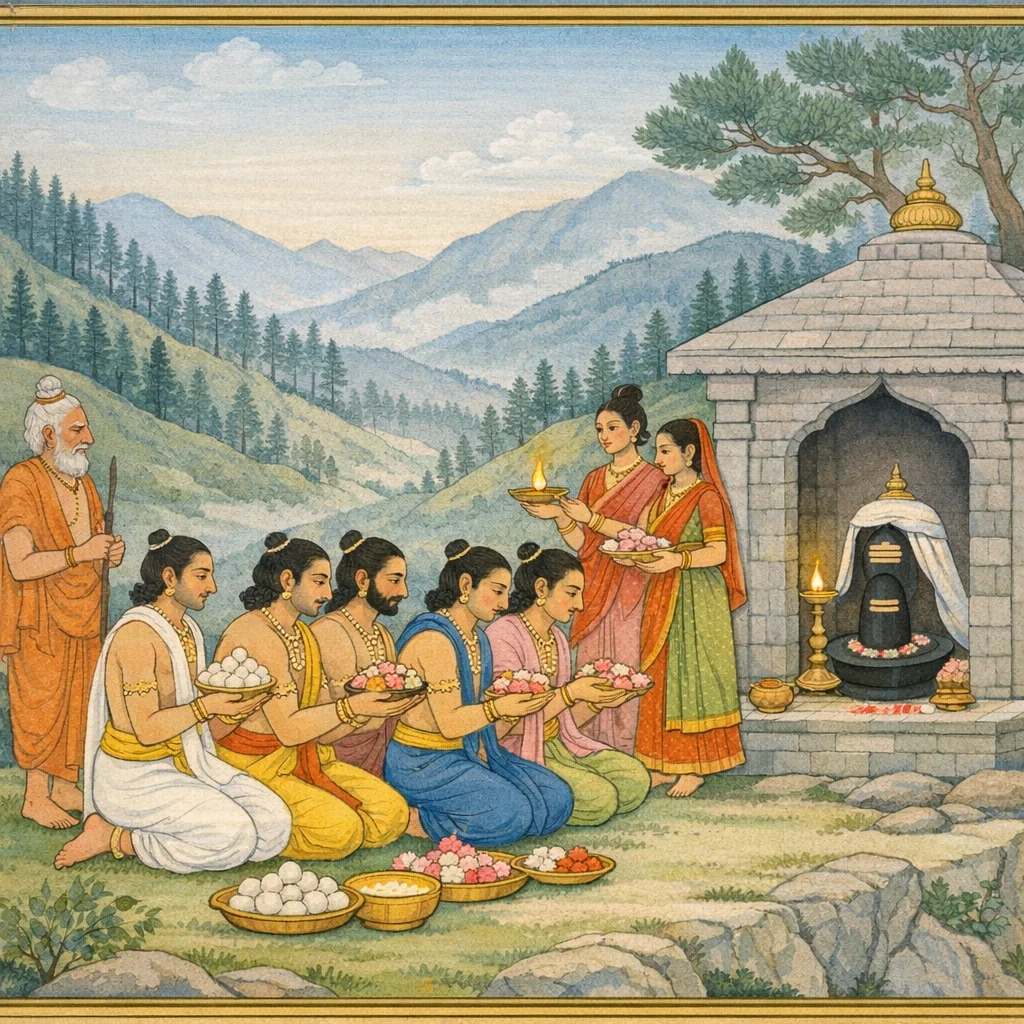
Chapter Arc: जनमेजय, व्यास-वचन से उद्वेलित होकर, उस गुप्त धन-निधान का रहस्य पूछता है—मरुत्त ने जो रत्न-सम्पदा पृथ्वी में छिपाई, वह युधिष्ठिर को कैसे प्राप्त होगी? → वैशम्पायन बताते हैं कि धर्मराज युधिष्ठिर व्यास के अद्भुत निर्देश सुनकर अपने सभी भाइयों को बुलाते हैं। वे परामर्श करते हैं कि अश्वमेध-यज्ञ की पूर्ति हेतु उस धन को लाना आवश्यक है, पर वह धन रौद्र किन्नरों द्वारा रक्षित है और देवाधिदेव महेश्वर तथा उनके अनुचरों की प्रसन्नता के बिना उपलब्ध नहीं। → युधिष्ठिर-भ्राता दल विधिवत् स्वस्तिवाचन कराकर, महेश्वर (कपर्दिन्, वृषभध्वज) की पूजा-अर्चना करता है—‘वाणी, बुद्धि और कर्म’ से प्रसाद-याचना करते हुए। यही क्षण निर्णायक बनता है: वे समझते हैं कि बल से नहीं, आराधना से ही रक्षक-गण वश में होंगे। → पूजा के उपरान्त वे प्रसन्नचित्त होकर प्रस्थान करते हैं और संकल्प लेते हैं कि शिव तथा उनके अनुचरों को संतुष्ट करके ही धन-निधान को सुरक्षित रूप से लाएँगे; रौद्र किन्नर भी वृषभध्वज के प्रसन्न होने पर अधीन हो जाएँगे। → धन-स्थल तक पहुँचकर रक्षक किन्नरों से सामना और धन-प्राप्ति की वास्तविक परीक्षा अभी शेष है।
Shlokas
Verse 1
ऑपन--मा_जल बछ। अकाल त्रेषष्टितमो<् ध्याय: युधिष्ठिरका अपने भाइयोंके साथ परामर्श करके सबको साथ ले धन ले आनेके लिये प्रस्थान करना जनमेजय उवाच श्रुत्वैतद् वचन ब्रह्मन् व्यासेनोक्त महात्मना | अश्वमेधं प्रति तदा कि भूय: प्रचकार ह,जनमेजयने पूछा--ब्रह्मन! महात्मा व्यासका कहा हुआ यह वचन सुनकर राजा युधिष्ठिरने अश्वमेध यज्ञके सम्बन्धमें फिर क्या किया? राजा मरुत्तने जो रत्न पृथ्वीतलपर रख छोड़ा था, उसे उन्होंने किस प्रकार प्राप्त किया? द्विजश्रेष्ठ]ी यह सब मुझे बताइये
Janamejaya said: “O Brahmin, having heard this statement spoken by the great-souled Vyāsa, what did King Yudhiṣṭhira do next regarding the Aśvamedha sacrifice? And how did he obtain the treasure that King Marutta had once left upon the surface of the earth? O best of twice-born ones, tell me all this.”
Verse 2
रत्नं च यन्मरुत्तेन निहितं वसुधातले । तदवाप कथं चेति तनमे ब्रूहि द्विजोत्तम,जनमेजयने पूछा--ब्रह्मन! महात्मा व्यासका कहा हुआ यह वचन सुनकर राजा युधिष्ठिरने अश्वमेध यज्ञके सम्बन्धमें फिर क्या किया? राजा मरुत्तने जो रत्न पृथ्वीतलपर रख छोड़ा था, उसे उन्होंने किस प्रकार प्राप्त किया? द्विजश्रेष्ठ]ी यह सब मुझे बताइये
Janamejaya said: “O best of twice-born sages, tell me this: the treasure that King Marutta had deposited upon the surface of the earth—how was it obtained? And after hearing the great Vyāsa’s words, what did King Yudhiṣṭhira do next in connection with the Aśvamedha sacrifice?”
Verse 3
वैशम्पायन उवाच श्रुत्वा द्वैयायनवचो धर्मराजो युधिष्ठिर: । भ्रातृ्न् सर्वान् समानाय्य काले वचनमनब्रवीत्
Vaiśampāyana said: Having heard the words of Dvaipāyana (Vyāsa), Dharma-rāja Yudhiṣṭhira summoned all his brothers together and, at the proper moment, addressed them. The scene underscores Yudhiṣṭhira’s ethic of timely, deliberate counsel—acting only after receiving authoritative guidance and gathering those responsible for the decision.
Verse 4
श्रुतं वो वचनं वीरा: सौहृदाद् यन्महात्मना
Vaiśampāyana said: “O heroes, I have heard your words—spoken out of goodwill—addressed by that noble-souled one.”
Verse 5
तपोवृद्धेन महता सुहृदां भूतिमिच्छता
Vaiśampāyana said: (This was done) by one greatly strengthened through austerity, and who, with noble intent, sought the welfare and prosperity of his friends and well-wishers.
Verse 6
गुरुणा धर्मशीलेन व्यासेनाद्भुतकर्मणा । भीष्मेण च महाप्राज्ञा गोविन्देन च धीमता
Vaiśampāyana said: (This was done/said) by the teacher Vyāsa—steadfast in dharma and of wondrous deeds—and also by Bhīṣma, the great sage of wisdom, and by Govinda, the discerning one. The line foregrounds the moral authority of these revered figures, implying that what follows carries the weight of dharma-guided counsel and exemplary conduct.
Verse 7
संस्मृत्य तदहं सम्यक् कर्तुमिच्छामि पाण्डवा: । आयत्यां च तदात्वे च सर्वेषां तद्धि नो हितम्
Vaiśaṃpāyana said: “Having properly recalled that matter, I wish to carry it out correctly, O Pāṇḍavas. For both in the time to come and in the present moment, that indeed is for the welfare of us all.”
Verse 8
'सुहदोंकी भलाई चाहनेवाले महान् तपोवृद्ध महात्मा धर्मशील गुरु व्यासने, अद्भुत पराक्रमी भीष्मने तथा बुद्धिमान् गोविन्दने समय-समयपर जो सलाह दी है, उसे याद करके मैं उनके आदेशका भलीभाँति पालन करना चाहता हूँ। महाप्राज्ञ पाण्डवो! उन महात्माओंका यह वचन भविष्य और वर्तमानमें भी हम सबके लिये हितकारक है || ५-- ७।। अनुबन्धे च कल्याणं यद् वचो ब्रह्मवादिन: । इयं हि वसुधा सर्वा क्षीणरत्ना कुरूद्वहा:
Vaiśampāyana said: “The words spoken by the Brahma-knowing sages are auspicious in their consequences. For this entire earth, O best of the Kurus, has become depleted of its jewels (its finest treasures).”
Verse 9
तच्चाचष्ट तदा व्यासो मरुत्तस्य धन नृपा: । “ब्रह्मवादी महात्मा व्यासजीका वचन परिणाममें हमारा कल्याण करनेवाला है। कौरवो! इस समय इस सारी पृथ्वीपर रत्न एवं धनका नाश हो गया है; अतः हमारी आर्थिक कठिनाई दूर करनेके लिये व्यासजीने उस दिन हमें मरुत्तके धनका पता बताया था ।। ८६ || यद्येतद् वो बहुमतं मन्यध्वं वा क्षमं यदि
Vaiśampāyana said: Then Vyāsa disclosed to the kings the treasure of Marutta. “If this seems agreeable to you, and if you judge it to be proper,” he said—guiding them toward a practical remedy in a time when wealth and precious resources had been exhausted, yet urging that their decision rest on what is fitting and acceptable.
Verse 10
इत्युक्तवाक्ये नृपती तदा कुरुकुलोद्वह,व्यासाख्यातस्य वित्तस्य समुपानयन प्रति । कुरुकुलशिरोमणे! राजा युधिष्ठिरके ऐसा कहनेपर भीमसेनने हाथ जोड़कर उन नृपश्रेष्ठठे इस प्रकार कहा--“महाबाहो! आपने जो कुछ कहा है, व्यासजीके बताये हुए धनको लानेके विषयमें जो विचार व्यक्त किया है, वह मुझे बहुत पसंद है
Vaiśampāyana said: When the king—foremost of the Kuru line—had thus spoken, Bhīmasena, with joined hands, addressed that best of rulers. He expressed approval of the king’s resolve concerning the bringing of the wealth indicated by Vyāsa, affirming that the proposed course was fitting and commendable in the present circumstance.
Verse 11
भीमसेनो नृपश्रेष्ठ प्राउजलियवरक्यमब्रवीत् । रोचते मे महाबाहो यदिदं भाषितं त्वया
Vaiśampāyana said: Then Bhīmasena, the best of kings, with palms joined in reverence, spoke these words: “O mighty-armed one, what you have said pleases me.” The line conveys Bhīma’s respectful assent—an ethical moment where right counsel is acknowledged with humility and readiness to follow it.
Verse 12
यदि तत् प्राप्रुयामेह धनमाविक्षितं प्रभो
Vaiśampāyana said: “If, O lord, we could obtain here that wealth which has been kept under watch (and secured)…”
Verse 13
ते वयं प्रणिपातेन गिरीशस्य महात्मन:
Vaiśampāyana said: “We, by bowing down in humble prostration, (approached) the great-souled Girīśa (Śiva).” The line underscores the ethic of reverence—seeking divine aid or guidance through humility rather than pride, especially in moments of grave consequence.
Verse 14
तद् वित्तं देवदेवेशं तस्यैवानुचरांश्ष तान्
Vaiśampāyana said: “That wealth, and those attendants belonging to him alone, were (then) offered/assigned to the Lord of gods—an act that frames material possession and service as ultimately subordinate to the highest divine authority.”
Verse 15
रक्षन्ते ये च तद् द्रव्यं किन्नरा रौद्रदर्शना:
Vaiśampāyana said: “And those fearsome-looking Kinnaras keep watch over that wealth.”
Verse 16
(स हि देव: प्रसन्नात्मा भक्तानां परमेश्वर: । ददात्यमरतां चापि कि पुनः काउ्चन प्रभु: ।। “सदा प्रसन्नचित्त रहनेवाले वे सर्वसमर्थ परमेश्वर महादेव अपने भक्तोंको अमरत्व भी दे देते हैं; फिर सुवर्णकी तो बात ही क्या? ।। वनस्थस्य पुरा जिष्णोरस्त्रं पाशुपतं महत् । रोद्रे ब्रह्मशिरश्नादात् प्रसन्न: कि पुनर्धनम् ।। 'पूर्वकालमें वनमें रहते समय अर्जुनपर प्रसन्न होकर भगवान् शंकरने उन्हें महान् पाशुपतास्त्र, रौद्रास्त्र तथा ब्रह्मास्त्र भी प्रदान किये थे। फिर धन दे देना उनके लिये कौन बड़ी बात है ।। वयं सर्वे च॒ तद्धक्ता: स चास्माकं प्रसीदति । तत्प्रसादाद् वयं राज्यं प्राप्ता: कौरवनन्दन ।। अभिमन्योर्वधे वृत्ते प्रतिज्ञाते धनंजये । जयद्रथवधार्थाय स्वप्ने लोकगुरुं निशि ।। प्रसाद्य लब्धवानस्त्रमर्जुन: सहकेशव: । “कौरवनन्दन! हम सब लोग उनके भक्त हैं और वे हम लोगोंपर प्रसन्न रहते हैं। उन्हींकी कृपासे हमने राज्य प्राप्त किया है। अभिमन्युका वध हो जानेपर जब अर्जुनने जयद्रथको मारनेकी प्रतिज्ञा की थी, उस समय स्वप्नमें अर्जुनने श्रीकृष्णके साथ रहकर रातमें उन्हीं लोकगुरु महेश्वरको प्रसन्न करके दिव्यास्त्र प्राप्त किया था ।। ततः प्रभातां रजनीं फाल्गुनस्याग्रत: प्रभु: ।। जघान सैन्यं शूलेन प्रत्यक्षं सव्यसाचिन: । “तदनन्तर जब रात बीती और प्रातःकाल हुआ, तब भगवान् शिवने अर्जुनके आगे रहकर अपने त्रिशूलसे शत्रुओंकी सेनाका संहार किया था। यह बात अर्जुनने प्रत्यक्ष देखी थी।। कस्तां सेनां महाराज मनसापि प्रधर्षयेत् ।। द्रोणकर्णमुखैर्युक्तां महेष्वासै: प्रहारिभि: । ऋते देवान्महेष्वासाद् बहुरूपान्महेश्वरात् ।। “महाराज! द्रोणाचार्य और कर्ण-जैसे प्रहारकुशल महाथधनुर्धरोंसे युक्त उस कौरवसेनाको महान् पाशुपतधारी अनेक रूपवाले महेश्वर महादेवके सिवा दूसरा कौन मनसे भी पराजित कर सकता था ।। तस्यैव च प्रसादेन निहता: शत्रवस्तव । अश्वमेधस्य संसिद्धि स तु सम्पादयिष्यति ।।) उन्हींके कृपाप्रसादसे आपके शत्रु मारे गये हैं। वे ही अश्वमेध यज्ञको सफलतापूर्वक सम्पन्न करेंगे” ।। श्रुत्वैवं वदतस्तस्य वाक््यं भीमस्य भारत,भारत! भीमसेनका यह कथन सुनकर धर्मपुत्र राजा युधिष्ठिर बहुत प्रसन्न हुए। अर्जुन आदिने भी बहुत ठीक कहकर उन्हींकी बातका समर्थन किया
Vaiśaṃpāyana said: “For that God—ever serene in spirit, the supreme Lord of his devotees—can grant even immortality. How much more easily, then, can the Almighty bestow mere gold? The point is this: when the Lord is pleased by devotion, his gifts are not constrained by human measures; worldly wealth is trivial compared to the grace that can confer the highest boons.”
Verse 17
प्रीतो धर्मात्मजो राजा बभूवातीव भारत । अर्जुनप्रमुखाश्नापि तथेत्येवाब्रुवन् वच:,भारत! भीमसेनका यह कथन सुनकर धर्मपुत्र राजा युधिष्ठिर बहुत प्रसन्न हुए। अर्जुन आदिने भी बहुत ठीक कहकर उन्हींकी बातका समर्थन किया
Vaiśampāyana said: O Bhārata, the righteous king, the son of Dharma (Yudhiṣṭhira), became exceedingly pleased. Arjuna and the others as well replied, “So be it,” thereby endorsing those words—signaling concord among the Pāṇḍavas and approval of the counsel just spoken (by Bhīmasena).
Verse 18
कृत्वा तु पाण्डवा: सर्वे रत्नाहरणनिश्चयम् । सेनामाज्ञापयामास;ुर्नक्षत्रेडहनि च ध्रुवे,इस प्रकार समस्त पाण्डवोंने रत्न लानेका निश्चय करके ध्रुवसंज्ञक- नक्षत्र एवं दिनमें सेनाको यात्राके लिये तैयार होनेकी आज्ञा दी
Vaiśampāyana said: Having all resolved to procure and bring back the jewels, the Pāṇḍavas ordered the army to make ready for the journey, choosing the auspicious time marked by the Dhruva constellation and day. The passage underscores deliberate resolve joined with disciplined action, and the traditional concern to align royal undertakings with favorable omens rather than impulsive force.
Verse 19
ततो ययु: पाण्डुसुता ब्राह्मणान् स्वस्ति वाच्य च । अर्चयित्वा सुरश्रेष्ठ॑ पूर्वमेव महेश्वरम्,तदनन्तर ब्राह्मणोंसे स्वस्तिवाचन कराकर सुरश्रेष्ठ महेश्वरकी पहले ही पूजा करके मिष्टात्न, खीर, पूआ तथा फलके गूदोंसे उन महेश्वरको तृप्त करके उनका आशीर्वाद ले समस्त पाण्डवोंने अत्यन्त प्रसन्नतापूर्वक यात्रा प्रारम्भ की
Vaiśampāyana said: Then the sons of Pāṇḍu set out, first having the Brāhmaṇas pronounce auspicious blessings. They worshipped Maheśvara—foremost among the divine—before all else, and only thereafter began their journey, strengthened by benedictions and the assurance that their undertaking was aligned with sacred propriety.
Verse 20
मोदकै: पायसेनाथ मांसापूपैस्तथैव च । आशास्य च महात्मानं प्रययुर्मुदिता भूशम्,तदनन्तर ब्राह्मणोंसे स्वस्तिवाचन कराकर सुरश्रेष्ठ महेश्वरकी पहले ही पूजा करके मिष्टात्न, खीर, पूआ तथा फलके गूदोंसे उन महेश्वरको तृप्त करके उनका आशीर्वाद ले समस्त पाण्डवोंने अत्यन्त प्रसन्नतापूर्वक यात्रा प्रारम्भ की
Vaiśampāyana said: Having gratified that great-souled Lord with sweetmeats, rice-pudding, and meat-cakes, they sought his benediction and then set out, the kings (the Pāṇḍavas) departing in high spirits. The episode underscores the ethic of beginning great undertakings with reverence, auspicious rites, and the seeking of divine approval.
Verse 21
तेषां प्रयास्यतां तत्र मज़लानि शुभान्यथ । प्राहु: प्रहष्टमनसो द्विजाग्रया नागराश्न ते,जब वे यात्राके लिये उद्यत हुए, उस समय समस्त श्रेष्ठ ब्राह्मणों और नागरिकोंने प्रसन्नचित्त होकर उनके लिये शुभ मंगल-पाठ किया
As they were preparing to depart from that place, the foremost among the twice-born—together with the townspeople—joyfully pronounced auspicious benedictions for them. The scene underscores a public, dharma-affirming send-off: communal goodwill, ritual propriety, and moral support offered to those setting out on their journey.
Verse 22
ततः प्रदक्षिणीकृत्य शिरोभि: प्रणिपत्य च | ब्राह्मणानग्निसहितान् प्रययु: पाण्डुनन्दना:,तत्पश्चात् पाण्डवोंने अग्निसहित ब्राह्मणोंकी परिक्रमा करके उनके चरणोंमें मस्तक झुकाकर वहाँसे प्रस्थान किया
Vaiśampāyana said: Then the sons of Pāṇḍu, having reverentially circumambulated the Brāhmaṇas who were accompanied by the sacred fire, and having bowed down with their heads at their feet, departed from that place. The act underscores dharmic humility—honouring spiritual authority and the sanctity of ritual before proceeding onward.
Verse 23
समनुज्ञाप्य राजानं पुत्रशोकसमाहतम् । धृतराष्ट्रं सभार्य॑ वै पृथां च पृुथुलोचनाम्,प्रस्थानके पूर्व उन्होंने पुत्रशोकसे व्याकुल राजा धूृतराष्ट्र, गान्धारी देवी तथा विशाललोचना कुन्तीसे आज्ञा ले ली थी
Having respectfully taken leave of King Dhṛtarāṣṭra, who was overwhelmed by grief for his sons, and also of his wife (Gāndhārī) and of Pṛthā (Kuntī), the large-eyed queen, they prepared to depart. The verse underscores the ethical propriety of seeking permission from elders and the bereaved before undertaking a significant journey.
Verse 24
मूले निक्षिप्य कौरव्यं युयुत्सुं धृतराष्ट्रजम् । सम्पूज्यमाना: पौरैश्न ब्राह्मणैश्वन मनीषिभि:,(प्रययु: पाण्डवा वीरा नियमस्था: शुचित्रता: ।) अपने कुलके मूलभूत धृतराष्ट्र गान्धारी और कुन्तीके समीप उनकी रक्षाके लिये कुरुवंशी धृतराष्ट्रपुत्र युयुत्सुको नियुक्त करके मनीषी ब्राह्मणों और पुरवासियोंसे पूजित होते हुए वीर पाण्डवोंने वहाँसे प्रस्थान किया। वे सब-के-सब उत्तम व्रतका पालन करते हुए शौच, संतोष आदि नियमोंमें दृढ़तापूर्वक स्थित थे
Vaiśampāyana said: Having stationed Yuyutsu—the son of Dhṛtarāṣṭra—at the very root of the Kuru line to serve as a protector, the heroic Pāṇḍavas departed from there, honored by the townspeople and by wise brāhmaṇas. They went forth steadfast in disciplined observances, firm in pure vows and in the restraints of cleanliness, contentment, and self-control.
Verse 33
अर्जुन भीमसेनं च माद्रीपुत्री यमावपि । वैशम्पायनजीने कहा--राजन्! व्यासजीकी बात सुनकर धर्मराज युधिष्ठिरने भीमसेन, अर्जुन, नकुल और सहदेव--इन सभी भाइयोंको बुलवाकर यह समयोचित वचन कहा--
Vaiśampāyana said: “O King, having heard Vyāsa’s words, Dharmarāja Yudhiṣṭhira summoned Bhīmasena, Arjuna, and the twin sons of Mādrī as well. Calling all his brothers together, he then spoke words suited to the moment—words meant to guide their conduct in accordance with dharma.”
Verse 43
कुरूणां हितकामेन प्रोक्तं कृष्णेन धीमता । “वीर बन्धुओ! कौरवोंके हितकी कामना रखनेवाले बुद्धिमान् महात्मा श्रीकृष्णने सौहार्दवश जो बात कही थी, वह सब तो तुमने सुनी ही थी
Vaiśampāyana said: The wise Kṛṣṇa, moved by goodwill and desiring the welfare of the Kurus, had spoken certain counsel. You have already heard in full what that great-souled one said out of friendship for the Kauravas’ benefit.
Verse 63
इति श्रीमहाभारते आश्वमेधिके पर्वणि अनुगीतापर्वणि द्रव्यानयनोपक्रमे त्रिषष्टितमो5 ध्याय:,इस प्रकार श्रीमहाभारत आश्वमेधिकपवके अन्तर्गत अनुगीतापर्वमें द्रव्य लानेका उपक्रमविषयक तिरसठवाँ अध्याय पूरा हुआ
Thus ends the sixty-third chapter in the Aśvamedhika Parva of the Śrī Mahābhārata, within the Anugītā section, dealing with the commencement of bringing the requisite materials. This is a formal colophon marking the completion of the chapter and indicating its subject matter.
Verse 93
तथा यथा55ह धर्मेण कथं वा भीम मन्यसे । “यदि तुमलोग उस धनको पर्याप्त समझो और उसे ले आनेकी अपनेमें सामर्थ्य देखो तो व्यासजीने जैसा कहा है, उसीके अनुसार धर्मतः उसे प्राप्त करनेका यत्न करो। अथवा भीमसेन! तुम बोलो, तुम्हारा इस सम्बन्धमें क्या विचार है?”
Vaiśampāyana said: “Proceed in the very manner that accords with dharma. If you consider that wealth sufficient and see in yourselves the ability to bring it, then strive to obtain it righteously, exactly as Vyāsa has instructed. Otherwise, Bhīmasena—speak: what is your judgment in this matter?”
Verse 113
व्यासाख्यातस्य वित्तस्य समुपानयन प्रति । कुरुकुलशिरोमणे! राजा युधिष्ठिरके ऐसा कहनेपर भीमसेनने हाथ जोड़कर उन नृपश्रेष्ठठे इस प्रकार कहा--“महाबाहो! आपने जो कुछ कहा है, व्यासजीके बताये हुए धनको लानेके विषयमें जो विचार व्यक्त किया है, वह मुझे बहुत पसंद है
Verse 126
कृतमेव महाराज भवेदिति मतिर्मम । 'प्रभो! महाराज! यदि हमें मरुत्तका धन प्राप्त हो जाय तब तो हमारा सारा काम बन ही जाय। यही मेरा मत है
Vaiśaṃpāyana said: “O great king, in my judgment the matter would be fully accomplished. O lord, O Mahārāja—if we could obtain the wealth of Marutta, then all our aims would be secured and our undertaking would succeed completely. This is my considered view.”
Verse 136
तदानयाम भद्रं ते समभ्यर्च्य कपर्दिनम् “आपका कल्याण हो। हम महात्मा गिरीशके चरणोंमें प्रणाम करके उन जटाजूटधारी महेश्वरकी सम्यक् आराधना करके उस धनको ले आवें
Vaiśampāyana said: “May auspiciousness be yours. Having bowed at the feet of the great Lord Girīśa, the matted-haired Maheśvara, and having duly worshipped him, we shall bring that wealth here.”
Verse 146
प्रसाद्यार्थमवाप्स्यामो नून॑ वाग्बुद्धि कर्मभि: | “हम बुद्धि, वाणी और क्रियाद्वारा आराधनापूर्वक देवाधिदेव महादेव तथा उनके अनुचरोंको प्रसन्न करके निश्चय ही उस धनको प्राप्त कर लेंगे
Vaiśampāyana said: “Surely we shall obtain it for the sake of winning divine favor—by our speech, our understanding, and our deeds. By reverently worshipping Mahādeva, the God of gods, along with his attendants, and by pleasing them, we will certainly gain that wealth.”
Verse 156
ते च वश्या भविष्यन्ति प्रसन्ने वृषभध्वजे । 'जो रौद्ररूपधारी किन्नर उस धनकी रक्षा करते हैं, वे भी भगवान् शंकरके प्रसन्न होनेपर हमारे अधीन हो जायँगे
And they too will become submissive, once Vṛṣabhadhvaja (Śiva, whose banner bears the bull) is pleased. The narrative underscores a moral logic: even formidable guardians and powers yield not merely to force, but to the higher authority gained through divine favor and righteous alignment.
Frequently Asked Questions
The chapter frames a governance tension between urgency and correctness: Yudhiṣṭhira seeks timely action yet submits to Brahmanical determination of auspicious time and procedure, prioritizing legitimacy through disciplined compliance over personal preference.
Authority is stabilized by restraint and consultation: public power is presented as accountable to learned expertise, auspicious timing, and orderly social arrangement—dharma enacted through method rather than impulse.
No explicit phalaśruti appears in this extract; the meta-commentary is implicit in the narrative emphasis on śānti rites, fasting, and correct encampment as prerequisites for successful ritual action and social stability.