Adhyaya 98
Ādi-parva Adhyāya 98 — Paraśurāma’s kṣatriya suppression; Dīrghatamas, Bali, Sudēṣṇā, and the birth of Aṅga
Upa-parva: Anukramaṇikā–Vaṃśānucarita (Genealogical & Exempla Cycle: Bhīṣma’s recollective narratives)
Bhīṣma recounts that Paraśurāma (Jāmadagnya Rāma), enraged by his father’s killing, slays the Haihaya ruler Arjuna (Kārtavīrya) and cuts off his many arms; he then repeatedly campaigns with powerful weapons, rendering the earth ‘without kṣatriyas’ for a traditional count of twenty-one times. The narrative turns to restoration: kṣatriya women seek progeny through disciplined brāhmaṇas, framed as a socially observed mechanism for reconstituting rulership. Next, the account introduces the sage Utathya and his wife Mamatā; Bṛhaspati approaches her despite her pregnancy, and the unborn child protests, leading to Bṛhaspati’s curse. The child becomes the sage Dīrghatamas, who later begets sons for Utathya’s lineage; those sons, driven by greed and delusion, abandon the blind elder in the Gaṅgā. King Bali rescues Dīrghatamas and requests sons for dynastic continuity. Bali sends his queen Sudēṣṇā, who refuses due to the sage’s age and blindness and instead sends a nurse; from her are born eleven sons (including Kākṣīvat), whom Dīrghatamas claims as his own due to their maternal status. After appeasement, Sudēṣṇā is sent again; Dīrghatamas foretells a truthful, radiant son, and Aṅga is born. Bhīṣma closes by generalizing that many capable rulers arose through such arrangements, presenting the episode as precedent and counsel for pragmatic continuity under dharma.
Chapter Arc: कुरुवंश के वृद्ध, तपस्वी-राजा प्रतीप के एकांत अध्ययन-ध्यान में सरिता-देवी गंगा का मनुष्य-रूप में प्रकट होना—और उसका निर्भीक, अलौकिक आसन ग्रहण। → गंगा का दिव्य सौंदर्य और संकेतों से भरा व्यवहार (राजा की दाहिनी जंघा पर बैठना) राजधर्म और लोकलज्जा—दोनों को चुनौती देता है। प्रतीप उसके रहस्य को पहचानते हुए भी संयम रखते हैं और उसे पुत्रवधू बनने का प्रस्ताव देते हैं; गंगा शर्तों सहित स्वीकृति का संकेत देती है, जिससे भविष्य के विवाह-धर्म की शर्तबद्धता स्थापित होती है। → प्रतीप का निर्णायक वचन—‘स्नुषा मे भव… पुत्रार्थ त्वां वृणोम्यहम्’—और गंगा का यह संकेत कि वह कुरुवंश के लिए ‘परायण’ (श्रेष्ठ आश्रय/भाग्य) बनेगी, परंतु एक शर्त के साथ; यहीं से शान्तनु-गंगा प्रसंग का बीज दृढ़ होता है। → प्रतीप गंगा को अपने लिए नहीं, वंश-धर्म के लिए स्वीकारते हैं; पुत्र-प्राप्ति हेतु तप और प्रतीक्षा करते हैं। आगे चलकर शान्तनु का जन्म, राज्याभिषेक और गंगा से पुनर्मिलन की भूमिका तैयार हो जाती है। → शान्तनु एक दिन उस परम तेजस्विनी स्त्री को देखते हैं और मधुर वाणी से पूछते हैं—‘देवी वा दानवी वा त्वं…?’—अब यह रहस्योद्घाटन और शर्तबद्ध विवाह किस दिशा में जाएगा?
Shlokas
Verse 1
अफड-्-क+ >> सप्तनवतितमो< ध्याय: राजा प्रतीपका गंगाको पुत्रवधूके रूपमें स्वीकार करना और शान्तनुका जन्म, राज्याभिषेक तथा गंगासे मिलना वैशम्पायन उवाच ततः प्रतीपो राजा55सीत् सर्वभूतहित:ः सदा । निषसाद समा बद्दीर्गज्राद्वारगतो जपन्,वैशम्पायनजी कहते हैं--तदनन्तर इस पृथ्वीपर राजा प्रतीप राज्य करने लगे। वे सदा सम्पूर्ण प्राणियोंके हितमें संलग्न रहते थे। एक समय महाराज प्रतीप गंगाद्वार (हरिद्वार)-में गये और बहुत वर्षोतक जप करते हुए एक आसनपर बैठे रहे इस प्रकार श्रीमह्याभारत आदिपर्वके अन्तर्गत सम्भवपर्वमें शान्तनूपाख्यानविषयक सत्तानबेवाँ अध्याय पूरा हुआ ॥/ ९७ ॥ (दाक्षिणात्य अधिक पाठके ६ श्लोक मिलाकर कुल ३८ श्लोक हैं) अपने-आप बछ। अर: अष्टनवतितमोब् ध्याय: शान्तनु और 8884: फे छ शर्तोके साथ सम्बन्ध, वसुओंका जन्म और ५ उद्धार तथा भीष्मकी उत्पत्ति वैशम्पायन उवाच एतच्छूत्वा वचो राज्ञ: सस्मितं मृदु वल्गु च । (यशस्विनी च सा55गच्छच्छान्तनो भूतये तदा । सा च दृष्टवा नृपश्रेष्ठ चरन्तं तीरमाश्रितम् ।।) वसूनां समयं स्मृत्वाथाभ्यगच्छदनिन्दिता
Vaiśampāyana said: Thereafter King Pratīpa ruled the earth, ever devoted to the welfare of all beings. Once he went to Gaṅgādvāra (the gateway of the Gaṅgā) and, practicing japa for many years, remained seated in a single posture. The verse frames Pratīpa as an ideal ruler whose kingship is grounded in universal benevolence and disciplined spiritual practice, suggesting that political authority is ethically strengthened by self-restraint and devotion.
Verse 2
तस्य रूपगुणोपेता गड्जा स्त्रीरूपधारिणी | उत्तीर्य सलिलात् तस्माललोभनीयतमाकृति:,उस समय मनस्विनी गंगा सुन्दर रूप और उत्तम गुणोंसे युक्त युवती स्त्रीका रूप धारण करके जलसे निकलीं और स्वाध्यायमें लगे हुए राजर्षि प्रतीपके शाल-जैसे विशाल दाहिने ऊरु (जाँघ)-पर जा बैठीं। उस समय उनकी आकृति बड़ी लुभावनी थी; रूप देवांगनाओंके समान था और मुख अत्यन्त मनोहर था
Vaiśampāyana said: Endowed with beauty and noble qualities, the river-goddess Gaṅgā assumed the form of a young woman. Rising up from the water, she appeared in an exceedingly captivating shape—her presence suggesting a divine allure as she approached the king-sage Pratīpa, setting the stage for a test of restraint and dharma in conduct toward the extraordinary and the unknown.
Verse 3
अधीयानस्य राजर्षेर्दिव्यरूपा मनस्विनी । दक्षिणं शालसंकाशमूरु भेजे शुभानना,उस समय मनस्विनी गंगा सुन्दर रूप और उत्तम गुणोंसे युक्त युवती स्त्रीका रूप धारण करके जलसे निकलीं और स्वाध्यायमें लगे हुए राजर्षि प्रतीपके शाल-जैसे विशाल दाहिने ऊरु (जाँघ)-पर जा बैठीं। उस समय उनकी आकृति बड़ी लुभावनी थी; रूप देवांगनाओंके समान था और मुख अत्यन्त मनोहर था
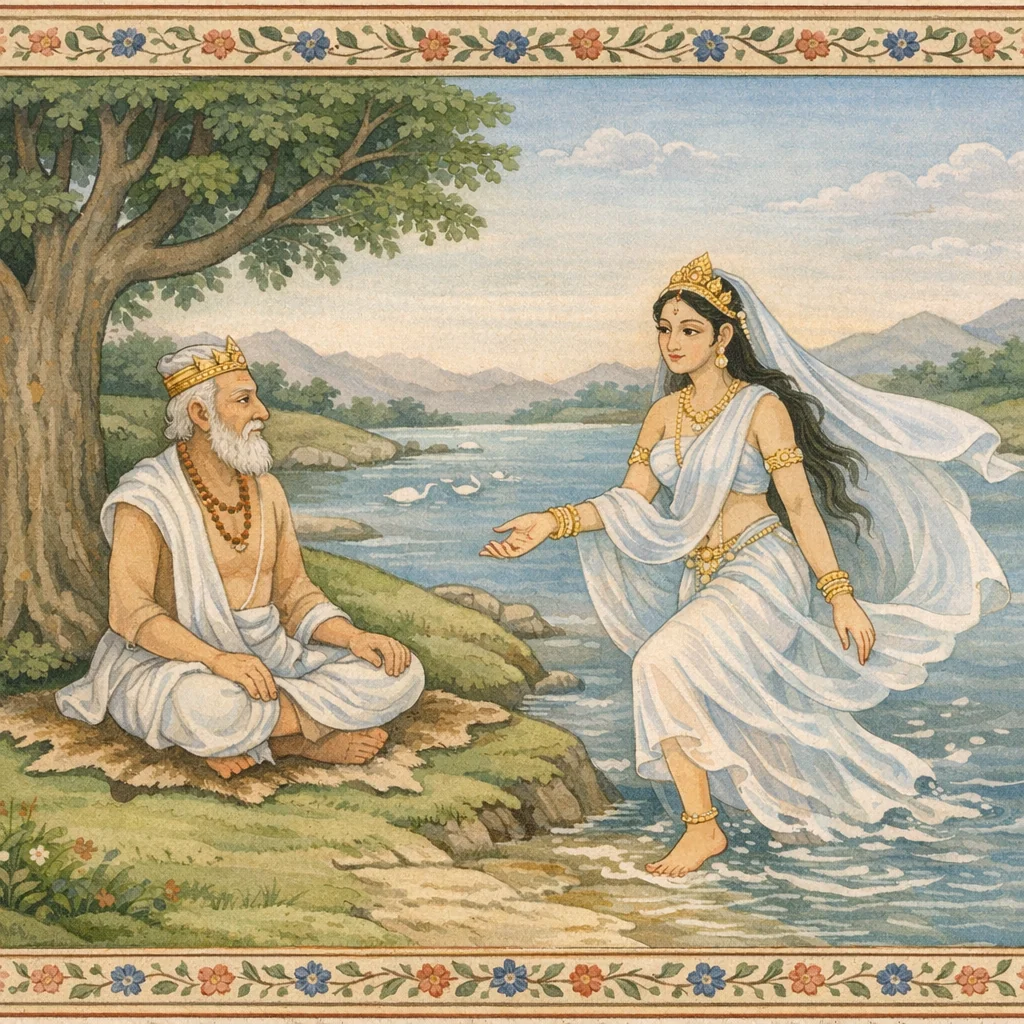
Vaiśampāyana said: While the royal sage Pratīpa was engaged in sacred study, the resolute Gaṅgā—of divine beauty—assumed the form of a lovely young woman. With an auspicious face, she came forth from the waters and sat upon the king’s right thigh, broad like a śāla tree. Her appearance was captivating, like that of a celestial maiden, and her face exceedingly charming.
Verse 4
प्रतीपस्तु महीपालस्तामुवाच यशस्विनीम् | करोमि कि ते कल्याणि प्रियं यत् तेडभिकाड्क्षितम्,अपनी जाँघपर बैठी हुई उस यशस्विनी नारीसे राजा प्रतीपने पूछा--“कल्याणि! मैं तुम्हारा कौन-सा प्रिय कार्य करूँ? तुम्हारी क्या इच्छा है?”
Vaiśampāyana said: King Pratīpa, lord of the earth, addressed that illustrious woman seated upon his thigh: “Auspicious lady, what dear wish of yours shall I fulfill? What is it that you desire?” The scene highlights the king’s courteous restraint and his readiness to act according to propriety, seeking her consent and intention rather than presuming upon her presence.
Verse 5
रूयुवाच त्वामहं कामये राजन् भजमानां भजस्व माम् | त्याग: कामवतीनां हि स्त्रीणां सद्धिर्विगर्हित:,स्त्री बोली--राजन्! मैं आपको ही चाहती हूँ। आपके प्रति मेरा अनुराग है, अतः आप मुझे स्वीकार करें; क्योंकि कामके अधीन होकर अपने पास आयी हुई स्त्रियोंका परित्याग साधु पुरुषोंने निन्दित माना है
Rūyu said: “O king, I desire you. I am devoted to you; therefore accept me. For the rejection of women who have come under the sway of love is censured by the virtuous.”
Verse 6
प्रतीप उवाच नाहं परस्त्रियं कामाद् गच्छेयं वरवर्णिनि । न चासवर्णा कल्याणि धर्म्यमेतद्धि मे व्रतम्,प्रतीपने कहा--सुन्दरी! मैं कामवश परायी स्त्रीके साथ समागम नहीं कर सकता। जो अपने वर्णकी न हो, उससे भी मैं सम्बन्ध नहीं रख सकता। कल्याणि! यह मेरा धर्मानुकूल व्रत है
Verse 7
रूयुवाच नाश्रेयस्यस्मि नागम्या न वक्तव्या च कहिचित् । भजन्तीं भज मां राजन् दिव्यां कन्यां वरस्त्रियम्,स्त्री बोली--राजन! मैं अशुभ या अमंगल करनेवाली नहीं हूँ, समागमके अयोग्य भी नहीं हूँ और ऐसी भी नहीं हूँ कि कभी कोई मुझपर कलंक लगावे। मैं आपके प्रति अनुरक्त होकर आयी हुई दिव्य कन्या एवं सुन्दरी स्त्री हूँ। अत: आप मुझे स्वीकार करें
The woman said: “I am not inauspicious, nor am I unfit for union; nor am I one about whom anything blameworthy can ever rightly be spoken. O king, accept me who have come to you with affection—a divine maiden, an excellent woman. Therefore, receive me.”
Verse 8
प्रतीप उवाच त्वया निवृत्तमेतत् तु यन्मां चोदयसि प्रियम् । अन्यथा प्रतिपन्न॑ मां नाशयेद् धर्मविप्लव:,प्रतीपने कहा--सुन्दरी! तुम जिस प्रिय मनोरथकी पूर्तिके लिये मुझे प्रेरित कर रही हो, उसका निराकरण भी तुम्हारे द्वारा ही हो गया। यदि मैं धर्मके विपरीत तुम्हारा यह प्रस्ताव स्वीकार कर लूँ तो धर्मका यह विनाश मेरा भी नाश कर डालेगा
Pratīpa said: “What you urge upon me as a dear desire has, in fact, already been set aside by you yourself. If I were to accept it otherwise—contrary to dharma—then that very overthrow of dharma would bring about my own ruin as well.”
Verse 9
प्राप्प दक्षिणमूरुं मे त्वमाश्लिष्टा वराड़ने । अपत्यानां स्नुषाणां च भीरु विद्धोतदासनम्,वरांगने! तुम मेरी दाहिनी जाँघपर आकर बैठी हो। भीरु! तुम्हें मालूम होना चाहिये कि यह पुत्र, पुत्री तथा पुत्रवधूका आसन है
Pratīpa said: “O fair-limbed lady, you have come and embraced my right thigh. O timid one, know that this seat is meant for one’s children and for daughters-in-law.”
Verse 10
सव्योरु: कामिनीभोग्यस्त्वया स च विवर्जित: । तस्मादहं नाचरिष्ये त्वयि काम॑ वराड़ने,पुरुषकी बायीं जाँघच ही कामिनीके उपभोगके योग्य है; किंतु तुमने उसका त्याग कर दिया है। अतः वरांगने! मैं तुम्हारे प्रति कामयुक्त आचरण नहीं करूँगा
Pratīpa said: “The left thigh is meant for a woman’s embrace, yet you have set it aside. Therefore, O fair-limbed lady, I will not act toward you with desire.” In this moment, the king frames restraint as a matter of propriety and self-control, refusing to pursue passion when the woman’s gesture signals a boundary and an unconventional condition.
Verse 11
स््नुषा मे भव सुश्रोणि पुत्रार्थ त्वां वृणोम्यहम् । स्नुषापक्षं हि वामोरु त्वमागम्य समाश्रिता,सुश्रोणि! तुम मेरी पुत्रवधू हो जाओ। मैं अपने पुत्रके लिये तुम्हारा वरण करता हूँ; क्योंकि वामोरु! तुमने यहाँ आकर मेरी उसी जाँघका आश्रय लिया है, जो पुत्रवधूके पक्षकी है
Pratīpa said: “O fair-hipped lady, become my daughter-in-law; for the sake of my son I choose you. For, O woman of beautiful thighs, you have come here and taken refuge upon that side of my thigh which is reserved for a daughter-in-law.”
Verse 12
रूयुवाच एवमप्यस्तु धर्मज्ञ संयुज्येयं सुतेन ते । त्वद्धक्त्या तु भजिष्यामि प्रख्यातं भारतं कुलम्,स्त्री बोली--धर्मज्ञ नरेश! आप जैसा कहते हैं, वैसा भी हो सकता है। मैं आपके पुत्रके साथ संयुक्त होऊँगी। आपके प्रति जो मेरी भक्ति है, उसके कारण मैं विख्यात भरतवंशका सेवन करूँगी
The woman said: “So be it, O knower of dharma. I shall be united with your son. Out of devotion to you, I will enter and uphold your renowned Bharata lineage.”
Verse 13
पृथिव्यां पार्थिवा ये च तेषां यूयं परायणम् । गुणा न हि मया शकया वक्तुं वर्षशतैरपि,पृथ्वीपर जितने राजा हैं, उन सबके आपलोग उत्तम आश्रय हैं। सौ वर्षोमें भी आपलोगोंके गुणोंका वर्णन मैं नहीं कर सकती
Pratīpa said: “Among all the kings who dwell upon the earth, you are their highest refuge and final recourse. Indeed, even in a hundred years I would not be able to fully describe your virtues.”
Verse 14
कुलस्य ये व: प्रथितास्तत्साधुत्वमथोत्तमम् | समयेनेह धर्मज्ञ आचरेयं च यद् विभो,पुत्रै: पुण्यै: प्रियैश्वैव स्वर्ग प्राप्स्पति ते सुतः । आपके कुलमें जो विख्यात राजा हो गये हैं, उनकी साधुता सर्वोपरि है। धर्मज्ञ! मैं एक शर्तके साथ आपके पुत्रसे विवाह करूँगी। प्रभो! मैं जो कुछ भी आचरण करूँ, वह सब आपके पुत्रको स्वीकार होना चाहिये। वे उसके विषयमें कभी कुछ विचार न करें। इस शर्तपर रहती हुई मैं आपके पुत्रके प्रति अपना प्रेम बढ़ाऊँगी। मुझसे जो पुण्यात्मा एवं प्रिय पुत्र उत्पन्न होंगे, उनके द्वारा आपके पुत्रको स्वर्गलोककी प्राप्ति होगी
Pratīpa said: “Those kings of your lineage who have become renowned—indeed their virtue is held to be the highest. O knower of dharma, I will enter into marriage with your son on a condition, O lord: whatever conduct I adopt here must be accepted by your son; he should never question it or sit in judgment over it. Living by this agreement, I will deepen my affection toward him. And through the righteous and beloved sons born from me, your son will attain the heavenly world.”
Verse 15
तत् सर्वमेव पुत्रस्ते न मीमांसेत कर्हिचित् | एवं वसन्ती पुत्रे ते वर्धयिष्याम्यहं रतिम्
Pratīpa said: “Let your son never, at any time, question or investigate any of this. If she dwells with your son in this manner, I shall myself foster and increase the bond of love between them.”
Verse 16
वैशम्पायन उवाच तथेत्युक्ता तु सा राजंस्तत्रैवान्तरधीयत,वैशम्पायनजी कहते हैं--जनमेजय! राजा प्रतीपने “तथास्तु” कहकर उसकी शर्त स्वीकार कर ली। तत्पश्चात् वह वहीं अन्तर्धान हो गयी
Vaiśampāyana said: O King, when she had been answered with “So be it,” she vanished then and there. The episode underscores the ethical weight of a ruler’s word: once a condition is accepted, fidelity to that assent becomes a binding duty, even when the other party withdraws from sight.
Verse 17
पुत्रजन्म प्रतीक्षन् वै स राजा तदधारयत् | एतस्मिन्नेव काले तु प्रतीप: क्षत्रियर्षभ:
Vaiśampāyana said: That king, waiting for the birth of a son, maintained his resolve and bore the situation with steadiness. And at that very time there lived Pratīpa, the bull among kṣatriyas—an exemplar of royal strength joined with patience and duty.
Verse 18
(प्रतीपस्य तु भारयायां गर्भ: श्रीमानवर्धत । श्रिया परमया युक्त: शरच्छुक्ले यथा शशी ।। ततस्तु दशमे मासि प्राजायत रविप्रभम् । कुमार देवगर्भाभ॑ प्रतीपमहिषी तदा ।।) तयो: समभवत् पुत्रो वृद्धयो: स महाभिष:,प्रतीपकी पत्नीकी कुक्षिमें एक तेजस्वी गर्भका आविर्भाव हुआ, जो शरद-ऋतुके शुक्ल पक्षमें परम कान्तिमान् चन्द्रमाकी भाँति प्रतिदिन बढ़ने लगा। तदनन्तर दसवाँ मास प्राप्त होनेपर प्रतीपकी महारानीने एक देवोषम पुत्रको जन्म दिया, जो सूर्यके समान प्रकाशमान था। उन बूढ़े राजदम्पतिके यहाँ पूर्वोक्त राजा महाभिष ही पुत्ररूपमें उत्पन्न हुए
Vaiśampāyana said: In Pratīpa’s queen a radiant embryo grew, endowed with supreme splendor—like the moon waxing in the bright fortnight of autumn. Then, when the tenth month arrived, the chief queen of Pratīpa gave birth to a boy shining like the sun, bearing the marks of a divine conception. Thus, to that aged royal couple, the very king Mahābhiṣa was born again as their son—an auspicious sign that greatness and responsibility may return to the world through lawful lineage and divine ordinance.
Verse 19
शान्तस्य जज्ञे संतानस्तस्मादासीत् स शान्तनु: । शान्त पिताकी संतान होनेसे वे शान्तनु कहलाये। (तस्य जातस्य कृत्यानि प्रतीपो5कारयत् प्रभु: । जातकर्मादि विप्रेण वेदोक्तै: कर्मभिस्तदा ।। शक्तिशाली राजा प्रतीपने उस बालकके आवश्यक कृत्य (संस्कार) करवाये। ब्राह्मण पुरोहितने वेदोक्त क्रियाओंद्वारा उसके जात-कर्म आदि सम्पन्न किये। नामकर्म च वितप्रास्तु चक्र: परमसत्कृतम् । शान्तनोरवनीपाल वेदोक्तै: कर्मभिस्तदा ।। जनमेजय! तदनन्तर बहुत-से ब्राह्मणोंने मिलकर वेदोक्त विधियोंके अनुसार शान्तनुका नामकरण-संस्कार भी किया। ततः संवर्धितो राजा शान्तनुलोकपालक: । स तु लेभे परां निष्ठां प्राप्य धर्मविदां वर: ।। धनुर्वेदे च वेदे च गतिं स परमां गत: । यौवन चापि सम्प्राप्त: कुमारो वदतां वर: ।।) तत्पश्चात् बड़े होनेपर राजकुमार शान्तनु लोकरक्षाका कार्य करने लगे। वे धर्मज्ञोंमें श्रेष्ठ थे। उन्होंने धनुर्वेदमें उत्तम योग्यता प्राप्त करके वेदाध्ययनमें भी ऊँची स्थिति प्राप्त की। वक्ताओंमें सर्वश्रेष्ठ वे राजकुमार धीरे-धीरे युवावस्थामें पहुँच गये। संस्मरंश्षाक्षयाँललोकान् विजातान् स्वेन कर्मणा,अपने सत्कर्मोद्वारा उपार्जित अक्षय पुण्यलोकोंका स्मरण करके कुरुश्रेष्ठ शान्तनु सदा पुण्यकर्मोंके अनुष्ठानमें ही लगे रहते थे। युवावस्थामें पहुँचे हुए राजकुमार शान्तनुको राजा प्रतीपने आदेश दिया--
Vaiśaṃpāyana said: From Śānta was born a son; therefore he came to be known as Śāntanu. The name reflects a moral ideal: a ruler’s identity is grounded in the virtue and serenity (śānti) embodied in his lineage, and his life is framed by Vedic rites and disciplined conduct that prepare him for the protection of the world and the practice of dharma.
Verse 20
पुण्यकर्मकृदेवासीच्छान्तनु: कुरुसत्तम: । प्रतीप: शान्तनु पुत्रं यौवनस्थं ततो5न्वशात्,अपने सत्कर्मोद्वारा उपार्जित अक्षय पुण्यलोकोंका स्मरण करके कुरुश्रेष्ठ शान्तनु सदा पुण्यकर्मोंके अनुष्ठानमें ही लगे रहते थे। युवावस्थामें पहुँचे हुए राजकुमार शान्तनुको राजा प्रतीपने आदेश दिया--
Vaiśampāyana said: Śāntanu, the best of the Kurus, was indeed a doer of meritorious deeds, ever devoted to righteous conduct and mindful of the imperishable rewards earned through good actions. Thereafter King Pratīpa instructed his son Śāntanu, who had reached youth, setting him on the path of kingly duty and disciplined virtue.
Verse 21
पुरा स्त्री मां समभ्यागाच्छान्तनो भूतये तव । त्वामाव्रजेद् यदि रह: सा पुत्र वरवर्णिनी,'शान्तनो! पूर्वकालमें मेरे समीप एक दिव्य नारी आयी थी। उसका आगमन तुम्हारे कल्याणके लिये ही हुआ था। बेटा! यदि वह सुन्दरी कभी एकान्तमें तुम्हारे पास आवे, तुम्हारे प्रति कामभावसे युक्त हो और तुमसे पुत्र पानेकी इच्छा रखती हो, तो तुम उत्तम रूपसे सुशोभित उस दिव्य नारीसे “अंगने! तुम कौन हो? किसकी पुत्री हो? इत्यादि प्रश्न न करना
Vaiśampāyana said: “Formerly, O Śāntanu, a woman once came to me—her coming was for your welfare. My son, if that fair-complexioned lady should ever approach you in private, filled with desire and wishing to obtain a son from you, then you should not question that radiant, divine woman—‘Lady, who are you? Whose daughter are you?’ and the like.”
Verse 22
कामयानाभिरूपाद्या दिव्या स्त्री पुत्रकाम्यया । सा त्वया नानुयोक्तव्या कासि कस्यासि चाड़ने,'शान्तनो! पूर्वकालमें मेरे समीप एक दिव्य नारी आयी थी। उसका आगमन तुम्हारे कल्याणके लिये ही हुआ था। बेटा! यदि वह सुन्दरी कभी एकान्तमें तुम्हारे पास आवे, तुम्हारे प्रति कामभावसे युक्त हो और तुमसे पुत्र पानेकी इच्छा रखती हो, तो तुम उत्तम रूपसे सुशोभित उस दिव्य नारीसे “अंगने! तुम कौन हो? किसकी पुत्री हो? इत्यादि प्रश्न न करना
Vaiśampāyana said: “O Śāntanu, in former times a radiant, heavenly woman—beautiful and alluring—came to me, driven by the desire to obtain a son. If that splendid divine lady should ever come to you in private, filled with passion toward you and wishing to conceive a child, you must not question her—‘Who are you? Whose daughter are you?’ and the like.”
Verse 23
यच्च कुर्यान्न तत् कर्म सा प्रष्टव्या त्वयानघ । मन्नियोगाद् भजन्तीं तां भजेथा इत्युवाच तम्,“अनघ! वह जो कार्य करे, उसके विषयमें भी तुम्हें कुछ पूछताछ नहीं करनी चाहिये। यदि वह तुम्हें चाहे, तो मेरी आज्ञासे उसे अपनी पत्नी बना लेना।' ये बातें राजा प्रतीपने अपने पुत्रसे कहीं
Vaiśampāyana said: “O blameless one, whatever she may do, you should not question her about that act. If she chooses you, then by my command you should accept her as your wife.” Thus King Pratīpa spoke these words to his son, setting a rule of conduct grounded in restraint, trust, and obedience to paternal authority.
Verse 24
वैशम्पायन उवाच एवं संदिश्य तनयं प्रतीप: शान्तनुं तदा । स्वे च राज्येडभिषिच्यैनं वन॑ राजा विवेश ह,वैशम्पायनजी कहते हैं--अपने पुत्र शान्तनुको ऐसा आदेश देकर राजा प्रतीपने उसी समय उन्हें अपने राज्यपर अभिषिक्त कर दिया और स्वयं वनमें प्रवेश किया
Vaiśampāyana said: Having thus instructed his son Śāntanu, King Pratīpa then consecrated him to his own kingdom. Thereafter, the king withdrew into the forest—an ethical act of renunciation that affirms orderly succession and the dharma of a ruler who hands over power at the proper time.
Verse 25
स राजा शानन््तनुर्धीमान् देवराजसमप्युति: । बभूव मृगयाशील: शान्तनुर्वनगोचर:,बुद्धिमान् राजा शान्तनु देवराज इन्द्रके समान तेजस्वी थे। वे हिंसक पशुओंको मारनेके उद्देश्यसे वनमें घूमते रहते थे
Vaiśampāyana said: That wise king Śāntanu, radiant like the king of the gods, became devoted to the hunt and would roam through the forests. The verse frames his royal vigor and splendor alongside a pursuit that involves violence toward animals, setting an ethical tension between kingly prowess and the moral weight of taking life for sport or habit.
Verse 26
स मृगान् महिषांश्वैव विनिघध्नन् राजसत्तम: । गड्जामनुचचारैक: सिद्धचारणसेविताम्,राजाओंमें श्रेष्ठ शान्तनु हिंसक पशुओं और जंगली भैंसोंको मारते हुए सिद्ध एवं चारणोंसे सेवित गंगाजीके तटपर अकेले ही विचरण करते थे
Vaiśampāyana said: The best of kings, Śāntanu, while hunting down deer and wild buffalo, wandered alone along the bank of the Gaṅgā— a river revered and frequented by Siddhas and Cāraṇas. The scene frames royal prowess and solitude against a sacred landscape, hinting at the ethical tension between kingly sport/violence and the sanctity of the riverine realm where higher beings are said to move.
Verse 27
स कदाचिन्महाराज ददर्श परमां स्त्रियम् । जाज्वल्यमानां वपुषा साक्षाच्छियमिवापराम्,महाराज जनमेजय! एक दिन उन्होंने एक परम सुन्दरी नारी देखी, जो अपने तेजस्वी शरीरसे ऐसी प्रकाशित हो रही थी, मानो साक्षात् लक्ष्मी ही दूसरा शरीर धारण करके आ गयी हो
Vaiśampāyana said: O King, on one occasion he beheld a woman of surpassing beauty, her body blazing with radiance—appearing as though Lakṣmī herself had visibly assumed another form. The verse underscores how extraordinary splendor can be read as a sign of auspiciousness and divine favor, while also setting the stage for the ensuing events by marking her as no ordinary person.
Verse 28
सर्वानिवद्यां सुदतीं दिव्याभरण भूषिताम् । सूक्ष्माम्बरधरामेकां पद्मोदरसमप्रभाम्,उसके सारे अंग परम सुन्दर और निर्दोष थे। दाँत तो और भी सुन्दर थे। वह दिव्य आभूषणोंसे विभूषित थी। उसके शरीरपर महीन साड़ी शोभा पा रही थी और कमलके भीतरी भागके समान उसकी कान्ति थी, वह अकेली थी
Vaiśampāyana said: She was flawless in every limb, a woman of beautiful teeth, adorned with divine ornaments. Wearing a fine, delicate garment, she stood alone, her radiance resembling the inner glow of a lotus—an image of unblemished beauty presented with reverent restraint.
Verse 29
तां दृष्टवा हृष्टरोमा भूद् विस्मितो रूपसम्पदा । पिबन्निव च नेत्राभ्यां नातृष्पत नराधिप:,उसे देखते ही राजा शान्तनुके शरीरमें रोमांच हो आया, वे उसकी रूप-सम्पत्तिसे आश्चर्यवकित हो उठे और दोनों नेत्रोंद्वारा उसकी सौन्दर्य-सुधाका पान करते हुए-से तृप्त नहीं होते थे
Seeing her, the king’s body thrilled with rapture; astonished by the wealth of her beauty, the lord of men could not be satisfied— as though he were drinking her loveliness with his very eyes. The verse underscores how powerful sense-perception can be in shaping desire and attachment, setting the ethical stage for choices that follow.
Verse 30
सा च दृष्टवैव राजानं विचरन्तं महाद्युतिम् स्नेहादागतसौहार्दा नातृप्पत विलासिनी,वह भी वहाँ विचरते हुए महातेजस्वी राजा शान्तनुको देखते ही मुग्ध हो गयी। स्नेहवश उसके हृदयमें सौहार्दका उदय हो आया। वह विलासिनी राजाको देखते-देखते तृप्त नहीं होती थी
And she, the graceful maiden, the very moment she saw the king Śantanu moving about in his great splendor, was captivated. Out of affection, a feeling of warm friendship arose in her heart; and as she kept looking at the king, she could not feel satisfied—her gaze would not turn away.
Verse 31
तामुवाच ततो राजा सान्त्वयज्शलक्ष्णया गिरा | देवी वा दानवी वा त्वं गन्धर्वी चाथ वाप्सरा:,तब राजा शान्तनु उसे सान्त्वना देते हुए मधुर वाणीमें बोले--'सुमध्यमे! तुम देवी, दानवी, गन्धर्वी, अप्सरा, यक्षी, नागकन्या अथवा मानवी, कुछ भी क्यों न होओ; देवकन्याके समान सुशोभित होनेवाली सुन्दरी! मैं तुमसे याचना करता हूँ कि मेरी पत्नी हो जाओ'
Then the king addressed her in a gentle, soothing, and refined voice: “Whether you are a goddess or a demoness, a Gandharvī or an Apsarā—whoever you may be.” In the narrative context, King Śāntanu’s speech frames desire within the etiquette of royal conduct: he approaches the mysterious woman with courtesy and persuasion rather than force, acknowledging her possibly superhuman nature while seeking consent and alliance through marriage.
Verse 32
यक्षी वा पन्नगी वापि मानुषी वा सुमध्यमे । याचे त्वां सुरगर्भाभे भार्या मे भव शोभने,तब राजा शान्तनु उसे सान्त्वना देते हुए मधुर वाणीमें बोले--'सुमध्यमे! तुम देवी, दानवी, गन्धर्वी, अप्सरा, यक्षी, नागकन्या अथवा मानवी, कुछ भी क्यों न होओ; देवकन्याके समान सुशोभित होनेवाली सुन्दरी! मैं तुमसे याचना करता हूँ कि मेरी पत्नी हो जाओ'
Vaiśampāyana said: “O slender-waisted lady! Whether you are a Yakṣa-woman, a serpent-maiden, or a human—O beautiful one, radiant like a celestial maiden—I beseech you: become my wife.” In the narrative setting, King Śāntanu speaks with gentle, conciliatory words, setting aside questions of origin and emphasizing respectful petition and the desire for lawful union.
Verse 97
इति श्रीमहा भारते आदिपर्वणि सम्भवपर्वणि शान्तनूपाख्याने सप्तनवतितमो< ध्याय:
Thus ends the ninety-seventh chapter in the Sambhava section of the Ādi Parva of the revered Mahābhārata, in the episode concerning King Śāntanu.
Verse 156
पुत्रै: पुण्यै: प्रियैश्वैव स्वर्ग प्राप्स्पति ते सुतः । आपके कुलमें जो विख्यात राजा हो गये हैं, उनकी साधुता सर्वोपरि है। धर्मज्ञ! मैं एक शर्तके साथ आपके पुत्रसे विवाह करूँगी। प्रभो! मैं जो कुछ भी आचरण करूँ, वह सब आपके पुत्रको स्वीकार होना चाहिये। वे उसके विषयमें कभी कुछ विचार न करें। इस शर्तपर रहती हुई मैं आपके पुत्रके प्रति अपना प्रेम बढ़ाऊँगी। मुझसे जो पुण्यात्मा एवं प्रिय पुत्र उत्पन्न होंगे, उनके द्वारा आपके पुत्रको स्वर्गलोककी प्राप्ति होगी
Pratīpa said: “Through sons who are both virtuous and dear, your son will attain heaven.” In the surrounding exchange, the maiden sets a moral condition for marriage: the prince must accept her conduct without suspicion or censure. If he honors that restraint and trusts her, she promises to deepen her love toward him, and the righteous, beloved sons born of her will become the cause of his heavenly attainment.
Verse 173
तपस्तेपे सुतस्यार्थे सभार्य: कुरुनन्दन । इसके बाद पुत्रके जन्मकी प्रतीक्षा करते हुए राजा प्रतीपने उसकी बात याद रखी। कुरुनन्दन! इन्हीं दिनों क्षत्रियोंमें श्रेष्ठ प्रतीप अपनी पत्नीको साथ लेकर पुत्रके लिये तपस्या करने लगे
Vaiśampāyana said: “O delight of the Kurus, King Pratīpa, together with his queen, undertook austerities for the sake of obtaining a son. Remembering what had been spoken to him earlier, he waited in expectation of the child’s birth.”
Frequently Asked Questions
The chapter juxtaposes retaliatory justice with social repair: Paraśurāma’s vengeance escalates into systemic suppression, while later sections ask how society restores legitimate rulership after disruption—without denying the ethical costs of coercion, desire, and abandonment.
Dharma is shown as historically adaptive: unchecked violence and unrestrained desire generate disorder, while continuity requires disciplined norms, truthful recognition of responsibility, and protective kingship (as exemplified by Bali’s rescue and petition for lawful progeny).
No explicit phalaśruti is stated; the meta-function is genealogical and normative—offering precedent to interpret later lineage claims and to frame restoration mechanisms as culturally recognized within the epic’s ethical-historical logic.