Adhyaya 233
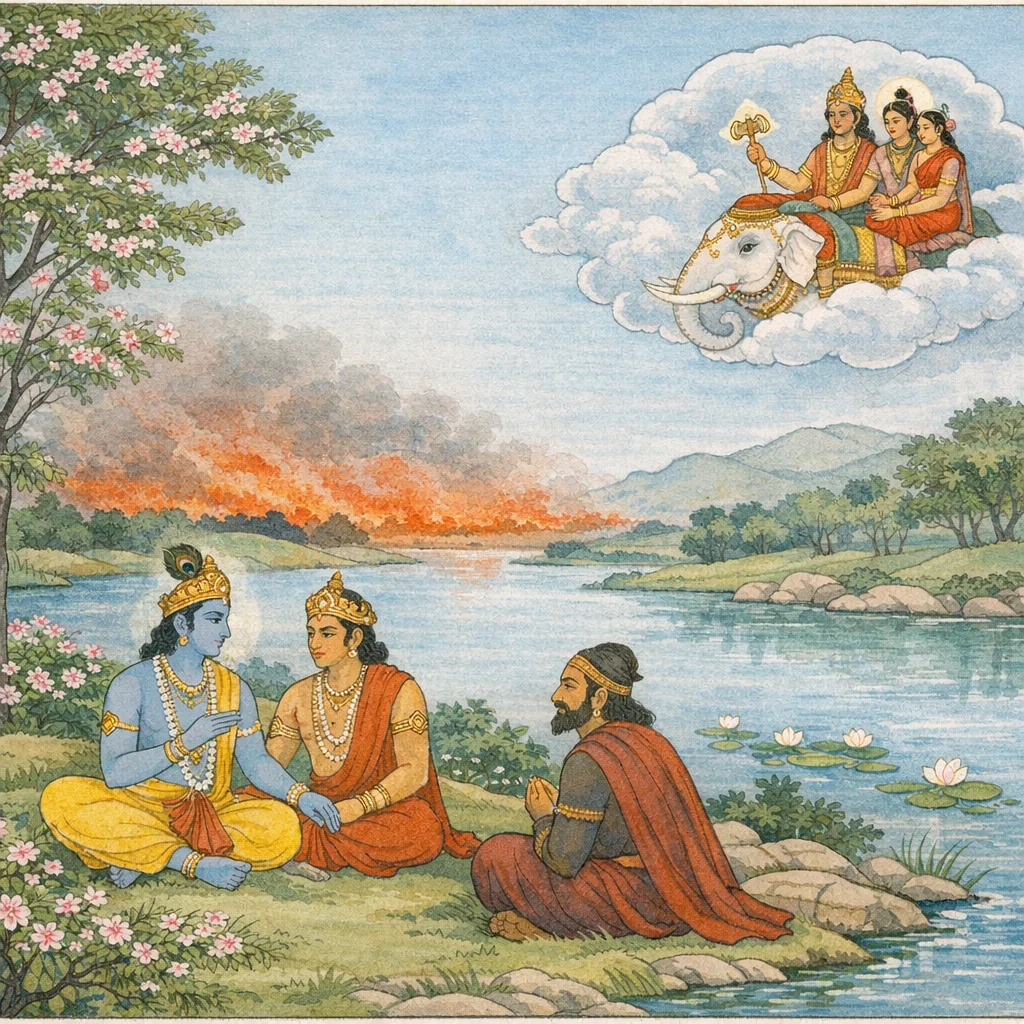
Chapter Arc: खाण्डव-दाह के बाद यमुना-तट पर अग्निदेव की आज्ञा से कृष्ण, अर्जुन और मय—तीनों एक साथ बैठते हैं; दाह की धधकती स्मृति के बीच वरदानों का प्रसंग उठता है। → अग्निदेव अपने वचन और कुन्ती की धर्मज्ञता का स्मरण कराते हुए अर्जुन-कृष्ण को आश्वस्त करते हैं कि उनके प्रति कोई संताप न रहे; फिर अर्जुन इन्द्र से ‘सर्वशः’ दिव्यास्त्रों की याचना करता है, पर इन्द्र समय-शर्त रखकर प्रतीक्षा कराते हैं। → इन्द्र का निर्णायक वचन—‘जब महादेव प्रसन्न होंगे, तब मैं तुम्हें पाण्डवास्त्राणि सर्वशः दूँगा’—अर्जुन के भविष्य-तप और शिव-प्रसाद को अस्त्र-प्राप्ति की अनिवार्य शर्त बना देता है। → अग्नि के जगत्-हितकारी दाह के बाद तीनों का नदीकूले उपवेशन, आश्वासन और वर-प्रदान की रूपरेखा तय होती है; अर्जुन के लिए अस्त्र-मार्ग स्पष्ट हो जाता है—पहले शिव-आराधना, फिर इन्द्र से पूर्ण दिव्यास्त्र। → इन्द्र द्वारा बताए गए ‘वह समय कब आएगा’ का संकेत अर्जुन को आगामी महान् तपस्या और महादेव-साक्षात्कार की ओर धकेलता है—अस्त्र-प्राप्ति अभी स्थगित है, मार्ग आगे खुलता है।
Shlokas
Verse 1
ऑपनआक्रात | अर: त्रयस्त्रिशर्दाधिकद्धिशततमो< ध्याय: इन्द्रदेवका श्रीकृष्ण और हर हर को वरदान तथा श्रीकृष्ण, अर्जुन और मयासुरका विदा लेकर एक साथ यमुनातटपर बैठना मन्दपाल उवाच युष्माकमपवर्गार्थ विज्ञप्तो ज्वलनो मया । अग्निना च तयथेत्येवं॑ प्रतिज्ञातं महात्मना,मन्दपाल बोले--मैंने अग्निदेवसे यह प्रार्थना की थी कि वे तुमलोगोंको दाहसे मुक्त कर दें। महात्मा अग्निने भी वैसा करनेकी प्रतिज्ञा कर ली थी
Mandapāla said: “For the sake of your deliverance from danger, I petitioned Jvalana (Agni). And the great-souled Agni, saying ‘So be it,’ gave his pledge accordingly.”
Verse 2
अग्नेर्वचनमाज्ञाय मातुर्धर्मज्ञता च व: | भवतां च परं वीर्य पूर्व नाहमिहागत:,अग्निके दिये हुए वचनको स्मरण करके, तुम्हारी माताकी धर्मज्ञताको जानकर और तुमलोगोंमें भी महान् शक्ति है, इस बातको समझकर ही मैं पहले यहाँ नहीं आया था
Having understood Agni’s instruction, recognizing your mother’s discernment of dharma, and realizing the extraordinary strength that is in you, I did not come here earlier.
Verse 3
न संतापो हि व: कार्य: पुत्रका हृदि मां प्रति । ऋषीन् वेद हुताशो<पि ब्रह्म तद् विदितं च व:,बच्चो! तुम्हें मेरे प्रति अपने हृदयमें संताप नहीं करना चाहिये। तुमलोग ऋषि हो, यह बात अग्निदेव भी जानते हैं; क्योंकि तुम्हें ब्रह्मतत््वका बोध हो चुका है
Mandapāla said: “My children, you should not harbor any grief in your hearts on my account. Even Hutāśa (Agni) knows that you are seers; for the knowledge of Brahman has already become known to you.”
Verse 4
वैशम्पायन उवाच एवमाश्चासितान् पुत्रान् भार्यामादाय स द्विज: । मन्दपालस्ततो देशादन्यं देशं जगाम ह,वैशम्पायनजी कहते हैं--जनमेजय! इस प्रकार आश्वस्त किये हुए अपने पुत्रों और पत्नी जरिताको साथ ले द्विज मन्दपाल उस देशसे दूसरे देशमें चले गये
Vaiśampāyana said: “O Janamejaya, thus having reassured his sons, the twice-born sage Mandapāla took his wife with him and departed from that region to another land.” The verse underscores a responsible withdrawal after restoring confidence and safety within the family, suggesting that right action includes consoling dependents before moving on.
Verse 5
भगवानपि तिम्मांशु: समिद्ध: खाण्डवं तत: । ददाह सह कृष्णाभ्यां जनयञ्जगतो हितम्,उधर प्रज्वलित हुए प्रचण्ड ज्वालाओंवाले भगवान् हुताशनने भी जगत्का हित करनेके लिये भगवान् श्रीकृष्ण और अर्जुनकी सहायतासे खाण्डववनको जला दिया
Vaiśampāyana said: Then the blessed Fire-god, blazing fiercely, burned the Khāṇḍava forest with the aid of Kṛṣṇa and Arjuna, bringing about what was deemed beneficial for the world. The episode frames a destructive act as one undertaken under divine agency and heroic cooperation, justified within the narrative as serving a larger cosmic and social good.
Verse 6
वसामेदोवहा: कुल्यास्तत्र पीत्वा च पावक: । जगाम परमां तृप्तिं दर्शयामास चार्जुनम्,वहाँ मज्जा और मेदकी कई नहरें बह चलीं और उन सबको पीकर अग्निदेव पूर्ण तृप्त हो गये। तत्पश्चात् उन्होंने अर्जुनको दर्शन दिया
Vaiśampāyana said: There, channels flowed carrying fat and marrow. Having drunk them all, Agni—the Purifier—became completely satisfied; thereafter he revealed himself to Arjuna. The episode underscores the grave, bodily cost of the conflagration even as it culminates in a divine encounter that will shape Arjuna’s future role and responsibilities.
Verse 7
ततोडन््तरिक्षाद् भगवानवतीर्य पुरंदर: । मरुद्गणैर्वृतः पार्थ केशवं चेदमब्रवीत्,उसी समय भगवान् इन्द्र मरुदगणों एवं अन्य देवताओंके साथ आकाशसे उतरे और अर्जुन तथा श्रीकृष्णसे इस प्रकार बोले--
Then the Blessed Purandara (Indra) descended from the mid-air, surrounded by the hosts of Maruts. Addressing Pārtha (Arjuna) and Keśava (Kṛṣṇa), he spoke these words—signaling divine oversight and counsel at a decisive moment, where righteous action is to be guided not merely by human impulse but by higher discernment and responsibility.
Verse 8
कृतं युवाभ्यां कर्मेदममरैरपि दुष्करम् | वरं वृणीतं तुष्टो<स्मि दुर्लभं पुरुषेष्विह,“आप दोनोंने यह ऐसा कार्य किया है, जो देवताओंके लिये भी दुष्कर है। मैं बहुत प्रसन्न हूँ। इस लोकमें मनुष्योंके लिये जो दुर्लभ हो ऐसा कोई वर आप दोनों माँग लें!
Vaiśaṃpāyana said: “You two have accomplished a deed that is difficult even for the gods. I am greatly pleased. Therefore, choose a boon—anything that is rare for human beings to obtain in this world.”
Verse 9
पार्थस्तु वरयामास शक्रादस्त्राणि सर्वश: । प्रदातुं तच्च शक्रस्तु काल॑ चक्रे महाद्युति:,तब अर्जुनने इन्द्रसे सब प्रकारके दिव्यास्त्र माँगे। महातेजस्वी इन्द्रने उन अस्त्रोंको देनेके लिये समय निश्चित कर दिया
Vaiśampāyana said: Arjuna, the son of Pṛthā, requested from Śakra (Indra) every kind of divine weapon. The radiant Indra, however, fixed an appropriate time for granting those weapons—implying that such powers are to be bestowed only when the recipient is ready and when the occasion is rightful.
Verse 10
यदा प्रसन्नो भगवान् महादेवो भविष्यति । तदा तुभ्य॑ प्रदास्यामि पाण्डवास्त्राणि सर्वश:,(वे बोले--) 'पाण्डुनन्दन! जब तुमपर भगवान् महादेव प्रसन्न होंगे, तब मैं तुम्हें सब प्रकारके अस्त्र-शस्त्र प्रदान करूँगा
Vaiśaṃpāyana said: “When the Blessed Lord Mahādeva becomes pleased with you, then I shall grant you, in every respect, the full range of the Pāṇḍavas’ weapons and missiles.” The statement frames martial power as something to be received only after divine approval, implying that strength must be grounded in devotion and worthiness rather than mere desire for victory.
Verse 11
“कुरुनन्दन! वह समय कब आनेवाला है, इसे भी मैं जानता हूँ। तुम्हारे महान् तपसे प्रसन्न होकर मैं तुम्हें सम्पूर्ण आग्नेय तथा सब प्रकारके वायव्य अस्त्र प्रदान करूँगा। धनंजय! उसी समय तुम मेरे सम्पूर्ण अस्त्रोंको ग्रहण करोगे”
Vaiśampāyana said: “O joy of the Kurus, I know even when that time will arrive. Pleased by your great austerity, I shall grant you the entire range of fiery weapons and every kind of wind-born weapon. O Dhanañjaya, at that very time you will receive all my weapons.”
Verse 12
आग्नेयानि च सर्वाणि वायव्यानि च सर्वश: । मदीयानि च सर्वाणि ग्रहीष्यसि धनंजय,“कुरुनन्दन! वह समय कब आनेवाला है, इसे भी मैं जानता हूँ। तुम्हारे महान् तपसे प्रसन्न होकर मैं तुम्हें सम्पूर्ण आग्नेय तथा सब प्रकारके वायव्य अस्त्र प्रदान करूँगा। धनंजय! उसी समय तुम मेरे सम्पूर्ण अस्त्रोंको ग्रहण करोगे”
Vaiśampāyana said: “I know when that time will come. Pleased by your great austerity, I shall bestow upon you all the Agneya weapons and every kind of Vāyavya weapon. O Dhanaṃjaya, at that very time you will receive all the weapons that are mine.”
Verse 13
अहमेव च तं काल वेत्स्यामि कुरुनन्दन । तपसा महता चापि दास्यामि भवतो>प्यहम्,वासुदेवो5पि जग्राह प्रीति पार्थेन शाश्वतीम् । ददौ सुरपतिश्वैव वरं कृष्णाय धीमते भगवान् श्रीकृष्णने भी यह वर माँगा कि अर्जुनके साथ मेरा प्रेम निरन्तर बढ़ता रहे। इन्द्रने परम बुद्धिमान् श्रीकृष्णको वह वर दे दिया
Vaiśampāyana said: “O delight of the Kurus, I myself shall come to know that destined time; and by great austerity I shall also bestow it—even upon you. Vāsudeva too sought an everlasting bond of affection with Pārtha (Arjuna). And the lord of the gods, Indra, granted that boon to the wise Kṛṣṇa.” The passage highlights a moral ideal in which divine power is not sought for domination but for steadfast friendship and loyalty, presenting enduring affection as a worthy object of prayer and divine favor.
Verse 14
एवं दत्त्वा वर ताभ्यां सह देवैर्मरुत्पति: । हुताशनमनुज्ञाप्य जगाम त्रिदिवं प्रभु:,इस प्रकार दोनोंको वर देकर अग्निदेवकी आज्ञा ले देवताओंसहित देवराज भगवान् इन्द्र स्वर्गलोकको चले गये
Vaiśampāyana said: Having thus granted boons to the two of them, the lord of the Maruts (Indra), accompanied by the gods, took leave of Hutāśana (Agni). With Agni’s permission obtained, the sovereign departed for Tridiva—heaven. The passage underscores a courtly ethic: even the mighty act with propriety, seeking consent and concluding affairs with due leave-taking after bestowing favors.
Verse 15
पावकश्च तदा दावं दग्ध्वा समृगपक्षिणम् । अहानि पज्च चैकं च विरराम सुतर्पित:,अग्निदेव भी मृगों और पक्षियोंसहित सम्पूर्ण वनको जलाकर पूर्ण तृप्त हो छः दिनोंतक विश्राम करते रहे
Vaiśampāyana said: Then Pāvaka (Agni), having burned the forest-conflagration area together with the beasts and birds within it, became fully satiated and ceased (his burning), resting for six days. The episode underscores the fearful, indiscriminate force of fire when driven by divine purpose, and hints at the ethical tension between cosmic necessity and the suffering of innocent creatures caught in it.
Verse 16
जग्ध्वा मांसानि पीत्वा च मेदांसि रुधिराणि च । युक्त: परमया प्रीत्या तावुवाचाच्युतार्जुनी,जीव-जन्तुओंके मांस खाकर उनके मेद तथा रक्त पीकर अत्यन्त प्रसन्न हो अग्निने श्रीकृष्ण और अर्जुनसे कहा--
Having consumed the flesh of living creatures and drunk their fat and blood, Agni—filled with intense satisfaction—addressed the pair, Acyuta (Kṛṣṇa) and Arjuna. The narration underscores the fierce, consuming nature of sacrificial fire: once fully ‘fed,’ it becomes pleased and capable of granting boons, even though the imagery is ethically stark and deliberately unsettling.
Verse 17
युवाभ्यां पुरुषाग्रयाभ्यां तर्पितो5स्मि यथासुखम् । अनुजानामि वां वीरौ चरतं यत्र वाज्छितम्,“वीरो! आप दोनों पुरुषरत्नोंने मुझे आनन्दपूर्वक तृप्त कर दिया। अब मैं आपको अनुमति देता हूँ, जहाँ आपकी इच्छा हो, जाइये”
Vaiśampāyana said: “You two, foremost among men, have satisfied me fully and with gladness. Therefore, O heroes, I grant you leave—go wherever you desire.”
Verse 18
एवं तौ समनुज्ञातौ पावकेन महात्मना । अर्जुनो वासुदेवश्न॒ दानवश्न मयस्तथा,भरतश्रेष्ठ! महात्मा अग्निदेवके इस प्रकार आज्ञा देनेपर अर्जुन, श्रीकृष्ण तथा मयासुर सबने उनकी परिक्रमा की। फिर तीनों ही यमुनानदीके रमणीय तटपर जाकर एक साथ बैठे
Vaiśampāyana said: Thus, when those two were duly granted permission by the great-souled Fire-god, Arjuna and Vāsudeva (Kṛṣṇa), and likewise the Dānava Maya—O best of the Bharatas—circumambulated him in reverence. Then all three went to the delightful bank of the river Yamunā and sat together. Ethically, the scene underscores disciplined conduct even amid extraordinary power: permission is sought, reverence is shown, and action proceeds in an orderly, respectful way.
Verse 19
परिक्रम्य ततः सर्वे त्रयोडपि भरतर्षभ । रमणीये नदीकूले सहिता: समुपाविशन्,भरतश्रेष्ठ! महात्मा अग्निदेवके इस प्रकार आज्ञा देनेपर अर्जुन, श्रीकृष्ण तथा मयासुर सबने उनकी परिक्रमा की। फिर तीनों ही यमुनानदीके रमणीय तटपर जाकर एक साथ बैठे
Vaiśampāyana said: “Then, O bull among the Bharatas, all three of them, having respectfully circumambulated (Agni), went together to a delightful riverbank and sat down there in companionship.” The act of circumambulation signals reverence and gratitude toward divine agency, and their sitting together marks a pause of concord after receiving instruction.
Verse 232
इस प्रकार श्रीमहाभारत आदिपव॑के अन्तर्गत मयदश्शनपर्वमें शा्ड्ुकोपाख्यानविषयक दो सौ बत्तीसवाँ अध्याय पूरा हुआ
Thus ends the two-hundred-and-thirty-second chapter of the Śāṇḍilya episode within the Mayadarśana section of the Ādi Parva of the sacred Mahābhārata. This closing colophon signals the completion of a self-contained narrative unit, inviting the listener to retain its ethical import as the larger epic proceeds.
Verse 233
इति श्रीमहाभारते शतसाहस्रयां संहितायां वैयासिक्यामादिपर्वणि मयदर्शनपर्वणि वरप्रदाने त्रयस्त्रिंशदधिकद्धिशततमो< ध्याय:,इस प्रकार श्रीमहाभारतमें व्यासनिर्मित एक लाख श*लोकोंकी संहिताके अंतर्गत आदिपवके मयदर्शनपर्वमें इन्द्रवरदानविषयक दो सौ तैतीसवाँ अध्याय पूरा हुआ
Thus, in the Śrī Mahābhārata—the Vyāsa-composed compendium of one hundred thousand verses—within the Ādi Parva, in the section called “Mayadarśana,” the chapter concerning the granting of a boon comes to an end here: the 233rd chapter. The colophon marks the formal closure of the episode, emphasizing the text’s careful organization and the ethical weight of boons as instruments that can shape destiny when sought and bestowed with discernment.