Adhyaya 228
Chapter Arc: जनमेजय का विस्मय—खाण्डव-दाह जैसे सर्वभक्षी अग्निकाण्ड में जहाँ अश्वसेन नाग और मय दानव के बचने का कारण बताया गया, वहीं ‘शार्कुक’ पक्षियों का सकुशल बच जाना कैसे हुआ? → वैशम्पायन शार्कुकों के ‘अग्निसम्मर्द’ में अविनाश का रहस्य खोलते हैं: मन्दपाल मुनि की तपस्या, यज्ञ-व्यवस्था में अग्नि की अनिवार्यता, और जरिता की अपत्य-स्नेहजन्य चिंता—इन सबके बीच यह प्रश्न तीखा होता जाता है कि अग्नि, जो सबको भस्म कर देता है, किन्हें और क्यों छोड़ देता है। → अग्नि के सर्वदेवात्मक स्वरूप का उद्घोष—‘त्वयि हव्यं च कव्यं च… त्वमेव दहनो देव…’—और उसी के साथ यह निर्णायक बोध कि अग्नि केवल विनाशक नहीं, यज्ञ-धर्म का आधार और लोक-धारण का स्तम्भ है; इसलिए उसके दाह और अदाह दोनों के पीछे धर्म-नियम और वर-प्रभाव काम करते हैं। → शार्कुकों के न जलने का कारण ‘यथाभूत’ रूप में स्थापित होता है—तप, वर, और धर्म-व्यवस्था के संरक्षण से वे अग्निकाण्ड में भी सुरक्षित रहे; साथ ही जरिता की मातृ-चिन्ता और संतति-रक्षा की कथा-धारा को आगे बढ़ाने का आधार बनता है। → जरिता की अपत्य-स्नेहयुक्त चिंता अब किस उपाय से संतानों की रक्षा/पुनर्मिलन को सुनिश्चित करेगी, और मन्दपाल की भूमिका किस दिशा में मुड़ेगी?
Shlokas
Verse 1
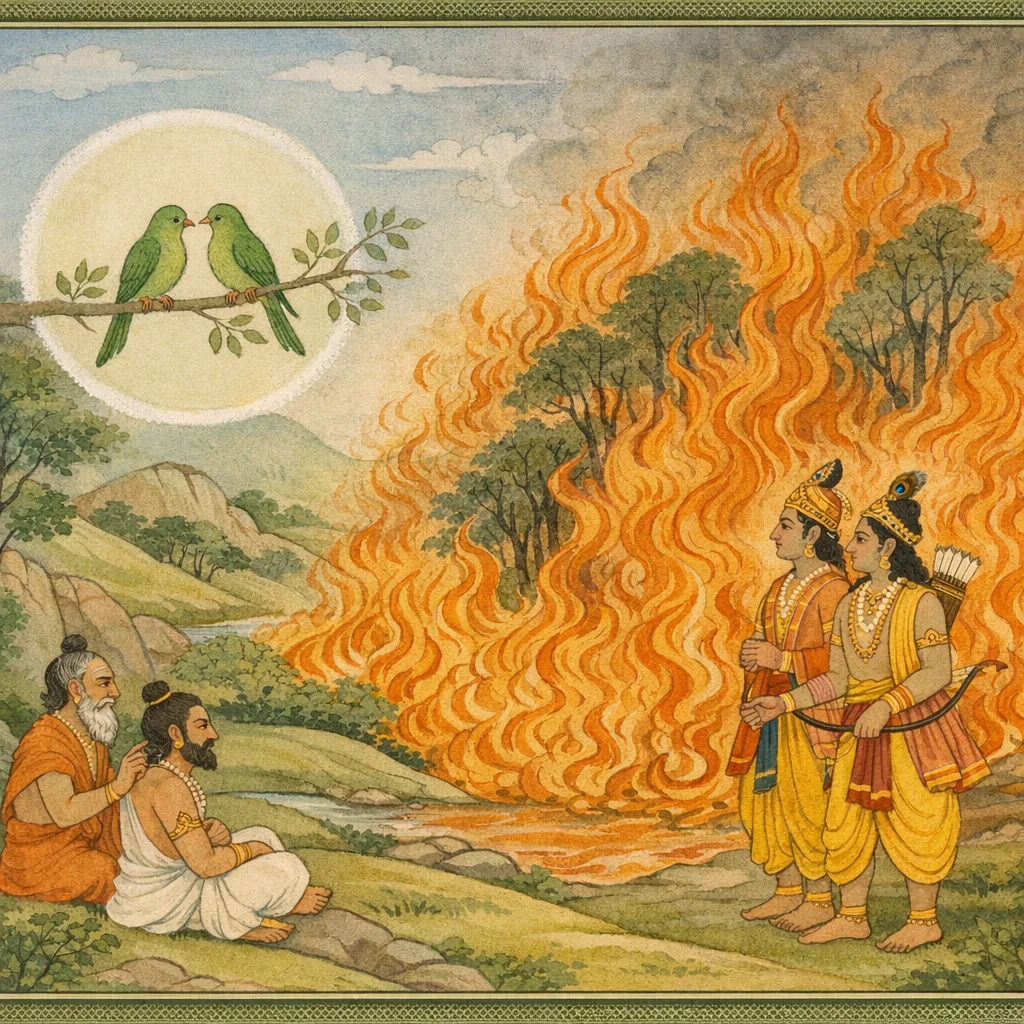
भ्च्प्स्ज्ल््स््ि ह्य #5््ाम्प्र् अष्टाविशर्त्याधिकद्विशततमो< ध्याय: शार्कुकोपाख्यान--मन्दपाल मुनिके द्वारा जरिता- शार्डिकासे पुत्रोंकी उत्पत्ति और उन्हें बचानेके लिये मुनिका अग्निदेवकी स्तुति करना जनमेजय उवाच किमर्थ शार्कुकानग्निर्न ददाह तथागते । तस्मिन् वने दहामाने ब्रद्मन्नेतत् प्रचक्ष्य मे,जनमेजयने पूछा--ब्रह्मन्! इस प्रकार सारे वनके जलाये जानेपर भी अग्निदेवने उन चारों शार्ड्गकोंको क्यों दग्ध नहीं किया? यह मुझे बताइये
Janamejaya said: “For what reason did Agni not burn the Śārkuka birds when he came there? When that forest was being consumed by fire, O Brahman, explain this to me.”
Verse 2
अदाहे हाश्वसेनस्य दानवस्य मयस्य च । कारणं कीर्तित ब्रह्म॒ज्छार्इुकाणां न कीर्तितम्,विप्रवर! आपने अश्वसेन नाग तथा मयदानवके न जलनेका कारण तो बताया है; परंतु शाड्ड्गकोंके दग्ध न होनेका कारण नहीं कहा है
Janamejaya said: “O Brahmin, you have explained why Aśvasena the Nāga and Maya the Dānava were not consumed in the burning; but you have not stated the reason why the Śārṅgakas were not burned.”
Verse 3
तदेतददभुतं ब्रह्मज्छा्डकाणामनामयम् | कीर्तयस्वाग्निसम्मर्दे कथं ते न विनाशिता:,ब्रह्म! उस भयानक अग्निकाण्डमें उन शाड्र्गकोंका सकुशल बच जाना, यह बड़े आश्चर्यकी बात है। कृपया बताइये, उनका नाश कैसे नहीं हुआ?
Janamejaya said: “O Brahman, this is truly wondrous—that the Śāṇḍakas remained unharmed. Please recount how, amid the crushing turmoil of that great fire, they were not destroyed.”
Verse 4
वैशम्पायन उवाच यदर्थ शार्कईकानग्निर्न ददाह तथागते । तत् ते सर्व प्रवक्ष्यामि यथाभूतमरिंदम,वैशम्पायनजी कहते हैं--शत्रुदमन जनमेजय! वैसे भयंकर अग्निकाण्डमें भी अग्निदेवने जिस कारणसे शाडूर्गकोंको दग्ध नहीं किया और जिस प्रकार वह घटना घटित हुई, वह सब मैं तुम्हें बताता हूँ, सुनो
Vaiśampāyana said: “O subduer of foes, I shall tell you in full the true reason why, even when that dreadful conflagration had come to pass, Agni did not burn the Śārkāikas, and how exactly that event unfolded. Listen.”
Verse 5
धर्मज्ञानां मुख्यतमस्तपस्वी संशितव्रत: । आसीन्महर्षि: श्रुत॒वान् मन्दपाल इति श्रुत:,मन्दपाल नामसे विख्यात एक विद्दान् महर्षि थे। वे धर्मज्ञोंमें श्रेष्ठ और कठोर व्रतका पालन करनेवाले तपस्वी थे
Vaiśampāyana said: “There was a great seer named Mandapāla, renowned for his learning. Among those who knew dharma he was foremost, an austere ascetic, steadfast in well-disciplined vows.”
Verse 6
स मार्ममाश्रितो राजन्नृषीणामूर्ध्वरेतसाम् । स्वाध्यायवान् धर्मरतस्तपस्वी विजितेन्द्रिय:,राजन! वे ऊ्ध्वरेता मुनियोंके मार्ग (ब्रह्मचर्य)-का आश्रय लेकर सदा वेदोंके स्वाध्यायमें संलग्न और धर्मपालनमें तत्पर रहते थे। उन्होंने सम्पूर्ण इन्द्रियोंको वशमें कर लिया था और वे सदा तपस्यामें ही लगे रहते थे
Vaiśampāyana said: “O King, he had taken refuge in the path followed by the sages of steadfast celibacy. Constantly devoted to Vedic self-study and intent on the practice of dharma, he was an ascetic who had conquered his senses, ever engaged in austerity.”
Verse 7
स गत्वा तपस: पार देहमुत्सूज्य भारत । जगाम पितृलोकाय न लेभे तत्र तत्फलम्,भारत! वे अपनी तपस्याको पूरी करके शरीरका त्याग करनेपर पितृलोकमें गये; किंतु वहाँ उन्हें अपने तप एवं सत्कर्मोंका फल नहीं मिला
Vaiśampāyana said: Having reached the culmination of his austerities, O Bhārata, he cast off his body and went to the world of the Pitṛs; yet there he did not obtain the fruit of that very tapas and of his meritorious deeds—implying that spiritual effort bears results only when aligned with right intention and dharma, not merely through exertion alone.
Verse 8
स लोकानफलान् दृष्टवा तपसा निर्जितानपि । पप्रच्छ धर्मराजस्य समीपस्थान् दिवौकस:,उन्होंने तपस्याद्वारा वशमें किये हुए लोकोंको भी निष्फल देखकर धर्मराजके पास बैठे हुए देवताओंसे पूछा
Seeing that even the worlds won through austerity appeared fruitless, he questioned the gods who were seated near Dharmarāja—seeking to understand why such hard-earned attainments did not yield true fulfillment. The verse underscores an ethical concern central to the epic: merit gained by tapas may still be empty if it does not culminate in right understanding and dharmic purpose.
Verse 9
मन्दपाल उवाच किमर्थमावृता लोका ममैते तपसार्जिता: । कि मया न कृतं तत्र यस्यैतत् कर्मण: फलम्,मन्दपाल बोले--देवताओ! मेरी तपस्याद्वारा प्राप्त हुए ये लोक बंद क्यों हैं? (उपभोगके साधनोंसे शून्य क्यों हैं?) मैंने वहाँ कौन-सा सत्कर्म नहीं किया है, जिसका फल मुझे इस रूपमें मिला है
Verse 10
तत्राहं तत् करिष्यामि यदर्थमिदमावृतम् । फलमेतस्य तपस: कथयध्वं दिवौकस:,जिसके लिये इस तपस्याका फल ढका हुआ है, मैं उस लोकमें जाकर वह कर्म करूँगा। आपलोग मुझसे उसको बताइये
“Then I shall do that very deed for which this reward has been kept concealed. Tell me, O dwellers of heaven, what is the fruit of this austerity—so that I may go to that realm and accomplish what must be done.”
Verse 11
देवा ऊचु: ऋणिनो मानवा ब्रह्मन् जायन्ते येन तच्छूणु । क्रियाभिन्रह्मचर्येण प्रजया च न संशय:,देवताओंने कहा--ब्रह्मन! मनुष्य जिस ऋणसे ऋणी होकर जन्म लेते हैं, उसे सुनिये। यज्ञकर्म, ब्रह्मचर्यपालन और प्रजाकी उत्पत्ति--इन तीनोंके लिये सभी मनुष्योंपर ऋण रहता है, इसमें संशय नहीं है। यज्ञ, तपस्या और वेदाध्ययनके द्वारा वह सारा ऋण दूर किया जाता है। आप तपस्वी और यज्ञकर्ता तो हैं ही, आपके कोई संतान नहीं है
The gods said: “O Brahmin, hear the reason for which human beings are born as debtors. There is no doubt that all people bear obligations—through sacrificial duties (ritual action), through the discipline of brahmacarya, and through the begetting of offspring. By sacrifice, austerity, and Vedic study these debts are discharged. You are indeed an ascetic and a performer of sacrifices, but you have no children.”
Verse 12
तदपाक्रियते सर्व यज्ञेन तपसा श्रुतैः । तपस्वी यज्ञकृच्चासि न च ते विद्यते प्रजा,देवताओंने कहा--ब्रह्मन! मनुष्य जिस ऋणसे ऋणी होकर जन्म लेते हैं, उसे सुनिये। यज्ञकर्म, ब्रह्मचर्यपालन और प्रजाकी उत्पत्ति--इन तीनोंके लिये सभी मनुष्योंपर ऋण रहता है, इसमें संशय नहीं है। यज्ञ, तपस्या और वेदाध्ययनके द्वारा वह सारा ऋण दूर किया जाता है। आप तपस्वी और यज्ञकर्ता तो हैं ही, आपके कोई संतान नहीं है
All of that (the accrued obligation) is removed through sacrifice, austerity, and sacred learning. You are indeed an ascetic and a performer of sacrifices; yet you have no offspring.
Verse 13
त इमे प्रसवस्यार्थे तव लोका: समावृता: । प्रजायस्व ततो लोकानुपभोक्ष्यसि पुष्कलान्,अतः संतानके लिये ही आपके ये लोक ढके हुए हैं। इसलिये पहले संतान उत्पन्न कीजिये, फिर अपने प्रचुर पुण्यलोकोंका फल भोगियेगा
Mandapāla said: “These worlds of yours are, as it were, veiled and held back for the sake of childbirth. Therefore, first beget offspring; then you will fully enjoy the abundant fruits of your meritorious worlds.”
Verse 14
पुंनाम्नो नरकात् पुत्रस्त्रायते पितरं श्रुति: । तस्मादपत्यसंताने यतस्व ब्रह्मसत्तम,श्रुतिका कथन है कि पुत्र 'पुत' नामक नरकसे पिताका उद्धार करता है। अतः विप्रवर! आप अपनी वंशपरम्पराको अविच्छिन्न बनानेका प्रयत्न कीजिये
Mandapāla said: “The śruti declares that a son delivers his father from the hell called ‘Puṁ-nāman’. Therefore, O best of Brahmins, strive to ensure the continuity of your lineage through offspring.”
Verse 15
वैशम्पायन उवाच तच्छुत्वा मन्दपालस्तु वचस्तेषां दिवौकसाम् । क्व नु शीघ्रमपत्यं स्याद् बहुलं चेत्यचिन्तयत्,वैशम्पायनजी कहते हैं--जनमेजय! देवताओंका वह वचन सुनकर मन्दपालने बहुत सोचा-विचारा कि कहाँ जानेसे मुझे शीघ्र संतान होगी
Vaiśampāyana said: Hearing those words spoken by the gods, Mandapāla reflected deeply—wondering where he might quickly obtain abundant offspring. The moment underscores how even a sage, stirred by divine counsel, turns to deliberate on the means and place by which a desired duty or goal—here, progeny—may be fulfilled without delay.
Verse 16
स चिन्तयन्नभ्यगच्छत् सुबहुप्रसवान् खगान् । शार््धिकां शार््रिको भूत्वा जरितां समुपेयिवान्,यह सोचते हुए वे अधिक बच्चे देनेवाले पक्षियोंके यहाँ गये और शार्ज्रिक होकर जरिता नामवाली शार्डििकासे सम्बन्ध स्थापित किया
Reflecting on his purpose, he went to the birds known for producing many offspring. Assuming the form of a śārdhika (a male of that bird-kind), he approached Jaritā, the śārdhikā (female), and entered into union with her—an act driven by the aim of begetting progeny and continuing a lineage, while also raising questions about the means adopted to fulfill a desired end.
Verse 17
तस्यां पुत्रानजनयच्चतुरो ब्रह्म॒वादिन: । तानपास्य स तत्रैव जगाम लपितां प्रति
Vaiśampāyana said: In her he begot four sons, all devoted to sacred learning and the life of Brahmanical discipline. Having left those sons behind there, he himself went on from that very place toward Lapitā.
Verse 18
तस्मिन् गते महाभागे लपितां प्रति भारत
When that illustrious person had departed, O Bhārata, (the events then turned) toward Lapitā, as the narration proceeds to what concerned her.
Verse 19
तेन त्यक्तानसंत्याज्यानृषीनण्डगतान् वने,अंडेमें स्थित उन मुनियोंको यद्यपि मन्दपालने त्याग दिया था, तो भी वे त्यागने योग्य नहीं थे। अतः पुत्र-शोकसे पीड़ित हुई जरिताने खाण्डववनमें अपने पुत्रोंको नहीं छोड़ा। वह स्नेहसे विह्नल होकर अपनी तवृत्तिद्वारा उन नवजात शिशुओंका भरण-पोषण करती रही
Those sages, though abandoned by Mandapāla while they were still within the eggs in the forest, were not truly fit to be abandoned. Therefore Jaritā, tormented by grief for her children, did not leave her sons in the Khāṇḍava forest. Overcome with maternal affection, she continued to sustain and raise those newborn chicks by her own means.
Verse 20
न जहीौ पुत्रशोकार्ता जरिता खाण्डवे सुतान् । बभार चैतान् संजातान् स्ववृत्त्या स््नेहविप्लवा,अंडेमें स्थित उन मुनियोंको यद्यपि मन्दपालने त्याग दिया था, तो भी वे त्यागने योग्य नहीं थे। अतः पुत्र-शोकसे पीड़ित हुई जरिताने खाण्डववनमें अपने पुत्रोंको नहीं छोड़ा। वह स्नेहसे विह्नल होकर अपनी तवृत्तिद्वारा उन नवजात शिशुओंका भरण-पोषण करती रही
Vaiśampāyana said: Overwhelmed by grief for her children, Jaritā did not abandon her sons in the Khāṇḍava forest. Swayed and shaken by maternal affection, she sustained and reared those newborns by her own means, refusing to treat them as cast away.
Verse 21
ततोअग्निं खाण्डवं दग्धुमायान्तं दृष्टवानृषि: । मन्दपाल शक्षरंस्तस्मिन् वने लपितया सह,उधर वनमें लपिताके साथ विचरते हुए मन्दपाल मुनिने अग्निदेवको खाण्डववनका दाह करनेके लिये आते देखा
Then the sage Mandapāla, roaming in that forest together with Lapitā, saw Agni approaching with the intent to burn the Khāṇḍava forest. The scene sets a moral tension between a cosmic act of purification and destruction and the immediate duty to protect life that dwells within the forest.
Verse 22
त॑ संकल्पं विदित्वाग्नेर्ज्ञात्वा पुत्रांक्ष बालकान् । सोभितुष्टाव विप्रर्षिब्राह्माणो जातवेदसम्
Vaiśampāyana said: Having understood Agni’s intention, and recognizing the children as his own sons, the brahmin—himself a sage among priests—was filled with satisfaction and offered praise to Jātavedas (Agni). The passage underscores discernment and reverent gratitude: once the divine purpose is grasped and the welfare of the innocent is secured, the proper response is thanksgiving rather than suspicion or fear.
Verse 23
मन्दपाल उवाच त्वमग्ने सर्वलोकानां मुखं त्वमसि हव्यवाट्,मन्दपालने कहा--अग्निदेव! आप सब लोकोंके मुख हैं, आप ही देवताओंको हविष्य पहुँचाते हैं
Mandapāla said: “O Agni, you are the mouth of all the worlds; you are the bearer of oblations, the one through whom offerings reach the gods.” In this appeal, Mandapāla acknowledges Fire as the sacred mediator of sacrifice and cosmic order, invoking Agni’s ethical role as the channel by which human duty (yajña) becomes divine nourishment and protection.
Verse 24
त्वमन्त: सर्वभूतानां गूढश्वरसि पावक । त्वामेकमाहु: कवयस्त्वामाहुस्त्रिविध पुन:,पावक! आप समस्त प्राणियोंके अन्तस्तलमें गूढ़-रूपसे विचरते हैं। विद्वान् पुरुष आपको एक (द्वितीय ब्रह्मरूप) बताते हैं। फिर दिव्य, भौम और जठरानलरूपसे आपके त्रिविध स्वरूपका प्रतिपादन करते हैं
Mandapāla said: “O Pāvaka (Fire), you move hidden within the innermost being of all creatures. The sages declare you to be one—of a single, ultimate essence—yet again they describe you as threefold: as the heavenly fire, the earthly fire, and the digestive fire within living bodies.”
Verse 25
त्वामष्टधा कल्पयित्वा यज्ञवाहमकल्पयन् । त्वया विश्वमिदं सृष्टं वदन्ति परमर्षय:,आपको ही पृथ्वी, जल, तेज, वायु, आकाश, सूर्य, चन्द्रमा और यजमान--इन आठ मूर्तियोंमें विभक्त करके ज्ञानी पुरुषोंने आपको यज्ञवाहन बनाया है। महर्षि कहते हैं कि इस सम्पूर्ण विश्वकी सृष्टि आपने ही की है
Having conceived you in eight forms, the wise have established you as the bearer and vehicle of sacrifice. The highest seers declare that it is by you that this entire universe has been brought forth.
Verse 26
त्वदृते हि जगत् कृत्स्नं सद्यो नश्येद् हुताशन । तुभ्यं कृत्वा नमो विप्रा: स्वकर्मविजितां गतिम्
Māṇḍapāla said: “Without you, O Hutāśana (Fire), this entire world would at once perish. Therefore the brahmins, having bowed to you, attain the blessed state won through the merit of their own rites and duties.”
Verse 27
त्वामग्ने जलदानाहुः खे विषक्तान् सविद्युत:,अग्ने! आकाशगमें विद्युतकें साथ मेघोंकी जो घटा घिर आती है, उसे भी आपका ही स्वरूप कहते हैं
Māṇḍapāla said: “O Agni, they call you the rain-bearing clouds—those that hang in the sky, flashing with lightning. Even that mass of clouds that gathers and rolls in through the heavens together with lightning is spoken of as none other than your very form.”
Verse 28
दहन्ति सर्वभूतानि त्वत्तो निष्क्रम्य हेतय: । जातवेदस्त्वयैवेदं विश्व सृष्ट महाद्युते,प्रलयकालमें आपसे ही भयंकर ज्वालाएँ निकलकर सम्पूर्ण प्राणियोंको भस्म कर डालती हैं। महान् तेजस्वी जातवेदा! आपसे ही यह सम्पूर्ण विश्व उत्पन्न हुआ है
Mandapāla said: “From you issue forth the blazing missiles (flames) that burn all living beings. O Jātavedas, O great-splendoured one—by you alone this entire universe has been brought into being.”
Verse 29
तवैव कर्म विहितं भूतं सर्व चराचरम् । त्वया55पो विहिता: पूर्व त्वयि सर्वमिदं जगत्,तथा आपके ही द्वारा कर्मोंका विधान किया गया है और सम्पूर्ण चराचर प्राणियोंकी उत्पत्ति भी आपसे ही हुई है। आपसे ही पूर्वकालमें जलकी सृष्टि हुई है और आपमें ही यह सम्पूर्ण जगत् प्रतिष्ठित है
Mandapāla declares to the addressed Lord that the ordering of action and destiny belongs to Him alone: from Him arises the whole moving and unmoving creation. It was He who first brought forth the waters in primordial time, and in Him the entire universe stands established. The verse frames creation as morally governed—karma is not random but instituted by a supreme principle in which all beings ultimately rest.
Verse 30
त्वयि हव्यं च कव्यं च यथावत् सम्प्रतिष्ठितम् । त्वमेव दहनो देव त्वं धाता त्वं बृहस्पति:
Mandapāla said: “In you, in their proper manner, are firmly established both the offerings meant for the gods and the rites meant for the ancestors. You alone are the divine Fire; you are the Sustainer (Dhātṛ), and you are Bṛhaspati. In honoring you, all sacred obligations are fulfilled.”
Verse 31
वैशम्पायन उवाच एवं स्तुतस्तदा तेन मन्दपालेन पावक:,वैशम्पायनजी कहते हैं--राजन्! मन्दपाल मुनिके इस प्रकार स्तुति करनेपर अग्निदेव उन अमित-तेजस्वी महर्षिपर बहुत प्रसन्न हुए और प्रसन्नचित्त होकर उनसे बोले --'मैं आपके किस अभीष्ट कार्यकी सिद्धि करूँ?”
Vaiśampāyana said: Thus praised at that time by the sage Mandapāla, Pāvaka (Agni), pleased and radiant with great splendor, addressed the seer with a gracious offer: “What desired purpose of yours shall I accomplish?” The episode frames devotion and right speech as forces that can move even divine powers toward benevolent action, provided the request aligns with righteous intent.
Verse 32
तुतोष तस्य नृपते मुनेरमिततेजस: । उवाच चैन प्रीतात्मा किमिष्टं करवाणि ते,वैशम्पायनजी कहते हैं--राजन्! मन्दपाल मुनिके इस प्रकार स्तुति करनेपर अग्निदेव उन अमित-तेजस्वी महर्षिपर बहुत प्रसन्न हुए और प्रसन्नचित्त होकर उनसे बोले --'मैं आपके किस अभीष्ट कार्यकी सिद्धि करूँ?”
Vaiśampāyana said: “O King, the Fire-god was greatly pleased with that sage of immeasurable splendor. With a delighted heart he addressed him: ‘What desired purpose of yours shall I accomplish?’”
Verse 33
तमब्रवीन्मन्दपाल: प्राउ्जलिहव्यवाहनम् । प्रदहन् खाण्डवं दावं मम पुत्रान् विसर्जय,तब मन्दपालने हाथ जोड़कर हव्यवाहन अग्निसे कहा--“भगवन्! आप खाण्डववनका दाह करते समय मेरे पुत्रोंको बचा दें”
Vaiśampāyana said: Then Mandapāla, with hands joined in reverence, addressed Havyavāhana (Agni): “As you burn the Khāṇḍava forest-fire, spare and release my sons.” The plea frames a moral tension between a cosmic act of destruction and a father’s duty to protect his offspring, expressed through humble supplication rather than force.
Verse 34
तथेति तत् प्रतिश्रुत्य भगवान् हव्यवाहन: । खाण्डवे तेन कालेन प्रजज्वाल दिधक्षया,“बहुत अच्छा” कहकर भगवान् हव्यवाहनने वैसा करनेकी प्रतिज्ञा की और उस समय खाण्डववनको जलानेके लिये वे प्रज्वलित हो उठे
Vaiśampāyana said: Saying, “So be it,” the divine Fire (Agni), having given his assent and promise, at that very time blazed forth in the Khāṇḍava forest with the intent to burn it—signaling the irreversible commencement of the conflagration that will drive the episode’s moral and cosmic consequences.
Verse 176
बालान् स तानण्डगतान् सह मात्रा मुनिर्वने । जरिताके गर्भसे चार ब्रह्मवादी पुत्रोंको मुनिने जन्म दिया। अंडेमें पड़े हुए उन बच्चोंको मातासहित वहीं छोड़कर वे मुनि वनमें लपिताके पास चले गये
Vaiśampāyana said: The sage, while in the forest, begot four sons—brahma-vādins (devoted to sacred learning)—in the womb of Jaritā. Those infants remained enclosed in eggs; leaving the egg-bound children there together with their mother, the sage went on through the forest to Jaritā’s dwelling. The episode underscores the tension between ascetic detachment and the ethical responsibility owed to one’s dependents, setting the stage for later protection and recognition of the vulnerable.
Verse 183
अपत्यस्नेहसंयुक्ता जरिता बह्गचिन्तयत् । भारत! महाभाग मन्दपाल मुनिके लपिताके पास चले जानेपर संतानके प्रति स्नेहयुक्त जरिताको बड़ी चिन्ता हुई
Vaiśampāyana said: Jaritā, bound by deep affection for her offspring, became greatly anxious—her mind turning again and again to the welfare of her children after the departure of the sage Māṇḍapāla.
Verse 223
पुत्रान् प्रति वदन् भीतो लोकपालं महौजसम् । अग्निदेवके संकल्पको जानकर और अपने पुत्रोंकी बाल्यावस्थाका विचार करके ब्रह्मर्षि मन्दपाल भयभीत होकर महातेजस्वी लोकपाल अग्निसे अपने पुत्रोंकी रक्षाके लिये निवेदन करते हुए (ईश्वरकी भाँति) उनकी स्तुति करने लगे
Verse 227
इस प्रकार श्रीमह्याभारत आदिपव॑के अन्तर्गत मयदर्शनपर्वमें मयदानवकी रक्षाविषयक दो सौ सत्ताईसवाँ अध्याय पूरा हुआ
Thus ends the two-hundred-and-twenty-seventh chapter of the Mayadarśana section within the Ādi Parva of the revered Mahābhārata, dealing with the protection (and sparing) of the Dānava Maya. The closing note underscores a moral emphasis: even amid destruction and conflict, restraint and the safeguarding of one who seeks refuge are upheld as significant virtues.
Verse 228
इति श्रीमहाभारते आदिपर्वणि मयदर्शनपर्वणि शार्ज़ुकोपाख्यानेडष्टाविंशत्यधिकद्धिशततमो< ध्याय:,इस प्रकार श्रीमहाभारत आदिपव॑के अन्तर्गत मयदर्शनपर्वमें शा्ड्ुकोपाख्यानविषयक दो सौ अद्वाईसवाँ अध्याय पूरा हुआ
Vaiśampāyana said: Thus, in the Śrī Mahābhārata, within the Ādi Parva, in the section called the ‘Mayadarśana Parva,’ the chapter known as the ‘Śārṅgaka Upākhyāna’—the two hundred and twenty-eighth chapter—comes to an end. This closing formula marks the completion of a narrative unit, affirming the text’s careful organization and transmission.
Verse 266
गच्छन्ति सह पत्नीभि: सुतैरपि च शाश्वतीम् । हुताशन! आपके बिना सम्पूर्ण जगत् तत्काल नष्ट हो जायगा। ब्राह्मणलोग आपको नमस्कार करके अपनी पत्नियों और पुत्रोंके साथ कर्मानुसार प्राप्त की हुई सनातन गतिको प्राप्त होते हैं
Mandapāla said: “They go on, together with their wives and even their sons, to the everlasting state. O Fire (Hutāśana), without you the whole world would perish at once. The Brahmins, having bowed to you, attain—along with their wives and children—the eternal destination that is gained in accordance with their deeds.”
Verse 303
त्वमश्विनौ यमौ मित्र: सोमस्त्वमसि चानिल: । आपट्ीमें हव्य और कव्य यथावत् प्रतिष्ठित हैं। देव! आप ही दग्ध करनेवाले अग्नि, धारण-पोषण करनेवाले धाता और बुद्धिके स्वामी बृहस्पति हैं। आप ही युगल अश्विनीकुमार, मित्र (सूर्य), चन्द्रमा और वायु हैं
Mandapāla praises the deity before him as the very embodiment of many divine powers: the twin Aśvins, the twin Yamas, Mitra, Soma, and the Wind. He affirms that the sacred offerings—both those meant for the gods (havis) and those meant for the ancestors (kavya)—stand properly established through this divine presence. Addressing him as “Deva,” he declares that the same being is Agni who burns, Dhātṛ who sustains and nourishes, and Bṛhaspati who governs intelligence. The ethical force of the verse is reverence for the cosmic order: the one divine reality upholds ritual duty, ancestral obligation, and the sustaining powers that make dharma possible.