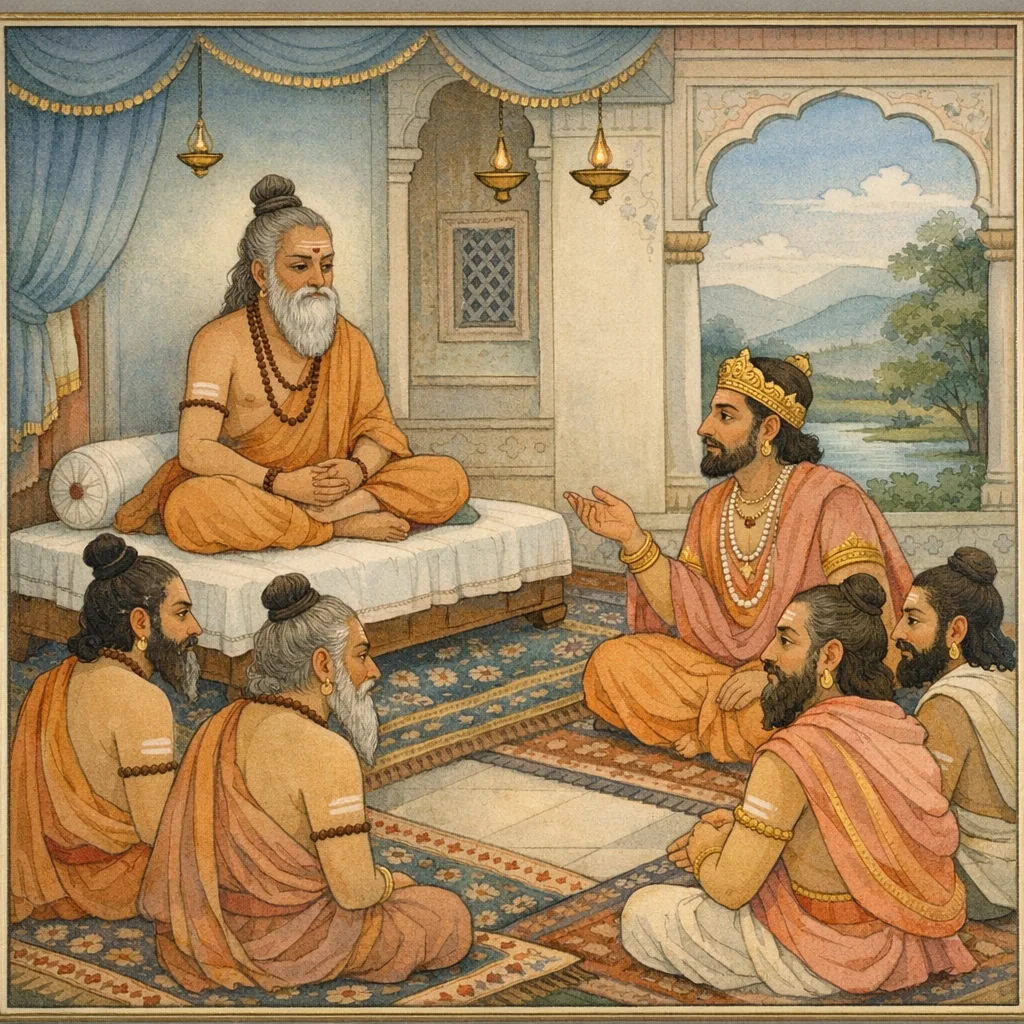
Adhyaya 195
Bhīṣma’s Counsel on Reconciliation and Partition (भीष्मोपदेशः—संधि-राज्यविभागविचारः)
Upa-parva: Sambhava Parva (Genealogies and Political Preconditions)
Chapter 195 records Bhīṣma addressing Dhṛtarāṣṭra and, by implication, Duryodhana, articulating a courtly ethics of conflict-avoidance with the Pāṇḍavas. He asserts impartial regard for Pāṇḍu equal to Dhṛtarāṣṭra and frames Kuntī’s sons as to be protected like Gāndhārī’s. The discourse argues that the realm is ancestral to both lines; therefore, negotiated settlement is preferable to escalation. Bhīṣma recommends granting the Pāṇḍavas half the kingdom “madhureṇa” (through conciliatory means), presenting this as beneficial to all (sarvajana-hita) and as reputational risk management: injustice yields collective harm and personal disrepute (akīrti). He elevates kīrti as a ruler’s enduring capital, claiming life without reputation is fruitless. The chapter also contrasts public attribution of blame (Purocana versus Duryodhana), urging alignment with Kuru-appropriate dharma and the precedent of forebears. The closing insistence reiterates: if dharma, affection for elders, and security are valued, a fair share must be allotted to the Pāṇḍavas.
Chapter Arc: यज्ञ, अतिथि-सत्कार और ‘इष्ट–पूर्त’ के विधान का स्मरण कराते हुए कथा एक धर्म-परिभाषा से आरम्भ होती है—मानो विवाह-प्रसंग के भीतर ही धर्म का तराजू रख दिया गया हो। → त्रुपद के यहाँ व्यास का सत्कार होता है; सभा में श्रेष्ठ आसन बिछते हैं। फिर मधुर वाणी से त्रुपद द्रौपदी-विवाह के विषय में प्रश्न उठाते हैं—एक ही स्त्री का पाँच भाइयों से विवाह लोक-वेध-विरोधी प्रतीत होता है, तो इसका धर्म क्या है? → व्यास ‘धर्म की सूक्ष्मता’ का उद्घोष करते हैं—यह विषय इतना गहन है कि धर्म-अधर्म का निश्चय सहज नहीं; पूर्व महात्माओं ने भी ऐसा आचरण सामान्यतः नहीं किया, पर विद्वान को उतावले निर्णय से बचना चाहिए। इसी क्षण सभा का केन्द्र ‘विवाह’ से हटकर ‘धर्म-मीमांसा’ बन जाता है। → व्यास त्रुपद को वह प्राचीन आख्यान/न्याय सुनाने लगते हैं जिसके अनुसार ‘बहूनाम् एकपत्नीता’ (अनेक पुरुषों की एक पत्नी) का धर्म-समर्थन/व्याख्या संभव है—और इस प्रकार द्रौपदी के पंच-पति-धर्म का आधार परम्परा में स्थापित किया जाता है। → व्यास द्वारा कही जाने वाली वह विस्तृत कथा/पूर्ववृत्त—जिससे यह अपवाद-धर्म सिद्ध होता है—आगे के प्रसंगों में पूर्ण रूप से खुलता है।
Shlokas
Verse 1
> स्मृतियोंमें इष्ट और पूर्तका परिचय इस प्रकार दिया गया है-- अन्निहोत्रं तपः सत्यं वेदानां चानुपालनम् | आतिथ्य॑ वैश्वदेवं च इष्टमित्यभिधीयते ।। वापीकूपतडागादि देवतायतनानि च । अन्नप्रदानमारामा: पूर्तमित्यभिधीयते ।। “अग्निहोत्र, तप, सत्यभाषण, वेदोंकी आज्ञाका निरन्तर पालन, अतिथियोंका सत्कार तथा बलिवैश्वदेव कर्म--ये “इष्ट" कहलाते हैं। बावली, कुआँ, पोखरे आदि बनवाना, देवमन्दिर निर्माण कराना, अन्नदान देना और बगीचे लगाना--इनका नाम पूर्त है।' > इस विषयमें यह श्रुतिका वचन प्रसिद्ध है--'एकस्य बह्यो जाया भवन्ति, नैकस्यै बहवः सहपतय:' अर्थात् एक पुरुषकी बहुत-सी स्त्रियाँ होती हैं, किंतु एक स्त्रीके लिये बहुत-से पति नहीं होते। पजञ्चनवर्त्याधेकशततमो< ध्याय: व्यासजीके सामने द्रौपदीका पाँच पुरुषोंसे विवाह होनेके विषयमें द्रुपद, धृष्टद्युम्म और युधिष्ठिरका अपने-अपने विचार व्यक्त करना वैशम्पायन उवाच ततस्ते पाण्डवा: सर्वे पाज्चाल्यश्व महायशा: । प्रत्युत्थाय महात्मानं कृष्णं सर्वेडभ्यवादयन्,वैशम्पायनजी कहते हैं--जनमेजय! तदनन्तर वे पाण्डव तथा महायशस्वी पांचालराज द्रपद--सबने खड़े होकर महात्मा श्रीकृष्णद्वैपायन व्यासजीको प्रणाम किया इस प्रकार श्रीमहाभारत आदिपव॑के अन्तर्गत वैवाहिकपर्वमें व्याय-वाक्यविषयक एक सौ पंचानबेवाँ अध्याय पूरा हुआ ॥/ १९५ ॥/ ऑपन-आक्रात | अर क्ाञज षण्णवर्त्याधेकशततमोब् ध्याय: व्यासजीका द्रुपदको पाण्डवों तथा द्रौपदीके पूर्वजन्मकी कथा सुनाकर दिव्य दृष्टि देना और ट्रुपदका उनके दिव्य रूपोकी झाँकी करना व्यास उवाच पुरा वै नैमिषारण्ये देवा: सत्रमुपासते | तत्र वैवस्वतो राजड्शामित्रमकरोत् तदा
Vaiśampāyana said: In the Smṛti traditions, the distinction between iṣṭa and pūrta is explained as follows. The daily fire-offering (agnihotra), austerity, truthfulness, unwavering observance of the Vedas’ injunctions, hospitality to guests, and the rite of bali and vaiśvadeva—these are called “iṣṭa,” meritorious acts of sacrificial and disciplined duty. The digging of stepwells, wells, ponds and the like, the building of temples for the gods, the giving of food, and the planting of gardens—these are called “pūrta,” meritorious acts of public benefit and pious construction. On this matter a well-known Śruti statement is cited: “For one man there may be many wives; but for one woman there are not many co-husbands.” Then, in the narrative frame, all the Pāṇḍavas together with the illustrious king of the Pāñcālas rose and paid reverence to the great-souled Kṛṣṇa Dvaipāyana Vyāsa—signaling the transition to the deliberations surrounding Draupadī’s unusual marriage and the dharmic reasoning invoked to justify it.
Verse 2
प्रतिनन्द्य स तां पूजां पृष्टवा कुशलमन्ततः । आसने काज्चने शुद्धे निषसाद महामना:,उनके द्वारा की हुई पूजाको प्रसन्नतापूर्वक स्वीकार करके अन्तमें सबसे कुशल-मंगल पूछकर महामना व्यासजी शुद्ध सुवर्णमय आसनपर विराजमान हुए
Having graciously accepted and commended the worship offered to him, he then inquired after their welfare and auspicious well-being. The great-souled sage sat down upon a pure seat made of gold—conducting himself with the courtesy and restraint befitting a revered elder.
Verse 3
अनुज्ञातास्तु ते सर्वे कृष्णेनामिततेजसा । आसजनेषु महार्लेंषु निषेदुर्द्धिपदां वरा:,फिर अमित-तेजस्वी व्यासजीकी आज्ञा पाकर वे सभी नरश्रेष्ठ बहुमूल्य आसनोंपर बैठे
Granted permission by Kṛṣṇa of immeasurable splendor, all those eminent men—the best among the twice-footed (human beings)—sat down upon the highly valued seats. The scene underscores proper decorum: even the greatest accept seating only after due consent, honoring hierarchy, hospitality, and restraint.
Verse 4
ततो मुहूर्तान्मधुरां वाणीमुच्चार्य पार्षत: । पप्रच्छ त॑ महात्मान द्रौपद्यर्थ विशाम्पते,राजन! तदनन्तर दो घड़ीके बाद राजा ट्रुपदने मीठी वाणी बोलकर महात्मा व्यासजीसे द्रौपदीके विषयमें पूछा--“भगवन्! एक ही स्त्री बहुत-से पुरुषोंकी धर्मपत्नी कैसे हो सकती है? जिससे संकरताका दोष न लगे, यह सब आप ठीक-ठीक बतावें”
Then, after a short while, King Drupada—the son of Pṛṣata—spoke in a gentle voice and questioned the great-souled Vyāsa about Draupadī. He asked how one woman could rightly become the lawful wife of many men without incurring the fault of social and genealogical confusion (saṅkara), and requested a clear account grounded in dharma.
Verse 5
कथमेका बहूनां स्याद् धर्मपत्नी न संकर: । एतन्मे भगवान् सर्व प्रत्रवीतु यथातथम्,राजन! तदनन्तर दो घड़ीके बाद राजा ट्रुपदने मीठी वाणी बोलकर महात्मा व्यासजीसे द्रौपदीके विषयमें पूछा--“भगवन्! एक ही स्त्री बहुत-से पुरुषोंकी धर्मपत्नी कैसे हो सकती है? जिससे संकरताका दोष न लगे, यह सब आप ठीक-ठीक बतावें”
How can a single woman become the lawful wife of many men without incurring the fault of social and moral confusion (saṅkara)? O King, may the revered one explain all this to me exactly as it truly is. (Thereafter, King Drupada, speaking gently, questioned the great sage Vyāsa about Draupadī.)
Verse 6
व्यास उवाच अस्मिन् धर्मे विप्रलब्धे लोकवेदविरोधके । यस्य यस्य मतं यद् यच्छोतुमिच्छामि तस्य तत्,व्यासजीने कहा--अत्यन्त गहन होनेके कारण शास्त्रीय आवरणके द्वारा ढके हुए अतएव इस लोक-वेद-विरुद्ध धर्मके सम्बन्धमें तुममेंसे जिसका-जिसका जो-जो मत हो, उसे मैं सुनना चाहता हूँ
Verse 7
दुपद उवाच अधर्मो5यं मम मतो विरुद्धो लोकवेदयो: । न होका विद्यते पत्नी बहूनां द्विजसत्तम,द्रपद बोले--द्विजश्रेष्ठ! मेरी रायमें तो यह अधर्म ही है; क्योंकि यह लोक और वेद दोनोंके विरुद्ध है। बहुत-से पुरुषोंकी एक ही पत्नी हो, ऐसा व्यवहार कहीं भी नहीं है
Dupada said: “In my judgment this is adharma, for it stands opposed to both common worldly practice and Vedic norm. Nowhere is it accepted, O best of Brahmins, that many men should share a single wife.”
Verse 8
न चाप्याचरित: पूर्वरयं धर्मो महात्मभि: । न चाप्यधर्मो विद्वद्धिश्षरितव्य:ः कथंचन,पूर्ववर्ती महात्मा पुरुषोंने भी ऐसे धर्मका आचरण नहीं किया है और विद्वान् पुरुषोंको किसी प्रकार भी अधर्मका आचरण नहीं करना चाहिये
“This kind of ‘dharma’ has not been practiced before by the great-souled men of earlier times. And in no circumstance should learned men engage in adharma.”
Verse 9
ततो<हं न करोम्येनं व्यवसायं क्रियां प्रति । धर्म: सदैव संदिग्ध: प्रतिभाति हि मे त्वयम्,इसलिये मैं इस धर्मविरोधी आचारको काममें नहीं लाना चाहता। मुझे तो इस कार्यके धर्मसंगत होनेमें सदा ही संदेह जान पड़ता है
Drupada said: “Therefore I will not undertake this resolve, nor proceed with this course of action. Because of what you have said, the righteousness of this deed appears to me always doubtful; I cannot bring myself to employ a practice that seems opposed to dharma.”
Verse 10
धष्टहुम्न उवाच यवीयस: कथ॑ भार्या ज्येष्ठो भ्राता द्विजर्षभ | ब्रह्मन् समभिवर्तेत सवृत्त: संसतपोधन,धृष्टद्युम्न बोले--द्विजश्रेष्ठ) आप ब्राह्मण हैं, तपोधन हैं; आप ही बताइये, बड़ा भाई सदाचारी होते हुए भी अपने छोटे भाईकी स्त्रीके साथ समागम कैसे कर सकता है?
Dhṛṣṭadyumna said: “O best of twice-born, O Brāhmaṇa, rich in austerity—tell me: how could an elder brother, though of good conduct, approach the wife of his younger brother?”
Verse 11
न तु धर्मस्य सूक्ष्मत्वाद् गतिं विद्य कथंचन । अधर्मो धर्म इति वा व्यवसायो न शक््यते,धर्मका स्वरूप अत्यन्त सूक्ष्म होनेके कारण हम उसकी गतिको सर्वथा नहीं जानते; अत: यह कार्य अधर्म है या धर्म, इसका निश्चय करना हम-जैसे लोगोंके लिये असम्भव है। ब्रह्म! इसीलिये हम किसी तरह भी ऐसी सम्मति नहीं दे सकते कि राजकुमारी कृष्णा पाँच पुरुषोंकी धर्मपत्नी हो
But because the nature of dharma is exceedingly subtle, we cannot truly discern its course in any way. Therefore, it is not possible for people like us to decide with certainty whether this act is adharma or dharma. For this reason, O Brahman, we cannot in any manner give our assent that Princess Kṛṣṇā should be the lawful wife of five men.
Verse 12
कर्तुमस्मद्विधै््रह्मूंस्ततो5यं न व्यवस्यते । पज्चानां महिषी कृष्णा भवत्विति कथंचन,धर्मका स्वरूप अत्यन्त सूक्ष्म होनेके कारण हम उसकी गतिको सर्वथा नहीं जानते; अत: यह कार्य अधर्म है या धर्म, इसका निश्चय करना हम-जैसे लोगोंके लिये असम्भव है। ब्रह्म! इसीलिये हम किसी तरह भी ऐसी सम्मति नहीं दे सकते कि राजकुमारी कृष्णा पाँच पुरुषोंकी धर्मपत्नी हो
Dhṛṣṭadyumna said: “O Brahmin, people like us cannot decide upon this matter. We cannot in any way assent to the proposal that Kṛṣṇā (Draupadī) should become the chief queen of five men. The true nature of dharma is exceedingly subtle, and we do not fully know its course; therefore it is impossible for us to determine whether this act would be dharma or adharma.”
Verse 13
युधिछिर उवाच न मे वागनृतं प्राह नाधर्मे धीयते मतिः । वर्तते हि मनो मे5त्र नैषो5धर्म: कथंचन,युधिष्ठिरने कहा--मेरी वाणी कभी झूठ नहीं बोलती और मेरी बुद्धि भी कभी अधर्ममें नहीं लगती; परंतु इस विवाहमें मेरे मनकी प्रवृत्ति हो रही है, इसलिये यह किसी प्रकार भी अधर्म नहीं है। पुराणोंमें भी सुना जाता है कि धर्मात्माओंमें श्रेष्ठ जटिला नामवाली गौतम गोत्रकी कन््याने सात ऋषियोंके साथ विवाह किया था
Yudhiṣṭhira said: “My speech has never uttered falsehood, nor does my understanding ever settle upon unrighteousness. Yet my mind is drawn toward this marriage; therefore it cannot, in any way, be unrighteous.”
Verse 14
श्रूयते हि पुराणेडपि जटिला नाम गौतमी । ऋषीनध्यासितवती सप्त धर्मभूतां वरा,युधिष्ठिरने कहा--मेरी वाणी कभी झूठ नहीं बोलती और मेरी बुद्धि भी कभी अधर्ममें नहीं लगती; परंतु इस विवाहमें मेरे मनकी प्रवृत्ति हो रही है, इसलिये यह किसी प्रकार भी अधर्म नहीं है। पुराणोंमें भी सुना जाता है कि धर्मात्माओंमें श्रेष्ठ जटिला नामवाली गौतम गोत्रकी कन््याने सात ऋषियोंके साथ विवाह किया था
Yudhiṣṭhira said: “Indeed, it is heard even in the Purāṇas that there was a maiden of Gautama’s lineage named Jaṭilā—foremost among the righteous—who accepted seven ṛṣis as her husbands. Therefore, the inclination of my mind toward this marriage cannot, in any way, be contrary to dharma.”
Verse 15
तथैव मुनिजा वार्क्षी तपोभिभर्भावितात्मन: । संगताभूद् दश भ्रातृनेकनाम्न: प्रचेतस:,इसी प्रकार कण्डु मुनिकी पुत्री वाक्षीने तपस्यासे पवित्र अन्तःकरणवाले दस प्रचेताओंके साथ, जिनका एक ही नाम था और जो आपसमें भाई-भाई थे, विवाहसम्बन्ध स्थापित किया था
In the same manner, Vārkṣī—daughter of the sage Kaṇḍu, her inner being purified and strengthened by austerities—entered into a marital alliance with the ten Pracetas brothers, who were all known by a single common name and were united as brothers.
Verse 16
गुरोहि वचन प्राहुर्धर्म्य धर्मज्ञसत्तम । गुरूणां चैव सर्वेषां माता परमको गुरु:,धर्मज्ञोंमें श्रेष्ठ व्यासजी! गुरुजनोंकी आज्ञाको धर्मसंगत बताया गया है और समस्त गुरुओंमें माता परम गुरु मानी गयी है
Yudhiṣṭhira said: “O best among the knowers of dharma, the command of one’s teacher is declared to be righteous and in harmony with dharma. And among all teachers, the mother is regarded as the supreme teacher.”
Verse 17
सा चाप्युक्तवती वाचं भैक्षवद् भुज्यतामिति । तस्मादेतदहं मन्ये परं धर्म द्विजोत्तम,हमारी माताने भी यही बात कही है कि तुम सब लोग भिक्षाकी भाँति इसका उपभोग करो; अतः द्विजश्रेष्ठ! हम पाँचों भाइयोंके साथ होनेवाले इस विवाहसम्बन्धको परम धर्म मानते हैं
She too spoke these words: “Let it be enjoyed as alms is shared.” Therefore, O best of the twice-born, I regard this marriage-bond—meant to be shared among us five brothers—as the highest dharma. (Yudhiṣṭhira frames their mother’s instruction as a binding ethical command, elevating obedience and unity over personal preference.)
Verse 18
कुन्त्युवाच एवमेतद् यथा प्राह धर्मचारी युधिष्ठिर: । अनृतान्मे भयं तीव्र मुच्येडहमनृतात् कथम्,कुन्तीने कहा--धर्मका आचरण करनेवाले युधिष्ठिरने जैसा कहा है, वह ठीक है। (अवश्य मैंने द्रौपदीके साथ पाँचों भाइयोंके विवाहसम्बन्धकी आज्ञा दे दी है।) मुझे झूठसे बहुत भय लगता है; बताइये, मैं झूठके पापसे कैसे बच सकूँगी?
Kuntī said: “It is exactly so, as the dharma-observing Yudhiṣṭhira has spoken. Yet I am seized by a sharp fear of falsehood. How may I be freed from the sin of untruth?”
Verse 19
व्यास उवाच अनुृतान्मोक्ष्यसे भद्रे धर्मश्लैष सनातन: । नतु वक्ष्यामि सर्वेषां पा्चाल शृणु मे स्वयम्,व्यासजी बोले--भद्रे! तुम झूठसे बच जाओगी। (पाण्डवोंके लिये) यह सनातन धर्म है। (कुन्तीसे यों कहकर वे ट्रुपदसे बोले) पांचालराज! (इस विवाहमें एक रहस्य है, जिसे) मैं सबके सामने नहीं कहूँगा। तुम स्वयं एकान्तमें चलकर मुझसे सुन लो
Vyāsa said: “O noble lady, you will be freed from falsehood; this is the eternal dharma, closely bound to righteousness (and to the welfare of the Pāṇḍavas). But I will not speak of it before everyone. O king of Pāñcāla, come—hear it from me yourself, in private.”
Verse 20
यथायं विहितो धर्मो यतश्चायं सनातन: । यथा च प्राह कौन्तेयस्तथा धर्मो न संशय:,जिस प्रकार और जिस कारणसे यह सनातन धर्मके अनुकूल कहा गया है और कुन्तीनन्दन युधिष्ठिरने जिस प्रकार इसकी धर्मानुकूलताका प्रतिपादन किया है, उसपर विचार करनेसे निस्संदेह यही सिद्ध होता है कि यह विवाह धर्मसम्मत है
Vyāsa said: “In the manner in which this dharma has been duly prescribed, and for the reason that it accords with the eternal order, and just as the son of Kuntī has argued it—so indeed it is dharma, without doubt.”
Verse 21
वैशम्पायन उवाच तत उत्थाय भगवान् व्यासो द्वैपायन: प्रभु: । करे गृहीत्वा राजानं राजवेश्म समाविशत्,वैशम्पायनजी कहते हैं--जनमेजय! तदनन्तर शक्तिशाली द्वैपायन भगवान् व्यासजी अपने आसनसे उठे और राजा ट्रपदका हाथ पकड़कर राजभवनके भीतर चले गये
Vaiśampāyana said: Then the venerable Vyāsa, the mighty lord Dvaipāyana, rose from his seat. Taking the king by the hand, he entered the royal residence—an act that signals both the king’s deference to spiritual authority and the sage’s guiding role in the unfolding events.
Verse 22
पाण्डवाश्वापि कुन्ती च धृष्टद्युम्नश्न पार्षत: । विविशोर्यत्र तत्रैव प्रतीक्षन्ते सम तावुभौ,पाँचों पाण्डव, कुन्तीदेवी तथा द्रुपदकुमार धृष्टद्युम्न--ये सब लोग जहाँ बैठे थे, वहीं उन दोनों (व्यास और द्रुपद)-की प्रतीक्षा करने लगे
Vaiśampāyana said: The five Pāṇḍavas, Kuntī, and Dhṛṣṭadyumna—the son of Pārṣata (Drupada)—entered and sat just where they were; remaining there, they waited for those two. The scene underscores disciplined restraint and respect for elders and teachers: rather than acting impulsively, they hold their place and await the arrival of the two revered figures.
Verse 23
ततो द्वैपायनस्तस्मै नरेन्द्राय महात्मने । आचख्यौ तद् यथा धर्मो बहूनामेकपत्निता,तदनन्तर व्यासजीने उन महात्मा नरेशको वह कथा सुनायी, जिसके अनुसार यहाँ बहुत-से पुरुषोंका एक ही पत्नीसे विवाह करना धर्मसम्मत माना गया
Then Dvaipāyana (Vyāsa) explained to that great-souled king how the rule of dharma stands in this matter—namely, that for many men, having a single wife (i.e., monogamy) is regarded as the proper and sanctioned conduct.
Verse 194
इस प्रकार श्रीमहाभारत आदिपरव॑के अन्तर्गत वैवाहिकपर्वमें वेदव्यायके आगमनसे सम्बन्ध रखनेवाला एक सौ चौरानबेवाँ अध्याय पूरा हुआ
Thus concludes the one hundred and ninety-fourth chapter of the Ādi Parva of the Śrī Mahābhārata, within the Vaivāhika Parva, dealing with the episode connected to the arrival of Vedavyāsa. The narration marks a formal closure to this section, signaling a transition in the unfolding of events and the continuity of sacred history.
Verse 195
इति श्रीमहा भारते आदिपर्वणि वैवाहिकपर्वणि व्यासवाक्ये पडञ्चनवत्यधिकशततमो< ध्याय:
Thus ends the one-hundred-and-ninety-fifth chapter of the Ādi Parva of the Śrī Mahābhārata, within the section on marriage, in the portion known as Vyāsa’s discourse. This is a formal colophon marking the close of the chapter and situating it within the epic’s larger structure.
Frequently Asked Questions
The dilemma is whether to pursue escalation against the Pāṇḍavas or to enact a lawful, stabilizing settlement—recognizing shared ancestral entitlement while preventing reputational and political deterioration.
Legitimacy and welfare in governance depend on dharma-aligned restraint: equitable treatment of kin, preference for saṃdhi over coercion, and the understanding that kīrti functions as a durable ethical constraint on rulers.
No formal phalaśruti is stated; the chapter’s meta-logic is reputational and civic: preserving kīrti is presented as the practical ‘fruit’ of dharmic conduct, while akīrti is framed as a form of social and political negation.