Adhyaya 187
Ādi-parva, Adhyāya 187: Drupada’s Inquiry and the Dharma Debate on Draupadī’s Marriage
Upa-parva: Svayaṃvara–Vivāha Prasaṅga (Draupadī’s alliance and marriage deliberations)
Vaiśaṃpāyana narrates Drupada’s reception of Yudhiṣṭhira after the svayaṃvara outcome. Drupada, seeking certainty, questions the visitors’ varṇa and identity, requesting truthful disclosure as a royal virtue and a prerequisite for conducting marriage rites. Yudhiṣṭhira replies with reassurance, identifies the brothers as Pāṇḍu’s Kṣatriya sons, and positions Drupada as a respected elder. Drupada, pleased, offers support and proposes immediate ritual action, initially oriented toward Arjuna as the victor. Yudhiṣṭhira then states that Draupadī will be the common queen of all the brothers, citing a prior utterance by their mother (Kuntī) and their shared compact regarding jointly enjoyed gains. Drupada objects on normative grounds, arguing that many wives for one man may be allowed but not many husbands for one woman, and that such a proposal conflicts with social and Vedic convention. Yudhiṣṭhira answers that dharma is subtle, that they follow the path of predecessors and stand by truthfulness and non-adharma, urging Drupada not to doubt. Drupada calls for consultation with Kuntī and his son Dhṛṣṭadyumna to determine the correct procedure, and the chapter closes with Vyāsa (Dvaipāyana) arriving unexpectedly, signaling authoritative resolution to follow.
Chapter Arc: स्वयंवर-मण्डप में लक्ष्य-वेध की घोषणा होते ही सभा में हलचल उठती है—पार्थ (अर्जुन) इन्द्रध्वज-सम दीप्त, धनुष की ओर बढ़ता दिखता है और ब्राह्मण-वेष में भी उसकी तेजस्विता सबको चौंका देती है। → ब्राह्मणों और राजाओं की प्रतिक्रिया दो ध्रुवों में बँटती है—कुछ उदास, कुछ उल्लसित, और कुछ बुद्धिजीवी आपस में तर्क-वितर्क करते हैं कि यह कौन है जिसकी सिंह-गति और मत्त-गजेन्द्र-सा पराक्रम संकेत देता है कि असम्भव-सा कर्म भी कर सकता है। अगस्त्य द्वारा समुद्र-पान की उपमा देकर वे आशीर्वाद-सा उच्चारण करते हैं कि यह ‘बटु’ महान धनुष उठा सके। → लक्ष्य-वेध के निर्णायक क्षण में अर्जुन का कौशल प्रकट होता है—सभा में सहस्रों ब्राह्मण विस्मय से ‘हाहाकार’ करते हैं, और आकाश से पुष्प-वृष्टि-सी प्रशंसा बरसती है; लक्ष्य-भेदन की सिद्धि से उसकी पहचान (यद्यपि छिपी) कर्म से उजागर हो जाती है। → लक्ष्य-भेदन देखकर द्रुपद हर्ष से भर उठता है और पार्थ के पक्ष में सहायक-भाव से आगे बढ़ता है; सभा का रुख बदलता है—जो विमुख थे वे स्तब्ध, और जो प्रसन्न थे वे उत्सव-भाव में स्थिर हो जाते हैं। → लक्ष्य-वेध के बाद स्वयंवर का अगला चरण—द्रौपदी का वरण और अन्य राजाओं की प्रतिक्रिया—तनाव का नया द्वार खोलती है।
Shlokas
Verse 1
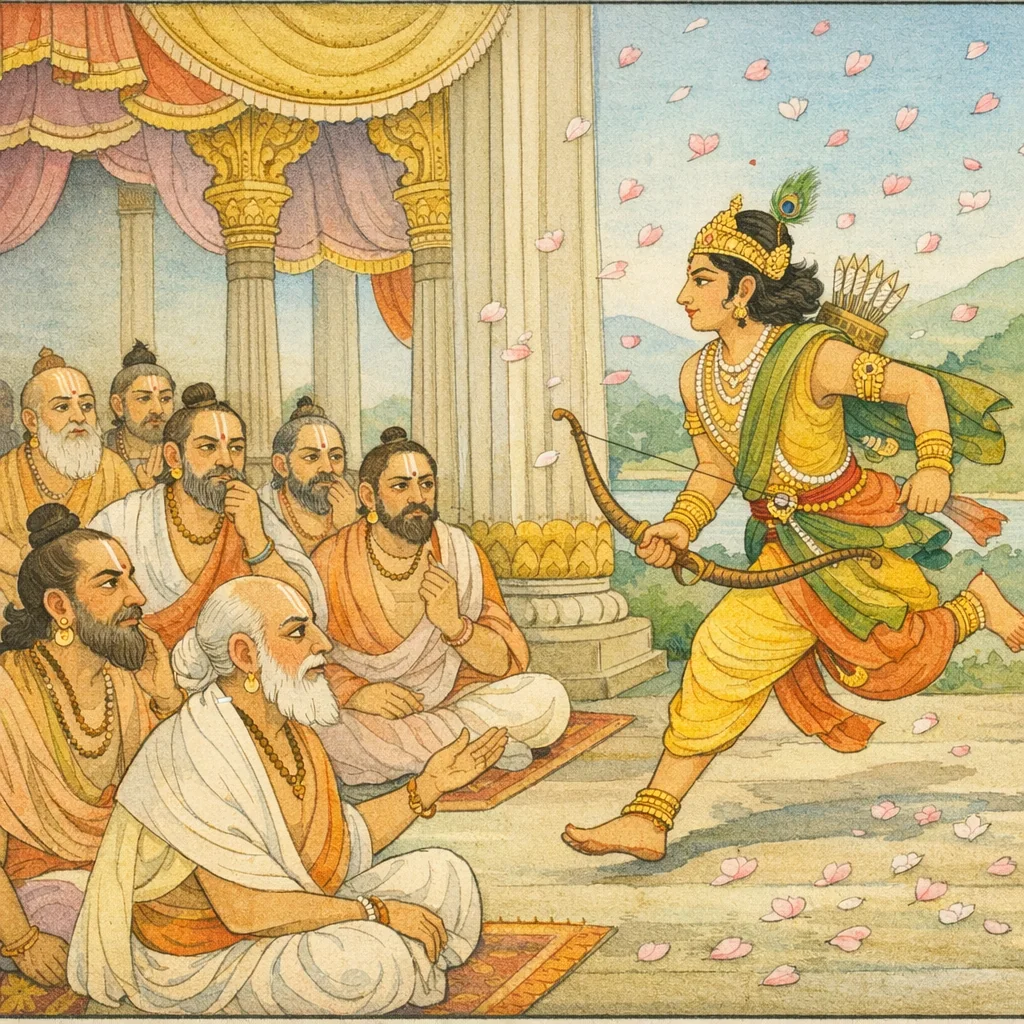
(दाक्षिणात्य अधिक पाठके ५ $ “लोक मिलाकर कुल ३४३ “लोक हैं) भीस्न्आ+ज () असऔमसने - कर्णकि द्वारा प्रत्यंचा और बाण चढ़ानेकी बात दाक्षिणात्य पाठमें कहीं नहीं है। भण्डारकरकी प्रतिमें भी मुख्य पाठमें यह वर्णन नहीं है। नीलकण्ठी पाठमें भी इससे पूर्व श्लोक १५में तथा उत्तर अ० १८७ श्लोक ४ एवं १९में भी ऐसा ही उल्लेख है कि कर्ण धनुषपर प्रत्यंचा और बाण नहीं चढ़ा सका था; इससे यही सिद्ध होता है कि कर्णने बाण नहीं चढ़ाया था। सप्ताशीरत्याधिकशततमो< ध्याय: अर्जुनका लक्ष्यवेध करके द्रौपदीको प्राप्त करना वैशम्पायन उवाच यदा निवृत्ता राजानो धनुष: सज्यकर्मण: । अथोदतिष्ठद् विप्राणां मध्याज्जिष्णुरुदारधी:,वैशम्पायनजी कहते हैं--जनमेजय! जब सब राजाओंने उस धनुषपर प्रत्यंचा चढ़ानेके कार्यसे मुँह मोड़ लिया, तब उदारबुद्धि अर्जुन ब्राह्मणमण्डलीके बीचसे उठकर खड़े हुए
Vaiśampāyana said: When all the kings had turned back from the task of stringing the bow, then Arjuna—noble-minded and resolute—rose to his feet from the midst of the assembled brāhmaṇas. The moment marks a shift from prideful royal competition to the quiet competence of one who acts with disciplined skill and purpose.
Verse 2
उदक्रोशन् विप्रमुख्या विधुन्वन्तो5जिनानि च । दृष्टवा सम्प्रस्थितं पार्थमिन्द्रकेतुसमप्रभम्,इन्द्रकी ध्वजाके समान (लंबे) अर्जुनको उठकर धनुषकी ओर जाते देख बड़े-बड़े ब्राह्मण अपने-अपने मृगचर्म हिलाते हुए जोर-जोरसे कोलाहल करने लगे
Vaiśampāyana said: Seeing Pārtha (Arjuna) set forth—radiant like Indraketu—the foremost brāhmaṇas raised a loud outcry, shaking their deerskins. The scene underscores how the community’s ritual authority publicly responds to a kṣatriya’s decisive movement toward his weapon and duty, marking the moment as socially and ethically charged rather than merely personal.
Verse 3
केचिदासन् विमनस: केचिदासन् मुदान्विता: । आहुः परस्परं केचिन्निपुणा बुद्धिजीविन:,कुछ ब्राह्मण उदास हो गये और कुछ प्रसन्नताके मारे फूल उठे तथा कुछ चतुर एवं बुद्धिजीवी ब्राह्मण आपसमें इस प्रकार कहने लगे--
Vaiśampāyana said: Some were downcast at heart, while others were filled with joy. And certain Brahmins—skilled and living by their intellect—began speaking among themselves in this manner. The verse highlights how a single public event can evoke contrasting moral and emotional responses, and how learned observers then frame those reactions through discussion and judgment.
Verse 4
यत् कर्णशल्यप्रमुखै: क्षत्रियैलोकविश्रुतै: नानतं बलवद्धिह्ि धरनुर्वेदपरायणै:,'ब्राह्मणो! कर्ण और शल्य आदि बलवान, थरनुर्वेदपरायण तथा लोकविख्यात क्षत्रिय जिसे झुका (-तक) न सके, उसी धनुषपर अस्त्र-ज्ञानसे शून्य और शारीरिक बलकी दृष्टिसे अत्यन्त दुर्बल यह निरा ब्राह्मण-बालक कैसे प्रत्यंचा चढ़ा सकेगा
Vaiśampāyana said: That bow which even mighty, world-renowned kṣatriyas—led by Karṇa and Śalya, devoted to the science of archery—could not bend: how could this mere brahmin boy, lacking weapons-training and bodily strength, possibly string it? The remark underscores the tension between social expectation and true capability, warning against judging worth solely by birth or outward power.
Verse 5
तत् कथं त्वकृतास्त्रेण प्राणतो दुर्बलीयसा । वटुमात्रेण शक्यं हि सज्यं कर्तु धनुद्धिजा:,'ब्राह्मणो! कर्ण और शल्य आदि बलवान, थरनुर्वेदपरायण तथा लोकविख्यात क्षत्रिय जिसे झुका (-तक) न सके, उसी धनुषपर अस्त्र-ज्ञानसे शून्य और शारीरिक बलकी दृष्टिसे अत्यन्त दुर्बल यह निरा ब्राह्मण-बालक कैसे प्रत्यंचा चढ़ा सकेगा
Vaiśampāyana said: “How could this mere brahmin boy—untrained in weapons and far weaker in bodily strength—possibly string the bow? Even renowned kṣatriya warriors, famed for mastery of archery and great power, such as Karṇa and Śalya, were unable to bend it; how then could one devoid of weapon-lore accomplish it?”
Verse 6
अवहास्या भविष्यन्ति ब्राह्मणा: सर्वराजसु । कर्मण्यस्मिन्नसंसिद्धे चापलादपरीक्षिते,“इसने बालोचित चपलताके कारण इस कार्यकी कठिनाईपर विचार नहीं किया है। यदि इसमें यह सफल न हुआ तो समस्त राजाओंमें ब्राह्मणोंकी बड़ी हँसी होगी
Vaiśampāyana said: “If this undertaking remains unaccomplished—attempted rashly, without due examination—then the brāhmaṇas will become a laughingstock among all kings. For he has not reflected on the difficulty of the task, driven by childish fickleness; and if he fails, ridicule will spread everywhere.”
Verse 7
यद्येष दर्पद्धिर्षाद् वाप्यथ ब्राह्णचापलात् | प्रस्थितो धनुरायन्तुं वार्यतां साधु मा गमत्,“यदि यह अभिमान, हर्ष अथवा ब्राह्मणसुलभ चंचलताके कारण धनुषपर डोरी चढ़ानेके लिये आगे बढ़ा है तो इसे रोक देना चाहिये; अच्छा तो यही होगा कि यह जाय ही नहीं!
Vaiśaṃpāyana said: “If this man has stepped forward to string the bow out of pride, reckless audacity, or mere Brahmin-like fickleness, then he should be restrained. It would be best that he not go at all.”
Verse 8
ब्राह्मणा ऊचु नावहास्या भविष्यामो न च लाघवमास्थिता: । न च विद्विष्टतां लोके गमिष्यामो महीक्षिताम्,ब्राह्मण बोले--(भाइयो!) हमारी हँसी नहीं होगी। न हमें किसीके सामने छोटा ही बनना पड़ेगा और लोकमें हमलोग राजाओंके द्वेषपात्र भी नहीं होगे। (अत: इन बातोंकी चिन्ता छोड़ दो)
The brāhmaṇas said: “We shall not become objects of ridicule, nor will we be forced into any humiliating position. Nor shall we, in the eyes of the world, become those whom kings come to hate. Therefore, set aside these worries.”
Verse 9
केचिदाहुर्युवा श्रीमानू नागराजकरोपम: । पीनस्कन्धोरुबाहुश्व धैर्येण हिमवानिव,कुछ ब्राह्मणोंने कहा--'यह सुन्दर युवक नागराज ऐरावतके शुण्ड-दण्डके समान हृष्ट- पुष्ट दिखायी देता है। इसके कंधे सुपुष्ट और भुजाएँ बड़ी-बड़ी हैं। यह धैर्यमें हिमालयके समान जान पड़ता है
Vaiśampāyana said: Some Brahmins remarked, “This handsome, illustrious youth appears as robust as the trunk-staff of Airāvata, king of elephants. His shoulders are broad and well-knit, his arms long and powerful, and in steadfast courage he seems like the Himālaya itself.” The description frames physical strength as meaningful when joined to inner firmness (dhairya), a virtue admired by the learned.
Verse 10
सिंहखेलगति: श्रीमान् मत्तनागेन्द्रविक्रम: । सम्भाव्यमस्मिन् कर्मेदमुत्साहाच्चानुमीयते,“इसकी सिंहके समान मस्तानी चाल है। यह शोभाशाली तरुण मतवाले गजराजके समान पराक्रमी प्रतीत होता है। इस वीरके लिये यह कार्य करना सम्भव है। इसका उत्साह देखकर भी ऐसा ही अनुमान होता है
Vaiśampāyana said: “His gait is like the proud, playful stride of a lion. He is radiant, and his prowess resembles that of an intoxicated lord of elephants. For such a hero, this undertaking is indeed feasible; even his very ardor makes one infer that he can accomplish it.”
Verse 11
शक्तिरस्य महोत्साहा न हाशक्त: स्वयं व्रजेत् न च तद् विद्यते किंचित् कर्म लोकेषु यद् भवेत्,इसमें शक्ति और महान् उत्साह है। यदि यह असमर्थ होता तो स्वयं ही धनुषके पास जानेका साहस नहीं करता। सम्पूर्ण लोकोंमें देवता, असुर आदिके रूपमें विचरनेवाले पुरुषोंका ऐसा कोई कार्य नहीं है, जो ब्राह्मणोंके लिये असाध्य हो। ब्राह्मगलोग जल पीकर, हवा खाकर अथवा फलाहार करके (भी) दृढ़तापूर्वक व्रतका पालन करते हैं। अतः वे शरीरसे दुबले होनेपर भी अपने तेजके कारण अत्यन्त बलवान होते हैं। ब्राह्मण भला-बुरा, सुखद-दुःखद और छोटा-बड़ा जो भी कर्म प्राप्त होता है, कर लेता है; अतः किसी भी कर्मको करते समय उस ब्राह्मणका अपमान नहीं करना चाहिये। मैं भूमण्डलमें ऐसे किसी पुरुषको नहीं देखता जो धरनुर्वेद, वेद तथा नाना प्रकारके योगोंमें ब्राह्मणसे बढ़-चढ़कर हो। श्रेष्ठ ब्राह्मण मन्त्रबल, योगबल अथवा महान् आत्मबलसे इस सम्पूर्ण जगत्को स्तब्ध कर सकते हैं। (अतः उनके प्रति तुच्छ बुद्धि नहीं रखनी चाहिये।) देखो, जमदग्निनन्दन परशुरामजीने अकेले ही (सम्पूर्ण) क्षत्रियोंको युद्धमें जीत लिया था
Vaiśampāyana said: “In him there is power and great resolve. If he were truly incapable, he would not dare go there on his own. Indeed, in all the worlds there is no deed that exists which is beyond the reach of brāhmaṇas.”
Verse 12
ब्राह्मणानामसाध्यं च नृषु संस्थानचारिषु । अब्भक्षा वायुभक्षाश्न फलाहारा दृढव्रता:,इसमें शक्ति और महान् उत्साह है। यदि यह असमर्थ होता तो स्वयं ही धनुषके पास जानेका साहस नहीं करता। सम्पूर्ण लोकोंमें देवता, असुर आदिके रूपमें विचरनेवाले पुरुषोंका ऐसा कोई कार्य नहीं है, जो ब्राह्मणोंके लिये असाध्य हो। ब्राह्मगलोग जल पीकर, हवा खाकर अथवा फलाहार करके (भी) दृढ़तापूर्वक व्रतका पालन करते हैं। अतः वे शरीरसे दुबले होनेपर भी अपने तेजके कारण अत्यन्त बलवान होते हैं। ब्राह्मण भला-बुरा, सुखद-दुःखद और छोटा-बड़ा जो भी कर्म प्राप्त होता है, कर लेता है; अतः किसी भी कर्मको करते समय उस ब्राह्मणका अपमान नहीं करना चाहिये। मैं भूमण्डलमें ऐसे किसी पुरुषको नहीं देखता जो धरनुर्वेद, वेद तथा नाना प्रकारके योगोंमें ब्राह्मणसे बढ़-चढ़कर हो। श्रेष्ठ ब्राह्मण मन्त्रबल, योगबल अथवा महान् आत्मबलसे इस सम्पूर्ण जगत्को स्तब्ध कर सकते हैं। (अतः उनके प्रति तुच्छ बुद्धि नहीं रखनी चाहिये।) देखो, जमदग्निनन्दन परशुरामजीने अकेले ही (सम्पूर्ण) क्षत्रियोंको युद्धमें जीत लिया था
Vaiśampāyana said: Among beings who move about in human forms and conditions, there is no deed that is impossible for brāhmaṇas. Some live on water alone, some as if on air, and some on fruits; steadfast in their vows, they endure austerity and yet remain powerful through their inner radiance. Therefore, one should not slight or insult a brāhmaṇa while he undertakes any task, for their strength arises from mantra, yoga, and self-mastery rather than mere bodily might.
Verse 13
दुर्बला अपि विप्रा हि बलीयांस: स्वतेजसा । ब्राह्मणो नावमन्तव्य: सदसद् वा समाचरन्,इसमें शक्ति और महान् उत्साह है। यदि यह असमर्थ होता तो स्वयं ही धनुषके पास जानेका साहस नहीं करता। सम्पूर्ण लोकोंमें देवता, असुर आदिके रूपमें विचरनेवाले पुरुषोंका ऐसा कोई कार्य नहीं है, जो ब्राह्मणोंके लिये असाध्य हो। ब्राह्मगलोग जल पीकर, हवा खाकर अथवा फलाहार करके (भी) दृढ़तापूर्वक व्रतका पालन करते हैं। अतः वे शरीरसे दुबले होनेपर भी अपने तेजके कारण अत्यन्त बलवान होते हैं। ब्राह्मण भला-बुरा, सुखद-दुःखद और छोटा-बड़ा जो भी कर्म प्राप्त होता है, कर लेता है; अतः किसी भी कर्मको करते समय उस ब्राह्मणका अपमान नहीं करना चाहिये। मैं भूमण्डलमें ऐसे किसी पुरुषको नहीं देखता जो धरनुर्वेद, वेद तथा नाना प्रकारके योगोंमें ब्राह्मणसे बढ़-चढ़कर हो। श्रेष्ठ ब्राह्मण मन्त्रबल, योगबल अथवा महान् आत्मबलसे इस सम्पूर्ण जगत्को स्तब्ध कर सकते हैं। (अतः उनके प्रति तुच्छ बुद्धि नहीं रखनी चाहिये।) देखो, जमदग्निनन्दन परशुरामजीने अकेले ही (सम्पूर्ण) क्षत्रियोंको युद्धमें जीत लिया था
Vaiśampāyana said: Even when physically weak, brahmins are truly powerful through their own spiritual radiance. Therefore a brahmin should never be treated with contempt, even if his conduct appears good or bad. The ethical point is clear: do not judge a brahmin’s worth merely by bodily strength or outward behavior, for his inner potency and discipline can make him formidable and deserving of respect.
Verse 14
सुखं दु:खं महद् हस्वं कर्म यत् समुपागतम् | (धनुर्वेदे च वेदे च योगेषु विविधेषु च । न तं पश्यामि मेदिन्यां ब्राह्मणाभ्यधिको भवेत् ।। मन्त्रयोगबलेनापि महता55त्मबलेन वा । जृम्भयेयुरमुं लोकमथवा द्विजसत्तमा: ।।) जामदग्न्येन रामेण निर्जिता: क्षत्रिया युधि,इसमें शक्ति और महान् उत्साह है। यदि यह असमर्थ होता तो स्वयं ही धनुषके पास जानेका साहस नहीं करता। सम्पूर्ण लोकोंमें देवता, असुर आदिके रूपमें विचरनेवाले पुरुषोंका ऐसा कोई कार्य नहीं है, जो ब्राह्मणोंके लिये असाध्य हो। ब्राह्मगलोग जल पीकर, हवा खाकर अथवा फलाहार करके (भी) दृढ़तापूर्वक व्रतका पालन करते हैं। अतः वे शरीरसे दुबले होनेपर भी अपने तेजके कारण अत्यन्त बलवान होते हैं। ब्राह्मण भला-बुरा, सुखद-दुःखद और छोटा-बड़ा जो भी कर्म प्राप्त होता है, कर लेता है; अतः किसी भी कर्मको करते समय उस ब्राह्मणका अपमान नहीं करना चाहिये। मैं भूमण्डलमें ऐसे किसी पुरुषको नहीं देखता जो धरनुर्वेद, वेद तथा नाना प्रकारके योगोंमें ब्राह्मणसे बढ़-चढ़कर हो। श्रेष्ठ ब्राह्मण मन्त्रबल, योगबल अथवा महान् आत्मबलसे इस सम्पूर्ण जगत्को स्तब्ध कर सकते हैं। (अतः उनके प्रति तुच्छ बुद्धि नहीं रखनी चाहिये।) देखो, जमदग्निनन्दन परशुरामजीने अकेले ही (सम्पूर्ण) क्षत्रियोंको युद्धमें जीत लिया था
Vaiśampāyana said: Whatever action comes to a Brahmin—pleasant or painful, great or small—he undertakes it; therefore, one should never insult a Brahmin while he is engaged in any duty. I see no one on this earth superior to Brahmins in the science of archery, in the Veda, or in the many disciplines of yoga. By the power of mantra, by yogic power, or by the great power of the self, the best of the twice-born can even paralyze this whole world. Consider this: Rāma Jāmadagnya (Paraśurāma) alone conquered the Kṣatriyas in battle.
Verse 15
पीत: समुद्रो5गस्त्येन हागाधो ब्रह्मतेजसा । तस्माद् ब्रुवन्तु सर्वेडत्र बटुरेष धनुर्महान्
Vaiśampāyana said: “The ocean—though unfathomable—was once drunk up by Agastya through the blazing power of his brahmanical austerity. Therefore, let everyone here speak out: this youth before us is indeed a great bowman (worthy of the mighty bow).”
Verse 16
एवं तेषां विलपतां विप्राणां विविधा गिर:,इस प्रकार जब ब्राह्मणलोग भाँति-भाँतिकी बातें कर रहे थे, उसी समय अर्जुन धनुषके पास जाकर पर्वतके समान अविचलभावसे खड़े हो गये। फिर उन्होंने धनुषके चारों ओर घूमकर उसकी परिक्रमा की
Vaiśampāyana said: While those brāhmaṇas were lamenting and speaking in many different ways, Arjuna went up to the bow and stood firm and unmoving like a mountain. Then, showing reverence and resolve, he circumambulated the bow, walking around it in a ritual gesture of respect before taking up the challenge.
Verse 17
अर्जुनो धनुषो<भ्याशे तस्थौ गिरिरिवाचल: । स तद् धनुः परिक्रष्य प्रदक्षिणमथाकरोत्,इस प्रकार जब ब्राह्मणलोग भाँति-भाँतिकी बातें कर रहे थे, उसी समय अर्जुन धनुषके पास जाकर पर्वतके समान अविचलभावसे खड़े हो गये। फिर उन्होंने धनुषके चारों ओर घूमकर उसकी परिक्रमा की
Verse 18
प्रणम्य शिरसा देवमीशानं वरदं प्रभुम् कृष्णं च मनसा कृत्वा जगृहे चार्जुनो धनु:,इसके बाद वरदायक भगवान् शंकरको मस्तक झुकाकर प्रणाम किया और मन-ही-मन भगवान् श्रीकृष्णका चिन्तन करके अर्जुनने वह धनुष उठा लिया
Having bowed with his head to the god Īśāna—Śiva, the gracious bestower of boons and sovereign lord—and having inwardly fixed his mind upon Kṛṣṇa, Arjuna took up the bow. The verse frames heroic action as grounded in reverence and disciplined devotion: strength is to be exercised only after acknowledging divine authority and aligning one’s intent with righteous guidance.
Verse 19
यत् पार्थिवै रुक्मसुनी थवक्रै: राधेयदुर्योधनशल्यशाल्चै: । तदा भरनुर्वेदपरैर्न॑सिंहै: कृतं न सज्यं महतो$पि यत्नात्,रुक्म, सुनीथ, वक्र, कर्ण, दुर्योधन, शल्य तथा शाल्व आदि धरनुर्वेदके पारंगत विद्वान् पुरुषसिंह राजालोग महान् प्रयत्न करके भी जिस धनुषपर डोरी न चढ़ा सके, उसी धनुषपर विष्णुके समान प्रभावशाली एवं पराक्रमी वीरोंमें श्रेष्ठठाका अभिमान रखनेवाले इन्द्रकुमार अर्जुनने पलक मारते-मारते प्रत्यंचा चढ़ा दी। इसके बाद उन्होंने वे पाँच बाण भी अपने हाथमें ले लिये
Vaiśampāyana said: That bow which, despite great effort, could not be strung by lion-like kings skilled in the science of archery—Rukma, Sunītha, Vakra, Rādheya (Karna), Duryodhana, Śalya, Śālva, and others—was strung in an instant by Arjuna, the son of Indra, who took pride in being the foremost among heroic warriors and whose might was likened to Viṣṇu. Thereafter, he also took the five arrows into his hand.
Verse 20
तदर्जुनो वीर्यवर्तां सदर्प- स्तदैन्द्रिरिन्द्रावरजप्र भाव: । सज्यं च चक्रे निमिषान्तरेण शरांश्व जग्राह दशार्धसंख्यान्,रुक्म, सुनीथ, वक्र, कर्ण, दुर्योधन, शल्य तथा शाल्व आदि धरनुर्वेदके पारंगत विद्वान् पुरुषसिंह राजालोग महान् प्रयत्न करके भी जिस धनुषपर डोरी न चढ़ा सके, उसी धनुषपर विष्णुके समान प्रभावशाली एवं पराक्रमी वीरोंमें श्रेष्ठठाका अभिमान रखनेवाले इन्द्रकुमार अर्जुनने पलक मारते-मारते प्रत्यंचा चढ़ा दी। इसके बाद उन्होंने वे पाँच बाण भी अपने हाथमें ले लिये
Then Arjuna—proud in his heroic prowess, the son of Indra and endowed with the might of Indra’s younger brother—strung that bow in the space of a blink. At once he also seized the arrows, numbering fifteen. The episode underscores how true capability, when joined to rightful purpose, manifests effortlessly where mere exertion without the requisite fitness fails.
Verse 21
विव्याध लक्ष्यं निपपात तच्च छिद्रेण भूमौ सहसातिविद्धम् | ततोडन््तरिक्षे च बभूव नाद: समाजमध्ये च महान् निनाद:,और उन्हें चलाकर बात-की-बातमें (लक्ष्य) वेध दिया। वह बिंधा हुआ लक्ष्य अत्यन्त छिन्न-भिन्न हो यन्त्रके छेदसे सहसा पृथ्वीपर गिर पड़ा। उस समय आकाशकमें बड़े जोरका हर्षनाद हुआ और सभामण्डपमें तो उससे भी महान् आनन्द-कोलाहल छा गया
Vaiśampāyana said: He pierced the target, and that target—suddenly struck through and thoroughly perforated—fell to the ground through the opening of the device. Then a loud roar arose in the sky, and within the assembled hall an even greater clamour of joy resounded. The scene marks the public recognition of consummate skill, where success is measured not by violence but by mastery, composure, and the fulfilment of a declared challenge before the community.
Verse 22
पुष्पाणि दिव्यानि ववर्ष देव: पार्थस्य मूर्श्नि द्विषतां निहन्तुः,देवतालोग शत्रुहन्ता अर्जुनके मस्तकपर दिव्य फूलोंकी वर्षा करने लगे
Vaiśampāyana said: The god, the slayer of enemies, caused a shower of celestial flowers to fall upon the head of Pārtha (Arjuna). The moment marks divine approval and honor for righteous prowess—celebrating victory aligned with dharma rather than mere violence.
Verse 23
चैलानि विव्यधुस्तत्र ब्राह्मणाश्न सहस्रशः । विलक्षितास्ततश्नक्रुर्ठाहाकारांश्व॒ सर्वश: । न्यपतंश्वात्र नभस: समन्तात् पुष्पवृष्टय:,सहसोरं ब्राह्मण (हर्षमें भरकर) वहाँ अपने दुपट्टे हिलाने लगे (मानो अर्जुनकी विजय- ध्वजा फहरा रहे हों), फिर तो जो लोग (लक्ष्यवेध करनेमें असमर्थ हो, हार मान चुके थे) वे राजा लोग सब ओरसे हाहाकार करने लगे। उस रंगभूमिमें आकाशसे सब ओर फूलोंकी वर्षा हो रही थी। बाजा बजानेवाले लोग सैकड़ों अंगोंवाली तुरही आदि बजाने लगे। सूत और मागधगण वहाँ मीठे स्वरसे यशोगान करने लगे
Vaiśampāyana said: There, thousands of brāhmaṇas waved their garments in excitement, as if raising victory-banners. Those who were confounded and had failed to hit the mark then raised cries of dismay on every side. And upon that arena, from the sky all around, showers of flowers fell—signs of acclaim for the feat and of the public recognition that true excellence, when displayed openly, commands honor.
Verse 24
शताड्नि च तूर्याणि वादका: समवादयन् | सूतमागधसड्घाश्षाप्यस्तुवंस्तत्र सुस्वरा:,सहसोरं ब्राह्मण (हर्षमें भरकर) वहाँ अपने दुपट्टे हिलाने लगे (मानो अर्जुनकी विजय- ध्वजा फहरा रहे हों), फिर तो जो लोग (लक्ष्यवेध करनेमें असमर्थ हो, हार मान चुके थे) वे राजा लोग सब ओरसे हाहाकार करने लगे। उस रंगभूमिमें आकाशसे सब ओर फूलोंकी वर्षा हो रही थी। बाजा बजानेवाले लोग सैकड़ों अंगोंवाली तुरही आदि बजाने लगे। सूत और मागधगण वहाँ मीठे स्वरसे यशोगान करने लगे
Vaiśampāyana said: Thereupon the musicians sounded hundreds of tūrya-instruments, and the assembled bards—Sūtas and Māgadhas—sang praises there in sweet, well-tuned voices. The scene conveys how public acclaim and ceremonial music mark a decisive moment of success, turning individual prowess into socially recognized honor.
Verse 25
त॑ दृष्टवा द्रुपद: प्रीतो बभूव रिपुसूदन: । सह सैन्यैश्न पार्थस्य साहाय्यार्थमियेष स:,अर्जुनको देखकर शत्रुसूदन ट्रपदके हर्षकी सीमा न रही। उन्होंने अपनी सेनाके साथ उनकी सहायता करनेका निश्चय किया
Seeing Arjuna, King Drupada—renowned as a subduer of foes—was filled with joy. Resolving to uphold righteous alliance and gratitude, he determined to assist Pārtha (Arjuna) and set out with his forces to support him.
Verse 26
तस्मिंस्तु शब्दे महति प्रवृद्धे युधिष्ठिरो धर्मभृतां वरिष्ठ: । आवासमेवोपजगाम शीजच्र॑ सार्थ यमाभ्यां पुरुषोत्तमा भ्याम्,उस समय जब महान् कोलाहल बढ़ने लगा, धर्मात्माओंमें श्रेष्ठ युधिष्ठिर पुरुषोत्तम नकुल और सहदेवको साथ लेकर डेरेपर ही चले गये
When the great uproar swelled, Yudhiṣṭhira—foremost among the upholders of dharma—quickly withdrew to the camp, taking with him the two best of men, Nakula and Sahadeva. The movement suggests restraint and prudence: rather than be drawn into the rising tumult, he chooses order and responsibility.
Verse 27
विद्धं तु लक्ष्यं प्रसमीक्ष्य कृष्णा पार्थ च शक्रप्रतिमं निरीक्ष्य । आदाय शुक््लं वरमाल्यदाम जगाम कुन्तीसुतमुत्स्मयन्ती,(स्वभ्यस्तरूपापि नवेव नित्यं विनापि हासं हसतीव कन्या । मदादृते5पि स्खलतीव भावै- वाचा विना व्याहरतीव दृष्ट्या ।। समेत्य तस्योपरि सोत्ससर्ज समागतानां पुरतो नृपाणाम् | विन्यस्य मालां विनयेन तस्थौ विहाय राज्ञ: सहसा नृपात्मजा ।। शचीव देवेन्द्रमथाग्निदेवं स्वाहेव लक्ष्मीश्व यथा मुकुन्दम् । उषेव सूर्य मदन रतिश्व महेश्वरं पर्वतराजपुत्री । राम॑ यथा मैथिलराजपुत्री भैमी यथा राजवरं नलं हि ।।) लक्ष्यको बिधंकर धरतीपर गिरा देख इन्द्रके तुल्य पराक्रमी अर्जुनपर दृष्टि डालकर हाथमें सुन्दर श्वेत फ़ूलोंकी जयमाला लिये द्रौपदी मन्द-मन्द मुसकराती हुई कुन्तीकुमारके समीप गयी। उसका रूप जिन्होंने बार-बार देखा था, उनके लिये भी वह नित्य नयी-सी जान पड़ती थी। वह द्रुपदकुमारी बिना हँसीके भी हँसती-सी प्रतीत होती थी। मदसेवनके बिना भी (आन्तरिक अनुराग-सूचक) भावोंके द्वारा लड़खड़ाती-सी चलती थी और बिना बोले भी केवल दृष्टिसे ही बातचीत करती-सी जान पड़ती थी। निकट जाकर राजकुमारी द्रौपदीने वहाँ जुटे हुए समस्त राजाओंके समक्ष उन सबकी उपेक्षा करके सहसा वह माला अर्जुनके गलेमें डाल दी और विनयपूर्वक खड़ी हो गयी। जैसे शचीने देवराज इन्द्रका, स्वाहाने अग्निदेवका, लक्ष्मीने भगवान् विष्णुका, उषाने सूर्यदेवका, रतिने कामदेवका, गिरिराजकुमारी उमाने महेश्वरका, विदेहराजनन्दिनी सीताने श्रीरामका तथा भीमकुमारी दमयन्तीने नृपश्रेष्ठ नलका वरण किया था, उसी प्रकार द्रौपदीने पाण्डुपुत्र अर्जुनका वरण कर लिया
Vaiśampāyana said: When the target had been struck, Kṛṣṇā (Draupadī), looking again at the pierced mark and then gazing upon Pārtha (Arjuna), whose prowess was like Indra’s, took up a splendid white garland and, smiling softly, went to the son of Kuntī. Though many had seen her beauty before, she appeared ever new; even without laughter she seemed to smile. Without any intoxicant she moved as if unsteady—made so by inner feeling—and without speaking she seemed to converse by her eyes alone. Approaching him, in the presence of the assembled kings, the princess suddenly disregarded them all and placed the garland upon him; then she stood modestly, with due decorum. Just as Śacī chose Indra, Svāhā chose Agni, Lakṣmī chose Mukunda (Viṣṇu), Ūṣā chose the Sun, Rati chose Madana (Kāma), Pārvatī chose Maheśvara, the daughter of the king of Mithilā (Sītā) chose Rāma, and Bhīmī (Damayantī) chose the best of kings, Nala—so Draupadī chose Arjuna. Ethically, the passage highlights the public, rule-governed nature of svayaṃvara choice: merit proven by feat is acknowledged, yet the bride’s agency is decisive, expressed with restraint and dignity amid political rivalry.
Verse 28
स तामुपादाय विजित्य रख्रे द्विजातिभिस्तैरभिपूज्यमान: । रड्भडान्निरक्रामदचिन्त्यकर्मा पत्न्या तया चाप्यनुगम्यमान:,अद्भुत कर्म करनेवाले अर्जुन इस प्रकार उस स्वयंवरसभामें (स्त्रीर॒त्न द्रौपदीको जीतकर) उसे अपने साथ ले रंगभूमिसे बाहर निकले। पत्नी द्रौपदी उनके पीछे-पीछे चल रही थी। उस समय उपस्थित ब्राह्मणोंने उनका बड़ा सत्कार किया
Vaiśampāyana said: Having won her, he took her with him and, honored by the assembled twice-born men, the doer of wondrous deeds departed from the arena. Draupadī, now his wife, followed close behind. The Brahmins present received him with great respect, affirming that rightful prowess, when joined with humility and reverence for the learned, earns public honor rather than mere acclaim.
Verse 153
आरोपयतु शीघ्र वै तथेत्यूचुद्विजर्षभा: । “महर्षि अगस्त्यने अपने ब्रह्मतेजके प्रभावसे अगाध समुद्रको पी डाला। इसलिये आप सब लोग यहाँ आशीर्वाद दें कि यह महान् ब्रह्मचारी शीघ्र ही इस धनुषको चढ़ा दे (और लक्ष्य-वेध करनेमें सफल हो)। यह सुनकर वे श्रेष्ठ ब्राह्मण उसी प्रकार आशीर्वादकी वर्षा करने लगे
The foremost of Brahmins said, “Let him string it quickly—so be it.” They recalled how the great sage Agastya, by the sheer force of his spiritual radiance, once drank up the unfathomable ocean. “Therefore,” they urged, “all of you here, bestow your blessings, so that this eminent celibate may swiftly string this bow and succeed in striking the mark.” Hearing this, those excellent Brahmins began to shower blessings just as requested.
Verse 186
इस प्रकार श्रीमह्या भारत आदिपर्वके अन्तर्गत स्वयंवरपर्वमें सम्पूर्ण रजाओंके विमुख होनेसे सम्बन्ध रखनेवाला एक सौ छियासीवाँ अध्याय पूरा हुआ
Thus, in the Śrī Mahābhārata, within the Ādi Parva—specifically in the Svayaṃvara section—the one hundred and eighty-sixth chapter is concluded, dealing with the turning away (withdrawal) of all the assembled kings. The closing note underscores how collective pride and rivalry can lead even great rulers to abandon a desired goal when circumstances and honor shift against them.
Verse 187
इति श्रीमहाभारते आदिपर्वणि स्वयंवरपर्वणि लक्ष्यच्छेदने सप्ताशीत्यधिकशततमो< ध्याय:,इस प्रकार श्रीमहाभारत आदिपर्वके अन्तर्गत स्वयंवरपर्वरनें लक्ष्यछेदनविषयक एक सौ सतासीवाँ अध्याय पूरा हुआ
Thus ends the one hundred and eighty-seventh chapter of the Ādi Parva of the Śrī Mahābhārata, within the section on the svayaṃvara, describing the feat of striking and piercing the target. This closing colophon marks the completion of that episode and formally transitions the narration onward.
Frequently Asked Questions
The dilemma is whether an exceptional marital arrangement can be reconciled with loka and Veda norms: Drupada stresses conventional legality, while Yudhiṣṭhira argues from truth, prior commitments, and the acknowledged subtlety of dharma in rare circumstances.
Dharma is not always reducible to a single rule; in complex cases it requires attention to truthfulness, intent, precedent, and social order, with decisions ideally stabilized by consultation and authoritative guidance.
No explicit phalaśruti is stated here; the meta-commentary is structural—Vyāsa’s arrival functions as an in-text signal that contested dharma questions may require higher interpretive authority within the epic’s jurisprudential framework.