Adhyaya 150
कुन्ती-युधिष्ठिरसंवादः (Kuntī–Yudhiṣṭhira Dialogue on Bhīma’s Mission)
Upa-parva: Baka-vadha (Puruṣādaka-vadha) Episode
Vaiśaṃpāyana reports that after Bhīma vows “I will do it,” the Pāṇḍavas return with alms. Yudhiṣṭhira, discerning the plan, questions Kuntī in private about Bhīma’s intended act and whether it has her consent. He critiques the proposal as rash, arguing that abandoning one’s own son for another’s household contradicts accepted conduct, especially given Bhīma’s role as the family’s protector and future instrument for reclaiming sovereignty. Kuntī responds that the decision is intentional and not born of confusion: the family has lived safely in the brāhmaṇa’s home and must repay that benefit; additionally, the act will relieve the town. She grounds her confidence in Bhīma’s proven strength (lac-house escape, Hiḍimba’s defeat, extraordinary bodily power) and frames the plan as a deliberate dharmic enterprise. Kuntī further generalizes a graded ethic of protection—assisting brāhmaṇa, kṣatriya, vaiśya, and śūdra dependents yields reputation and merit—citing Vyāsa’s teaching as precedent. Yudhiṣṭhira accepts the reasoning, predicts Bhīma’s success against the man-eater, and instructs that the brāhmaṇa be carefully guided so the townspeople do not discover the operation, preserving both civic stability and the Pāṇḍavas’ concealment.
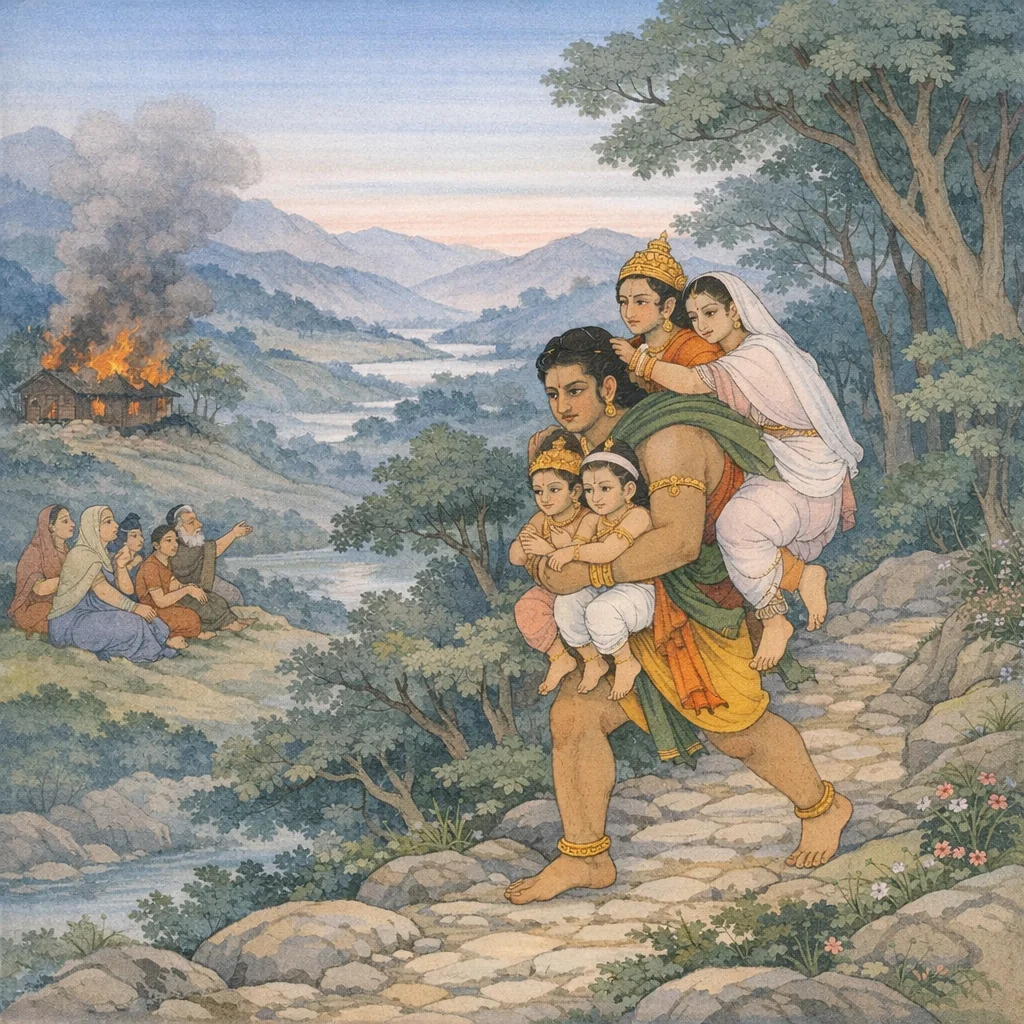
Chapter Arc: रात बीतते ही वारणावत के नागरिक उतावले होकर लाक्षागृह के पास दौड़ते हैं—पाण्डवों का हाल जानने, और धुएँ-राख के बीच किसी चमत्कार की आशा लिये। → लोग आग बुझाते-बुझाते देखते हैं कि जातुगृह जलकर ढह चुका है; पुरोचन भी वहीं मरा पड़ा है। नगर में चीख-पुकार उठती है—यह दुर्योधन का पापकर्म है, पाण्डव-विनाश का षड्यंत्र। शोक-क्रिया की तैयारी होती है; ‘हा फाल्गुन!’ ‘हा यमौ!’ कहकर जनता जल अर्पित करती है। विदुर भीतर-भीतर सब समझते हुए भी शोक को संयत रखते हैं और हित-कार्य का उपाय सोचते हैं। → धर्मराज के संकेत पर भीम अपनी महाबल से कुन्ती और भाइयों को उठाकर शीघ्रता से सुरक्षित मार्ग पर ले चलता है—नगर के शोक और शत्रुओं की निगाहों के बीच पाण्डवों का गुप्त पलायन निर्णायक बन जाता है। → बाहर की दुनिया के लिए पाण्डव ‘मृत’ माने जाते हैं; भीतर की कथा में वे वन-प्रवेश की ओर बढ़ते हैं—जीवित रहकर धर्म-यात्रा और भविष्य के प्रतिशोध की भूमि तैयार करते हुए। → पाण्डव अब अज्ञात पथ पर हैं—क्या वे पीछा करने वालों से बच पाएँगे, और किस आश्रय/सहायता से आगे का जीवन टिकेगा?
Shlokas
Verse 1
वैशम्पायनजी कहते हैं--जनमेजय! उधर रात व्यतीत होनेपर वारणावत नगरके सारे नागरिक बड़ी उतावलीके साथ पाण्डुकुमारोंकी दशा देखनेके लिये उस लाक्षागृहके समीप आये
Vaiśampāyana said: “O Janamejaya, when the night had passed, all the citizens of the city of Vāraṇāvata, driven by anxious urgency, came near that house of lac to see what had become of the sons of Pāṇḍu.”
Verse 2
निर्वापयन्तो ज्वलनं ते जना ददृशुस्तत: । जातुषं तद् गृहं दग्धममात्यं च पुरोचनम्,आते ही वे (सब) लोग आग बुझानेमें लग गये। उस समय उन्होंने देखा कि सारा घर लाखका बना था, जो जलकर खाक हो गया। उसीमें मन्त्री पुरोचन भी जल गया था
As the people hurried to extinguish the blaze, they then saw that the entire house—made of lac—had been reduced to ashes; and within it the minister Purocana too had been burned. The episode underscores how a deceitful plot meant to destroy the innocent rebounds upon its author, revealing the moral peril of adharma and treachery.
Verse 3
नूनं दुर्योधनेनेदं विहितं पापकर्मणा । पाण्डवानां विनाशायेत्येवं ते चुक्कुशुर्जना:,(यह देख) वे (सभी) नागरिक चिल्ला-चिल्लाकर कहने लगे कि “अवश्य ही पापाचारी दुर्योधनने पाण्डवोंका विनाश करनेके लिये इस भवनका निर्माण करवाया था
Vaiśampāyana said: “Surely this has been contrived by Duryodhana, that doer of sinful deeds, for the destruction of the Pāṇḍavas”—thus the people cried out loudly. The verse frames public moral judgment: the citizens interpret the event not as accident but as deliberate adharma aimed at annihilating the righteous heirs.
Verse 4
विदिते धृतराष्ट्रस्य धार्तराष्ट्रो न संशय: । दग्धवान् पाण्डुदायादान् न होन॑ प्रतिषिद्धवान्,“इसमें संदेह नहीं कि धुृतराष्ट्रपुत्र दुर्योधनने धृतराष्ट्रकी जानकारीमें पाण्डुपुत्रोंको जलाया है और धृतराष्ट्रने इसे मना नहीं किया
Vaiśaṃpāyana said: “There is no doubt that Duryodhana, the son of Dhṛtarāṣṭra, burned the heirs of Pāṇḍu with Dhṛtarāṣṭra’s knowledge; and Dhṛtarāṣṭra did not forbid it.” The statement underscores a grave ethical failure: complicity through awareness and silence, where a ruler’s duty to restrain wrongdoing is abandoned.
Verse 5
नूनं शांतनवो5पीह न धर्ममनुवर्तते । द्रोणश्न विदुरश्चैव कृपश्चान्ये च कौरवा:,“निश्चय ही इस विषयमें शंतनुनन्दन भीष्मजी भी धर्मका अनुसरण नहीं कर रहे हैं। द्रोण, विदुर, कृपाचार्य तथा अन्य कौरवोंकी भी यही दशा है
Vaiśampāyana said: “Surely, even Bhīṣma, the son of Śantanu, is not here following the path of dharma. The same is true of Droṇa, Vidura, Kṛpa, and the other Kauravas.”
Verse 6
ते वयं धृतराष्ट्रस्य प्रेषयामो दुरात्मन: । संवृत्तस्ते पर: काम: पाण्डवान् दग्धवानसि,“अब हमलोग दुरात्मा धृतराष्ट्रके पास यह संदेश भेज दें कि तुम्हारी सबसे बड़ी कामना पूरी हो गयी। तुम पाण्डवोंको जलानेमें सफल हो गये”
Vaiśampāyana said: “Come, let us send this message to the wicked Dhṛtarāṣṭra: ‘Your greatest desire has been fulfilled. You have succeeded in burning the Pāṇḍavas.’” The line is spoken with bitter irony, exposing the moral collapse in wishing harm upon one’s own kin and treating catastrophe as the satisfaction of desire.
Verse 7
ततो व्यपोहमानास्ते पाण्डवार्थे हुताशनम् । निषादी ददृशुर्दग्धां पठ्चपुत्रामनागसम्,तदनन्तर उन्होंने पाण्डवोंको ढूँढ़नेके लिये जब आगको इधर-उधर हटाया, तब पाँच पुत्रोंके साथ निरपराध भीलनीकी जली लाश देखी
Then, as they pushed aside the fire while searching for the Pāṇḍavas, they saw the charred body of an innocent Niṣādī woman, burned together with her five sons. The discovery underscores a tragic moral misrecognition: the signs meant to confirm the Pāṇḍavas’ death instead reveal the death of the blameless, exposing how deceit and violence can spill over onto the uninvolved.
Verse 8
खनकेन तु तेनैव वेश्म शोधयता बिलम् । पांसुभि: पिहितं तच्च पुरुषैस्तैर्न लक्षितम्,उसी सुरंग खोदनेवाले पुरुषने घरको साफ करते समय सुरंगके छेदको धूलसे ढक दिया था। इससे दूसरे लोगोंकी दृष्टि उसपर नहीं पड़ी
Vaiśampāyana said: The very digger who had made the tunnel, while cleaning the house, covered the opening of the hole with dust. Because it was thus concealed, the other men did not notice it. The episode underscores deliberate secrecy and calculated concealment as tools in a perilous situation, raising ethical tension between survival-driven strategy and straightforward conduct.
Verse 9
ततस्ते ज्ञापयामासुर्धुतराष्ट्रस्य नागरा: । पाण्डवानग्निना दग्धानमात्यं च पुरोचनम्,तदनन्तर वारणावतके नागरिकोंने धृतराष्ट्रको यह सूचित कर दिया कि पाण्डव तथा मन्त्री पुरोचन आगमें जल गये
Then the townspeople informed Dhṛtarāṣṭra that the Pāṇḍavas had been burned by fire, and that the minister Purocana as well. In the narrative’s moral frame, this report—accepted at court as confirmation—shows how adharma can advance through misinformation and convenient belief, while the vulnerable are presumed lost and justice is deferred.
Verse 10
श्र॒ुत्वा तु धृतराष्ट्रस्तद् राजा सुमहदप्रियम् । विनाशं पाण्डुपुत्राणां विललाप सुदु:खित:,महाराज धूृतराष्ट्र पाण्डुपुत्रोंके विनाशका यह अत्यन्त अप्रिय समाचार सुनकर बहुत दुःखी हो विलाप करने लगे---
Vaiśaṃpāyana said: Hearing that exceedingly unwelcome report, King Dhṛtarāṣṭra—deeply distressed at the destruction of Pāṇḍu’s sons—broke into lamentation. The verse underscores how attachment to one’s own and the weight of past choices can overwhelm a ruler’s composure when calamity strikes.
Verse 11
अद्य पाण्डुर्मुतो राजा मम भ्राता महायशा: । तेषु वीरेषु दग्धेषु मात्रा सह विशेषतः,“अहो! मातासहित इन शूरवीर पाण्डवोंके दग्ध हो जानेपर विशेषरूपसे ऐसा लगता है, मानो मेरे भाई महायशस्वी राजा पाण्डुकी मृत्यु आज हुई है
Vaiśampāyana said: “Today it feels as though King Pāṇḍu—my illustrious brother—has died anew. For when those heroic sons have been burned, and especially when their mother too is said to have perished with them, the grief returns with a force as if the old loss has happened again.”
Verse 12
गच्छन्तु पुरुषा: शीघ्र॑ं नगरं वारणावतम् । सत्कारयन्तु तान् वीरान् कुन्तिराजसुतां च ताम्,“मेरे कुछ लोग शीघ्र ही वारणावत नगरमें जायेँ और कुन्तिभोजकुमारी कुन्ती तथा वीरवर पाण्डवोंका आदरपूर्वक दाहसंस्कार करायें
Vaiśampāyana said: “Let men go quickly to the city of Vāraṇāvata. Let them perform the due rites of honor and funeral observances for those heroes, and for that daughter of the Kuntī king as well.” In the narrative context, this is a politically charged instruction: outwardly it appears to uphold social duty toward the dead, while it also serves to manage public perception after a catastrophic event.
Verse 13
कारयन्तु च कुल्यानि शुभानि च बृहन्ति च | ये च तत्र मृतास्तेषां सुहदो यान्तु तानपि,“उन सबके कुलोचित शुभ और महान् संस्कारकी व्यवस्था करें तथा जो-जो उस घरमें जलकर मरे हैं, उनके सुहृद् एवं सगे-सम्बन्धी भी उन मृतकोंका दाह-संस्कार करनेके लिये वहाँ जायूँ
Vaiśampāyana said: “Let the proper family rites be arranged—auspicious and grand. And let the friends and close kin of all who died there also go, so that those dead may receive the due funerary rites.”
Verse 14
एवं गते मया शक््यं यद् यत् कारयितुं हितम् | पाण्डवानां च कुन्त्याश्व तत् सर्व क्रियतां धनै:,“इस दशामें मुझे पाण्डवों तथा कुन्तीका हित करनेके लिये जो-जो कार्य करना चाहिये या जो-जो कार्य मुझसे हो सकता है, वह सब धन खर्च करके सम्पन्न किया जाय।' यों कहकर अम्बिकानन्दन धृतराष्ट्रने जातिभाइयोंसे घिरे रहकर पाण्डवोंके लिये जलांजलि देनेका कार्य किया
Vaiśampāyana said: “Since matters have come to this pass, whatever beneficial action for the Pāṇḍavas and for Kuntī can be carried out by me—whatever is within my power—let all of it be accomplished, even by spending wealth.” Having spoken thus, Dhṛtarāṣṭra, the son of Ambikā, surrounded by his kinsmen, performed the rite of offering water (jalāñjali) for the Pāṇḍavas.
Verse 15
एवमुक्त्वा ततश्नक्रे ज्ञातिभि: परिवारित: । उदकं पाण्डुपुत्राणां धृतराष्ट्रोौडम्बिकासुत:,“इस दशामें मुझे पाण्डवों तथा कुन्तीका हित करनेके लिये जो-जो कार्य करना चाहिये या जो-जो कार्य मुझसे हो सकता है, वह सब धन खर्च करके सम्पन्न किया जाय।' यों कहकर अम्बिकानन्दन धृतराष्ट्रने जातिभाइयोंसे घिरे रहकर पाण्डवोंके लिये जलांजलि देनेका कार्य किया
Vaiśampāyana said: Having spoken thus, Dhṛtarāṣṭra—the son of Ambikā—surrounded by his kinsmen, performed the rite of offering water (a funerary libation) for the sons of Pāṇḍu. In doing so, he also expressed that whatever acts were proper and possible for him to undertake for the welfare of the Pāṇḍavas and of Kuntī should be carried out, even at the cost of spending wealth—framing his response as a duty of kinship and moral responsibility amid loss.
Verse 16
(समेतास्तु ततः सर्वे भीष्मेण सह कौरवा: । धृतराष्ट्र: सपुत्रश्न गड़ामभिमुखा ययु: ।। एकवस्त्रा निरानन्दा निराभरणवेष्टना: । उदकं कर्तुकामा वै पाण्डवानां महात्मनाम् ।।) उस समय भीष्म, सब कौरव तथा पुत्रोंसहित धृतराष्ट्र एकत्र हो महात्मा पाण्डवोंको जलांजलि देनेकी इच्छासे गंगाजीके निकट गये। उन सबके शरीरपर एक-एक ही वस्त्र था। वे सभी आभूषण और पगड़ी आदि उतारकर आनन्दशून्य हो रहे थे। रुरुदु: सहिता: सर्वे भूशं शोकपरायणा: । हा युधिष्ठिर कौरव्य हा भीम इति चापरे,उस समय सब लोग अत्यन्त शोकमग्न हो एक साथ रोने और विलाप करने लगे। कोई कहता--'हा कुरुवंश-विभूषण युधिष्ठिर!” दूसरे कहते--'हा भीमसेन!”
Vaiśampāyana said: Then all the Kauravas, together with Bhīṣma, and Dhṛtarāṣṭra with his sons, assembled and went toward the Gaṅgā, wishing to offer the water-rite (libation) to the great-souled Pāṇḍavas. Wearing only a single garment each, stripped of ornaments and head-wraps, and bereft of joy, they proceeded. All of them, overwhelmed by grief, wept together and cried out—some, “Alas, Yudhiṣṭhira, glory of the Kurus!” and others, “Alas, Bhīma!”
Verse 17
हा फाल्गुनेति चाप्यन्ये हा यमाविति चापरे | कुन्तीमार्ताश्न शोचन्त उदकं चक्रिरे जना:,अन्य कोई बोलते--'हा अर्जुन!” और इसी प्रकार दूसरे लोग “हा नकुल-सहदेव!' कहकर पुकार उठते थे। सब लोगोंने कुन्तीदेवीके लिये शोकार्त होकर जलांजलि दी
Vaiśampāyana said: Some cried out, “Alas, Phālguna (Arjuna)!” while others lamented, “Alas, the twins (Nakula and Sahadeva)!” Grief-stricken, the people mourned for Kuntī and performed the water-offering rites, expressing communal sorrow and the duty of honoring the departed.
Verse 18
अन्ये पौरजनाश्वैवमन्वशोचन्त पाण्डवान् | विदुरस्त्वल्पशश्षक्रे शोक॑ वेद परं हि सः,इसी प्रकार दूसरे-दूसरे पुरवासीजन भी पाण्डवोंके लिये बहुत शोक करने लगे। विदुरजीने बहुत थोड़ा शोक मनाया; क्योंकि वे वास्तविक वृत्तान्तसे परिचित थे
Other townspeople too began to lament for the Pāṇḍavas in the same way. Vidura, however, displayed only a little grief, for he knew the true state of affairs and understood what lay behind these events.
Verse 19
(ततः प्रव्यथितो भीष्म: पाण्डुराजसुतान् मृतान् । सह मात्रेति तच्छुत्वा विललाप रुरोद च ।। भीष्म उवाच न हि तौ नोत्सहेयातां भीमसेनधनंजयौ । तरसा वेगितात्मानौ निर्भेत्तुमपि मन्दिरम् । परासुत्वं न पश्यामि पृथाया: सह पाण्डवै: ।। सर्वथा विकृतं नीत॑ यदि ते निधनं गता: । धर्मराज: स निर्दिष्टो ननु विप्रैर्युधिष्ठिर: ।। सत्यव्रतो धर्मदत्त: सत्यवाक्छुभलक्षण: । कथं कालवशं प्राप्त: पाण्डवेयो युधिष्ठिर: ।। आत्मानमुपमां कृत्वा परेषां वर्तते तु यः । सह मात्रा तु कौरव्य: कथं कालवशं गतः ।। यौवराज्ये5भिषिक्तेन पितुर्येनाहतं यश: । आत्मनश्न पितुश्चिव सत्यधर्मस्य वृत्तिभि: ।। कालेन स हि सम्भग्नो धिक् कृतान्तमनर्थकम् ।। यच्च सा वनवासेन क्लेशिता दुःखभागिनी । पुत्रगृध्नुतया कुन्ती न भर्तारें मृता त्वनु ।। अल्पकालं कुले जाता भर्तुः प्रीतिमवाप या । दग्धाद्य सह पुत्रै: सा असम्पूर्णममनोरथा ।। पीनस्कन्धश्चारुबाहुर्मेरुकूटसमो युवा । मृतो भीम इति श्रुत्वा मनो न श्रद्दधाति मे ।। अनिन्न्द्यानि च यो गच्छन् क्षिप्रहस्तो दृढायुध: । प्रपत्तिमाँललब्धलक्ष्यो रथयानविशारद: ।। दूरपाती त्वसम्भ्रान्तो महावीर्यों महास्त्रवित् । अदीनात्मा नरव्याप्र: श्रेष्ठ: सर्वधनुष्मताम् ।। येन प्राच्या: ससौवीरा दाक्षिणात्याश्र निर्जिता: । ख्यापितं येन शूरेण त्रिषु लोकेषु पौरुषम् ।। यस्मिज्जाते विशोकाभूत् कुन्ती पाण्डुश्व वीर्यवान् पुरन्दरसमो जिष्णु: कथं कालवशं गत: ।। कथं तावृषभस्कन्धौ सिंहविक्रान्तगामिनौ । मर्त्यधर्ममनुप्राप्ती यमावरिनिबर्हणौ ।। तदनन्तर भीष्मजी यह सुनकर कि राजा पाण्डुके पुत्र अपनी माताके साथ जल मरे हैं, अत्यन्त व्यथित हो उठे और रोने एवं विलाप करने लगे। भीष्मजी बोले--वे दोनों भाई भीमसेन और अर्जुन उत्साह-शून्य हो गये हों, ऐसा तो नहीं प्रतीत होता। यदि वे वेगसे अपने शरीरका धक्का देते तो सुदृढ़ मकानको भी तोड़- फोड़ सकते थे। अतः पाण्डवोंके साथ कुन्तीकी मृत्यु हो गयी है, ऐसा मुझे नहीं दिखायी देता। यदि सचमुच उन सबकी मृत्यु हो चुकी है, तब तो यह सभी प्रकारसे बहुत बुरी बात हुई है। ब्राह्मणोंने तो धर्मराज युधिष्ठिरके विषयमें यह कहा था कि ये धर्मके दिये हुए राजकुमार सत्यव्रती, सत्यवादी एवं शुभ लक्षणोंसे सम्पन्न होंगे। ऐसे वे पाण्डुनन्दन युधिष्छिर कालके अधीन कैसे हो गये? जो अपने-आपको आदर्श बनाकर तदनुरूप दूसरोंके साथ बर्ताव करते थे वे ही कुरुकुलशिरोमणि युधिष्ठिर अपनी माताके साथ कालके अधीन कैसे हो गये? जिन्होंने युवराजपदपर अभिषिक्त होते ही पिताके समान ही अपने सत्य एवं धर्मपूर्ण बर्तावके द्वारा अपना ही नहीं, राजा पाण्डुके भी यशका विस्तार किया था, वे युधिष्ठिर भी कालके अधीन हो गये। ऐसे निकम्मे कालको धिक््कार है। उत्तम कुलमें उत्पन्न कुन्ती, जो पुत्रोंकी अभिलाषा रखनेके कारण ही वनवासका कष्ट भोगती और दुःखपर दुःख उठाती रही तथा पतिके मरनेपर भी उनका अनुगमन न कर सकी, जिसे बहुत थोड़े समयतक ही पतिका प्रेम प्राप्त हुआ था, वही कुन्तिभोजकुमारी अभी अपने मनोरथ पूरे भी न कर पायी थी कि पुत्रोंके साथ दग्ध हो गयी! जिनके भरे हुए कंधे और मनोहर भुजाएँ थीं, जो मेर-शिखरके समान सुन्दर एवं तरुण थे, वे भीमसेन मर गये, यह सुनकर भी मनको विश्वास नहीं होता। जो सदा उत्तम मार्गोंपर चलते थे, जिनके हाथोंमें बड़ी फुर्ती थी, जिनके आयुध अत्यन्त दृढ़ थे, जो गुरुजनोंके आश्रित रहते थे, जिनका निशाना कभी चूकता नहीं था, जो रथ हाँकनेमें कुशल, दूरतकका लक्ष्य बेधनेवाले, कभी व्याकुल न होनेवाले, महापराक्रमी और महान् अस्त्रोंके ज्ञाता थे, जिनके हृदयमें कभी दीनता नहीं आती थी, जो मनुष्योंमें सिंहके समान पराक्रमी तथा सम्पूर्ण धनुर्धरोंमें श्रेष्ठ थे, जिन्होंने प्राच्य, सौवीर और दाक्षिणात्य नरेशोंको परास्त किया था, जिस शूरवीरने तीनों लोकोंमें अपने पुरुषार्थको प्रसिद्ध किया था और जिनके जन्म लेनेपर कुन्ती और महापराक्रमी पाण्डु भी शोकरहित हो गये थे, वे इन्द्रके समान विजयी वीर अर्जुन भी कालके अधीन कैसे हो गये? जो बैलके-से हृष्ट-पुष्ट कंधोंसे सुशोभित थे तथा सिंहकी-सी मस्तानी चालसे चलते थे, वे शत्रुओंका संहार करनेवाले नकुल-सहदेव सहसा मृत्युको कैसे प्राप्त हो गये? वैशम्पायन उवाच तस्य विक्रन्दितं श्रुत्वा उदकं॑ च प्रसिज्चत: । देशकालं समाज्ञाय विदुर: प्रत्यभाषत ।। मा शोचीस्त्वं नरव्यापत्र जहि शोकं महाव्रत । न तेषां विद्यते पापं प्राप्तकालं कृतं मया । एतच्च तेभ्य उदकं विप्रसिज्च न भारत ।। सो<ब्रवीत् किंचिदुत्सार्य कौरवाणामशृण्वताम् | क्षत्तारमुपसंगृहा बाष्पोत्पीडकलस्वर: ।। वैशम्पायनजी कहते हैं--जलांजलि-दान देते समय भीष्मजीका यह विलाप सुनकर विदुरजीने देश और कालका भलीभाँति विचार करके कहा--“नरश्रेष्ठ] आप दु:खी न हों। महाव्रती वीर! आप शोक त्याग दें, पाण्डवोंकी मृत्यु नहीं हुई है। मैंने उस अवसरपर जो उचित था, वह कार्य कर दिया है। भारत! आप उन पाण्डवोंके लिये जलांजलि न दें।” तब भीष्मजी विदुरका हाथ पकड़कर उन्हें कुछ दूर हटा ले गये, जहाँसे कौरवलोग उनकी बात न सुन सकें। फिर वे आँसू बहाते हुए गद्गद वाणीमें बोले। भीष्म उवाच कथं ते तात जीवन्ति पाण्डो: पुत्रा महारथा: । कथमस्मत्कृते पक्ष: पाण्डोर्न हि निपातितः ।। कथं मत्प्रमुखा: सर्वे प्रमुक्ता महतो भयात् | जननी गरुडेनेव कुमारास्ते समुद्धृता: ।। भीष्मजीने कहा--तात! पाण्डुके वे महारथी पुत्र कैसे जीवित बच गये? पाण्डुका पक्ष किस तरह हमारे लिये नष्ट होनेसे बच गया? जैसे गरुड़ने अपनी माताकी रक्षा की थी, उसी प्रकार तुमने किस तरह पाण्डुकुमारोंको बचाकर हम सब लोगोंकी महान् भयसे रक्षा की है? वैशम्पायन उवाच एवमुक्तस्तु कौरव्य कौरवाणामशृण्वताम् । आचचक्षे स धर्मात्मा भीष्मायाद्भुतकर्मणे ।। वैशम्पायनजी कहते हैं--जनमेजय! इस प्रकार पूछे जानेपर धर्मात्मा विदुरने कौरवोंके न सुनते हुए अद्भुत कर्म करनेवाले भीष्मजीसे इस प्रकार कहा-- विदुर उवाच धृतराष्ट्रस्य शकुने राज्ञो दुर्योधनस्य च । विनाशे पाण्डुपुत्राणां कृतो मतिविनिश्चय: ।। ततो जतुगृहं गत्वा दहने5स्मिन् नियोजिते । पृथायाश्न सपुत्राया धार्तराष्ट्स्य शासनात् ।। ततः खनकमाहूय सुरझ्भां वै बिले तदा । सगुहां कारयित्वा ते कुन्त्या पाण्डुसुतास्तदा ।। निष्क्रामिता मया पूर्व मा सम शोके मन: कृथा: । निर्गता: पाण्डवा राजन् मात्रा सह परंतपा: ।। अग्निदाहान्महाघोरान्मया तस्मादुपायत: । मा सम शोकमिमं कार्षीर्जीवन्त्येव च पाण्डवा: ।। प्रच्छन्ना विचरिष्यन्ति यावत् कालस्य पर्यय: ।। तस्मिन् युधिष्ठिरं काले दक्ष्यन्ति भुवि भूमिपा: ।) विदुर बोले--धूृतराष्ट्र शकुनि तथा राजा दुर्योधनका यह पक्का विचार हो गया था कि पाण्डवोंको नष्ट कर दिया जाय। तदनन्तर लाक्षागृहमें जानेपर जब दुर्योधनकी आज्ञासे पुत्रोंसहित कुन्तीको जला देनेकी योजना बन गयी, तब मैंने एक भूमि खोदनेवालेको बुलाकर भूगर्भमें गुफासहित सुरंग खुदवायी और कुन्तीसहित पाण्डवोंको घरमें आग लगनेसे पहले ही निकाल लिया, अतः आप अपने मनमें शोकको स्थान न दीजिये। राजन! शत्रुओंको संताप देनेवाले पाण्डव अपनी माताके साथ उस महाभयंकर अग्निदाहसे दूर निकल गये हैं। मेरे पूर्वोक्त उपायसे ही यह कार्य सम्भव हो सका है। पाण्डव निश्चय ही जीवित हैं, अतः आप उनके लिये शोक न कीजिये। जबतक यह समय बदलकर अनुकूल नहीं हो जाता, तबतक वे पाण्डव छिपे रहकर इस भूतलपर विचरेंगे। अनुकूल समय आनेपर सब राजा इस पृथ्वीपर युधिष्ठिरको देखेंगे। पाण्डवाश्वापि निर्गत्य नगराद् वारणावतात् | नदीं गड्जभामनुप्राप्ता मातृषष्ठा महाबला:,(इधर) महाबली पाण्डव भी वारणावत नगरसे निकलकर माताके साथ गंगा नदीके तटपर पहुँचे
Vidura said: “Dhṛtarāṣṭra, Śakuni, and King Duryodhana reached a firm resolve to destroy the sons of Pāṇḍu. Then, when the lac-house was prepared and the plan was set in motion to burn Pṛthā (Kuntī) together with her sons—by order of the Dhārtarāṣṭra— I summoned a digger and had a tunnel made underground, with a concealed chamber. By that means I brought Kuntī and the Pāṇḍava princes out beforehand. Therefore, do not give your mind over to grief, O King. The Pāṇḍavas, tormenters of foes, have escaped with their mother from that most dreadful fire, through the stratagem I employed. Do not indulge this sorrow: the Pāṇḍavas are indeed alive. They will move about in concealment until the turn of time changes; and when that time arrives, the kings of the earth will behold Yudhiṣṭhira upon this world.”
Verse 20
दाशानां भुजवेगेन नद्या: स्रोतोजवेन च | वायुना चानुकूलेन तूर्ण पारमवाप्रुवन्,वे नाविकोंकी भुजाओं तथा नदीके प्रवाहके वेगसे अनुकूल वायुकी सहायता पाकर जल्दी ही पार उतर गये
Vidura said: Aided by the strong strokes of the boatmen, by the swift current of the river, and by a favorable wind, they quickly reached the far shore. The passage underscores how timely cooperation—human effort aligned with natural forces—brings a safe and speedy crossing in moments of urgency.
Verse 21
ततो नावं परित्यज्य प्रययुर्दक्षिणां दिशम् विज्ञाय निशि पन्थानं नक्षत्रगणसूचितम्,तदनन्तर नाव छोड़ रातमें नक्षत्रोंद्वारा सूचित मार्गको पहचानकर वे दक्षिण दिशाकी ओर चल दिये
Then, leaving the boat behind, they set out toward the southern direction. Having recognized in the night the route indicated by the constellations, they proceeded onward—moving with alertness and discretion in a time of danger.
Verse 22
यतमाना वनं राजन् गहन प्रतिपेदिरे । ततः श्रान्ता: पिपासार्ता निद्रान्धा: पाण्डुनन्दना:,राजन! इस प्रकार आगे बढ़नेकी चेष्टा करते हुए वे सब-के-सब एक घने जंगलमें जा पहुँचे। उस समय पाण्डवलोग थके-माँदे, प्याससे पीड़ित और (अधिक जगनेसे) नींदमें अंधे-से हो रहे थे। वे महापराक्रमी भीमसेनसे पुनः इस प्रकार बोले--'भारत! इससे बढ़कर महान् कष्ट क्या होगा कि हमलोग इस घने जंगलमें फँसकर दिशाओंको भी नहीं जान पाते तथा चलने-फिरनेमें भी असमर्थ हो रहे हैं
Vidura said: “Striving onward, O King, they all entered a dense forest. Then the sons of Pāṇḍu—exhausted, tormented by thirst, and as though blinded by sleep from prolonged wakefulness—found themselves overwhelmed.”
Verse 23
पुनरूचुर्महावीर्य भीमसेनमिदं वच: । इत: कष्टतरं कि नु यद् वयं गहने वने । दिशश्व न विजानीमो गन्तुं चैव न शकनुम:,राजन! इस प्रकार आगे बढ़नेकी चेष्टा करते हुए वे सब-के-सब एक घने जंगलमें जा पहुँचे। उस समय पाण्डवलोग थके-माँदे, प्याससे पीड़ित और (अधिक जगनेसे) नींदमें अंधे-से हो रहे थे। वे महापराक्रमी भीमसेनसे पुनः इस प्रकार बोले--'भारत! इससे बढ़कर महान् कष्ट क्या होगा कि हमलोग इस घने जंगलमें फँसकर दिशाओंको भी नहीं जान पाते तथा चलने-फिरनेमें भी असमर्थ हो रहे हैं
Again they addressed the mighty Bhīmasena with these words: “What hardship could be greater than this—that we are trapped in a dense forest, unable even to discern the directions, and not capable of moving onward?” In the narrative context, the Pāṇḍavas’ physical exhaustion and disorientation become a moral test of endurance and mutual reliance, pressing them to seek strength and guidance from the one most able to protect and lead.
Verse 24
तं च पापं न जानीमो यदि दग्ध:ः पुरोचन: । कथं तु विप्रमुच्येम भयादस्मादलक्षिता:,“हमें यह भी पता नहीं है कि पापी पुरोचन जल गया या नहीं। हम दूसरोंसे छिपे रहकर किस प्रकार इस महान् कष्टसे छुटकारा पा सकेंगे?”
Vidura says: “We do not even know whether that sinful Purocana has been burned to death. And if we must remain unnoticed by others, how are we to free ourselves from this fear and peril?”
Verse 25
पुनरस्मानुपादाय तथैव व्रज भारत । त्वं हि नो बलवानेको यथा सततगस्तथा,'भैया! तुम पुन: पूर्ववत् हम सबको लेकर चलो। हमलोगोंमें एक तुम्हीं अधिक बलवान् और उसी प्रकार निरन्तर चलने-फिरनेमें भी समर्थ हो'
Vidura said: “O Bhārata, take us up again and proceed just as before. Among us, you alone are the strong one—and likewise the one capable of moving on continuously without faltering.”
Verse 26
इत्युक्तो धर्मराजेन भीमसेनो महाबल: । आदाय कुन्तीं भ्रातृंश्ष जगामाशु महाबल:,धर्मराजके यों कहनेपर महाबली भीमसेन माता कुन्ती तथा भाइयोंको अपने ऊपर चढ़ाकर बड़ी शीघ्रताके साथ चलने लगे
Thus instructed by Dharmarāja (Yudhiṣṭhira), the mighty Bhīmasena, gathering up Kuntī and his brothers, set out at once with great speed and strength—acting promptly in obedience to righteous counsel and in protection of his family.
Verse 149
इति श्रीमहाभारते आदिपर्वणि जतुगृहपर्वणि पाण्डववनप्रवेशे एकोनपञ्चाशदधिकशततमो< ध्याय:,इस प्रकार श्रीमह्या भारत आदिपर्वके अन्तर्गत जतुयृहपर्वरमें पाण्डवोंका वनमें प्रवेशविषयक एक सौ उनचासवाँ अध्याय पूरा हुआ
Thus ends, in the Śrī Mahābhārata, within the Ādi Parva, in the section concerning the Lac House episode, the one-hundred-and-forty-ninth chapter describing the Pāṇḍavas’ entry into the forest. (This is a colophon marking the close of the chapter rather than a spoken verse.)
Frequently Asked Questions
Whether it is ethically permissible to expose Bhīma to danger for the sake of a host brāhmaṇa and the town—balancing familial duty to protect one’s own against reciprocal obligation and the public-good imperative to end predation.
Dharma is argued as reasoned action under constraints: gratitude and protection of the vulnerable can justify calculated risk when capability is adequate and intentions are aligned with social welfare rather than personal gain.
No formal phalaśruti is stated; however, the chapter provides meta-ethical framing by attributing the graded merit of protecting different social groups to Vyāsa’s prior instruction, presenting the episode as exemplary dharma rather than mere adventure.