Adhyaya 139
आदि पर्व, अध्याय 139 — Hiḍimba’s Detection and Hiḍimbā’s Approach to Bhīma
Upa-parva: Hiḍimbavadha / Hiḍimbopākhyāna (Episode of Hiḍimba and Hiḍimbā)
Vaiśaṃpāyana describes Hiḍimba, a powerful rākṣasa stationed near a śāla tree, who senses the human presence and expresses predatory intent in vivid bodily imagery (fangs, hunger, and the anticipation of blood). He commands his sister Hiḍimbā to identify the sleepers and bring them for consumption. Hiḍimbā hastens to the site and observes the Pāṇḍavas with Kuntī; Bhīma alone remains awake and vigilant. Upon seeing Bhīma’s physique and radiance, Hiḍimbā experiences attraction and resolves not to carry out her brother’s violent plan. Adopting an appealing human form, she approaches Bhīma with courteous inquiry, warns him that the forest is frequented by Hiḍimba, admits she was sent to facilitate harm, and requests Bhīma’s acceptance and protection, offering mobility and safety. Bhīma responds by prioritizing familial duty: he rejects abandoning his mother and brothers, refuses to wake them from fear, asserts confidence against rākṣasa power, and invites Hiḍimbā to do as she wishes—including summoning her brother—thereby positioning himself as guardian and imminent responder.
Chapter Arc: एक वर्ष बीतते ही हस्तिनापुर में युधिष्ठिर के युवराजाभिषेक की चर्चा उठती है—धृतराष्ट्र के मन में राज्य-स्थैर्य और वंश-प्रतिष्ठा का विचार, पर भीतर कहीं अनकहा भय भी। → वैशम्पायन बताते हैं कि युधिष्ठिर धृति, स्थैर्य, सहिष्णुता, अनृशंसता और आर्जव से पिता पाण्डु की कीर्ति को ढँकने लगता है। उधर अर्जुन की अद्वितीय धनुर्विद्या, युद्ध-कौशल (गदा, खड्ग, रथ, धनुष) और तीर्थ-तीर्थ जाने की तैयारी/प्रतिज्ञा जैसी बातें पाण्डवों की बढ़ती प्रभा को और तेज करती हैं। यह तेज धृतराष्ट्र के हृदय में शंका और असूया का बीज बो देता है। → अर्जुन के पराक्रम का चरम वर्णन—भीम की सहायता से एक ही रथ पर आरूढ़ होकर ‘प्राच्यान् सर्वान्’ अनेक रथियों को जीत लेना—और उसी क्षण धृतराष्ट्र का मन पाण्डवों के प्रति दूषित हो उठता है; राजा रात में निद्रा नहीं पाता। → बाह्य रूप से राजकाज चलता है और पाण्डवों की प्रतिष्ठा बढ़ती है, पर अंतःपुर में धृतराष्ट्र की चिंता स्थिर हो जाती है—यह चिंता आगे की राजनीति का आधार बनती है। → धृतराष्ट्र की अनिद्रा और बढ़ती शंका संकेत देती है कि वह पाण्डवों की उन्नति को रोकने हेतु कोई उपाय सोचेगा—अगला अध्याय उसी मनोवृत्ति को कर्म में ढालने की ओर बढ़ेगा।
Shlokas
Verse 1
(दाक्षिणात्य अधिक पाठके ७६ श्लोक मिलाकर कुल ८४३ “लोक हैं) न२्््च्य्निनास् श््य नी्-नत्तज्स अष्टात्रिशर्दाधिकशततमो< ध्याय: युधिष्ठिरका युवराजपदपर अभिषेक, पाण्डवोंके शौर्य, कीर्ति और बलके विस्तारसे धृतराष्ट्रको चिन्ता वैशम्पायन उवाच ततः संवत्सरस्यान्ते यौवराज्याय पार्थिव । स्थापितो धृतराष्ट्रेण पाण्डुपुत्रो युधिष्ठिर:,वैशम्पायनजी कहते हैं--राजन्! तदनन्तर एक वर्ष बीतनेपर धृतराष्ट्रने पाण्डुपुत्र युधिष्ठिरको धृति, स्थिरता, सहिष्णुता, दयालुता, सरलता तथा अविचल सौहार्द आदि सदगुणोंके कारण पालन करनेयोग्य प्रजापर अनुग्रह करनेके लिये युवराजपदपर अभिषिक्त कर दिया
Vaiśampāyana said: Then, at the end of a year, O king, Dhṛtarāṣṭra installed Pāṇḍu’s son Yudhiṣṭhira as heir-apparent (crown prince). The act signals a public endorsement of Yudhiṣṭhira’s fitness to protect and favor the people through steadiness, forbearance, and righteous governance—yet it also sets the stage for inner anxiety and political tension within the Kuru house.
Verse 2
धृतिस्थैर्यसहिष्णुत्वादानृशंस्यात् तथार्जवात् भृत्यानामनुकम्पार्थ तथैव स्थिरसौहृदात्,वैशम्पायनजी कहते हैं--राजन्! तदनन्तर एक वर्ष बीतनेपर धृतराष्ट्रने पाण्डुपुत्र युधिष्ठिरको धृति, स्थिरता, सहिष्णुता, दयालुता, सरलता तथा अविचल सौहार्द आदि सदगुणोंके कारण पालन करनेयोग्य प्रजापर अनुग्रह करनेके लिये युवराजपदपर अभिषिक्त कर दिया
Vaiśampāyana said: O King, because of (Yudhiṣṭhira’s) steadfastness, firmness, forbearance, compassion, straightforwardness, and unwavering goodwill, Dhṛtarāṣṭra—after a year had passed—installed Pāṇḍu’s son Yudhiṣṭhira as heir-apparent, intending thereby to show favor to the people and to extend benevolent care to those dependent upon the throne.
Verse 3
ततो<दीर्घेण कालेन कुन्तीपुत्रो युधिष्ठिर: । पितुरन्तर्दधे कीर्ति शीलवृत्तसमाधिभि:,इसके बाद थोड़े ही दिनोंमें कुन्तीकुमार युधिष्ठिरने अपने शील (उत्तम स्वभाव), वृत्त (सदाचार एवं सदव्यवहार) तथा समाधि (मनोयोगपूर्वक प्रजापालनकी प्रवृत्ति)-के द्वारा अपने पिता महाराज पाण्डुकी कीर्तिको भी ढक दिया
Then, after a long passage of time, Kuntī’s son Yudhiṣṭhira, by his noble character, righteous conduct, and concentrated dedication to governance, so surpassed that he seemed to eclipse even the fame of his father, King Pāṇḍu.
Verse 4
असियुद्धे गदायुद्धे रथयुद्धे च पाण्डव: । संकर्षणादशिक्षद् वै शश्वच्छिक्षां वृकोदर:,पाण्डुनन्दन भीमसेन बलरामजीसे नित्यप्रति खड्गयुद्ध, गदायुद्ध तथा रथयुद्धकी शिक्षा लेने लगे
Vaiśampāyana said: In sword-fighting, mace-fighting, and chariot warfare, Bhīma—the Pāṇḍava known as Vṛkodara—continually received training from Saṅkarṣaṇa (Balarāma). The passage highlights disciplined apprenticeship in the arts of war, implying that martial power is to be grounded in sustained instruction under a worthy teacher rather than mere impulse or brute strength.
Verse 5
समाप्तशिक्षो भीमस्तु द्युमत्सेनसमो बले । पराक्रमेण सम्पन्नो भ्रातृणामचरद् वशे,शिक्षा समाप्त होनेपर भीमसेन बलमें राजा द्युमत्सेनके समान हो गये और पराक्रमसे सम्पन्न हो अपने भाइयोंके अनुकूल रहने लगे
Vaiśampāyana said: When Bhīma had completed his training, he became equal in strength to King Dyumatsena. Endowed with valor, he thereafter lived in harmony with his brothers, keeping himself under their wishes—showing disciplined power guided by family concord rather than pride.
Verse 6
प्रगाढदृढमुष्टित्वे लाघवे वेधने तथा । क्षुनाराचभल्लानां विपाठानां च तत्त्ववित्,अर्जुन अत्यन्त दृढ़तापूर्वक मुद्ठीसे धनुषको पकड़नेमें, हाथोंकी फुर्तीमें और लक्ष्यको बींधनेमें बड़े चतुर निकले। वे क्षुरु, नाराचः, भललः और विपाठ४ नामक ऋजु, वक्र और विशाल” अस्त्रोंके संचालनका गूढ़ तत्त्व अच्छी तरह जानते और उनका सफलतापूर्वक प्रयोग कर सकते थे। इसलिये द्रोणाचार्यको यह दृढ़ विश्वास हो गया था कि फुर्ती और सफाईमें अर्जुनके समान दूसरा कोई योद्धा इस जगतमें नहीं है। एक दिन द्रोणने कौरवोंकी भरी सभामें निद्राको जीतनेवाले अर्जुनसे कहा---
Vaiśampāyana said: Arjuna proved exceptionally skilled in gripping the bow with a firm, unshakable fist, in quickness of hand, and in piercing the target. He thoroughly understood the inner principles of handling and deploying weapons such as the kṣura, nārāca, bhalla, and vipāṭha, and could apply them effectively. Therefore Droṇācārya became firmly convinced that, in agility and clean execution, there was no other warrior in the world equal to Arjuna.
Verse 7
ऋजुवक्रविशालानां प्रयोक्ता फाल्गुनो5भवत् | लाघवे सौष्ठवे चैव नान्य: कश्षन विद्यते,अर्जुन अत्यन्त दृढ़तापूर्वक मुद्ठीसे धनुषको पकड़नेमें, हाथोंकी फुर्तीमें और लक्ष्यको बींधनेमें बड़े चतुर निकले। वे क्षुरु, नाराचः, भललः और विपाठ४ नामक ऋजु, वक्र और विशाल” अस्त्रोंके संचालनका गूढ़ तत्त्व अच्छी तरह जानते और उनका सफलतापूर्वक प्रयोग कर सकते थे। इसलिये द्रोणाचार्यको यह दृढ़ विश्वास हो गया था कि फुर्ती और सफाईमें अर्जुनके समान दूसरा कोई योद्धा इस जगतमें नहीं है। एक दिन द्रोणने कौरवोंकी भरी सभामें निद्राको जीतनेवाले अर्जुनसे कहा---
Vaiśampāyana said: Phālguna (Arjuna) became the adept user of straight-flying, curved, and broad-headed missiles. In lightness of hand and in refined skill there was, indeed, no other to equal him. The verse underscores how disciplined mastery and steadiness in practice make Arjuna uniquely fit for the responsibilities of a warrior trained under Droṇa—skill joined to control, not mere force.
Verse 8
बीभत्सुसदृशो लोके इति द्रोणो व्यवस्थित: । ततोअब्रवीद् गुडाकेशं द्रोण: कौरवसंसदि,अर्जुन अत्यन्त दृढ़तापूर्वक मुद्ठीसे धनुषको पकड़नेमें, हाथोंकी फुर्तीमें और लक्ष्यको बींधनेमें बड़े चतुर निकले। वे क्षुरु, नाराचः, भललः और विपाठ४ नामक ऋजु, वक्र और विशाल” अस्त्रोंके संचालनका गूढ़ तत्त्व अच्छी तरह जानते और उनका सफलतापूर्वक प्रयोग कर सकते थे। इसलिये द्रोणाचार्यको यह दृढ़ विश्वास हो गया था कि फुर्ती और सफाईमें अर्जुनके समान दूसरा कोई योद्धा इस जगतमें नहीं है। एक दिन द्रोणने कौरवोंकी भरी सभामें निद्राको जीतनेवाले अर्जुनसे कहा---
Vaiśampāyana said: Drona became firmly convinced that in this world there was none equal to Bībhatsu (Arjuna). Then, in the assembly of the Kauravas, Drona addressed Guḍākeśa (Arjuna)—setting the stage to acknowledge his unmatched skill and to speak to him publicly before the princes.
Verse 9
अगस्त्यस्य थनुर्वेदे शिष्यो मम गुरु: पुरा । अग्निवेश इति ख्यातस्तस्य शिष्यो5स्मि भारत,“भारत! मेरे गुरु अग्निवेश नामसे विख्यात हैं। उन्होंने पूर्वकालमें महर्षि अगस्त्यसे धनुर्वेदकी शिक्षा प्राप्त की थी। मैं उन्हीं महात्मा अग्निवेशका शिष्य हूँ। एक पात्र (गुरु)-से दूसरे (सुयोग्य शिष्य)-को इसकी प्राप्ति करानेके उद्देश्यसे सर्वथा उद्यत होकर मैंने तुम्हें यह ब्रह्मशिर नामक अस्त्र प्रदान किया, जो मुझे बड़ी तपस्यासे मिला था। वह अमोघ अस्त्र वज्रके समान प्रकाशमान है। उसमें समूची पृथ्वीको भी भस्म कर डालनेकी शक्ति है। मुझे वह अस्त्र देते समय गुरु अग्निवेशजीने कहा था, “शक्तिशाली भारद्वाज! तुम यह अस्त्र मनुष्योंपर न चलाना। मनुष्येतर प्राणियोंमें भी जो अल्पवीर्य हों, उनपर भी इस अस्त्रको न छोड़ना।” वीर अर्जुन! इस दिव्य अस्त्रको तुमने मुझसे पा लिया है। दूसरा कोई इसे नहीं प्राप्त कर सकता। राजकुमार! इस अस्त्रके सम्बन्धमें मुनिके बताये हुए इस नियमका तुम्हें भी पालन करना चाहिये। अब तुम अपने भाई-बन्धुओंके सामने ही मुझे एक गुरु-दक्षिणा दो'
Vaiśampāyana said: “O Bhārata, my teacher in former times was a disciple of Agastya in the science of archery. He was renowned by the name Agniveśa; and I am the disciple of that Agniveśa.”
Verse 10
तीर्थात् तीर्थ गमयितुमहमेतत् समुद्यत: । तपसा यन्मया प्राप्तममोघमशनिप्रभम्,“भारत! मेरे गुरु अग्निवेश नामसे विख्यात हैं। उन्होंने पूर्वकालमें महर्षि अगस्त्यसे धनुर्वेदकी शिक्षा प्राप्त की थी। मैं उन्हीं महात्मा अग्निवेशका शिष्य हूँ। एक पात्र (गुरु)-से दूसरे (सुयोग्य शिष्य)-को इसकी प्राप्ति करानेके उद्देश्यसे सर्वथा उद्यत होकर मैंने तुम्हें यह ब्रह्मशिर नामक अस्त्र प्रदान किया, जो मुझे बड़ी तपस्यासे मिला था। वह अमोघ अस्त्र वज्रके समान प्रकाशमान है। उसमें समूची पृथ्वीको भी भस्म कर डालनेकी शक्ति है। मुझे वह अस्त्र देते समय गुरु अग्निवेशजीने कहा था, “शक्तिशाली भारद्वाज! तुम यह अस्त्र मनुष्योंपर न चलाना। मनुष्येतर प्राणियोंमें भी जो अल्पवीर्य हों, उनपर भी इस अस्त्रको न छोड़ना।” वीर अर्जुन! इस दिव्य अस्त्रको तुमने मुझसे पा लिया है। दूसरा कोई इसे नहीं प्राप्त कर सकता। राजकुमार! इस अस्त्रके सम्बन्धमें मुनिके बताये हुए इस नियमका तुम्हें भी पालन करना चाहिये। अब तुम अपने भाई-बन्धुओंके सामने ही मुझे एक गुरु-दक्षिणा दो'
Vaiśampāyana said: “I am fully resolved to pass this on from one worthy recipient to another, as one carries sacred knowledge from pilgrimage-site to pilgrimage-site. This unfailing weapon—radiant like a thunderbolt—was obtained by me through austerity; therefore I now bestow it with the intent that it be transmitted rightly and used under strict restraint.”
Verse 11
अस्त्र ब्रह्मशिरो नाम यद् दहेत् पृथिवीमपि । ददता गुरुणा चोक्तं न मनुष्येष्विदं त्वया,“भारत! मेरे गुरु अग्निवेश नामसे विख्यात हैं। उन्होंने पूर्वकालमें महर्षि अगस्त्यसे धनुर्वेदकी शिक्षा प्राप्त की थी। मैं उन्हीं महात्मा अग्निवेशका शिष्य हूँ। एक पात्र (गुरु)-से दूसरे (सुयोग्य शिष्य)-को इसकी प्राप्ति करानेके उद्देश्यसे सर्वथा उद्यत होकर मैंने तुम्हें यह ब्रह्मशिर नामक अस्त्र प्रदान किया, जो मुझे बड़ी तपस्यासे मिला था। वह अमोघ अस्त्र वज्रके समान प्रकाशमान है। उसमें समूची पृथ्वीको भी भस्म कर डालनेकी शक्ति है। मुझे वह अस्त्र देते समय गुरु अग्निवेशजीने कहा था, “शक्तिशाली भारद्वाज! तुम यह अस्त्र मनुष्योंपर न चलाना। मनुष्येतर प्राणियोंमें भी जो अल्पवीर्य हों, उनपर भी इस अस्त्रको न छोड़ना।” वीर अर्जुन! इस दिव्य अस्त्रको तुमने मुझसे पा लिया है। दूसरा कोई इसे नहीं प्राप्त कर सकता। राजकुमार! इस अस्त्रके सम्बन्धमें मुनिके बताये हुए इस नियमका तुम्हें भी पालन करना चाहिये। अब तुम अपने भाई-बन्धुओंके सामने ही मुझे एक गुरु-दक्षिणा दो'
Vaiśampāyana said: “The weapon called Brahmaśiras—so powerful that it could burn even the earth—was given with a warning from the teacher: ‘You must not employ this against human beings.’” The verse frames the gift of a supreme missile within an ethical boundary: possession of extraordinary power is inseparable from restraint and responsibility.
Verse 12
भारद्वाज विमोक्तव्यमल्पवीर्येष्वपि प्रभो । त्वया प्राप्तमिदं वीर दिव्यं नान््यो5हति त्विदम्,“भारत! मेरे गुरु अग्निवेश नामसे विख्यात हैं। उन्होंने पूर्वकालमें महर्षि अगस्त्यसे धनुर्वेदकी शिक्षा प्राप्त की थी। मैं उन्हीं महात्मा अग्निवेशका शिष्य हूँ। एक पात्र (गुरु)-से दूसरे (सुयोग्य शिष्य)-को इसकी प्राप्ति करानेके उद्देश्यसे सर्वथा उद्यत होकर मैंने तुम्हें यह ब्रह्मशिर नामक अस्त्र प्रदान किया, जो मुझे बड़ी तपस्यासे मिला था। वह अमोघ अस्त्र वज्रके समान प्रकाशमान है। उसमें समूची पृथ्वीको भी भस्म कर डालनेकी शक्ति है। मुझे वह अस्त्र देते समय गुरु अग्निवेशजीने कहा था, “शक्तिशाली भारद्वाज! तुम यह अस्त्र मनुष्योंपर न चलाना। मनुष्येतर प्राणियोंमें भी जो अल्पवीर्य हों, उनपर भी इस अस्त्रको न छोड़ना।” वीर अर्जुन! इस दिव्य अस्त्रको तुमने मुझसे पा लिया है। दूसरा कोई इसे नहीं प्राप्त कर सकता। राजकुमार! इस अस्त्रके सम्बन्धमें मुनिके बताये हुए इस नियमका तुम्हें भी पालन करना चाहिये। अब तुम अपने भाई-बन्धुओंके सामने ही मुझे एक गुरु-दक्षिणा दो'
Vaiśampāyana said: “O lord, this (weapon) must not be discharged even against beings of little strength. O hero, you have obtained this divine (missile); no one else is fit to possess it.”
Verse 13
समयस्तु त्वया रक्ष्यो मुनिसृष्टो विशाम्पते । आचार्यदक्षिणां देहि ज्ञातिग्रामस्य पश्यत:,“भारत! मेरे गुरु अग्निवेश नामसे विख्यात हैं। उन्होंने पूर्वकालमें महर्षि अगस्त्यसे धनुर्वेदकी शिक्षा प्राप्त की थी। मैं उन्हीं महात्मा अग्निवेशका शिष्य हूँ। एक पात्र (गुरु)-से दूसरे (सुयोग्य शिष्य)-को इसकी प्राप्ति करानेके उद्देश्यसे सर्वथा उद्यत होकर मैंने तुम्हें यह ब्रह्मशिर नामक अस्त्र प्रदान किया, जो मुझे बड़ी तपस्यासे मिला था। वह अमोघ अस्त्र वज्रके समान प्रकाशमान है। उसमें समूची पृथ्वीको भी भस्म कर डालनेकी शक्ति है। मुझे वह अस्त्र देते समय गुरु अग्निवेशजीने कहा था, “शक्तिशाली भारद्वाज! तुम यह अस्त्र मनुष्योंपर न चलाना। मनुष्येतर प्राणियोंमें भी जो अल्पवीर्य हों, उनपर भी इस अस्त्रको न छोड़ना।” वीर अर्जुन! इस दिव्य अस्त्रको तुमने मुझसे पा लिया है। दूसरा कोई इसे नहीं प्राप्त कर सकता। राजकुमार! इस अस्त्रके सम्बन्धमें मुनिके बताये हुए इस नियमका तुम्हें भी पालन करना चाहिये। अब तुम अपने भाई-बन्धुओंके सामने ही मुझे एक गुरु-दक्षिणा दो'
Vaiśampāyana said: “O lord of the people, you must safeguard the pledge—this rule laid down by the sage. Now give me the teacher’s fee (guru’s due), in the very sight of your kinsmen.”
Verse 14
ददानीति प्रतिज्ञाते फाल्गुनेनाब्रवीद् गुरु: । युद्धेडहं प्रतियोद्धव्यो युध्यमानस्त्वयानघ,तब अर्जुनने प्रतिज्ञा की--'अवश्य दूँगा।” उनके यों कहनेपर गुरु द्रोण बोले--“निष्पाप अर्जुन! यदि युद्धभूमिमें मैं भी तुम्हारे विरुद्ध लड़नेको आऊँ तो तुम (अवश्य) मेरा सामना करना”
When Phālguna (Arjuna) had pledged, “I will give it,” the teacher spoke: “Blameless Arjuna, if on the battlefield I myself must be fought as an opponent while you are engaged in combat, then you must face me (without shrinking).” The verse frames the guru’s demand as a test of resolve and impartial adherence to one’s vow, even when duty collides with personal reverence.
Verse 15
तथेति च प्रतिज्ञाय द्रोणाय कुरुपुड्गव: । उपसंगृहा चरणौ स प्रायादुत्तरां दिशम्,यह सुनकर कुरुश्रेष्ठ अर्जुनने 'बहुत अच्छा” कहते हुए उनकी इस आज्ञाका पालन करनेकी प्रतिज्ञा की और गुरुके दोनों चरण पकड़कर उन्होंने सर्वोत्तम उपदेश प्राप्त कर लिया
Vaiśampāyana said: Having assented with the words “So be it,” the bull among the Kurus pledged to Droṇa that he would carry out the command. Taking hold of his teacher’s feet in reverence—having received the finest instruction—he then set out toward the northern direction. The verse highlights disciplined obedience to one’s preceptor and the ethic of humility that frames the acquisition of martial knowledge.
Verse 16
स्वभावादगमच्छब्दो महीं सागरमेखलाम् | अर्जुनस्य समो लोके नास्ति कश्रिद् धनुर्धर:,इस प्रकार समुद्रपर्यन्त पृथ्वीपर सब ओर अपने-आप ही यह बात फैल गयी कि संसारमें अर्जुनके समान दूसरा कोई धनुर्धर नहीं है
Vaiśampāyana said: By its own momentum the report spread throughout the earth, girdled by the ocean, that in all the world there was no bowman equal to Arjuna. The verse underscores how true excellence, when grounded in disciplined skill, becomes widely acknowledged without deliberate self-advertisement.
Verse 17
गदायुद्धे$सियुद्धे च रथयुद्धे च पाण्डव: । पारगश्न धनुर्युद्धे बभूवाथ धनंजय:,पाण्डुनन्दन धनंजय गदा, खड्ग, रथ तथा धनुषद्वारा युद्ध करनेकी कलामें पारंगत हुए
Vaiśampāyana said: The Pāṇḍava (Arjuna, Dhanañjaya) became fully accomplished in the arts of combat—skilled in fighting with the mace, with the sword, in chariot-warfare, and especially proficient in archery. The narrative underscores disciplined training and mastery of arms as a kṣatriya duty, preparing him to uphold dharma in the conflicts that would later test the Kurus and Pāṇḍavas.
Verse 18
नीतिमान् सकलां नीति विबुधाधिपतेस्तदा । अवाप्य सहदेवोडपि भ्रातृणां ववृते वशे,सहदेव भी उस समय द्रोणके रूपमें अवतीर्ण देवताओंके आचार्य बृहस्पतिसे सम्पूर्ण नीतिशास्त्रकी शिक्षा पाकर नीतिमान् हो अपने भाइयोंके अधीन (अनुकूल) होकर रहते थे। नकुलने भी द्रोणाचार्यसे ही अस्त्र-शस्त्रोंकी शिक्षा पायी थी। वे अपने भाइयोंको बहुत ही प्रिय थे और विचित्र प्रकारसे युद्ध करनेमें उनकी बड़ी ख्याति थी। वे अतिरथी वीर कहे जाते थे
Vaiśampāyana said: Having then learned the entire science of polity and right conduct from the lord of the wise (Bṛhaspati), Sahadeva too became a man of sound judgment, and he lived in willing compliance with the will of his brothers—showing disciplined humility alongside his learning.
Verse 19
द्रोणेनेव विनीतश्च भ्रातृणां नकुल: प्रिय: । चित्रयोधी समाख्यातो बभूवातिरथोदित:,सहदेव भी उस समय द्रोणके रूपमें अवतीर्ण देवताओंके आचार्य बृहस्पतिसे सम्पूर्ण नीतिशास्त्रकी शिक्षा पाकर नीतिमान् हो अपने भाइयोंके अधीन (अनुकूल) होकर रहते थे। नकुलने भी द्रोणाचार्यसे ही अस्त्र-शस्त्रोंकी शिक्षा पायी थी। वे अपने भाइयोंको बहुत ही प्रिय थे और विचित्र प्रकारसे युद्ध करनेमें उनकी बड़ी ख्याति थी। वे अतिरथी वीर कहे जाते थे
Vaiśaṃpāyana said: Trained as though by Droṇa himself, Nakula was disciplined and well-bred, dear to his brothers. He became renowned as a fighter of varied and artful methods, and was celebrated as an atiratha—an outstanding chariot-warrior.
Verse 20
त्रिवर्षकृतयज्ञस्तु गन्धर्वाणामुपप्लवे । अर्जुनप्रमुखै: पार्थ: सौवीर: समरे हत:,सौवीर देशका राजा, जो गन्धर्वोंके उपद्रव करनेपर भी लगातार तीन वर्षोतक बिना किसी विघ्न-बाधाके यज्ञोंका अनुष्ठान करता रहा, युद्धमें अर्जुन आदि पाण्डवोंके हाथों मारा गया। पराक्रमी राजा पाण्डु भी जिसे वशमें न ला सके थे, उस यवनदेश (यूनान)-के राजाको भी जीतकर अर्जुनने अपने अधीन कर लिया
Vaiśampāyana said: Even though the Gandharvas were causing disturbances, the king of Sauvīra had performed sacrificial rites continuously for three years without interruption; yet in battle he was slain by Pārtha (Arjuna) and the other Pāṇḍavas. The passage underscores a recurring Mahābhārata ethic: ritual merit and steadfast observance of sacrifice do not by themselves guarantee worldly security—kṣatriya power, political conflict, and the consequences of prior actions can still culminate in violent ends.
Verse 21
न शशाक वशे कर्तु यं पाण्डुरपि वीर्यवान् सो<र्जुनेन वशं॑ नीतो राजा5डसीद् यवनाधिप:,सौवीर देशका राजा, जो गन्धर्वोंके उपद्रव करनेपर भी लगातार तीन वर्षोतक बिना किसी विघ्न-बाधाके यज्ञोंका अनुष्ठान करता रहा, युद्धमें अर्जुन आदि पाण्डवोंके हाथों मारा गया। पराक्रमी राजा पाण्डु भी जिसे वशमें न ला सके थे, उस यवनदेश (यूनान)-के राजाको भी जीतकर अर्जुनने अपने अधीन कर लिया
Vaiśaṃpāyana said: Even the mighty Pāṇḍu could not bring that king under his control; yet Arjuna subdued him—the ruler of the Yavanas—bringing him into obedience. The passage underscores Arjuna’s expanding sovereignty and the political-moral ideal that true power is shown not merely by conquest, but by establishing order and submission to rightful authority.
Verse 22
अतीव बलसम्पन्न: सदा मानी कुरून् प्रति । विपुलो नाम सौवीर: शस्तः पार्थेन धीमता,जो अत्यन्त बली तथा कौरवोंके प्रति सदा अभिमान एवं उद्दण्डतापूर्ण बर्ताव करनेवाला था, वह सौवीरनरेश विपुल भी बुद्धिमान् अर्जुनके हाथसे संग्रामभूमिमें मारा गया। जो सदा युद्धके लिये दृढ़ संकल्प किये रहता था, जिसे लोग दत्तामित्रके नामसे जानते थे, उस सौवीरनिवासी सुमित्रका भी अर्जुनने अपने बाणोंसे दमन कर दिया
Vaiśampāyana said: The king of Sauvīra named Vipula—exceedingly strong, ever proud, and habitually insolent toward the Kurus—was struck down on the battlefield by the wise Pārtha (Arjuna).
Verse 23
दत्तामित्र इति ख्यातं संग्रामे कृतनिश्चयम् । सुमित्रं नाम सौवीरमर्जुनोडदमयच्छरै:,जो अत्यन्त बली तथा कौरवोंके प्रति सदा अभिमान एवं उद्दण्डतापूर्ण बर्ताव करनेवाला था, वह सौवीरनरेश विपुल भी बुद्धिमान् अर्जुनके हाथसे संग्रामभूमिमें मारा गया। जो सदा युद्धके लिये दृढ़ संकल्प किये रहता था, जिसे लोग दत्तामित्रके नामसे जानते थे, उस सौवीरनिवासी सुमित्रका भी अर्जुनने अपने बाणोंसे दमन कर दिया
Vaiśampāyana said: Arjuna subdued with his arrows Sumitra, the king of Sauvīra—renowned as “Dattāmitra,” ever firm in resolve for battle. Thus, one celebrated for steadfastness in war was brought under control on the field, showing how martial pride and obstinacy meet their limit before superior prowess and fate in combat.
Verse 24
भीमसेनसहायश्च रथानामयुतं च सः । अर्जुन: समरे प्राच्यान् सर्वानेकरथो5जयत्,इसके सिवा अर्जुनने केवल भीमसेनकी सहायतासे एकमात्र रथपर आरूढ़ हो युद्धमें पूर्व दिशाके सम्पूर्ण योद्धाओं तथा दस हजार रथियोंको जीत लिया
Vaiśampāyana said: With Bhīmasena as his support, Arjuna—though standing alone upon a single chariot—defeated in battle all the warriors of the eastern quarter, and even an array of ten thousand charioteers. The passage underscores Arjuna’s prowess joined with reliance on a trusted ally, presenting victory as a blend of personal valor and steadfast support rather than mere numbers.
Verse 25
तथैवैकरथो गत्वा दक्षिणामजयद् दिशम् । धनौघं प्रापयामास कुरुराष्ट्र धनंजय:,इसी प्रकार एकमात्र रथसे यात्रा करके धनंजयने दक्षिण दिशापर भी विजय पायी और अपने “धनंजय” नामको सार्थक करते हुए कुरुदेशकी राजधनीमें धनकी राशि पहुँचायी
Vaiśampāyana said: In the same manner, traveling with but a single chariot, Dhanaṃjaya conquered the southern quarter as well; and, making his very name ‘winner of wealth’ meaningful, he caused a great flood of riches to be delivered to Kururāṣṭra, the Kuru capital—an act that underscores the king’s duty to secure resources for the realm through disciplined prowess rather than mere plunder.
Verse 26
एवं सर्वे महात्मान: पाण्डवा मनुजोत्तमा: । परराष्ट्राणि निर्जित्य स्वराष्ट्र ववृधु: पुरा,जनमेजय! इस तरह नरश्रेष्ठ महामना पाण्डवोंने प्राचीन कालमें दूसरे राष्ट्रोंकोी जीतकर अपने राष्ट्रकी अभिवृद्धि की
Vaiśampāyana said: Thus, O Janamejaya, all those great-souled Pāṇḍavas—foremost among men—having conquered other kingdoms in ancient times, increased and strengthened their own realm. The statement frames their expansion not as mere aggression but as the consolidation of sovereignty and prosperity after subduing rival powers.
Verse 27
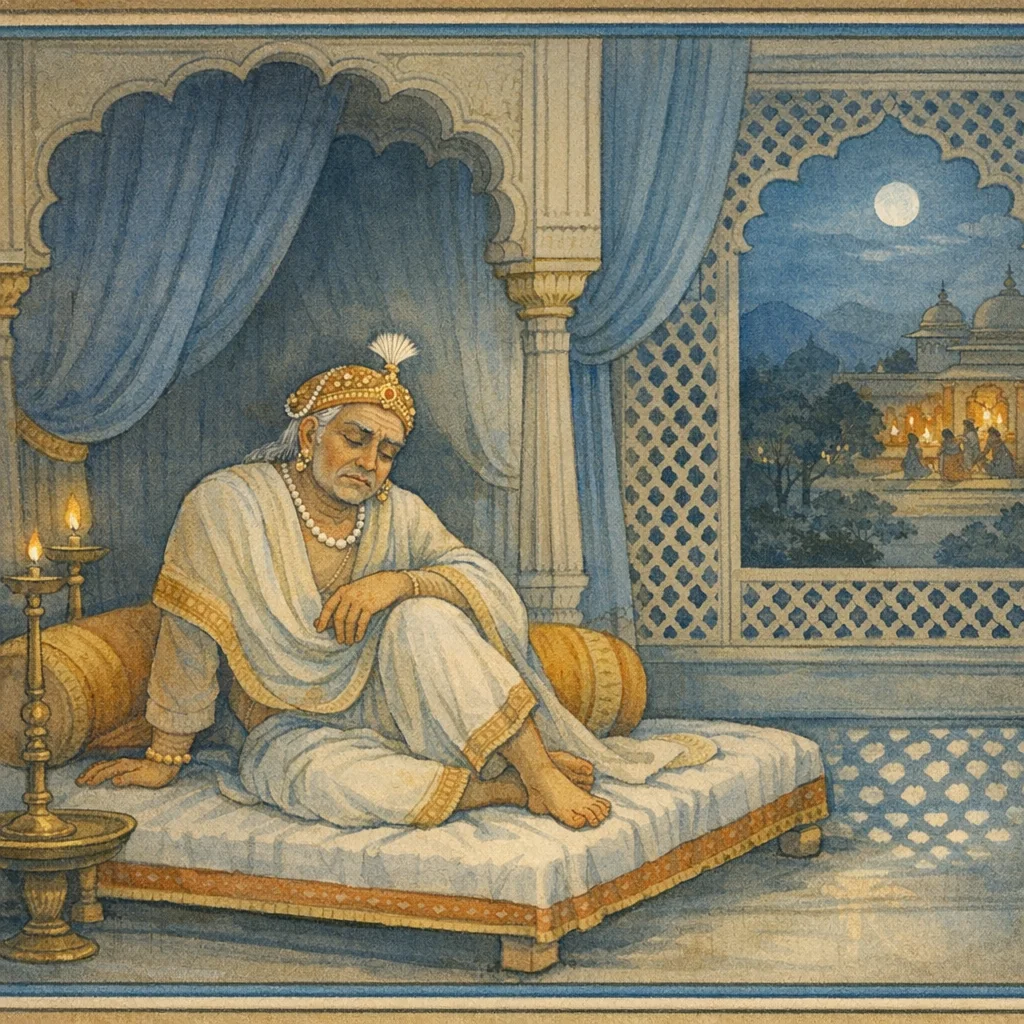
ततो बलमतिख्यातं विज्ञाय दृढ्धन्विनाम् । दूषित: सहसा भावो धृतराष्ट्रस्य पाण्डुषु । स चिन्तापरमो राजा न निद्रामलभन्निशि,तब दृढ़तापूर्वक धनुष धारण करनेवाले पाण्डवोंके अत्यन्त विख्यात बल-पराक्रमकी बात जानकर उनके प्रति राजा धृतराष्ट्रका भाव सहसा दूषित हो गया। अत्यन्त चिन्तामें निमग्न हो जानेके कारण उन्हें रातमें नींद नहीं आती थी
Then, learning of the exceedingly renowned strength and prowess of the Pāṇḍavas—those steadfast bearers of the bow—King Dhṛtarāṣṭra’s attitude toward them suddenly became tainted. Overwhelmed by anxious brooding, the king could not obtain sleep at night. The passage highlights how fear and attachment can corrupt judgment, even in a ruler, and how inner unrest follows ethical decline.
Verse 137
इस प्रकार श्रीमह्या भारत आदिपर्वके अन्तर्गत सम्भवपर्वमें दुपदपर द्रोणके शासनका वर्णन करनेवाला एक सौ सैतीसवाँ अध्याय पूरा हुआ
Thus ends the one hundred and thirty-seventh chapter of the Sambhava section within the Ādi Parva of the sacred Mahābhārata, describing Droṇa’s disciplining and instruction of Drupada. The closing formula marks the completion of a narrative unit that foregrounds how education, authority, and wounded pride can seed future hostility—an ethical warning about the long consequences of humiliation and rivalry.
Verse 138
इति श्रीमहाभारते आदिपर्वणि सम्भवपर्वणि धृतराष्ट्रचिन्तायामष्टात्रिंशयदधिकशततमो< ध्याय:,इस प्रकार श्रीमह्याभारत आदिपर्वके अन्तर्गत सम्भवपर्वमें धृतराष्रकी चिन्ताविषयक एक सौ अड़तीसवाँ अध्याय पूरा हुआ
Thus ends the one hundred and thirty-eighth chapter of the Sambhava section within the Ādi Parva of the Śrī Mahābhārata, concerning Dhṛtarāṣṭra’s anxious reflections. The colophon signals a pause in the narrative, emphasizing the moral weight of a ruler’s inner turmoil—how attachment and uncertainty in leadership can shape the fate of a dynasty.
Frequently Asked Questions
Hiḍimbā faces a conflict between obedience to her brother’s command and a chosen ethical/affective alignment after encountering Bhīma; Bhīma faces the test of whether personal opportunity should override responsibility to protect sleeping kin and his mother.
The chapter emphasizes that guardianship and duty to dependents outweigh private inducements; courage is framed as disciplined responsibility—meeting danger directly while minimizing harm and panic among those under one’s care.
No explicit phalaśruti appears in the provided passage; its significance is contextual, functioning as a narrative hinge that clarifies Bhīma’s protector role and initiates the subsequent resolution of the forest threat within the larger Ādi Parva arc.