Adhyaya 134
Vāraṇāvata-praveśa and Jatugṛha-saṃdeha (Entry into Vāraṇāvata and Suspicion of the Lac-House)
Upa-parva: Jatugṛha-dāha (Vāraṇāvata) Episode
Vaiśaṃpāyana narrates the Pāṇḍavas’ arrival at Vāraṇāvata, where townspeople greet them with formal auspicious observances and enthusiastic attendance. The brothers enter an adorned, crowded city and are received across households and civic roles, indicating broad public visibility. Purocana then escorts them to a well-appointed residence, providing food, drink, beds, and seats, and hosting them for a period before presenting a house described as “Śiva by name” yet practically inauspicious. Upon inspection, Yudhiṣṭhira identifies the structure as deliberately combustible, noting materials and scents associated with ghee, resin, and lac, and infers hostile intent under Duryodhana’s influence. Bhīma proposes leaving, but Yudhiṣṭhira argues that overt flight would reveal their position and accelerate danger; instead, they should remain without fixed patterns, behave as if searching for safety, and prepare a concealed underground passage so that fire cannot trap them and observers—including Purocana or townspeople—cannot detect their plan.
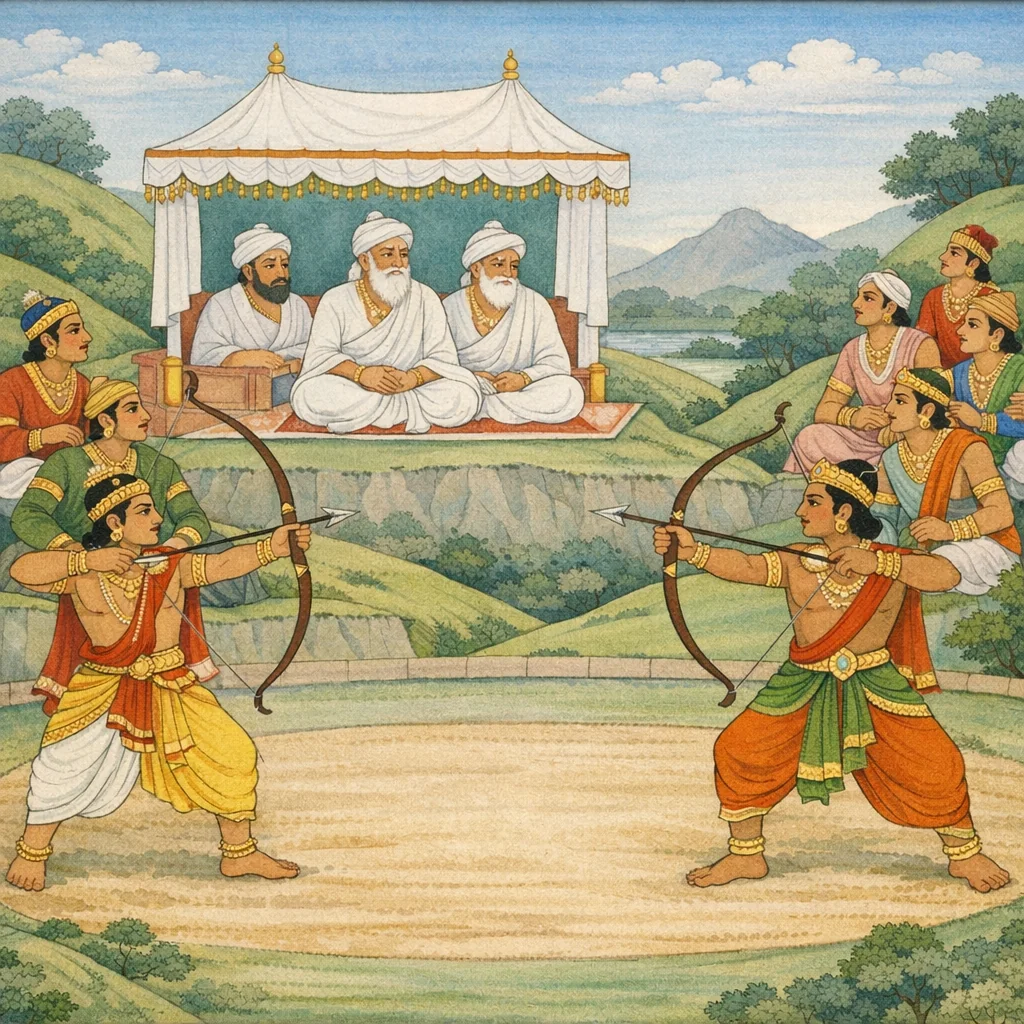
Chapter Arc: Drona, seeing the Kuru princes fully trained, seeks the king’s leave to stage a public exhibition—so the realm may witness what has been forged in the gurukula. → Dhritarashtra, stung by blindness and longing to ‘see’ his sons through others’ eyes, consents; a grand arena is raised, instruments blare, crowds surge like a churned ocean, and the court’s gaze sharpens into judgment and comparison. → Before elders—Kripa, Somadatta, Bhishma (Bahlika), Vyasa, Vidura—and the queens, the princes step forth to demonstrate their mastery, turning the arena into a crucible where pride, rivalry, and destiny begin to show their first public face. → The spectacle is formally witnessed and reported—Vidura to Dhritarashtra, and Kunti to Gandhari—so that the private anxieties of the palace become shared knowledge, and the princes’ reputations begin to harden into public truth. → The exhibition’s applause and scrutiny set the stage for sharper contest: whose prowess will eclipse the rest, and what jealousy will awaken when skill becomes a weapon of status?
Shlokas
Verse 1
ऑपनआक्राा बछ। अं त्रयस्त्रिंशर्दाधिकशततमो< ध्याय: राजकुमारोंका रंगभूमिमें अस्त्र-कौशल दिखाना वैशम्पायन उवाच कृतास्त्रान् धार्तराष्ट्रांक्ष पाण्डुपुत्रांश्व भारत । दृष्टवा द्रोणो5ब्रवीद् राजन् धृतराष्ट्रं जनेश्वरम्,वैशम्पायनजी कहते हैं--भारत! जब द्रोणने देखा कि धृतराष्ट्रके पुत्र तथा पाण्डव अस्त्र-विद्याकी शिक्षा समाप्त कर चुके, तब उन्होंने कृपाचार्य, सोमदत्त, बुद्धिमान् बाह्लीक, गंगानन्दन भीष्म, महर्षि व्यास तथा विदुरजीके निकट राजा धृतराष्ट्रसे कहा--
Vaiśampāyana said: “O Bhārata, when Droṇa saw that the sons of Dhṛtarāṣṭra and the sons of Pāṇḍu had completed their training in the science of weapons, he addressed King Dhṛtarāṣṭra, lord of the people.” (In context, Droṇa speaks in the presence of elders and counselors, preparing the king for a public demonstration of the princes’ martial skill—an event that carries ethical weight because education, royal duty, and the seeds of rivalry converge.)
Verse 2
कृपस्य सोमदत्तस्य बाह्लीकस्य च धीमत: । गाड़ेयस्य च सांनिध्ये व्यासस्य विदुरस्थ च,वैशम्पायनजी कहते हैं--भारत! जब द्रोणने देखा कि धृतराष्ट्रके पुत्र तथा पाण्डव अस्त्र-विद्याकी शिक्षा समाप्त कर चुके, तब उन्होंने कृपाचार्य, सोमदत्त, बुद्धिमान् बाह्लीक, गंगानन्दन भीष्म, महर्षि व्यास तथा विदुरजीके निकट राजा धृतराष्ट्रसे कहा--
Vaiśampāyana said: “O Bhārata, when Droṇa saw that the sons of Dhṛtarāṣṭra and the Pāṇḍavas had completed their training in the science of weapons, he addressed King Dhṛtarāṣṭra in the presence of Kṛpa, Somadatta, the wise Bāhlīka, Bhīṣma the son of the Gaṅgā, the sage Vyāsa, and Vidura.”
Verse 3
राजन् सम्प्राप्तविद्यास्ते कुमारा: कुरुसत्तम | ते दर्शयेयु: स्वां शिक्षां राजन्ननुमते तव
Vaiśampāyana said: O King, those princes have now fully acquired their learning, O best of the Kurus. With your permission, O King, they wish to demonstrate before you the training and discipline they have mastered.
Verse 4
धृतराष्ट उवाच भारद्वाज महत् कर्म कृतं ते द्विजसत्तम,धृतराष्ट्रने कहा--द्विजश्रेष्ठ भरद्वाजनन्दन! आपने (राजकुमारोंको अस्त्रकी शिक्षा देकर) बहुत बड़ा कार्य किया है
Dhṛtarāṣṭra said: “O Bhāradvāja, O best among the twice-born, you have accomplished a great deed.” In context, the king acknowledges the immense responsibility and consequence of imparting martial training to the princes—an act that can uphold royal duty when guided by dharma, yet also carries grave ethical weight because such knowledge shapes the future use of power and violence.
Verse 5
यदानुमन्यसे काल॑ यस्मिन् देशे यथा यथा । तथा तथा विधानाय स्वयमाज्ञापयस्व माम्,आप कुमारोंकी अस्त्र-शिक्षाके प्रदर्शनकके लिये जब जो समय ठीक समझें, जिस स्थानपर जिस-जिस प्रकारका प्रबन्ध आवश्यक मानें, उस-उस तरहकी तैयारी करनेके लिये स्वयं ही मुझे आज्ञा दें
Verse 6
स्पृहयाम्यद्य निर्वेदात् पुरुषाणां सचक्षुषाम् । अस्त्रहेतो: पराक्रान्तान् ये मे द्रक्ष्यन्ति पुत्रकान्,आज मैं नेत्रहीन होनेके कारण दुःखी होकर, जिनके पास आँँखें हैं, उन मनुष्योंके सुख और सौभाग्यको पानेके लिये तरस रहा हूँ; क्योंकि वे अस्त्र-कौशलका प्रदर्शन करनेके लिये भाँति-भाँतिके पराक्रम करनेवाले मेरे पुत्रोंकोी देखेंगे
Dhṛtarāṣṭra said: “Today, out of dejection, I find myself longing for the good fortune of those men who have sight. For they will behold my sons—displaying their prowess in many ways for the sake of weapons-training—while I, being blind, cannot.”
Verse 7
क्षत्तर्यद् गुरुराचार्यो ब्रवीति कुरु तत् तथा । न हीदृशं प्रियं मन््ये भविता धर्मवत्सल,(आचार्यसे इतना कहकर राजा धुृतराष्ट्र विदुरसे बोले--) “धर्मवत्सल! विदुर! गुरु द्रोणाचार्य जो काम जैसे कहते हैं, उसी प्रकार उसे करो। मेरी रायमें इसके समान प्रिय कार्य दूसरा नहीं होगा”
Dhṛtarāṣṭra said: “O Kṣattṛ (Vidura), O dharma-loving one—do exactly as the revered teacher Droṇa instructs. I do not think anything could be more pleasing to me than this.”
Verse 8
ततो राजानमामन्त्र्य निर्गतो विदुरो बहिः | भारद्वाजो महाप्राज्ञो मापयामास मेदिनीम्,तदनन्तर राजाकी आज्ञा लेकर विदुरजी (आचार्य द्रोणके साथ) बाहर निकले। महाबुद्धिमान् भरद्वाजनन्दन द्रोणने रंगमण्डपके लिये एक भूमि पसंद की और उसका माप करवाया
Then, having taken leave of the king, Vidura went out. Thereafter the highly intelligent son of Bharadvāja—Droṇa—selected a suitable tract of land and had the ground measured out for the arena, setting in motion the arrangements that would publicly display the princes’ training and thereby shape the kingdom’s future expectations and rivalries.
Verse 9
समामवृक्षां निर्गुल्मामुदक्प्रस्रवणान्विताम् । तस्यां भूमौ बलिं चक्रे तिथौ नक्षत्रपूजिते,वह भूमि समतल थी। उसमें वृक्ष या झाड़-झंखाड़ नहीं थे। वह उत्तरदिशाकी ओर नीची थी। वक्ताओंमें श्रेष्ठ द्रोणने वास्तुपूुजन देखनेके लिये डिण्डिम-घोष कराके वीरसमुदायको आमन्त्रित किया और उत्तम नक्षत्रसे युक्त तिथिमें उस भूमिपर वास्तुपूजन किया। तत्पश्चात् उनके शिल्पियोंने उस रंगभूमिमें वास्तु-शास्त्रके अनुसार विधिपूर्वक एक अति विशाल प्रेक्षागहकी- नींव डाली तथा राजा और राजघरानेकी स्त्रियोंके बैठनेके लिये वहाँ सब प्रकारके अस्त्र-शस्त्रोंसे सम्पन्न बहुत सुन्दर भवन बनाया। जनपदके लोगोंने अपने बैठनेके लिये वहाँ ऊँचे और विशाल मंच बनवाये तथा (स्त्रियोंको लानेके लिये) बहुमूल्य शिबिकाएँ तैयार करायीं
Dhṛtarāṣṭra said: On that ground—level, free of trees and thickets, and sloping so that water would drain northward—he performed the prescribed offering (bali) on an auspicious lunar day duly sanctified by the worship of the nakṣatra. The narrative underscores that even public undertakings are to be begun with orderly preparation and ritual propriety, aligning human action with auspicious time and sacred observance.
Verse 10
अवचुष्टे समाजे च तदर्थ वदतां वर: | रड्रभूमौ सुविपुलं शास्त्रदृष्ट यथाविधि,वह भूमि समतल थी। उसमें वृक्ष या झाड़-झंखाड़ नहीं थे। वह उत्तरदिशाकी ओर नीची थी। वक्ताओंमें श्रेष्ठ द्रोणने वास्तुपूुजन देखनेके लिये डिण्डिम-घोष कराके वीरसमुदायको आमन्त्रित किया और उत्तम नक्षत्रसे युक्त तिथिमें उस भूमिपर वास्तुपूजन किया। तत्पश्चात् उनके शिल्पियोंने उस रंगभूमिमें वास्तु-शास्त्रके अनुसार विधिपूर्वक एक अति विशाल प्रेक्षागहकी- नींव डाली तथा राजा और राजघरानेकी स्त्रियोंके बैठनेके लिये वहाँ सब प्रकारके अस्त्र-शस्त्रोंसे सम्पन्न बहुत सुन्दर भवन बनाया। जनपदके लोगोंने अपने बैठनेके लिये वहाँ ऊँचे और विशाल मंच बनवाये तथा (स्त्रियोंको लानेके लिये) बहुमूल्य शिबिकाएँ तैयार करायीं
Dhṛtarāṣṭra said: “In that assembly, the foremost among speakers (Drona) proclaimed the purpose and, on the great arena-ground, arranged everything in the proper manner as prescribed by the śāstras. The ground was level and clear of trees and thickets, sloping slightly toward the north. After summoning the community of heroes with the beat of a drum and choosing an auspicious lunar day and constellation, he performed the Vāstu-rite on that site. Thereafter the craftsmen, following architectural injunctions, laid the foundation of a very large viewing-hall, and also built a splendid, well-protected pavilion for the king and the royal women. The people of the realm raised high and spacious platforms for their own seating and prepared costly palanquins to bring the women.”
Verse 11
प्रेक्षागारं सुविहितं चक़ुस्ते तस्य शिल्पिन: । राज्ञ: सर्वायुधोपेतं स्त्रीणां चैव नरर्षभ,वह भूमि समतल थी। उसमें वृक्ष या झाड़-झंखाड़ नहीं थे। वह उत्तरदिशाकी ओर नीची थी। वक्ताओंमें श्रेष्ठ द्रोणने वास्तुपूुजन देखनेके लिये डिण्डिम-घोष कराके वीरसमुदायको आमन्त्रित किया और उत्तम नक्षत्रसे युक्त तिथिमें उस भूमिपर वास्तुपूजन किया। तत्पश्चात् उनके शिल्पियोंने उस रंगभूमिमें वास्तु-शास्त्रके अनुसार विधिपूर्वक एक अति विशाल प्रेक्षागहकी- नींव डाली तथा राजा और राजघरानेकी स्त्रियोंके बैठनेके लिये वहाँ सब प्रकारके अस्त्र-शस्त्रोंसे सम्पन्न बहुत सुन्दर भवन बनाया। जनपदके लोगोंने अपने बैठनेके लिये वहाँ ऊँचे और विशाल मंच बनवाये तथा (स्त्रियोंको लानेके लिये) बहुमूल्य शिबिकाएँ तैयार करायीं
Dhṛtarāṣṭra said: “O bull among men, did his craftsmen construct a well-appointed viewing-hall (arena-theatre)? And did they also make for the king and for the women of the royal household a splendid, fully secured pavilion—equipped with every kind of weapon—so that the spectacle could be witnessed in safety and proper royal order?”
Verse 12
मज्चांश्व॒ कारयामासुस्तत्र जानपदा जना: । विपुलानुच्छुयोपेतान् शिबिकाश्न महाधना:,वह भूमि समतल थी। उसमें वृक्ष या झाड़-झंखाड़ नहीं थे। वह उत्तरदिशाकी ओर नीची थी। वक्ताओंमें श्रेष्ठ द्रोणने वास्तुपूुजन देखनेके लिये डिण्डिम-घोष कराके वीरसमुदायको आमन्त्रित किया और उत्तम नक्षत्रसे युक्त तिथिमें उस भूमिपर वास्तुपूजन किया। तत्पश्चात् उनके शिल्पियोंने उस रंगभूमिमें वास्तु-शास्त्रके अनुसार विधिपूर्वक एक अति विशाल प्रेक्षागहकी- नींव डाली तथा राजा और राजघरानेकी स्त्रियोंके बैठनेके लिये वहाँ सब प्रकारके अस्त्र-शस्त्रोंसे सम्पन्न बहुत सुन्दर भवन बनाया। जनपदके लोगोंने अपने बैठनेके लिये वहाँ ऊँचे और विशाल मंच बनवाये तथा (स्त्रियोंको लानेके लिये) बहुमूल्य शिबिकाएँ तैयार करायीं
Dhṛtarāṣṭra said: There, the people of the countryside had platforms constructed—broad and raised high—and they also had costly palanquins made. Thus the local populace, eager to witness the great public spectacle, arranged seating and conveyances in keeping with their means, reflecting both communal participation and the social order surrounding royal events.
Verse 13
तस्मिंस्ततो5हनि प्राप्ते राजा ससचिवस्तदा । भीष्म॑ प्रमुखत: कृत्वा कृप॑ं चाचार्यसत्तमम्,तत्पश्चात् जब निश्चित दिन आया, तब मन्त्रियोंसहित राजा धृतराष्ट्र भीष्मजी तथा आचार्यप्रवर कृपको आगे करके बाह्नलीक, सोमदत्त, भूरिश्रवा तथा अन्यान्य कौरवों और मन्त्रियोंको साथ ले नगरसे बाहर उस दिव्य प्रेक्षागृहमें आये। उसमें मोतियोंकी झालरें लगी थीं, वैदूर्यमणियोंसे उस भवनको सजाया गया था तथा उसकी दीवारोंमें स्वर्णखण्ड मढ़े गये थे
When that day arrived, King Dhṛtarāṣṭra, accompanied by his ministers, set out—placing Bhīṣma in the foremost position and also the eminent teacher Kṛpa. It frames the king’s public action as one undertaken under the guidance of senior, authoritative elders, suggesting a concern for propriety and legitimacy in what is about to be witnessed.
Verse 14
(बाह्लीकं सोमदत्तं च भूरिश्रवसमेव च । कुरूनन्यांश्व सचिवानादाय नगरादू बहि: ।।) मुक्ताजालपरिक्षिप्तं वैदूर्यममणिशोभितम् । शातकुम्भमयं दिव्यं प्रेक्षागारमुपागमत्,तत्पश्चात् जब निश्चित दिन आया, तब मन्त्रियोंसहित राजा धृतराष्ट्र भीष्मजी तथा आचार्यप्रवर कृपको आगे करके बाह्नलीक, सोमदत्त, भूरिश्रवा तथा अन्यान्य कौरवों और मन्त्रियोंको साथ ले नगरसे बाहर उस दिव्य प्रेक्षागृहमें आये। उसमें मोतियोंकी झालरें लगी थीं, वैदूर्यमणियोंसे उस भवनको सजाया गया था तथा उसकी दीवारोंमें स्वर्णखण्ड मढ़े गये थे
Dhṛtarāṣṭra said: Taking with him Bāhlīka, Somadatta, and Bhūriśravas, along with other Kurus and his ministers, he went out of the city and approached a splendid viewing-hall. It was draped with nets of pearls, adorned with vaidūrya gems, and fashioned with divine panels of pure gold—an outward display of royal magnificence that frames the coming events with the contrast between glittering power and the moral peril that follows.
Verse 15
गान्धारी च महाभागा कुन्ती च जयतां वर । स्त्रियश्व राज्ञ: सर्वास्ता: सप्रेष्या: सपरिच्छदा:,विजयी वीरोंमें श्रेष्ठ जनमेजय! परम सौभाग्यशालिनी गान्धारी, कुन्ती तथा राजभवनकी सभी स्ट्रियाँ वस्त्राभूषणोंस सज-धजकर दास-दासियों और आवश्यक सामग्रियोंके साथ उस भवनमें आयीं तथा जैसे देवांगनाएँ मेरुपर्वतपर चढ़ती हैं, उसी प्रकार वे हर्षपूर्वक मंचोंपर चढ़ गयीं। ब्राह्मण, क्षत्रिय आदि चारों वर्णोके लोग कुमारोंका अस्त्र- कौशल देखनेकी इच्छासे तुरंत नगरसे निकलकर आ गये। क्षणभरमें वहाँ विशाल जनसमुदाय एकत्र हो गया
Dhṛtarāṣṭra said: “O Janamejaya, best among the victorious! The greatly fortunate Gāndhārī and Kuntī, and indeed all the women of the king’s household, came adorned and well-equipped, accompanied by attendants and with all necessary articles.” Ethically, the verse frames a public royal occasion marked by dignity, auspiciousness, and orderly preparation—signs of a court that values propriety (maryādā) and communal participation in events connected with the princes’ training and future responsibilities.
Verse 16
हर्षादारुरुहुर्मज्चान् मेरुं देवस्त्रियो यथा । ब्राह्मणक्षत्रियाद्यं च चातुर्वर्ण्य पुराद् द्रतम्,विजयी वीरोंमें श्रेष्ठ जनमेजय! परम सौभाग्यशालिनी गान्धारी, कुन्ती तथा राजभवनकी सभी स्ट्रियाँ वस्त्राभूषणोंस सज-धजकर दास-दासियों और आवश्यक सामग्रियोंके साथ उस भवनमें आयीं तथा जैसे देवांगनाएँ मेरुपर्वतपर चढ़ती हैं, उसी प्रकार वे हर्षपूर्वक मंचोंपर चढ़ गयीं। ब्राह्मण, क्षत्रिय आदि चारों वर्णोके लोग कुमारोंका अस्त्र- कौशल देखनेकी इच्छासे तुरंत नगरसे निकलकर आ गये। क्षणभरमें वहाँ विशाल जनसमुदाय एकत्र हो गया
Out of joy, they climbed up onto the platforms, just as celestial women ascend Mount Meru. And the people of the four social orders—beginning with brāhmaṇas and kṣatriyas—hurried out from the city at once, eager to witness the princes’ display of martial skill; in a moment, a vast crowd gathered there. The scene underscores how public spectacle, royal ceremony, and social order converge around the education and testing of future rulers, with collective excitement framed within the norms of varṇa and courtly decorum.
Verse 17
दर्शनेप्सु समभ्यागात् कुमाराणां कृतास्त्रताम् । क्षणेनैकस्थतां तत्र दर्शनेप्सु जगाम ह,विजयी वीरोंमें श्रेष्ठ जनमेजय! परम सौभाग्यशालिनी गान्धारी, कुन्ती तथा राजभवनकी सभी स्ट्रियाँ वस्त्राभूषणोंस सज-धजकर दास-दासियों और आवश्यक सामग्रियोंके साथ उस भवनमें आयीं तथा जैसे देवांगनाएँ मेरुपर्वतपर चढ़ती हैं, उसी प्रकार वे हर्षपूर्वक मंचोंपर चढ़ गयीं। ब्राह्मण, क्षत्रिय आदि चारों वर्णोके लोग कुमारोंका अस्त्र- कौशल देखनेकी इच्छासे तुरंत नगरसे निकलकर आ गये। क्षणभरमें वहाँ विशाल जनसमुदाय एकत्र हो गया
Dhṛtarāṣṭra said: Eager to witness the princes’ mastery of weapons, people quickly streamed in; and in a mere moment, a great crowd gathered there, all intent on seeing the display. The scene underscores how public fascination with martial skill can swell into mass excitement, foreshadowing how such prowess, admired as virtue, may later become an instrument of grave ethical consequence.
Verse 18
प्रवादितैश्न वादित्रर्जनकौतूहलेन च । महार्णव इव क्षुब्ध: समाज: सो5भवत् तदा,अनेक प्रकारके बाजोंके बजनेसे तथा मनुष्योंके बढ़ते हुए कौतूहलसे वह जनसमूह उस समय क्षुब्ध महासागरके समान जान पड़ता था
Dhṛtarāṣṭra said: “With many instruments being sounded and with the people’s curiosity rising ever higher, that gathered assembly at that time appeared like a vast ocean, churned and agitated.”
Verse 19
ततः शुक्लाम्बरधर: शुक्लयज्ञोपवीतवान् | शुक्लकेश: सितश्मश्रु: शुक्लमाल्यानुलेपन:,तदनन्तर श्वैत वस्त्र और श्वेत यज्ञोपवीत धारण किये आचार्य द्रोणने अपने पुत्र अश्वृत्थामाके साथ रंगभूमिमें प्रवेश किया; मानो मेघरहित आकाशमें चन्द्रमाने मंगलके साथ पदार्पण किया हो। आचार्यके सिर और दाढ़ी-मूँछके बाल सफेद हो गये थे। वे श्वेत पुष्पोंकी माला और श्वेत चन्दनसे सुशोभित हो रहे थे
Then Droṇa, clad in white garments and wearing a white sacrificial thread, entered the arena together with his son Aśvatthāmā. His hair and beard had turned pale; he was adorned with a garland of white flowers and anointed with white sandal paste—appearing like the moon, accompanied by auspicious Mars, in a cloudless sky. The scene underscores the teacher’s dignified, ritual purity and the solemn authority with which he steps into a public contest that will shape the princes’ future and, indirectly, the moral trajectory toward war.
Verse 20
रंगमध्यं तदा5<चार्य: सपुत्र: प्रविवेश ह | नभो जलधरैहीनं साड्रारक इवांशुमान्,तदनन्तर श्वैत वस्त्र और श्वेत यज्ञोपवीत धारण किये आचार्य द्रोणने अपने पुत्र अश्वृत्थामाके साथ रंगभूमिमें प्रवेश किया; मानो मेघरहित आकाशमें चन्द्रमाने मंगलके साथ पदार्पण किया हो। आचार्यके सिर और दाढ़ी-मूँछके बाल सफेद हो गये थे। वे श्वेत पुष्पोंकी माला और श्वेत चन्दनसे सुशोभित हो रहे थे
Dhṛtarāṣṭra said: Then the preceptor Droṇa entered the middle of the arena, accompanied by his son. He shone like the moon appearing in a cloudless sky, as if attended by the planet Mars—an image that heightens the solemnity of the moment and frames the teacher’s arrival as auspicious and authoritative. The scene underscores the ethical weight of instruction: the arena is not merely for display, but a public stage where mastery, discipline, and the responsibilities of a guru will soon shape the princes’ future conduct.
Verse 21
स यथासमयं चक्रे बलिं बलवतां वर: । ब्राह्माणांस्तु सुमन्त्रज्ञान् कारयामास मज़लम्,बलवानोंमें श्रेष्ठ द्रोणने यथासमय देवपूजा की और श्रेष्ठ मन्त्रवेत्ता ब्राह्मणोंसे मंगलपाठ करवाया
At the proper time, the foremost among the mighty offered the prescribed oblation (bali). He then had auspicious benedictions recited by Brahmins who were expert in excellent mantras—thus ensuring that the undertaking proceeded under the protection of right ritual order and sacred speech.
Verse 22
(सुवर्णमणिरत्नानि वस्त्राणि विविधानि च । प्रददौ दक्षिणां राजा द्रोणस्य च कृपस्य च ।।) सुखपुण्याहघोषस्य पुण्यस्य समनन्तरम् । विविशेुर्विविध॑ गृह्मु शस्त्रोपकरणं नरा:,उस समय राजा धुृतराष्ट्रने सुवर्ण, मणि, रत्न तथा नाना प्रकारके वस्त्र आचार्य द्रोण और कृपको दक्षिणारूपमें दिये। फिर सुखमय पुण्याहवाचन तथा दान-होम आदि पुण्यकर्मोंके अनन्तर नाना प्रकारकी शस्त्र-सामग्री लेकर बहुत-से मनुष्योंने उस रंगमण्डपमें प्रवेश किया
Dhṛtarāṣṭra said: The king bestowed as priestly fees gold, gems, and jewels, along with garments of many kinds, upon Droṇa and also upon Kṛpa. Then, immediately after the auspicious and joyful proclamation of the puṇyāha and the completion of meritorious rites such as gifting and offerings, many men entered the hall, bringing with them various kinds of weapons and military equipment.
Verse 23
ततो बद्धाड्गुलित्राणा बद्धकक्षा महारथा: । बद्धतूणा: सधनुषो विविशुर्भरतर्षभा:,उसके बाद भरतवंशियोंमें श्रेष्ठ वे वीर राजकुमार बड़े-बड़े रथोंके साथ दस्ताने पहने, कमर कसे, पीठपर तूणीर बाँधे और धनुष लिये हुए उस रंगमण्डपके भीतर आये
Then those bull-like scions of Bharata—great warriors mounted on mighty chariots—entered the arena pavilion, their finger-guards fastened, their waists tightly girded, quivers strapped on their backs, and bows in hand. The scene underscores disciplined readiness: martial skill is presented not as rash violence, but as trained, orderly preparedness within a public and rule-bound setting.
Verse 24
अनुज्येष्ठं तु ते तत्र युधिष्िरपुरोगमा: । (रणमध्ये स्थित॑ द्रोणमभिवाद्य नरर्षभा: । पूजां चक्कुर्यथान्यायं द्रोणस्थ च कृपस्य च ।। नरश्रेष्ठ युधिष्ठिर आदि उन राजकुमारोंने जेठे-छोटेके क्रमसे स्थित हो उस रंगभूमिके मध्यभागमें बैठे हुए आचार्य द्रोणको प्रणाम करके द्रोण और कृप दोनों आचार्योंकी यथोचित पूजा की। आशीकभ्िरश्व प्रयुक्ताभि: सर्वे संहृष्टमानसा: । अभिवाद्य पुनः शस्त्रान् बलिपुष्पै: समन्वितान् ।। रक्तचन्दनसम्मिश्रै: स्वयमार्चन्त कौरवा: । रक्तचन्दनदिग्धाश्व रक्तमाल्यानुधारिण: ।। सर्वे रक्तपताकाश्न सर्वे रक्तान्तलोचना: । द्रोणेन समनुज्ञाता गृहा शस्त्र परंतपा: ।। धनूंषि पूर्व संगृह्द तप्तकाज्चनभूषिता: । सज्यानि विविधाकारै: शरै: संधाय कौरवा: ।। ज्याघोषं तलघोषं च कृत्वा भूतान्यपूजयन् ।) चक्कुरस्त्रं महावीर्या: कुमारा: परमाद्भुतम्,फिर उनसे आशीर्वाद पाकर उन सबका मन प्रसन्न हो गया। तत्पश्चात् पूजाके पुष्पोंसे आच्छादित अस्त्र-शस्त्रोंको प्रणाम करके कौरवोंने रक्त चन्दन और फूलोंद्वारा पुनः स्वयं उनका पूजन किया। वे सब-के-सब लाल चन्दनसे चर्चित तथा लाल रंगकी मालाओंसे विभूषित थे। सबके रथोंपर लाल रंगकी पताकाएँ थीं। सभीके नेत्रोंके कोने लाल रंगके थे। तदनन्तर तपाये हुए सुवर्णके आभूषणोंसे विभूषित एवं शत्रुओंको संताप देनेवाले कौरव राजकुमारोंने आचार्य द्रोणकी आज्ञा पाकर पहले अपने अस्त्र एवं धनुष लेकर डोरी चढ़ायी और उसपर भाँति-भाँतिकी आकृतिके बाणोंका संधान करके प्रत्यंचाका टंकार करते और ताल ठोंकते हुए समस्त प्राणियोंका आदर किया। तत्पश्चात् वे महापराक्रमी राजकुमार वहाँ परम अद्भुत अस्त्र-कौशल प्रकट करने लगे
Dhṛtarāṣṭra said: There, with Yudhiṣṭhira at their head, those bull-like princes—standing in due order from the younger to the elder—approached Droṇa who was stationed in the midst of the arena. Having bowed to him, they rendered proper honors, as prescribed, to both Droṇa and Kṛpa. The scene underscores disciplined hierarchy and the ethic of reverence toward teachers even in a martial setting, where skill is to be displayed under the restraint of dharma and decorum.
Verse 25
केचिच्छराक्षेपभयाच्छिरांस्यवननामिरे । मनुजा धृष्टमपरे वीक्षाज्चक्रु: सुविस्मिता:,कितने ही मनुष्य बाण लग जानेके डरसे अपना मस्तक झुका देते थे। दूसरे लोग अत्यन्त विस्मित होकर बिना किसी भयके सब कुछ देखते थे
Dhṛtarāṣṭra said: Some men, fearing the flight and impact of arrows, bowed their heads down. Others, bold and unshaken, watched the spectacle with great astonishment—revealing how fear and courage divide people when danger suddenly appears.
Verse 26
ते सम लक्ष्याणि बिभिदुर्बाणै्नामाड्कशोभितै: । विविधैरलाघवोत्सूष्टैरुह्मुन्तो वाजिभिरद्द्रूतम्,वे राजकुमार घोड़ोंपर सवार हो अपने नामके अक्षरोंसे सुशोभित और बड़ी फुर्तीके साथ छोड़े हुए नाना प्रकारके बाणोंद्वारा शीघ्रतापूर्वक लक्ष्यवेध करने लगे
Dhṛtarāṣṭra said: They began to pierce the set targets swiftly with many kinds of arrows—arrows released with great quickness, adorned with the marks of their own names—while their horses, urged on, sped along. The scene highlights princely discipline and competitive skill, where prowess is displayed under rules rather than for wanton harm.
Verse 27
तत् कुमारबलं तत्र गृहीतशरकार्मुकम् । गन्धर्वनगराकार प्रेक्ष्य ते विस्मिताभवन्,धनुष-बाण लिये हुए राजकुमारोंके उस समुदायको गन्धर्वनगरके समान अद्भुत देख वहाँ समस्त दर्शक आश्चर्यचकित हो गये
Dhṛtarāṣṭra said: Seeing there that troop of princes, bows in hand and arrows grasped, appearing wondrous like a celestial Gandharva-city, all the onlookers were struck with amazement. The scene underscores how disciplined martial readiness and youthful prowess can inspire awe, while also hinting at the rising power that will later demand wise, dharma-guided restraint.
Verse 28
सहसा चुक्रुशुश्ान्ये नरा: शतसहसत्रश: । विस्मयोत्फुल्लनयना: साधु साध्विति भारत,जनमेजय! सैकड़ों और हजारोंकी संख्यामें एक-एक जगह बैठे हुए लोग आश्चर्यचकित नेत्रोंसे देखते हुए सहसा 'साधु-साधु (वाह-वाह)” कहकर कोलाहल मचा देते थे
All at once, other men—by the hundreds and thousands—cried out. With eyes widened in astonishment, they erupted into a clamour, repeatedly exclaiming, “Well done! Well done!”, O Bhārata Janamejaya. The scene conveys a spontaneous public acclaim, where collective wonder turns into loud approval of what has just been witnessed or heard.
Verse 29
कृत्वा धनुषि ते मार्गान् रथचर्यासु चासकृत् । गजपृष्ठे<श्वपृष्ठे च नियुद्धे च महाबल:,उन महाबली राजकुमारोंने पहले धनुष-बाणके पैंतरे दिखाये। तदनन्तर रथ-संचालनके विविध मार्गों (शीघ्र ले जाना, लौटा लाना, दायें, बायें और मण्डलाकार चलाना आदि)-का अवलोकन कराया। फिर कुश्ती लड़ने तथा हाथी और घोड़ेकी पीठपर बैठकर युद्ध करनेकी चातुरीका परिचय दिया
Dhṛtarāṣṭra said: “Those mighty princes, having first demonstrated the various maneuvers of archery, then repeatedly displayed the different courses of chariot-driving—swift advance, withdrawal, turning right and left, and circling. Thereafter they showed their skill in close combat and in fighting while mounted on the backs of elephants and horses.” In context, the verse highlights disciplined training and mastery of martial arts as a royal duty, implying that power is to be tempered by rigorous practice and controlled technique rather than mere aggression.
Verse 30
गृहीतखड््गचर्माणस्ततो भूय: प्रहारिण: । त्सरुमार्गान् यथोद्दिष्टं श्लेरु: सर्वासु भूमिषु,इसके बाद वे ढाल और तलवार लेकर एक-दूसरेपर प्रहार करते हुए खड्ग चलानेके शास्त्रोक्त मार्ग (ऊपर-नीचे और अगल-बगलमें घुमानेकी कला)-का प्रदर्शन करने लगे। उन्होंने रथ, हाथी, घोड़े और भूमि--इन सभी भूमियोंपर यह युद्ध-कौशल दिखाया
Then, taking up sword and shield, they again began striking, repeatedly delivering blows. They displayed the prescribed sword-paths and maneuvers as taught in the martial tradition, demonstrating their skill across every ‘ground’ of combat—on chariots, on elephants, on horses, and on foot—showing disciplined training rather than mere rage.
Verse 31
लाघवं सीष्ठवं शोभां स्थिरत्वं दृढमुष्टिताम् ददृशुस्तत्र सर्वेषां प्रयोग खड्गचर्मणो:,दर्शकोंने उन सबके ढाल-तलवारके प्रयोगोंकों देखा। उस कलामें उनकी फुर्ती, चतुरता, शोभा, स्थिरता और मुद्ठीकी दृढ़ताका अवलोकन किया
Verse 32
अथ तौ नित्यसंहृष्टोी सुयोधनवृकोदरौ । अवतीर्णों गदाहस्तावेकशुड्राविवाचलौ,तदनन्तर सदा एक-दूसरेको जीतनेका उत्साह रखनेवाले दुर्योधन और भीमसेन हाथमें गदा लिये रंगभूमिमें उतरे। उस समय वे एक-एक शिखरवाले दो पर्वतोंकी भाँति शोभा पा रहे थे
Dhṛtarāṣṭra said: Then those two—Suyodhana (Duryodhana) and Vṛkodara (Bhīma)—ever exhilarated and eager for victory over one another, descended into the arena with maces in hand. At that moment they appeared splendid and unshakable, like two mountains each crowned with a single peak—an image that heightens the sense of impending conflict and the peril of pride-driven rivalry within the Kuru house.
Verse 33
ततोड<ब्रवीन्महाराज: प्रहृष्टेनान्तरात्मना | “राजन! आपके कुमार अस्त्र-विद्याकी शिक्षा प्राप्त कर चुके हैं। कुरुश्रेष्ठ॒ यदि आपकी अनुमति हो तो वे अपनी सीखी हुई अस्त्र-संचालनकी कलाका प्रदर्शन करें'। यह सुनकर महाराज धृतराष्ट्र अत्यन्त प्रसन्नचित्तसे बोले,बद्धकक्षौ महाबाहू पौरुषे पर्यवस्थितौ । बृंहन्तौ वासिताहेतो: समदाविव कुञठ्जरौ वे दोनों महाबाहु कमर कसकर पुरुषार्थ दिखानेके लिये आमने-सामने डटकर खड़े थे और गर्जना कर रहे थे, मानो दो मतवाले गजराज किसी हथिनीके लिये एक-दूसरेसे भिड़ना चाहते और चिग्घाड़ते हों
Then the king, inwardly delighted, spoke. The two mighty-armed princes, having tightened their waistbands, stood facing one another, firmly resolved to display their prowess. They roared aloud, like two rut-maddened elephants bellowing as they clash for the sake of a cow-elephant.
Verse 34
तौ प्रदक्षिणसव्यानि मण्डलानि महाबलौ । चेरतुर्मण्डलगतौ समदाविव कुठ्जरी,वे दोनों महाबली योद्धा अपनी-अपनी गदाको दायें-बायें मण्डलाकार घुमाते हुए दो मदोन्मत्त हाथियोंकी भाँति मण्डलके भीतर विचरने लगे
Dhṛtarāṣṭra said: The two mighty warriors, each whirling his mace in rightward and leftward circles, moved within the ring of combat like two equally intoxicated elephants. The scene underscores the disciplined ritual of single combat—power restrained by form—yet also hints at the peril of pride and battle-frenzy that can eclipse discernment.
Verse 35
विदुरो धृतराष्ट्राय गान्धार्या: पाण्डवारणि: | न्यवेदयेतां तत् सर्व कुमाराणां विचेष्टितम्,विदुर धृतराष्ट्रको और पाण्डव जननी कुन्ती गान्धारीको उन राजकुमारोंकी सारी चेष्टाएँ बताती जाती थीं
Vidura kept informing Dhṛtarāṣṭra, and Kuntī—the mother of the Pāṇḍavas—kept informing Gāndhārī, about all the conduct and doings of those princes. The verse underscores the elders’ responsibility to stay aware of the young heirs’ behavior, since such knowledge is essential for guiding them toward dharma and preventing harm born of unchecked impulses.
Verse 132
इस प्रकार श्रीमह्या भारत आदिपर्वके अन्तर्गत सम्भवपर्वमें द्रोणाचार्यका ग्राहसे छुटकारा नामक एक सौ बत्तीसवाँ अध्याय पूरा हुआ
Thus ends the one hundred and thirty-second chapter of the Sambhava section within the Ādi Parva of the sacred Mahābhārata, entitled “Dronācārya’s Deliverance from the Crocodile’s Grip.”
Verse 133
इति श्रीमहाभारते आदिपर्वणि सम्भवपर्वण्यस्त्रदर्शने त्रयस्त्रिंशयदधिकशततमो< ध्याय:,इस प्रकार श्रीमहाभारत आदिपवके अन्तर्गत यम्भवपर्वमें अस्त्र-कौशलदर्शनविषयक एक सौ तैतीसवाँ अध्याय पूरा हुआ
Thus, in the Śrī Mahābhārata, within the Ādi Parva—specifically in the Sambhava Parva—the one-hundred-and-thirty-third chapter, concerning the demonstration of weapons and martial skill, is concluded. This closing formula marks the end of the episode in which prowess with arms is displayed, foreshadowing how cultivated skill, when joined to ambition and rivalry, can become a moral test for rulers and kin alike.
Frequently Asked Questions
Whether to reject a politically arranged hospitality on suspicion (risking immediate retaliation and surveillance escalation) or to accept it outwardly while ethically prioritizing protection of life through discreet preparation.
Dharma may require calibrated conduct under coercive conditions: preserving social decorum publicly while exercising vigilant discernment privately, especially when harm is concealed within seemingly auspicious forms.
No explicit phalaśruti is stated here; the chapter functions as narrative-ethical instruction by demonstrating inference, restraint, and planning as integral to sustaining dharma amid political hostility.