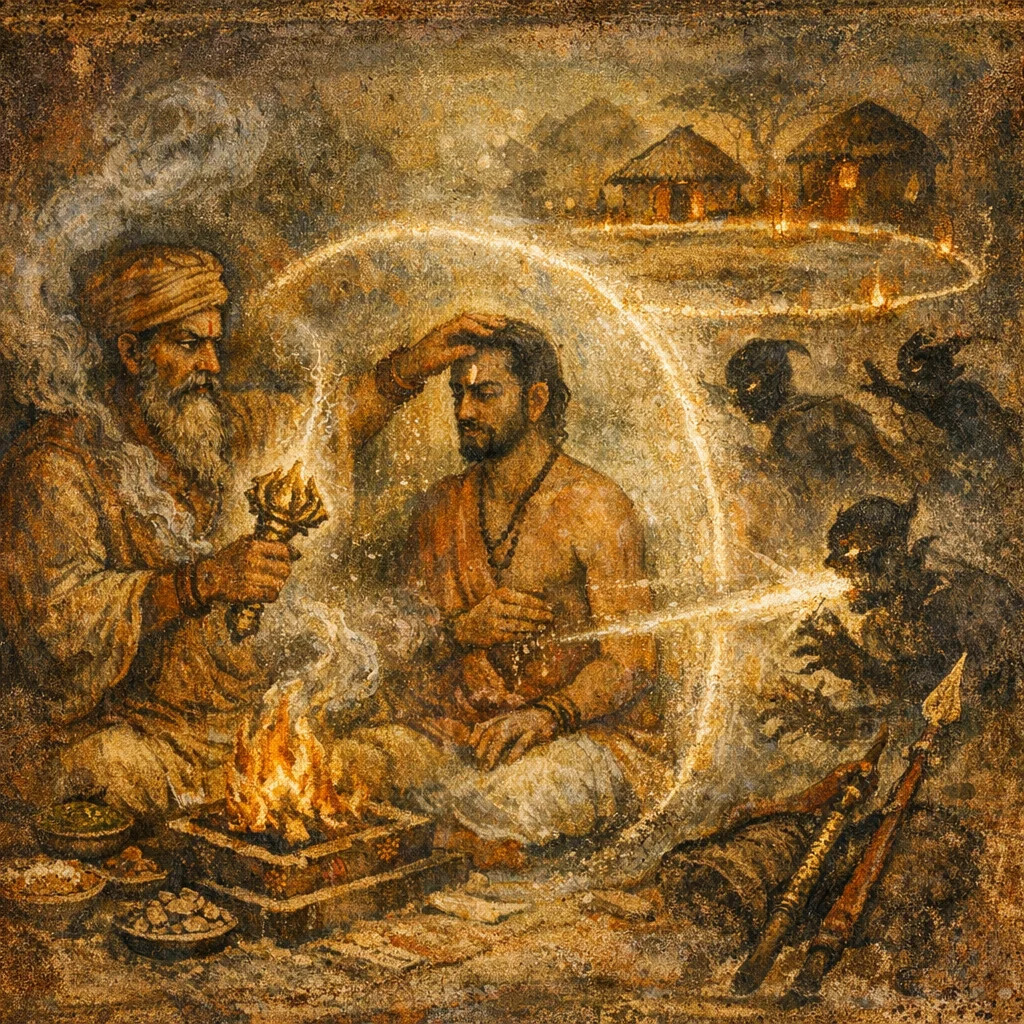
Sukta 93
Rishi: Rigvedic attribution (borrowed into AV 20): Indra hymn tradition.
Devata: Indra
Chandas: Anuṣṭubh (shorter, command-like cadence)
Mantras
Mantra 1
उत् त्वा मन्दन्तु स्तोमाः कृणुष्व राधो अद्रिवः । अव ब्रह्मद्विषो जहि
Let praises exhilarate thee; accomplish bounty, O Adriva: smite down the haters of holy power.
Mantra 2
पदा पणींरराधसो नि बाधस्व महां असि । नहि त्वा कश्चन प्रति
With thy foot tread down the Paṇis, the withholders of bounty; thrust them down—thou art great: for none at all is set against thee.
Mantra 3
त्वमीशिषे सुतानामिन्द्र त्वमसुतानाम्। त्वं राजा जनानाम्
Thou rulest over the well-set, O Indra; thou (rulest) over the ill-set: thou art king of the peoples.
Mantra 4
ईङ्खयन्तीरपस्युव इन्द्रं जातमुपासते । भेजानासः सुवीर्यम्
Swaying to and fro, eager for service, they wait upon Indra newly manifest; partakers (of his gift) they win excellent hero-might.
Mantra 5
त्वमिन्द्र बलादधि सहसो जात ओजसः । त्वं वृषन् वृषेदसि
Thou, Indra, art born from strength, upon overpowering might, from vigor: thou, O Bull, art seated as the Bull.
Mantra 6
त्वमिन्द्रासि वृत्रहा व्य१न्तरिक्षमतिरः । उद् द्यामस्तभ्ना ओजसा
Thou, Indra, art the Vṛtra-slayer: thou hast cleft and overpassed the mid-air; thou hast propped aloft the heaven by thy vigor.
Mantra 7
त्वमिन्द्र सजोषसमर्कं बिभर्षि बाह्वोः । वज्रं शिशान ओजसा
Thou, Indra, in concord bearest the hymn within thine arms, and—whetting the thunderbolt—(doest all) with thy vigor.
Mantra 8
त्वमिन्द्राभिभूरसि विश्वा जातान्योजसा । स विश्वा भुव आभवः
Thou, Indra, art the overmasterer of all that is born by thy vigor; thou hast become (lord) for all the worlds.
Mantra 9
By Dr. Sachchidanand Pathak, U.P. Sanskrit Sansthan, Lucknow, India. अभि प्र गोपतिं गिरेन्द्रमर्च यथा विदे। सूतुं सत्यस्य सत्पतिम्
Forth—toward the Lord of cattle, the Mountain-Indra—sing thou, that we may win success: the Impeller of Truth, the Lord of the Good.
Mantra 10
आ हरयः ससृज्रिरेऽरुषीरधि बर्हिषि । यत्राभि संनवामहे
Hither the tawny steeds have been let loose, the ruddy ones, upon the sacred grass—there where we bow us down before thee.
Mantra 11
इन्द्राय गाव आशिरं दुदुह्रे वज्रिणे मधु । यत् सीमुपह्वरे विदत्
For Indra the cows have milked forth refreshment—honey-sweet—for the Thunderer, when in the hollow by the water-side they found him there.
Mantra 12
उद् यद् ब्रध्नस्य विष्टपं गृहमिन्द्रश्च गन्वहि । मध्वः पीत्वा सचेवहि त्रिः सप्त सख्युः पदे
When forth the bright One’s spacious realm, his dwelling, thou—O Indra—go and reach; and, having drunk the sweet, be joined in fellowship, in the Friend’s station, thrice sevenfold.
Mantra 13
अर्चत प्रार्चत प्रियमेधासो अर्चत । अर्चन्तु पुत्रका उत पुरं न धृष्ण्वऽर्चत
Praise ye, praise forth—ye of pleasing wisdom—praise ye! Let the sons, too, praise; yea, like unto a fortress, boldly praise ye on.
Mantra 14
अव स्वराति गर्गरो गोधा परि सनिष्वणत्। पिङ्गा परि चनिष्कददिन्द्राय ब्रह्मोद्यतम्
Lo, Gargara uttereth sound; the iguana resoundeth round about. The tawny one springeth forth around: for Indra is the sacred spell uplifted.
Mantra 15
आ यत् पतन्त्येन्यः सुदुघा अनपस्फुरः । अपस्फुरं गृभायत सोममिन्द्राय पातवे
When hither fly the swift ones, good-milking, never failing, then seize ye fast what would slip away: the Soma for Indra to drink.
Mantra 16
अपादिन्द्रो अपादग्निर्विश्वे देवा अमत्सत । वरुण इदिह क्षयत् तमापो अभ्यऽनूषत वत्सं संशिश्वरीरिव
Indra hath protected, Agni hath protected; all the Gods have rejoiced. Varuṇa indeed dwelleth here: him have the Waters hymned around, as fondling kine a calf.
Mantra 17
सुदेवो असि वरुण यस्य ते सप्त सिन्धवः । अनुक्षरन्ति काकुदं सूर्यं सुषिरामिव
A gracious God art thou, O Varuṇa, whose seven rivers flow in ordered course; they follow on the ridge, the Sun, as waters well-channelled.
Mantra 18
यो व्यतींरफाणयत् सुयुक्तां उप दाशुषे । तक्वो नेता तदिद् वपुरुपमा यो अमुच्यत
Who drove the Vyatīs to flight, with well-yoked power, unto the liberal worshipper—Takva the leader: that verily is the peerless form of him who was loosed free.
Mantra 19
अतीदु शक्र ओहत इन्द्रो विश्वा अति द्विषः । भिनत् कनीन ओदनं पच्यमानं परो गिरा
Yea, Śakra Indra drave them forth—he passed beyond all haters. The youthful One clave asunder, by his uttered word, the porridge as it seethed, and cast it far away.
Mantra 20
अर्भको न कुमारकोऽधि तिष्ठन्नवं रथम्। स पक्षन्महिषं मृगं पित्रे मात्रे विभुक्रतुम्
Like a mere boy, like a young lad, mounting the swift car, he cooked the buffalo, the wild game, for father and for mother—he of far-reaching purpose.
Mantra 21
आ तू सुशिप्र दंपते रथं तिष्ठा हिरण्ययम्। अध द्युक्षं सचेवहि सहस्रपादमरुषं स्वस्तिगामनेहसम्
Come thou, fair-lipped, O Lord of the house; ascend the golden car. Then bring with thee the radiant power, thousand-footed, ruddy, hither-hastening, that goeth forth for our welfare.
Mantra 22
तं घेमित्था नमस्विन उप स्वराजमासते । अर्थं चिदस्य सुधितं यदेतव आवर्तयन्ति दावने
To him, the self-sovereign, do the reverent thus draw near and sit in attendance; for even his well-ordered boon the coursers turn again, to bring it back for bestowal.
Mantra 23
अनु प्रत्नस्यौकसः प्रियमेधास एषाम्। पूर्वामनु प्रयतिं वृक्तबर्हिषो हितप्रयस आशत
Following the ancient seat, these dear-offerers—having strewn the grass and set the oblations—attained, in accordance with the former course, the appointed rite’s successful end.
Mantra 24
यो राजा चर्षणीनां याता रथेभिरध्रिगुः । विश्वासां तरुता पृतनानां ज्येष्ठो यो वृत्रहा गृणे
He who is King of the peoples, who fares with chariots, of unimpeded course; the Overcomer of all battles, the chief—he, the Slayer of Vṛtra, is hymned.
Mantra 25
इन्द्रं तं शुम्भ पुरुहन्मन्नवसे यस्य द्विता विधर्तरि । हस्ताय वज्रः प्रति धायि दर्शतो महो दिवे न सूर्यः
Adorn thou that Indra for our aid, of much-smiting purpose—whose bolt, set ready to his hand in the Upholder, stands manifest, great in heaven as is the Sun.
Mantra 26
नकिष्टं कर्मणा नशद् यश्चकार सदावृधम्। इन्द्रं न यज्ञैर्विश्वगूर्तमृभ्वसमधृष्टं धृष्ण्वोऽजसम्
None by deed attains to him who made himself ever waxing—Indra, as by sacrifices, universally approved, of deft puissance, unassailed, bold, primeval.
Mantra 27
अषाल्हमुग्रं पृतनासु सासहिं यस्मिन् महीरुरुज्रयः । सं धेनवो जायमाने अनोनवुर्द्यावः क्षामो अनोनवुः
Invincible, fierce, victorious in battles—he in whom the mighty far-ranging powers abide: at his birth the milch-cows lowed together; Heaven and Earth gave voice, they gave voice.
Mantra 28
यद् द्याव इन्द्र ते शतं शतं भूमीरुत स्युः । न त्वा वज्रिन्त्सहस्रं सूर्या अनु न जातमष्ट रोदसी
Though, O Indra, there were for thee a hundred heavens, a hundred earths besides—yet thee, O Bolt-bearer, not a thousand suns in sequence could match, within the eightfold compass of the two worlds.
Mantra 29
आ पप्राथ महिना वृष्ण्या वृषन् विश्वा शविष्ठ शवसा । अस्मां अव मघवन् गोमति व्रजे वज्रिं चित्राभिरूतिभिः
Thou hast spread abroad, by greatness and by manly might, O Bull, all things—O strongest—by thy strength. Protect us, O bounteous Vajrin, in the cattle-rich fold, with thy bright and manifold succours.
Frequently Asked Questions
“Brahma-dviṣ” refers to those hostile to brahman—sacred speech, ritual authority, and the power of mantra. In practice it can mean rivals, slanderers, or opponents seen as undermining the performer’s ritual and social standing.
Its dominant tone is rakṣā (protection) with abhicārika-adjacent language: the violence is directed outward to neutralize threats so the household, cattle-fold, and ritual order remain secure.
In its Rigvedic logic Soma is central, but in Atharvanic domestic adaptation a clean substitute libation (water or milk) can stand in. The key idea is ‘securing’ the offering and directing it to Indra while reciting the protection commands.