Adhyaya 16
श्राद्ध-योग्य द्रव्य, निषेध, तथा गयाश्राद्ध-माहात्म्य (Śrāddha Materials, Prohibitions, and the Glory of Gayā)
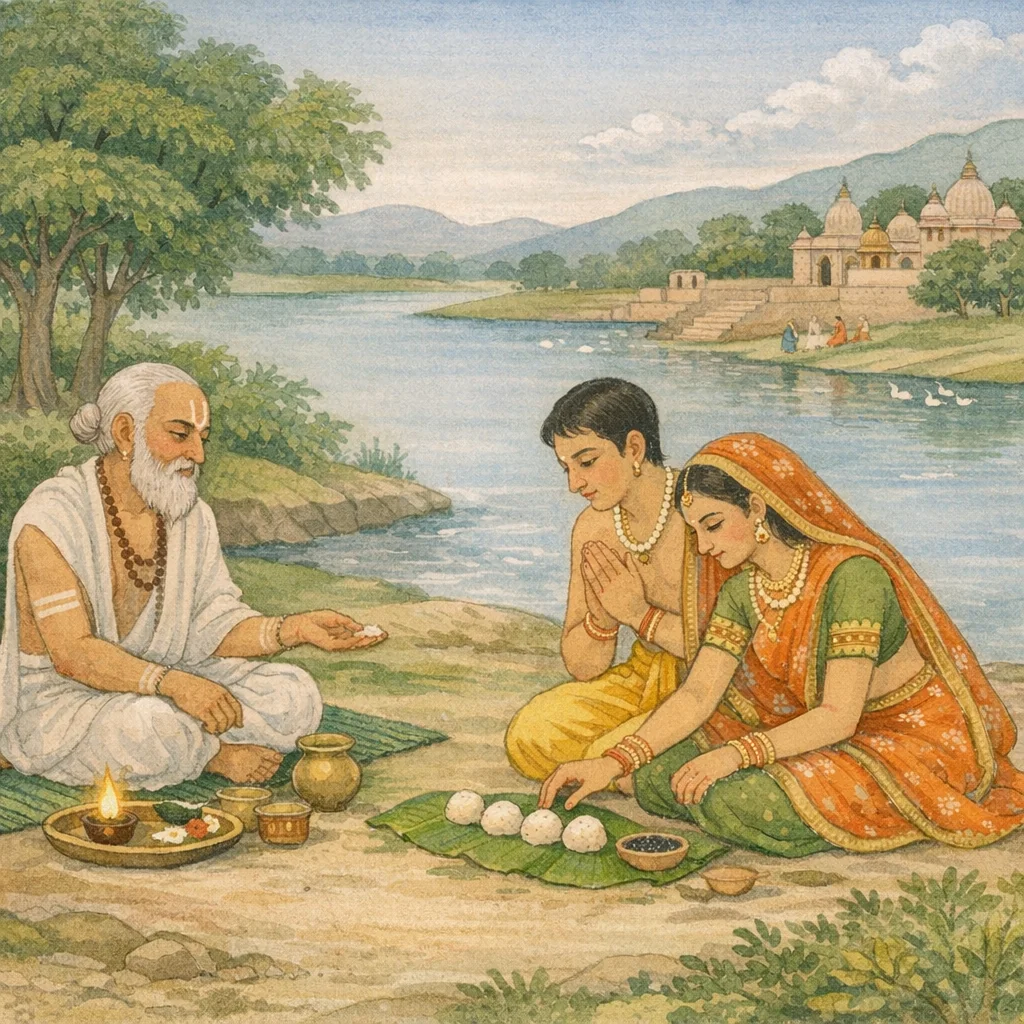
Parāśara teaches Maitreya the rules of śrāddha and consecrated food (haviṣya), urging restraint of appetite under dharma while noting meats permitted in certain special rites. He extols Gayā as a uniquely fruitful tīrtha for the satisfaction of the Pitṛs. The chapter lists śrāddha-suitable grains and produce, and details prohibitions: unsanctified first-fruits (agra-yāṇa), certain pulses, specific vegetables and condiments, red-tinted foods, resins, coarse salt, unsuitable water, and particular milks. Parāśara warns that impurity conditions (aśauca), menstrual/postpartum contexts, or impure attendees nullify the rite and divert its ‘consumption’ away from the Pitṛs. Faith (śraddhā), proper place, and protective measures such as scattering sesame to ward off obstructive forces are emphasized. It concludes that offerings given with faith, naming one’s lineage, become real sustenance for the Pitṛs, and introduces an ancestral gāthā linked to Ikṣvāku, expressing the wish for descendants who offer piṇḍa at Gayā.
Shlokas
Verse 1
हविष्यमत्स्यमांसैस् तु शशस्य शकुनस्य च सौकरच्छागलैणेयरौरवैर् गवयेन च
In the matter of consecrated sacrificial food (haviṣya), the meats held to be permitted are those of fish, the hare, and certain birds; likewise of the boar, the goat, the eṇeya antelope, the raurava deer, and the wild ox (gavaya).
Verse 2
औरभ्रगव्यैश् च तथा मासवृद्ध्या पितामहाः प्रयान्ति तृप्तिं मांसैस् तु नित्यं वार्ध्रीणसाम् इषैः
And by offerings prepared from the flesh of the aurabhra and the gavya, and likewise by the monthly augmenting rite, the pitāmahas attain satisfaction; indeed, through such meat-offerings they are continually gratified—through the prescribed oblations of the vārdhrīṇasa as well.
Verse 3
खड्गमांसम् अतीवात्र कालशाकं तथा मधु शस्तानि कर्मण्य् अत्यन्ततृप्तिदानि नरेश्वर
O lord of men, here the meat of the rhinoceros, the leafy green called kālaśāka, and honey are praised as offerings in sacred rites, for they are said to bestow the highest satisfaction.
Verse 4
गयाम् उपेत्य यः श्राद्धं करोति पृथिवीपते सफलं तस्य तज् जन्म जायते पितृतुष्टिदम्
O lord of the earth, whoever goes to Gayā and performs the śrāddha rites there—his very birth becomes fruitful, for it brings satisfaction and peace to the ancestors.
Verse 5
प्रसातिकाः सनीवाराः श्यामाका द्विविधास् तथा वन्यौषधीप्रधानास् तु श्राद्धार्हाः पुरुषर्षभ
O best of men, prasātikā-grains, sanīvāra, and the two kinds of śyāmāka—along with preparations chiefly made from wild herbs—are all deemed fit to be offered in śrāddha rites for the ancestors.
Verse 6
यवाः प्रियंगवो मुद्गा गोधूमा व्रीहयस् तिलाः निष्पावाः कोविदाराश् च सर्षपाश् चात्र शोभनाः
Here, too, thrive fine grains—barley, priyangu seed, green gram, wheat, rice, and sesame—along with niṣpāva beans, the kovidāra tree, and splendid mustard.
Verse 7
अकृताग्रयणं यच् च धान्यजातं नरेश्वर राजमाषान् अणूंश् चैव मसूरांश् च विवर्जयेत्
O lord of men, one should not partake of any grain that has not been sanctified by the first-fruits rite (Agra-yāṇa); likewise, one should avoid rājāmāṣa beans, aṇu pulses, and masūra (lentils).
Verse 8
अलाबुं गृञ्जनं चैव पलाण्डुं पिण्डमूलकम् गन्धारकं करम्भाणि लवणान्य् औषराणि च
Bottle-gourd, certain pungent roots and herbs, onion, bulbous tubers, gandhāraka, thickened gruels, and salts derived from alkaline earth—these too are to be regarded as items to be avoided in the discipline of regulated living.
Verse 9
आरक्ताश् चैव निर्यासाः प्रत्यक्षलवणानि च वर्ज्यान्य् एतानि वै श्राद्धे यच् च वाचा न शस्यते
At the Śrāddha offering, red-tinted foods, plant resins, and visible salt are to be avoided. Likewise, whatever is not sanctioned by right speech is also to be shunned.
Verse 10
नक्ताहृतम् अनुत्सृष्टं तृप्यते न च यत्र गौः दुर्गन्धि फेनिलं चाम्बु श्राद्धयोग्यं न पार्थिव
O King, water is not fit to be used for śrāddha if it has been fetched at night, if it is stagnant, if even a cow does not drink to satisfaction from it, or if it is foul-smelling and covered with froth.
Verse 11
क्षीरम् एकशफानां यद् औष्ट्रम् आविकम् एव च मार्गं च माहिषं चैव वर्जयेच् छ्राद्धकर्मणि
In the rite of śrāddha, one should avoid milk obtained from single-hoofed animals, as well as camel’s milk, sheep’s milk, and likewise the milk of deer and of the buffalo.
Verse 12
षण्डापविद्धचण्डालपाषण्ड्युन्मत्तरोगिभिः कृकवाकुश्वनग्नैश् च वानरग्रामसूकरैः
Society will be overrun by the impotent and the ruined, by outcastes and heretical sectarians; by the deranged and the diseased; by men who live like scavenging birds, like dogs, and like the shameless naked—indeed, by those who behave like monkeys, village rabble, and swine.
Verse 13
उदक्यासूतिकाशौचिमृतहारैश् च वीक्षिते श्राद्धे सुरा न पितरो भुञ्जते पुरुषर्षभ
O best of men, when a Śrāddha is performed under the stain of impurity—during menses, after childbirth, in ritual defilement, or in the presence of those who live by impure means—the Pitṛs do not partake of the offering; the deities of surā (intoxicating drink) consume it instead.
Verse 14
तस्मात् परिश्रिते कुर्याच् श्राद्धं श्रद्धासमन्वितः उर्व्यां च तिलविक्षेपाद् यातुधानान् निवारयेत्
Therefore, in a properly prepared and consecrated place, one should perform the śrāddha with steadfast faith; and by casting sesame upon the ground, one should ward off the yātudhānas—hostile forces that obstruct the rite.
Verse 15
न पूति नैवोपपन्नं केशकीटादिभिर् नृप न चैवाभिषवैर् मिश्रम् अन्नं पर्युषितं तथा
O King, one should not partake of food that is foul, nor food contaminated by hair, insects, and the like; nor food mixed with intoxicants—nor likewise food kept overnight and grown stale.
Verse 16
श्रद्धासमन्वितैर् दत्तं पितृभ्यो नामगोत्रतः यदाहारास् तु ते जातास् तदाहारत्वम् एति तत्
Whatever is offered with faith to the Pitṛs—invoked by their names and lineage—becomes, for those ancestral beings who subsist upon such offerings, their very sustenance; it is transformed into food proper to them.
Verse 17
श्रूयन्ते चापि पितृभिर् गीता गाथा महीपते इक्ष्वाकोर् मनुपुत्रस्य कलापोपवने पुरा
O king, even among the Pitṛs there is heard an ancient gāthā, once sung long ago in the grove called Kalāpa, telling of Ikṣvāku, the son of Manu.
Verse 18
अपि नस् ते भविष्यन्ति कुले सन्मार्गशीलिनः गयाम् उपेत्य ये पिण्डान् दास्यन्त्य् अस्माकम् आदरात्
May there arise in our lineage those steadfast on the righteous path, who, coming to Gayā, will reverently offer piṇḍa-obsequies for us.
Verse 19
अपि नः स कुले जायाद् यो नो दद्यात् त्रयोदशीम् पायसं मधुसर्पिभ्यां वर्षासु च मघासु च
May no one be born in our lineage who would deny us the sacred observance of the thirteenth lunar day, nor offer the sweet pāyasa mixed with honey and ghee—especially in the rainy season and when the asterism Maghā prevails.
Verse 20
गौरीं वाप्य् उद्वहेत् कन्यां नीलं वा वृषम् उत्सृजेत् यजेत वाश्वमेधेन विधिवद् दक्षिणावता
He may also set the matter right by duly marrying a fair-complexioned maiden; or by ritually releasing a dark-blue bull; or, in accordance with sacred rule, by performing the Aśvamedha sacrifice with the prescribed dakṣiṇā and gifts.
Frequently Asked Questions
Effectiveness depends on śraddhā (faith), correct dravya (fit offerings), śauca (purity of performer, place, time, and participants), and proper invocation by name and gotra; otherwise the rite is obstructed or diverted from the Pitṛs.
Gayā is presented as a tīrtha where śrāddha yields heightened fruit: one’s birth becomes ‘successful’ because it directly satisfies and pacifies the ancestors, strengthening pitṛ-ṛṇa repayment within dharma.
Restrictions discipline desire and protect ritual intelligibility: offerings must be sattva-supporting and tradition-sanctioned so karma is aligned with dharma, ultimately orienting the mind toward Viṣṇu as the inner ruler of order.