Sukta 21
Sukta 6.21
Bharadvāja (Bārhaspatya) (traditional ascription for RV 6.21 within Mandala 6)
Indra
Triṣṭubh (probable for RV 6.21; Mandala 6 Indra hymns predominantly Triṣṭubh)
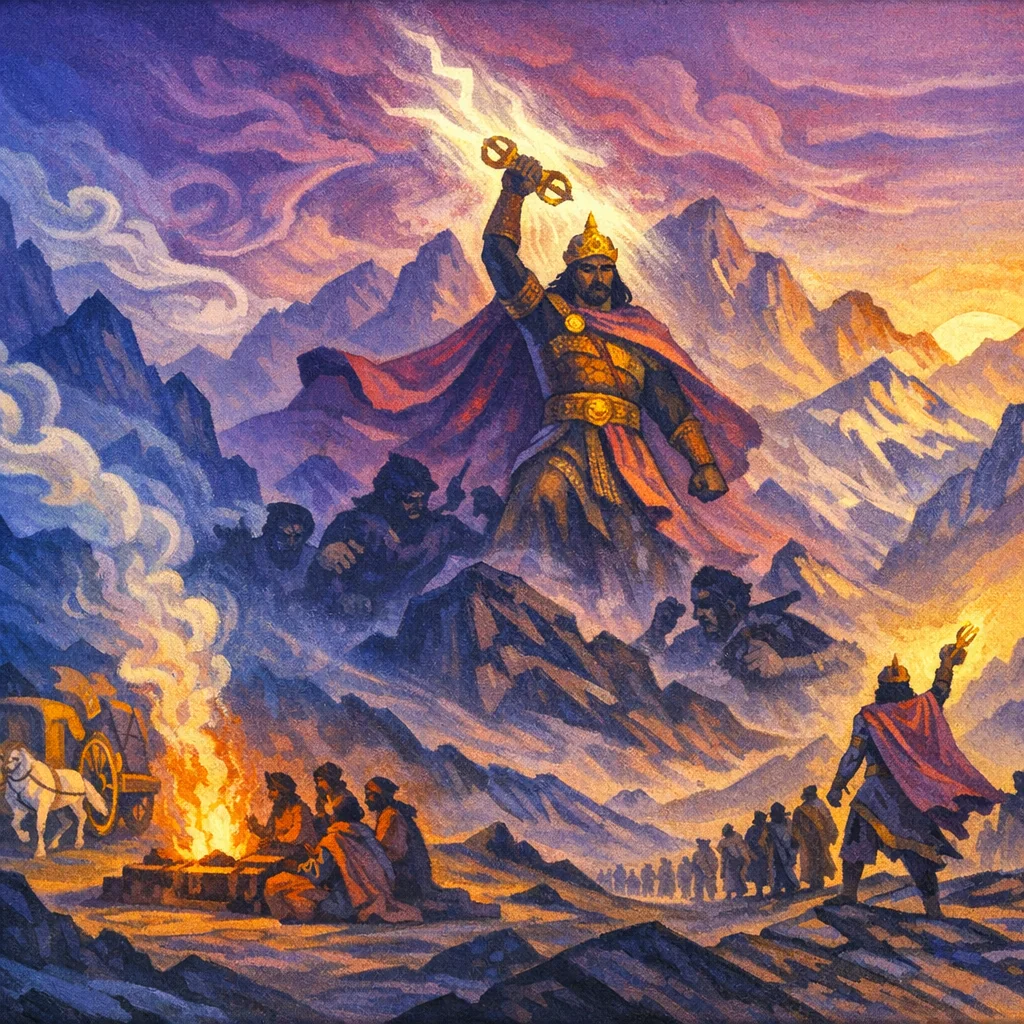
This hymn invokes Indra with potent offerings and chariot-set inspirations (dhīḥ), praising him as the ever-youthful, undecaying power who brings expansive wealth and victory. It confronts hostile forces (rakṣas) and asks Indra, the vajra-bearer and ancient ally, to drive them away. The sukta closes with a practical prayer: may Indra awaken as the path-maker and leader through both easy and difficult ways, carrying the worshippers to strength and plenitude (vāja).
Mantras
Mantra 1
इमा उ त्वा पुरुतमस्य कारोर्हव्यं वीर हव्या हवन्ते । धियो रथेष्ठामजरं नवीयो रयिर्विभूतिरीयते वचस्या ॥
These offerings call to you, O Hero, from the singer who is richest in plenitude. The oblations summon you. The inspired thoughts, firm-set on the chariot-path, ever-young and undecaying, move forward as a rayi—an all-pervading fullness—through the power of the word.
Mantra 2
तमु स्तुष इन्द्रं यो विदानो गिर्वाहसं गीर्भिर्यज्ञवृद्धम् । यस्य दिवमति मह्ना पृथिव्याः पुरुमायस्य रिरिचे महित्वम् ॥
Him I affirm—Indra—known in the seeing, the carrier of the inspired songs, increased by the sacrifice. His greatness, manifold in power, has overflowed by might beyond heaven and beyond earth.
Mantra 3
स इत्तमोऽवयुनं ततन्वत्सूर्येण वयुनवच्चकार । कदा ते मर्ता अमृतस्य धामेयक्षन्तो न मिनन्ति स्वधावः ॥
He indeed stretched out the darkness that is without right discernment; with the Sun he made it full of luminous order. When shall your mortals, offering into the home of immortality, no longer diminish—O self-powered One?
Mantra 4
यस्ता चकार स कुह स्विदिन्द्रः कमा जनं चरति कासु विक्षु । कस्ते यज्ञो मनसे शं वराय को अर्क इन्द्र कतमः स होता ॥
He who has done these deeds—where indeed is that Indra? To which people does he move, in what clans? Which offering brings peace to your mind for the choosing? Which hymn is it, Indra—and which is the priest who bears it?
Mantra 5
इदा हि ते वेविषतः पुराजाः प्रत्नास आसुः पुरुकृत्सखायः । ये मध्यमास उत नूतनास उतावमस्य पुरुहूत बोधि ॥
For even now, your eager companions are there—ancient-born allies, doers of many works. Those of the middle time, and those who are new, and even of the last: become aware of them, O much-invoked.
Mantra 6
तं पृच्छन्तोऽवरासः पराणि प्रत्ना त इन्द्र श्रुत्यानु येमुः । अर्चामसि वीर ब्रह्मवाहो यादेव विद्म तात्त्वा महान्तम् ॥
Seeking, the lesser ones asked about the higher things; the ancient truths of you, O Indra, they followed by what was heard. We chant to you, O Hero, bearer of the brahman—so far as we know—therefore we affirm you as the Vast.
Mantra 7
अभि त्वा पाजो रक्षसो वि तस्थे महि जज्ञानमभि तत्सु तिष्ठ । तव प्रत्नेन युज्येन सख्या वज्रेण धृष्णो अप ता नुदस्व ॥
Against you the hostile powers have ranged their force; stand firmly upon that, O greatly born. By your ancient, yoked companionship, O Bold One, with the vajra drive them away.
Mantra 8
स तु श्रुधीन्द्र नूतनस्य ब्रह्मण्यतो वीर कारुधायः । त्वं ह्यापिः प्रदिवि पितॄणां शश्वद्बभूथ सुहव एष्टौ ॥
Therefore hear, O Indra, the new word of the one who seeks the brahman, O Hero, who upholds the poet’s work. For you are indeed the close kin in the fore-heaven of the Fathers; ever you have become the easy-to-call in the seeking.
Mantra 9
प्रोतये वरुणं मित्रमिन्द्रं मरुतः कृष्वावसे नो अद्य । प्र पूषणं विष्णुमग्निं पुरंधिं सवितारमोषधीः पर्वताँश्च ॥
For our help today, set forward Varuṇa and Mitra, Indra and the Maruts for our protection. Set forward Pūṣan, Viṣṇu, Agni, the Power of right plenty, Savitṛ, the healing plants, and the mountains too.
Mantra 10
इम उ त्वा पुरुशाक प्रयज्यो जरितारो अभ्यर्चन्त्यर्कैः । श्रुधी हवमा हुवतो हुवानो न त्वावाँ अन्यो अमृत त्वदस्ति ॥
These indeed, O wide-capable One, O worthy of the fore-offering, the singers acclaim you with luminous hymns. Hear the call of the caller who calls you; none other is so possessed of you—O Deathless—none other exists beyond you.
Mantra 11
नू म आ वाचमुप याहि विद्वान्विश्वेभिः सूनो सहसो यजत्रैः । ये अग्निजिह्वा ऋतसाप आसुर्ये मनुं चक्रुरुपरं दसाय ॥
Now, come near to my word, O knower, O Son of Force, together with all the adorable powers. Those who have the tongue of the Fire and drink the R̥ta—those who made Manu a higher being for the servant-nature—may they approach and uphold this utterance.
Mantra 12
स नो बोधि पुरएता सुगेषूत दुर्गेषु पथिकृद्विदानः । ये अश्रमास उरवो वहिष्ठास्तेभिर्न इन्द्राभि वक्षि वाजम् ॥
Awaken for us as the leader in front, the maker of the path in the easy ways and also in the hard ways, O knower. With those wide and most-bearing, unwearied powers, O Indra, carry us forward to the plenitude of force.
Frequently Asked Questions
It asks Indra to accept the offerings, grant wealth and strength, protect the worshippers by driving away hostile forces, and lead them safely through both easy and difficult paths.
Rakṣas represent forces that obstruct and harm—outer dangers and inner confusion. The hymn calls on Indra’s vajra-power to repel these obstacles and restore a clear way forward.
Puraetā means “the one who goes in front” (leader), and pathikṛt means “maker of the path.” Together they describe Indra as guidance and enabling power in all circumstances.