Sarga 127
भरद्वाजाश्रम-समागमः / Meeting Bharadvaja at the Hermitage (Homeward Blessings)
युद्धकाण्ड
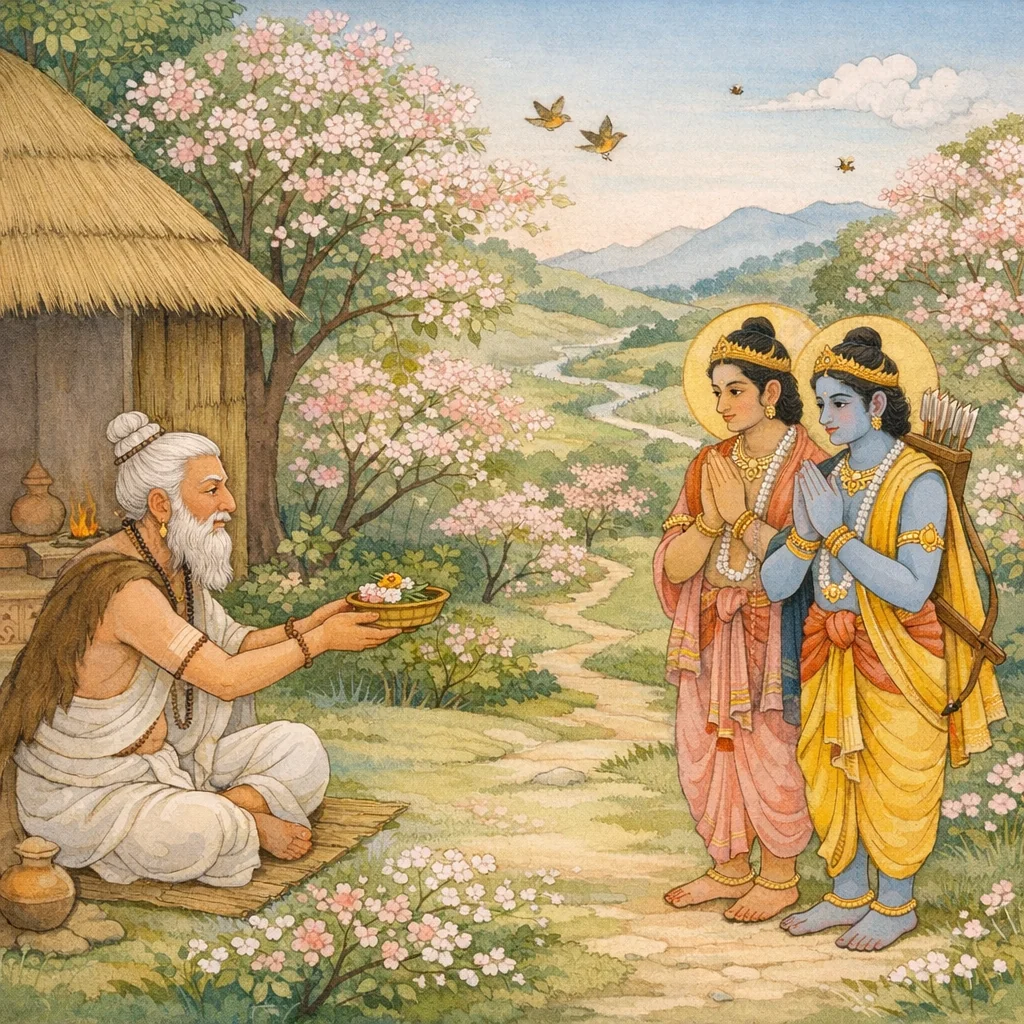
After the exile term is fulfilled (marked by a precise lunar date), Rāma and Lakṣmaṇa arrive at the āśrama of Bharadvāja and bow in reverent salutation. Rāma asks about Ayodhyā—its public prosperity, Bharata’s rule, and the welfare of the queens—signaling the epic’s turn from war to civic restoration. Bharadvāja replies warmly: Bharata, ascetic in appearance, awaits Rāma with the pādukā (wooden sandals) set before him, a sign of delegated sovereignty and unwavering loyalty. The sage says that through tapas and the reports of disciples he knows Rāma’s whole course—Sītā’s abduction while protecting ascetics and brāhmaṇas, the encounters and alliances (Mārīca, Kabandha, Pampā, Sugrīva), Vāli’s death, Hanumān’s finding of Sītā and burning of Laṅkā, Nala’s bridge, Rāvaṇa’s fall, and the divine bestowals. Offering arghya and a boon, Bharadvāja invites a request; Rāma asks that the road to Ayodhyā abound in unseasonal fruits and blossoms fragrant like amṛta. With the sage’s assent, the land transforms for several yojanas: barren trees bear fruit, leafless trees regain foliage, and honeyed plenty appears—an auspicious sign of restored order accompanying the homeward return.
Shlokas
Verse 1
पूर्णेचतुर्दशेवर्षेपञ्चम्यांलक्ष्मणाग्रजः ।भरद्वाजाश्रमंप्राप्यववन्देनियतोमुनिम् ।।6.127.1।।
When the fourteen years were completed, on the fifth lunar day, Rāma—elder brother of Lakṣmaṇa—reached Bharadvāja’s hermitage and, with disciplined reverence, bowed to the sage.
Verse 2
सोऽपृच्छदभिवाद्यैनंभरद्वाजंतपोधनम् ।शृणोषिकच्चिद्भगवन्सुभिक्षानायमंपुरे ।।6.127.2।।कच्चित्सयुक्तोभरतोजीवन्त्यपि च मातरः ।
After greeting Bharadvāja—whose wealth is austerity—he asked: “O venerable one, have you heard whether the city is free from famine and disease and enjoys prosperity? Is Bharata diligently engaged in his duty? And are the mothers living well?”
Verse 3
एवमुक्तस्तुरामेणभरद्वाजोमहामुनिः ।।6.127.3।।प्रत्युवाचरघुश्रेष्ठंस्मितपूर्वंप्रहृष्टवत् ।
Thus addressed by Rāma, the great sage Bharadvāja—delighted—replied to the best of the Raghus with a smile.
Verse 4
पङ्कदिग्धस्तुभरतोजटिलस्त्वांप्रतीक्षते ।।6.127.4।।पादुकतेपुरस्कृत्यसर्वं च कुशलंगृहे ।
Bharata, smeared with mud and wearing matted locks, awaits you—setting your sandals before him; and all is well at home.
Verse 5
त्वांपुराचीरवसनंप्रविशन्तंमहावनम् ।।6.127.5।।स्त्रीतृतीयंच्युतंराज्याद्धर्मकामं च केवलम् ।पदातिंत्यक्तसर्वस्वंपितुर्वचनकारिणम् ।।6.127.6।।सर्वभोगैःपरित्यक्तंस्वर्गच्युतमिवामरम् ।दृष्टातुकरुणापूर्वंममासीत्समितिञ्जयः ।।6.127.7।।कैकेयीवचनेयुक्तंवन्यमूलफलाशिनम् ।
Formerly, when I saw you—clad in bark garments—entering the great forest, exiled from the kingdom, going as the third with your wife, seeking only dharma, walking on foot, having abandoned everything and acting solely to fulfill your father’s word, renouncing all comforts like a god fallen from heaven, living on forest roots and fruits in obedience to Kaikeyī’s demand—then, O conqueror in battle, compassion first arose in me.
Verse 6
त्वांपुराचीरवसनंप्रविशन्तंमहावनम् ।।6.127.5।।स्त्रीतृतीयंच्युतंराज्याद्धर्मकामं च केवलम् ।पदातिंत्यक्तसर्वस्वंपितुर्वचनकारिणम् ।।6.127.6।।सर्वभोगैःपरित्यक्तंस्वर्गच्युतमिवामरम् ।दृष्टातुकरुणापूर्वंममासीत्समितिञ्जयः ।।6.127.7।।कैकेयीवचनेयुक्तंवन्यमूलफलाशिनम् ।
When the fourteen years were complete, on the fifth day, Rāma—the elder brother of Lakṣmaṇa—reached Bharadvāja’s hermitage and, with disciplined reverence, bowed to the sage.
Verse 7
त्वांपुराचीरवसनंप्रविशन्तंमहावनम् ।।6.127.5।।स्त्रीतृतीयंच्युतंराज्याद्धर्मकामं च केवलम् ।पदातिंत्यक्तसर्वस्वंपितुर्वचनकारिणम् ।।6.127.6।।सर्वभोगैःपरित्यक्तंस्वर्गच्युतमिवामरम् ।दृष्टातुकरुणापूर्वंममासीत्समितिञ्जयः ।।6.127.7।।कैकेयीवचनेयुक्तंवन्यमूलफलाशिनम् ।
When I saw you—O conqueror in battle—having renounced every comfort, like an immortal fallen from heaven, compassion arose in me at once.
Verse 8
साम्प्रतंतुसमृद्धार्थंसमित्रगणबान्धवम् ।।6.127.8।।समीक्ष्यविजितारिं च समाभूप्रतीतिरुत्तमा ।
But now, seeing you with your purpose fulfilled—victorious over your foes and reunited with your friends, hosts, and kinsmen—my joy has become supreme.
Verse 9
सर्वं च सुखदुःखंतेविदितंममराघव ।यत्त्वयाविपुलंप्राप्तंजनस्थान्नवधादिकम् ।।6.127.9।।
Rāghava, all your joys and sorrows are known to me—everything you experienced in abundance, beginning with your dwelling at Jana-sthāna and the events that followed.
Verse 10
ब्राह्मणार्थेनियुक्तस्यरक्षतःसर्वतापसान् ।रावणेनहृताभार्याबभूवेयमनिता ।।6.127.10।।
While you were engaged for the sake of the brāhmaṇas, protecting all the ascetics, this blameless wife of yours was abducted by Rāvaṇa.
Verse 11
मारीचदर्शनंचैवसीतोन्मधनमेव च ।कबन्धदर्शनंचैवसम्पाभिगमनंतथा ।।6.127.11।।सुग्रीवेण च तेसख्यंयथावालीहतस्त्वया ।मार्गणंचैववैदेह्याःकर्मवातात्मजस्य च ।।6.127.12।।विदितायां च सीतायांनलसेतुर्यथाकृतः ।यथाचादीपितालङ्काप्रहृष्टैर्हरियूथपैः ।।6.127.13।।सपुत्रबान्दवामात्यःसबलःसहावाहनः ।यथा च निहतःसंख्येरावणोबलदर्पितः ।।6.127.14।।यथा च निहतेतस्मिन् रावणेदेवकण्टके ।समागमश्चत्रिदशैर्यथादत्तश्चतेवरः ।।6.127.15।।सर्वंममैतद्विदितंतपसाधर्मवत्सल ।सम्पतन्ति च मेशिष्याःप्रवृत्ताख्याःपुरीमितः ।।6.127.16।।
I know all this, O lover of dharma, through the power of my austerities: your meeting with Mārīca; your anguished search for Sītā; your sight of Kabandha; your going to Sampā; your friendship with Sugrīva and your slaying of Vālī; the search for Vaidehī and the deeds of the Wind-god’s son; the finding of Sītā; how Nala built the bridge; how Laṅkā was set aflame by the rejoicing leaders of the monkey-hosts; how Rāvaṇa, proud of his strength, was slain in battle with his sons, kinsmen, ministers, forces, and vehicles; and how, when that Rāvaṇa—thorn to the devas—was killed, the devas assembled and granted you a boon. And my disciples, bearers of tidings, have also come here from the city.
Verse 12
मारीचदर्शनंचैवसीतोन्मधनमेव च ।कबन्धदर्शनंचैवसम्पाभिगमनंतथा ।।6.127.11।।सुग्रीवेण च तेसख्यंयथावालीहतस्त्वया ।मार्गणंचैववैदेह्याःकर्मवातात्मजस्य च ।।6.127.12।।विदितायां च सीतायांनलसेतुर्यथाकृतः ।यथाचादीपितालङ्काप्रहृष्टैर्हरियूथपैः ।।6.127.13।।सपुत्रबान्दवामात्यःसबलःसहावाहनः ।यथा च निहतःसंख्येरावणोबलदर्पितः ।।6.127.14।।यथा च निहतेतस्मिन् रावणेदेवकण्टके ।समागमश्चत्रिदशैर्यथादत्तश्चतेवरः ।।6.127.15।।सर्वंममैतद्विदितंतपसाधर्मवत्सल ।सम्पतन्ति च मेशिष्याःप्रवृत्ताख्याःपुरीमितः ।।6.127.16।।
I know all this, O lover of dharma, through the power of my austerities: your meeting with Mārīca; your anguished search for Sītā; your sight of Kabandha; your going to Sampā; your friendship with Sugrīva and your slaying of Vālī; the search for Vaidehī and the deeds of the Wind-god’s son; the finding of Sītā; how Nala built the bridge; how Laṅkā was set aflame by the rejoicing leaders of the monkey-hosts; how Rāvaṇa, proud of his strength, was slain in battle with his sons, kinsmen, ministers, forces, and vehicles; and how, when that Rāvaṇa—thorn to the devas—was killed, the devas assembled and granted you a boon. And my disciples, bearers of tidings, have also come here from the city.
Verse 13
मारीचदर्शनंचैवसीतोन्मधनमेव च ।कबन्धदर्शनंचैवसम्पाभिगमनंतथा ।।6.127.11।।सुग्रीवेण च तेसख्यंयथावालीहतस्त्वया ।मार्गणंचैववैदेह्याःकर्मवातात्मजस्य च ।।6.127.12।।विदितायां च सीतायांनलसेतुर्यथाकृतः ।यथाचादीपितालङ्काप्रहृष्टैर्हरियूथपैः ।।6.127.13।।सपुत्रबान्दवामात्यःसबलःसहावाहनः ।यथा च निहतःसंख्येरावणोबलदर्पितः ।।6.127.14।।यथा च निहतेतस्मिन् रावणेदेवकण्टके ।समागमश्चत्रिदशैर्यथादत्तश्चतेवरः ।।6.127.15।।सर्वंममैतद्विदितंतपसाधर्मवत्सल ।सम्पतन्ति च मेशिष्याःप्रवृत्ताख्याःपुरीमितः ।।6.127.16।।
I know all this, O lover of dharma, through the power of my austerities: your meeting with Mārīca; your anguished search for Sītā; your sight of Kabandha; your going to Sampā; your friendship with Sugrīva and your slaying of Vālī; the search for Vaidehī and the deeds of the Wind-god’s son; the finding of Sītā; how Nala built the bridge; how Laṅkā was set aflame by the rejoicing leaders of the monkey-hosts; how Rāvaṇa, proud of his strength, was slain in battle with his sons, kinsmen, ministers, forces, and vehicles; and how, when that Rāvaṇa—thorn to the devas—was killed, the devas assembled and granted you a boon. And my disciples, bearers of tidings, have also come here from the city.
Verse 14
मारीचदर्शनंचैवसीतोन्मधनमेव च ।कबन्धदर्शनंचैवसम्पाभिगमनंतथा ।।6.127.11।।सुग्रीवेण च तेसख्यंयथावालीहतस्त्वया ।मार्गणंचैववैदेह्याःकर्मवातात्मजस्य च ।।6.127.12।।विदितायां च सीतायांनलसेतुर्यथाकृतः ।यथाचादीपितालङ्काप्रहृष्टैर्हरियूथपैः ।।6.127.13।।सपुत्रबान्दवामात्यःसबलःसहावाहनः ।यथा च निहतःसंख्येरावणोबलदर्पितः ।।6.127.14।।यथा च निहतेतस्मिन् रावणेदेवकण्टके ।समागमश्चत्रिदशैर्यथादत्तश्चतेवरः ।।6.127.15।।सर्वंममैतद्विदितंतपसाधर्मवत्सल ।सम्पतन्ति च मेशिष्याःप्रवृत्ताख्याःपुरीमितः ।।6.127.16।।
I know all this, O lover of dharma, through the power of my austerities: your meeting with Mārīca; your anguished search for Sītā; your sight of Kabandha; your going to Sampā; your friendship with Sugrīva and your slaying of Vālī; the search for Vaidehī and the deeds of the Wind-god’s son; the finding of Sītā; how Nala built the bridge; how Laṅkā was set aflame by the rejoicing leaders of the monkey-hosts; how Rāvaṇa, proud of his strength, was slain in battle with his sons, kinsmen, ministers, forces, and vehicles; and how, when that Rāvaṇa—thorn to the devas—was killed, the devas assembled and granted you a boon. And my disciples, bearers of tidings, have also come here from the city.
Verse 15
मारीचदर्शनंचैवसीतोन्मधनमेव च ।कबन्धदर्शनंचैवसम्पाभिगमनंतथा ।।6.127.11।।सुग्रीवेण च तेसख्यंयथावालीहतस्त्वया ।मार्गणंचैववैदेह्याःकर्मवातात्मजस्य च ।।6.127.12।।विदितायां च सीतायांनलसेतुर्यथाकृतः ।यथाचादीपितालङ्काप्रहृष्टैर्हरियूथपैः ।।6.127.13।।सपुत्रबान्दवामात्यःसबलःसहावाहनः ।यथा च निहतःसंख्येरावणोबलदर्पितः ।।6.127.14।।यथा च निहतेतस्मिन् रावणेदेवकण्टके ।समागमश्चत्रिदशैर्यथादत्तश्चतेवरः ।।6.127.15।।सर्वंममैतद्विदितंतपसाधर्मवत्सल ।सम्पतन्ति च मेशिष्याःप्रवृत्ताख्याःपुरीमितः ।।6.127.16।।
I know all this, O lover of dharma, through the power of my austerities: your meeting with Mārīca; your anguished search for Sītā; your sight of Kabandha; your going to Sampā; your friendship with Sugrīva and your slaying of Vālī; the search for Vaidehī and the deeds of the Wind-god’s son; the finding of Sītā; how Nala built the bridge; how Laṅkā was set aflame by the rejoicing leaders of the monkey-hosts; how Rāvaṇa, proud of his strength, was slain in battle with his sons, kinsmen, ministers, forces, and vehicles; and how, when that Rāvaṇa—thorn to the devas—was killed, the devas assembled and granted you a boon. And my disciples, bearers of tidings, have also come here from the city.
Verse 16
मारीचदर्शनंचैवसीतोन्मधनमेव च ।कबन्धदर्शनंचैवसम्पाभिगमनंतथा ।।6.127.11।।सुग्रीवेण च तेसख्यंयथावालीहतस्त्वया ।मार्गणंचैववैदेह्याःकर्मवातात्मजस्य च ।।6.127.12।।विदितायां च सीतायांनलसेतुर्यथाकृतः ।यथाचादीपितालङ्काप्रहृष्टैर्हरियूथपैः ।।6.127.13।।सपुत्रबान्दवामात्यःसबलःसहावाहनः ।यथा च निहतःसंख्येरावणोबलदर्पितः ।।6.127.14।।यथा च निहतेतस्मिन् रावणेदेवकण्टके ।समागमश्चत्रिदशैर्यथादत्तश्चतेवरः ।।6.127.15।।सर्वंममैतद्विदितंतपसाधर्मवत्सल ।सम्पतन्ति च मेशिष्याःप्रवृत्ताख्याःपुरीमितः ।।6.127.16।।
I know all this, O lover of dharma, through the power of my austerities: your meeting with Mārīca; your anguished search for Sītā; your sight of Kabandha; your going to Sampā; your friendship with Sugrīva and your slaying of Vālī; the search for Vaidehī and the deeds of the Wind-god’s son; the finding of Sītā; how Nala built the bridge; how Laṅkā was set aflame by the rejoicing leaders of the monkey-hosts; how Rāvaṇa, proud of his strength, was slain in battle with his sons, kinsmen, ministers, forces, and vehicles; and how, when that Rāvaṇa—thorn to the devas—was killed, the devas assembled and granted you a boon. And my disciples, bearers of tidings, have also come here from the city.
Verse 17
अहमप्यद्यतेदद्मिवरंशस्त्रभृतांवर ।अर्घ्यंप्रतिगृहाणेदमयोध्यांश्वोगमिष्यसि ।।6.127.17।।
I too, today, shall grant you a boon, O best among weapon-bearers. Accept this arghya, the honor-water; tomorrow you will go to Ayodhyā.
Verse 18
तस्यतच्छिरसावाक्यंप्रतिगृह्यनृपात्मजः ।बाढमित्येवसम्हृष्टःश्रीमान्वरमयाचत ।।6.127.18।।
The prince, receiving his words with bowed head, joyfully replied, “So be it,” and the illustrious one requested the boon.
Verse 19
अकालफलिनोवृक्षास्सर्वेचापिमधुस्रवाः ।फलान्यमृतगन्धीनिबहूनिविविधानि च ।।6.127.19।।भवन्तुमार्गेभगवन्नयोध्यांप्रतिगच्छतः ।
O Blessed Bhagavān, as we journey back on the road to Ayodhyā, may all the trees along the way bear fruit out of season—sweet, with juice flowing—many and various, fragrant like nectar.
Verse 20
तथेति च प्रतिज्ञातेवचनात्समनन्तरम् ।।6.127.20।।अभवन्पादपास्तत्रस्वर्गपादपसन्निभाः ।
As soon as he pledged, “So be it,” the trees there at once became like the trees of heaven.
Verse 21
पुष्फलाःफलिनश्चासवनिपुष्पाःपुष्पशालिनः ।।6.127.21।।शुष्कास्समग्रपत्रास्तेनगाश्चैवमधुस्रवाः ।सर्वतोयोजनास्त्रिस्रोगच्छतामभवंस्तदा ।।6.127.22।।
Then, as they proceeded for three yojanas in every direction, trees that had been fruitless became laden with fruit; those without blossoms turned richly flowered; and even dried-up trees became full of leaves and began to drip honey—an auspicious transformation accompanying the righteous return.
Verse 22
Thus addressed by Rāma, the great sage Bharadvāja—delighted—replied to the best of the Raghus with a smile.
Verse 23
पूर्णेचतुर्दशेवर्षेपञ्चम्यांलक्ष्मणाग्रजः ।भरद्वाजाश्रमंप्राप्यववन्देनियतोमुनिम् ।।6.127.1।।
When the fourteen years were complete, on the fifth day, Rāma—the elder brother of Lakṣmaṇa—reached Bharadvāja’s hermitage and, with disciplined reverence, bowed to the sage.
Frequently Asked Questions
The Sarga foregrounds post-war ethical transition: Rāma’s return is framed not as personal triumph but as accountable reintegration into polity—seeking welfare reports, honoring ascetic authority, and receiving blessings before re-entering kingship.
Rightful duty (dharma) is shown as continuous across phases—forest, war, and return—validated by tapas and by social trust (Bharata’s pādukā-vigil). Prosperity on the path symbolizes that moral order radiates outward into the environment.
Bharadvāja’s āśrama functions as a liminal waypoint between battlefield and capital; Ayodhyā is the civic destination; the narrative recalls Pampā, Laṅkā, and Nala’s bridge as itinerary nodes, while the pādukā and arghya mark cultural protocols of sovereignty and hospitality.