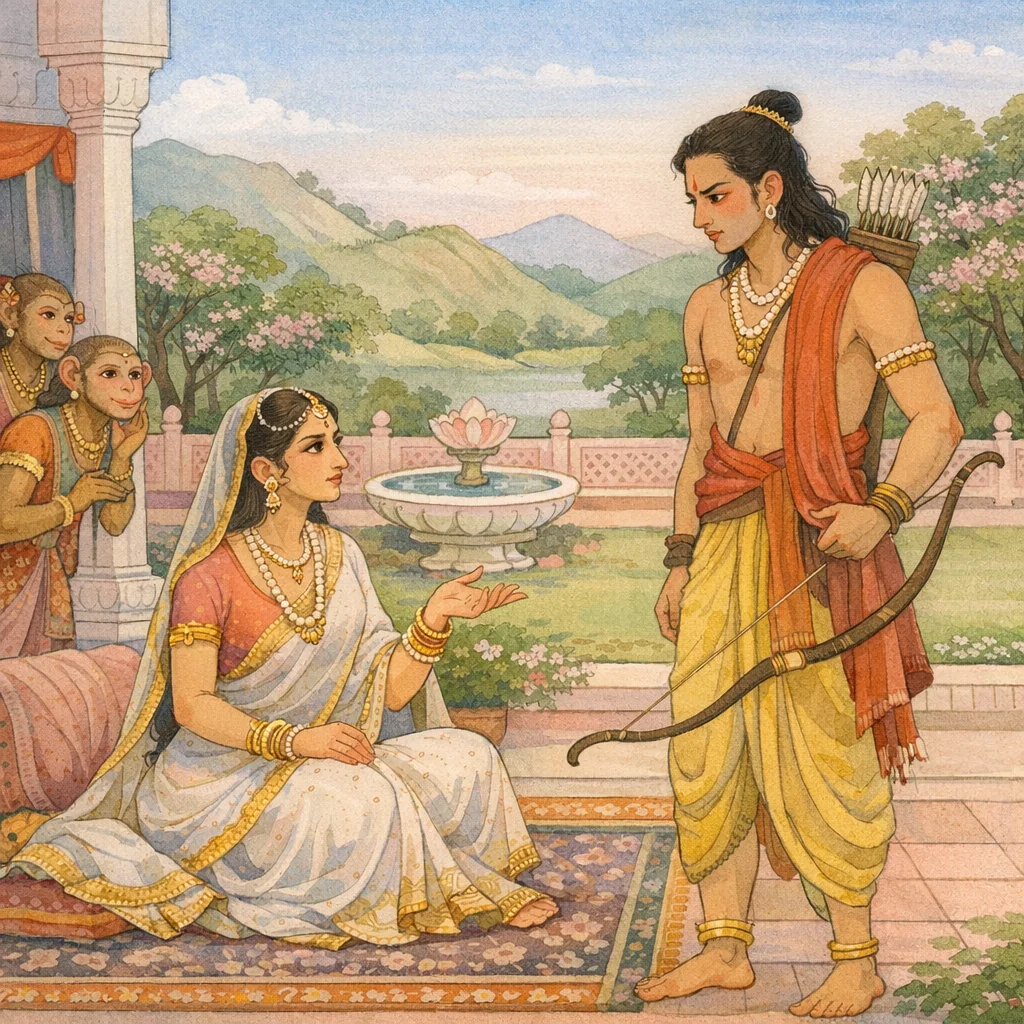
Sarga 35
तारोपदेशः — Tara’s Counsel to Lakshmana (Restraint, Time, and Mobilization)
किष्किन्धाकाण्ड
In Sarga 35, Tārā offers Lakṣmaṇa a carefully ordered counsel when his radiance and anger flare at Sugrīva’s seeming delay. She first corrects the ethics of speech: harsh words are unfit to be aimed at the king of the vānaras, especially from Lakṣmaṇa. She then defends Sugrīva’s nature—neither ungrateful nor deceitful—and explains the delay with a teaching example: even time-wise Viśvāmitra once lost track of time through attachment to Ghṛtācī; therefore ordinary beings may err. Tārā urges forbearance and reflective restraint, for steady men do not instantly fall under anger. She personally appeases Lakṣmaṇa “for Sugrīva’s sake,” declaring that Sugrīva is ready to renounce kingdom, wealth, and even personal attachments for Rāma’s pleasure. The counsel turns to strategic realism: Laṅkā teems with rākṣasa hosts and allied strength is necessary; Rāvaṇa cannot be slain without first overcoming powerful, shape-changing demons, and Sugrīva cannot accomplish this alone. Citing Vālī as an informed source (while admitting her report is hearsay), she explains that chiefs have been dispatched to gather vast forces, and Sugrīva waits for their arrival to fulfill Rāghava’s aim. The sarga closes with a social note: vānarī women, seeing Lakṣmaṇa’s blood-red angry eyes, fear a return of past danger linked to Vālī’s death and cannot find peace—underscoring the ethical need for controlled force and measured speech.
Shlokas
Verse 1
तथा ब्रुवाणं सौमित्रिं प्रदीप्तमिव तेजसा।अब्रवील्लक्ष्मणं तारा ताराधिपनिभानना।।।।
As Saumitri (Lakṣmaṇa) spoke, blazing as though with fiery splendor, Tārā—moon-faced like the lord of stars—addressed Lakṣmaṇa.
Verse 2
नैवं लक्ष्मण वक्तव्यो नायं परुषमर्हति।हरीणामीश्वरश्श्रोतुं तव वक्त्राद्विशेषतः।।।।
O Lakṣmaṇa, you should not speak in that manner. The lord of the monkeys does not deserve to hear harsh words—least of all from your mouth.
Verse 3
नैवाकृतज्ञस्सुग्रीवो न शठो नापि दारुणः।नैवानृतकथो वीर न जिह्मश्च कपीश्वरः।।।।
O hero, Sugrīva, lord of the monkeys, is not ungrateful, not deceitful, nor cruel; he neither speaks falsehood nor is crooked in nature.
Verse 4
उपकारं कृतं वीरो नाप्ययं विस्मृतः कपिः।रामेण वीर सुग्रीवो यदन्यैर्दुष्करं रणे।।।।
O hero, this monkey-warrior Sugrīva has not forgotten the help Rāma rendered—an achievement in battle that would have been difficult for others.
Verse 5
रामप्रसादात्कीर्तिञ्च कपिराज्यं च शाश्वतम्।प्राप्तवानिह सुग्रीवो रुमां मां च परन्तप ।।।।
O scorcher of enemies, by Rāma’s grace Sugrīva has gained renown and the enduring kingship of the monkeys—and has regained Rumā and me as well.
Verse 6
सुदुःखं शयितः पूर्वं प्राप्येदं सुखमुत्तमम्।प्राप्तकालं न जानीते विश्वामित्रो यथा मुनिः।।।।
After lying long in great misery, having now obtained this highest happiness, he does not recognize that the time for action has arrived—like the sage Viśvāmitra.
Verse 7
घृताच्यां किल संसक्तो दशवर्षाणि लक्ष्मण।अहोऽमन्यत धर्मात्मा विश्वामित्रो महामुनिः।।।।
O Lakṣmaṇa, the great sage Viśvāmitra, though righteous at heart, was once absorbed with the apsaras Ghṛtācī for ten years—yet thought it had been only a single day.
Verse 8
स हि प्राप्तं न जानीते कालं कालविदां वरः।विश्वामित्रो महातेजाः किं पुनर्यः पृथग्जनः।।।।
If even the radiant Viśvāmitra—foremost among those who understand time—failed to recognize the moment that had come, what more can be expected of an ordinary person?
Verse 9
देहधर्मं गतस्यास्य परिश्रान्तस्य लक्ष्मण।अवितृप्तस्य कामेषु कामं क्षन्तुमिहार्हसि।।।।
O Lakṣmaṇa, since he is worn out and given over to bodily impulses, still unsated in pleasures, you should for now forgive this indulgence.
Verse 10
न च रोषवशं तात गन्तुमर्हसि लक्ष्मण।निश्चयार्थमविज्ञाय सहसा प्राकृतो यथा।।।।
Dear Lakṣmaṇa, you should not be carried away by anger, rushing like an ordinary man without first understanding the true intent and decision.
Verse 11
सत्त्वयुक्ता हि पुरुषास्त्वद्विधाः पुरुषर्षभ।अविमृश्य न रोषस्य सहसा यान्ति वश्यताम्।।।।
Bull among men, persons of steady virtue like you do not suddenly fall under the control of anger without first reflecting rightly.
Verse 12
प्रसादये त्वां धर्मज्ञ सुग्रीवार्थे समाहिता।महान्रोषसमुत्पन्न स्संरम्भस्त्यज्यतामयम्।।।।
O knower of dharma, I beseech you—calmly, for Sugrīva’s sake: set aside this great turmoil born of anger.
Verse 13
रुमां मां कपि राज्यं च धनधान्यवसूनि च।रामप्रियार्थं सुग्रीवस्त्यजेदिति मतिर्मम।।।।
This is my conviction: for Rāma’s pleasure, Sugrīva would renounce the monkey-kingdom, wealth, grain, and treasures—and even Rumā and me.
Verse 14
समानेष्यति सुग्रीव स्सीतया सह राघवम्।शशाङ्कमिव रोहिण्या निहत्वा रावणं रणे।।।।
Having slain Rāvaṇa in battle, Sugrīva will soon reunite Rāghava with Sītā—like the Moon rejoining Rohiṇī.
Verse 15
शतकोटिसहस्राणि लङ्कायां किल राक्षसाः।आयुतानि च षट्त्रिंशत्सहस्राणि शतानि च।।।।
In Laṅkā, it is said, there are rākṣasas numbering “a hundred-thousand crores”, and further tens of thousands, thousands, and hundreds—an immense host.
Verse 16
अहत्वा तांश्च दुर्धर्षान्राक्षसान्कामरूपिणः।न शक्यो रावणो हन्तुं येन सा मैथिली हृता।।।।
Without first slaying those unassailable, shape-shifting rākṣasas, Rāvaṇa cannot be killed—the very one by whom Maithilī was abducted.
Verse 17
ते न शक्या रणे हन्तुमसहायेन लक्ष्मण।रावणः क्रूरकर्मा च सुग्रीवेण विशेषतः।।।।
O Lakṣmaṇa, without allies they cannot be slain in battle—least of all by Sugrīva, and all the more when facing Rāvaṇa, cruel in his deeds.
Verse 18
एवमाख्यातवान्वाली स ह्यभिज्ञो हरीश्वरः।आगमस्तु न मे व्यक्तश्श्रवात्तस्माद्ब्रवीम्यहम्।।।।
Thus did Vālī, the well-informed lord of the monkeys, once relate it. Yet the source is not clear to me; therefore I speak only from what I have heard.
Verse 19
त्वत्सहायनिमित्तं वै प्रेषिता हरिपुङ्गवाः।आनेतुं वानरान्युद्धे सुबहून्हरियूधपान्।।।।
Indeed, for the sake of aiding you, the foremost monkey leaders have been dispatched—to bring for battle great multitudes of vānara, commanders of monkey troops.
Verse 20
तांश्च प्रतीक्षमाणोऽयं विक्रान्तात्सुमहाबलान्।राघवस्यार्थसिध्यर्थं न निर्याति हरीश्वरः।।।।
This lord of the monkeys has not yet set out to accomplish Rāghava’s purpose, for he is awaiting the arrival of those valiant and immensely strong ones.
Verse 21
कृता तु संस्था सौमित्रे सुग्रीवेण पुरा यथा।अद्य तैर्वानरैस्सर्वैरागन्तव्यं महाबलैः।।।।
O Saumitrī, since Sugrīva earlier issued the proper command, all those mighty vanaras should be arriving today.
Verse 22
ऋक्षकोटिसहस्राणि गोलाङ्गूलशतानि च।अद्य त्वामुपयास्यन्ति जहि कोपमरिन्दम।कोट्योऽनेकास्तु काकुत्स्थ कपीनां दीप्ततेजसाम्।।4.35.22।।
Thousands of crores of bears and hundreds of golāṅgūlas will come to you today. O subduer of foes, abandon your anger. O Kākutstha, countless crores of monkeys of blazing vigor will assemble.
Verse 23
तव हि मुखमिदं निरीक्ष्य कोपात्क्षतजनिभे नयने निरीक्षमाणाः।हरिवरवनिता न यान्ति शान्तिंप्रथमभयस्य हि शङ्कितास्तु सर्वाः।।।।
Seeing your face inflamed with anger, and watching your eyes, red as if with blood, the wives of the foremost monkeys cannot regain peace; all of them are anxious, fearing a repetition of the earlier terror.
Frequently Asked Questions
Lakṣmaṇa faces a dharma-sankat between righteous urgency (holding Sugrīva to his promise) and improper conduct (anger and harsh speech toward an ally-king). Tārā argues that urgency must be expressed through disciplined speech and reflective restraint, not impulsive wrath.
The upadeśa is that sattva (clarity and steadiness) governs power: those of right vision do not become instantly subject to anger, and effective dharma-work requires kāla-jñāna—knowing when action is ripe and when preparation is necessary.
Lankā is foregrounded as the strategic theatre with immense rākṣasa forces; Kiṣkindhā’s polity is implied through the ordinance and mustering of vānaras and ṛkṣas. The Moon–Rohiṇī simile functions as a cultural-literary landmark for ideal reunion (Rāma–Sītā) after victory.