Adhyaya 44
कृपकर्णसंवादः (Kṛpa’s Counsel to Karṇa on Deśa-Kāla and Coordinated Strategy)
Upa-parva: Kīcaka-vadha Upaparva (Episode of Kīcaka’s fall and its strategic aftermath)
This chapter is structured as an admonitory discourse by Kṛpa to Karṇa. Kṛpa critiques Karṇa’s recurrent inclination toward harsh, immediate combat decisions, stating that he fails to evaluate the nature of objectives (artha), their consequences (anubandha), and the suitability of means. He argues that many śāstric approaches (naya) exist, and that indiscriminate war is treated as especially blameworthy by learned tradition. The central analytic axis is deśa-kāla: battle joined at the right place and time can yield victory, whereas mistimed engagement becomes fruitless and harmful. Kṛpa then underscores that prudent agents allocate tasks according to capability and circumstance, and he illustrates Arjuna’s exceptional record through a sequence of ‘ekaḥ…’ exempla—solo achievements that include protection of the Kurus, severe disciplines, acquisition of celestial weapons, victories over formidable beings, and feats that establish unmatched martial credibility. Building on this, Kṛpa warns that even Indra would be unfit to face Arjuna in direct combat; those who presume otherwise require ‘remedy’ (a corrective to delusion). He deploys vivid analogies (grasping a serpent’s fang, riding an ungoverned elephant, crossing a blazing fire, swimming with a stone tied to the neck) to characterize reckless confrontation. The chapter concludes with operational guidance: do not act rashly; instead, assemble senior commanders and fight in coordinated formation, likening the intended collective stance to resisting a powerful, weapon-raised adversary.
Chapter Arc: गोहरण के बाद रणभूमि की धूल अभी बैठी भी नहीं कि उत्तरकुमार—जिसने बृहन्नला को सारथि समझकर तिरस्कार किया था—अब उसी के सामने विनीत होकर खड़ा है, और पूछता है: वे पाण्डव कहाँ हैं, जिनकी कथा उसने केवल सुनी थी। → बृहन्नला (अर्जुन) उत्तर के प्रश्नों के उत्तर में एक-एक कर पाण्डवों का यथार्थ परिचय खोलते हैं—युधिष्ठिर, भीम, नकुल, सहदेव और द्रौपदी तक; साथ ही विराटनगर में उनके छद्म-जीवन के पद और कार्य भी बताते हैं। उत्तर के भीतर भय, लज्जा और विस्मय एक साथ उमड़ते हैं—जिसे वह दास समझ बैठा, वही महावीर पार्थ निकला। → उत्तरकुमार अपनी अज्ञानजन्य वाणी के लिए क्षमा माँगता है और अर्जुन के पूर्व-असाध्य कर्मों का स्मरण कर कहता है कि उसका भय मिट गया और अर्जुन के प्रति परम प्रीति जागी; फिर वह अपनी पूर्व प्रतिज्ञा (सारथ्य-कार्य) को उलटते हुए स्वयं को अर्जुन का दास/सेवक बनने की याचना करता है। → अध्याय का निष्कर्ष उत्तर के पूर्ण आत्मसमर्पण और संबंध-परिवर्तन में है—अहंकार से विनय तक, और ‘सारथि-स्वामी’ की उलटी हुई भूमिका से ‘शिष्य-सेवक’ की स्वीकृति तक; पाण्डवों की पहचान अब उत्तर के लिए रहस्य नहीं रहती। → उत्तर की यह विनय और अर्जुन का प्रत्युत्तर आगे किस रूप में संबंध (मित्रता/गुरुता/संधि) बनेगा—और विराट के दरबार में यह सत्य कब और कैसे प्रकट होगा—यह प्रश्न अगले प्रसंग की ओर ले जाता है।
Shlokas
Verse 1
हि मय न (0) है चतुश्नत्वारिशो< ध्याय: अर्जुनका उत्तरकुमारसे अपना और अपने भाइयोंका यथार्थ परिचय देना उत्तर उवाच सुवर्णविकृतानीमान्यायुधानि महात्मनाम् । रुचिराणि प्रकाशन्ते पार्थानामाशुकारिणाम्
Uttara said: “O Bṛhannalā, these splendid weapons—adorned with gold—shine brilliantly, belonging to the great-souled sons of Pṛthā, swift in action on the battlefield. Where now are Arjuna, and Yudhiṣṭhira the joy of the Kurus, and Nakula, Sahadeva, and Bhīmasena, the son of Pāṇḍu?”
Verse 2
क्व नु स्विदर्जुन: पार्थ: कौरव्यो वा युधिष्ठिर: । नकुलः सहदेवश्न भीमसेनश्ल पाण्डव:
Uttara said: “Where indeed are Arjuna, the son of Pṛthā, and Yudhiṣṭhira of the Kuru line? Where are Nakula and Sahadeva, and Bhīmasena the Pāṇḍava? The splendid, gold-adorned weapons that shine so brilliantly—belonging to those swift and mighty sons of Pāṇḍu—where are those great heroes now?”
Verse 3
सर्व एव महात्मान: सर्वामित्रविनाशना: | राज्यमक्षै: पराकीर्य न श्रूयन्ते कथंचन
Uttara said: “All those great-souled heroes, destroyers of every foe—having lost their kingdom through the dice—where have they gone? For in no way is anything heard about them anywhere.”
Verse 4
द्रौपदी क्व च पाञ्चाली स्त्रीरत्नमिति विश्रुता । जितानक्षैस्तदा कृष्णा तानेवान्वगमद् वनम्
Uttara said: “And where is Draupadī, the Pāñcālī, famed as a jewel among women? It is said that when the Pāṇḍavas were defeated at dice, Kṛṣṇā, the daughter of Drupada, followed them into the forest.”
Verse 5
अजुन उवाच अहमस्म्यर्जुन: पार्थ: सभास्तारो युधिष्ठिर: । बल्लवो भीमसेनस्तु पितुस्ते रसपाचक:
Arjuna said: “Prince, I am Arjuna, the son of Pṛthā. Kanka, the honored member of your father’s court, is Yudhiṣṭhira. And Ballava is Bhīmasena, who serves as a cook in your father’s kitchens.”
Verse 6
अश्वबन्धो5थ नकुलः सहदेवस्तु गोकुले । सैरन्ध्रीं द्रौपदी विद्धि यत्कृते कीचका हता:
Arjuna said: “Nakula is the one in charge of the horses, and Sahadeva is stationed in the cattle-shed. Know that the maidservant (Sairandhrī) is Draupadī—on whose account the Kīcakas were slain.”
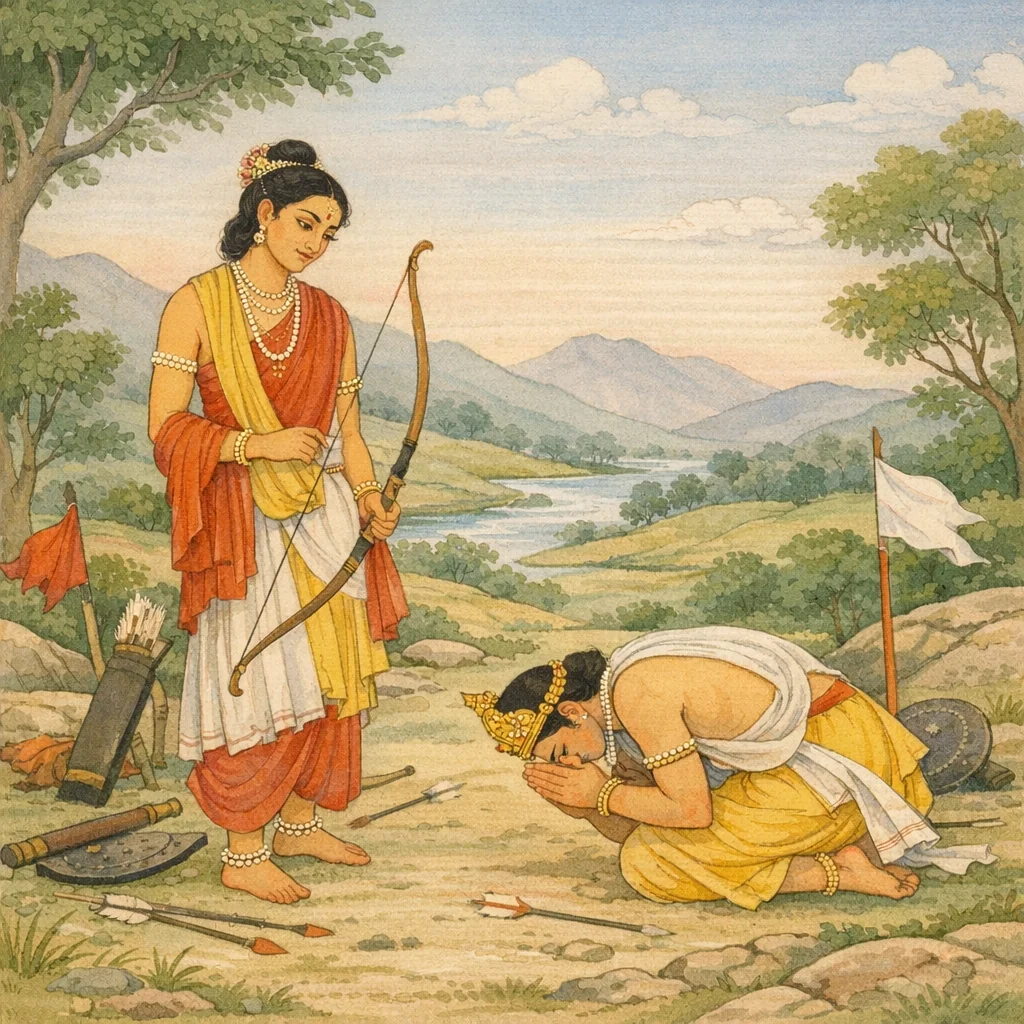
Verse 7
उत्तर उवाच दश पार्थस्य नामानि यानि पूर्व श्रुतानि मे । प्रत्रूयास्तानि यदि मे श्रद्दध्यां सर्वमेव ते
Uttara said: “I have previously heard the ten names of Pārtha (Arjuna). If you would tell me those names, then I would be able to place full trust in everything you have said.”
Verse 8
अर्जुन उवाच हन्त ते5हं समाचक्षे दश नामानि यानि मे । वैराटे शृणु तानि त्वं यानि पूर्व श्रुतानि ते
Arjuna said: “Very well—now I shall clearly tell you my ten names. O son of Virāṭa, listen to them—those very names which you have already heard before.”
Verse 9
एकाग्रमानसो भूत्वा शूणु सर्व समाहित: । अर्जुन: फाल्गुनो जिष्णु: किरीटी श्वेतवाहन: । बीभत्सुर्विजय: कृष्ण: सव्यसाची धनंजय:
With mind gathered into one point, listen with full attention: Arjuna, Phālguna, Jiṣṇu, Kirīṭī, Śvetavāhana, Bībhatsu, Vijaya, Kṛṣṇa, Savyasācī, and Dhanañjaya.
Verse 10
उत्तर उवाच केनासि विजयो नाम केनासि श्वेतवाहन: । किरीटी नाम केनासि सव्यसाची कथं भवान्
Uttara said: “For what reason are you called ‘Vijaya’? Why are you known as ‘Śvetavāhana’, the one with the white steeds? How did you come to bear the name ‘Kirīṭī’, the diademed one? And in what way are you famed as ‘Savyasācī’?”
Verse 11
अर्जुन: फाल्गुनो जिष्णु: कृष्णो बीभत्सुरेव च धनंजयश्न केनासि ब्रूहि तन््मम तत्त्वतः
Uttara said: “You are called Arjuna, Phālguna, Jiṣṇu, Kṛṣṇa, Bībhatsu, and Dhanañjaya—by what reasons have you received these names? Tell me the truth of it clearly.”
Verse 12
श्रुता मे तस्य वीरस्य केवला नामहेतव: । तत् सर्व यदि मे ब्रूया: श्रद्दध्यां सर्वमेव ते
Uttara said: “I have heard only the bare reasons behind that hero’s fame—only the name and the cause of it. If you would tell me the whole account, I would place full trust in every word you say.”
Verse 13
वीर अर्जुनके विभिन्न नाम पड़नेके जो प्रधान हेतु हैं, वे सब मैंने सुन रखे हैं। उन सबको यदि आप बता देंगे तो आपकी सब बातोंपर मेरा विश्वास हो जायगा ।।
Arjuna said: “Having conquered all the realms and taken only wealth from them, I stood amid that wealth; therefore people call me ‘Dhanañjaya’—the Conqueror of Wealth.”
Verse 14
अभिप्रयामि संग्रामे यदहं युद्धदुर्मदान् । नाजित्वा विनिवर्तामि तेन मां विजयं विदु:
“When I go to the battlefield to face warriors drunk with the fury of war, I never turn back without defeating them. Therefore the valiant know me by the name ‘Vijaya’—Victory.”
Verse 15
श्वेता: काउ्चनसंनाहा रथे युज्यन्ति मे हया: । संग्रामे युध्यमानस्य तेनाहं श्वेतवाहन:
Arjuna said: “My horses, white in color and clad in golden armor, are yoked to my chariot. Therefore, when I fight in battle, I am known as ‘Śvetavāhana’—the one whose chariot is drawn by white steeds.”
Verse 16
उत्तराभ्यां फल्गुनीभ्यां नक्षत्राभ्यामहं दिवा | जातो हिमवत: पृष्ठे तेन मां फाल्गुनं विदुः
Arjuna said: “I was born by day under the twin Phalgunī constellations—Uttarā and Phalgunī—upon the heights of the Himavat. Therefore people know me by the name ‘Phālguna.’”
Verse 17
पुरा शक्रेण मे दत्तं युध्यतो दानवर्षभै: । किरीटं मुर्श्नि सूर्याभं तेनाहुर्मा किरीटिनम्
In former days, as I fought the mighty heroes among the Dānavas, Śakra (Indra) bestowed upon me a crown, set upon my head and radiant like the sun. Therefore I am called “Kirīṭin”—the crowned one.
Verse 18
न कुर्या कर्म बीभत्सं युध्यमान: कथंचन । तेन देवमनुष्येषु बीभत्सुरिति विश्रुत:
Arjuna said: “Even while fighting, I would never commit any vile or disgraceful act in any circumstance. Because of that restraint, among gods and men I am renowned by the name ‘Bībhatsu’—one who shuns what is abhorrent.”
Verse 19
उभौ मे दक्षिणौ पाणी गाण्डीवस्य विकर्षणे । तेन देवमनुष्येषु सव्यसाचीति मां विदु:
Arjuna said: “Both of my hands are equally capable in drawing the string of the bow Gāṇḍīva. Therefore, among gods and men, I am known as ‘Savyasācī’—one who can shoot with either hand.”
Verse 20
पृथिव्यां चतुरन्तायां वर्णो मे दुर्लभ: सम: । करोमि कर्म शुक्लं च तस्मान्मामर्जुनं विदु:
Arjuna said: “On this earth, bounded on all four sides by the encircling ocean, a radiance like mine is rare. I maintain even-mindedness toward all, and I perform pure, stainless deeds. Therefore the discerning know me by the name ‘Arjuna’.”
Verse 21
अहं दुरापो दुर्धर्षो दमन: पाकशासनि: । तेन देवमनुष्येषु जिष्णुर्नामास्मि विश्रुत:
Arjuna said: “I am hard to seize and hard to overpower; I am a subduer of foes, the son of Pākaśāsana (Indra). Therefore, among gods and men I am renowned by the name ‘Jiṣṇu’—the ever-victorious.”
Verse 22
कृष्ण इत्येव दशमं नाम चक्रे पिता मम । कृष्णावदातस्य ततः प्रियत्वादू बालकस्य वै
Arjuna said: “My father gave me a tenth name—‘Kṛṣṇa’—for I was a child of dark-and-fair complexion, and because, being charming in my boyhood, I was especially dear to him.”
Verse 23
वैशम्पायन उवाच ततः स पार्थ वैराटिरभ्यवादयदन्तिकात् । अहं भूमिंजयो नाम नाम्नाहमपि चोत्तर:
Vaiśampāyana said: Then that prince of Virāṭa, approaching Pārtha at close range, respectfully greeted him, saying, “I am named Bhūmiṃjaya; and I too am called Uttara.”
Verse 24
वैशम्पायनजी कहते हैं--जनमेजय! तदनन्तर विराटपुत्र उत्तरने निकट जाकर अर्जुनके चरणोंमें प्रणाम किया और बोला--“मेरा नाम भूमिंजय तथा उत्तर भी है ।।
Vaiśampāyana said: “O Janamejaya, thereafter Virāṭa’s son Uttara approached Arjuna, bowed at his feet, and spoke: ‘My name is Bhūmiñjaya, and also Uttara. By good fortune I behold you, O Pārtha; welcome to you, O Dhanañjaya. O mighty-armed one with reddish eyes, whose arms are like the trunk of the lord of elephants.’”
Verse 25
यदज्ञानादवोच त्वां क्षन्तुमहसि तन््मम । यतस्त्वया कृतं पूर्व चित्र कर्म सुदुष्करम् । अतो भयं व्यतीतं मे प्रीतिक्ष॒ परमा त्वयि
“Whatever improper words I spoke to you out of ignorance, please forgive that of mine. For you have formerly accomplished wondrous deeds that are exceedingly difficult; therefore, under your protection my fear has passed away, and my affection and reverence for you have grown to the highest degree.”
Verse 43
इस प्रकार श्रीमह्या भारत विराटपर्वके अन्तर्गत गोहरणपर्वमें उत्तरयोग्रहके अवसरपर आयुधवर्णनविषयक तैंतालीसवाँ अध्याय पूरा हुआ
Thus ends the chapter in the Virāṭa Parva of the Śrī Mahābhārata, within the Goharaṇa episode, on the occasion of Uttara’s taking up the yoke (entering the chariot/undertaking the task), dealing with the description of weapons. This closing note frames the narrative moment when martial responsibility is assumed and the instruments of war are formally introduced, marking a transition from hesitation to duty-bound action.
Verse 44
(दासो<हं ते भविष्यामि पश्य मामनुकम्पया । या प्रतिज्ञा कृता पूर्व तव सारथ्यकर्मणि ।।
Vaiśampāyana said: “O Pārtha, I will be your servant. Look upon me with compassion. As for the promise I once made to serve as your charioteer—my mind is now steady and at ease regarding it. Great good fortune has arisen for me, for it has granted me this auspicious opportunity to serve you.”
Frequently Asked Questions
Whether a warrior should pursue immediate confrontation for personal assertion, or restrain impulse in favor of counsel, contextual timing (deśa-kāla), and responsibility for collective outcomes (anubandha).
Strategic action is dharmically valid only when aligned with preparedness and context; realistic appraisal of an opponent and coalition-based coordination are presented as superior to solitary, mistimed aggression.
No formal phalaśruti is stated; the chapter’s meta-function is advisory—positioning deśa-kāla reasoning and consequence-awareness as interpretive keys for evaluating legitimate force within the epic’s ethical framework.
Read Mahabharata in the Vedapath app
Scan the QR code to open this directly in the app, with audio, word-by-word meanings, and more.