Adhyaya 252
Draupadī’s Rebuke of Jayadratha and Dhaumya’s Admonition (Āraṇyaka-parva, Adhyāya 252)
Upa-parva: Jayadratha–Draupadī Episode (Abduction Attempt) — Āraṇyaka-parva
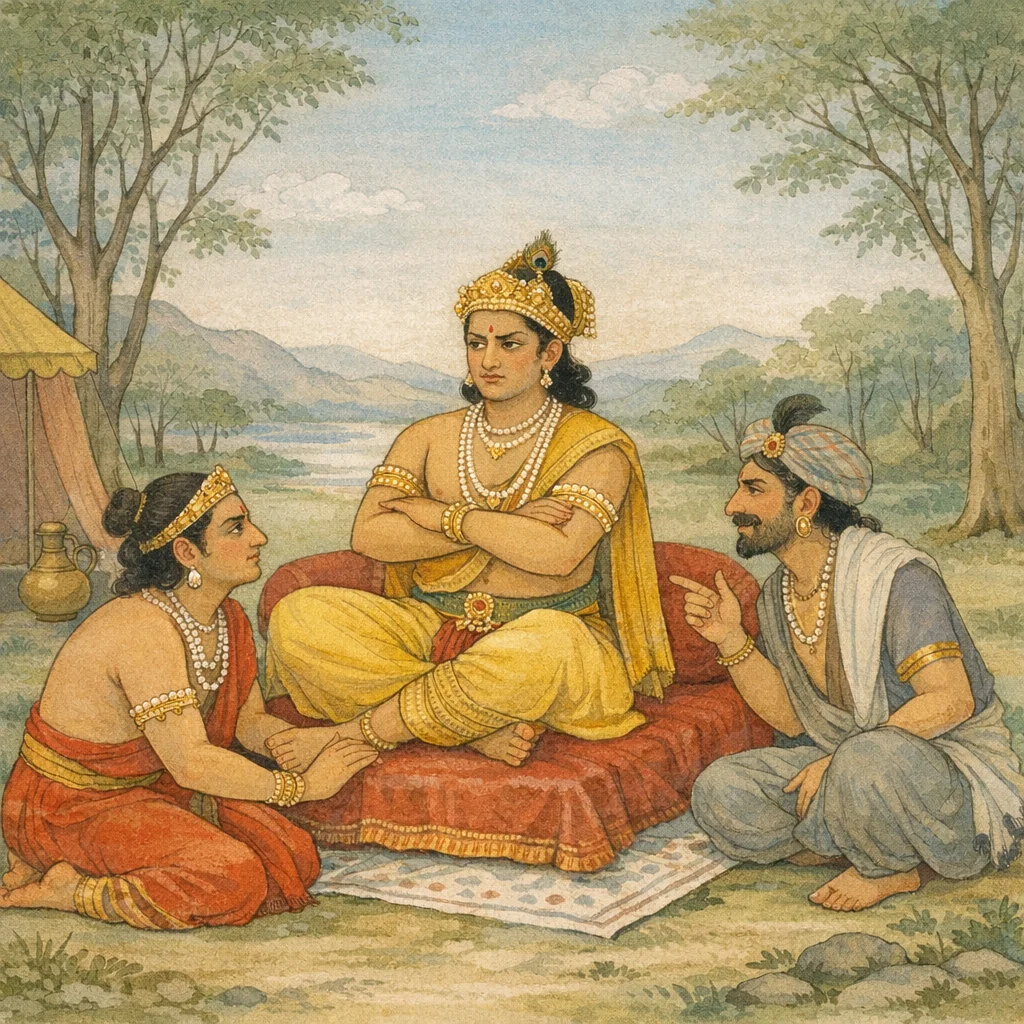
Vaiśaṃpāyana narrates a charged exchange in which Draupadī addresses Jayadratha with angered clarity, censuring his disparagement of renowned warriors and warning him through a chain of analogies: attempting to challenge the Pāṇḍavas is likened to provoking formidable beasts or handling venomous serpents, underscoring disproportionate risk and moral impropriety. Jayadratha replies by asserting his own aristocratic standing and dismissing verbal threats, pressing for immediate compliance. Draupadī refuses any posture of supplication, grounding her confidence in the protective agency of the Pāṇḍavas and their allies, and projects the psychological outcome Jayadratha would face upon encountering their martial response. The narration then shifts from speech to action: Draupadī resists being touched, calls out to Dhaumya, and Jayadratha seizes her garment. A brief reversal is described—Jayadratha falls when she counters—yet she is then forcibly taken toward a chariot, after saluting Dhaumya’s feet. Dhaumya publicly warns Jayadratha that removal without defeating the great warriors violates ancient kṣatra norms and will yield harmful consequences. The chapter ends with Dhaumya following on foot amid attendants as Draupadī is carried away, marking the episode’s transition from ethical discourse to imminent accountability.
Chapter Arc: अपमान और विफलता से जला दुर्योधन प्राणत्याग (प्रायोपवेशन) का निश्चय कर बैठता है; कर्ण की ‘उचित’ सलाह भी उसे लौटा नहीं पाती। → शकुनि दुर्योधन को समझाता है कि कर्ण की बात सही है और जो समृद्धि/श्री उसे मिली है उसे मोहवश त्यागना अज्ञान है; वह दुर्योधन की ‘अल्पबुद्धि’ पर चोट करता है और बताता है कि उसने वृद्धों/हितैषियों की सेवा नहीं की, इसलिए विवेक नहीं आया। → शकुनि के वचनों के बाद दुर्योधन दःशासन की ओर देखता है; दःशासन भाईचारे की विकृत अवस्था में, वीर होकर भी पाँवों पर गिरकर उसे रोकने का प्रयत्न करता है—भ्रातृस्नेह बनाम हठ का तीखा टकराव। → दुर्योधन सुहृदों/गुरुओं को नगर लौट जाने का आदेश देता है—वह धर्म, अर्थ, सुख, ऐश्वर्य, राज्य और भोग की बातों को तिरस्कार कर अपने निश्चय पर अड़ा रहता है; समझाइश असफल रहती है। → पातालवासी रौद्र दैत्य-दानव दुर्योधन के निश्चय को जानकर अथर्ववेद/उपनिषद्-प्रोक्त मंत्र-जप सहित क्रियाएँ आरम्भ करते हैं—अदृश्य शक्तियाँ इस हठ को किस दिशा में मोड़ेंगी?
Shlokas
Verse 1
(दाक्षिणात्य अधिक पाठका ३ श्लोक मिलाकर कुल १३ ६ “लोक हैं) हू... “+/ (9) #:६.+ #25-२ एकपज्चाशर्दाधिकद्विशततमो< ध्याय: शकुनिके समझानेपर भी दुर्योधनको प्रायोपवेशनसे विचलित होते न देखकर दैत्योंका कृत्याद्वारा उसे रसातलमें बुलाना वैशम्पायन उवाच प्रायोपविष्टं राजानं॑ दुर्योधनममर्षणम् । उवाच सान्त्वयन् राजज्छकुनि: सौबलस्तदा,वैशम्पायनजी कहते हैं--राजन्! तदनन्तर अमर्षमें भरकर आमरण उपवासके लिये बैठे हुए राजा दुर्योधनको सान्त्वना देते हुए सुबलपुत्र शकुनिने कहा
Vaiśampāyana said: Then Śakuni, son of Subala, seeing King Duryodhana—burning with resentment—seated in a fast unto death, spoke to him with soothing words, seeking to console him and turn him from that resolve.
Verse 2
शकुनिरुवाच सम्यगुक्तं हि कर्णेन तच्छुतं कौरव त्वया । मया हूतां श्रियं स्फीतां तां मोहादपहाय किम्,शकुनि बोला--कुरुनन्दन! कर्णने बहुत अच्छी बात कही है, जो तुमने सुनी ही है। मैंने पाण्डवोंसे तुम्हारे लिये जिस समृद्धशालिनी राज-लक्ष्मीका अपहरण किया है, तुम उसे मोहवश क्यों त्याग रहे हो?
Shakuni said: “What Karna has spoken is indeed well spoken, and you, O Kaurava, have heard it. I have seized for you from the Pandavas that flourishing royal fortune—Rajya-Lakṣmī itself; why would you, out of delusion, cast it away?”
Verse 3
त्वमल्पबुद्धया नृपते प्राणानुत्स्रष्टमर्हसि । अथवाप्यवगच्छामि न वृद्धा: सेवितास्त्वया,नरेश्वर! तुम अपनी अल्पबुद्धिके कारण ही आज प्राणत्याग करनेको उतारू हो गये हो; अथवा मैं समझता हूँ कि तुमने कभी वृद्धपुरुषोंका सेवन नहीं किया है
He said: “O king, it is from poor judgment that you are now set on casting away your life. Or rather, this is what I understand: you have never kept the company and counsel of elders, O lord of men.”
Verse 4
यः समुत्पतितं हर्ष दैन्यं वा न नियच्छति । स नश्यति श्रियं प्राप्य पात्रमाममिवाम्भसि,जो मनुष्य सहसा उत्पन्न हुए हर्ष अथवा शोकपर नियन्त्रण नहीं रखता, वह राजलक्ष्मीको पाकर भी उसी प्रकार नष्ट हो जाता है जैसे मिट्टीका कच्चा बर्तन पानीमें गल जाता है
Vaiśaṃpāyana said: Whoever does not restrain sudden elation or sudden dejection is ruined even after attaining prosperity—just as an unbaked clay vessel, though formed, dissolves when placed in water.
Verse 5
अतिभीरुमतिकक्लीबं दीर्घसूत्रं प्रमादिनम् । व्यसनाद् विषयाक्रान्तं न भजन्ति नृपं प्रजा:,जो राजा अत्यन्त डरपोक, बहुत कायर, दीर्घसूत्री (आलसी), प्रमादी और दुर्व्यसनवश विषयोंमें फँसा होता है, उसे प्रजा अपना स्वामी नहीं स्वीकार करती है
Vaiśampāyana said: The people do not accept as their ruler a king whose mind is excessively fearful—spiritless and weak, procrastinating and negligent, and who, driven by vice, is overpowered by sense-pleasures.
Verse 6
सत्कृतस्य हि ते शोको विपरीते कथं भवेत् | मा कृतं शोभनं पार्थ: शोकमालमब्य नाशय,पाण्डवोंने तुम्हारा सत्कार किया है तो तुम्हें शोक हो रहा है। इसके विपरीत यदि उन्होंने तिरस्कार किया होता तो न जाने तुम्हारी कैसी दशा हो जाती? कुन्तीकुमारोंने जो सद्व्यवहार किया है, उसे तुम शोकका आश्रय लेकर नष्ट न कर दो
Vaiśampāyana said: “If you have been honoured, how can grief rightly arise in you? Had the opposite happened—had they treated you with contempt—what would your condition have been then? Do not, by clinging to sorrow, ruin the good and fitting conduct shown by the son of Kuntī (the Pāṇḍava).”
Verse 7
यत्र हर्षस्त्वया कार्य: सत्कर्तव्याश्व पाण्डवा: । तत्र शोचसि राजेन्द्र विपरीतमिदं तव,राजेन्द्र! जहाँ तुम्हें हर्ष मनाना और पाण्डवोंका सत्कार करना चाहिये था वहाँ तुम शोक कर रहे हो। तुम्हारा यह व्यवहार तो उलटा ही है
Vaiśaṃpāyana said: “O best of kings, where you ought to rejoice and honor the Pāṇḍavas, there you are grieving. This conduct of yours, O king, is the very opposite of what is fitting.”
Verse 8
प्रसीद मा त्यजात्मान तुष्टश्न सुकृतं समर । प्रयच्छ राज्यं पार्थानां यशो धर्ममवाप्रुहि,अतः मनमें प्रसन्नता लाओ। शरीरका त्याग न करो। पाण्डवोंने तुम्हारे साथ जो सद्व्यवहार किया है उसे स्मरण करो और संतुष्ट होकर उनका राज्य उन्हें लौटा दो। ऐसा करके यश और धर्मके भागी बनो
Vaiśampāyana said: “Be calm; do not abandon yourself (do not give up your life). Remember the good deeds and honorable conduct shown to you, and be content. Restore the kingdom to the Pārthas; by doing so you will attain both lasting fame and the merit of dharma.”
Verse 9
क्रियामेतां समाज्ञाय कृतज्ञस्त्वं भविष्यसि । सौक्षात्रं पाण्डवैः कृत्वा समवस्थाप्य चैव तान्
Vaiśampāyana said: “When you understand this course of action, you will become truly grateful. Having performed, together with the Pāṇḍavas, the rite/act connected with the Sūta lineage, and having duly settled them in proper order, you should proceed accordingly.”
Verse 10
वैशम्पायन उवाच शकुनेस्तु वच: श्रुत्वा दःशासनमवेक्ष्य च
Vaiśampāyana said: Having heard Śakuni’s words, and then casting his gaze upon Duḥśāsana—this was the moment when counsel hardened into resolve, when manipulative advice sought an instrument ready to act, foreshadowing deeds ethically fraught, driven by factional loyalty rather than dharma.
Verse 11
पादयो: पतितं वीरं विकृतं भ्रातृसौहदम् । बाहुभ्यां साधुजाताभ्यां दुःशासनमरिंदमम्
Vaiśampāyana said: With his brotherly affection now distorted, the hero fell at his feet and, with his well-born arms, seized Duḥśāsana—the subduer of foes. The scene underscores how kinship, when corrupted by envy and wrongdoing, turns into a force that drives humiliation and violence rather than protection and restraint.
Verse 12
उत्थाप्य सम्परिष्वज्य प्रीत्याजिप्रत मूर्थनि । वैशम्पायनजी कहते हैं--राजन! शकुनिका यह वचन सुनकर दुर्योधनने अपने चरणोंमें पड़े हुए म्लान मुखवाले भ्रातृभक्त शत्रुदमन वीर दुःशासनकी ओर देखकर अपनी सुन्दर बाँहोंद्वारा उसे उठाया और प्रेमपूर्वक हृदयसे लगाकर उसका मस्तक सूँघा ।। १०-११ ई | कर्णसौबलयोश्वापि संश्रुत्य वचनान्यसौ,कर्ण और शकुनिकी भी बातें सुनकर राजा दुर्योधन अत्यन्त उदास हो गया, तथा मन- ही-मन लज्जासे अभिभूत हो उसने बड़ी निराशाका अनुभव किया
Vaiśampāyana said: “O King! Hearing Śakuni’s words, Duryodhana looked at the heroic Duḥśāsana—devoted to his brother, a subduer of foes—who lay at his feet with a downcast face. With his handsome arms he raised him up, embraced him with affection from the heart, and smelled his head in a gesture of intimate brotherly love. Yet, after also hearing the words of Karṇa and Śakuni, King Duryodhana became deeply dejected; inwardly overwhelmed by shame, he felt a profound despair.”
Verse 13
निर्वेदं परमं गत्वा राजा दुर्योधनस्तदा । ब्रीडयाभिपरीतात्मा नैराश्यमगमत् परम्,कर्ण और शकुनिकी भी बातें सुनकर राजा दुर्योधन अत्यन्त उदास हो गया, तथा मन- ही-मन लज्जासे अभिभूत हो उसने बड़ी निराशाका अनुभव किया
Then King Duryodhana, having fallen into the deepest despondency, became inwardly overwhelmed by shame and sank into extreme hopelessness. The verse highlights how unethical intent and failed counsel can culminate not in clarity or reform, but in a corrosive mixture of embarrassment and despair that further clouds judgment.
Verse 14
तच्छुत्वा सुहृदश्चैव समन्युरिदमब्रवीत् | न धर्मधनसौख्येन नैश्वर्येण न चाज्ञया,गच्छध्वं नगरं सर्वे पूज्याश्व गुरवो मम । सब सुहृदोंके वचन सुनकर दुर्योधनने उनसे कुपित हो इस प्रकार कहा--'मुझे धर्म, धन, सुख, ऐश्वर्य, शासन और भोग किसीकी भी आवश्यकता नहीं है। तुमलोग मेरे निश्चयमें बाधा न डालो। यहाँसे चले जाओ। आमरण अनशन करनेके सम्बन्धमें मेरी बुद्धिका निश्चय अटल है। तुम सब लोग नगरको जाओ और वहाँ मेरे गुरुजनोंका सदा आदर-सत्कार करो'
Hearing the words of his well-wishers, he—angered—spoke thus: “I have no need of righteousness, wealth, pleasure, sovereignty, or even command. Do not obstruct my resolve. All of you go back to the city, and there continually honor my venerable elders and teachers.”
Verse 15
नैव भोगैश्षल मे कार्य मा विहन्यत गच्छत । निश्चितेयं मम मति: स्थिता प्रायोपवेशने
“I have no need at all of pleasures; do not obstruct me—go on your way. My resolve is fixed and unwavering: I am set upon prāyopaveśana, the vow of fasting unto death.”
Verse 16
त एवमुक्ता: प्रत्यूचू राजानमरिमर्दनम्,ऐसा उत्तर पाकर सब सुहदोंने शत्रुदमन राजा दुर्योधनसे कहा--'राजेन्द्र! तुम्हारी जो गति होगी वही हमारी भी होगी। भारत! हम तुम्हारे बिना हस्तिनापुरमें कैसे प्रवेश करेंगे?”
Vaiśampāyana said: Thus addressed, the well-wishers replied to the enemy-subduing king: “O lord of kings, whatever course and fate await you, that same will be ours as well. O scion of Bharata, without you how could we enter Hastināpura?”
Verse 17
या गतिस्तव राजेन्द्र सास्माकमपि भारत । कथं वा सम्प्रवेक्ष्यामस्त्वद्विहीना: पुरं वयम्,ऐसा उत्तर पाकर सब सुहदोंने शत्रुदमन राजा दुर्योधनसे कहा--'राजेन्द्र! तुम्हारी जो गति होगी वही हमारी भी होगी। भारत! हम तुम्हारे बिना हस्तिनापुरमें कैसे प्रवेश करेंगे?”
“O lord of kings, your fate will be ours as well. O scion of Bharata, without you how could we enter the city?”
Verse 18
वैशम्पायन उवाच स सुहृद्भिरमात्यैश्न भ्रातृभि: स्वजनेन च । बहुप्रकारमप्युक्तो निश्चयाज्न विचाल्यते,वैशम्पायनजी कहते हैं--जनमेजय! दुर्योधनको उसके सुहृद मन्त्री, भाई तथा स्वजनोंने बहुतेरा समझाया, परंतु कोई भी उसे अपने निश्चयसे विचलित न कर सका
Vaiśampāyana said: Though urged in many ways by his well-wishers, his ministers, his brothers, and his own kinsmen, he could not be shaken from his fixed resolve.
Verse 19
संस्पृश्याप: शुचिर्भूत्वा भूतले समुपस्थित:
Having touched water and thereby become ritually pure, he then stood upon the ground—signaling a deliberate return to disciplined conduct and readiness for the next act in the unfolding narrative.
Verse 20
कुशचीराम्बरधर: परं नियममास्थित: । वाग्यतो राजशार्दूल: स स्वर्गगतिकाम्यया
Vaiśampāyana said: Wearing garments of kuśa-grass and bark, the tiger-like king undertook an austere discipline of the highest order. Restrained in speech, he pursued this vow with the desire of attaining the path to heaven.
Verse 21
मनसोपचितिं कृत्वा निरस्य च बहिःक्रिया: । धृतराष्ट्रपुत्र नृपश्रेष्ठ दुर्योधन अपने निश्चयपर अटल रहकर आचमन करके पवित्र हो पृथ्वीपप कुशका आसन बिछा कुश और वल्कलके वस्त्र धारण करके बैठा और स्वर्गप्राप्तिकी इच्छासे वाणीका संयम करके उपवासके उत्तम नियमोंका पालन करने लगा। उस समय उसने मनके द्वारा मरनेका ही निश्चय करके स्नान-भोजन आदि बाहा क्रियाओंको सर्वथा त्याग दिया था ।। १९-२० ई || अथ तं निश्चयं तस्य बुद्ध्वा दैतेयदानवा:,दुर्योधनके इस निश्चयकों जानकर पातालवासी भयंकर दैत्यों और दानवोंने, जो पूर्वकालमें देवताओंसे पराजित हो चुके थे, मन-ही-मन विचार किया कि इस प्रकार दुर्योधनका प्राणान्त होनेसे तो हमारा पक्ष ही नष्ट हो जायगा; अतः उसे अपने पास बुलानेके लिये मन्त्रविद्यामें निपुण दैत्योंने उस समय बृहस्पति और शुक्राचार्यके द्वारा वर्णित तथा अथर्ववेदमें प्रतिपादित मन्त्रोंद्वारा अग्निविस्तार-साध्य यज्ञकर्मका अनुष्ठान आरम्भ किया और उपनिषद् (आरण्यक)-में जो मन्त्रजपसे युक्त हवनादि क्रियाएँ बतायी गयी हैं, उनका भी सम्पादन किया
Vaiśaṃpāyana said: Having gathered his mind into inward composure and casting aside all outward acts, Duryodhana—the son of Dhṛtarāṣṭra, best of kings—remained firm in his resolve. After sipping water for purification, he spread a seat of kuśa-grass upon the earth, donned kuśa and bark garments, and sat down. Desiring to attain heaven, he restrained his speech and began to observe the excellent disciplines of fasting. At that time, having decided in his heart upon death itself, he completely abandoned external routines such as bathing and eating. When the Daiteyas and Dānavas—terrible beings dwelling in the netherworld, once defeated by the gods—came to know of his resolve, they reflected: “If Duryodhana’s life ends in this way, our own side will be ruined.” Therefore, to summon him to their presence, those demons skilled in mantra-lore began a sacrificial rite requiring the spreading of sacred fire, employing Atharvavedic mantras described by Bṛhaspati and Śukrācārya; and they also performed the oblations and related acts taught in the Upaniṣadic/Āraṇyaka tradition, accompanied by mantra-recitation.
Verse 22
पातालवासिनो रौद्रा: पूर्व देवैविनिर्जिता: । ते स्वपक्षक्षयं त॑ तु ज्ञात्वा दुर्योधनस्य वै,दुर्योधनके इस निश्चयकों जानकर पातालवासी भयंकर दैत्यों और दानवोंने, जो पूर्वकालमें देवताओंसे पराजित हो चुके थे, मन-ही-मन विचार किया कि इस प्रकार दुर्योधनका प्राणान्त होनेसे तो हमारा पक्ष ही नष्ट हो जायगा; अतः उसे अपने पास बुलानेके लिये मन्त्रविद्यामें निपुण दैत्योंने उस समय बृहस्पति और शुक्राचार्यके द्वारा वर्णित तथा अथर्ववेदमें प्रतिपादित मन्त्रोंद्वारा अग्निविस्तार-साध्य यज्ञकर्मका अनुष्ठान आरम्भ किया और उपनिषद् (आरण्यक)-में जो मन्त्रजपसे युक्त हवनादि क्रियाएँ बतायी गयी हैं, उनका भी सम्पादन किया
Vaiśampāyana said: The fierce beings who dwelt in Pātāla—who in former times had been defeated by the gods—came to understand that Duryodhana’s impending destruction would mean the ruin of their own faction as well. Recognizing this, they resolved to act so that their cause would not collapse with him.
Verse 23
आह्वानाय तदा चक्कु: कर्म वैतानसम्भवम् । बृहस्पत्युशनोक्तैश्न मन्त्रैर्मन्त्रविशारदा:,दुर्योधनके इस निश्चयकों जानकर पातालवासी भयंकर दैत्यों और दानवोंने, जो पूर्वकालमें देवताओंसे पराजित हो चुके थे, मन-ही-मन विचार किया कि इस प्रकार दुर्योधनका प्राणान्त होनेसे तो हमारा पक्ष ही नष्ट हो जायगा; अतः उसे अपने पास बुलानेके लिये मन्त्रविद्यामें निपुण दैत्योंने उस समय बृहस्पति और शुक्राचार्यके द्वारा वर्णित तथा अथर्ववेदमें प्रतिपादित मन्त्रोंद्वारा अग्निविस्तार-साध्य यज्ञकर्मका अनुष्ठान आरम्भ किया और उपनिषद् (आरण्यक)-में जो मन्त्रजपसे युक्त हवनादि क्रियाएँ बतायी गयी हैं, उनका भी सम्पादन किया
Vaiśampāyana said: Then, in order to summon him, those experts in mantras undertook a Vaitāna (Atharvavedic) rite—an act of ritual performance—employing the incantations taught by Bṛhaspati and Uśanas (Śukrācārya). In the narrative context, the subterranean Daityas and Dānavas, fearing that Duryodhana’s death would ruin their own cause, resort to powerful sacrificial and mantra-based procedures to draw him to themselves—showing how self-interest can drive even learned ritual action toward ethically dubious ends.
Verse 24
अथर्ववेदप्रोक्तैश्न याश्नोपनिषदि क्रिया: । मन्त्रजप्यसमायुक्तास्तास्तदा समवर्तयन्,दुर्योधनके इस निश्चयकों जानकर पातालवासी भयंकर दैत्यों और दानवोंने, जो पूर्वकालमें देवताओंसे पराजित हो चुके थे, मन-ही-मन विचार किया कि इस प्रकार दुर्योधनका प्राणान्त होनेसे तो हमारा पक्ष ही नष्ट हो जायगा; अतः उसे अपने पास बुलानेके लिये मन्त्रविद्यामें निपुण दैत्योंने उस समय बृहस्पति और शुक्राचार्यके द्वारा वर्णित तथा अथर्ववेदमें प्रतिपादित मन्त्रोंद्वारा अग्निविस्तार-साध्य यज्ञकर्मका अनुष्ठान आरम्भ किया और उपनिषद् (आरण्यक)-में जो मन्त्रजपसे युक्त हवनादि क्रियाएँ बतायी गयी हैं, उनका भी सम्पादन किया
Vaiśampāyana said: Learning of Duryodhana’s resolve, the dreadful Daityas and Dānavas who dwelt in the netherworld—ancient foes once defeated by the gods—reflected inwardly: “If Duryodhana meets his end, our own side will be ruined.” Therefore, to summon him to their presence, those adept in mantra-lore began sacrificial rites requiring the spreading of sacred fire, employing Atharvavedic mantras described by Bṛhaspati and Śukrācārya; and they also carried out the oblations and related acts taught in the Upaniṣadic (Āraṇyaka) tradition, accompanied by mantra-recitation.
Verse 25
जुद्वत्यग्नौ हवि: क्षीरं मन्त्रवत् सुसमाहिता: । ब्राह्मणा वेदवेदाड़पारगा: सुदृढव्रता:,तब दृढ़तापूर्वक व्रतका पालन करनेवाले, वेद-वेदांगोंके पारंगत विद्वान् ब्राह्मण एकाग्रचित्त हो मन्त्रोच्चारणपूर्वक प्रज्वलित अग्निमें घृत और खीरकी आहुति देने लगे
Vaiśampāyana said: The Brahmins—steadfast in their vows, fully versed in the Vedas and the Vedāṅgas—sat with concentrated minds and, with the proper recitation of mantras, began offering ghee and milk-rice as oblations into the blazing sacred fire.
Verse 26
कर्मसिद्धौ तदा तत्र जूम्भमाणा महाद्धुता । कृत्या समुत्थिता राजन् कि करोमीति चाब्रवीत्,राजन! कर्मकी सिद्धि होनेपर वहाँ यज्ञकुण्डसे उस समय एक अत्यन्त अदभुत कृत्या जँभाई लेती हुई प्रकट हुई और बोली--“मैं क्या करूँ?”
Vaiśampāyana said: When the rite had reached completion, there in that place an exceedingly wondrous kṛtyā arose, yawning as she emerged. Addressing the king, she spoke: “What am I to do?”
Verse 27
आहहुर्देत्याश्ष तां तत्र सुप्रीतेनान्तरात्मना । प्रायोपविष्टं राजानं धार्तराष्ट्रमिहानय,तब दैत्योंने प्रसन्नचित्त होकर उससे कहा--'तू प्रायोपवेशन करते हुए धुृतराष्ट्रपुत्र राजा दुर्योधनको यहाँ ले आ'
Vaiśampāyana said: There the Dānavas (Daityas), inwardly pleased, addressed her: “Bring here King Dhārtarāṣṭra (Duryodhana), who is seated in the resolve of fasting unto death.”
Verse 28
तथेति च प्रतिश्रुत्य सा कृत्या प्रययौ तदा । निमेषादगमच्चापि यत्र राजा सुयोधन:,“जो आज्ञा" कहकर वह कृत्या तत्काल वहाँसे प्रस्थित हुई और पलक मारते-मारते जहाँ राजा दुर्योधन था, वहाँ पहुँच गयी
Vaiśampāyana said: Having assented with the words “So be it,” that kṛtyā set out at once. In no more time than a blink, she reached the place where King Suyodhana (Duryodhana) was.
Verse 29
समादाय च राजानं प्रविवेश रसातलम् । दानवानां मुहूर्ताच्च तमानीत॑ न््यवेदयत् । तमानीत॑ नृपं दृष्टवा रात्रौ संगत्य दानवा:,फिर राजाको साथ ले दो ही घड़ीमें रसातल आ पहुँची; और दानवोंको उसके लाये जानेकी सूचना दे दी। राजा दुर्योधनको लाया गया देख सब दानव रातमें एकत्र हुए। उनके मनमें प्रसन्नता भरी थी और नेत्र हर्षातिरिकसे कुछ खिल उठे थे। उन्होंने दुर्योधनसे अभिमानपूर्वक यह बात कही
Vaiśampāyana said: Taking the king with him, he entered Rasātala. Within a short while he informed the Dānavas that the king had been brought. Seeing King Duryodhana delivered to them, the Dānavas gathered together at night—delighted at heart and bright-eyed with excitement—ready to address Duryodhana with proud, self-assured words.
Verse 30
प्रहृष्मनस: सर्वे किंचिदुत्फुल्ललोचना: । साभिमानमिदं वाक्यं दुर्योधनमथाब्रुवन्,फिर राजाको साथ ले दो ही घड़ीमें रसातल आ पहुँची; और दानवोंको उसके लाये जानेकी सूचना दे दी। राजा दुर्योधनको लाया गया देख सब दानव रातमें एकत्र हुए। उनके मनमें प्रसन्नता भरी थी और नेत्र हर्षातिरिकसे कुछ खिल उठे थे। उन्होंने दुर्योधनसे अभिमानपूर्वक यह बात कही
Vaiśampāyana said: All of them, their minds elated and their eyes slightly widened with delight, then addressed Duryodhana with words spoken in a spirit of pride.
Verse 96
पित्र्यं राज्यं प्रयच्छैषां तत: सुखमवाप्स्यसि । मेरे इस प्रस्तावको समझकर ऐसा ही करो। इससे तुम कृतज्ञ माने जाओगे। पाण्डवोंके साथ उत्तम भाईचारेका बर्ताव करके उन्हें राज्यसिंहासनपर बिठा दो और उनका पैतृक राज्य उन्हें समर्पित कर दो। इससे तुम्हें सुख प्राप्त होगा
Grant them their ancestral kingdom; then you will attain peace and happiness.
Verse 153
गच्छध्वं नगरं सर्वे पूज्याश्व गुरवो मम । सब सुहृदोंके वचन सुनकर दुर्योधनने उनसे कुपित हो इस प्रकार कहा--'मुझे धर्म, धन, सुख, ऐश्वर्य, शासन और भोग किसीकी भी आवश्यकता नहीं है। तुमलोग मेरे निश्चयमें बाधा न डालो। यहाँसे चले जाओ। आमरण अनशन करनेके सम्बन्धमें मेरी बुद्धिका निश्चय अटल है। तुम सब लोग नगरको जाओ और वहाँ मेरे गुरुजनोंका सदा आदर-सत्कार करो'
Vaiśampāyana said: “All of you, go back to the city; my elders and teachers are to be honored.” Hearing the words of his well-wishers, Duryodhana, angered, spoke in this manner: “I have no need of dharma, wealth, happiness, sovereignty, rule, or pleasures. Do not obstruct my resolve. Leave this place. My determination regarding fasting unto death is unwavering. You all go to the city and there continually show respect and hospitality to my revered elders and teachers.”
Verse 250
इस प्रकार श्रीमह्याभारत वनपर्वके अन्तर्गत घोषयात्रापर्वमें दुर्योधनप्रायोपवेशनके प्रसंगमें कर्णवाक्यसम्बन्धी दो सौ पचासवाँ अध्याय पूरा हुआ
Thus ends the 250th chapter of the Vana Parva of the Śrī Mahābhārata, within the Ghoṣa-yātrā section, in the context of Duryodhana’s resolve to fast unto death, and concerning the words spoken by Karṇa.
Verse 251
इति श्रीमहाभारते वनपर्वणि घोषयात्रापर्वणि दुर्योधनप्रायोपवेशे एकपज्चाशदधिकद्वधिशततमो<5ध्याय:
Thus ends the two-hundred-and-fifty-first chapter of the Vana Parva of the Śrī Mahābhārata, within the section on the cattle-raid expedition (Ghoṣa-yātrā), describing Duryodhana’s resolve to undertake a fast unto death. The colophon signals a narrative turning point: pride and humiliation drive Duryodhana toward self-destructive resolve, setting ethical tension between stubborn ego and the duties of kingship and kinship.
Frequently Asked Questions
The dilemma is the attempted use of status and force to override dharmic protections: whether coercion can be legitimized by lineage or opportunity, versus the principle that kṣatra authority is constrained by restraint, consent, and accountability to established norms.
Speech functions as ethical governance: Draupadī’s admonition and Dhaumya’s counsel model how dharma is articulated before retaliation, and how foreseeable consequences—social, moral, and strategic—follow from adharma even when immediate power appears to favor the aggressor.
No explicit phalaśruti is stated; the chapter’s meta-commentary is implicit in its narrative closure: the purohita’s warning and the transition to pursuit frame the episode as a demonstrative case of karmic and social consequence rather than a ritualized promise of merit.