Adhyaya 96
Adhyāya 96: Nārada Guides Mātali in Varuṇa’s Realm (Varuṇa-loka Darśana)
Upa-parva: Nārada–Mātali Saṃvāda (Varuṇa-loka / Nāga-loka Darśana Episode)
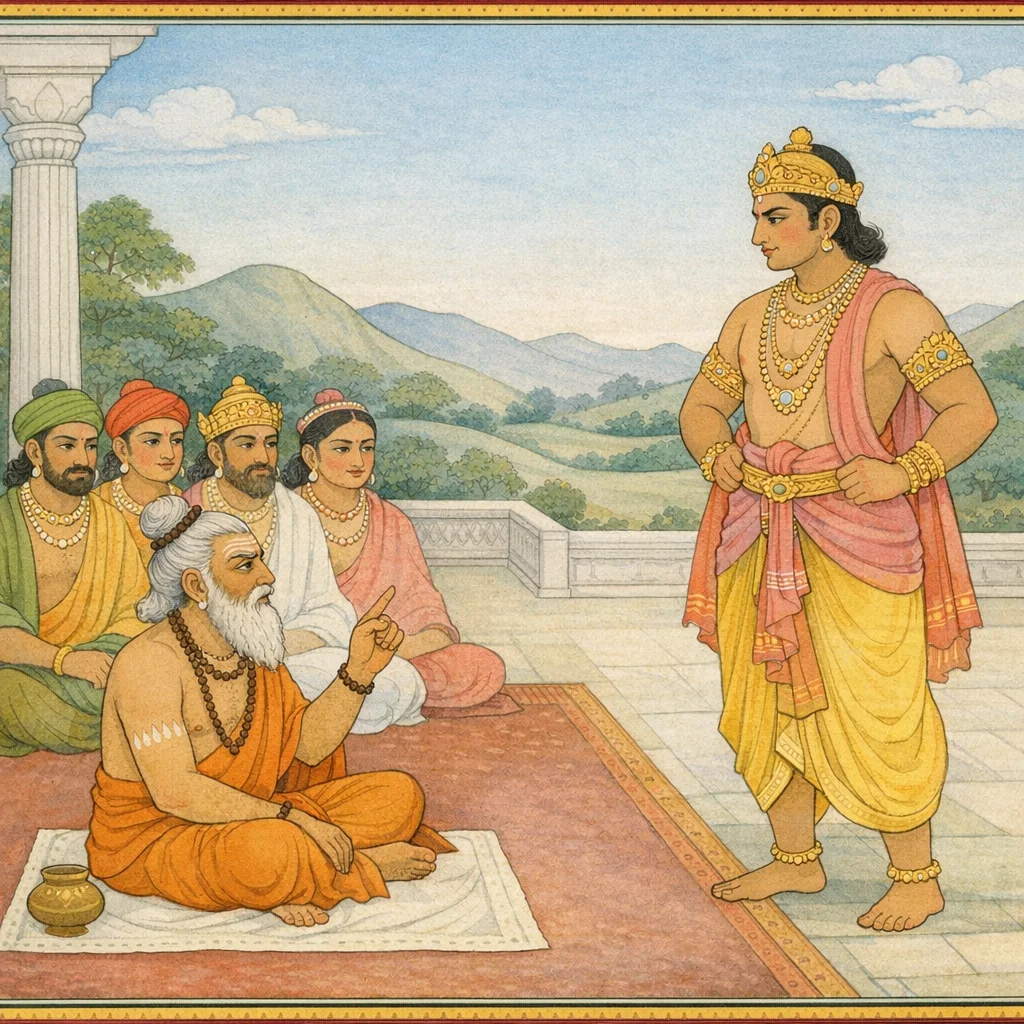
Kaṇva introduces a chance meeting on the road: Mātali, traveling to see Varuṇa, encounters the sage Nārada. Nārada inquires whether Mātali is acting on personal duty or on Śatakratu (Indra)’s command; Mātali explains his purpose. Nārada proposes they go together, stating he will also visit the lord of waters and will show Mātali the terrestrial and subterranean marvels. They enter Varuṇa’s domain, where Nārada receives honors befitting a devarṣi and Mātali is welcomed with honors comparable to those offered to Mahendra. With Varuṇa’s permission they move on, and Nārada provides a guided description: Varuṇa is seen surrounded by descendants; Varuṇa’s distinguished sons are identified (including Puṣkara), and Varuṇa’s golden residence is noted. The narration then becomes a catalog of guarded, extraordinary objects—divine weapons and insignia—described as enduring, powerful, and protected: a blazing Agni at Varuṇa’s lake, the Vaiṣṇava discus, the Gāṇḍīva bow, the primordial punitive ‘daṇḍa,’ and Varuṇa’s great umbrella whose falling waters produce chilling, obscuring effects. Nārada concludes by noting many further wonders but urges departure to avoid delaying Mātali’s task.
Chapter Arc: कण्व मुनि राजन् धृतराष्ट्र/दुर्योधन के सम्मुख एक विराट दृष्टान्त रखते हैं—जैसे लोकपितामह ब्रह्मा अक्षय हैं, वैसे ही नर-नारायण और सनातन विष्णु सर्वाधार हैं; जिनके आश्रय में जगत का धर्म टिका है। → कण्व की वाणी उपदेश से आगे बढ़कर चेतावनी बनती है: ‘हे सुयोधन, केवल अपने बल पर मत इतराओ; बलवान भी बलियों से पराजित देखे जाते हैं।’ साथ ही वे आग्रह करते हैं कि धर्मपुत्र युधिष्ठिर से संधि कर पृथ्वी का पालन पाण्डव और कुरु मिलकर करें। → धर्म-नीति का निर्णायक आग्रह—‘तुम्हें युधिष्ठिर के साथ शम (संधि) करनी चाहिए’—और उसके साथ अहंकार-भ्रम का खंडन, यही अध्याय का शिखर है: शक्ति का मद विनाश का द्वार है, और धर्म का आश्रय ही राज्य का स्थायित्व। → उपदेश का निष्कर्ष स्पष्ट है: युद्ध की ओर बढ़ते कदम रोककर, कुल-क्षय से बचकर, धर्मसम्मत समझौते से राज्य-रक्षा की जाए; विष्णु-तत्त्व की स्मृति के साथ यह भी संकेत कि अधर्म के विरुद्ध दैवी-न्याय अवश्य सक्रिय होगा। → कण्व की नीति-वाणी के बाद भी प्रश्न शेष रहता है—क्या दुर्योधन अहंकार त्यागकर संधि स्वीकार करेगा, या विनाश की राह चुनेगा?
Shlokas
Verse 1
इस प्रकार श्रीमह्ा भारत उद्योगपर्वके अन्तर्गत भगवद्यानपर्वमें दग्भोड्भावका कथाविषयक छानबेवाँ अध्याय पूरा हुआ ॥/ ९६ ॥। [दाक्षिणात्य अधिक पाठका १ श्लोक मिलाकर कुल ५३ “लोक हैं।] प्यास बछ। अि<-छऋाझ जा - जिस अस्त्रसे अभिभूत होकर योद्धा रथ और हाथी आदिके ककुद् (पृष्ठभाग)-पर ही सोते रह जाते हैं, उसका नाम काकुदीक एवं प्रस्वापन है। जैसे शुक पानीके ऊपर रखी हुई बाँसकी नलिकाको पकड़कर भयसे चिल्लाता रहता है, उसी प्रकार जिससे मोहित हुए योद्धा बिना भयके ही भय देखकर घोड़े और रथ आदिके पाँवोंसे चिपट जाते हैं; उस अस्त्रका नाम शुक अथवा मोहन है। जिस अस्त्रसे भ्रान्तचित्त होकर मनुष्यको नाक (स्वर्ग)-लोक दिखायी देने लगे, वह नाक या उन््मादन कहलाता है। जिसके प्रहारसे विद्ध होकर लोग त्रासके कारण मल-मूत्र करने लगते हैं, वह अक्षिसंतर्जन अथवा त्रासन नामक अस्त्र है। संतान अथवा दैवत अस्त्र वह है, जिसके प्रयोगसे अविच्छिन्नरूपसे अस्त्र-शस्त्रोंकी वर्षा होने लगती है। जिसके प्रयोगसे मनुष्य वेदनाके मारे नाच उठता है, वह नर्तक या पैशाच अस्त्र है। भयानक संहारकारी अस्त्रको घोर अथवा राक्षस कहा गया है। जिससे आहत होकर लोग मुँहमें पत्थर रखकर मरनेके लिये निकल पड़ते हैं, वह आस्यमोदक अथवा याम्य नामक अस्त्र है। (भारतभावदीपटीका) सप्तनवतितमो< ध्याय: कण्व मुनिका दुर्योधनको संधिके लिये समझाते हुए मातलिका उपाख्यान आरम्भ करना वैशम्पायन उवाच जामदग्न्यवच: श्रुत्वा कण्वोडपि भगवानृषि: । दुर्योधनमिदं वाक्यमब्रवीत् कुरुसंसदि,वैशम्पायनजी कहते हैं--जनमेजय! जमदग्निनन्दन परशुरामका यह वचन सुनकर भगवान् कण्व मुनिने भी कौरवसभामें दुर्योधनसे यह बात कही
Vaiśampāyana said: “O Janamejaya, having heard the words of Jāmadagnya (Paraśurāma), the venerable sage Kaṇva too addressed Duryodhana in the assembly of the Kurus.”
Verse 2
कण्व उवाच अक्षयश्चाव्ययश्रैव ब्रह्मा लोकपितामह: । तथैव भगवन्तौ तौ नरनारायणावृषी,कण्व बोले--राजन्! जैसे लोकपितामह ब्रह्मा अक्षय और अविनाशी हैं, उसी प्रकार वे दोनों भगवान् नर-नारायण ऋषि भी हैं
Kaṇva said: “O King, just as Brahmā—the grandsire of the worlds—is imperishable and undecaying, so too are those two revered sages, Nara and Nārāyaṇa, truly divine in nature.”
Verse 3
आदित्यानां हि सर्वेषां विष्णुरेक: सनातन: । अज्य्यश्नाव्ययश्वैव शाश्वत: प्रभुरीश्षर:,अदितिके सभी पुत्रोंमें अथवा सम्पूर्ण आदित्योंमें एकमात्र भगवान् विष्णु ही अजेय, अविनाशी, नित्य विद्यमान एवं सर्वसमर्थ सनातन परमेश्वर हैं
Kaṇva said: “Among all the Ādityas, Viṣṇu alone is the eternal one—unconquerable and undecaying, ever-abiding, the all-powerful Lord and supreme ruler.”
Verse 4
निमित्तमरणाश्षान्ये चन्द्रसू्यों मही जलम् | वायुरग्निस्तथा55काशं ग्रहास्तारागणास्तथा,अन्य सब लोग तो किसी-न-किसी निमित्तसे मृत्युको प्राप्त होते ही हैं। चन्द्रमा, सूर्य, पृथ्वी, जल, वायु, अग्नि, आकाश, ग्रह तथा नक्षत्र--ये सभी नाशवान् हैं
Kaṇva said: “All other beings meet death due to one cause or another. Even the moon and the sun, the earth and the waters, the wind and the fire, and likewise space itself—together with the planets and the hosts of stars—are all perishable.”
Verse 5
ते च क्षयान्ते जगतो हित्वा लोकत्रयं सदा । क्षयं गच्छन्ति वै सर्वे सृज्यन्ते च पुन: पुन:,जगत्का विनाश होनेके पश्चात् ये चन्द्र, सूर्य आदि तीनों लोकोंका सदाके लिये परित्याग करके नष्ट हो जाते हैं। फिर सृष्टिकालमें इन सबकी बारंबार सृष्टि होती है
Kaṇva said: “At the end of the world-cycle, these too—abandoning the three worlds altogether—pass into dissolution. Yet when the time of creation returns, they are brought forth again and again.”
Verse 6
मुहूर्तमरणास्त्वन्ये मानुषा मृगपक्षिण: । तैर्यग्योन्याक्ष॒ ये चान्ये जीवलोकचरास्तथा
Kaṇva said: “Some beings die within a mere moment—humans, beasts, and birds. Likewise, those born in lower (animal) wombs and other creatures that move about in the world of living beings also meet such swift death.”
Verse 7
इनके सिवा ये दूसरे जो मनुष्य, पशु, पक्षी तथा जीवलोकमें विचरनेवाले अन्यान्य तिर्यग्योनिके प्राणी हैं, वे अल्पकालमें ही कालके गालमें चले जाते हैं ।। भूयिष्ठेन तु राजान: श्रियं भुक्त्वा55युष: क्षये | तरुणा: प्रतिपद्यन्ते भोक्तुं सुकृतदुष्कृते,राजालोग भी प्राय: राजलक्ष्मीका उपभोग करके आयुकी समाप्ति होनेपर मृत्यु होनेके पश्चात् अपने पाप-पुण्यका फल भोगनेके लिये पुनः नूतन जन्म ग्रहण करते हैं
Apart from these, the other beings that move about in the world—humans, beasts, birds, and the many creatures born in non-human wombs—are swiftly swallowed by Time. But kings, for the most part, after enjoying royal prosperity, when their lifespan is exhausted and they meet death, take up a fresh, youthful birth again in order to experience the results of their good and evil deeds.
Verse 8
स भवान् धर्मपुत्रेण शमं कर्तुमिहाहति । पाण्डवा: कुरवश्चैव पालयन्तु वसुंधराम्,राजन! आपको धर्मपुत्र युधिष्ठिरके साथ संधि कर लेनी चाहिये। मैं चाहता हूँ कि पाण्डव तथा कौरव दोनों मिलकर इस पृथ्वीका पालन करें
Kaṇva said: “O king, it is fitting that you make peace here with Dharmaputra (Yudhiṣṭhira). I desire that both the Pāṇḍavas and the Kurus together protect and govern this earth.”
Verse 9
बलवानहमित्येव न मन्तव्यं सुयोधन । बलवन्तो बलिभ्यो हि दृश्यन्ते पुरुषर्षभ,पुरुषरत्न सुयोधन! तुम्हें यह नहीं मानना चाहिये कि मैं ही सबसे अधिक बलवान हूँ; क्योंकि संसारमें बलवानोंसे भी बलवान् पुरुष देखे जाते हैं
Kaṇva said: “O Suyodhana, you should not think, ‘I alone am strong.’ For, O bull among men, even among the mighty there are others mightier still. Therefore, do not let pride in strength become your guide; recognize the limits of power and act with restraint and discernment.”
Verse 10
न बलं॑ बलिनां मध्ये बलं भवति कौरव । बलवन्तो हि ते सर्वे पाण्डवा देवविक्रमा:
Kaṇva said: “O Kaurava, mere ‘strength’ does not count as strength when one stands among the truly strong. For all those Pāṇḍavas are indeed mighty—heroes whose prowess is like that of the gods.”
Verse 11
कुरुनन्दन! बलवानोंके बीचमें सैनेकबलको बल नहीं समझा जाता है। समस्त पाण्डव देवताओंके समान पराक्रमी हैं; अतः वे ही तुम्हारी अपेक्षा बलवान हैं ।। अत्राप्युदाहरन्तीममितिहासं पुरातनम् । माललेदातुकामस्य कनन््यां मृगयतो वरम्
O joy of the Kurus, among truly mighty men, mere numerical strength of an army is not regarded as real strength. All the Pāṇḍavas possess valor like that of the gods; therefore, they are in fact stronger than you. In this very connection, the elders cite an ancient precedent: the tale of a certain man who, while hunting, sought to obtain a maiden as a gift.
Verse 12
इस प्रसंगमें कन्यादान करनेके लिये वर ढूँढ़नेवाले मातलिके इस प्राचीन इतिहासका उदाहरण दिया करते हैं ।। मतस्त्रैलोक्यराजस्य मातलिनाम सारथि: । तस्यैकैव कुले कन्या रूपतो लोकविश्रुता,त्रिलोकीनाथ इन्द्रके प्रिय सारथिका नाम मातलि है। उनके कुलमें उन्हींकी एक कन्या थी; जो अपने रूपके कारण सम्पूर्ण लोकोंमें विख्यात थी
Kaṇva said: “There is an ancient precedent that people cite when seeking a worthy bridegroom to whom a daughter may be given in marriage. Indra’s charioteer—the lord of the three worlds—was named Mātali. In his lineage there was but one daughter, famed throughout the worlds for her beauty.”
Verse 13
गुणकेशीति विख्याता नाम्ना सा देवरूपिणी । श्रिया च वपुषा चैव स्त्रियो5न्या: सातिरिच्यते,वह देवरूपिणी कन्या गुणकेशीके नामसे प्रसिद्ध थी। गुणकेशी अपनी शोभा तथा सुन्दर शरीरकी दृष्टिसे उस समयकी सम्पूर्ण स्त्रियोंसे श्रेष्ठ थी
Kaṇva said: “That maiden, divine in appearance, was renowned by the name Guṇakeśī. In splendour and in the beauty of her form, she surpassed all other women of that time.”
Verse 14
तस्या: प्रदानसमयं मातलि: सह भार्यया । ज्ञात्वा विममृशे राजंस्तत्पर: परिचिन्तयन्,राजन्! उसके विवाहका समय आया जान मातलिने एकाग्रचित्त हो उसीके विषयमें चिन्तन करते हुए अपनी पत्नीके साथ विचार-विमर्श किया
O King, learning that the time had come to give her in marriage, Mātali—his mind fixed on that very matter—deliberated and reflected carefully together with his wife.
Verse 15
धिक् खल्वलघुशीलानामुच्छितानां यशस्विनाम् । नराणां मृदुसत्त्वानां कुले कन्याप्ररोहणम्
Shame indeed upon those men—petty in conduct though puffed up with reputation—whose hearts are weak, when in their family a maiden is made to “sprout” (raised up) as a means of continuing the line.
Verse 16
“जिनका शीलस्वभाव श्रेष्ठ है, जो ऊँचे कुलमें उत्पन्न हुए यशस्वी तथा कोमल अन्तःकरणवाले हैं; ऐसे लोगोंके कुलमें कन्याका उत्पन्न होना दुःखकी ही बात है ।। मातुः कुलं पितृकुलं यत्र चैव प्रदीयते । कुलत्रयं संशयितं कुरुते कन््यका सताम्,“कन्या मातृकुलको, पितृकुलको तथा जहाँ वह ब्याही जाती है, उस कुलको-- सत्पुरुषोंके इन तीनों कुलोंको संशयमें डाल देती है
Kaṇva said: “A daughter places three lineages in doubt—the mother’s family, the father’s family, and the family into which she is given in marriage. Thus, among the virtuous, her birth becomes a cause of anxiety, because questions of descent and continuity of the line arise around all three houses.”
Verse 17
देवमानुषलोकौ द्वौ मानुषेणैव चक्षुषा । अवगाहाौँव विचितौ न च मे रोचते वर:,“मैंने मानवदृष्टिके अनुसार देवलोक तथा मनुष्यलोक दोनोंमें अच्छी तरह घूम-फिरकर कन्याके लिये वरका अन्वेषण किया है, पर वहाँ कोई भी वर मुझे पसंद नहीं आ रहा है!
Kaṇva said: “With only a human’s sight, I have thoroughly ranged through both the world of the gods and the world of men, searching for a bridegroom. Yet no suitor pleases me.”
Verse 18
कण्व उवाच न देवान् नैव दितिजान् न गन्धर्वान् न मानुषान् | अरोचयदू वरकृते तथैव बहुलानूषीन्,कण्व मुनि कहते हैं--मातलिने वरके लिये बहुत-से देवताओं, दैत्यों, गन्धर्वों और मनुष्यों तथा ऋषियोंको भी देखा; परंतु कोई उन्हें पसंद नहीं आया
Kaṇva said: “In seeking a bridegroom, she found no delight in the gods, nor in the sons of Diti (Daityas), nor in the Gandharvas, nor in men; likewise, even among many sages, none pleased her.”
Verse 19
भार्ययानु स सम्मन्त्रय सह रात्रौ सुधर्मया । मातलिनागलोकाय चकार गमने मतिम्,तब उन्होंने रातमें अपनी पत्नी सुधमाके साथ सलाह करके नागलोकमें जानेका विचार किया
Kaṇva said: After consulting with his wife Sudharmā during the night, he resolved to set out for Nāgaloka, in connection with Mātali.
Verse 20
न मे देवमनुष्येषु गुणकेश्या: समो वर: । रूपतो दृश्यते कश्षिन्नागेषु भविता ध्रुवम्,वे अपनी पत्नीसे बोले--'देवि! देवताओं और मनुष्योंमें तो गुणकेशीके योग्य कोई रूपवान् वर नहीं दिखायी देता। नागलोकमें कोई-न-कोई उसके योग्य वर अवश्य होगा”
Kaṇva said, addressing his wife: “O lady, among gods and men I do not see any handsome bridegroom who is a true match for Guṇakeśī. Surely, among the Nāgas there will certainly be someone fit for her.”
Verse 21
इत्यामन्त्रय सुधर्मा स कृत्वा चाभिप्रदक्षिणम् । कन्यां शिरस्युपापच्राय प्रविवेश महीतलम्,सुधर्मासे ऐसी सलाह करके मातलिने इष्टदेवकी परिक्रमा की और कन्याका मस्तक सूँघकर रसातलमें प्रवेश किया
Having thus taken leave, Sudharmā performed a reverential circumambulation. Then, smelling the maiden’s head as a gesture of affectionate blessing and farewell, he entered into the earth—departing to the nether regions.
Verse 97
इति श्रीमहाभारते उद्योगपर्वणि भगवद्यानपर्वणि मातलिवरान्वेषणे सप्तनवतितमो<5ध्याय:
Thus, in the Śrī Mahābhārata, within the Udyoga Parva, in the section concerning the Lord’s mission (Bhagavad-yāna), in the episode of searching for the excellent charioteer Mātali, ends the ninety-seventh chapter. This colophon marks the close of a narrative unit that frames duty-bound action and counsel in the lead-up to war.
Frequently Asked Questions
Rather than a direct dispute, the chapter frames a dilemma of authority: whether power is defined by possession or by regulated stewardship. The guarded placement and authorized movement around divine instruments implies that legitimate rule requires controlled, accountable use of force and symbols.
The upadeśa is that cosmic and political orders are maintained through hierarchy, protocol, and restraint: honors are status-calibrated, domains are governed by lokapālas, and potent instruments remain under protection, suggesting that dharma includes disciplined containment of capability.
No explicit phalaśruti is stated in the provided verses; the meta-function is structural and thematic—an illustrative catalog (darśana) that contextualizes power, legitimacy, and guarded potency within the epic’s pre-war atmosphere.