Adhyaya 92
Udyoga Parva Adhyāya 92: Kṛṣṇasya sabhāpraveśaḥ (Krishna’s Entry into the Royal Assembly)
Upa-parva: Kṛṣṇa-dhṛtarāṣṭra-sabhāpraveśa (Kṛṣṇa’s ceremonial entry into the Kuru assembly)
Vaiśaṃpāyana reports that the night passes auspiciously as Kṛṣṇa listens to Vidura’s varied, dharma-artha-kāma–inflected counsel. At dawn, Kṛṣṇa performs required morning observances: water-rites, japa, tending the sacred fire, and worship of the rising sun, then distributes gifts to brāhmaṇas (gold, garments, cattle, horses). Duryodhana and Śakuni approach and convey that Dhṛtarāṣṭra, the Kurus led by Bhīṣma, and many kings are assembled and request Kṛṣṇa’s presence. Kṛṣṇa mounts a richly adorned chariot with Vidura; Duryodhana and Śakuni follow in a second chariot, while Vṛṣṇi warriors and a large retinue of chariots, horses, elephants, and armed attendants accompany the procession with conches and drums. The city gathers to witness Kṛṣṇa’s arrival. Entering the sabhā, Kṛṣṇa is honored by Dhṛtarāṣṭra, Bhīṣma, Droṇa, and the kings; he notices ṛṣis (with Nārada prominent) present in the assembly-space and requests that they be seated and worshiped first. Seats are brought; the ṛṣis receive arghya; Kṛṣṇa and the kings take their places. The scene culminates in a collective hush as attention centers on Govinda, indicating a transition from ceremonial reception to consequential deliberation.
Chapter Arc: विदुर के वचनों को सुनकर श्रीकृष्ण शांत, तर्कपूर्ण स्वर में बताते हैं कि कौरव-पाण्डवों के बीच संधि-प्रयत्न करना क्यों धर्मसंगत और आवश्यक है। → कृष्ण ‘धर्म+अर्थ+युक्ति’ के आधार पर अपना उद्देश्य स्पष्ट करते हैं—यदि दुर्योधन जैसे ‘बाल’ (मूढ़) ने भी शांति-वाणी न मानी, तब भी प्रयास का पुण्य और लोक-न्याय स्थापित होता है; वे विदुर से अपने आगमन-हेतु पर सावधान होकर सुनने को कहते हैं। → कृष्ण का निर्णायक प्रतिपादन: मनुष्य यदि अपनी शक्ति भर धर्म-कार्य का प्रयत्न करे तो वही पुण्य है; मित्र को चोटी पकड़कर भी अधर्म से रोकने का यत्न करने वाला निंद्य नहीं—अतः मैं शांति के लिए ऐसी वाणी बोलूँगा जो धर्म-समान, अर्थवती और अहिंसक हो, और कुरुजन उसे देखें-समझें। → कृष्ण यह भी संकेत करते हैं कि यदि दुर्योधन ने इस ‘कष्टनिवारक’ और हितकारी वचन को न अपनाया तो वह दिष्टि (भाग्य/विनाश-प्रवृत्ति) के वश जाएगा; फिर वे विश्राम हेतु शयन करते हैं—यात्रा और दूतकार्य की तैयारी पूर्ण होती है। → कृष्ण की शांति-यात्रा आरंभ होने से पहले प्रश्न लटकता है—क्या धृतराष्ट्र और दुर्योधन इस अहिंसक, धर्मार्थयुक्त वाणी को स्वीकार करेंगे, या विनाश की ओर बढ़ेंगे?
Shlokas
Verse 1
अपन का छा | अत-४-क+ त्रिनवतितमो<्थ्याय: श्रीकृष्णका कौरव-पाण्डवोंमें संधिस्थापनके प्रयत्नका ओऔचित्य बताना (वैशग्पायन उवाच विदुरस्य वच: श्रुत्वा प्रश्चितं पुरुषोत्तम: । इदं होवाच वचन॑ भगवान् मधुसूदन: ।। ) वैशम्पायनजी कहते हैं--जनमेजय! विदुरका यह प्रेम और विनयसे युक्त वचन सुनकर पुरुषोत्तम भगवान् मधुसूदनने यह बात कही। श्रीभगवानुवाच यथा ब्रूयान्महाप्राज्ञो यथा ब्रूयाद् विचक्षण: । यथा वाच्यस्त्वद्विधेन भवता मद्विध: सुह्ृत्,श्रीभगवान् बोले--विदुरजी! एक महान् बुद्धिमान् पुरुष जैसी बात कह सकता है, विद्वान् मनुष्य जैसी सलाह दे सकता है, आप-जैसे हितैषी पुरुषके लिये मेरे-जैसे सुहृदसे जैसी बात कहनी उचित है और आपके मुखसे जैसा धर्म और अर्थसे युक्त सत्य वचन निकलना चाहिये, आपने माता-पिताके समान स्नेहपूर्वक वैसी ही बात मुझसे कही है
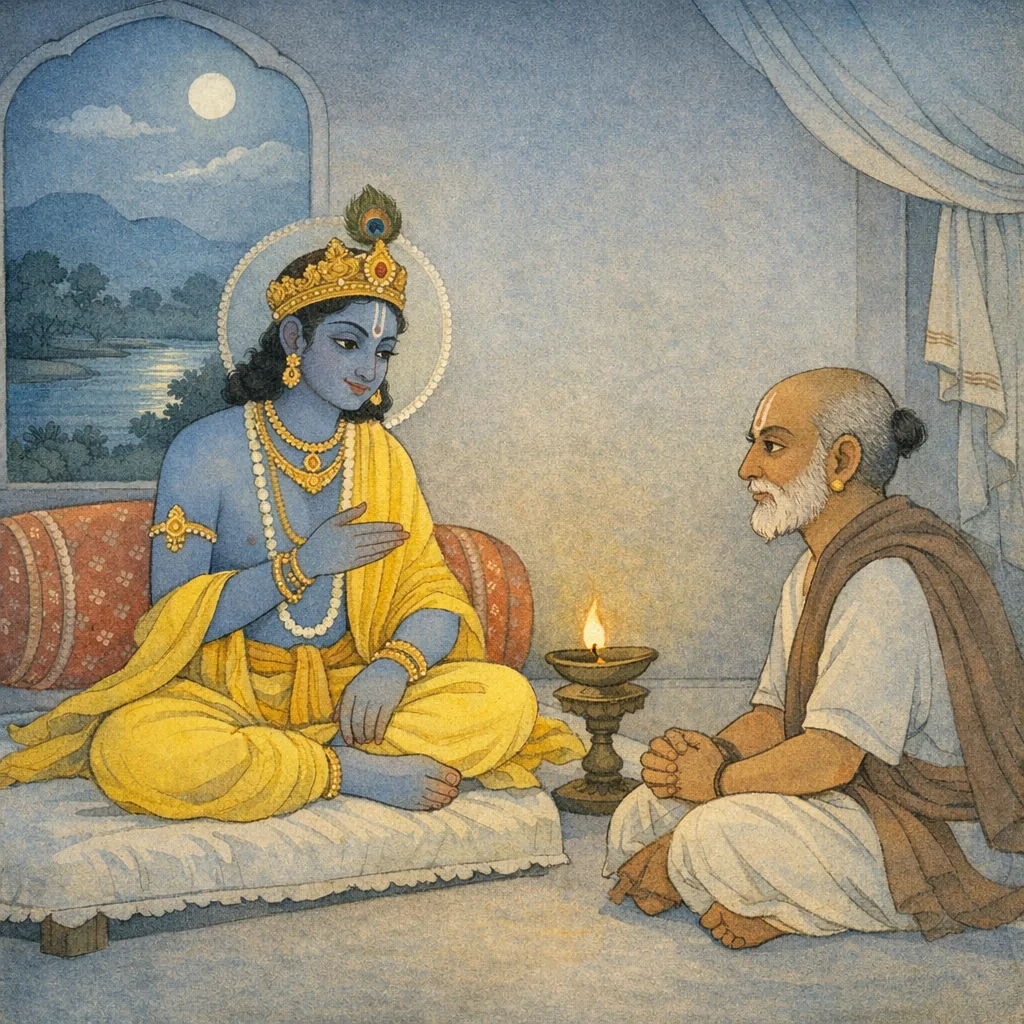
Vaiśampāyana said: Hearing Vidura’s words, the Supreme Person—calm and receptive—spoke thus. The Blessed Lord, Madhusūdana (Kṛṣṇa), replied by honoring Vidura’s wise, well-wishing counsel as fitting speech, grounded in dharma and practical good sense, offered with the affection of a parent.
Verse 2
धर्मार्थयुक्त तथ्यं च यथा त्वय्युपपद्यते । तथा वचनमुक्तो5स्मि त्वयैतत् पितृमातृवत्,श्रीभगवान् बोले--विदुरजी! एक महान् बुद्धिमान् पुरुष जैसी बात कह सकता है, विद्वान् मनुष्य जैसी सलाह दे सकता है, आप-जैसे हितैषी पुरुषके लिये मेरे-जैसे सुहृदसे जैसी बात कहनी उचित है और आपके मुखसे जैसा धर्म और अर्थसे युक्त सत्य वचन निकलना चाहिये, आपने माता-पिताके समान स्नेहपूर्वक वैसी ही बात मुझसे कही है
The Blessed Lord said: “Vidura, you have spoken to me truthfully, in harmony with dharma and artha, exactly as befits you. Indeed, you have addressed me with the affectionate concern of a father and a mother.”
Verse 3
सत्यं प्राप्तं च युक्त वाप्येवमेव यथा55त्थ माम् | शृणुष्वागमने हेतुं विदुरावहितो भव
Vaiśaṃpāyana said: “What you have said to me is true, and it is also fitting—just as you have spoken. Now listen to the reason for my coming; Vidura, be attentive.”
Verse 4
आपने मुझसे जो कुछ कहा है, वही सत्य, समयोचित और युक्तिसंगत है। तथापि विदुरजी! यहाँ मेरे आनेका जो कारण है, उसे सावधान होकर सुनिये ।। दौरात्म्यं धार्तराष्ट्रस्य क्षत्रियाणां च वैरताम् । सर्वमेतदहं जानन क्षत्त: प्राप्तोडद्य कौरवान्,विदुरजी! मैं धृतराष्ट्रपुत्र दुर्योधनकी दुष्टता और क्षत्रिय योद्धाओंके वैरभाव--इन सब बातोंको जानकर ही आज कौरवोंके पास आया हूँ
Vaiśampāyana said: “All that you have said to me is true, timely, and well-reasoned. Yet, Vidura, listen with care to the purpose of my coming here. O Vidura, fully aware of the wickedness of Dhṛtarāṣṭra’s son (Duryodhana) and of the enmity that has arisen among the Kṣatriya warriors, I have nevertheless come today to the Kauravas.”
Verse 5
पर्यस्तां पृथिवीं सर्वा साश्वचां सरथकुञ्जराम् । यो मोचयेन्मृत्युपाशात् प्राप्तुयाद् धर्ममुत्तमम्,अश्व, रथ और हाथियोंसहित यह सारी पृथ्वी विनष्ट होना चाहती है। जो इसे मृत्युपाशसे छुड़ानेका प्रयत्न करेगा, उसे ही उत्तम धर्म प्राप्त होगा
Vaiśaṃpāyana said: “The whole earth, together with horses, chariots, and elephants, is as though overturned and rushing toward ruin. Whoever strives to free it from the noose of death—he alone attains the highest dharma.”
Verse 6
धर्मकार्य यतज्छक्त्या नो चेत् प्राप्रोति मानव: । प्राप्तो भवति तत् पुण्यमत्र मे नास्ति संशय:,मनुष्य यदि अपनी शक्तिभर किसी धर्म-कार्यको करनेका प्रयत्न करते हुए भी उसमें सफलता न प्राप्त कर सके, तो भी उसे उसका पुण्य तो अवश्य ही प्राप्त हो जाता है। इस विषयमें मुझे संदेह नहीं है
Vaiśaṃpāyana said: If a person, striving to the best of his ability in a righteous undertaking, does not attain success, even then the merit of that effort surely accrues to him. Of this, I have no doubt.
Verse 7
मनसा चिन्तयन् पापं कर्मणा नातिरोचयन् । न प्राप्नोति फलं तस्येत्येवं धर्मविदो विदु:ः ७ ।। इसी प्रकार यदि मनुष्य मनसे पापका चिन्तन करते हुए भी उसमें रुचि न होनेके कारण उसे क्रियाद्वारा सम्पादित न करे, तो उसे उस पापका फल नहीं मिलता है। ऐसा धर्मज्ञ पुरुष जानते हैं
Likewise, if a person contemplates sin in his mind but, having no taste for it, does not carry it out in action, he does not incur the fruit of that sin. Thus do the knowers of dharma understand.
Verse 8
सोऊहं यतिष्ये प्रशमं क्षत्त: कर्तुममायया । कुरूणां सृञ्जयानां च संग्रामे विनशिष्यताम्,अतः विदुरजी! मैं युद्धमें मर मिटनेको उद्यत हुए कौरवों तथा सूंजयोंमें संधि करानेका निश्छलभावसे प्रयत्न करूँगा
Therefore I shall strive, O Kṣattṛ (Vidura), with guileless intent to bring about pacification and reconciliation between the Kurus and the Sṛñjayas—who, in the coming battle, are poised to perish. I will make an honest effort to forge peace among those rushing toward mutual destruction.
Verse 9
सेयमापन्महाघोरा कुरुष्वेव समुत्थिता । कर्णदुर्योधनकृता सर्वे होते तदन््वया:,यह अत्यन्त भयंकर आपत्ति कर्ण और दुर्योधनद्वारा ही उपस्थित की गयी है; क्योंकि ये सभी नरेश इन्हीं दोनोंका अनुसरण करते हैं। अतः इस विपत्तिका प्रादुर्भाव कौरवपक्षमें ही हुआ है
This most dreadful calamity has arisen within the Kuru camp itself, brought forth by Karṇa and Duryodhana; for all these kings follow after those two. Thus the outbreak of this disaster has its source on the Kuru side.
Verse 10
व्यसने क्लिश्यमानं हि यो मित्र नाभिपद्यते | अनुनीय यथाशक्ति तै नृशंसं विदुर्बुधा:,जो किसी व्यसन या विपत्तिमें पड़कर क्लेश उठाते हुए मित्रको यथाशक्ति समझा- बुझाकर उसका उद्धार नहीं करता है, उसे विद्वान् पुरुष निर्दय एवं क्रूर मानते हैं
A friend who, seeing his companion afflicted and suffering in calamity, does not go to him and, to the best of his ability, console and guide him toward relief—such a person the wise regard as cruel and hard-hearted.
Verse 11
आकेशग्रहणान्मित्रमकार्यात् संनिवर्तयन् । अवाच्य: कस्यचिद् भवति कृतयत्नो यथाबलम्,जो अपने मित्रको उसकी चोटी पकड़कर भी बुरे कार्यसे हटानेके लिये यथाशक्ति प्रयत्न करता है, वह किसीकी निन्दाका पात्र नहीं होता है
One who, even seizing his friend by the hair, strives to the best of his ability to restrain him from a wrongful deed does not become blameworthy in anyone’s eyes.
Verse 12
तत् समर्थ शुभं वाक््यं धर्मार्थसहितं हितम् । धार्तराष्ट्र: सहामात्यो ग्रहीतुं विदुराहीति,अतः विदुरजी! दुर्योधन और उसके मन्त्रियोंको मेरी शुभ, हितकर, युक्तियुक्त तथा धर्म और अर्थके अनुकूल बात अवश्य माननी चाहिये
Vaiśaṃpāyana said: “Vidura spoke thus: ‘Dhṛtarāṣṭra’s son (Duryodhana), together with his ministers, ought to accept this capable, auspicious counsel—beneficial, well-reasoned, and in harmony with both dharma and prudent statecraft.’”
Verse 13
हित॑ हि धार्तराष्ट्राणां पाण्डवानां तथैव च | पृथिव्यां क्षत्रियाणां च यतिष्येडहममायया,मैं तो निष्कपटभावसे धृतराष्ट्रके पुत्रों, पाण्डवों तथा भूमण्डलके सभी क्षत्रियोंके हितका ही प्रयत्न करूँगा
For indeed I shall strive, without any guile, for the welfare of Dhṛtarāṣṭra’s sons, of the Pāṇḍavas as well, and of the Kṣatriyas upon the earth.
Verse 14
हिते प्रयतमानं मां शड्केद् दुर्योधनो यदि । ह्ृदयस्य च मे प्रीतिरानृण्यं च भविष्यति,इस प्रकार हितसाधनके लिये प्रयत्न करनेपर भी यदि दुर्योधन मुझपर शंका करेगा तो भी मेरे मनको तो प्रसन्नता ही होगी और मैं अपने कर्तव्यके भारसे उऋण हो जाऊँगा
Even if Duryodhana should suspect me while I strive for what is truly beneficial, my heart will still be glad; for I will have done my duty and will stand free of the burden of obligation.
Verse 15
ज्ञातीनां हि मिथो भेदे यम्मित्र॑ नाभिपद्यते । सर्वयत्नेन माध्यस्थ्यं न तम्मित्रं विदुर्बुधा:,भाई-बन्धुओंमें परस्पर फूट होनेका अवसर आनेपर जो मित्र सर्वथा प्रयत्न करके उनमें मेल करानेके लिये मध्यस्थता नहीं करता, उसे विद्वान् पुरुष मित्र नहीं मानते हैं
When kinsmen fall into division among themselves, the one called a friend who does not, with every effort, stand as a mediator to bring about reconciliation—him the wise do not regard as a friend.
Verse 16
नमां ब्रूयुरधर्मिष्ठा मूढा हासुहृदस्तथा । शक्तो नावारयत् कृष्ण: संरब्धान् कुरुपाण्डवान्,संसारके पापी, मूढ़ और शत्रुभाव रखनेवाले लोग मेरे विषयमें यह न कहें कि श्रीकृष्णने समर्थ होते हुए भी क्रोधसे भरे हुए कौरव-पाण्डवोंको युद्धसे नहीं रोका (इसलिये भी मैं संधि करानेका प्रयत्न करूँगा)
Let not the unrighteous, the deluded, and those of hostile disposition say of me: “Though capable, Kṛṣṇa did not restrain the enraged Kurus and Pāṇḍavas from war.” Therefore I too will strive to bring about reconciliation.
Verse 17
उभयो: साधयजन्नर्थमहमागत इत्युत । तत्र यत्नमहं कृत्वा गच्छेयं नृष्ववाच्यताम्,मैं दोनों पक्षोंका स्वार्थ सिद्ध करनेके लिये ही यहाँ आया हूँ। इसके लिये पूरा प्रयत्न कर लेनेपर मैं लोगोंमें निन््दाका पात्र नहीं बनूँगा
“I have come,” he said, “for the sake of securing the rightful interests of both sides. If, in that matter, I exert myself to the utmost, I shall depart without becoming an object of reproach among men.”
Verse 18
मम धर्मार्थियुक्तं हि श्रुत्वा वाक्यमनामयम् | न चेदादास्यते बालो दिष्टस्य वशमेष्यति,यदि मूर्ख दुर्योधन मेरे कष्टनिवारक एवं धर्म तथा अर्थके अनुकूल वचनोंको सुनकर भी उन्हें ग्रहण नहीं करेगा तो उसे दुर्भाग्यके अधीन होना पड़ेगा
Vaiśaṃpāyana said: “Even after hearing my words—wholesome, free from harm, and aligned with both dharma and practical welfare—if that childish (foolish) one does not accept them, then he will inevitably fall under the dominion of fate.”
Verse 19
अहापयन् पाण्डवार्थ यथाव- च्छमं कुरूणां यदि चाचरेयम् | पुण्यं च मे स्थाच्चरितं महात्मन् मुच्येरंश्न कुरवो मृत्युपाशात्,महात्मन्! यदि मैं पाण्डवोंके स्वार्थमें बाधा न आने देकर कौरवों तथा पाण्डवोंमें यथायोग्य संधि करा सकूँगा तो मेरे द्वारा यह महान् पुण्यकर्म बन जायगा और कौरव भी मृत्युके पाशसे मुक्त हो जायँगे
If I can act so that the Pāṇḍavas’ rightful interests are not obstructed, and if I can bring about a proper peace between the Kurus and the Pāṇḍavas in accordance with what is fitting, then this conduct of mine will become a great act of merit. And the Kurus, too, would be released from the noose of death.
Verse 20
अपि वाचं भाषमाणस्य काव्यां धर्मासमामर्थवतीमहिंस्राम् । अवेक्षेरन् धार्तराष्ट्रा: शमार्थ मां च प्राप्त कुरव: पूजयेयु:,मैं शान्तिके लिये दविद्वानोंद्वारा अनुमोदित धर्म और अर्थके अनुकूल हिंसारहित बात कहूँगा। यदि धृतराष्ट्रके पुत्र मेरी बातपर ध्यान देंगे तो उसे अवश्य मानेंगे तथा कौरव भी मुझे वास्तवमें शान्तिस्थापनके लिये ही आया हुआ जान मेरा आदर करेंगे
“If, as I speak, I utter a well-shaped and fitting speech—one that accords with dharma, is purposeful, and free from violence—may the sons of Dhṛtarāṣṭra pay heed to it. And may the Kurus honor me, recognizing that I have come for the sake of peace.”
Verse 21
न चापि मम पर्याप्ता: सहिता: सर्वपार्थिवा: । क्रुद्धस्य प्रमुखे स्थातुं सिंहस्येवेतरे मृगा:,जैसे क्रोधमें भरे हुए सिंहके सामने दूसरे पशु नहीं ठहर सकते, उसी प्रकार यदि मैं कुपित हो जाऊँ तो ये समस्त राजालोग एक साथ मिलकर भी मेरा सामना करनेमें समर्थ न होंगे
Even if all the kings were to unite together, they would not suffice to stand before me when I am enraged—just as other beasts cannot hold their ground before a lion in wrath.
Verse 22
वैशम्पायन उवाच इत्येवमुक्त्वा वचन वृष्णीनामृषभस्तदा । शयने सुखसंस्पश्शें शिश्ये यदुसुखावह:,वैशम्पायनजी कहते हैं--राजन्! यदुकुलको सुख देनेवाले वृष्णिवंशविभूषण श्रीकृष्ण विदुरजीसे उपर्युक्त बात कहकर स्पर्शमात्रसे सुख देनेवाली शय्यापर सो गये
Vaiśampāyana said: O king, having spoken those words, the bull among the Vṛṣṇis—Śrī Kṛṣṇa, the giver of joy to the Yadus—then lay down upon a couch whose touch itself was soothing, and went to sleep.
Verse 92
इस प्रकार श्रीमह्याभारत उद्योगपर्वके अन्तर्गत भगवद्यानपर्वनें श्रीकृष्ण-विदुरसंवादविषयक बानबेवाँ अध्याय पूरा हुआ
Thus, in the revered Mahābhārata, within the Udyoga Parva—specifically in the section concerning the Lord’s embassy (Bhagavad-yāna)—the ninety-second chapter, dealing with the dialogue between Śrī Kṛṣṇa and Vidura, is concluded.
Verse 93
इति श्रीमहा भारते उद्योगपर्वणि भगवद्यानपर्वणि श्रीकृष्णवाक्ये त्रिनवतितमो<ध्याय:
Thus ends the ninety-third chapter in the Udyoga Parva of the Śrī Mahābhārata, within the section on the Lord’s embassy, in the portion recounting Śrī Kṛṣṇa’s words.
Frequently Asked Questions
The chapter frames an ethical tension between political urgency and procedural dharma: whether power-centered factions can accept counsel grounded in ritual legitimacy, respect for sages, and public accountability before decisions harden into confrontation.
Ethical authority is reinforced through disciplined conduct—self-regulation at dawn, generosity, and honoring knowledge-bearing elders—suggesting that credible leadership in crisis begins with ordered personal and civic practice.
No explicit phalaśruti appears here; the meta-function is structural, using ritual, reception, and silence as narrative signals that the assembly has entered a decisive phase of deliberation with heightened moral stakes.