Adhyaya 85
उद्योगपर्व — विदुरोक्तिः (Dhṛtarāṣṭra Addressed on Sincerity, Hospitality, and Settlement)
Upa-parva: Vidura-nīti (Counsel of Vidura) — Dhṛtarāṣṭra Instruction Sequence
Vidura addresses Dhṛtarāṣṭra with a calibrated ethical and political critique. He begins by acknowledging the king’s reputation and the public expectation that dharma is anchored in him (vv. 1–4), then urges preservation of virtues and straightforwardness (ārjava) as a stabilizing principle for dynasty, allies, and realm (v. 5). Turning to the immediate diplomatic crisis, Vidura argues that lavish gifts to Kṛṣṇa as an honored guest are insufficient and potentially disingenuous when the substantive demand—peace through fair concession—remains unmet (vv. 6–9). He identifies the underlying strategy as an attempt to influence or ‘win over’ Kṛṣṇa through material inducement and thereby intimidate the Pāṇḍavas (vv. 10–11), but stresses Kṛṣṇa’s stature and Arjuna’s unwavering devotion make such inducement ineffective (vv. 12–13). Proper honor is reframed as compliance with Kṛṣṇa’s peace-seeking message: offer what is required for reconciliation rather than performative hospitality (vv. 14–16). Vidura closes with a paternal model of rule: Dhṛtarāṣṭra must treat the Pāṇḍavas as sons, given his seniority and their youth, to secure social order and avert escalation (v. 17).
Chapter Arc: धृतराष्ट्र सभा में यह समाचार उठता है कि पाण्डवों की ओर से स्वयं भगवान् जनार्दन दूत बनकर आ रहे हैं—और कुरु-राज्य को अब औपचारिकता नहीं, निर्णायक संवाद का सामना करना है। → राजसभा की राजनीति भीतर-भीतर काँपती है: कृष्ण का स्वागत कैसे हो? धृतराष्ट्र (और दरबार) बाह्य सम्मान की भव्य योजना बनाते हैं—हाथी, वस्त्र, मणि, प्रासाद—मानो उपहारों से आने वाले वचन की धार कुंद हो जाएगी। साथ ही यह भी संकेत उभरता है कि कृष्ण को दुर्योधन के महल में ठहराने का विचार रखा जा रहा है, जिससे दूत-धर्म और निष्पक्षता पर छाया पड़ सकती है। → भेंटों की अतिशय सूची अपने चरम पर पहुँचती है—मतवाले हाथी, पर्वतीय ऊन के बहुमूल्य वस्त्र, दिवा-रात्रि चमकने वाला निर्मल मणि—और अंततः यह घोषणा कि ‘मेरे और दुर्योधन के सब रत्न इसी गृह में हैं; वार्ष्णेय जो चाहें, निःसंदेह दे दिए जाएँ।’ यह क्षण दिखाता है कि कुरु-पक्ष कृष्ण की महिमा तो मानता है, पर सत्य-समाधान के स्थान पर वैभव-प्रदर्शन को आगे रख रहा है। → अध्याय का निष्कर्ष स्वागत-व्यवस्था और आतिथ्य-नीति के निर्धारण में है: कृष्ण के लिए प्रासाद, रत्न, दान और नगर-जन की निर्बाध दर्शन-व्यवस्था का प्रस्ताव—एक राजकीय ‘सम्मान’ जो भीतर छिपे भय और गणना को ढँकता है। → कृष्ण का आगमन निकट है—पर प्रश्न लटका रहता है: क्या यह भव्य आतिथ्य शांति-वार्ता का द्वार बनेगा, या दुर्योधन के महल का आतिथ्य स्वयं एक राजनीतिक जाल सिद्ध होगा?
Shlokas
Verse 1
अफ्-४#-कात जा षडशीतितमो<्ध्याय: लि पड भगवान् श्रीकृष्णकी अगवानी करके उन्हें भेंट एवं दुःशासनके महलमें ठहरानेका विचार प्रकट करना धृतराष्ट उवाच उपप्लव्यादिह क्षत्तरुपायातो जनार्दन: । वृकस्थले निवसति स च प्रातरिहैष्यति,धृतराष्ट्र बोले--विदुर! मुझे सूचना मिली है कि भगवान् श्रीकृष्ण उपप्लव्यसे यहाँके लिये प्रस्थित हो गये हैं, आज वृकस्थलमें ठहरे हैं तथा कल सबेरे ही इस नगरमें पहुँच जायूँगे
Dhṛtarāṣṭra said: “O Vidura (kṣattṛ), I have learned that Janārdana (Śrī Kṛṣṇa) has set out from Upaplavya and is coming here. He is staying at Vṛkasthala today, and tomorrow morning he will arrive in this city.”
Verse 2
आहुकानामधिपति: पुरोग: सर्वसात्वताम् । महामना महावीर्यों महासत्त्वो जनार्दन:
Dhṛtarāṣṭra said: “Janārdana (Kṛṣṇa)—the lord of the Āhukas, the foremost among all the Sātvatas—is high-souled, of great valor, and possessed of mighty strength.”
Verse 3
भगवान् जनार्दन आहुकवंशी क्षत्रियोंक अधिपति तथा समस्त सात्वतों (यादवों)-के अगुआ हैं। उनका हृदय महान् है, पराक्रम भी महान् है तथा वे महान् सत्त्वगुणसे सम्पन्न हैं ।। स्फीतस्थ वृष्णिराष्ट्रस्थ भर्ता गोप्ता च माधव: । त्रयाणामपि लोकानां भगवान् प्रपितामह:,वे भगवान् माधव समृद्धिशाली यादव गणराष्ट्रकरे पोषक तथा संरक्षक हैं। पितामहके भी जनक होनेके कारण वे तीनों लोकोंके प्रपितामह हैं
Dhṛtarāṣṭra said: “The Blessed Janārdana—born in the Āhuka line—is the sovereign among kṣatriyas and the foremost leader of all the Sāttvatas (the Yādavas). His heart is great, his valor is great, and he is endowed with lofty excellence and purity of character. Established amid prosperity in the Vṛṣṇi realm, Mādhava is the sustainer and protector of that people; and, being the progenitor even of the grandsire, the Lord is revered as the great-grandsire of the three worlds.”
Verse 4
वृष्ण्यन्धका: सुमनसो यस्य प्रज्ञामुपासते । आदित्या वसवो रुद्रा यथा बुद्धि बृहस्पते:,जैसे आदित्य, वसु तथा रुद्रगण बृहस्पतिकी बुद्धिका आश्रय लेते हैं, उसी प्रकार वृष्णि और अन्धकवंशके लोग प्रसन्नचित्त होकर श्रीकृष्णकी ही बुद्धिके आश्रित रहते हैं
Dhṛtarāṣṭra said: “Just as the Ādityas, the Vasus, and the Rudras rely upon the counsel of Bṛhaspati, so too do the Vṛṣṇis and the Andhakas, with glad hearts, depend upon the wisdom of Kṛṣṇa.”
Verse 5
तस्मै पूजां प्रयोक्ष्यामि दाशार्हाय महात्मने । प्रत्यक्ष तव धर्मज्ञ तां मे कथयत: शृणु,धर्मज्ञ विदुर! मैं तुम्हारे सामने ही उन महात्मा श्रीकृष्णको जो पूजा दूँगा, उसे बताता हूँ, सुनो
Dhṛtarāṣṭra said: “I shall offer worship to that great-souled Dāśārha (Śrī Kṛṣṇa). O Vidura, knower of dharma, listen as I describe—right here in your presence—the worship I intend to perform.”
Verse 6
एकवर्ण: सुक्लूृप्ताड्रैर्बाद्विजातैर्हयोत्तमै: । चतुर्युक्तान् रथांस्तस्मै रौक्मान् दास्यामि षघोडश,एक रंगके, सुदृढ़ अंगोंवाले तथा बाह्नलीकदेशमें उत्पन्न हुए उत्तम जातिके चार-चार घोड़ोंसे जुते हुए सोलह सुवर्णमय रथ मैं श्रीकृष्णको भेंट करूँगा
Dhṛtarāṣṭra said: “To him (Kṛṣṇa) I will present sixteen golden chariots, each yoked with four superb horses—uniform in color, powerfully built, of excellent breed, and born in the Bāhlīka country.”
Verse 7
नित्यप्रभिन्नान् मातज्रानीषादन्तान् प्रहारिण: । अष्टानुचरमेकैकमष्टौ दास्यामि कौरव,कुरुनन्दन! इनके सिवा मैं उन्हें आठ मतवाले हाथी भी दूँगा, जिनके मस्तकोंसे सदा मद चूता रहता है, जिनके दाँत ईषादण्डके समान प्रतीत होते हैं तथा जो शत्रुओंपर प्रहार करनेमें कुशल हैं और जिन आठों गजराजोंमेंसे प्रत्येकके साथ आठ-आठ सेवक हैं
Dhṛtarāṣṭra said: “O Kaurava, joy of the Kurus! Besides these, I will also give you eight intoxicated elephants, with temples ever streaming with rut, whose tusks appear like the pole of a chariot, and who are skilled at striking down foes. And with each of those eight lordly elephants, I will provide eight attendants.”
Verse 8
दासीनामप्रजातानां शुभानां रुक्मवर्चसाम् | शतमस्मै प्रदास्यामि दासानामपि तावताम्,साथ ही मैं उन्हें सुवर्णकी-सी कान्तिवाली परम सुन्दरी सौ ऐसी दासियाँ दूँगा, जिनसे किसी संतानकी उत्पत्ति नहीं हुई है। दासियोंके ही बराबर दास भी दूँगा
Dhṛtarāṣṭra said: “I will give him a hundred maidservants—auspicious, radiant like gold, and not yet mothers (who have borne no children). And I will also give an equal number of male servants.”
Verse 9
आविकं च सुखस्पर्श पार्वतीयैरुपाह्तम् । तदप्यस्मै प्रदास्यामि सहस्राणि दशाष्ट च,मेरे यहाँ पर्वतीयोंसे भेंटमें मिले हुए भेड़के ऊनसे बने हुए (असंख्य) कम्बल हैं, जो स्पर्श करनेपर बड़े मुलायम जान पड़ते हैं; उनमेंसे अठारह हजार कम्बल भी मैं श्रीकृष्णको उपहारमें दूँगा
Dhṛtarāṣṭra said: “I shall also give woollen coverings—soft to the touch—brought as gifts by the hill-people. From these, I will present to him eighteen thousand blankets as an offering.”
Verse 10
अजिनानां सहस््राणि चीनदेशोद्धवानि च । तान्यप्यस्मै प्रदास्यामि यावदर्हति केशव:,चीनदेशमें उत्पन्न हुए सहस्रों मृगचर्म मेरे भण्डारमें सुरक्षित हैं; उनमेंसे श्रीकृष्ण जितने लेना चाहेंगे, उतने सब-के-सब उन्हें अर्पित कर दूँगा
Dhṛtarāṣṭra said: “I have in my stores thousands of deerskins that have come from the land of China. Those too I will give to him—whatever amount Keśava deems fitting to accept.”
Verse 11
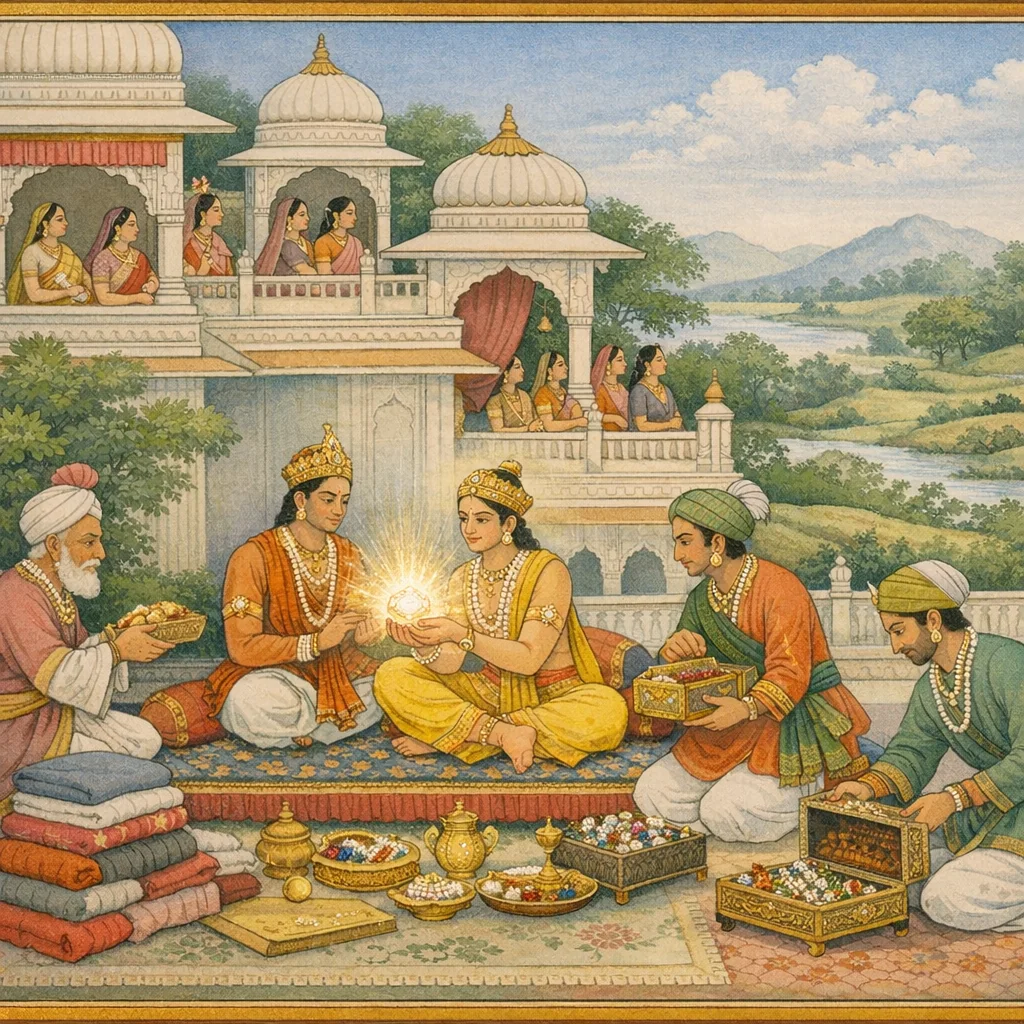
दिवा रात्रौ च भात्येष सुतेजा विमलो मणि: | तमप्यस्मै प्रदास्यामि तमरहति हि केशव:
Dhṛtarāṣṭra said: “This flawless jewel, radiant with its own brilliance, shines both by day and by night. I shall give that jewel to him as well, for Keśava truly deserves it.”
Verse 12
मेरे पास यह एक अत्यन्त तेजस्वी निर्मल मणि है, जो दिन तथा रातमें भी प्रकाशित होती है, इसे भी मैं श्रीकृष्णको ही दूँगा; क्योंकि वे ही इसके योग्य हैं ।। एकेनाभिपतत्यह्ला योजनानि चतुर्दश । यानमश्चतरीयुक्तं दास्ये तस्मै तदप्यहम्,मेरे पास खच्चरियोंसे युक्त एक रथ है, जो एक दिनमें चौदह योजनतक चला जाता है, वह भी मैं उन्हींको अर्पित करूँगा
Dhṛtarāṣṭra said: “I possess a supremely radiant, flawless jewel that shines even by day and by night. I will give that too to Śrī Kṛṣṇa alone, for he alone is worthy of it. I also have a chariot yoked with mules, which can cover fourteen yojanas in a single day; that as well I shall offer to him.”
Verse 13
यावन्ति वाहनान्यस्य यावन्तः पुरुषाश्च ते । ततोड॒ष्टगुणमप्यस्मै भोज्यं दास्याम्यहं सदा,श्रीकृष्णके साथ जितने वाहन और जितने सेवक आयेंगे उन सबको औसतसे आठगुना भोजन मैं प्रत्येक समय देता रहूँगा
Dhṛtarāṣṭra said: “However many vehicles accompany him, and however many men come with them, I will always provide him provisions—food—eightfold beyond that measure.”
Verse 14
मम पुत्राश्न पौत्राश्न सर्वे दुर्योधनादूृते । प्रत्युद्यास्यन्ति दाशाह् रथैर्मृष्टै: स््वलंकृता:,दुर्योधनके सिवा मेरे सभी पुत्र और पौत्र वस्त्र-आभूषणोंसे विभूषित हो स्वच्छ-सुन्दर रथोंपर बैठकर श्रीकृष्णकी अगवानीके लिये जायँगे
Dhṛtarāṣṭra said: “All my sons and grandsons—except Duryodhana—will go forth to welcome (Kṛṣṇa), adorned with fine garments and ornaments, mounted on clean and splendid chariots.”
Verse 15
स्वलंकृताश्च॒ कल्याण्य: पादैरेव सहस्रश: । वारमुख्या महाभागं प्रत्युद्यास्यन्ति केशवम्,सहस्रों सुन्दरी वारांगनाएँ सुन्दर वेषभूषासे सज-धजकर महाभाग केशवकी अगवानीके लिये पैदल ही जायँगी
Dhṛtarāṣṭra said: “Adorned in fine ornaments and auspicious attire, thousands of eminent courtesans will go on foot to welcome the illustrious Keśava.”
Verse 16
नगरादपि या: काश्रिद् गमिष्यन्ति जनार्दनम् | द्रष्ट कन्याश्व॒ कल्याण्यस्ता श्च॒ यास्यन्त्यनावृता:,जनार्दनका दर्शन करनेके लिये इस नगरसे जो भी कोई पर्दा न रखनेवाली कल्याणमयी कन्याएँ जाना चाहेंगी, वे जा सकेंगी
Dhṛtarāṣṭra said: “From this city too, whichever auspicious young women wish to go to see Janārdana—those maidens may go, even without veils.”
Verse 17
सस्त्रीपुरुषबालं च नगरं मधुसूदनम् । उदीक्षतां महात्मानं भानुमन्तमिव प्रजा:,जैसे प्रजा सूर्यदेवका दर्शन करती है, उसी प्रकार स्त्री, पुरुष और बालकोंसहित यह सारा नगर महात्मा मधुसूदनका दर्शन करे
Dhṛtarāṣṭra said: “Let this entire city—women, men, and children—behold the great-souled Madhusūdana, just as the people gaze upon the radiant Sun.”
Verse 18
महाध्वजपताकाश्ष क्रियन्तां सर्वतो दिश: | जलावसिक्तो विरजा: पन्थास्तस्येति चान्वशात्,“नगरमें चारों ओर विशाल थ्वजाएँ और पताकाएँ फहरा दी जायेँ और श्रीकृष्ण जिसपर आ रहे हों, उस राजपथपर जलका छिड़काव करके उसे धूलरहित बना दिया जाय' इस प्रकार राजा धृतराष्ट्रने आदेश दिया
Dhṛtarāṣṭra said: “Let great banners and flags be set up in every direction. Let the royal road on which Śrī Kṛṣṇa is coming be sprinkled with water and made free of dust.” Thus the king issued his command.
Verse 19
दुःशासनस्य च गहं दुर्योधनगृहाद् वरम् । तदद्य क्रियतां क्षिप्रं सुसम्मृष्टमलंकृतम्,इतना कहकर वे फिर बोले--दुःशासनका महल दुर्योधनके राजभवनसे भी श्रेष्ठ है। उसीको आज झाड़-पोंछकर सब प्रकारसे सुसज्जित कर दिया जाय
Dhṛtarāṣṭra said: “And Duḥśāsana’s residence is finer even than Duryodhana’s royal palace. Therefore, let that house be prepared today without delay—thoroughly cleaned and properly adorned.”
Verse 20
एतद्धि रुचिराकारै: प्रासादैरुपशोभितम् । शिवं च रमणीयं च सर्वर्तुसुमहाधनम्,यह महल सुन्दर आकारवाले भवनोंसे सुशोभित, कल्याणकारी, रमणीय, सभी ऋतुओंके वैभवसे सम्पन्न तथा अनन्त धनराशिसे समृद्ध है
Dhṛtarāṣṭra said: “This is indeed adorned with mansions of pleasing form. It is auspicious and delightful, flourishing with the splendor of every season and enriched with immense wealth.”
Verse 21
सर्वमस्मिन् गृहे रत्नं मम दुर्योधनस्थ च । यद् यदर्हति वार्ष्णेयस्तत् तद् देयमसंशयम्
Dhṛtarāṣṭra said: “All the treasures in this house belong to me and to Duryodhana. Whatever the Vārṣṇeya (Kṛṣṇa) deems fitting to receive, that should certainly be given—without any doubt.”
Verse 86
मेरे और दुर्योधनके पास जो भी रत्न हैं, वे सब इसी घरमें रखे हैं। भगवान् श्रीकृष्ण उनमेंसे जो-जो रत्न लेना चाहें, वे सब उन्हें नि:संदेह दे दिये जायँ ।। इति श्रीमहाभारते उद्योगपर्वणि भगवद्यानपर्वणि धृतराष्ट्रवाक्ये षडशीतितमो< ध्याय:,इस प्रकार श्रीमह्ाभारत उद्योगपर्वके अन्तर्गत भगवद्यानपर्वमें धृतराष्ट्रवाक्यविषयक छियासीवाँ अध्याय पूरा हुआ
Dhṛtarāṣṭra said: “Whatever treasures belong to me and to Duryodhana are all stored in this very house. Whatever jewels the Blessed Śrī Kṛṣṇa may wish to take from among them—let all of those be given to him without hesitation.”
Frequently Asked Questions
Whether a ruler may substitute symbolic honor (lavish hospitality and gifts to an envoy) for substantive justice (meeting a minimal, peace-preserving demand), or whether such substitution constitutes ethically unstable governance that endangers the polity.
Public legitimacy is sustained by ārjava and consistent dharma: counsel recommends aligning external conduct with internal intent, prioritizing reconciliation through fair concession over tactics that rely on inducement or intimidation.
No explicit phalaśruti formula appears in this unit; its meta-function is pragmatic-ethical—positioning peace (śama) and paternal kingship as the interpretive standard for evaluating diplomatic actions within the broader pre-war narrative.