Adhyaya 74
भीमसेनस्य आत्मबलप्रशंसा — Bhīmasena’s Assertion of Strength (Udyoga Parva, Adhyāya 74)
Upa-parva: Bhīmasena–Kṛṣṇa Saṃvāda (Boast and Reassurance Episode)
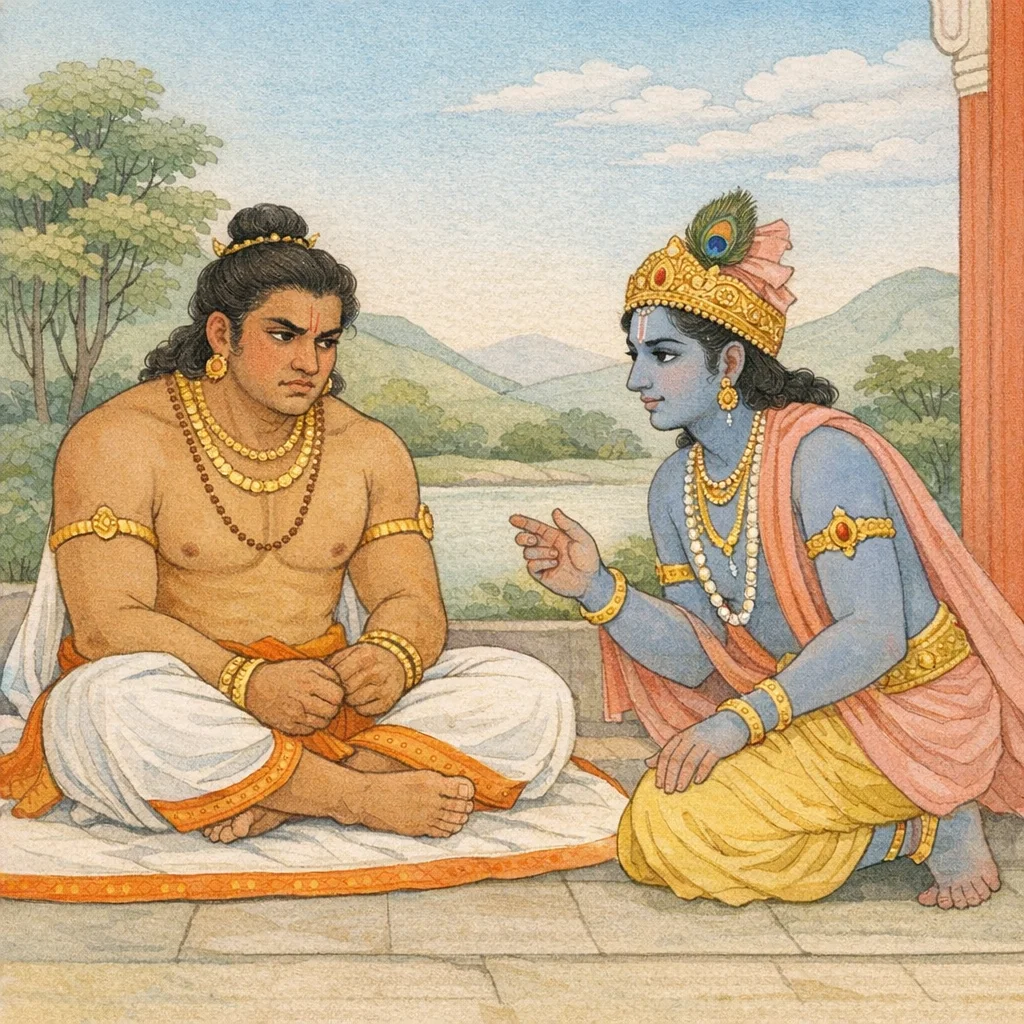
Vaiśaṃpāyana narrates a post-remark exchange in which Bhīmasena, described as consistently wrathful and impatient of insult, responds to Vāsudeva Kṛṣṇa. Bhīma interprets Kṛṣṇa’s words as misjudging his intent and capacity in battle, and he challenges the appropriateness of such speech toward him. He then delivers a self-assessment that he acknowledges as generally improper (self-praise being socially discouraged), yet he proceeds due to provocation. Employing cosmic-scale imagery, Bhīma claims he could restrain even the two ‘worlds’ (rodasī) if they collided in anger, and describes the inescapability of his arms, likening them to massive iron bars. He asserts that even formidable natural or divine forces would not protect adversaries once he has engaged them, and he frames future combat as the arena where Kṛṣṇa will empirically ‘know’ his power. Despite the intensity, Bhīma concludes by reframing his endurance of hardship as grounded in friendship and compassion, requesting that the Bhāratas not be destroyed—thus tempering martial boast with a stated preference for the welfare of the polity.
Chapter Arc: भीम—जो सामान्यतः अग्नि-सा उग्र है—आज एकान्त में बोझ से दबे दुर्बल-से मनुष्य की भाँति बैठा है; कभी हँसता, कभी रोता-सा, आँखें मूँदे, भौंहें चढ़ाए—यह उलटा दृश्य सबको चकित करता है। → श्रीकृष्ण (शौरि, शार्ङ्गधन्वा) भीम के मुख से निकले ‘अभूतपूर्व मृदु’ वचन सुनकर आश्चर्य करते हैं—यह तो पावक में शीतलता या पर्वत के सरकने जैसा है। वे भीम के भीतर उठे विषाद, ग्लानि और मन्यु-जन्य विक्षोभ को पहचानकर उसे टटोलते हैं और कारण पूछते हैं। → कृष्ण का तीक्ष्ण, पर करुण, उत्तेजक उपदेश: ‘यह तुम्हारे योग्य नहीं; अपने कर्म, अपने कुल और क्षत्रिय-धर्म को देखो—उठो, विषाद मत करो; जो पराक्रम से नहीं मिलता, उसे क्षत्रिय शोभा नहीं देता।’ भीम के ‘असंगत’ मृदु-वचन को वे पर्वत-सरकने जैसा महदाश्चर्य कहकर झकझोरते हैं। → कृष्ण भीम के मन में जमी ग्लानि को ‘अनुरूप नहीं’ कहकर काटते हैं और उसे स्थिरता, धैर्य तथा कर्तव्य-निष्ठा की ओर मोड़ते हैं—भीम का मन्यु अब दिशाहीन नहीं, धर्म-संगत संकल्प में ढलने लगता है। → कृष्ण द्वारा भीम को उठाकर कर्तव्य-पथ पर लाने के बाद प्रश्न शेष रहता है—यह जाग्रत भीम आगे किस प्रतिज्ञा/कर्म-निर्णय की ओर बढ़ेगा, और दूत-यात्रा के व्यापक राजनैतिक संकट में इसका क्या प्रभाव पड़ेगा?
Shlokas
Verse 1
इस प्रकार श्रीमह्ाभारत उद्योगपर्वके अन्तर्गत भगवद्यानपर्वमें भीमवाक्यविषयक चौद्तत्तरवाँ अध्याय पूरा हुआ ॥/ ७४ ॥ ऑपन-माजल बछ। अं कऋाज पड्चसप्ततितमो< ध्याय: श्रीकृष्णका भीमसेनको उत्तेजित करना वैशम्पायन उवाच एतच्छुत्वा महाबाहु: केशव: प्रहसन्निव । अभूतपूर्व भीमस्य मार्दवोपहितं वच:,वैशम्पायनजी कहते हैं--भीमसेनके मुखसे यह अभूतपूर्व मृदुतापूर्ण वचन सुनकर महाबाहु भगवान् श्रीकृष्ण हँसने-से लगे। जैसे पर्वतमें लघुता आ जाय और अम्निमें शीतलता प्रकट हो जाय, उसी प्रकार उनमें यह नम्रताका प्रादुर्भाव हुआ था। यह सोचकर शार्ड्धनुष धारण करनेवाले रामानुज श्रीकृष्ण अपने पास बैठे हुए वृकोदर भीमसेनको, जो उस समय दयासे द्रवित हो रहे थे, अपने वचनोंद्वारा उसी प्रकार उत्तेजित करते हुए बोले, मानो वायु अग्निको उद्दीप्त कर रही हो
Vaiśampāyana said: Hearing these words—unprecedented in Bhīma for their gentleness—Keśava, the mighty-armed, seemed to smile. Then Śrī Kṛṣṇa, bearer of the Śārṅga bow, spoke to rouse Vṛkodara Bhīmasena who sat beside him, his heart melted with compassion, stirring him as the wind kindles fire.
Verse 2
गिरेरिव लघुत्वं तच्छीतत्वमिव पावके । मत्वा रामानुज: शौरि: शार्ज्र्धन्वा वृकोदरम्,वैशम्पायनजी कहते हैं--भीमसेनके मुखसे यह अभूतपूर्व मृदुतापूर्ण वचन सुनकर महाबाहु भगवान् श्रीकृष्ण हँसने-से लगे। जैसे पर्वतमें लघुता आ जाय और अम्निमें शीतलता प्रकट हो जाय, उसी प्रकार उनमें यह नम्रताका प्रादुर्भाव हुआ था। यह सोचकर शार्ड्धनुष धारण करनेवाले रामानुज श्रीकृष्ण अपने पास बैठे हुए वृकोदर भीमसेनको, जो उस समय दयासे द्रवित हो रहे थे, अपने वचनोंद्वारा उसी प्रकार उत्तेजित करते हुए बोले, मानो वायु अग्निको उद्दीप्त कर रही हो
Vaiśampāyana said: Hearing from Bhīmasena’s mouth those unprecedented words, gentle and softened with compassion, the mighty-armed Lord Śrī Kṛṣṇa began to smile. It was as though a mountain had become light, or fire had turned cool—such was the surprising rise of humility in Bhīma. Understanding this, Śauri, the younger brother of Rāma (Balarāma), the wielder of the Śārṅga bow, addressed Vṛkodara (Bhīma), who sat near him and was melting with pity, and with his words roused him again—like wind kindling a flame.
Verse 3
संतेजयंस्तदा वाम्भिर्मातरिश्वेव पावकम् | उवाच भीममासीनं कृपयाभिपरिप्लुतम्,वैशम्पायनजी कहते हैं--भीमसेनके मुखसे यह अभूतपूर्व मृदुतापूर्ण वचन सुनकर महाबाहु भगवान् श्रीकृष्ण हँसने-से लगे। जैसे पर्वतमें लघुता आ जाय और अम्निमें शीतलता प्रकट हो जाय, उसी प्रकार उनमें यह नम्रताका प्रादुर्भाव हुआ था। यह सोचकर शार्ड्धनुष धारण करनेवाले रामानुज श्रीकृष्ण अपने पास बैठे हुए वृकोदर भीमसेनको, जो उस समय दयासे द्रवित हो रहे थे, अपने वचनोंद्वारा उसी प्रकार उत्तेजित करते हुए बोले, मानो वायु अग्निको उद्दीप्त कर रही हो
Vaiśampāyana said: Then, as the Wind-god kindles fire with gusts, he roused Bhīma with words—Bhīma who sat nearby, overwhelmed and flooded with compassion.
Verse 4
श्रीभगवानुवाच त्वमन्यदा भीमसेन युद्धमेव प्रशंससि । वधाभिनन्दिन: क्रूरान् धार्तराष्ट्रानू मिमर्दिषु:,श्रीभगवान् बोले--भैया भीमसेन! आजके सिवा और दिन तो तुम हिंसासे ही प्रसन्न होनेवाले क्रूर धृतराष्ट्रप््न्रोंको मसल डालनेकी इच्छा मनमें लेकर सदा युद्धकी ही प्रशंसा किया करते थे
The Blessed Lord said: “O Bhīmasena, on other days you used to praise nothing but war, keeping in your mind the wish to crush the cruel sons of Dhṛtarāṣṭra—men who delight in slaughter.”
Verse 5
न च स्वपिषि जागर्षि न्युब्ज: शेषे परंतप । घोरामशान्तां रुषतीं सदा वाचं प्रभाषसे,परंतप! (इन्हीं विचारोंमें डूबे रहनेके कारण) तुम रातमें सोते भी नहीं थे, जागते ही रहते थे। कभी सोना ही पड़ा, तो औंधे-मुँह लेट जाते और सदा घोर, अशान्त तथा रोषभरी बातें ही तुम्हारे मुँठउसले निकलती थीं
“You did not sleep even when you lay down; you remained wakeful. And whenever you did lie down, you lay face-down. From your mouth there continually issued speech that was dreadful, restless, and filled with anger—O scorcher of foes.”
Verse 6
निःश्वसन्नग्निवत् तेन संतप्त: स्वेन मन्युना । अप्रशान्तमना भीम सधूम इव पावक:,भीम! तुम बारंबार लंबी साँस खींचते हुए अपने ही क्रोधसे उसी प्रकार संतप्त होते थे, जैसे आग अपने ही तेजसे तपी रहती है। धुएँसे व्याप्त हुई अग्निकी भाँति तुम्हारे नित्य- निरन्तर अशान्ति छायी रहती थी
Vaiśaṃpāyana said: Sighing again and again, Bhīma was scorched by his own wrath, like fire burning with its own heat. His mind found no peace; like a flame shrouded in smoke, he remained continually clouded by unrest.
Verse 7
एकान्ते निः:श्वसज्छेषे भारार्त इव दुर्बल: । अपि त्वां केचिदुन्मत्तं मन्यन्तेडतद्विदों जना:,भारी बोझसे पीड़ित दुर्बल मनुष्यकी भाँति तुम एकान्तमें बैठकर जोर-जोरसे साँस खींचते रहते थे। इसीलिये तुम्हें कुछ लोग, जो इस बातको नहीं जानते हैं, पागल मानते हैं
You sat apart, heaving deep sighs like a frail man crushed beneath a heavy burden. Therefore some people, not knowing the cause, take you for mad.
Verse 8
आरुज्य वक्षान् निर्मूलान् गज: परिरुजन्निव | निष्नन् पद्धिः क्षितिं भीम निष्टनन् परिधावसि,भीम! जैसे हाथी वृक्षोंको जड़-मूलसहित उखाड़कर उन्हें पैरोंकी ठोकरोंसे टूक-टूक कर डालता है, उसी प्रकार तुम भी पैरोंसे पृथ्वीपर आघात करते हुए जोर-जोरसे गर्जते और चारों ओर दौड़ते थे
Vaiśampāyana said: “Bhīma, you ran about on every side, roaring loudly, striking the earth with your feet—like an elephant that tears up trees by the roots and then crushes them into fragments under its trampling.”
Verse 9
नास्मिज्जने5भिरमसे रह: क्षिपसि पाण्डव । नान्यं निशि दिवा चापि कदाचिदभिनन्दसि,पाण्डुनन्दन! तुम कभी इस जनसमुदायमें प्रसन्नताका अनुभव नहीं करते थे; सदा एकान्तमें ही बैठकर कालक्षेप करते थे। दिन हो या रात, तुम कभी किसी दूसरेका अभिनन्दन नहीं करते थे
Vaiśampāyana said: “O Pāṇḍava, you did not take delight in this crowd of people; rather, you passed your time in solitude. Whether by night or by day, you never at any time offered greetings or approval to anyone else, O son of Pāṇḍu.”
Verse 10
अकस्मात् स्मयमानश्न रहस्यास्से रुदन्निव | जान्वोर्मूर्धानमाधाय चिरमास्से प्रमीलित:,कभी सहसा हँस पड़ते और कभी एकान्त स्थानमें रोते हुए-से प्रतीत होते थे और कभी घुटनोंपर मस्तक रखकर दीर्घकालतक नेत्र बंद किये बैठे रहते थे
Vaiśaṃpāyana said: “All of a sudden you would break into a smile; at other times you would sit apart as though weeping. And sometimes, placing your head upon your knees, you would remain seated for a long time with your eyes closed—absorbed in inward reflection.”
Verse 11
भ्रुकुटिं च पुन: कुर्वन्नोष्ठी च विदशन्निव । अभीक्षणं दृश्यसे भीम सर्व तन््मन्युकारितम्,भीमसेन! मैंने बार-बार तुम्हें भौंहें टेढ़ी करके दोनों ओठोंको चबाते हुए-से देखा है। यह सब तुम्हारे क्रोधकी करतूत है
Vaiśampāyana said: “O Bhīma, I keep seeing you again and again with your brows drawn into a frown, as though you were biting your lips. All of this is the work of anger.”
Verse 12
यथा पुरस्तात् सविता दृश्यते शुक्रमुच्चरन् । यथा च पश्चान्निर्मुक्तो ध्रुवं पर्येति रश्मिवान्
Vaiśaṃpāyana said: “Just as the Sun is seen in the east, rising and casting forth brilliant radiance, and just as, having moved onward, the radiant one steadily courses toward the west—so too does this matter proceed with unfailing, orderly certainty.”
Verse 13
तथा सत्य ब्रवीम्येतन्नास्ति तस्य व्यतिक्रम: । हन्ताहं गदयाभ्येत्य दुर्योधनममर्षणम्
“So I declare this as the truth: there will be no deviation from it. I shall come forth with my mace and slay the intolerant Duryodhana.”
Verse 14
इति सम मध्ये भ्रातृणां सत्येनालभसे गदाम् । तस्य ते प्रशमे बुद्धिर्ध्रियतेडद्य परंतप
Vaiśaṃpāyana said: “Thus, in the midst of your brothers, by truthfulness you have obtained the mace. Therefore, O scorcher of foes, let your resolve now be held steady in restraint and pacification—let your mind be fixed today upon calming the situation rather than inflaming it.”
Verse 15
तुम अपने भाइयोंके बीचमें सत्यकी शपथ खाकर बार-बार गदा छूते हुए यह कहते थे -- जैसे सूर्यदेव पूर्वदिशामें उदित होते हुए अपने तेजोमण्डलको प्रकट करते दिखायी देते हैं और पश्चिमदिशामें वे ही अंशुमाली अस्ताचलको जाकर निश्चितरूपसे मेरुपर्वतकी परिक्रमा करते हैं, उनके इस नियममें कभी कोई अन्तर नहीं पड़ता; उसी प्रकार मैं यह सच कहता हूँ कि अमर्षशील दुर्योधनके पास जाकर अपनी गदासे उसके प्राण ले लूँगा। मेरे इस कथनमें कभी कोई अन्तर नहीं पड़ सकता।” परंतप! ऐसी प्रतिज्ञा करनेवाले तुम-जैसे वीरशिरोमणिकी बुद्धि आज शान्ति-स्थापनमें लग रही है; (यह आश्वर्यकी बात है!) ।। १२ -१४ || अहो युद्धाभिकाड्क्षाणां युद्धकाल उपस्थिते । चेतांसि विप्रतीपानि यत् त्वां भीर्भीम विन्दति,अहो! युद्धका अवसर उपस्थित होनेपर पहलेसे युद्धकी अभिलाषा रखनेवाले लोगोंके विचार भी इतने बदल जाते हैं कि वे विपरीत सोचने लगते हैं। भीमसेन! जान पड़ता है, इसीलिये तुम्हें भी युद्धसे भय होने लगा है
Vaiśaṃpāyana said: “In the midst of your brothers you would swear to truth, touching your mace again and again, and declare: ‘Just as the Sun rises in the east revealing his circle of radiance, and that same ray-bearing one goes to the western mountain of setting and unfailingly makes his circuit around Mount Meru—never deviating from his rule—so I speak this truth: I shall go to the hot-tempered Duryodhana and with my mace take his life. In my word there can be no change.’ Yet now, O scorcher of foes, the very mind of a hero-crown like you—who made such a vow—has turned toward establishing peace; this is astonishing. Alas, when the hour of war arrives, even those who longed for battle find their thoughts reversed; thus it seems fear of war has come upon you too, O Bhīma.”
Verse 16
अहो पार्थ निमित्तानि विपरीतानि पश्यसि । स्वप्रान्ते जागरान्ते च तस्मात् प्रशममिच्छसि,कुन्तीनन्दन! बड़े विस्मयकी बात है कि तुम्हें सोते और जागतेमें उलटे परिणामकी सूचना देनेवाले अपशकुन दिखायी देते हैं। इसीसे तुम शान्तिकी इच्छा प्रकट कर रहे हो
Vaiśaṃpāyana said: “Alas, O Pārtha, you are seeing ominous signs that portend contrary and adverse outcomes—both at the end of sleep and at the end of wakefulness. Therefore, O son of Kuntī, you are expressing a desire for pacification and peace.”
Verse 17
अहो नाशंससे किज्वचित् पुंस्त्वं क्लीब इवात्मनि । कश्मलेनाभिपन्नो$सि तेन ते विकृतं मन:
Vaiśaṃpāyana said: “Alas! You commend no manliness in yourself at all; toward your own self you are like an impotent man. You have been overcome by moral confusion, and therefore your mind has become distorted.”
Verse 18
अहो! कायर और नपुंसककी भाँति इस समय तुम अपनेमें कुछ भी पुरुषार्थ नहीं मानते। तुम्हारे ऊपर मोह छा गया है, जिससे तुम्हारी मानसिक दशा बिगड़ गयी है ।। उद्वेपते ते हृदयं मनस्ते प्रतिसीदति । ऊरुस्तम्भगृहीतो5सि तस्मात् प्रशममिच्छसि,जान पड़ता है कि तुम्हारा हृदय काँपता है, मन शिथिल होता जाता है, तुम्हारी जाँचें मानो अकड़ गयी हैं; इसीलिये तुम शान्ति चाहते हो
Vaiśampāyana said: “Your heart is trembling and your mind is sinking into dejection. It is as though your thighs have been seized by stiffness and you are unable to move forward; therefore you seek ‘peace’—not from wisdom, but from collapse of resolve.”
Verse 19
अनित्यं किल मर्त्यस्य पार्थ चित्त चलाचलम् | वातवेगप्रचलिता अछ्लीला शाल्मलेरिव,पार्थ! कहते हैं कि मनुष्यका चित्त सदा एक निश्चयपर अटल नहीं रहता। वह हवाके वेगसे हिलती हुई सेंमलके फलकी गाँठके समान डाँवाडोल रहता है
Vaiśaṃpāyana said: “O Pārtha, they say that a mortal’s mind is indeed impermanent—never firmly fixed in one resolve. Driven about by the rush of the wind, it wavers unsteadily, like the loose tuft on the śālmali (silk-cotton) tree.”
Verse 20
तवैषा विकृता बुद्धिर्गवां वागिव मानुषी । मनांसि पाण्डुपुत्राणां मज्जयत्यप्लवानिव,यदि गौएँ मनुष्योंकी बोली बोलें, तो वह जैसे बिगड़ी हुई होगी, उसी प्रकार तुम्हारी यह बुद्धि विकृत होकर अगाध समुद्रमें नावके बिना डूबनेवाले मनुष्योंकी भाँति पाण्डवोंके मनको चिन्तामग्न किये देती है
Vaiśampāyana said: “This perverted counsel of yours is like the human speech of cattle—something unnatural and distorted. In the same way, it plunges the hearts of the sons of Pāṇḍu into anxiety, like people without a boat sinking in a deep sea.”
Verse 21
इदं मे महदाश्चर्य पर्वतस्येव सर्पणम् । यदीदृशं प्रभाषेथा भीमसेनासमं वच:,भीमसेन! तुम जो बात कह रहे हो, वह तुम्हारे योग्य कदापि नहीं है। जैसे पर्वतका चलना आश्चर्यकी बात है, उसी प्रकार तुम्हारे द्वारा किया हुआ यह शान्ति-प्रस्ताव मुझे महान आश्चर्यमें डाल रहा है
Vaiśampāyana said: “This is a great wonder to me, like a mountain moving. O Bhīmasena, such words do not befit you; this proposal of peace from you fills me with profound astonishment.”
Verse 22
स दृष्टवा स्वानि कर्माणि कुले जन्म च भारत | उत्तिष्ठस्व विषादं मा कृथा वीर स्थिरो भव,भारत! तुम अपने कर्मोंकी ओर देखकर और जिस कुलनमें तुम्हारा जन्म हुआ है, उसपर भी दृष्टिपात करके खड़े हो जाओ। वीरवर! विषाद न करो और अपने क्षत्रियोचित कर्मपर डट जाओ
Seeing your own deeds and reflecting on the noble lineage into which you were born, O Bhārata, rise up. O hero, do not give way to grief; stand firm and commit yourself to the duty proper to a kṣatriya.
Verse 23
न चैतदनुरूपं ते यत् ते ग्लानिररिंदम । यदोजसा न लभते क्षत्रियो न तदश्लुते,शत्रुदमन! तुम्हारे चित्तमें जो ग्लानि उत्पन्न हुई है, यह तुम्हारे-जैसे शूरवीरके योग्य कदापि नहीं है; क्योंकि क्षत्रिय जिसे ओज एवं पराक्रमसे प्राप्त नहीं करता, उसे अपने उपयोगमें नहीं लाता है
Vaiśampāyana said: “This despondency that has arisen in you is not at all befitting one like you, O subduer of foes. For a kṣatriya does not enjoy or make use of what he cannot obtain by his own vigor and valor.”
Verse 75
इति श्रीमहाभारते उद्योगपर्वणि भगवद्यानपर्वणि भीमोत्तेजकश्रीकृष्णवाक्ये पजञ्चसप्ततितमो<ध्याय:
Thus, in the Śrī Mahābhārata, within the Udyoga Parva—specifically the section on the Blessed Lord’s embassy—ends the seventy-fifth chapter, marked by Śrī Kṛṣṇa’s words that kindle and elevate Bhīma’s ardor.
Frequently Asked Questions
The dilemma concerns whether forceful self-assertion (including socially disfavored self-praise) is justified to correct perceived disrespect, versus maintaining restraint to preserve harmonious counsel among allies.
Speech is ethically consequential: counsel should be truthful and strategic while honoring the recipient’s dignity; simultaneously, personal power must be governed by friendship, compassion, and responsibility to collective welfare.
No explicit phalaśruti is stated in these verses; the meta-level function is character-ethical, positioning Bhīma’s rhetoric as a psychological and political signal within the pre-conflict narrative rather than a ritualized promise of merit.