Adhyaya 154
पाण्डवसेनानायकाभिषेकः तथा बलरामागमन-उपदेशः | Appointment of Pandava Commanders and Balarama’s Counsel
Upa-parva: Sainyābhiseka (Appointment and Consecration of Commanders) — Pandava Command Structure
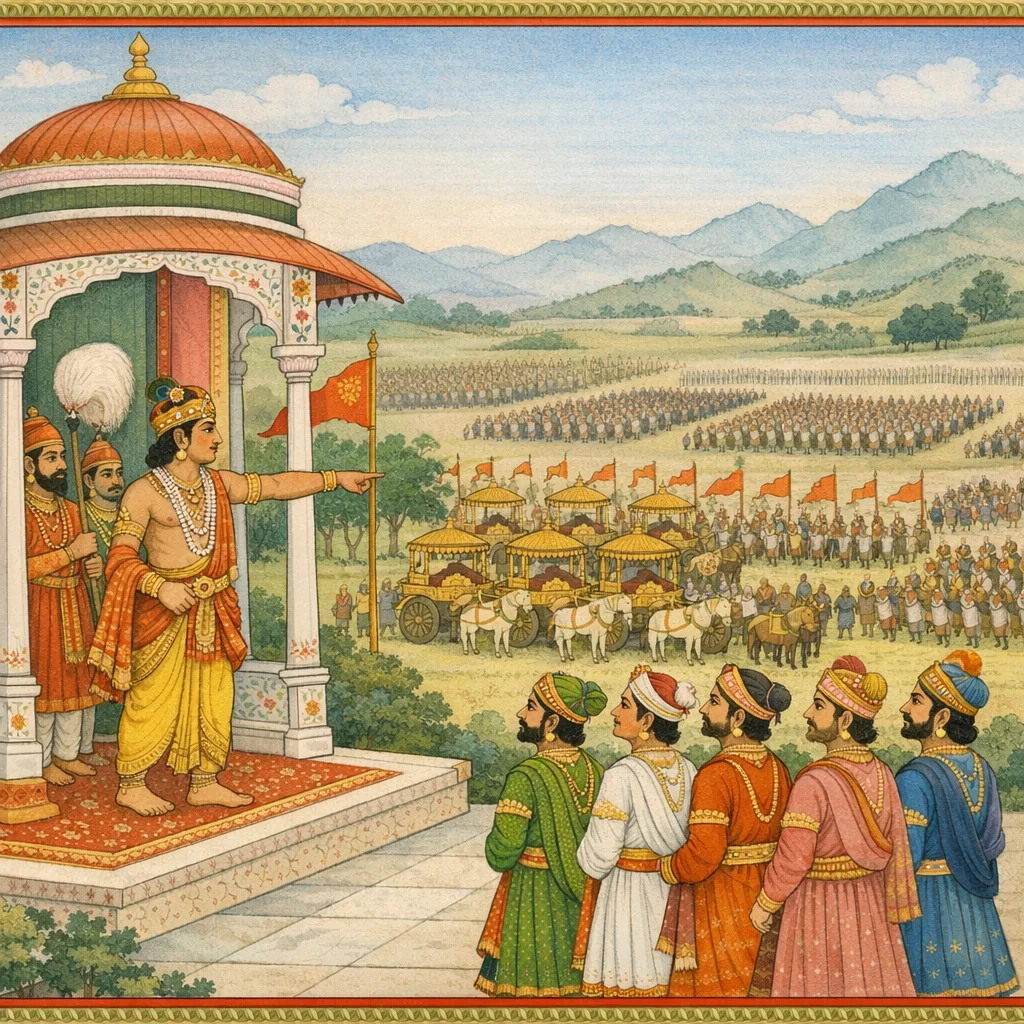
Janamejaya inquires about the response of Yudhiṣṭhira and others upon hearing that Bhīṣma—praised as exemplary in intellect, forbearance, gravity, stability, and martial capacity—has undertaken a long war consecration. Vaiśaṃpāyana recounts that Yudhiṣṭhira, skilled in dharma under crisis, gathers his brothers and Vāsudeva and urges disciplined readiness and the selection of leaders for the seven divisions. Kṛṣṇa approves the timing and recommends appointing seven commanders. Yudhiṣṭhira then installs Drupada, Virāṭa, Dhṛṣṭadyumna, Dhṛṣṭaketu, Śikhaṇḍin, and Sahadeva of Magadha (as listed) as the seven division leaders, appointing Dhṛṣṭadyumna as overall commander-in-chief, and designating Arjuna (Dhanaṃjaya) as a superior coordinating leader over the assembled commanders; Kṛṣṇa serves as Arjuna’s charioteer and controller of the horses. Balarāma arrives with prominent Vṛṣṇis, is honored by the gathered kings, and addresses Kṛṣṇa: he foresees unavoidable mass destruction, wishes for the safe survival of kinsmen, and advises Kṛṣṇa to maintain even-handed conduct toward relatives, noting the Pāṇḍavas and Duryodhana are equally related. He also states he cannot bear to witness the Kuru destruction and will depart on a Sarasvatī pilgrimage; with Pāṇḍava permission, he leaves, having urged Kṛṣṇa toward balanced engagement.
Chapter Arc: वैशम्पायन दुर्योधन की उस घड़ी का वर्णन करते हैं जब वह युद्ध को निकट जानकर अपनी समस्त सेना को सुव्यवस्थित करने बैठता है—पैदल, हाथी, रथ और अश्व, सबका ‘सार’ चुनकर। → अक्षौहिणियों का क्रमबद्ध विभाजन होता है; रथों पर रक्षक, घोड़ों की उत्कृष्टता, पदातियों के विविध कवच-शस्त्र और स्वर्णालंकार—यह सब एक ऐसे नगर-समूह की तरह दिखता है जो शत्रु के लिए दुर्गम हो। साथ ही, सेनापतियों का पृथक्-पृथक् अभिषेक कर दुर्योधन अपने पक्ष को अनुशासन और गर्व से बाँध देता है। → दुर्योधन द्वारा प्रमुख महारथियों/राजाओं को उनके-उनके दलों का नेतृत्व सौंपना—कृप, द्रोण, अश्वत्थामा, शल्य, जयद्रथ, सुदक्षिण, कृतवर्मा, कर्ण, भूरिश्रवा, शकुनि आदि—और उनके अनुयायियों का भी यथायोग्य स्थानों पर नियोजन; यही क्षण कौरव-सेना को एक ‘यंत्र’ की तरह चालू कर देता है। → सेना, वाहिनी, पृतना, ध्वजिनी, चमू, वरूथिनी, अक्षौहिणी—इन सैन्य-रचनाओं की परिभाषात्मक स्पष्टता के साथ कौरव-बल का संगठन पूर्ण होता है; दुर्योधन की आज्ञा-व्यवस्था स्थापित हो जाती है। → अब जब कौरव-पक्ष की सैन्य-रचना और सेनापति-क्रम निश्चित हो गया, अगला प्रश्न यही है—पाण्डव-पक्ष इस विराट व्यवस्था के सामने कैसी प्रतिरचना करेगा?
Shlokas
Verse 1
भीकम (2 अमान पञ्चपञ्चाशर्दाधिकशततमो& ध्याय: दुर्योधनके द्वारा सेनाओंका विभाजन और पृथक्-पृथक् अक्षौहिणियोंके सेनापतियोंका अभिषेक वैशम्पायन उवाच व्युष्टायां वै रजन्यां हि राजा दुर्योधनस्तत: । व्यभजत् तान्यनीकानि दश चैकं च भारत,वैशम्पायनजी कहते हैं--जनमेजय! रात बीतनेपर जब सबेरा हुआ, तब राजा दुर्योधनने अपनी ग्यारह अक्षौहिणी सेनाओंका विभाग किया
Vaiśampāyana said: When the night had passed and dawn had come, King Duryodhana then divided those battle-formations—ten and one, O Bhārata—thus organizing his forces for the coming war.
Verse 2
नरहस्तिरथाश्चानां सारं मध्यं च फल्गु च । सर्वेष्वेतेष्वनीकेषु संदिदेश नराधिप:,राजा दुर्योधनने पैदल, हाथी, रथ और घुड़सवार--इन सभी सेनाओंमेंसे उत्तम, मध्यम और निकृष्ट श्रेणियोंकोी पृथक्-पृथक् करके उन्हें यथास्थान नियुक्त कर दिया
Vaiśampāyana said: The king (Duryodhana), having reviewed the infantry, elephants, chariots, and cavalry, separated out what was best, what was middling, and what was inferior among them; and in each of those divisions of the host he assigned them to their proper stations.
Verse 3
सानुकर्षा: सतूणीरा: सवरूथा: सतोमरा: । सोपासड्रा: सशक्तीका: सनिषड़ा: सहर्शय:,वे सब वीर अनुकर्ष (रथकी मरम्मतके लिये उसके नीचे बाँधा हुआ काष्ठ), तरकस, वरूथ (रथको ढकनेका बाघ आदिका चमड़ा), उपासंग (जिन्हें हाथी या घोड़े उठा सकें, ऐसे तरकस), तोमर, शक्ति, निषंग (पैदलों-द्वारा ले जाये जानेवाले तरकस), ऋष्टि (एक प्रकारकी लोहेकी लाठी), ध्वजा, पताका, धनुष-बाण, तरह-तरहकी रस्सियाँ, पाश, बिस्तर, कचग्रह-विक्षेप (बाल पकड़कर गिरानेका यन्त्र), तेल, गुड़, बालू, विषधर सर्पोंके घड़े, रालका चूरा, घण्टफलक ([घुँघचुरुओंवाली ढाल), खड्गादि लोहेके शस्त्र, औंटा हुआ गुड़का पानी, ढेले, साल, भिन्दिपाल (गोफियाँ), मोम चुपड़े हुए मुद्गर, काँटीदार लाठियाँ, हल विष लगे हुए बाण, सूप तथा टोकरियाँ, दरात, अंकुश, तोमर, काँटेदार कवच, बसूले, आरे आदि, बाघ और गैंड़ेके चमड़ेसे मढ़े हुए रथ, ऋष्टि, सींग, प्रास, भाँति-भाँतिके आयुध कुठार, कुदाल, तेलमें भींगे हुए रेशमी वस्त्र तथा घी लिये हुए थे
Vaiśampāyana said: They were equipped in full—bearing the anukarṣa (the wooden support fixed beneath a chariot for repair and stability), quivers, protective coverings for the chariots, javelins, auxiliary quivers and gear, spears and lances, and various missile-weapons.
Verse 4
सध्वजा: सपताकाश्न सशरासनतोमरा: । रज्जुभिश्न विचित्राभि: सपाशा: सपरिच्छदा:,वे सब वीर अनुकर्ष (रथकी मरम्मतके लिये उसके नीचे बाँधा हुआ काष्ठ), तरकस, वरूथ (रथको ढकनेका बाघ आदिका चमड़ा), उपासंग (जिन्हें हाथी या घोड़े उठा सकें, ऐसे तरकस), तोमर, शक्ति, निषंग (पैदलों-द्वारा ले जाये जानेवाले तरकस), ऋष्टि (एक प्रकारकी लोहेकी लाठी), ध्वजा, पताका, धनुष-बाण, तरह-तरहकी रस्सियाँ, पाश, बिस्तर, कचग्रह-विक्षेप (बाल पकड़कर गिरानेका यन्त्र), तेल, गुड़, बालू, विषधर सर्पोंके घड़े, रालका चूरा, घण्टफलक ([घुँघचुरुओंवाली ढाल), खड्गादि लोहेके शस्त्र, औंटा हुआ गुड़का पानी, ढेले, साल, भिन्दिपाल (गोफियाँ), मोम चुपड़े हुए मुद्गर, काँटीदार लाठियाँ, हल विष लगे हुए बाण, सूप तथा टोकरियाँ, दरात, अंकुश, तोमर, काँटेदार कवच, बसूले, आरे आदि, बाघ और गैंड़ेके चमड़ेसे मढ़े हुए रथ, ऋष्टि, सींग, प्रास, भाँति-भाँतिके आयुध कुठार, कुदाल, तेलमें भींगे हुए रेशमी वस्त्र तथा घी लिये हुए थे
Vaiśampāyana said: They were equipped with standards and banners, with bows and arrows and with javelins; they also carried many kinds of ropes and nooses, along with the full complement of gear and supplies.
Verse 5
सकचग्रहविक्षेपा: सतैलगुडवालुका: । साशीविषघटा: सर्वे ससर्जरसपांसव:,वे सब वीर अनुकर्ष (रथकी मरम्मतके लिये उसके नीचे बाँधा हुआ काष्ठ), तरकस, वरूथ (रथको ढकनेका बाघ आदिका चमड़ा), उपासंग (जिन्हें हाथी या घोड़े उठा सकें, ऐसे तरकस), तोमर, शक्ति, निषंग (पैदलों-द्वारा ले जाये जानेवाले तरकस), ऋष्टि (एक प्रकारकी लोहेकी लाठी), ध्वजा, पताका, धनुष-बाण, तरह-तरहकी रस्सियाँ, पाश, बिस्तर, कचग्रह-विक्षेप (बाल पकड़कर गिरानेका यन्त्र), तेल, गुड़, बालू, विषधर सर्पोंके घड़े, रालका चूरा, घण्टफलक ([घुँघचुरुओंवाली ढाल), खड्गादि लोहेके शस्त्र, औंटा हुआ गुड़का पानी, ढेले, साल, भिन्दिपाल (गोफियाँ), मोम चुपड़े हुए मुद्गर, काँटीदार लाठियाँ, हल विष लगे हुए बाण, सूप तथा टोकरियाँ, दरात, अंकुश, तोमर, काँटेदार कवच, बसूले, आरे आदि, बाघ और गैंड़ेके चमड़ेसे मढ़े हुए रथ, ऋष्टि, सींग, प्रास, भाँति-भाँतिके आयुध कुठार, कुदाल, तेलमें भींगे हुए रेशमी वस्त्र तथा घी लिये हुए थे
Vaiśampāyana said: All of them were equipped with devices for seizing and hurling an enemy, along with supplies of oil, jaggery, and sand; they also carried jars filled with venomous serpents and dust mixed with resin—implements and materials meant for stratagems, obstruction, and harm in the conflict that was drawing near.
Verse 6
सघण्टफलका: सर्वे सायोगुडजलोपला: । सशालभिन्दिपालाश्न समधूच्छिष्टमुद्गरा:,वे सब वीर अनुकर्ष (रथकी मरम्मतके लिये उसके नीचे बाँधा हुआ काष्ठ), तरकस, वरूथ (रथको ढकनेका बाघ आदिका चमड़ा), उपासंग (जिन्हें हाथी या घोड़े उठा सकें, ऐसे तरकस), तोमर, शक्ति, निषंग (पैदलों-द्वारा ले जाये जानेवाले तरकस), ऋष्टि (एक प्रकारकी लोहेकी लाठी), ध्वजा, पताका, धनुष-बाण, तरह-तरहकी रस्सियाँ, पाश, बिस्तर, कचग्रह-विक्षेप (बाल पकड़कर गिरानेका यन्त्र), तेल, गुड़, बालू, विषधर सर्पोंके घड़े, रालका चूरा, घण्टफलक ([घुँघचुरुओंवाली ढाल), खड्गादि लोहेके शस्त्र, औंटा हुआ गुड़का पानी, ढेले, साल, भिन्दिपाल (गोफियाँ), मोम चुपड़े हुए मुद्गर, काँटीदार लाठियाँ, हल विष लगे हुए बाण, सूप तथा टोकरियाँ, दरात, अंकुश, तोमर, काँटेदार कवच, बसूले, आरे आदि, बाघ और गैंड़ेके चमड़ेसे मढ़े हुए रथ, ऋष्टि, सींग, प्रास, भाँति-भाँतिके आयुध कुठार, कुदाल, तेलमें भींगे हुए रेशमी वस्त्र तथा घी लिये हुए थे
Vaiśampāyana said: All of them were equipped with bell-studded shields, stones and clods to be hurled, and slings with sal-wood pellets; they also carried maces smeared with wax and honey-residue—an array of weapons and implements prepared for the coming conflict, showing how thoroughly the warriors readied themselves for war’s harsh demands.
Verse 7
सकाण्डदण्डका: सर्वे ससीरविषतोमरा: । सशूर्पपिटका: सर्वे सदात्राड॒कुशतोमरा:,वे सब वीर अनुकर्ष (रथकी मरम्मतके लिये उसके नीचे बाँधा हुआ काष्ठ), तरकस, वरूथ (रथको ढकनेका बाघ आदिका चमड़ा), उपासंग (जिन्हें हाथी या घोड़े उठा सकें, ऐसे तरकस), तोमर, शक्ति, निषंग (पैदलों-द्वारा ले जाये जानेवाले तरकस), ऋष्टि (एक प्रकारकी लोहेकी लाठी), ध्वजा, पताका, धनुष-बाण, तरह-तरहकी रस्सियाँ, पाश, बिस्तर, कचग्रह-विक्षेप (बाल पकड़कर गिरानेका यन्त्र), तेल, गुड़, बालू, विषधर सर्पोंके घड़े, रालका चूरा, घण्टफलक ([घुँघचुरुओंवाली ढाल), खड्गादि लोहेके शस्त्र, औंटा हुआ गुड़का पानी, ढेले, साल, भिन्दिपाल (गोफियाँ), मोम चुपड़े हुए मुद्गर, काँटीदार लाठियाँ, हल विष लगे हुए बाण, सूप तथा टोकरियाँ, दरात, अंकुश, तोमर, काँटेदार कवच, बसूले, आरे आदि, बाघ और गैंड़ेके चमड़ेसे मढ़े हुए रथ, ऋष्टि, सींग, प्रास, भाँति-भाँतिके आयुध कुठार, कुदाल, तेलमें भींगे हुए रेशमी वस्त्र तथा घी लिये हुए थे
Vaiśampāyana said: All of them were equipped with staves and clubs, and with javelins whose heads were smeared with poison. They also carried winnowing-fans and baskets, along with sickles, goads, and spears—an inventory of weapons and implements gathered for the coming conflict, showing how thoroughly the forces prepared for war, even by adapting ordinary tools into instruments of violence.
Verse 8
सकीलकवचा: सर्वे वासीवृक्षादनान्विता: । व्याप्रचर्मपरीवारा द्वीपिचर्मावृताश्च ते,वे सब वीर अनुकर्ष (रथकी मरम्मतके लिये उसके नीचे बाँधा हुआ काष्ठ), तरकस, वरूथ (रथको ढकनेका बाघ आदिका चमड़ा), उपासंग (जिन्हें हाथी या घोड़े उठा सकें, ऐसे तरकस), तोमर, शक्ति, निषंग (पैदलों-द्वारा ले जाये जानेवाले तरकस), ऋष्टि (एक प्रकारकी लोहेकी लाठी), ध्वजा, पताका, धनुष-बाण, तरह-तरहकी रस्सियाँ, पाश, बिस्तर, कचग्रह-विक्षेप (बाल पकड़कर गिरानेका यन्त्र), तेल, गुड़, बालू, विषधर सर्पोंके घड़े, रालका चूरा, घण्टफलक ([घुँघचुरुओंवाली ढाल), खड्गादि लोहेके शस्त्र, औंटा हुआ गुड़का पानी, ढेले, साल, भिन्दिपाल (गोफियाँ), मोम चुपड़े हुए मुद्गर, काँटीदार लाठियाँ, हल विष लगे हुए बाण, सूप तथा टोकरियाँ, दरात, अंकुश, तोमर, काँटेदार कवच, बसूले, आरे आदि, बाघ और गैंड़ेके चमड़ेसे मढ़े हुए रथ, ऋष्टि, सींग, प्रास, भाँति-भाँतिके आयुध कुठार, कुदाल, तेलमें भींगे हुए रेशमी वस्त्र तथा घी लिये हुए थे
Vaiśampāyana said: All of them were equipped with protective fittings and fastenings, furnished with axes and other implements for cutting wood, and supplied with various tools. Their chariots and gear were surrounded with tiger-hide coverings and were also wrapped in leopard-skins—signs of full martial readiness and the grim resolve that precedes war.
Verse 9
सहर्षय: सश्ड्राश्व सप्रासविविधायुधा: । सकुठारा: सकुद्दाला: सतैलक्षौमसर्पिष:,वे सब वीर अनुकर्ष (रथकी मरम्मतके लिये उसके नीचे बाँधा हुआ काष्ठ), तरकस, वरूथ (रथको ढकनेका बाघ आदिका चमड़ा), उपासंग (जिन्हें हाथी या घोड़े उठा सकें, ऐसे तरकस), तोमर, शक्ति, निषंग (पैदलों-द्वारा ले जाये जानेवाले तरकस), ऋष्टि (एक प्रकारकी लोहेकी लाठी), ध्वजा, पताका, धनुष-बाण, तरह-तरहकी रस्सियाँ, पाश, बिस्तर, कचग्रह-विक्षेप (बाल पकड़कर गिरानेका यन्त्र), तेल, गुड़, बालू, विषधर सर्पोंके घड़े, रालका चूरा, घण्टफलक ([घुँघचुरुओंवाली ढाल), खड्गादि लोहेके शस्त्र, औंटा हुआ गुड़का पानी, ढेले, साल, भिन्दिपाल (गोफियाँ), मोम चुपड़े हुए मुद्गर, काँटीदार लाठियाँ, हल विष लगे हुए बाण, सूप तथा टोकरियाँ, दरात, अंकुश, तोमर, काँटेदार कवच, बसूले, आरे आदि, बाघ और गैंड़ेके चमड़ेसे मढ़े हुए रथ, ऋष्टि, सींग, प्रास, भाँति-भाँतिके आयुध कुठार, कुदाल, तेलमें भींगे हुए रेशमी वस्त्र तथा घी लिये हुए थे
Vaiśampāyana said: They came in high spirits—together with seers—bringing teams of horses, spears, and many kinds of weapons. They also carried axes and spades, along with oil, fine linen, and ghee—supplies and implements meant to sustain and equip the great war-effort, where both combat and logistics move side by side.
Verse 10
रुक्मजालप्रतिच्छन्ना नानामणिविभूषिता: । चित्रानीका: सुवपुषो ज्वलिता इव पावका:,वे सभी सैनिक सोनेके जालीदार कवच धारण किये नाना प्रकारके मणिमय आभूषणोंसे विभूषित हो समस्त सेनाको ही विचित्र शोभासे सम्पन्न करते हुए अपने सुन्दर शरीरसे प्रज्वलित अग्निके समान प्रकाशित हो रहे थे
Vaiśampāyana said: Covered in golden, mesh-like armour and adorned with many kinds of jeweled ornaments, those warriors—arrayed in variegated formations and possessed of handsome bodies—made the whole army splendid, shining like blazing fires.
Verse 11
तथा कवचिन: शूरा: शस्त्रेषु कृतनिश्चया: । कुलीना हययोनिज्ञा: सारथ्ये विनिवेषिता:,इसी प्रकार जो शस्त्र-विद्याका निश्चित ज्ञान रखनेवाले, कुलीन तथा घोड़ोंकी नस्लको पहचाननेवाले थे, वे कवचधारी शूरवीर ही सारथिके कामपर नियुक्त किये गये थे
Vaiśampāyana said: Likewise, those armored heroes—valiant men firmly trained and resolved in the use of weapons, of noble lineage, and skilled in recognizing the breeds and temperaments of horses—were appointed to the duty of charioteers.
Verse 12
बद्धारिष्टा बद्धकक्षा बद्धध्वजपताकिन: । बद्धाभरणनिर्यूहा बद्धचर्मासिपट्टिशा:,उस सेनाके रथोंमें अमंगल निवारणके लिये यन्त्र और ओषधियाँ बाँधी गयी थीं। वे रस्सियोंसे खूब कसे गये थे। उन रथोंपर बँधी हुई ध्वजा-पताकाएँ फहरा रही थीं। उनके ऊपर छोटी-छोटी घंटियाँ बँधी थीं और कँगूरे जोड़े गये थे। उन सबमें ढाल-तलवार और पट्टिश आबद्ध थे
Vaiśampāyana said: The chariots of that army had protective charms fastened on them to ward off ill-omens; their fittings were tightly bound with straps. Flags and pennants were secured and fluttered above, with small bells and ornamental projections attached. Each chariot was equipped and bound with shields, swords, and paṭṭiśa weapons.
Verse 13
चतुर्युजो रथा: सर्वे सर्वे चोत्तमवाजिन: । सप्रासऋष्टिका: सर्वे सर्वे शतशरासना:,उन सभी रथोंमें चार-चार घोड़े जुते हुए थे, वे सभी घोड़े अच्छी जातिके थे और सम्पूर्ण रथोंमें प्रास, ऋष्टि एवं सौ-सौ धनुष रखे गये थे
Vaiśampāyana said: All the chariots were four-yoked, and all the horses were of excellent breed. Every chariot was furnished with spears and javelins, and each was stocked with a hundred bows.
Verse 14
धुर्ययो्हययोरेकस्त थान्यौ पार्ष्णिसारथी । तौ चापि रथिनां श्रेष्ठी रथी च हयवित् तथा,प्रत्येक रथके दो-दो घोड़ोंपर एक-एक रक्षक नियुक्त था, एक-एक रथके लिये दो चक्ररक्षक नियत किये गये थे। वे दोनों ही रथियोंमें श्रेष्ठ थे तथा रथी भी अश्वसंचालनकी कलामें निपुण थे। सब ओर सुवर्णमालाओंसे अलंकृत हजारों रथ शोभा पाते थे। शत्रुओंके लिये उनका भेदन करना अत्यन्त कठिन था। वे सब-के-सब नगरोंकी भाँति सुरक्षित थे
Vaiśampāyana said: For each pair of principal horses there was a dedicated attendant, and likewise a rear-charioteer/guard. Those men were among the finest of chariot-warriors—skilled fighters and also expert in handling horses. Thus the chariots, richly adorned and carefully protected, were made hard for enemies to break, secure like fortified towns.
Verse 15
नगराणीव गुप्तानि दुराधर्षाणि शत्रुभि: । आसन् रथसहस््राणि हेममालीनि सर्वश:,प्रत्येक रथके दो-दो घोड़ोंपर एक-एक रक्षक नियुक्त था, एक-एक रथके लिये दो चक्ररक्षक नियत किये गये थे। वे दोनों ही रथियोंमें श्रेष्ठ थे तथा रथी भी अश्वसंचालनकी कलामें निपुण थे। सब ओर सुवर्णमालाओंसे अलंकृत हजारों रथ शोभा पाते थे। शत्रुओंके लिये उनका भेदन करना अत्यन्त कठिन था। वे सब-के-सब नगरोंकी भाँति सुरक्षित थे
Vaiśampāyana said: “Everywhere stood thousands of chariots, adorned with garlands of gold—guarded like fortified cities and exceedingly hard for enemies to assail. Their order and protection made them as secure as towns: a disciplined, well-defended battle formation, not mere display.”
Verse 16
यथा रथास्तथा नागा बद्धकक्षा: स्वलंकृता: । बभूवु: सप्तपुरुषा रत्नवन्त इवाद्रय:,जिस प्रकार रथ सजाये गये थे, उसी प्रकार हाथियोंको भी स्वर्णमालाओंसे सुसज्जित किया गया था। उन सबको रस्सोंसे कसा गया था। उनपर सात-सात पुरुष बैठे हुए थे, जिससे वे हाथी रत्नयुक्त पर्वतोंके समान जान पड़ते थे
Vaiśampāyana said: “Just as the chariots had been arrayed and adorned, so too the elephants were splendidly decorated with garlands of gold and tightly bound with girths and straps. With seven men seated upon each, those elephants looked like mountains studded with jewels.”
Verse 17
द्वावड्कुशधरीौ तत्र द्वावुत्तमधनुर्धरी । दौ वरासिधरौ राजन्नेक: शक्तिपिनाकधृक्,राजन! उनमेंसे दो पुरुष अंकुश लेकर महावतका काम करते थे, दो उत्तम धनुर्धर योद्धा थे, दो पुरुष अच्छी तलवारें लिये रहते थे और एक पुरुष शक्ति तथा त्रिशूल धारण करता था
Vaiśampāyana said: “There, O King, two men carried elephant-goads and served as mahouts; two were excellent archers; two bore fine swords; and one man carried a śakti (spear) and Pināka—Śiva’s sacred weapon—standing ready among the attendants.”
Verse 18
गजैर्मत्तै: समाकीर्ण सर्वमायुधको शकै: । तद् बभूव बल॑ राजन् कौरव्यस्य महात्मन:,राजन! महामना दुर्योधनकी वह सारी सेना ही अस्त्र-शस्त्रोंके भण्डारसे युक्त मदमत्त गजराजोंसे व्याप्त हो रही थी
Vaiśampāyana said: “O King, the entire army of the high-souled Kaurava was densely filled with rut-maddened elephants and fully supplied with stores of weapons of every kind. The sight proclaimed deliberate readiness for war—an outward show of power and resources that, in the epic’s dharmic frame, also marks a hardening resolve that drives reconciliation farther away.”
Verse 19
आमुक्तकवचैरयुक्ति: सपताकै: स्वलड्कृतै: । सादिभिश्वोपपन्नास्तु तथा चायुतशो हया:,इसी प्रकार कवचधारी, युद्धके लिये उद्यत, आभूषणोंसे विभूषित तथा पताकाधारी सवारोंसे युक्त हजारों-लाखों घोड़े उस सेनामें मौजूद थे
Vaiśampāyana said: “The army also held countless horses—tens of thousands—together with mounted warriors whose armor was fastened tight, ready for battle, bearing banners, and adorned with fine ornaments. The account underscores the vastness and preparedness of the forces gathering for a war whose moral weight would soon test both sides’ claims to dharma.”
Verse 20
असंग्राहा: सुसम्पन्ना हेमभाण्डपरिच्छदा: । अनेकशतसाहमस्रा: सर्वे सादिवशे स्थिता:,वे घोड़े उछल-कूद मचाने आदि दोषोंसे रहित होनेके कारण सदा अपने सवारोंके वशमें रहते थे। उन्हें अच्छी शिक्षा मिली थी। वे सुनहरे साजोंसे सुसज्जित थे। उनकी संख्या कई लाख थी
Vaiśampāyana said: “They were well-broken and free from unruly faults, excellently trained, and adorned with golden trappings. Numbering in many hundreds of thousands, they all remained under the complete control of their riders.”
Verse 21
नानारूपविकाराश्न नानाकवचशस्त्रिण: । पदातिनो नरास्तत्र बभूविहेममालिन:,उस सेनामें जो पैदल मनुष्य थे, वे भी सोनेके हारोंसे अलंकृत थे। उनके रूप-रंग, कवच और अस्त्र-शस्त्र नाना प्रकारके दिखायी देते थे
Vaiśampāyana said: “There, even the foot-soldiers were adorned with garlands of gold. Their appearances and accoutrements were of many kinds—varied in form and complexion, and equipped with diverse armor and weapons—displaying the army’s wealth and readiness for war, where outward splendor accompanies the grave moral weight of impending conflict.”
Verse 22
रथस्यासन् दश गजा गजस्य दश वाजिन: । नरा दश हयस्यासन् पादरक्षा: समन्ततः,एक-एक रथके पीछे दस-दस हाथी, एक-एक हाथीके पीछे दस-दस घोड़े और एक- एक घोड़ेके पीछे दस-दस पैदल सैनिक सब ओर पादरक्षक नियुक्त किये गये थे
Vaiśampāyana said: “Behind each chariot were stationed ten elephants; behind each elephant, ten horses; and behind each horse, ten foot-soldiers were posted on every side as protective guards. The formation reflects deliberate organization and layered protection, showing how warfare was conducted with disciplined order and careful safeguarding of key units.”
Verse 23
रथस्य नागा: पञ्चाशन्नागस्यथासन् शतं हया: । हयस्य पुरुषा: सप्त भिन्नसंधानकारिण:,एक-एक रथके पीछे पचास-पचास हाथी, एक-एक हाथीके पीछे सौ-सौ घोड़े और एक-एक घोड़ेके साथ सात-सात पैदल सैनिक इस उद्देश्यसे संगठित किये गये थे कि वे समूहसे बिछुड़ी हुई दो सैनिक टुकड़ियोंको परस्पर मिला दें
Vaiśampāyana said: “For each chariot there were fifty elephants; for each elephant, a hundred horses; and with each horse, seven foot-soldiers—organized with the specific tactical aim of reuniting military detachments that had become separated from their larger formations. The description highlights disciplined war-ordering meant to prevent confusion and fragmentation in battle.”
Verse 24
सेना पञ्चशतं नागा रथास्तावन्त एव च | दश सेना च पृतना पृतना दशवाहिनी,पाँच सौ हाथियों और पाँच सौ रथोंकी एक सेना होती है। दस सेनाओंकी एक पृतना और दस पृतनाओंकी एक वाहिनी होती है
Vaiśampāyana said: “A ‘senā’ consists of five hundred elephants and an equal number of chariots. Ten such senās make a pṛtanā, and ten pṛtanās make a vāhinī.” In the Udyoga context, this is a sober, administrative reckoning of force—showing how war is systematized and quantified even before the first blow is struck, and hinting at the ethical weight of decisions that mobilize such vast, ordered violence.
Verse 25
सेना च वाहिनी चैव पृतना ध्वजिनी चमू: । अक्षौहिणीति पर्यायर्निरुक्ता च वरूथिनी,इसके सिवा सेना, वाहिनी, पृतना, ध्वजिनी, चमू, वरूथिनी और अक्षौहिणी--इन पर्यायवाची (समानार्थक) नामोंद्वारा भी सेनाका वर्णन किया गया है
Vaiśampāyana said: “The host is also spoken of by these synonymous designations—senā, vāhinī, pṛtanā, dhvajinī, camū, varūthinī, and akṣauhiṇī.” In the Udyoga setting, this catalog of terms frames war not as mere violence but as an organized, accountable institution whose scale and structure must be precisely grasped before choices of dharma and diplomacy are made.
Verse 26
एवं व्यूढान्यनीकानि कौरवेयेण धीमता । अक्षौहिण्यो दशैका च संख्याता: सप्त चैव ह,इस प्रकार बुद्धिमान् दुर्योधनने अपनी सेनाओंको व्यूहरचनापूर्वक संगठित किया था। कुरक्षेत्रमें यारह और सात मिलकर अठारह अक्षौहिणी सेनाएँ एकत्र हुईं थीं
Vaiśampāyana said: Thus the wise son of the Kuru line (Duryodhana) arranged his battle-formations in ordered array. On the field of Kurukṣetra, ten and one—together with seven—made eighteen akṣauhiṇīs of troops assembled, marking the vast scale of the coming war and the grave moral weight of choosing conflict over conciliation.
Verse 27
अक्षौहिण्यस्तु सप्तैव पाण्डवानामभूद् बलम् | अक्षौहिण्यो दशैका च कौरवाणामभूद् बलम्,पाण्डवोंकी सेना केवल सात अक्षौहिणी थी और कौरवोंके पक्षमें ग्यारह अक्षौहिणी सेनाएँ एकत्र हो गयी थीं
Vaiśampāyana said: The Pāṇḍavas’ military strength amounted to only seven akṣauhiṇīs, whereas the Kauravas’ strength amounted to eleven akṣauhiṇīs. Thus, in the approaching war, the side that had seized the kingdom also stood with the greater amassed force—an outward advantage that throws into sharper relief the ethical question of where dharma truly stands.
Verse 28
नराणां पञ्चपज्चाशदेषा पत्तिर्विधीयते । सेनामुखं च तिस्रस्ता गुल्म इत्यभिशब्दितम्,पचपन पैदलोंकी एक टुकड़ीको पत्ति कहते हैं। तीन पत्तियाँ मिलकर एक सेनामुख कहलाती हैं। सेनामुखका ही दूसरा नाम गुल्म है
Vaiśampāyana said: A “patti” is constituted as a unit of fifty-five foot-soldiers. Three such pattis together are called a “senāmukha”; this senāmukha is also designated by the name “gulma”.
Verse 29
त्रयो गुल्मा गणस्त्वासीद् गणास्त्वयुतशो5भवन् | दुर्योधनस्य सेनासु योत्स्यमाना: प्रहारिण:,तीन गुल्मोंका एक गण होता है। दुर्योधनकी सेनाओंमें युद्ध करनेवाले पैदल योद्धाओंके ऐसे-ऐसे गण दस हजारसे भी अधिक थे
Vaiśampāyana said: Three detachments (gulmas) made up a single unit (gaṇa). In Duryodhana’s armies, such units of hard-hitting foot-soldiers, ready to engage in battle, existed by the tens of thousands. The narration underscores the vast scale of mobilization and the momentum toward war, where sheer numbers and organization begin to eclipse restraint and reconciliation.
Verse 30
तत्र दुर्योधनो राजा शूरान् बुद्धिमतो नरान् । प्रसमीक्ष्य महाबाहुश्नक्रे सेनापतींस्तदा,उस समय वहाँ महाबाहु राजा दुर्योधनने अच्छी तरह सोच-विचारकर बुद्धिमान् एवं शूरवीर पुरुषोंको सेनापति बनाया
There, King Duryodhana—mighty-armed—after carefully reviewing the brave and intelligent men, appointed them as commanders of the army.
Verse 31
पृथगक्षौहिणीनां च हा १० [ नरसत्तमान् | विधिवत पूर्वमानीय भ्यषेचयत्
Vaiśampāyana said: Having first brought the foremost of men forward, he duly performed their consecration, and also arranged the armies separately by akṣauhiṇīs.
Verse 32
कृपं द्रोणं च शल्यं च सैन्धवं च जयद्रथम् | सुदक्षिणं च काम्बोजं कृतवर्माणमेव च
Vaiśampāyana said: “(He named) Kṛpa, Droṇa, Śalya, the Sindhu prince Jayadratha, Sudakṣiṇa of Kāmboja, and Kṛtavarmā as well.”
Verse 33
द्रोणपुत्रं च कर्ण च भूरिश्रवसमेव च । शकुनिं सौबलं चैव बाह्लीकं॑ च महाबलम्
Vaiśampāyana said: “And (he named) Droṇa’s son, and Karṇa, and Bhūriśravas as well; and Śakuni, the son of Subala, and also Bāhlīka, the mighty warrior.”
Verse 34
कृपाचार्य, द्रोणाचार्य और अश्वत्थामा--इन श्रेष्ठ पुरुषोंको एवं मद्रराज शल्य, सिंधुराज जयद्रथ, कम्बोज-राज सुदक्षिण, कृतवर्मा, कर्ण, भूरिश्रवा, सुबलपुत्र शकुनि तथा महाबली बाह्नीक--इन राजाओंको पहले अपने सामने बुलाकर उन सबको पृथक्-पृथक् एक-एक अक्षौहिणी सेनाका नायक निश्चित करके विधि-पूर्वक उनका अभिषेक किया || ३१-- ३३ ॥।। दिवसे दिवसे तेषां प्रतिवेलं च भारत । चक्रे स विविधा: पूजा: प्रत्यक्ष च पुन: पुन:,भारत! दुर्योधन प्रतिदिन और प्रत्येक वेलामें उन सेनापतियोंका बारंबार विविध प्रकारसे प्रत्यक्ष पूजन करता था
Vaiśaṃpāyana said: “O Bhārata, day after day, and at every appointed time, Duryodhana repeatedly performed various honors for those commanders, paying them direct and public respect again and again.”
Verse 35
तथा विनियता: सर्वे ये च तेषां पदानुगा: । बभूवु: सैनिका राज्ञां प्रियं राज्ञश्चिकीर्षव:,उनके जो अनुयायी थे, उनको भी उसी प्रकार यथायोग्य स्थानोंपर नियुक्त कर दिया गया। वे राजाओंके सैनिक राजा दुर्योधनका प्रिय करनेकी इच्छा रखकर अपने-अपने कार्यमें तत्पर हो गये
Thus all were duly regulated and assigned, and those who followed in their steps were likewise appointed to fitting stations. The kings’ soldiers, intent on pleasing King Duryodhana, applied themselves eagerly to their several duties.
Verse 155
इति श्रीमहाभारते उद्योगपर्वणि सैन्यनिर्याणपर्वणि दुर्योधनसैन्यविभागे पडञ्चपञ्चाशदधिकशततमो<ध्याय:
Thus, in the Śrī Mahābhārata, within the Udyoga Parva— in the section on the army’s departure and the division of Duryodhana’s forces—ends the 155th chapter.
Frequently Asked Questions
Balarāma articulates a kinship-based ethical tension: remaining aligned with Kṛṣṇa’s intention while maintaining impartial regard for both Pāṇḍavas and Duryodhana as relatives, and choosing withdrawal to avoid witnessing inevitable familial ruin.
The chapter teaches that ethical action in crisis combines institutional clarity (defined leadership and accountability) with relational restraint—avoiding dehumanization of kin and recognizing the moral cost of escalation even when conflict appears unavoidable.
No explicit phalaśruti appears here; the meta-significance is structural—this adhyāya formally establishes the Pāṇḍava command architecture and frames the war as a dharma-laden inevitability, shaping how later actions are interpreted within the epic’s moral economy.