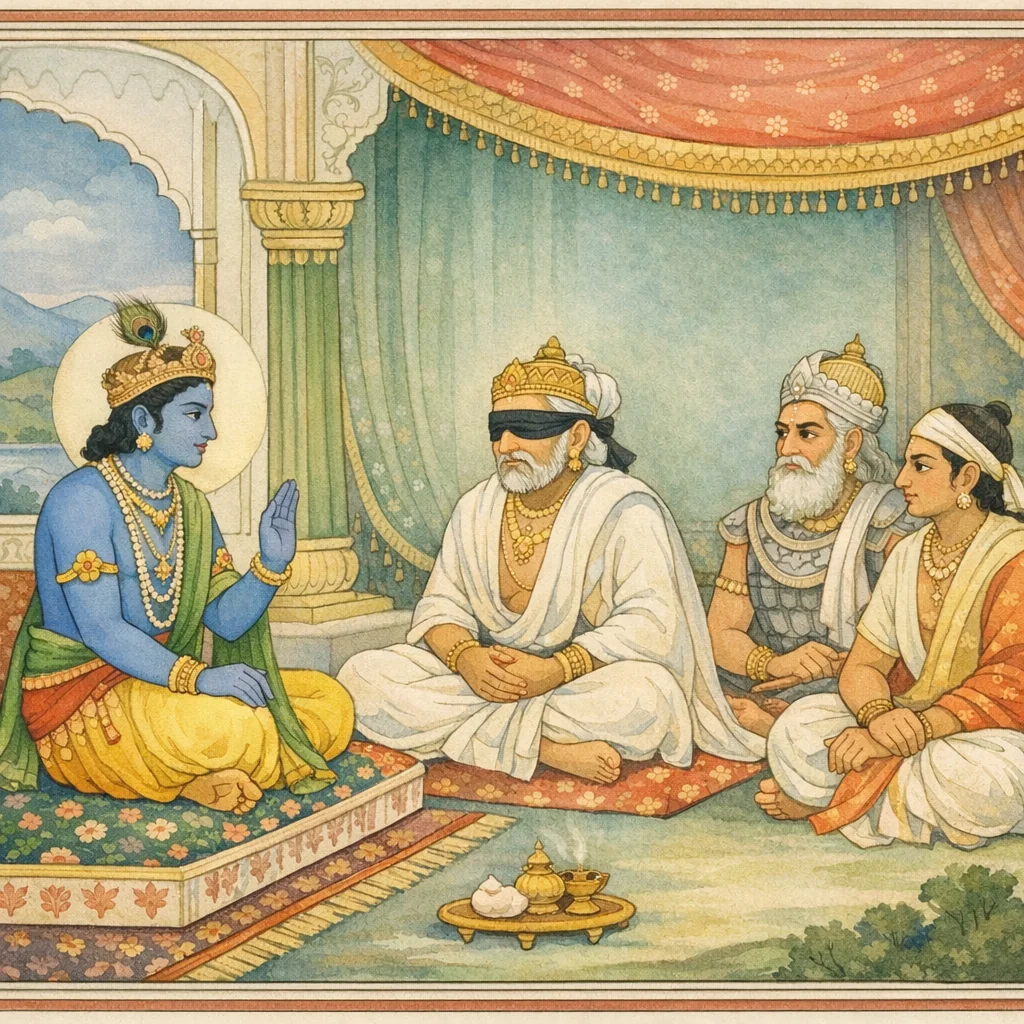
Adhyaya 147
धृतराष्ट्रस्य वंशोपदेशः (Dhṛtarāṣṭra’s Dynastic Counsel on Legitimate Rule)
Upa-parva: Kuru-vaṃśa-prastāva (Genealogical and Succession Counsel Episode)
Chapter 147 presents a courtly admonition framed through dynastic memory. After Gāndhārī’s prior statement, Dhṛtarāṣṭra addresses Duryodhana publicly, urging him to heed paternal counsel and act with reverence for elders. He introduces genealogical precedent beginning with Soma and Yayāti, emphasizing how Yadu’s pride and disregard for paternal instruction led to curse and displacement, while Pūru—obedient and disciplined—received sovereignty. Dhṛtarāṣṭra then cites the lineage of Pratīpa: Devāpi is admired yet blocked from consecration due to a bodily defect; Bāhlīka withdraws; Śaṃtanu assumes rule with authorization—illustrating that kingship can pass to a younger or alternative heir when circumstances and collective judgment require. He applies these precedents to the Kuru present: Pāṇḍu, though younger, ruled after Dhṛtarāṣṭra’s exclusion, and therefore Yudhiṣṭhira’s claim is presented as lawful succession. The chapter culminates in a character contrast—Yudhiṣṭhira’s virtues (truthfulness, restraint, compassion, diligence) versus Duryodhana’s moral deficits—and a pragmatic directive: relinquish a rightful portion of sovereignty to prevent broader ruin.
Chapter Arc: भगवान् श्रीकृष्ण दूत-धर्म निभाते हुए धृतराष्ट्र के सभामण्डल में कुरुवंश की पुरानी मर्यादाओं—प्रतीप, शान्तनु, भीष्म और पाण्डु—का स्मरण कराते हैं, मानो वर्तमान को अतीत के दर्पण में खड़ा कर दें। → कृष्ण कुरुकुल के पूर्वजों के त्याग, सत्य-संकल्प और कुल-हित के व्रत का उदाहरण देकर धृतराष्ट्र को चेताते हैं कि आज वही कुल-हित दुर्योधन के हठ से नष्ट होने जा रहा है। पाण्डु के राज्य-त्याग, पृथ्वी-विजय और धर्मनिष्ठा का वर्णन कर वे दिखाते हैं कि सत्ता का मूल्य ‘धर्म’ है, ‘हठ’ नहीं। इसी बीच द्रोण, विदुर और गान्धारी के युक्तियुक्त वचनों का संदर्भ आता है—सभामें नीति-वाक्य हैं, पर निर्णय-शक्ति पर विनाशकाल की छाया है। → कृष्ण का कठोर, निर्विकार उद्घोष—वे न दीनता से बोलते हैं, न अर्थ-लोभ से; वे वही चाहते हैं जो भीष्म ने न्यायपूर्वक दिया/स्वीकृत कराया था, पर धृतराष्ट्र की दुर्बलता और दुर्योधन का अहंकार उसे रोक रहा है। कृष्ण धृतराष्ट्र को ‘चित्रकार’ की उपमा देकर झकझोरते हैं: जैसे चित्रकार चित्र बनाकर स्थिर रख देता है, वैसे ही तुमने विनाश का चित्र रचकर उसे स्थिर कर दिया है—अब उसे मिटाने का उपाय करो। → कृष्ण अंतिम नीति-मार्ग रखते हैं: धर्म को आगे रखकर दीर्घकाल के हित हेतु सुहृदों (भीष्म-विधुर-गान्धारी जैसे) की सम्मति से कार्य करो; अन्यथा राजधर्म का पतन निश्चित है। वे धृतराष्ट्र को आत्म-परिवर्तन का अवसर देते हैं—अभी भी कुल-रक्षा संभव है, यदि हठ छोड़ा जाए। → कृष्ण का तीखा विकल्प-प्रस्ताव गूंजता है—यदि बुद्धि विनाशकाल से नष्ट हो गई हो तो मेरे और धृतराष्ट्र के साथ वन चलो—और प्रश्न अधर में रह जाता है: क्या हस्तिनापुर का राजा राजसिंहासन पर रहते हुए भी ‘वन’ जैसी वैराग्य-बुद्धि अपनाएगा, या दुर्योधन के साथ विनाश की ओर बढ़ेगा?
Shlokas
Verse 1
औपनआक्ात छा अर: अष्टचत्वारिशर्दाधिकशततमो< ध्याय: द्रोणाचार्य, विदुर तथा गान्धारीके युक्तियुक्त एवं महत्त्वपूर्ण वचनोंका भगवान् श्रीकृष्णके द्वारा कथन वायुदेव उवाच भीष्मेणोक्ते ततो द्रोणो दुर्योधनमभाषत । मध्ये नृपाणां भद्रं ते वचनं वचनक्षम:,भगवान् श्रीकृष्ण कहते हैं--राजन्! तुम्हारा कल्याण हो। भीष्मजीकी बात समाप्त होनेपर प्रवचन करनेमें समर्थ द्रोणाचार्यने राजाओंके बीचमें दुर्योधनसे इस प्रकार कहा --
Vāyudeva said: When Bhīṣma had finished speaking, Droṇa—skilled in giving counsel—addressed Duryodhana in the midst of the assembled kings: “May welfare be yours,” and then spoke words fit for deliberation. The scene shows how the elders sought to guide a ruler by reason at the critical hour before war.
Verse 2
प्रातीप: शान्तनुस्तात कुलस्यार्थे यथा स्थित: । यथा देवब्रतो भीष्म: कुलस्यार्थे स्थितो5भवत्
Vāyu said: “Dear one, just as Pratīpa and Śāntanu stood firm for the welfare of their lineage, so too did Devavrata—Bhīṣma—take his stand for the sake of the Kuru family. This is the measure of their greatness: they set aside personal desire for the enduring good of the dynasty and its dharma.”
Verse 3
तथा पाण्डुर्नरपति: सत्यसंधो जितेन्द्रिय: । राजा कुरूणां धर्मात्मा सुव्रतः सुसमाहित:
Vāyu said: “So too was King Pāṇḍu—lord of men—steadfast in truth and master of his senses. He, the righteous king of the Kurus, was firm in his vows and deeply composed in mind.”
Verse 4
“तात! जैसे प्रतीपपुत्र शान्तनु इस कुलकी भलाईमें ही लगे रहे, जैसे देवव्रत भीष्म इस कुलकी वृद्धिके लिये ही यहाँ स्थित हैं, उसी प्रकार सत्य-प्रतिज्ञ एवं जितेन्द्रिय राजा पाण्डु भी रहे हैं। वे कुरुकुलके राजा होते हुए भी सदा धर्ममें ही मन लगाये रहते थे। वे उत्तम व्रतके पालक तथा चित्तको एकाग्र रखनेवाले थे ।। ज्येष्ठाय राज्यमददाद् धृतराष्ट्राय धीमते । यवीयसे तथा क्षत्त्रे कुरूणां वंशवर्धन:,“कुरुवंशकी वृद्धि करनेवाले पाण्डुने अपने बड़े भाई बुद्धिमान् धृतराष्ट्रको तथा छोटे भाई विदुरको अपना राज्य धरोहररूपसे दिया
“Child! Just as Śāntanu, son of Pratīpa, devoted himself wholly to the welfare of this lineage, and just as Devavrata Bhīṣma stands here for the increase of this family, so too was King Pāṇḍu—true to his vow and master of his senses. Though he was the ruler of the Kuru house, his mind was always set on dharma. He kept excellent vows and was of concentrated mind. That Pāṇḍu, increaser of the Kuru line, entrusted the kingdom to his elder brother, the wise Dhṛtarāṣṭra, and likewise to the younger kṣattṛ (Vidura), as a charge to be safeguarded.”
Verse 5
ततः सिंहासने राजन् स्थापयित्वैनमच्युतम् । वनं जगाम कौरव्यो भारयभ्यां सहितो नृप:,“राजन! कुरुकुलरत्न पाण्डुने अपनी मर्यादासे कभी च्युत न होनेवाले धृतराष्ट्रको सिंहासनपर बिठाकर स्वयं अपनी दोनों स्त्रियोंके साथ वनको प्रस्थान किया था
Then, O King, the Kuru ruler installed Dhṛtarāṣṭra—one who never swerved from propriety—upon the royal throne, and the king himself departed for the forest together with his two queens. The episode underscores orderly succession and the renunciant ideal: power is entrusted according to duty, while the ruler withdraws to the forest-stage in keeping with dharma.
Verse 6
नीचै: स्थित्वा तु विदुर उपास्ते सम विनीतवत् । प्रेष्पवत् पुरुषव्याप्रो वालव्यजनमुत्क्षिपन्,“तदनन्तर पुरुषसिंह विदुर सेवककी भाँति नीचे खड़े होकर चँवर डुलाते हुए विनीतभावसे धृतराष्ट्रकी सेवामें रहने लगे
Then Vidura, standing humbly below like a well-trained attendant, served Dhṛtarāṣṭra with even-tempered courtesy. Like a tiger among men, he lifted and waved the yak-tail fan (cāmara), choosing disciplined service and self-restraint over pride—an ethical display of duty performed without ego even in a tense royal household.
Verse 7
ततः सर्वा: प्रजास्तात धृतराष्ट्रं जनेश्वरम् । अन्वपद्यन्त विधिवद् यथा पाण्डुं जनाधिपम्,“तात! तदनन्तर सारी प्रजा जैसे राजा पाण्डुके अनुगत रहती थी, उसी प्रकार विधिपूर्वक राजा धृतराष्ट्रके अधीन रहने लगी
Then, dear one, all the subjects duly aligned themselves under Dhṛtarāṣṭra, lord of the people—just as they had formerly followed King Pāṇḍu. The verse underscores the ethical ideal of orderly civic loyalty: when kingship passes in a proper manner, society seeks stability by adhering to the rightful sovereign according to established norms.
Verse 8
विसृज्य धृतराष्ट्राय राज्यं सविदुराय च । चचार पृथिवीं पाण्डु: सर्वा परपुरञज्जय:,“इस प्रकार शत्रुओंकी राजधानीपर विजय पाने-वाले पाण्डु विदुरसहित धृतराष्ट्रको अपना राज्य सौंपकर सारी पृथ्वीपर विचरने लगे
Having entrusted the kingdom to Dhṛtarāṣṭra—together with Vidura—Pāṇḍu, famed as a conqueror of enemy strongholds, set aside royal life and wandered over the whole earth. The verse highlights a deliberate act of responsible renunciation: power is not clung to, but handed over in an orderly way, after which the king turns to a wider, disciplined course of life.
Verse 9
कोशसंवनने दाने भृत्यानां चान्ववेक्षणे । भरणे चैव सर्वस्य विदुर: सत्यसड्भर:,'सत्यप्रतिज्ञ विदुर कोषको सँभालने, दान देने, भृत्यवर्गकी देखभाल करने तथा सबके भरण-पोषणके कार्यमें संलग्न रहते थे
Vāyu-deva said: “In safeguarding the treasury, in giving gifts, in supervising the servants, and in providing for everyone’s maintenance—Vidura, steadfast in truth, remained continually engaged.”
Verse 10
संधिविग्रहसंयुक्तो राज्ञां संवाहनक्रिया: । अवैक्षत महातेजा भीष्म: परपुरञ्जय:,“शत्रुनगरीको जीतनेवाले महातेजस्वी भीष्म संधि-विग्रहके कार्यमें संयुक्त हो राजाओंसे सेवा और कर आदि लेनेका काम सँभालते थे
Vāyu said: Endowed with mastery in matters of alliance and conflict, the mighty Bhīṣma—conqueror of enemy strongholds—oversaw the royal administration, including the collection of service, tribute, and other dues from subordinate kings. The verse highlights the ethical weight of governance: power is exercised not merely in war, but through ordered policy, responsibility, and the disciplined management of obligations within a political hierarchy.
Verse 11
सिंहासनस्थो नृपतिर्धुतराष्ट्री महाबल: । अन्वास्यमान: सततं विदुरेण महात्मना
Vāyu said: The mighty king Dhṛtarāṣṭra sat upon his throne, and at all times the great-souled Vidura remained close by him, attending him—an image of righteous counsel standing beside power in a moment of grave political and moral consequence.
Verse 12
“महाबली राजा धृतराष्ट्र केवल सिंहासनपर बैठे रहते और महात्मा विदुर सदा उनकी सेवामें उपस्थित रहते थे ।। कथं तस्य कुले जात: कुलभेदं व्यवस्यसि । सम्भूय भ्रातृभि: सार्थ भुड्क्ष्य भोगान् जनाधिप,उन्हींके वंशमें उत्पन्न होकर तुम इस कुलमें फूट क्यों डालते हो? राजन! भाइयोंके साथ मिलकर मनोवांछित भोगोंका उपभोग करो
Vāyu said: “The mighty king Dhṛtarāṣṭra sat continually upon the throne, while the noble Vidura stood ever present in his service. How can you—born in that very lineage—resolve to split the family? O lord of men, unite with your brothers and enjoy the rightful pleasures together.”
Verse 13
ब्रवीम्यहं न कार्पण्यान्नार्थहेतो: कथंचन । भीष्मेण दत्तमिच्छामि न त्वया राजसत्तम,“नृपश्रेष्ठ! मैं दीनतासे या धन पानेके लिये किसी प्रकार कोई बात नहीं कहता हूँ। मैं भीष्मका दिया हुआ पाना चाहता हूँ, तुम्हारा दिया नहीं
Vāyu said: “I do not speak out of wretchedness, nor for the sake of gain in any way. O best of kings, I desire what was given by Bhīṣma—nothing that comes from you.”
Verse 14
नाहं त्वत्तोडभिकाडूशक्षिष्ये वृत््युपायं जनाधिप । यतो भीष्मस्ततो द्रोणो यद् भीष्मस्त्वाह तत् कुरु,'जनेश्वर! मैं तुमसे कोई जीविकाका साधन प्राप्त करनेकी इच्छा नहीं करूँगा। जहाँ भीष्म हैं, वहीं द्रोण हैं। जो भीष्म कहते हैं, उसका पालन करो
Vāyu said: “O lord of men, I do not seek from you any means of livelihood. Where Bhīṣma stands, there stands Droṇa as well. Therefore, whatever Bhīṣma advises you—do that.”
Verse 15
दीयतां पाण्डुपुत्रेभ्यो राज्यार्धमरिकर्शन । सममाचार्यक॑ तात तव तेषां च मे सदा,'शत्रुसूदन! तुम पाण्डवोंका आधा राज्य दे दो। तात! मेरा यह आचार्यत्व तुम्हारे और पाण्डवोंके लिये सदा समान है
Vāyu said: “O subduer of foes, grant the sons of Pāṇḍu half the kingdom. Dear child, my role as a teacher is always impartial—equally directed toward you and toward them.”
Verse 16
अश्रत्थामा यथा महां तथा श्वेतहयो मम । बहुना कि प्रलापेन यतो धर्मस्ततो जयः,“मेरे लिये जैसा अश्वत्थामा है वैसा ही श्वेत घोड़ोंवाला अर्जुन भी है। अधिक बकवाद करनेसे क्या लाभ? जहाँ धर्म है, उसी पक्षकी विजय निश्चित है!
Vāyu said: “As Aśvatthāmā is a great warrior, so too is my own Śvetahaya—Arjuna of the white horses. What is the use of excessive talk? Wherever dharma stands, on that side victory is assured.”
Verse 17
वायुदेव उवाच एवमुक्ते महाराज द्रोणेनामिततेजसा । व्याजहार ततो वाक््यं विदुर: सत्यसड्भर: । पितुर्वदनमन्वीक्ष्य परिवृत्य च धर्मवित्,भगवान् श्रीकृष्ण कहते हैं--महाराज! अमित-तेजस्वी द्रोणाचार्यके इस प्रकार कहनेपर सत्यप्रतिज्ञ धर्मज्ञ विदुरने ज्येष्ठ पिता भीष्मकी ओर घूमकर उनके मुँहकी ओर देखते हुए इस प्रकार कहा
Vāyudeva said: “O King, when the mighty Droṇācārya had spoken thus, Vidura—steadfast in truth and discerning in dharma—then addressed the assembly. Turning toward the elder sire Bhīṣma and looking upon his face, he spoke, grounding his words in ethical duty and truthful resolve.”
Verse 18
विदुर उवाच देवव्रत निबोधेदं वचनं मम भाषत: । प्रणष्ट: कौरवो वंशस्त्वयायं पुनरुद्धृत:,विदुर बोले--देवव्रतजी! मेरी यह बात सुनिये। यह कौरववंश नष्ट हो चला था, जिसका आपने पुनः उद्धार किया था
Vidura said: “O Devavrata (Bhīṣma), understand this statement of mine as I speak. The Kaurava lineage had been on the verge of ruin, and it was you who raised it up again.”
Verse 19
तन्मे विलपमानस्य वचन समुपेक्षसे । को<यं दुर्योधनो नाम कुले5स्मिन् कुलपांसन:,मैं भी उसी वंशकी रक्षाके लिये विलाप कर रहा हूँ; परंतु न जाने क्यों आप मेरे कथनकी उपेक्षा कर रहे हैं। मैं पूछता हूँ, यह कुलांगार दुर्योधन इस कुलका कौन है? जिसके लोभके वशीभूत होनेपर भी आप उसकी बुद्धिका अनुसरण कर रहे हैं। लोभने इसकी विवेकशक्ति हर ली है। इसकी बुद्धि दूषित हो गयी है तथा यह पूरा अनार्य बन गया है
Vidura said: “Though I lament for the protection of this very lineage, you disregard my words. Tell me—who, in truth, is this man called Duryodhana within this family, this disgrace of the line? And yet, even when he is driven by greed, you choose to follow his counsel—greed has stolen his discernment, his mind is corrupted, and he has become wholly unworthy of noble conduct.”
Verse 20
यस्य लोभाभिभूतस्य मतिं समनुवर्तसे । अनार्यस्याकृतज्ञस्थ लोभेन हृतचेतस:,मैं भी उसी वंशकी रक्षाके लिये विलाप कर रहा हूँ; परंतु न जाने क्यों आप मेरे कथनकी उपेक्षा कर रहे हैं। मैं पूछता हूँ, यह कुलांगार दुर्योधन इस कुलका कौन है? जिसके लोभके वशीभूत होनेपर भी आप उसकी बुद्धिका अनुसरण कर रहे हैं। लोभने इसकी विवेकशक्ति हर ली है। इसकी बुद्धि दूषित हो गयी है तथा यह पूरा अनार्य बन गया है
Vidura said: “Why do you follow the counsel of one whose mind is overpowered by greed—of one who is ignoble and ungrateful, whose consciousness has been stolen away by avarice? In yielding to such a man’s judgment, you abandon the path of dharma and endanger the very lineage you seek to protect.”
Verse 21
अतिक्रामति य: शास्त्र पितुर्धर्मार्थदर्शिन: । एते नश्यन्ति कुरवो दुर्योधनकृतेन वै,यह शास्त्रकी आज्ञाका तो उल्लंघन करता ही है। धर्म और अर्थपर दृष्टि रखनेवाले अपने पिताकी भी बात नहीं मानता है। निश्चय ही एकमात्र दुर्योधनके कारण ये समस्त कौरव नष्ट हो रहे हैं
Vidura says: He who oversteps the injunctions of śāstra and refuses to heed even his father—who sees clearly what is dharma and what serves true welfare—becomes the cause of ruin. Indeed, it is solely because of Duryodhana’s conduct that the Kauravas are being destroyed.
Verse 22
यथा ते न प्रणश्येयुर्महाराज तथा कुरु । मां चैव धृतराष्ट्रं च पूर्वमेव महामते
Vidura said: “O great king, act in such a way that your line does not perish. And, O wise one, protect me and Dhṛtarāṣṭra beforehand as well—take timely measures before calamity overtakes us.”
Verse 23
प्रजापति: प्रजा: सृष्टवा यथा संहरते तथा
Vidura said: “Just as the Lord of creatures, having brought beings into existence, later withdraws them again, so too does the world move by a law of creation and dissolution.”
Verse 24
नोपेक्षस्व महाबाहो पश्यमान: कुलक्षयम् | महाबाहो! जैसे प्रजापति प्रजाकी सृष्टि करके पुनः उसका संहार करते हैं, उसी प्रकार आप भी अपने कुलका विनाश देखकर उसकी उपेक्षा न कीजिये ।। अथ तेड्द्य मतिर्नष्टा विनाशे प्रत्युपस्थिते
Vidura urges the mighty-armed prince not to remain indifferent while witnessing the ruin of his own lineage. Just as Prajāpati creates living beings and then brings their dissolution, so too, seeing the destruction poised to engulf your family, you must not ignore it. If, even now, your judgment has failed when annihilation stands at the door, the blame will be yours for letting calamity proceed unchecked.
Verse 25
बद्ध्वा वा निकृतिप्रज्ञं धार्तराष्ट्रं सुदु्मतिम्
Vidura says: “Either bind up Dhṛtarāṣṭra—whose understanding has been warped by deceit, whose mind is ill-disposed.” The line conveys Vidura’s stern ethical urgency: when a ruler’s judgment is corrupted and harmful, restraint becomes a necessary act to prevent further adharma and ruin.
Verse 26
शाधीदं राज्यमद्याशु पाण्डवैरभिरक्षितम् । अथवा जिसकी बुद्धि सदा छल-कपटमें ही लगी रहती है उस परम दुर्बुद्धि धृतराष्ट्रपुत्र दुर्योधनको शीघ्र ही बाँधकर पाण्डवोंद्वारा सुरक्षित इस राज्यका शासन कीजिये ।। २५६ || प्रसीद राजशार्दूल विनाशो दृश्यते महान्,नृपश्रेष्ठ! प्रसन्न होइये। पाण्डवों, कौरवों तथा अमिततेजस्वी राजाओंका महान् विनाश दृष्टिगोचर हो रहा है। ऐसा कहकर दीनचित्त विदुरजी चुप हो गये और विशेष चिन्तामें मग्न होकर उस समय बार-बार लंबी साँसें खींचने लगे
Vidura urges the king to act at once: either accept and govern the kingdom now under the Pandavas’ protection, or—if Duryodhana’s mind remains fixed on deceit and fraud—have that utterly misguided son of Dhritarashtra swiftly restrained and then rule this realm in safety under the Pandavas’ guardianship. He then pleads, “Be gracious, tiger among kings; a great destruction is coming into view. O best of rulers, be calm—before our eyes looms a vast ruin of the Pandavas, the Kauravas, and the mighty kings as well.” Having spoken thus, Vidura fell silent, his heart heavy; absorbed in anxious thought, he repeatedly drew long, deep breaths.
Verse 27
पाण्डवानां कुरूणां च राज्ञाममिततेजसाम् । विररामैवमुक्त्वा तु विदुरो दीनमानस: । प्रध्यायमान: स तदा नि: श्वसंश्व॒ पुन: पुन:,नृपश्रेष्ठ! प्रसन्न होइये। पाण्डवों, कौरवों तथा अमिततेजस्वी राजाओंका महान् विनाश दृष्टिगोचर हो रहा है। ऐसा कहकर दीनचित्त विदुरजी चुप हो गये और विशेष चिन्तामें मग्न होकर उस समय बार-बार लंबी साँसें खींचने लगे
Vidura, his heart weighed down, spoke thus and then fell silent. As he reflected deeply, he kept drawing long, repeated breaths, for before his eyes he saw the looming great destruction of the Pāṇḍavas, the Kurus, and other kings of immeasurable prowess. The verse underscores the ethical tragedy of a war born from obstinacy: when counsel is ignored, even the wise can only grieve at the dharmic collapse that leads to collective ruin.
Verse 28
ततो<थ राज्ञ: सुबलस्य पुत्री धर्मार्थयुक्ते कुलनाशभीता । दुर्योधनं पापमतिं नृशंसं राज्ञां समक्ष सुतमाह कोपात्,तदनन्तर राजा सुबलकी पुत्री गान्धारी अपने कुलके विनाशसे भयभीत हो क्रूर स्वभाववाले पापबुद्धि पुत्र दुर्योधनसे समस्त राजाओंके समक्ष क्रोधपूर्वक यह धर्म और अर्थसे युक्त वचन बोली--
Then Gandhārī, daughter of King Subala—fearful that her lineage would be destroyed—spoke in anger before the assembled kings to her own son Duryodhana, whose mind had turned to sin and whose nature was cruel. Her words were grounded in dharma and prudent statecraft, warning him against the ruinous path he was choosing.
Verse 29
ये पार्थिवा राजसभां प्रविष्टा ब्रह्मर्षयो ये च सभासदो<न्ये । शृण्वन्तु वक्ष्यामि तवापराध॑ पापस्य सामात्यपरिच्छदस्य,“जो-जो राजा, ब्रह्मर्षि तथा अन्य सभासद् इस राजसभाके भीतर आये हैं, वे सब लोग मन्त्री और सेवकोंसहित तुझ पापी दुर्योधनके अपराधोंको सुनें। मैं वर्णन करती हूँ
Vidura addresses the assembled court: “Let all the kings who have entered this royal hall, the Brahmarishis, and the other members of the assembly listen. I shall declare your wrongdoing—yours, O sinful Duryodhana—together with that of your ministers and attendants.” The verse frames a public moral indictment: guilt is not private when it endangers the realm, and complicity extends to those who enable injustice.
Verse 30
राज्यं कुरूणामनुपूर्व भोज्यं क्रमागतो न: कुलधर्म एष: । त्वं पापबुद्धेडतिनृशंसकर्मन् राज्यं कुरूणामनयाद् विहंसि,“हमारे यहाँ परम्परासे चला आनेवाला कुलधर्म यही है कि यह कुरुराज्य पूर्व-पूर्व अधिकारीके कमसे उपभोगमें आवे (अर्थात् पहले पिताके अधिकारमें रहे, फिर पुत्रके, पिताके जीते-जी पुत्र राज्यका अधिकारी नहीं हो सकता); परंतु अत्यन्त क्रूर कर्म करनेवाले पापबुद्धि दुर्योधन! तू अपने अन्यायसे इस कौरवराज्यका विनाश कर रहा है
Vidura declares that among the Kurus the kingdom is to be enjoyed in due succession—this is their inherited family law and established custom: authority passes step by step to the rightful elder, not seized out of turn. He then rebukes Duryodhana as one of sinful intent and brutally cruel deeds, saying that by his injustice he is bringing ruin upon the Kuru realm itself.
Verse 31
राज्ये स्थितो धृतराष्ट्रो मनीषी तस्यानुजो विदुरो दीर्घदर्शी । एतावतिक्रम्य कथं नृपत्वं दुर्योधन प्रार्थयसे5द्य मोहात्,“इस राज्यपर अधिकारीके रूपमें परम बुद्धिमान् धृतराष्ट्र और उनके छोटे भाई दूरदर्शी विदुर स्थापित किये गये थे। दुर्योधन! इन दोनोंका उल्लंघन करके तू आज मोहवश अपना प्रभुत्व कैसे जमाना चाहता है
Vidura said: “In this kingdom, the wise Dhṛtarāṣṭra has been duly established, and his younger brother Vidura, far-sighted in counsel, stands with him. Duryodhana, how can you, out of delusion today, seek to seize royal authority by overriding these rightful guardians of the realm?”
Verse 32
राजा च क्षत्ता च महानुभावौ भीष्मे स्थिते परवन्तौ भवेताम् | अयं तु धर्मज्ञतया महात्मा न कामयेद् यो नृवरो नदीज:,“राजा धृतराष्ट्र और विदुर--ये दोनों महानुभाव भी भीष्मके जीते-जी पराधीन ही रहेंगे (भीष्मके रहते इन्हें राज्य लेनेका कोई अधिकार नहीं है); परंतु धर्मज्ञ होनेके कारण ये नरश्रेष्ठ महात्मा गंगानन्दन राज्य लेनेकी इच्छा ही नहीं रखते हैं
Vidura said: “So long as Bhīṣma remains alive, both the king (Dhṛtarāṣṭra) and the kṣattā (Vidura), though men of great stature, would still be dependent on him—without any rightful scope to assume sovereignty in his presence. Yet this best of men, the great-souled son of the river (Gaṅgā), precisely because he knows dharma, does not even desire to take up kingship.”
Verse 33
राज्यं तु पाण्डोरिदमप्रधुृष्यं तस्याद्य पुत्रा: प्रभवन्ति नान्ये । राज्यं तदेतन्निखिलं पाण्डवानां पैतामहं पुत्रपौत्रानुगामि,*वास्तवमें यह दुर्धर्ष राज्य महाराज पाण्डुका है। उन्हींके पुत्र इसके अधिकारी हो सकते हैं, दूसरे नहीं। अतः यह सारा राज्य पाण्डवोंका है; क्योंकि बाप-दादोंका राज्य पुत्र- पौत्रोंके पास ही जाता है
Vidura declares that this unconquerable kingdom belongs to King Pāṇḍu. Only Pāṇḍu’s sons have the rightful claim to it—no others. Therefore the entire realm is the Pāṇḍavas’ inheritance, for ancestral sovereignty properly passes down through the line of sons and grandsons.
Verse 34
यद् वै ब्रूते कुरुमुख्यो महात्मा देवव्रत: सत्यसंधो मनीषी । सर्व तदस्माभिरहत्य कार्य राज्यं स्वधर्मान् परिपालयद्धिः,“कुरुकुलके श्रेष्ठ पुरुष सत्यप्रतिज्ञ एवं बुद्धिमान् महात्मा देवव्रत जो कुछ कहते हैं, उसे राज्य और स्वधर्मका पालन करनेवाले हम सब लोगोंको बिना काट-छाँट किये पूर्णरूपसे मान लेना चाहिये
Vidura said: Whatever the foremost of the Kurus—Devavrata, the great-souled, truth-bound, and wise—declares, all of that should be accepted by us in full, without trimming or contradiction, for we are charged with safeguarding the kingdom and upholding our own dharma.
Verse 35
अनुज्ञया चाथ महाव्रतस्य ब्रूयान्नपो5यं विदुरस्तथैव । कार्य भवेत् तत् सुहृद्धिर्नियोज्यं धर्म पुरस्कृत्य सुदीर्घकालम्,“अथवा इन महान् व्रतधारी भीष्मजीकी आज्ञासे यह राजा धृतराष्ट्र तथा विदुर भी इस विषयमें कुछ कह सकते हैं और अन्य सुहृदोंको भी धर्मको सामने रखते हुए उसीका सुदीर्घ कालतक पालन करना चाहिये
Vidura said: “With the permission of that great vow-observing elder, let this Vidura also speak without hesitation. Whatever ought to be done should be undertaken in consultation with well-wishing friends, placing dharma in the forefront and adhering to it steadfastly for a long time.”
Verse 36
न्यायागतं राज्यमिदं कुरूणां युधिष्ठिर: शास्तु वै धर्मपुत्र: । प्रचोदितो धृतराष्ट्रेण राज्ञा पुरस्कृत: शान्तनवेन चैव,“कौरवोंके इस न्यायतः प्राप्त राज्यका धर्मपुत्र युधिष्ठिर ही शासन करें और वे राजा धृतराष्ट्र तथा शान्तनुनन्दन भीष्मसे कर्तव्यकी शिक्षा लेते रहें!
This kingdom of the Kurus, rightfully obtained, should be ruled by Yudhiṣṭhira—the Dharmaputra, the knower of dharma. Urged by King Dhṛtarāṣṭra and honored with the foremost support of Bhīṣma, Śāntanu’s son, let him continue to learn from them the teaching of duty.
Verse 148
इति श्रीमहा भारते उद्योगपर्वणि भगवद्यानपर्वणि श्रीकृष्णवाक्ये अष्टचत्वारिंशदाधिकशततमो< ध्याय:,इस प्रकार श्रीमह्याभारत उद्योगपर्वके अन्तर्गत भगवद्यानपर्वमें श्रीकृष्णवाक्यविषयक एक सौ अड़तालीसवाँ अध्याय पूरा हुआ
Thus ends, in the Mahābhārata’s Udyoga Parva, within the section known as the Bhagavad-yāna Parva, the one-hundred-and-forty-eighth chapter concerning Śrī Kṛṣṇa’s discourse.
Verse 226
चित्रकार इवालेख्यं कृत्वा स्थापितवानसि । महाराज! ऐसा कोई उपाय कीजिये, जिससे इनका नाश न हो। महामते! जैसे चित्रकार किसी चित्रको बनाकर एक जगह रख देता है, उसी प्रकार आपने मुझको और धृतराष्ट्रको पहलेसे ही निकम्मा बनाकर रख दिया है
Vidura said: “You have set things in place as a painter sets down a finished picture—fixed and unchanging. O King, devise some means by which these men may not be destroyed. O wise one, just as an artist completes a painting and then sets it aside, so you have, as it were, already rendered both me and Dhṛtarāṣṭra ineffective and left us apart.”
Verse 246
वनं गच्छ मया सार्ध धृतराष्ट्रेण चैव ह | यदि इन दिनों विनाशकाल उपस्थित होनेके कारण आपकी बुद्धि नष्ट हो गयी हो तो मेरे और धृतराष्ट्रके साथ वनमें पधारिये
Vidura said: “Come to the forest with me—and with Dhṛtarāṣṭra as well. If, in these days when the time of ruin has arrived, your judgment has been destroyed, then withdraw with me and Dhṛtarāṣṭra to the forest.”
Frequently Asked Questions
The dilemma is whether Duryodhana should prioritize personal claim and dominance or accept dharma-grounded legitimacy and compromise, recognizing that sovereignty is conditioned by conduct, precedent, and the welfare of the polity.
Authority is not merely inherited but ethically earned: pride and disobedience lead to loss of status (Yadu), while humility, service to elders, and self-governance stabilize rule (Pūru; the idealized portrait of Yudhiṣṭhira).
No explicit phalaśruti is stated; the meta-function is juridical and pedagogical—using precedent as a normative tool to guide decision-making and to situate present claims within the epic’s broader discourse on legitimate rule and social order.