Adhyaya 112
धन-निरुक्ति तथा गालवस्य गुरुदक्षिणा-प्रसङ्गः (Etymology of Wealth and the Gurudakṣiṇā Predicament of Gālava)
Upa-parva: Galava–Yayāti Upākhyāna (within Udyoga-parva)
Nārada explains a traditional nirukti for dhana/hiraṇya, presenting wealth as that which ‘supports and is held’ (dhāraṇa) and as enduring across the three worlds in a paradigmatic sense. The discourse introduces cosmological guardianship motifs (associating wealth with divine custodianship) and then pivots to a practical constraint: Gālava cannot obtain the required horses without substantial resources. Garuḍa proposes an actionable solution—approach a royal patron within his Soma-lineage network—identifying King Yayāti (Nāhuṣa) as a truthful and capable donor whose prosperity is likened to Kubera’s. Upon arrival, Yayāti honors them with hospitality, and Garuḍa formally introduces Gālava as Viśvāmitra’s long-serving student. The narrative clarifies the guru’s demand: eight hundred white, pure-born horses with dark ears (ekataḥ-śyāma-karṇa), described as moon-lustrous, and frames Gālava’s distress as an ethical burden rather than mere material lack. The chapter concludes with a statement on pātratā (worthiness) in giving and receiving, using the simile of milk adhering to a conch to characterize proper transfer and fittingness.
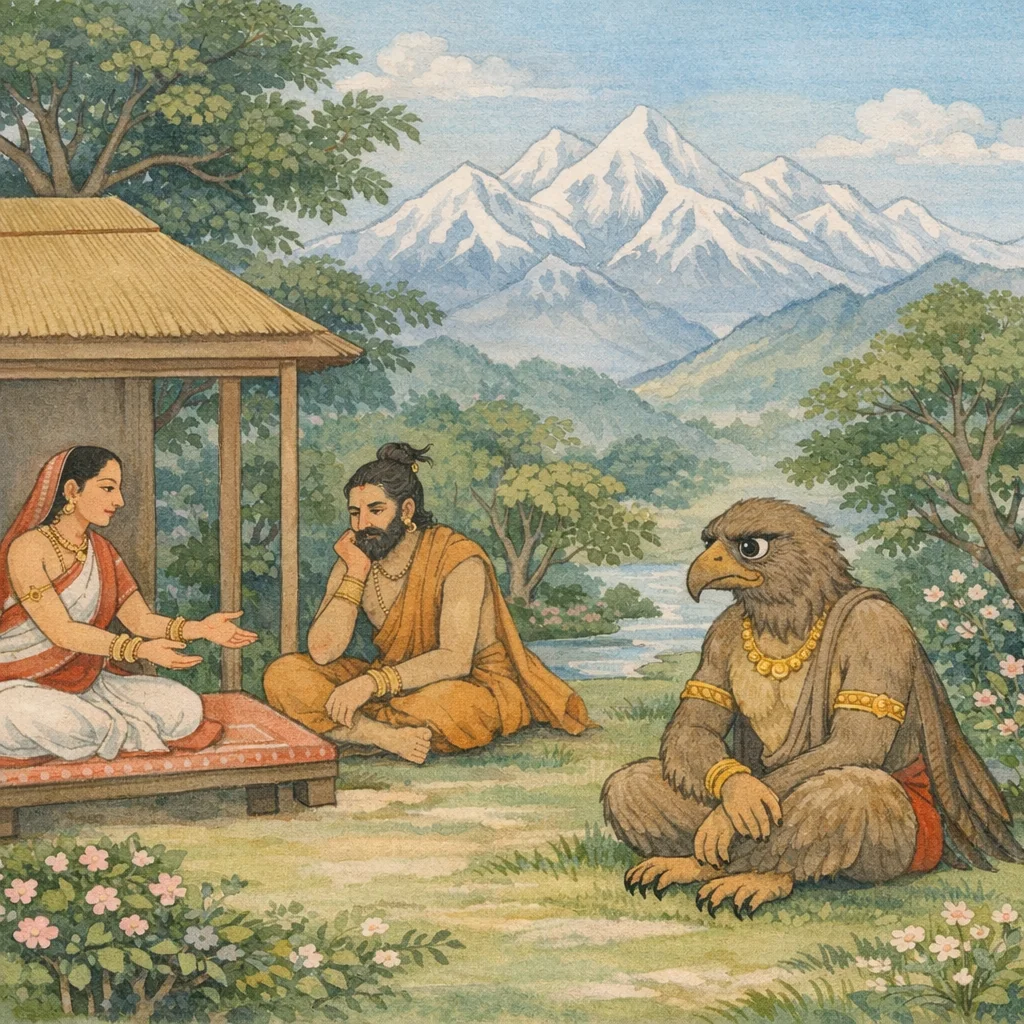
Chapter Arc: ऋषभ पर्वत के शिखर पर महर्षि गालव और सुपर्ण गरुड़ का तपस्विनी शाण्डिली से साक्षात्कार होता है—एक शांत आश्रम-क्षण, पर भीतर गुरुदक्षिणा का असह्य भार धधक रहा है। → शाण्डिली आदरपूर्वक दोनों का स्वागत कर आसन देती है; पर गालव की दृष्टि गरुड़ पर टिकते ही विचित्र दृश्य उभरता है—आकाशचारी खग ‘मुख और हाथों से युक्त’ होकर भी पंखहीन, मांसपिण्ड-सा प्रतीत होता है। यह असामान्यता गालव के मन में शंका और विषाद बढ़ाती है। → शाण्डिली गरुड़ को स्पष्ट आदेश देती है—‘पक्षिराज, अब तुम यहाँ से अपने अभीष्ट स्थान को जाओ’; साथ ही वह स्त्रियों की निन्दा-निषेध का वचन जोड़कर मर्यादा और करुणा की सीमा रेखा खींच देती है। उसी क्षण गालव की दीनता चरम पर पहुँचती है, और गरुड़ स्वयं विश्वामित्र के कथन की स्मृति के साथ गालव को परामर्श हेतु बुलाता है। → गरुड़ गालव से कहता है कि बिना गुरु को दिये (गुरुदक्षिणा चुकाये) लक्ष्य सिद्ध नहीं हो सकता; वह ‘आओ, मंत्रणा करें’ कहकर समाधान की दिशा खोल देता है, और गालव प्रतीक्षा/उपाय के लिए तैयार होता है। → गुरुदक्षिणा की पूर्ति का ठोस उपाय अभी प्रकट नहीं होता—गरुड़ और गालव की आगामी ‘मंत्रणा’ पर कथा टिकी रह जाती है।
Shlokas
Verse 1
ऑपन-- मा छा अकाल त्रयोदशाधिकशततमो< ध्याय: ऋषभ पर्वतके शिखरपर महर्षि गालव और गरुड़की तपस्विनी शाण्डिलीसे भेंट तथा गरुड़ और गालवका गुरुदक्षिणा चुकानेके विषयमें परस्पर विचार नारद उवाच ऋषभस्य तत: शूड्रं निपत्य द्विजपक्षिणौ । शाण्डिलीं ब्राह्मणीं तत्र ददूशाते तपो5न्विताम्,नारदजी कहते हैं--तदनन्तर गालव और गरुड़ने ऋषभ पर्वतके शिखरपर उतरकर वहाँ तपस्विनी शाण्डिली ब्राह्मणीको देखा
Narada said: Thereafter, Galava and Garuḍa descended upon the peak of Mount Ṛṣabha. There they beheld Śāṇḍilī, a Brahmin woman endowed with austerity.
Verse 2
अभिवाद्य सुपर्णस्तु गालवश्वाभिपूज्य ताम् । तया च स्वागतेनोक्तौ विष्टरे संनिषीदतु:
Having offered respectful salutations, Suparṇa (Garuḍa) duly honored her; and she, welcoming them, invited them to sit upon a prepared seat.
Verse 3
गरुड़ने उसे प्रणाम किया और गालवने उसका आदर-सम्मान किया। तदनन्तर उसने भी उन दोनोंका स्वागत करके उन्हें आसनपर बैठनेके लिये कहा। उसकी आज्ञा पाकर वे दोनों वहाँ आसनपर बैठ गये ।। सिद्धमन्नं तया दत्तं बलिमन्त्रोपबृंहितम् । भुक््त्वा तृप्तावुभौ भूमौ सुप्ती तावनुमोहितौ,तपस्विनीने उन्हें बलिवैश्वदेवसे बचा हुआ अभिमन्त्रित सिद्धान्न अर्पण किया। उसे खाकर वे दोनों तृप्त हो गये और भूमिपर ही सो गये। तत्पश्चात् निद्राने उन्हें अचेत कर दिया
Garuḍa bowed to her, and Gālava honored her with due respect. Then she welcomed them both and bade them sit upon the seat; at her word they sat there. The ascetic woman offered cooked food, sanctified with mantras—the remainder of her bali and vaiśvadeva offerings. Having eaten, both were satisfied and lay down upon the ground; soon sleep overcame them and they became insensible.
Verse 4
मुहूर्तात् प्रतिबुद्धस्तु सुपर्णो गमनेप्सया । अथ भ्रष्टतनूजाज्रमात्मानं ददृशे खग:,दो ही घड़ीके बाद मनमें वहाँसे जानेकी इच्छा लेकर गरुड़ जाग उठे। उठनेपर उन्होंने अपने शरीरको दोनों पंखोंसे रहित देखा
After a short while, Suparṇa (Garuḍa) awoke, seized by the desire to depart. On rising, the bird beheld himself bereft of his own wings.
Verse 5
मांसपिण्डोपमो5भूत् स मुखपादान्वित: खग: । गालवस्तं तथा दृष्टवा विमना: पर्यपृच्छत,आकाशचारी गरुड़ मुख और हाथोंसे युक्त होते हुए भी उन पंखोंके बिना मांसके लोंदे- से हो गये। उन्हें उस दशामें देखकर गालवका मन उदास हो गया और उन्होंने पूछा --
The bird—though furnished with a beak and feet—became like a mere lump of flesh, bereft of its wings. Seeing him in that condition, Gālava grew despondent and questioned him.
Verse 6
किमिदं भवता प्राप्तमिहागमनजं फलम् । वासो5यमिह काल तु कियन्तं नौ भविष्यति,“सखे! तुम्हें यहाँ आनेका यह क्या फल मिला? इस अवस्थामें हम दोनोंको यहाँ कितने समयतक रहना पड़ेगा?
“My friend, what outcome have you obtained by coming here? And in this condition, for how long must the two of us remain here?”
Verse 7
कि नु ते मनसा ध्यातमशुभं॑ धर्मदूषणम् | न हायं भवतः स्वल्पो व्यभिचारो भविष्यति,“तुमने अपने मनमें कौन-सा अशुभ चिन्तन किया है, जो धर्मको दूषित करनेवाला रहा है। मैं समझता हूँ, तुम्हारे द्वारा यहाँ कोई थोड़ा धर्मविरुद्ध कार्य नहीं हुआ होगा”
Nārada said: “What inauspicious thought have you been dwelling on in your mind—one that would tarnish dharma? This will not be a minor lapse on your part; it seems it is bound to become a serious transgression.”
Verse 8
सुपर्णो<थाब्रवीद् विप्रं प्रध्यातं वै मया द्विज । इमां सिद्धामितो नेतुं तत्र यत्र प्रजापति:,तब गरुड़ने विप्रवर गालवसे कहा--'ब्रह्मन! मैंने तो अपने मनमें यही सोचा था कि इस सिद्ध तपस्विनीको वहाँ पहुँचा दूँ, जहाँ प्रजापति ब्रह्मा हैं, जहाँ महादेवजी हैं, जहाँ सनातन भगवान् विष्णु हैं तथा जहाँ धर्म एवं यज्ञ है, वहीं इसे निवास करना चाहिये
Then Suparṇa (Garuḍa) said to the brāhmaṇa: “O twice-born, I have indeed resolved in my mind to carry this accomplished ascetic woman from here to that realm where Prajāpati (Brahmā) abides.”
Verse 9
यत्र देवो महादेवो यत्र विष्णु: सनातन: । यत्र धर्मश्न यज्ञश्न तत्रेयं निवसेदिति,तब गरुड़ने विप्रवर गालवसे कहा--'ब्रह्मन! मैंने तो अपने मनमें यही सोचा था कि इस सिद्ध तपस्विनीको वहाँ पहुँचा दूँ, जहाँ प्रजापति ब्रह्मा हैं, जहाँ महादेवजी हैं, जहाँ सनातन भगवान् विष्णु हैं तथा जहाँ धर्म एवं यज्ञ है, वहीं इसे निवास करना चाहिये
Nārada said: “Where the god Mahādeva is, where the eternal Viṣṇu is, and where Dharma and Sacrifice (Yajña) abide—there indeed should this woman reside.”
Verse 10
सो<हं भगवती याचे प्रणत: प्रियकाम्यया । मयैतन्नाम प्रध्यातं मनसा शोचता किल,“अतः मैं भगवती शाण्डिलीके चरणोंमें पड़कर यह प्रार्थना करता हूँ कि मैंने अपने चिन्तनशील मनके द्वारा आपका प्रिय करनेकी इच्छासे ही यह बात सोची है
Nārada said: “Therefore I, bowing down, entreat the revered goddess, moved by the wish to please her. Indeed, with a mind burdened by sorrow, I had contemplated this very matter (and her name) within myself.”
Verse 11
तदेवं बहुमानात् ते मयेहानीप्सितं कृतम् सुकृतं दुष्कृतं वा त्वं माहात्म्यात् क्षन्तुमहसि,“आपके प्रति विशेष आदरका भाव होनेसे ही मैंने इस स्थानपर ऐसा चिन्तन किया है, जो सम्भवत: आपको अभीष्ट नहीं रहा है। मेरे द्वारा यह पुण्य हुआ हो या पाप, अपने ही माहात्म्यसे आप मेरे इस अपराधको क्षमा कर दें”
Nārada said: “Thus, out of deep respect for you, I have done something here that may not have been pleasing to you. Whether what I have done turns out to be merit or fault, you should, by the greatness of your own nature, forgive me.”
Verse 12
सा तौ तदाब्रवीत् तुष्टा पतगेन्द्रद्धिजर्षभौ । न भेतव्यं सुपर्णोडसि सुपर्ण त्यज सम्भ्रमम्,यह सुनकर तपस्विनी बहुत संतुष्ट हुई। उसने उस समय पक्षिराज गरुड़ और विप्रवर गालवसे कहा--'सुपर्ण! तुम्हारे पंख और भी सुन्दर हो जायाँगे; अतः तुम्हें भयभीत नहीं होना चाहिये। तुम घबराहट छोड़ो
Pleased at heart, the ascetic woman then addressed the two—Garuda, lord of birds, and the foremost of Brahmins (Galava): “Do not be afraid. You are Suparna; O Suparna, cast off your agitation.”
Verse 13
निन्दितास्मि त्वया वत्स न च निन्दां क्षमाम्यहम् । लोकेभ्य: सपदि भ्रश्येद् यो मां निन्देत पापकृत्,“वत्स! तुमने मेरी निन््दा की है, मैं निन्दा नहीं सहन करती हूँ। जो पापी मेरी निन्दा करेगा, वह पुण्यलोकोंसे तत्काल भ्रष्ट हो जायगा
Nārada said: “Child, you have spoken in blame of me, and I do not tolerate such disparagement. Whoever, being sinful, reviles me will at once fall away from the worlds of merit.”
Verse 14
हीनयालक्षणै: सर्वेस्तथानिन्दितया मया । आचार प्रतिगृह्नन्त्या सिद्धि: प्राप्तेयमुत्तमा,“समस्त अशुभ लक्षणोंसे हीन और अनिन्दित रहकर सदाचारका पालन करते हुए ही मैंने यह उत्तम सिद्धि प्राप्त की है
Narada said: “Free from every inauspicious mark, and living in a manner beyond reproach, I embraced right conduct; by accepting and upholding such disciplined virtue, I attained this highest spiritual accomplishment.”
Verse 15
आचार: फलते धर्ममाचार: फलते धनम् । आचाराच्छियमाप्रोति आचारो हन्त्यलक्षणम्,“आचार ही धर्मको सफल बनाता है, आचार ही धनरूपी फल देता है, आचारसे मनुष्यको सम्पत्ति प्राप्त होती है और आचार ही अशुभ लक्षणोंका भी नाश कर देता है
Nārada said: “Right conduct is what makes dharma bear fruit; right conduct is what yields wealth as its result. Through conduct a person attains prosperity, and conduct also destroys inauspicious marks and misfortune.”
Verse 16
तदायुष्मन् खगपते यथेष्टं गम्पतामित: । न च ते गर्हणीयाहं गर्हितव्या: स्त्रियः क्वचित्,“अतः आयुष्मन् पक्षिराज! अब तुम यहाँसे अपने अभीष्ट स्थानको जाओ। आजसे तुम्हें मेरी निन्दा नहीं करनी चाहिये। मेरी ही क्यों, कहीं किसी भी स्त्रीकी निन््दा करनी उचित नहीं है
Narada said: “Therefore, O long-lived lord of birds, go from here to whatever place you desire. And you should not censure me; indeed, it is never proper to censure any woman at any time.”
Verse 17
भवितासि यथापूर्व बलवीर्यसमन्वित: । बभूवतुस्ततस्तस्य पक्षौ द्रविणवत्तरी,“अब तुम पहलेकी ही भाँति बल और पराक्रमसे सम्पन्न हो जाओगे।” शाण्डिलीके इतना कहते ही गरुड़की पाँखें पहलेसे भी अधिक शक्तिशाली हो गयीं
Nārada said: “You will become, as before, endowed with strength and heroic power.” When Śāṇḍilī had spoken thus, Garuḍa’s wings grew even more vigorous and mighty than earlier—signaling the restoration of his innate power through a truthful, beneficent utterance and the efficacy of a sage’s blessing.
Verse 18
अनुज्ञातस्तु शाण्डिल्या यथागतमुपागमत् | नैव चासादयामास तथारूपांस्तुरंगमान्,तत्पश्चात् शाण्डिलीकी आज्ञा ले वे जैसे आये थे, वैसे ही चले गये। वे गालवके बताये अनुसार श्यामकर्ण घोड़े नहीं पा सके
Having received Śāṇḍilī’s permission, he departed exactly as he had come. Yet he could not obtain horses of the required kind; thus, the sought-after dark-eared steeds described by Gālava were not found.
Verse 19
विश्वामित्रो5थ तं दृष्टवा गालवं चाध्वनि स्थित: । उवाच वदतां श्रेष्ठो वैनतेयस्य संनिधौ,इधर गालवको राहमें आते देख वक्ताओंमें श्रेष्ठ विश्वामित्रजी खड़े हो गये और गरुड़के समीप उनसे इस प्रकार बोले--
Then Viśvāmitra, seeing Gālava on the road, stood there and—being foremost among speakers—addressed him in the very presence of Vainateya (Garuḍa).
Verse 20
यस्त्वया स्वयमेवार्थ: प्रतिज्ञातो मम द्विज । तस्य कालो<पवर्गस्य यथा वा मन्यते भवान्,“ब्रह्मन! तुमने स्वयं ही जिस धनको देनेकी प्रतिज्ञा की थी, उसे देनेका समय आ गया है। फिर तुम जैसा ठीक समझो, करो
“O Brahmin, the gift you yourself promised me has now reached its due time. Therefore, act as you deem proper—fulfil what was pledged in the manner you judge right.”
Verse 21
प्रतीक्षिष्याम्यहं कालमेतावन्तं तथा परम् । यथा संसिध्यते विप्र स मार्गस्तु निशाम्यताम्,मैं इतने ही समयतक और तुम्हारी प्रतीक्षा करूँगा। ब्रह्म! जिस प्रकार तुम्हें सफलता मिल सके, उस मार्गका विचार करो”
Nārada said: “I shall wait for just this much time—and no more. O brāhmaṇa, consider carefully the course by which your purpose may be successfully accomplished.”
Verse 22
सुपर्णो5थाब्रवीद् दीनं गालवं भृशदु:खितम् । प्रत्यक्ष खल्चिदानीं मे विश्वामित्रो यदुक्तवान्,तदनन्तर दीन और अत्यन्त दुःखी हुए गालव मुनिसे गरुड़ने कहा--'द्विजश्रेष्ठ गालव! विश्वामित्रजीने मेरे सामने जो कुछ कहा है, आओ, उसके विषयमें हम दोनों सलाह करें। तुम्हें अपने गुरुको उनका सारा धन चुकाये बिना चुप नहीं बैठना चाहिये”
Narada said: Then Suparna (Garuda) spoke to Galava, who was dejected and overwhelmed with sorrow: “What Visvamitra said to me directly has now become clear. Come—let us consult together about it. O best of the twice-born, you should not sit at ease until you have fully paid your teacher what is due.”
Verse 23
तदागच्छ द्विजश्रेष्ठ मन्त्रयिष्याव गालव । नादत्त्वा गुरवे शक्यं कृत्स्नमर्थ त्वया55सितुम्,तदनन्तर दीन और अत्यन्त दुःखी हुए गालव मुनिसे गरुड़ने कहा--'द्विजश्रेष्ठ गालव! विश्वामित्रजीने मेरे सामने जो कुछ कहा है, आओ, उसके विषयमें हम दोनों सलाह करें। तुम्हें अपने गुरुको उनका सारा धन चुकाये बिना चुप नहीं बैठना चाहिये”
Narada said: “Come then, best of the twice-born, O Galava; let us deliberate together. Without first giving to your teacher, it is not possible for you to find peace while the whole of that demanded wealth remains unpaid.”
Verse 112
इस प्रकार श्रीमहाभारत उद्योगपर्वके अन्तर्गत भगवद्यानपर्वमें गालवचरित्रविषयक एक सौ बारहवाँ अध्याय पूरा हुआ
Thus concludes the one hundred and twelfth chapter, dealing with the story of Galava, within the Bhagavad-yana section of the Udyoga Parva of the Sri Mahabharata.
Verse 113
इति श्रीमहाभारते उद्योगपर्वणि भगवद्यानपर्वणि गालवचरिते त्रयोदशाधिकशततमो< ध्याय:,इस प्रकार श्रीमहाभारत उद्योगपर्वके अन्तर्गत भगवद्यानपर्वमें गालवचरित्रविषयक एक सौ तेरहवाँ अध्याय पूरा हुआ
Thus, in the Sri Mahabharata, within the Udyoga Parva—specifically in the Bhagavad-yana section—the one hundred and thirteenth chapter, dealing with the narrative of Galava, comes to a close.
Frequently Asked Questions
Gālava faces the conflict between the binding duty to fulfill a guru’s requested gurudakṣiṇā and the practical impossibility of acquiring the specified horses without wealth, forcing reliance on ethically acceptable patronage rather than coercion or illegitimate means.
Wealth is framed as meaningful when it sustains (dhāraṇa) and circulates through rightful giving; the chapter stresses that the moral quality of acquisition and transfer depends on pātratā—fitness of both recipient and donor.
No formal phalaśruti is stated here; the meta-level emphasis is ethical instrumentation—how correct giving, receiving, and fulfilling obligations function as stabilizing practices within dharma rather than as a direct mokṣa-claim.