Adhyaya 108
Adhyāya 108: Paścima-dik—Varuṇa’s Realm, Sunset Cosmology, and Sacred-Geographic Markers (Suparṇa–Gālava संवाद)
Upa-parva: Tīrtha–Digvarṇana (Paścima-dik) — Suparṇa’s Directional Discourse to Gālava
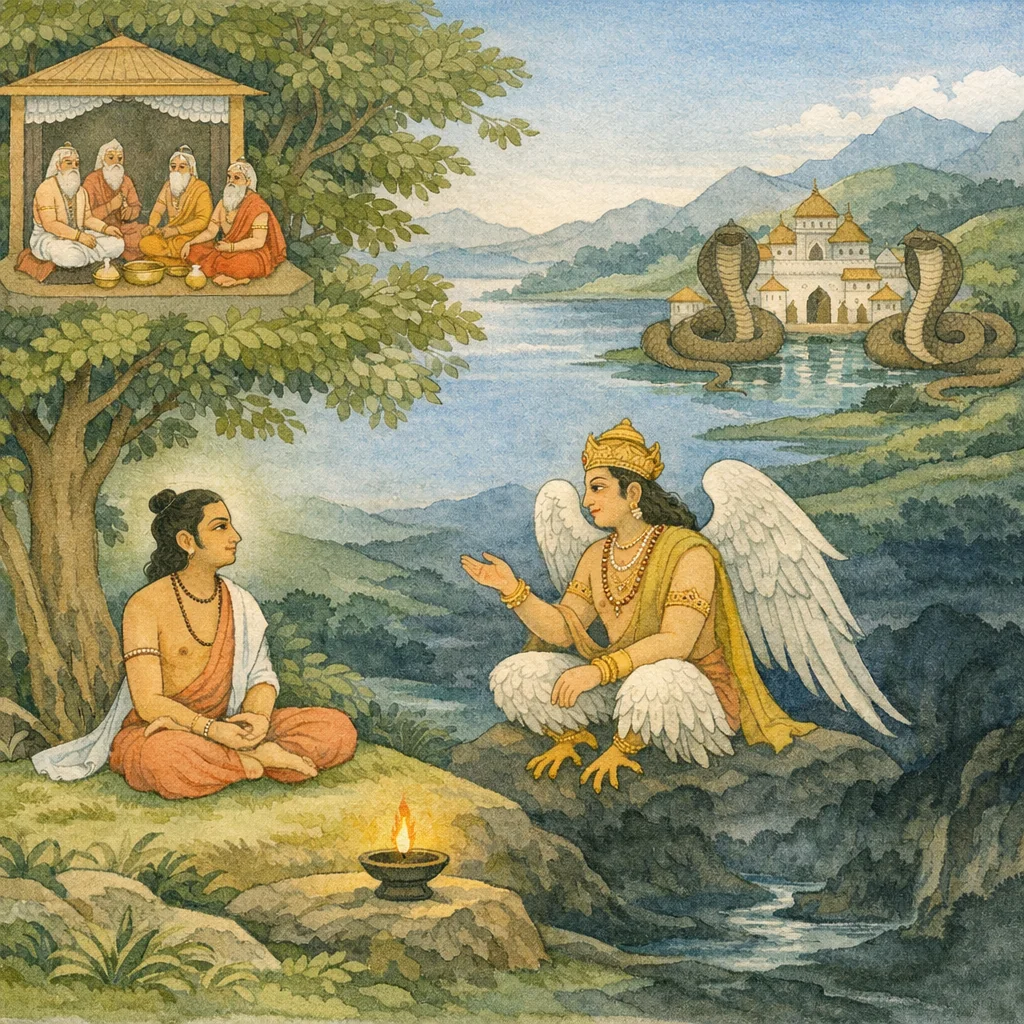
Suparṇa describes the western direction as a theologically governed space associated with Varuṇa, guardian of waters, presenting it as a ‘digdvāra’ (directional portal). The account ties observable phenomena—sunset, twilight (sandhyā), the emergence of night and sleep—to mythic causation and divine administration. It notes Varuṇa’s consecration by Kaśyapa, references Soma’s emergence after imbibing Varuṇa’s ‘rasas,’ and situates episodes involving Daityas, Vāyu, and Nāgas in the west. Mythic events are layered onto geography: Indra’s act affecting Diti and the origin of the Marut hosts; the immeasurable rootward extent of Himavat toward Mandara; Surabhī’s milk at the ocean’s shore; and oceanic marvels including Svarbhānu’s ‘kabandha’ threatening Soma and Sūrya. Auditory signs of an unseen, immeasurable presence are mentioned, along with Dhvajavatī stationed in the sky by the Sun’s command. The chapter concludes with a cosmological claim about the Sun’s laterally turning course, the periodic ingress of luminaries into the solar orb, and the west as a locus for Varuṇa-supported waters across the three worlds, including Ananta’s abode and Viṣṇu’s supreme station, before Suparṇa asks Gālava to decide their onward course.
Chapter Arc: गरुड़ गालव से कहते हैं कि यह ‘दक्षिण’ दिशा यूँ ही नहीं कहलाती—पूर्वकाल में विवस्वान् (सूर्य) ने वेदोक्त विधि से यज्ञ कर आचार्य कश्यप को दक्षिणा-रूप में इस दिशा का दान किया था। → दक्षिण दिशा का रहस्य गहराता जाता है: यहाँ पितरों के साथ विश्वेदेवों का निवास, मृत्यु के बाद सभी प्राणियों का इसी दिशा की ओर प्रवाह, और ऐसे प्रसंग जिनसे देव-दानव वैर, नागलोक की सुरक्षा, तथा पुण्य-पाप के परिणामों का भूगोल जुड़ता है। → मृत्योत्तर-मार्ग का भयावह सत्य उद्घाटित होता है—इस दिशा में जाने वाले प्राणी को घोर अन्धकार का सामना करना पड़ता है, ऐसा तम जो भास्कर (सूर्य) के लिए भी अभेद्य-सा कहा गया है; अज्ञान से घिरी यह दिशा ‘सुख-गम्य’ नहीं रहती। → गरुड़ दक्षिण दिशा को केवल भय का प्रदेश नहीं रहने देते—वे वहाँ के देव-पितृ-लोक, नागपुरी भोगवती, और सिद्ध-ब्राह्मणों/तपस्वियों (जैसे ‘शिव’ नाम से प्रसिद्ध सिद्ध) के मोक्ष-प्राप्ति प्रसंगों से बताते हैं कि यह दिशा कर्मफल, तप, और ज्ञान—तीनों का संगम-स्थल है। → गालव के सामने प्रश्न शेष रह जाता है: यदि दक्षिण दिशा मृत्यु का मार्ग है और तमस से ढकी है, तो कौन-सा ज्ञान/धर्म-आचरण उस अन्धकार को पार कर मोक्ष का द्वार खोलता है?
Shlokas
Verse 1
ऑपनआ कराता बछ। अर: 2 नवाधिकशततमो<्ध्याय: दक्षिणदिशाका वर्णन युपर्ण उवाच इयं विवस्वता पूर्व श्रेतेन विधिना किल । गुरवे दक्षिणा दत्ता दक्षिणेत्युच्यते च दिक्
Yuparṇa said: “In former times, it is said, this quarter was given by Vivasvat to his teacher as the prescribed dakṣiṇā, according to the established rite. Therefore it is called the ‘Southern’ direction (dakṣiṇā), for it was a dakṣiṇā—a sacred teacher’s fee.”
Verse 2
गरुड़ कहते हैं--गालव! यह प्रसिद्ध है कि पूर्वकालमें भगवान् सूर्यने वेदोक्त विधिके अनुसार यज्ञ करके आचार्य कश्यपको दक्षिणारूपसे इस दिशाका दान किया था, इसीलिये इसे दक्षिण दिशा कहते हैं ।। अत्र लोकत्रयस्यास्य पितृपक्ष: प्रतिष्ठित: । अत्रोष्मपाणां देवानां निवास: श्रूयते द्विज,ब्रह्म! तीनों लोकोंके पितृगण इसी दिशामें प्रतिष्ठित हैं तथा “ऊष्मप” नामक देवताओंका निवास भी इसी दिशामें सुना जाता है
Garuḍa said: “Gālava, it is well known that in ancient times the blessed Sun, having performed a sacrifice according to Vedic ordinance, granted this quarter to the teacher Kaśyapa as dakṣiṇā; therefore it is called the Southern direction. Here the ancestral hosts of the three worlds are established, and here too—O Brahmin—dwells, as tradition reports, the class of deities known as the Uṣmapas.”
Verse 3
अत्र विश्वे सदा देवा: पितृभि: सार्थमासते । इज्यमाना: सम लोकेषु सम्प्राप्तास्तुल्यभागताम्,पितरोंके साथ विश्वेदेवगण सदा दक्षिण दिशामें ही वास करते हैं। वे समस्त लोकोंमें पूजित हो श्राद्धमें पितरोंके समान ही भाग प्राप्त करते हैं
Here, the Viśvedevas ever abide together with the Pitṛs. Being duly worshipped across the worlds, they attain an equal share—receiving in the śrāddha offerings the same portion as the ancestral Fathers.
Verse 4
एतद द्वितीयं देवस्य द्वारमाचक्षते द्विज । त्रुटिशो लवशश्लापि गण्यते कालनिश्चय:,विप्रवर! विद्वान् पुरुष इस दक्षिण दिशाको धर्म-देवताका दूसरा द्वार कहते हैं। यहीं (चित्रगुप्त आदिके द्वारा) 'त्रुटि' और “लव” आदि सूक्ष्म-से-सूक्ष्म कालांशों-पर दृष्टि रखते हुए प्राणियोंकी आयुकी निश्चित गणना की जाती है
Yuparṇa said: “O twice-born one, the learned describe this as the deity’s second gate. Here, with attention even to the tiniest measures of time—such as a truṭi and a lava—the fixed reckoning of time is made.”
Verse 5
अत्र देवर्षयो नित्यं पितृलोकर्षयस्तथा । तथा राजर्षय: सर्वे निवसन्ति गतव्यथा:,देवर्षि, पितृलोकके ऋषि तथा समस्त राजर्षिगण दुःखरहित हो सदा इसी दिशामें निवास करते हैं
In this region dwell, ever and without interruption, the divine seers, the seers of the world of the Pitṛs, and likewise all the royal sages—abiding here free from sorrow and affliction.
Verse 6
अत्र धर्मश्न सत्यं च कर्म चात्र निगद्यते | गतिरेषा द्विजश्रेष्ठ कर्मणामवसायिनाम्,द्विजश्रेष्ठ! इसी दिशामें (रहकर चित्रगुप्त आदिके द्वारा धर्मराजके निकट प्राणियोंके) धर्म, सत्य तथा साधारण कर्मोंके विषयमें कहा जाता है। मृत प्राणी तथा उनके कर्म इसी दिशाका आश्रय लेते हैं
Here, O best of Brahmins, Dharma and Truth are spoken of, and deeds too are accounted for here. This is the destined course for embodied beings at the end of their actions—this is the direction to which the dead and their deeds resort, where they are reported before the Lord of Dharma.
Verse 7
एषा दिक् सा द्विजश्रेष्ठ यां सर्व: प्रतिपद्यते । वृता त्वनवबोधेन सुखं तेन न गम्यते,विप्रवर! यह वह दिशा है, जिसमें मृत्युके पश्चात् सभी प्राणियोंको जाना पड़ता है। यह सदा अज्ञानान्धकारसे आवृत रहती है, इसलिये इसमें सुखपूर्वक यात्रा सम्भव नहीं हो पाती है
Yuparṇa said: “O best of twice-born ones, this is that direction—the path to which all beings must proceed after death. Yet it is veiled by lack of true understanding; therefore one cannot travel it with ease or happiness.”
Verse 8
नै#तानां सहस््राणि बहुन्यत्र द्विजर्षभ । सृष्टानि प्रतिकूलानि द्रष्टव्यान्यकृतात्मभि:,द्विजश्रेष्ठ! ब्रह्माजीने इस दिशामें प्रतिकूल स्वभाव एवं आचरणवाले सहसों राक्षसोंकी सृष्टि की है, जिनका दर्शन अशुद्ध अन्तःकरणवाले पुरुषोंको ही होता है
“O bull among Brahmins, here countless thousands have been created—beings of hostile disposition and contrary conduct. Such sights are perceived only by those whose inner self is unpurified and undisciplined.”
Verse 9
अत्र मन्दरकुग्जेषु विप्रर्षिसदनेषु च । गायन्ति गाथा गन्धर्वक्षित्तबुद्धिहरा द्विज,ब्रह्म! इसी दिशामें गन्धर्वगण मन्दराचलके कुंजों और ब्रह्मर्षियोंके आश्रमोंमें मन और बुद्धिको आकर्षित करनेवाली गाथाओंका गान करते हैं
“Here, O brahmin, in the groves of Mandara and in the hermitages of the brahmin seers, the Gandharvas sing enchanting ballads—songs that captivate and carry away the mind and understanding.”
Verse 10
अत्र सामानि गाथाभि: श्र॒ुत्वा गीतानि रैवत: । गतदारो गतामात्यो गतराज्यो वनं गत:,पूर्वकालमें यहीं राजा रैवत गाथाओंके रूपमें सामगान सुनते-सुनते अपनी स्त्री, मन्त्री तथा राज्यसे भी वियुक्त हो वनमें चले गये थे”
Here is an old account: King Raivata, having listened to Sāman-chants sung in the form of narrative verses, became so detached that he abandoned wife, ministers, and kingdom, and departed for the forest.
Verse 11
अत्र सावर्णिना चैव यवक्रीतात्मजेन च । मर्यादा स्थापिता ब्रह्मन् यां सूर्यो नातिवर्तते
Here, O Brahmin, Sāvarṇi—and also the son of Yavakrīta—established a binding boundary of right conduct, so firm that even the Sun does not overstep it.
Verse 12
ब्रह्म! इस दिशामें सावर्णि मनु तथा यवक्रीतके पुत्रने सूर्यकी गतिके लिये मर्यादा (सीमा) स्थापित की थी, जिसका सूर्यदेव कभी उल्लंघन नहीं करते हैं ।। अत्र राक्षसराजेन पौलस्त्येन महात्मना । रावणेन तपश्नीर्त्वा सुरेभ्योडमरता वृता,पुलस्त्यवंशी राक्षसराज महामना रावणने इसी दिशामें तपस्या करके देवताओंसे अवध्य होनेका वरदान प्राप्त किया था
Yūparṇa said: “O Brahmin! In this very quarter, Sāvarṇi Manu—and also the son of Yavakrīta—once set a fixed boundary for the Sun’s course, a limit the Sun-god never transgresses. Here too the great-souled Rākṣasa king Rāvaṇa, descendant of Pulastya, performed austerities and obtained from the gods the boon of immortality (or invulnerability).”
Verse 13
अत्र वृत्तेन वृत्रो5पि शक्रशत्र॒ुत्वमीयिवान् | अत्र सर्वासव: प्राप्ता: पुनर्गच्छन्ति पडचधा,इसी दिशामें घटित हुई घटनाके कारण वृत्रासुर देवराज इन्द्रका शत्रु बन बैठा था। दक्षिण दिशामें ही आकर सबके प्राण पुनः (प्राण-अपान आदिके भेदसे) पाँच भागोंमें बँट जाते हैं (अर्थात् प्राणी नूतन देह धारण करते हैं)
By what occurred here, even Vṛtra came to be the enemy of Śakra (Indra). Here, too, all vital forces, once they arrive, again proceed divided fivefold—the five prāṇas—and beings take up a fresh embodiment according to their karmic course.
Verse 14
अत्र दुष्कृतकर्माणो नरा: पच्यन्ति गालव । अत्र वैतरणी नाम नदी वितरणैर्वृता,गालव! इसी दिशामें पापाचारी मनुष्य नरकोंकी आगमें पकाये जाते हैं। दक्षिणमें ही वह वैतरणी नदी है, जो वैतरणी नरकके अधिकारी पापियोंसे घिरी रहती है
Here, O Gālava, men who have committed evil deeds are cooked in torment. Here too is the river named Vaitaraṇī, hemmed in by the sinners destined for that hell, forming a fearful boundary of retribution.
Verse 15
अत्र गत्वा सुखस्यान्तं दुःखस्यान्तं प्रपद्यते अन्रावृत्तो दिनकर: सुरसं क्षरते पय:
“Having gone to this place, one reaches the end of pleasure and the end of pain. There the Sun, unobstructed in his course, causes sweet-tasting milk to flow.”
Verse 16
अत्राहं गालव पुरा क्षुधार्त: परिचिन्तयन्
Here, O Gālava, long ago, when I was tormented by hunger, I stood reflecting deeply—seeking a course of action that would be right and effective amid distress.
Verse 17
अत्र चक्रधनुर्नाम सूर्याज्जातो महानृषि:
Here, too, there was a great sage named Cakradhanu, born of the Sun. The narration invokes a solar-born seer to ground the ensuing account in sacred lineage and moral authority, suggesting that the counsel or precedent being cited is not merely worldly strategy but sanctioned by venerable tradition.
Verse 18
अत्र सिद्धा: शिवा नाम ब्राह्मणा वेदपारगा:
“Here are accomplished Brahmins, known by the name ‘Śivā’, who have crossed to the far shore of the Vedas.”
Verse 19
अत्र भोगवती नाम पुरी वासुकिपालिता
Here is a city called Bhogavatī, protected and ruled by Vāsuki. The line situates the listener within the sacred geography of the epic, pointing to a realm under nāga guardianship—an implicit reminder that power and prosperity are sustained by vigilant protection and rightful stewardship.
Verse 20
तक्षकेण च नागेन तथैवैरावतेन च । दक्षिणमें ही वासुकिद्वारा पालित तथा तक्षक एवं ऐरावत नागद्वारा सुरक्षित भोगवती नामक पुरी है ।। अत्र निर्याणकालेडपि तम: सम्प्राप्पते महत्
Yuparṇa said: “In the southern region lies the city called Bhogavatī. It is guarded at Vāsuki’s gate, and likewise protected by the serpent Takṣaka and by Airāvata. Even when one departs from there, a great darkness is encountered.”
Verse 21
एष तस्यापि ते मार्ग: परिचार्यस्य गालव । ब्रृूहि मे यदि गन्तव्यं प्रतीचीं शूणु चापराम्,गालव! तुम मेरे द्वारा परिचर्या पाने (सेवा ग्रहण करने)-के योग्य हो, अतः तुम्हें यह दक्षिण मार्ग बताया है; यदि इस दिशामें चलना हो तो मुझसे कहो अथवा अब तीसरी पश्चिम दिशाका वर्णन सुनो
O Gālava! This too is your path, fit for one whose service may be accepted. Therefore I have shown you the southern road; if you would travel in that direction, tell me. Otherwise, hear now the account of the third quarter—the West.
Verse 109
इति श्रीमहाभारते उद्योगपर्वणि भगवद्यानपर्वणि गालवचरिते नवाधिकशततमोड<ध्याय:
Thus ends the one-hundred-and-ninth chapter in the Udyoga Parva of the Śrī Mahābhārata—within the section concerning the Lord’s embassy (Bhagavad-yāna), in the episode narrating Gālava’s story. This colophon marks the formal close of the chapter, setting the tale within the ethical frame of counsel, duty (dharma), and the quest for a rightful resolution before war.
Verse 156
काष्छां चासाद्य वासिष्ठीं हिममुत्सूजते पुनः । मनुष्य इसी दिशामें जाकर सुख और दुःखके अन्तको प्राप्त होता है। इसी दक्षिण दिशामें लौटनेपर (अर्थात् उत्तरायणके अन्तिम भागमें पहुँचकर दक्षिणायनके आरम्भमें आनेपर जब कि वर्षा ऋतु रहती है,) सूर्यदेव सुस्वादु जलकी वर्षा करते हैं। फिर वसिष्ठ मुनिके द्वारा सेवित उत्तर दिशामें पहुँचकर (अर्थात् उत्तरायणके प्रारम्भमें जब कि शिशिर ऋतु रहती है,) वे ओले गिराते हैं
Yūparṇa said: “Reaching the Vāsiṣṭhī quarter, one releases snow again. A person who goes in this direction attains the end of pleasure and pain. When the Sun turns back along this southern course—at the close of Uttarāyaṇa and the beginning of Dakṣiṇāyaṇa, when the rainy season prevails—Sūrya sends down a shower of sweet, pleasant water. Then, reaching the northern quarter honored by the sage Vasiṣṭha—at the start of Uttarāyaṇa, when the cold season sets in—he causes hailstones to fall.”
Verse 166
लब्धवान् युध्यमानौ द्वौ बृहन्तौ गजकच्छपौ । गालव! पूर्वकालकी बात है, मैं भूखसे पीड़ित होकर भारी चिन्तामें पड़ गया था, परंतु इसी दिशामें आनेपर दो विशाल प्राणी--हाथी और कछुआ मेरे हाथ लग गये, जो आपसमें लड़ रहे थे
Yūparṇa said: “Gālava, this happened long ago. Tormented by hunger, I fell into grave anxiety; but when I came in this direction, two enormous creatures came into my grasp—an elephant and a tortoise—who were fighting each other.”
Verse 176
विदुर्य कपिल देवं येनार्ता: सगरात्मजा: । सूर्यके समान तेजस्वी महर्षि कर्दमसे उत्पन्न हुए “चक्रधनु” नामक महर्षि इसी दिशामें रहते थे, जिन्हें सब लोग “कपिलदेव”के नामसे जानते हैं। उन्होंने ही सगरके पुत्रोंको भस्म कर दिया था
Yūparṇa said: “Vidura, in this very direction dwells the divine sage Kapila—radiant like the Sun—born of the great seer Kardama, also known as the rishi named Cakradhanu. All people know him as ‘Kapiladeva’. It was he who reduced the distressed sons of Sagara to ashes.”
Verse 186
अधीत्य सकलान् वेदाल्लेभिरे मोक्षमक्षयम् । इसी दिशामें “शिव” नामसे प्रसिद्ध कुछ सिद्ध ब्राह्मण रहते थे, जो वेदोंके पारंगत पण्डित थे। उन्होंने सम्पूर्ण वेदोंका अध्ययन करके (तत्त्वज्ञानद्वारा) अक्षय मोक्ष प्राप्त कर लिया
Having studied all the Vedas, they attained imperishable liberation. In that very region lived certain accomplished Brahmin sages, renowned by the name “Śiva,” masters of Vedic learning; through complete Vedic study culminating in true knowledge of reality, they reached the undecaying state of mokṣa.
Verse 206
अभेद्यं भास्करेणापि स्वयं वा कृष्णवर्त्मना । मृत्युके पश्चात् इस दिशामें जानेवाले प्राणीको ऐसे घोर अन्धकारका सामना करना पड़ता है, जो साक्षात् अग्नि एवं सूर्यके लिये भी अभेद्य है
Yuparṇa said: “After death, a being who goes in this direction must confront a dreadful darkness—so impenetrable that even fire and the sun cannot pierce it. It is a realm where ordinary sources of light and guidance fail, warning that the soul’s post-mortem course is shaped by its deeds and choices.”
Frequently Asked Questions
The implied dilemma is epistemic rather than juridical: whether reality should be read primarily through empirical observation (sunset, nightfall) or through mythic-theological causation (deities and consecrations), with the chapter modeling an integrated interpretive method.
Orientation precedes action: one should situate decisions within a coherent map of time (day/night cycles), domain authority (Varuṇa and other devas), and remembered precedent (mythic events), thereby aligning conduct with cosmic order.
No explicit phalaśruti is present in the supplied verses; the chapter’s closing functions as pragmatic meta-commentary by returning from cosmography to agency—Suparṇa asks Gālava to state the plan of travel/action after the western ‘digdvāra’ has been defined.