Adhyaya 105
गालवस्य विषादः तथा विष्णुप्रयाणम् (Gālava’s Despair and Resolve to Seek Viṣṇu)
Upa-parva: Galavopākhyāna (Episode of Gālava: vow, debt, and recourse to Viṣṇu)
Nārada reports that, after being addressed by the wise Viśvāmitra, Gālava enters an extreme ascetic-like paralysis: he neither sits nor sleeps nor eats, becoming emaciated and consumed by anxiety and grief (1–2). He verbalizes a cascading logic of deprivation—without resources, how can he sustain friendships, accumulate wealth, or obtain the demanded steeds—culminating in the collapse of faith in food, comfort, and even life itself (3–5). He frames indebtedness and unfulfilled obligation as intrinsically joyless, and judges death preferable to living after consuming friends’ resources without the capacity to reciprocate (6–7). He then articulates a moral doctrine: failure to carry out a promised duty burns one with falsehood and destroys the merit of iṣṭa and pūrta; untruth yields no ‘form,’ no continuity, no sovereignty, and no auspicious end; ingratitude is socially untrustworthy and lacks expiation (8–10). He internalizes these charges—calling himself sinful, ungrateful, miserly, and untruthful for not accomplishing his guru’s task—and resolves to relinquish life after a final effort (11–12). The chapter pivots as he notes he has never petitioned the gods, yet is honored among them, and therefore chooses to approach Viṣṇu/Kṛṣṇa, the supreme refuge and imperishable yogin, seeking direct audience (13–15). In response, Garuḍa—his friend—appears, affirms mutual friendship and capability, and offers to carry Gālava swiftly even beyond the earth, indicating practical aid aligned with the renewed ethical purpose (16–19).
Chapter Arc: जनमेजय का प्रश्न उठता है—दुर्योधन जैसा अनर्थकारी, जो स्वजनों के दुःख और शत्रुओं के हर्ष का कारण बनता है, उसे उसके बन्धु, सुहृद या पितामह भी क्यों नहीं रोक पाते? → वैशम्पायन उत्तर के लिए ‘पुरातन इतिहास’ का उदाहरण खोलते हैं: गालव का हठ और दुराग्रह। धर्म स्वयं (सप्तर्षि-वेष में) कौशिक-आश्रम में पहुँचते हैं, जहाँ विश्वामित्र की तपस्या-प्रतिष्ठा और आश्रम-धर्म की कसौटी बनती है। → गालव की सेवा से प्रसन्न विश्वामित्र बार-बार उसे विदा करते हैं, पर गालव का निर्बन्ध बढ़ता जाता है; अंततः विश्वामित्र का संयम टूटता है और वे क्रोध में अत्यन्त कठिन दान/दक्षिणा का आदेश देते हैं—चन्द्रवर्चस, श्यामकर्ण अश्वों की ‘आठ सौ’ संख्या का कठोर आग्रह। → आख्यान यह स्थापित करता है कि हठ से पराजय और संकट जन्म लेते हैं—गालव का आग्रह गुरु को भी क्रोध तक ले जाता है और असम्भव-सा भार उसके सिर पर रख देता है; इसी से दुर्योधन के ‘विमार्ग’ पर अड़े रहने की मनोवृत्ति का कारण-रूपक स्पष्ट होता है। → गालव अब उस असाध्य-सी आज्ञा को कैसे पूरा करेगा—किससे, कहाँ से, और किस मूल्य पर—यह प्रश्न अगले अध्यायों के लिए द्वार खोल देता है।
Shlokas
Verse 1
इस प्रकार श्रीमहाभारत उद्योगपर्वके अन्तर्गत भगवद्यानपर्वमें मातलिके द्वारा वरका खोजविषयक एक सौ पॉचवाँ अध्याय पूरा हुआ ॥/ १०५ ॥/ ऑपन-माज बक। डे षर्डाधिकभशततमोब् ध्याय: लि की धनको समझाते हुए धर्मराजके द्वारा वि परीक्षा तथा गालवके विश्वामित्रसे गुरुदक्षिणा माँगनेके लिये हठका वर्णन जनमेजय उवाच अनर्थ जातनिर्बन्ध॑ परार्थे लोभमोहितम् । अनार्यकेष्वभिरतं मरणे कृतनिश्चयम्,जनमेजयने कहा--भगवन्! दुर्योधनका अनर्थकारी कार्योंमें ही अधिक आग्रह था। पराये धनके प्रति अधिक लोभ रखनेके कारण वह मोहित हो गया था। दुर्जनोंमें ही उसका अनुराग था। उसने मरनेका ही निश्चय कर लिया था। वह कुट॒म्बीजनोंके लिये दुःख-दायक और भाई-बन्धुओंके शोकको बढ़ानेवाला था। सुहृदोंको क्लेश पहुँचाता और शत्रुओंका हर्ष बढ़ाता था। ऐसे कुमार्गपर चलनेवाले इस दुर्योधनको उसके भाई-बन्धु रोकते क्यों नहीं थे? कोई सुहृद, स्नेही अथवा पितामह भगवान् व्यास उसे सौहार्दवश मना क्यों नहीं करते थे?
Janamejaya said: “O revered one, Duryodhana was stubbornly bent on enterprises that breed calamity. Deluded by greed for another’s wealth, he took pleasure in the company and ways of the ignoble, and he had resolved upon a course that leads to death.”
Verse 2
ज्ञातीनां दुःखकर्तारें बन्धूनां शोकवर्धनम् । सुहृदां क्लेशदातारं द्विषतां हर्षवर्धनम्,जनमेजयने कहा--भगवन्! दुर्योधनका अनर्थकारी कार्योंमें ही अधिक आग्रह था। पराये धनके प्रति अधिक लोभ रखनेके कारण वह मोहित हो गया था। दुर्जनोंमें ही उसका अनुराग था। उसने मरनेका ही निश्चय कर लिया था। वह कुट॒म्बीजनोंके लिये दुःख-दायक और भाई-बन्धुओंके शोकको बढ़ानेवाला था। सुहृदोंको क्लेश पहुँचाता और शत्रुओंका हर्ष बढ़ाता था। ऐसे कुमार्गपर चलनेवाले इस दुर्योधनको उसके भाई-बन्धु रोकते क्यों नहीं थे? कोई सुहृद, स्नेही अथवा पितामह भगवान् व्यास उसे सौहार्दवश मना क्यों नहीं करते थे?
Janamejaya said: “One who brings sorrow to his own kin, who increases the grief of relatives, who causes distress to well-wishers, and who heightens the joy of enemies—why was such a Duryodhana, set on a ruinous path, not restrained by his brothers and family? Why did no friend, affectionate elder, or even the revered grandsire Vyāsa dissuade him out of goodwill?”
Verse 3
कथं नैनं विमार्गस्थं वारयन्तीह बान्धवा: । सौह्ददाद् वा सुहृत् स्निग्धो भगवान् वा पितामह:,जनमेजयने कहा--भगवन्! दुर्योधनका अनर्थकारी कार्योंमें ही अधिक आग्रह था। पराये धनके प्रति अधिक लोभ रखनेके कारण वह मोहित हो गया था। दुर्जनोंमें ही उसका अनुराग था। उसने मरनेका ही निश्चय कर लिया था। वह कुट॒म्बीजनोंके लिये दुःख-दायक और भाई-बन्धुओंके शोकको बढ़ानेवाला था। सुहृदोंको क्लेश पहुँचाता और शत्रुओंका हर्ष बढ़ाता था। ऐसे कुमार्गपर चलनेवाले इस दुर्योधनको उसके भाई-बन्धु रोकते क्यों नहीं थे? कोई सुहृद, स्नेही अथवा पितामह भगवान् व्यास उसे सौहार्दवश मना क्यों नहीं करते थे?
Janamejaya said: “How is it that his kinsmen here did not restrain him when he had strayed onto a wrong path? Or why did no affectionate well-wisher, moved by friendship, restrain him—nor even the venerable grandsire Vyāsa?”
Verse 4
वैशम्पायन उवाच उक्त भगवता वाक्यमुक्त भीष्मेण यत् क्षमम् उक्त बहुविधं चैव नारदेनापि तच्छूणु,वैशम्पायनजी बोले--राजन्! भगवान् वेदव्यासने भी दुर्योधनसे उसके हितकी बात कही। भीष्मजीने भी जो उचित कर्तव्य था, वह बताया। इसके सिवा नारदजीने भी नाना प्रकारके उपदेश दिये। वह सब तुम सुनो
Vaiśampāyana said: O King, the Blessed one (Vyāsa) spoke words of counsel for Duryodhana’s welfare; Bhīṣma too declared what was proper and fitting to be done. Moreover, Nārada also offered instruction in many ways. Now listen to all of that.
Verse 5
नारद उवाच दुर्लभो वै सुहृच्छोता दुर्लभश्न हित: सुहृत् । तिष्ठते हि सुह्ृद् यत्र न बन्धुस्तत्र तिछते,नारदजीने कहा--अकारण हित चाहनेवाले सुहृदकी बातोंको जो मन लगाकर सुने, ऐसा श्रोता दुर्लभ है। हितैषी सुहृद् भी दुर्लभ ही है; क्योंकि महान् संकटमें सुहृद् ही खड़ा हो सकता है, वहाँ भाई-बन्धु नहीं ठहर सकते
Nārada said: Rare indeed is the listener who truly hears the words of a well-wishing friend; and rare, too, is the friend who speaks for one’s good. For when a great crisis comes, it is the true friend who stands firm—there, mere relatives do not remain steadfast.
Verse 6
श्रोतव्यमपि पश्यामि सुहृदां कुरुनन्दन । न कर्तव्यश्न निर्बन्धो निर्बन्धो हि सुदारुण:,कुरुनन्दन! मैं देखता हूँ कि तुम्हें अपने सुहृदोंके उपदेशको सुननेकी विशेष आवश्यकता है; अतः तुम्हें किसी एक बातका दुराग्रह नहीं रखना चाहिये। आग्रहका परिणाम बड़ा भयंकर होता है
O Kurunandana, I see that you must listen to the counsel of your well-wishing friends; therefore you should not cling stubbornly to any single demand. For insistence, indeed, brings a most dreadful result.
Verse 7
अत्राप्युदाहरन्तीममितिहासं पुरातनम् । यथा निर्बन्धत: प्राप्तो गालवेन पराजय:
Here too, they cite an ancient historical example: how, through sheer insistence and rigid persistence, defeat came upon Gālava. The verse is a moral warning—when one clings obstinately to a demand or course of action, even a capable person may be driven into failure by the force of that very compulsion.
Verse 8
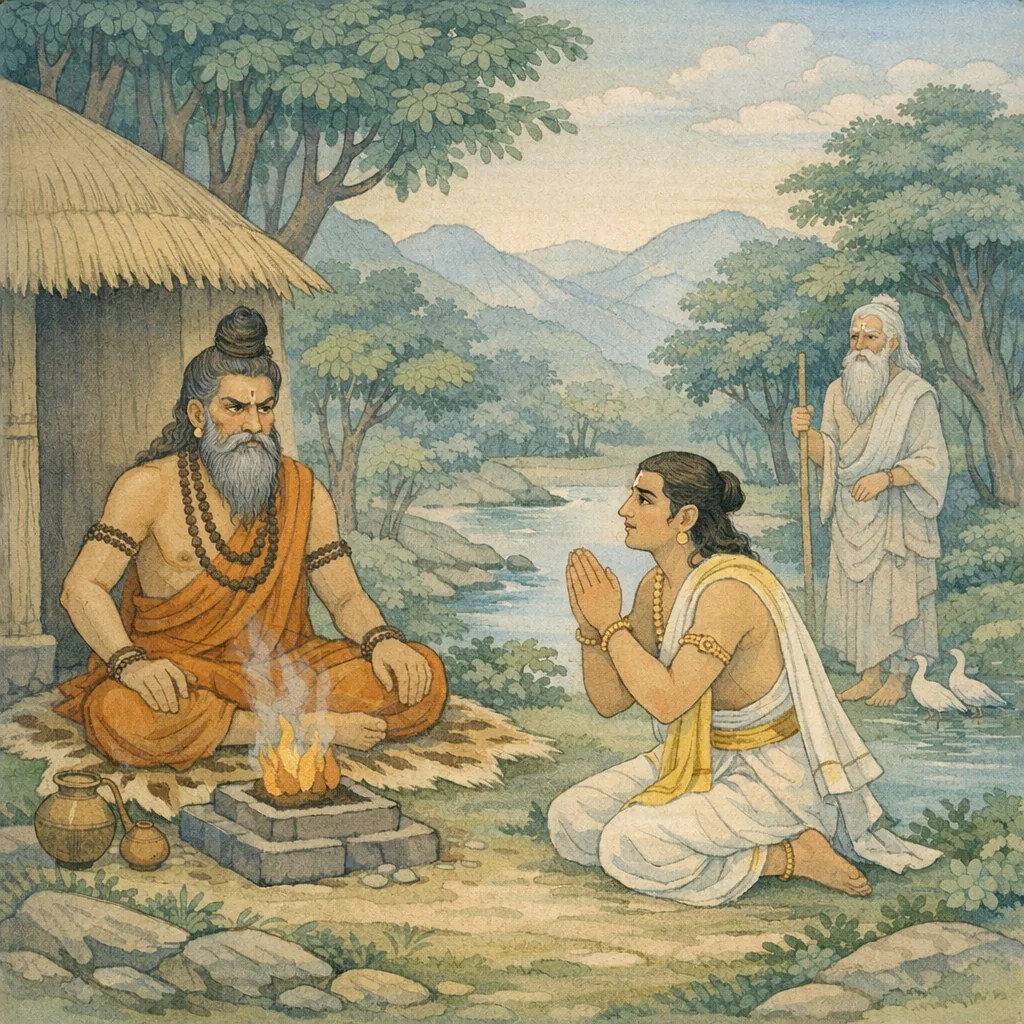
इस विषयमें विज्ञ पुरुष इस पुरातन इतिहासका उदाहरण दिया करते हैं, जिससे ज्ञात होता है कि महर्षि गालवने हठ या दुराग्रहके कारण पराजय प्राप्त की थी ।। विश्वामित्रं तपस्यन्तं धर्मो जिज्ञासया पुरा । अभ्यगच्छत् स्वयं भूत्वा वसिष्ठो भगवानृषि:,पहलेकी बात है, साक्षात् धर्मराज महर्षि भगवान् वसिष्ठका रूप धारण करके तपस्यामें लगे हुए विश्वामित्रके पास उनकी परीक्षा लेनेके लिये आये
On this matter, learned men cite an ancient historical example, from which it is understood that the great sage Gālava met with defeat because of stubborn insistence and obstinate resolve. Long ago, when Viśvāmitra was engaged in austerities, Dharma—wishing to test and understand him—approached him by assuming the form of the venerable sage Vasiṣṭha.
Verse 9
सप्तर्षीणामन्यतमं वेषमास्थाय भारत । बुभुक्षुः क्षुभितो राजन्नाश्रमं कौशिकस्य तु,भारत! धर्म सप्तर्षियोंमेंसे एक (वसिष्ठजी)-का वेष धारण करके भूखसे पीड़ित हो भोजनकी इच्छासे विश्वामित्रके आश्रमपर आये
Nārada said: O Bharata, one among the Seven Sages, assuming a disguise, came—distressed by hunger and longing for food—to the hermitage of Kauśika (Viśvāmitra), O king. The episode shows how hunger and need can test even the great, and how dharma is examined through one’s response to a guest who arrives in distress.
Verse 10
विश्वामित्रो5थ सम्भ्रान्त: श्रपयामास वै चरुम् परमान्नस्य यत्नेन न च तं प्रत्यपालयत्,विश्वामित्रजीने बड़ी उतावलीके साथ उनके लिये उत्तम भोजन देनेकी इच्छासे यत्नपूर्वक चरुपाक बनाना आरम्भ किया; परंतु ये अतिथिदेवता उनकी प्रतीक्षा न कर सके
Nārada said: Then Viśvāmitra, in great haste, set about cooking a caru—an excellent offering of fine food—with careful effort; yet he did not wait upon that guest in due time, for the guest could not remain waiting. The episode shows that even sincere intent and lavish preparation fall short when timely hospitality is neglected.
Verse 11
अन्न तेन तदा भुक्तमन्यैर्दत्तं तपस्विभि: । अथ गह्ान्नमत्युष्णं विश्वामित्रो5प्युपागमत्,उन्होंने जब दूसरे तपस्वी मुनियोंका दिया हुआ अन्न खा लिया, तब विश्वामित्रजी भी अत्यन्त उष्ण भोजन लेकर उनकी सेवामें उपस्थित हुए
After he had eaten the food that other ascetic sages had given, Viśvāmitra too arrived, bringing a meal that was exceedingly hot, and presented himself in attendance—highlighting a test of restraint and the ethics of hospitality and service among ascetics.
Verse 12
भुक्त मे तिष्ठ तावत् त्वमित्युक्त्वा भगवान् ययौ । विश्वामित्रस्ततो राजन् स्थित एव महाद्युति:,उस समय भगवान् धर्म यह कहकर कि मैंने भोजन कर लिया, अब तुम रहने दो, वहाँसे चल दिये। राजन्! तब महातेजस्वी विश्वामित्र मुनि वहाँ उसी अवस्थामें खड़े ही रह गये
Having said, “I have eaten; you may remain here for now,” the venerable Lord Dharma departed from that place. O King, then the radiant sage Viśvāmitra stayed on, standing just as he was—enduring the situation in silence and restraint.
Verse 13
भक्तं प्रगृह्म मूर्ध्ना वै बाहुभ्यां संशितव्रत: । स्थित: स्थाणुरिवाभ्याशे निश्चेष्टो मार्ताशन:,कठोर व्रतका पालन करनेवाले विश्वामित्रने दोनों हाथोंसे उस भोजनपात्रको थामकर माथेपर रख लिया और आश्रमके समीप ही ढूँठे पेड़की भाँति वे निश्वेष्ट खड़े रहे। उस अवस्थामें केवल वायु ही उनका आहार था
Nārada said: Having taken up the offered food with both arms, the austere sage—firm in his vows—placed it upon his head. Near the hermitage he stood motionless, like a tree-stump, sustaining himself only on the wind. The scene underscores severe self-restraint: even when food is obtained, the vow-bound ascetic subordinates bodily need to disciplined resolve.
Verse 14
तस्य शुश्रूषणे यत्नमकरोद् गालवो मुनि: । गौरवाद् बहुमानाच्च हार्देन प्रियकाम्यया,उन दिनों उनके प्रति गौरवबुद्धि, विशेष आदर-सम्मानका भाव तथा प्रेम-भक्ति होनेके कारण उनकी प्रसन्नताके लिये गालव मुनि यत्नपूर्वक उनकी सेवा-शुश्रूषामें लगे रहते थे
Nārada said: Out of reverence, deep respect, and heartfelt affection—seeking only to please him—the sage Gālava exerted himself in attentive service and dutiful attendance. The verse highlights śuśrūṣā (devoted service) as an ethical discipline grounded not in compulsion but in sincere regard and loving intention.
Verse 15
अथ वर्षशते पूर्णे धर्म: पुनरुपागमत् । वासिष्ठ॑ वेषमास्थाय कौशिकं भोजनेप्सया,तदनन्तर सौ वर्ष पूर्ण होनेपर पुनः धर्मदेव वसिष्ठ मुनिका वेष धारण करके भोजनकी इच्छासे विश्वामित्र मुनिके पास आये
When a full hundred years had passed, Dharma returned once more. Assuming the guise of Vasiṣṭha, he approached Kauśika (Viśvāmitra), driven by the desire for food—testing the sage’s steadfastness and the ethical strength of his conduct under prolonged hardship.
Verse 16
स दृष्टवा शिरसा भक्तं प्रियमाणं महर्षिणा । तिष्ठता वायुभक्षेण विश्वामित्रेण धीमता,उन्होंने देखा कि परम बुद्धिमान महर्षि विश्वामित्र केवल वायु पीकर रहते हुए सिरपर भोजनपात्र रखे खड़े हैं। यह देखकर धर्मने वह भोजन ले लिया। वह अन्न उसी प्रकार तुरंतकी तैयार की हुई रसोईके समान गरम था। उसे खाकर वे बोले--“ब्रह्मर्ष! मैं आपपर बहुत प्रसन्न हूँ।! ऐसा कहकर मुनिवेषधारी धर्मदेव चले गये
Nārada said: Seeing the wise sage Viśvāmitra standing firm, living only on air and bearing the offered food upon his head in an act of austere devotion, Dharma (in ascetic guise) understood the depth of his restraint. Dharma accepted the food; it was hot, as if freshly cooked. After eating, he declared, “O Brahmarṣi, I am greatly pleased with you.” Having thus spoken, the god Dharma—still disguised as a sage—departed.
Verse 17
प्रतिगृह्म ततो धर्मस्तथैवोष्णं तथा नवम् | भुक््त्वा प्रीतो5स्मि विप्ररषे तमुक्त्वा स मुनिर्गतः,उन्होंने देखा कि परम बुद्धिमान महर्षि विश्वामित्र केवल वायु पीकर रहते हुए सिरपर भोजनपात्र रखे खड़े हैं। यह देखकर धर्मने वह भोजन ले लिया। वह अन्न उसी प्रकार तुरंतकी तैयार की हुई रसोईके समान गरम था। उसे खाकर वे बोले--“ब्रह्मर्ष! मैं आपपर बहुत प्रसन्न हूँ।! ऐसा कहकर मुनिवेषधारी धर्मदेव चले गये
Then Dharma accepted it; the food was still hot and fresh, as if just prepared. Having eaten, he said, “O rishi, I am pleased with you.” After speaking thus, Dharma—wearing the guise of a muni—departed.
Verse 18
क्षत्रभावादपगतो ब्राह्मणत्वमुपागत: । धर्मस्य वचनात् प्रीतो विश्वामित्रस्तदाभवत्,क्षत्रियत्वसे ऊँचे उठकर ब्राह्मणत्वको प्राप्त हुए विश्वामित्रको धर्मके वचनसे उस समय बड़ी प्रसन्नता हुई
Having risen beyond the warrior’s disposition and attained the state of a brāhmaṇa, Viśvāmitra became greatly pleased at that time by Dharma’s words.
Verse 19
विश्वामित्रस्तु शिष्यस्थ गालवस्य तपस्विन: । शुश्रूषया च भक्त्या च प्रीतिमानित्युवाच ह,वे अपने शिष्य तपस्वी गालव मुनिकी सेवा-शुश्रूषा तथा भक्तिसे संतुष्ट होकर बोले --
Nārada said: Viśvāmitra, pleased with the devoted service and faithful attendance of his ascetic disciple Gālava, spoke to him with affection.
Verse 20
अनुज्ञातो मया वत्स यथेष्टं गच्छ गालव । इत्युक्त: प्रत्युवाचेदं गालवो मुनिसत्तमम्
Nārada said, “My child, you have my permission—go wherever you wish, as you please.” Thus addressed, Gālava replied to that foremost of sages.
Verse 21
प्रीतो मधुरया वाचा विश्वामित्र॑ महाद्युतिम् । दक्षिणा: का: प्रयच्छामि भवते गुरुकर्मणि
Nārada said: “Pleased by your sweet words, O Viśvāmitra of great splendor, what honorarium (dakṣiṇā) shall I offer you for the service of a teacher?”
Verse 22
“वत्स गालव! अब मैं तुम्हें आज्ञा देता हूँ, तुम्हारी जहाँ इच्छा हो, जाओ।” उनके इस प्रकार आदेश देनेपर गालवने प्रसन्नता प्रकट करते हुए मधुर वाणीमें महातेजस्वी मुनिवर विश्वामित्रसे इस प्रकार पूछा--“भगवन्! मैं आपको गुरुदक्षिणाके रूपमें क्या दूँ? ।। दक्षिणाभिरुपेतं हि कर्म सिद्धयति मानद । दक्षिणानां हि दाता वै अपवर्गेण युज्यते
Nārada said: “My child Gālava, I now give you leave—go wherever you wish.” When he had thus granted permission, Gālava, showing his joy, addressed the radiant sage Viśvāmitra in gentle words and asked: “Revered sir, what shall I give you as the teacher’s fee? For an undertaking succeeds when accompanied by a proper gift, O bestower of honor; and the giver of such gifts is said to be joined with liberation.”
Verse 23
“मानद! दक्षिणायुक्त कर्म ही सफल होता है। दक्षिणा देनेवाले पुरुषको ही सिद्धि प्राप्त होती है ।। स्वर्गे क्रतुफलं तद्धि दक्षिणा शान्तिरुच्यते । किमाहरामि गुर्वर्थ ब्रवीतु भगवानिति,'दक्षिणा देनेवाला मनुष्य ही स्वर्गमें यज्ञका फल पाता है। वेदमें दक्षिणाको ही शान्तिप्रद बताया गया है। अतः पूज्य गुरुदेव! बतावें कि मैं क्या गुरुदक्षिणा ले आऊँ?
Nārada said: “O giver of honor! A rite performed together with a proper honorarium truly becomes fruitful. It is the giver of the dakṣiṇā who attains success. Indeed, in heaven the fruit of a sacrifice is said to rest upon dakṣiṇā, and the Veda declares dakṣiṇā to be a source of peace. Therefore, revered teacher—tell me: what shall I bring as your guru’s fee?”
Verse 24
जानानस्तेन भगवाज्जित: शुश्रूषणेन वै । विश्वामित्रस्तमसकृद् गच्छ गच्छेत्यचोदयत्
Knowing this, the venerable sage—won over indeed by devoted service—repeatedly urged him, saying, “Go on, go on.”
Verse 25
गालवकी सेवा-शुश्रूषासे भगवान् विश्वामित्र उनके वशमें हो गये थे। अतः उनके उपकारको समझते हुए विश्वामित्रने उनसे बार-बार कहा--'जाओ, जाओ! ।। असकृद् गच्छ गच्छेति विश्वामित्रेण भाषित: । कि ददानीति बहुशो गालव: प्रत्यभाषत,उनके द्वारा बारंबार 'जाओ, जाओ' की आज्ञा मिलनेपर भी गालवने अनेक बार आग्रहपूर्वक पूछा--“मैं आपको क्या गुरुदक्षिणा दूँ?”
Though Viśvāmitra repeatedly told him, “Go, go,” Gālava kept replying again and again with insistent humility: “What shall I give you?”—seeking a fitting guru’s fee and refusing to depart without acknowledging the debt of service and instruction.
Verse 26
निर्बन्धतस्तु बहुशो गालवस्य तपस्विन: । किंचिदागतसंरम्भो विश्वामित्रो5ब्रवीदिदम्
Nārada said: When the ascetic Gālava pressed him repeatedly with insistent requests, Viśvāmitra—stirred to a measure of impatience—spoke these words. The passage highlights how persistent importunity can strain even a disciplined sage, and how a teacher’s response may arise from the need to set ethical limits rather than from mere anger.
Verse 27
तपस्वी गालवके बहुत आग्रह करनेपर विश्वामित्रको कुछ क्रोध आ गया; अतः उन्होंने इस प्रकार कहा-- ।। एकत: श्यामकर्णानां हयानां चन्द्रवर्चसाम् । अष्टौ शतानि मे देहि गच्छ गालव मा चिरम्,“गालव! तुम मुझे चन्द्रमाके समान श्वेत रंगवाले ऐसे आठ सौ घोड़े दो, जिनके कान एक ओरसे श्याम वर्णके हों। जाओ, देर न करो”
Nārada said: When the ascetic Gālava pressed him insistently, Viśvāmitra grew somewhat angry and declared, “Gālava, bring me eight hundred horses, radiant like the moon, with one ear dark-colored. Go—do not delay.” The demand reflects a teacher’s stern test of resolve and obedience, setting a difficult condition that forces the seeker to confront the limits of effort and the ethics of fulfilling a vow without haste or excuse.
Verse 106
इति श्रीमहाभारते उद्योगपर्वणि भगवद्यानपर्वणि गालवचरिते षडधिकशततमोड<्ध्याय:
Thus ends the one-hundred-and-sixth chapter in the Udyoga Parva of the Śrī Mahābhārata—within the section concerning the Lord’s mission (Bhagavad-yāna), and within the episode of Gālava. This closing colophon signals the completion of a narrative unit, reminding the listener that the account is framed within the larger ethical crisis of impending war and the efforts toward righteous resolution.
Frequently Asked Questions
Gālava confronts the dilemma of having accepted an obligation to his guru yet lacking means to fulfill it, weighing the ethical consequences of unkept promises against the duty to continue striving.
The discourse presents truthfulness, gratitude, and reciprocity as foundations of personal and social legitimacy; ethical failure is portrayed as self-destructive, while disciplined recourse and renewed effort restore agency.
No explicit phalaśruti is stated here; the chapter functions as an ethical exemplum, implying that understanding the linkage between promise, truth, and merit is integral to dharma-oriented conduct.