Adhyaya 11
Dhṛtarāṣṭra’s Bereavement and the Averted Assault on Bhīma (Āyasī Pratimā Episode)
Upa-parva: Strī-parva (Lamentation and Aftermath Episodes)
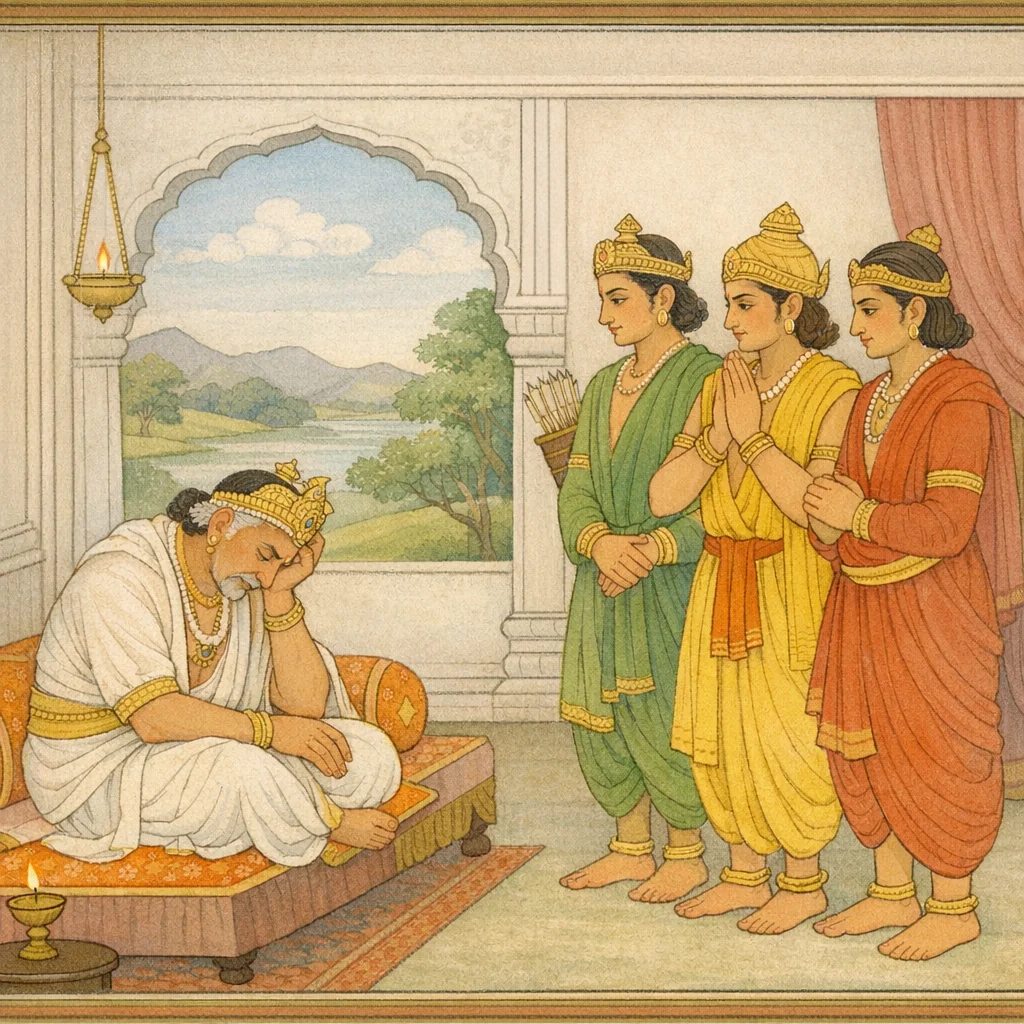
Vaiśaṃpāyana reports that after the armies are slain, Yudhiṣṭhira hears that the aged Dhṛtarāṣṭra has come out from Hastināpura (Gajasāhvaya). Yudhiṣṭhira approaches with his brothers, accompanied by Yuyudhāna (Sātyaki) and Yuyutsu; Draupadī follows with the women of Pāñcāla. Along the Gaṅgā they encounter crowds of lamenting women who question the king’s dharma and the meaning of sovereignty after the deaths of fathers, brothers, teachers, friends, Abhimanyu, and the Draupadeyas. Yudhiṣṭhira bows to Dhṛtarāṣṭra; the bereaved father embraces him but, inflamed by grief and anger, seeks to seize and crush Bhīma. Anticipating this, Kṛṣṇa substitutes an iron effigy of Bhīma (āyasī pratimā). Dhṛtarāṣṭra crushes it with immense force, injuring himself and collapsing; his charioteer (Gāvalgaṇi) restrains him. Kṛṣṇa then discloses the substitution, consoles Dhṛtarāṣṭra, and frames the episode as a necessary measure to prevent further loss, urging acceptance and release from grief-driven intent.
Chapter Arc: कौरव-पक्ष के बचे हुए तीन महारथी—कृपाचार्य, कृतवर्मा और द्रोणपुत्र अश्वत्थामा—हस्तिनापुर पहुँचकर प्रज्ञाचक्षु राजा धृतराष्ट्र के सामने युद्ध का अंतिम समाचार रखने आते हैं। → वे अश्रुकण्ठ, विनिःश्वास और रुदन के साथ बताते हैं कि दुर्योधन ने ‘सुदुष्कर कर्म’ करके अपने अनुचरों सहित शक्रलोक की गति पाई; और यह भी कि दुर्योधन की विशाल सेना से अब केवल वे तीन रथी ही शेष हैं। यह वाक्य-प्रहार धृतराष्ट्र के शोक को और तीव्र करता है तथा राज्य-परिवार के भविष्य पर अंधकार घना होता जाता है। → तीनों वीर यह निर्णायक घोषणा करते हैं कि कौरव-सेना पूर्णतः परिक्षीण हो चुकी है—‘वयमेव त्रयो रथा:’—और धृतराष्ट्र के सामने कौरव-पाण्डव विनाश का समग्र वृत्तांत रख देते हैं; साथ ही संकेत देते हैं कि अश्वत्थामा के नेतृत्व में आगे क्या ‘कृतम्’ हुआ/होगा, जिससे शोक के बीच प्रतिशोध की चिंगारी चमक उठती है। → धृतराष्ट्र से भेंट कर वे उद्विग्न होकर परस्पर विदा लेते हैं और तीन दिशाओं में प्रस्थान करते हैं—कृपाचार्य हस्तिनापुर में, कृतवर्मा अपने राष्ट्र की ओर, और अश्वत्थामा व्यास-आश्रम की राह। → अश्वत्थामा के ‘पुरोगमैः’ किए गए कृत्य का संकेत और उसका व्यास-आश्रम की ओर जाना अगले प्रसंग में भयावह परिणति की भूमिका बनाता है।
Shlokas
Verse 1
प्याज बछ। जज: एकादशोब< ध्याय: राजा धृतराष्ट्रसे कृपाचार्य, अश्वत्थामा हम +3 768 तवर्माकी भेंट और कृपाचार्यका कौरव-पाण्डवोंकी विनाशकी सूचना देना वैशम्पायन उवाच क्रोशमात्रं ततो गत्वा ददृशुस्तान् महारथान् | शारद्वतं कृपं द्रार्णि कृतवर्माणमेव च,वैशम्पायनजी कहते हैं--राजन्! वे सब लोग हस्तिनापुरसे एक ही कोसकी दूरीपर पहुँचे होंगे कि उन्हें शरद्वानके पुत्र कृपाचार्य, द्रोणकुमार अश्वत्थामा और कृतवर्मा-ये तीनों महारथी दिखायी दिये
Vaiśampāyana said: After they had gone only about a krośa from there, they saw those great chariot-warriors—Kṛpa, the son of Śaradvat; Aśvatthāman, the son of Droṇa; and Kṛtavarman.
Verse 2
ते तु दृष्टवैव राजान प्रज्ञाचक्षुषमी श्वरम् । अश्रुकण्ठा विनि:श्वस्य रुदन््तमिदमन्रुवन्,रोते हुए ऐश्वर्यशाली प्रज्ञाचक्षु राजा धृतराष्ट्रको देखते ही आँसुओंसे उनका गला भर आया और वे इस प्रकार बोले--
But as soon as they beheld the king Dhṛtarāṣṭra—lordly yet blind, seeing only through wisdom—their throats choked with tears. Sighing deeply, they addressed him with these words as he wept.
Verse 3
पुत्रस्तव महाराज कृत्वा कर्म सुदुष्करम् | गत: सानुचरो राजन् शक्रलोकं॑ महीपते,'पृथ्वीनाथ महाराज! आपका पुत्र अत्यन्त दुष्कर कर्म करके अपने सेवकोंसहित इन्द्रलोकमें जा पहुँचा है
Vaiśampāyana said: “O great king, your son—having accomplished an exceedingly difficult deed—has departed, together with his attendants, to Śakra’s world (Indra’s heaven), O lord of the earth.”
Verse 4
दुर्योधनबलान्मुक्ता वयमेव त्रयो रथा: । सर्वमन्यत् परिक्षीणं सैन्यं ते भरतर्षभ,“भरतश्रेष्ठ! दुर्योधनकी सेनासे केवल हम तीन रथी ही जीवित बचे हैं। आपकी अन्य सारी सेना नष्ट हो गयी”
Vaiśampāyana said: “Freed from (the ruin of) Duryodhana’s forces, only we three chariot-warriors remain alive. All the rest of your army has been utterly destroyed, O bull among the Bharatas.”
Verse 5
इत्येवमुक्त्वा राजानं कृप: शारद्वतस्तत: । गान्धारी पुत्रशोकार्तामिदं वचनमत्रवीत्,राजा धुतराष्ट्रसे ऐसा कहकर शरद्वानके पुत्र कृपाचार्य पुत्रशोकसे पीड़ित हुई गान्धारीसे इस प्रकार बोले--
Having thus addressed the king, Kṛpa—the son of Śāradvat—then spoke these words to Gāndhārī, who was overwhelmed by grief for her sons.
Verse 6
अभीता युद्धयमानास्ते घ्नन्त: शत्रुगणान् बहून् । वीरकर्माणि कुर्वाणा: पुत्रास्ते निधनं गता:,“देवि! आपके सभी पुत्र निर्भय होकर जूझते और बहुसंख्यक शत्रुओंका संहार करते हुए वीरोचित कर्म करके वीरगतिको प्राप्त हुए हैं
Vaiśaṃpāyana said: “Your sons fought without fear; while battling they slew many bands of enemies. Performing deeds worthy of heroes, they have gone to their death—attaining the end that comes to warriors on the field.”
Verse 7
ध्रुवं सम्प्राप्प लोकांस्ते निर्मलान् शस्त्रनिर्जितान् । भास्वरं देहमास्थाय विहरन्त्यमरा इव,“निश्चय ही वे शस्त्रोंद्वारा जीते हुए निर्मल लोकोंमें पहुँचकर तेजस्वी शरीर धारण करके वहाँ देवताओंके समान विहार करते होंगे
Vaiśaṃpāyana said: “Surely they have attained those stainless worlds won by the sword. Assuming radiant bodies, they sport there like the immortals.”
Verse 8
नहि वशस्रिद्धि शूराणां युद्धायमान: पराड्मुख: । शस्त्रेण निधन प्राप्तो न च कश्चित् कृताञ्जलि:,“उन शूरवीरोंमेंसे कोई भी युद्ध करते समय पीठ नहीं दिखा सका है। किसीने भी शत्रुके सामने हाथ नहीं जोड़े हैं। सभी शस्त्रके द्वारा मारे गये हैं
Vaiśaṃpāyana said: None among those heroes, while engaged in battle, turned his back in flight. Nor did any clasp his hands in supplication before the enemy. Each met his end by weapons—falling as warriors, not as men seeking mercy.
Verse 9
एवं तां क्षत्रियस्याहु: पुराणा: परमां गतिम् । शस्त्रेण निधन संख्ये तन्न शोचितुमरहसि,“इस प्रकार युद्धमें जो शस्त्रद्वारा मृत्यु होती है, उसे प्राचीन महर्षि क्षत्रियके लिये उत्तम गति बताते हैं; अतः उनके लिये आपको शोक नहीं करना चाहिये
Thus, the ancient sages declare this to be the highest end for a kṣatriya: to meet death by weapons in the thick of battle. Therefore, you ought not to grieve for him on that account.
Verse 10
न चापि शत्रवस्तेषामृद्धयन्ते राज्ञि पाण्डवा: | शृणु यत् कृतमस्माभिर श्वृत्थामपुरोगमै:,“महारानी! उनके शत्रु पाण्डव भी विशेष लाभमें नहीं हैं। अश्वत्थामाको आगे करके हमने जो कुछ किया है, उसे सुनिये
Vaiśaṃpāyana said: “O Queen, even the Pāṇḍavas—though enemies to us—are not truly prospering under this kingship. Listen to what was done by us, with Aśvatthāman placed at the forefront.”
Verse 11
अधर्मेण हत॑ श्रुत्वा भीमसेनेन ते सुतम् । सुप्तं शिबिरमासाद्य पाण्डूनां कदनं कृतम्,'भीमसेनने आपके पुत्रको अधर्मसे मारा है, यह सुनकर हमलोग भी पाण्डवोंके सोते हुए शिविरमें जा पहुँचे और पाण्डववीरोंका संहार कर डाला
Vaiśaṃpāyana said: Hearing that your son had been slain by Bhīmasena through unrighteous means, we approached the Pāṇḍavas’ camp while it lay asleep and wrought a massacre among the Pāṇḍava warriors.
Verse 12
पज्चाला निहताः: सर्वे धृष्टद्युम्नपुरोगमा: । द्रुपदस्यात्मजाश्रैव द्रौपदेयाश्व पातिता:
Vaiśaṃpāyana said: All the Pañcālas were slain—led by Dhṛṣṭadyumna. Drupada’s sons as well, and the sons of Draupadī too, were struck down.
Verse 13
“'ट्रुपदके पुत्र धृष्टद्युम्न आदि सारे पांचाल मार डाले गये और द्रौपदीके पाँचों पुत्रोंको भी हमने मार गिराया ।। तथा विशसन कृत्वा पुत्रशत्रुगणस्य ते । प्राद्रवाम रणे स्थातुं न हि शक््यामहे त्रयः:,“इस प्रकार आपके पुत्रके शत्रुओंका रणभूमिमें संहार करके हम तीनों भागे जा रहे हैं। अब यहाँ ठहर नहीं सकते इति श्रीमहाभारते स्त्रीपर्वणि जलप्रदानिकपर्वणि कृपद्रौणिभोजदर्शने एकादशो<ध्याय:
Vaiśampāyana said: “O son of Kṛpa, Dhṛṣṭadyumna and all the Pāñcālas have been slain, and we have also struck down Draupadī’s five sons. Having thus carried out the slaughter of your son’s enemies on the battlefield, we three are fleeing; we cannot remain here.”
Verse 14
ते हि शूरा महेष्वासा: क्षिप्रमेष्यन्ति पाण्डवा: । अमर्षवशमापन्ना वैरं प्रतिजिहीर्षव:,“क्योंकि अमर्षमें भरे हुए वे महाधनुर्धर वीर पाण्डव वैरका बदला लेनेकी इच्छासे शीघ्र यहाँ आयेंगे
For those Pāṇḍavas are heroic and mighty archers. Overpowered by indignation and intent on exacting vengeance for the enmity done to them, they will come here swiftly.
Verse 15
ते हतानात्मजान श्रुत्वाप्रमत्ता: पुरुषर्षभा: । निरीक्षन्तः पद शूरा: क्षिप्रमेव यशस्विनि
Vaiśampāyana said: Hearing that their own sons had been slain, those bull-like men—once heedless in the pride of power—became alert. Looking about on every side, the heroes, swift in action, moved at once, O illustrious lady, driven by grief and the hard moral shock of war’s consequences.
Verse 16
“यशस्विनि! अपने पुत्रोंके मारे जानेका समाचार सुनकर सदा सावधान रहनेवाले पुरुषप्रवर पाण्डव हमारा चरणचिह्न देखते हुए शीघ्र ही हमलोगोंका पीछा करेंगे ।। तेषां तु कदनं कृत्वा संस्थातुं नोत्सहामहे | अनुजानीहि नो राज्ञि मा च शोके मन: कृथा:
“O illustrious queen! On hearing the news that your sons have been slain, the foremost of men—the ever-vigilant Pāṇḍavas—will quickly track us by our footprints and pursue us. Having wrought such devastation upon them, we do not have the courage to remain here. Grant us leave, O queen, and do not let your mind be consumed by grief.”
Verse 17
“रानीजी! उनके पुत्रों और सम्बन्धियोंका विनाश करके हम यहाँ ठहर नहीं सकते; अतः हमें जानेकी आज्ञा दीजिये और आप भी अपने मनसे शोकको निकाल दीजिये ।। राजंस्त्वमनुजानीहि धैर्यमातिष्ठ चोत्तमम् । दिष्टान्तं पश्य चापि त्वं क्षात्रं धर्म च केवलम्,(फिर वे धृतराष्ट्रसे बोले--) “राजन! आप भी हमें जानेकी आज्ञा प्रदान करें और महान् धैर्यका आश्रय लें, केवल क्षात्रधर्मपर दृष्टि रखकर इतना ही देखें कि उनकी मृत्यु कैसे हुई है?”
Vaiśampāyana said: They then addressed Dhṛtarāṣṭra: “O King, grant us leave to depart. Take refuge in the highest steadfastness. Look upon what has occurred as destiny’s outcome, and keep your gaze fixed solely on kṣatriya-duty—seeing, in essence, that this is how their death has come to pass.”
Verse 18
इत्येवमुक्त्वा राजानं कृत्वा चाभिप्रदक्षिणम् कृपश्च कृतवर्मा च द्रोणपुत्रश्च भारत,भारत! राजासे ऐसा कहकर उनकी प्रदक्षिणा करके कृपाचार्य, कृतवर्मा और अश्वृत्थामाने मनीषी राजा धृतराष्ट्रकी ओर देखते हुए तुरंत ही गंगातटकी ओर अपने घोड़े हॉँक दिये
Vaiśaṃpāyana said: Having spoken thus to the king and respectfully circumambulated him, Kṛpa, Kṛtavarmā, and Droṇa’s son Aśvatthāman—O Bhārata—at once drove their horses toward the bank of the Gaṅgā, their gaze cast toward the wise king Dhṛtarāṣṭra.
Verse 19
अवेक्षमाणा राजानं धृतराष्ट्र मनीषिणम् । गड्जगमनु महाराज तूर्णमश्वानचोदयन्,भारत! राजासे ऐसा कहकर उनकी प्रदक्षिणा करके कृपाचार्य, कृतवर्मा और अश्वृत्थामाने मनीषी राजा धृतराष्ट्रकी ओर देखते हुए तुरंत ही गंगातटकी ओर अपने घोड़े हॉँक दिये
Vaiśaṃpāyana said: Casting their eyes upon the wise king Dhṛtarāṣṭra, they—moving with the gait of elephants—swiftly urged on their horses, O descendant of Bharata. Having spoken thus to the king and circumambulated him in respect, Kṛpācārya, Kṛtavarmā, and Aśvatthāmā at once drove their steeds toward the bank of the Gaṅgā.
Verse 20
अपक्रम्य तु ते राजन् सर्व एव महारथा: । आमन्त्र्यान्योन्यमुद्धिग्नास्त्रिधा ते प्रययुस्तदा,राजन! वहाँसे हटकर वे सभी महारथी उद्विग्न हो एक-दूसरेसे विदा ले तीन मार्गोंपर चल दिये
Vaiśaṃpāyana said: “O King, withdrawing from that place, all those great chariot-warriors—deeply shaken—took leave of one another and then departed at that time by three different routes.”
Verse 21
शरद्वानके पुत्र कृपाचार्य तो हस्तिनापुर चले गये, कृतवर्मा अपने ही देशकी ओर चल दिया और द्रोणपुत्र अश्वत्थामाने व्यास-आश्रमकी राह ली
Vaiśaṃpāyana said: Kṛpa, the son of Śaradvat, set out for Hastināpura; Kṛtavarmā departed toward his own land; and Droṇa’s son Aśvatthāmā took the road to Vyāsa’s hermitage.
Verse 22
एवं ते प्रययुर्वीरा वीक्षमाणा: परस्परम् । भयार्ता: पाण्डुपुत्राणामागस्कृत्वा महात्मनाम्,महात्मा पाण्डवोंका अपराध करके भयसे पीड़ित हुए वे तीनों वीर इस प्रकार एक- दूसरेकी ओर देखते हुए वहाँसे खिसक गये
Vaiśaṃpāyana said: Thus those warriors departed, glancing at one another. Distressed by fear—having committed an offence against the great-souled sons of Pāṇḍu—they slipped away from that place, their guilt weighing upon them.
Verse 23
समेत्य वीरा राजानं तदा त्वनुदिते रवौ । विप्रजग्मुर्महात्मानो यथेच्छकमरिंदमा:,राजा धृतराष्ट्रसे मिलकर शत्रुओंका दमन करनेवाले वे तीनों महामनस्वी वीर सूर्योदयसे पहले ही अपने अभीष्ट स्थानोंकी ओर चल पड़े
Having met with the king, those heroic, high-souled warriors—subduers of foes—set out even before sunrise, each departing to the place he desired.
Verse 24
समासाद्याथ वै द्रौणिं पाण्डुपुत्रा महारथा: । व्यजयंस्ते रणे राजन् विक्रम्प तदनन्तरम्,राजन्! तदनन्तर महारथी पाण्डवोंने द्रोणपुत्र अश्वत्थामाके पास पहुँचकर उसे बलपूर्वक युद्धमें पराजित किया
Vaiśampāyana said: Then the mighty chariot-warriors, the sons of Pāṇḍu, came up to Droṇa’s son (Aśvatthāman). O King, they overcame him in battle; and after displaying their valor, they pressed on further.
Verse 231
जगाम हास्तिनपुरं कृप: शारद्वतस्तदा । स्वमेव राष्ट्र हार्दिक्यो द्रौणिव्यासाश्रमं ययौ
Vaiśampāyana said: Then Kṛpa, the son of Śaradvat, went to Hāstinapura. Hārdikya, however, returned to his own realm, while the son of Droṇa went to the hermitage of Vyāsa.
Frequently Asked Questions
The dilemma is whether grief-justified retaliation can be morally permitted: Dhṛtarāṣṭra’s bereavement motivates an attempt at immediate vengeance, while the survivors must prioritize restraint and the prevention of renewed harm.
The episode teaches that leadership requires anticipatory restraint and harm-prevention: intense emotion does not suspend dharma, and prudent measures may be necessary to avert irreversible consequences.
No formal phalaśruti is presented here; the chapter’s meta-function is narrative-ethical, positioning the listener to understand why de-escalation and consolation are prerequisites for the later, more systematic teachings on governance and dharma.