Adhyaya 177
Adhyāya 177: Pañca-mahābhūta-vicāra and Vṛkṣa-jīva-lakṣaṇa (Five Elements Inquiry and the Status of Plant Life)
Upa-parva: Mokṣa-dharma (Mokṣadharma-parvan) — Discourse on Liberation and Ontology
Bharadvāja opens by asking how the cosmos can be said to be constituted by only five mahābhūtas when innumerable beings were created. Bhṛgu answers that the term “mahābhūta” applies because countless entities arise from these great constituents. The dialogue then maps embodiment to the five elements and their guṇas: space (ākāśa) with sound, wind (vāyu) with touch, fire/light (tejas) with form, water (āpas) with taste, and earth (pṛthivī) with smell. Bharadvāja challenges the thesis by citing trees as seemingly lacking heat, motion, and the full set of senses. Bhṛgu responds by arguing for element-presence and functional signs in plants: growth, flowering/fruiting, withering under cold/heat, damage from wind/fire/lightning, vine-directed movement, responsiveness to fragrances and fumigation, water uptake through roots (illustrated via the lotus-stalk analogy), and regeneration after cutting—taken as indicators of life (jīva) and non-absence of sentience. The chapter then provides a more technical physiological allocation of “fivefold” manifestations within animals: earth-aspects (skin, flesh, bone, marrow, sinew), fire-aspects (tejas, digestion/heat, eye, anger as a heat-like function), space-aspects (ear, nostril, mouth, heart, abdomen), water-aspects (phlegm, bile, sweat, fat, blood), and wind-aspects as the five vāyus (prāṇa, vyāna, apāna, samāna, udāna) governing respiration, circulation/expansion, downward motion, central balance, and upward breath/speech. It concludes with detailed enumerations of sensory qualities: ninefold earth-smell types, six tastes of water, twelve forms/colors for fire’s visible qualities, twelve touch-qualities for wind, and seven notes (svara) for space’s sound-quality, presenting a systematic ontology linking perception, physiology, and elemental theory.
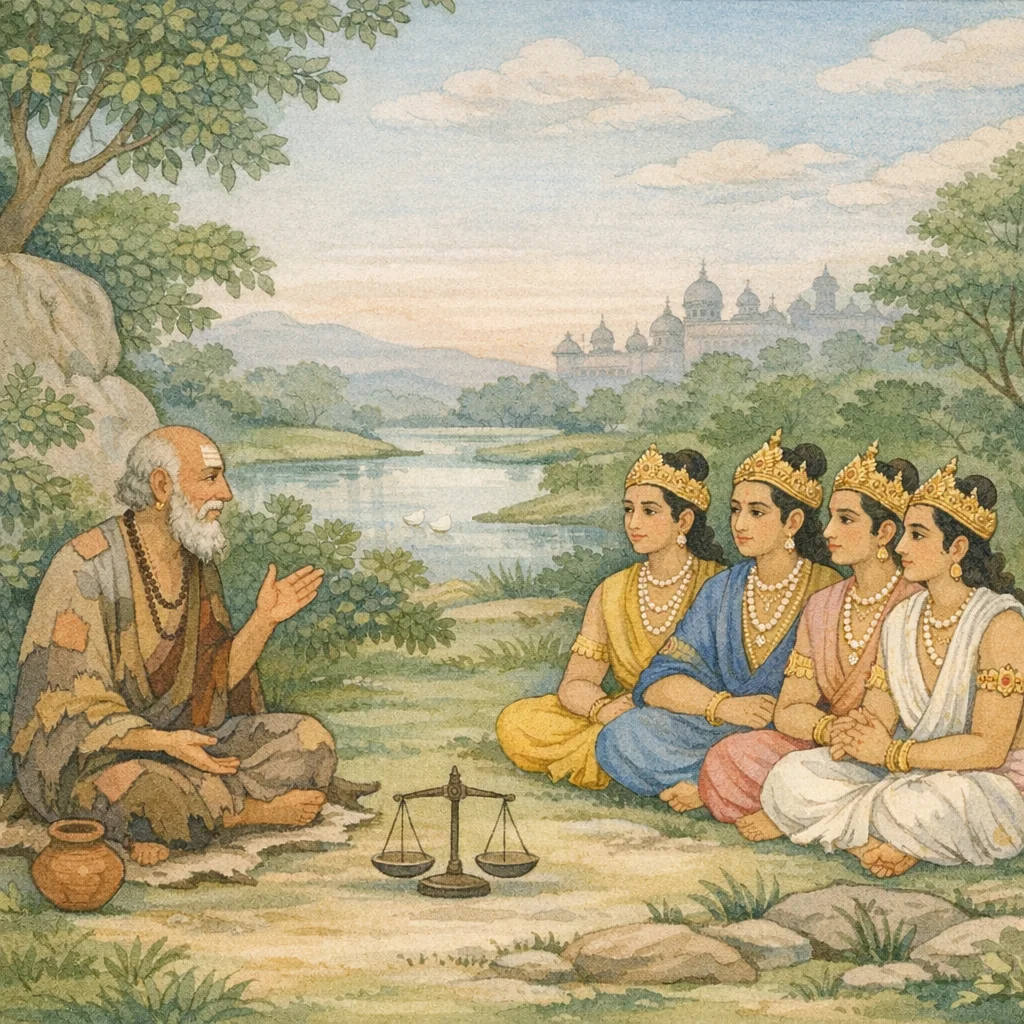
Chapter Arc: युधिष्ठिर का प्रश्न उठता है—जब धनी और निर्धन दोनों अपने-अपने ढंग से ‘स्वतन्त्र’ होकर चलते हैं, तो फिर सुख-दुःख उन्हें किस नियम से, किस रूप में प्राप्त होता है? → भीष्म उत्तर को एक उपदेश-कथा में बाँधते हैं: पूर्वकाल में शम्पाक नामक ब्राह्मण, फटे वस्त्र, भूख और ‘कुदारा’ (कठोर/दुष्टा पत्नी) के क्लेश से पीड़ित होकर भी त्याग-मार्ग का आश्रय लेता है। बाह्य दरिद्रता और आन्तरिक वैराग्य के बीच संघर्ष उभरता है—कामनारहित होने पर भी यदि आत्म-कल्याण का साधन न किया जाए तो जीवन ‘धुर’ (भार) बन जाता है। → शम्पाक का निर्णायक प्रतिपादन: ‘आकिंचन्य’ ही लोक में सुख, पथ्य, शिव और निरामय है; और बुद्धि की तुला पर ‘राज्य’ बनाम ‘आकिंचन्य’ तौलने पर गुणों में दरिद्रता/असंगता राज्य से भी श्रेष्ठ ठहरती है। फिर सूत्र-वाक्य की तरह निष्कर्ष—‘नात्यक्त्वा सुखमाप्नोति… त्यक्त्वा सर्वः सुखी भव’—त्याग के बिना न सुख, न परम, न अभय। → भीष्म शम्पाक के वचन को हस्तिनापुर में कहे गए प्रमाण-उपदेश के रूप में स्थापित करते हैं और युधिष्ठिर के प्रश्न का उत्तर ‘स्वतन्त्रता’ नहीं, ‘आसक्ति’ को कारण बताकर देते हैं: संग्रह/ममता ही दुःख का द्वार है; त्याग/अकिंचनता ही सुख और निर्भयता का आधार।
Shlokas
Verse 1
(दाक्षिणात्य अधिक पाठके १६ शलोक मिलाकर कुल ४०३ श्लोक हैं) त्न्द्््ासस श्यु नाचज्ज्जभप्त्ज्स षट्सप्तरत्याधेकशततमो< ध्याय: त्यागकी महिमाके विषयमें शम्पाक ब्राह्णका उपदेश युधिछिर उवाच धनिनश्चाधना ये च वर्तयन्ते स्वतन्त्रिण: । सुखदुःखागमस्तेषां कः कथं वा पितामह
Yudhiṣṭhira said: “O Grandfather, among those who live independently—whether wealthy or poor—how, and by whom, do experiences of happiness and sorrow come to them?”
Verse 2
युधिष्ठिरने पूछा--पितामह! धनी और निर्धन दोनों स्वतन्त्रतापूर्वक व्यवहार करते हैं; फिर उन्हें किस रूपमें और कैसे सुख और दुःखकी प्राप्ति होती है? ।। भीष्म उवाच अत्राप्युदाहरन्तीममितिहासं पुरातनम् । शम्पाकेनेह मुक्तेन गीतं॑ शान्तिगतेन च,भीष्मजीने कहा--युधिष्ठिर! इस विषयमें विद्वान् पुरुष इस पुरातन इतिहासका उदाहरण देते हैं, जिसे परम शान्त जीवन्मुक्त शम्पाकने यहाँ कहा था
Bhīṣma said: “On this very point, the learned cite an ancient historical example—words sung here by Śampāka, a liberated sage (jīvanmukta) who had attained supreme peace.”
Verse 3
अब्रवीन्मां पुरा वश्िद् ब्राह्मणस्त्यागमाश्रित: । क्लिश्यमान: कुदारेण कुचैलेन बुभुक्षया,पहलेकी बात है, फटे-पुराने वस्त्रों एवं अपनी दुष्टा सत्रीके और भूखके कारण अत्यन्त कष्ट पानेवाले एक त्यागी ब्राह्मणने जिसका नाम शम्पाक था, मुझसे इस प्रकार कहा --
Bhīṣma said: “Long ago, a certain brāhmaṇa, devoted to renunciation, spoke to me. He was severely afflicted—by a wretched wife, by tattered clothing, and by hunger—and thus he addressed me.”
Verse 4
उत्पन्नमिह लोके वै जन्मप्र भूति मानवम् । विविधान्युपवर्तन्ते दु:खानि च सुखानि च,“इस संसारमें जो भी मनुष्य उत्पन्न होता है (वह धनी हो या निर्धन) उसे जन्मसे ही नाना प्रकारके सुख-दु:ख प्राप्त होने लगते हैं
Bhishma said: In this world, from the very moment a human being is born—whether wealthy or poor—diverse experiences begin to arise: sorrows as well as joys, natural companions of embodied life.
Verse 5
तयोरेकतरे मार्गे यदेनमभिसन्नयेत् । न सुखं प्राप्य संहृष्येन्नासुखं प्राप्प संज्वरेत्,“विधाता यदि उसे सुख और दु:ख इन दोनोंमेंसे किसी एकके मार्गपर ले जाय तो वह न तो सुख पाकर प्रसन्न हो और न दुःखमें पड़कर परितप्त हो
Bhishma said: If the Ordainer leads a person onto either of the two paths—pleasure or pain—he should neither exult on attaining happiness nor burn with distress on falling into suffering.
Verse 6
न वै चरसि यच्छेय आत्मनो वा यदीशिषे । अकामात्मापि हि सदा धुरमुद्यम्य चैव ह,“तुम जो कामनारहित होकर भी अपने कल्याणका साधन नहीं कर रहे हो और मनको वशमें नहीं कर रहे हो, इसका कारण यही है कि तुमने राज्यका बोझा अपनेपर उठा रखा है
Bhishma said: “You do not pursue what is truly beneficial for yourself, nor do you master your own inner life. Though free from personal desire, you still continually shoulder the heavy burden of kingship—this is why your welfare and self-governance are not fully cultivated.”
Verse 7
अकिंचन: परिपतन् सुखमास्वादयिष्यसि । अकिंचन: सुखं शेते समुत्तिषछति चैव ह,“यदि तुम सब कुछ त्यागकर किसी वस्तुका संग्रह नहीं रखोगे तो सर्वत्र विचरते हुए सुखका ही अनुभव करोगे; क्योंकि जो अकिंचन होता है--जिसके पास कुछ नहीं रहता है, वह सुखसे सोता और जागता है
Bhishma said: “If you renounce everything and keep no store of possessions, then, wandering everywhere, you will taste only happiness. For the one who has nothing—free from ownership and hoarding—lies down in ease and rises in ease as well.”
Verse 8
आकिंचन्यं सुखं लोके पथ्यं शिवमनामयम् । अनमित्रपथो होष दुर्लभ: सुलभो मत:,'संसारमें अकिंचनता ही सुख है। वही हितकारक, कल्याणकारी और निरापद है। इस मार्गमें किसी प्रकारके शत्रुका भी खटका नहीं है। यह दुर्लभ होनेपर भी सुलभ है
Bhishma said: “In this world, freedom from possessions is itself happiness. It is wholesome, auspicious, and free from harm. This path gives no opening for enmity—there is no fear of foes upon it. Though it is considered difficult to attain, it is also held to be readily accessible.”
Verse 9
अकिंचनस्य शुद्धस्य उपपन्नस्य सर्वतः । अवेक्षमाणस्त्रीललॉकान् न तुल्यमिह लक्षये,“मैं तीनों लोकोंपर दृष्टि डालकर देखता हूँ तो मुझे अकिंचन, शुद्ध एवं सब ओरसे वैराग्यसम्पन्न पुरुषके समान दूसरा कोई नहीं दिखायी देता है
Bhīṣma said: “When I cast my gaze over the three worlds, I do not perceive anyone here equal to the person who is without possessions, inwardly pure, and established in renunciation on every side.”
Verse 10
आकिंचन्यं च राज्यं च तुलया समतोलयम् | अत्यरिच्यत दारिद्रयं राज्यादपि गुणाधिकम्,“मैंने अकिंचनता तथा राज्यको बुद्धिकी तराजूपर रखकर तौला तो गुणोंमें अधिक होनेके कारण राज्यसे भी अकिंचनताका ही पलड़ा भारी निकला
Bhīṣma said: “I weighed poverty (the state of having nothing) and kingship on the balance of discernment. Poverty outweighed kingship, for it is richer in virtues even than royal power.”
Verse 11
आकिंचन्ये च राज्ये च विशेष: सुमहानयम् । नित्योद्धिग्नो हि धनवान् मृत्योरास्यगतो यथा,“अकिंचनता तथा राज्यमें बड़ा भारी अन्तर यह है कि धनी राजा सदा इस प्रकार उद्विग्न रहता है, मानो मौतके मुखमें पड़ा हुआ हो
Bhishma said: “Between poverty (having nothing) and kingship there is this very great difference: the wealthy man is perpetually anxious, as though he had already fallen into the very mouth of Death.”
Verse 12
नैवास्याग्निर्न चारिष्टो न मृत्युर्न च दस्यव: । प्रभवन्ति धनत्यागाद् विमुक्तस्य निराशिष:,'परंतु जो मनुष्य धनको त्यागकर उसकी आसक्तिसे मुक्त हो गया है और मनमें किसी तरहकी कामना नहीं रखता, उसपर न अग्निका जोर चलता है, न अरिष्टकारी ग्रहोंका, न मृत्यु उसका कुछ बिगाड़ सकती है, न डाकू और लुटेरे ही
Bhishma says: For one who has renounced wealth, become free from attachment to it, and remains without craving, neither fire nor baleful portents can overpower him; death cannot harm him, nor can thieves and robbers prevail against him.
Verse 13
त॑ वै सदा कामचरमनुपस्तीर्णशायिनम् । बाहूपधान शाम्यन्तं प्रशंसन्ति दिवौकस:,“वह सदा दैव-इच्छाके अनुसार विचरता है। बिना बिछौनेके भूतलपर सोता है। बाँहोंकी ही तकिया लगाता है और सदा शान्तभावसे रहता है। देवतालोग भी उसकी भूरि- भूरि प्रशंसा करते हैं
“He ever moves as he wills (in accord with the divine order), sleeps upon the bare ground without any spread, uses his own arms as a pillow, and remains continually tranquil. The dwellers of heaven, too, praise him again and again.”
Verse 14
धनवान् क्रोधलोभाभ्यामाविष्टो नष्टचेतन: । तिर्यगीक्ष: शुष्कमुख: पापको भ्रुकुटीमुख:,“जो धनवान् है, वह क्रोध और लोभके आवेशमें आकर अपनी विचारशक्तिको खो बैठता है, टेढ़ी आँखोंसे देखता है, उसका मुँह सूखा रहता है, भौंहें चढ़ी होती हैं और वह पापमें ही मग्न रहा करता है
A man of wealth, seized by anger and greed, loses the power of discernment. He looks askance, his mouth grows dry, his brows knit into a scowl, and he remains absorbed in sin.
Verse 15
निर्दशन्नधरोष्ठ॑ च क़ुद्धो दारुणभाषिता । कस्तमिच्छेत् परिद्रष्टं दातुमिच्छति चेन्महीम्,'क्रोधके कारण वह ओठ चबाता रहता है और अत्यन्त कठोर वचन बोलता है। ऐसा मनुष्य सारी पृथ्वीका राज्य ही दे देना चाहता हो, तो भी उसकी ओर कौन देखना चाहेगा?
From anger he keeps biting his lower lip and speaks in harsh, cruel words. Who would even wish to look upon such a man, even if he were willing to give away the sovereignty of the entire earth?
Verse 16
श्रिया हुभीक्ष्णं संवासो मोहयत्यविचक्षणम् । सा तस्य चित्त हरति शारदा भ्रमिवानिल:,“सदा धन-सम्पत्तिका सहवास मूर्ख मनुष्यके चित्तको लुभाकर उसे मोहमें ही डाले रहता है। जैसे वायु शरद्ू-ऋतुके बादलोंको उड़ा ले जाती है, उसी प्रकार वह सम्पत्ति मनुष्यके मनको हर लेती है
Constant companionship with wealth bewilders the undiscerning. It steals away his mind, as the autumn wind drives off the clouds.
Verse 17
अथैनं रूपमानश्न धनमानश्न् विन्दति । अभिजातोड<स्मि सिद्धो स्मि नास्मि केवलमानुष:,“फिर उसके ऊपर रूपका अहंकार और धनका मद सवार हो जाता है और वह ऐसा मानने लगता है कि मैं बड़ा कुलीन हूँ, सिद्ध हूँ, कोई साधारण मनुष्य नहीं हूँ
Then pride in one’s beauty and the intoxication of wealth seize him. He begins to think, “I am high-born; I am accomplished; I am not merely an ordinary human being.”
Verse 18
इत्येभि: कारणैस्तस्य त्रिभिक्षित्तं प्रमाद्यति । सम्प्रसक्तमना भोगान् विसृज्य पितृसंचितान् । परिक्षीण: परस्वानामादानं साधु मन्यते,“रूप, धन और कुल--इन तीनोंके अभिमानके कारण उसके चित्तमें प्रमाद भर जाता है। वह भोगोंमें आसक्त होकर बाप-दादोंके जोड़े हुए पैसोंको खो बैठता है; और दरिद्र होकर दूसरोंके धनको हड़प लाना अच्छा मानने लगता है
For these reasons, his mind—thrown off balance by the threefold pride of beauty, wealth, and lineage—falls into heedlessness. With his heart entangled in pleasures, he squanders the riches amassed by his forefathers; and when he is reduced to poverty, he comes to regard the taking of others’ property as something good.
Verse 19
तमतिक्रान्तमर्यादमाददानं ततस्ततः । प्रतिषेधन्ति राजानो लुब्धा मृगमिवेषुभि:,“इस तरह मर्यादाका उल्लंघन करके जब वह इधर-उधरसे लूट-खसोटकर धन ले आता है, तब राजा उसे उसी प्रकार कठोर दण्ड देकर रोकते हैं। जैसे व्याध बाणोंसे मारकर मृगोंकी गति रोक देते हैं
Bhishma said: When a man oversteps the bounds of maryādā and keeps seizing wealth here and there by plunder, kings restrain him with severe punishment—just as hunters stop a deer’s flight with arrows.
Verse 20
एवमेतानि दुःखानि तानि तानीह मानवम् | विविधान्युपपद्यन्ते गात्रसंस्पर्शजान्यपि,“इस प्रकार मनको तप्त करनेवाले और शरीरके स्पर्शसे होनेवाले ये नाना प्रकारके दुःख मनुष्यको प्राप्त होते हैं
Bhishma said: “Thus, in this world, a human being encounters those very sufferings—many and various—some that scorch the mind and others that arise simply from contact with the body.”
Verse 21
तेषां परमदु:खानां बुद्धया भैषज्यमाचरेत् । लोकथर्ममवज्ञाय ध्रुवाणामध्रुवै: सह,“अतः अनित्य शरीरोंके साथ सदैव लगे रहनेवाले पुत्रैषणा आदि लोकधर्मोंकी अवहेलना करके अवश्य प्राप्त होनेवाले पूर्वोक्त महान् दुःखोंकी विचारपूर्वक चिकित्सा करनी चाहिये
For those extreme and inevitable sufferings, one should, with clear understanding, undertake the proper remedy. Disregarding the merely worldly code of life—bound up with what is unstable—one should seek the cure for what is certain (the great sorrows) rather than cling to the uncertain along with the perishable.
Verse 22
नात्यक्त्वा सुखमाप्रोति नात्यक्त्वा विन्दते परम् । नात्यक्त्वा चाभय: शेते त्यक्त्वा सर्व सुखी भव,“कोई मनुष्य त्याग किये बिना सुख नहीं पाता, त्याग किये बिना परमात्माको नहीं पा सकता और त्याग किये बिना निर्भय सो नहीं सकता। इसलिये तुम भी सब कुछ त्यागकर सुखी हो जाओ”
Bhīṣma teaches that without renunciation one does not attain true happiness; without renunciation one does not reach the Supreme; and without renunciation one cannot lie down in fearlessness. Therefore, he urges the listener to relinquish attachment to all things and thereby become genuinely at peace.
Verse 23
इत्येतद्धास्तिनपुरे ब्राह्मणेनोपवर्णितम् । शम्पाकेन पुरा महां तस्मात् त्याग: परो मत:,इस प्रकार पूर्वकालमें शम्पाक नामक ब्राह्मणने हस्तिनापुरमें मुझसे त्यागकी महिमाका वर्णन किया था। अतः: त्याग ही सबसे श्रेष्ठ माना गया है
Thus, in ancient times, the great Brahmin Śampāka described to me in Hastināpura the glory of renunciation. Therefore, renunciation (tyāga) is regarded as the highest good.
Verse 176
इति श्रीमहाभारते शान्तिपर्वणि मोक्षधर्मपर्वणि शम्पाकगीतायां षट्सप्तत्यधिकशततमो<ध्याय:
Thus, in the revered Mahābhārata, within the Śānti Parva—specifically the Mokṣa-dharma section—ends the Śampāka-gītā, being the one-hundred-and-seventy-seventh chapter. This is the concluding colophon marking the close of a teaching on liberation-oriented dharma within Bhīṣma’s instruction.
Frequently Asked Questions
He questions how only five “elements” can account for innumerable created beings, and whether the claim of universal pañcabhūtika embodiment is coherent across all forms of life.
The chapter teaches a systematic correspondence between elements, sensory qualities, and bodily functions, using graded manifestation (rather than absolute absence) to explain diversity in living forms.
No explicit phalaśruti appears in the provided passage; its meta-function is classificatory and contemplative—supporting mokṣa-oriented analysis through elemental and sensory taxonomy.