Adhyaya 16
Bhīmasena’s Counsel on Grief, Inner Conflict, and the Duty of Kingship (भीमसेन-उपदेशः)
Upa-parva: Rājadharmānuśāsana Upa-Parva (राजधर्मानुशासन उपपर्व)
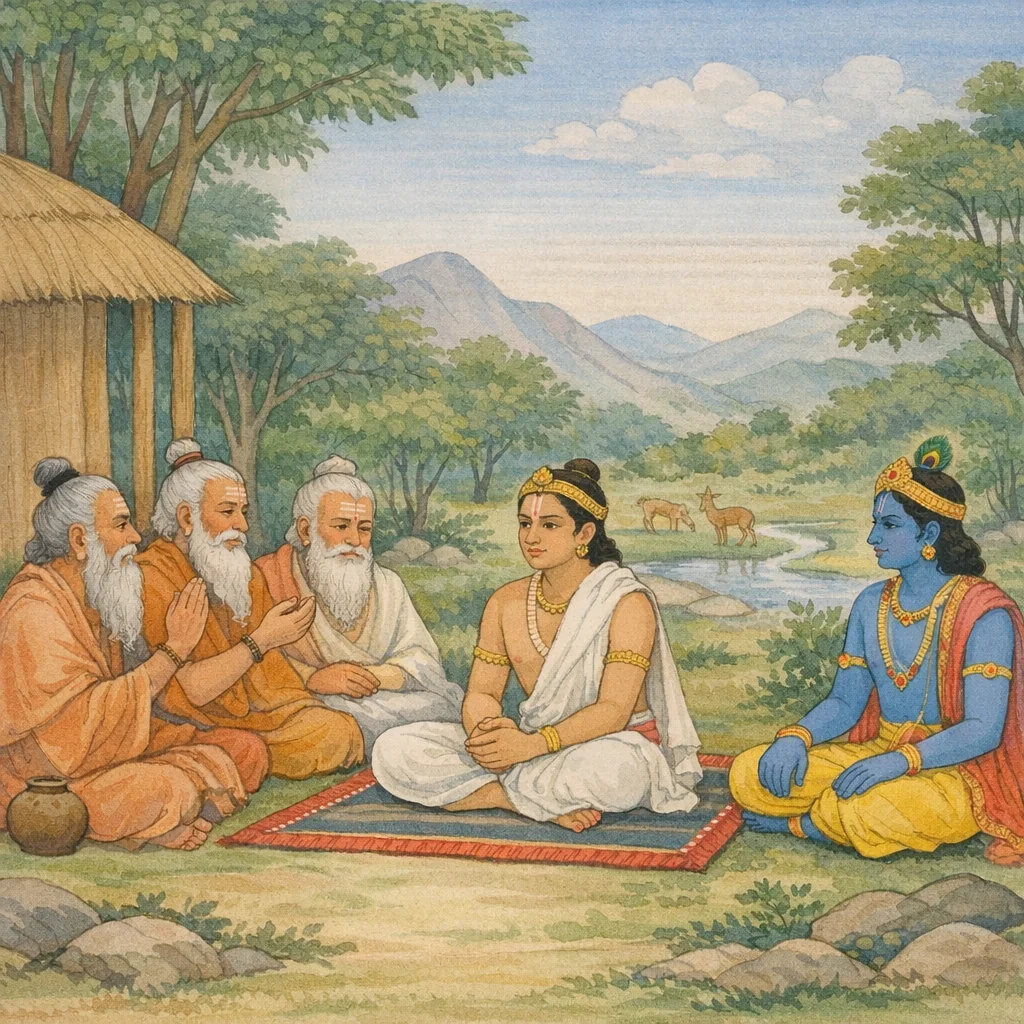
Vaiśaṃpāyana reports that Bhīmasena, stirred after hearing Arjuna, addresses his elder brother Yudhiṣṭhira with controlled resolve. Bhīma frames Yudhiṣṭhira as learned in dharma yet presently clouded by delusion, arguing that the king’s hesitation has produced uncertainty and weakness among allies. He introduces an analytic scheme of suffering: disease is twofold—bodily and mental—and each can generate the other; fixation on past pain multiplies harm. He outlines balancing principles: bodily states (cold/heat/wind) and mental guṇas (sattva/rajas/tamas), noting that one affect can counter another (joy and grief as mutual correctives). Bhīma then redirects memory: Yudhiṣṭhira should not repeatedly rehearse humiliations and hardships (Draupadī’s public distress, exile, forest trials, adversarial encounters), but confront the present ‘battle’ within—an internal struggle requiring solitary steadiness. He concludes that victory over this inner conflict enables rightful rule; he endorses governance in the paternal tradition, notes the strategic removal of Duryodhana, and recommends ritual affirmation (aśvamedha) with appropriate dakṣiṇā, positioning the Pāṇḍavas and Vāsudeva as supportive agents.
Chapter Arc: युद्ध-धूलि अभी बैठी भी नहीं कि धर्मराज युधिष्ठिर के भीतर एक और युद्ध उठ खड़ा होता है—बाह्य रणभूमि नहीं, मन की रणभूमि। ऋषि-जन जानते हैं कि राजा सब धर्म जानता है, फिर भी वे उसे उसी ज्ञान की ओर लौटाने आते हैं। → उपदेशक पहले धर्म का तीक्ष्ण उदाहरण रखते हैं—गोशाला में बाघ घुस आए तो उसकी हिंसा ही ‘आर्त-रक्षा’ है; एक के वध से अनेक की रक्षा होती है। फिर वे युधिष्ठिर की अंतर्दाह को पहचानते हैं: ‘मैं नहीं कहूँगा’—ऐसा मन में ठानकर भी वे अत्यन्त दुःख से बोलने को बाध्य हैं। इसी बीच वे रोग का द्वैत बताते हैं—शारीरिक और मानसिक—और संकेत करते हैं कि राजा का वास्तविक रोग मन का है, जिसका कारण और परिणाम एक-दूसरे में उलझे हैं। → उपदेश का शिखर ‘अस्त्रहीन युद्ध’ की घोषणा है: यहाँ न बाण काम आएँगे, न मित्र-बन्धु; अकेले आत्मा को ही लड़ना है। यदि इस युद्ध में विजय के बिना प्राण त्यागे, तो दूसरे देह में भी वही संघर्ष करना पड़ेगा; और मन को न जीतने पर काम-वासनाओं की दासता में गिरना निश्चित है। → ऋषि-जन युधिष्ठिर को बुद्धि स्थिर कर भूतों की गति-अगति और पितृ-पैतामह मर्यादा के अनुसार राज्य-शासन करने का आदेश देते हैं। वे युद्ध-समाप्ति का शुभ समाचार भी दृढ़ करते हैं—दुर्योधन का वध हो चुका, द्रौपदी के अपमान का प्रतिकार पूर्ण हुआ—अब शोक को धर्म-कार्य में रूपान्तरित करने का समय है। → वासुदेव और जन-समुदाय युधिष्ठिर को अश्वमेध यज्ञ का प्रस्ताव देते हैं—क्या धर्मराज शोक-ग्रस्त मन को जीतकर राजधर्म के इस विराट कर्म में प्रवृत्त होंगे या वैराग्य में डगमगाएँगे?
Shlokas
Verse 1
/ - यदि गोशालामें बाघ आ जाय तो उसकी हिंसा ही उचित होगी, क्योंकि उसका वध न करनेसे कितनी ही गौओंकी हिंसा हो जायगी। अत: 'आर्त-रक्षा” रूप धर्मकी सिद्धिके लिये उस हिंसक प्राणीका वध ही वहाँ श्रेयस्कर होगा। घोडशो< ध्याय: भीमसेनका राजाको भुक्त दुःखोंकी स्मृति कराते हुए मोह छोड़कर मनको काबूमें करके राज्यशासन और यज्ञके लिये प्रेरित करना वैशम्पायन उवाच अर्जुनस्य वच: श्र॒ुत्वा भीमसेनोत्यमर्षण: । धैर्यमास्थाय तेजस्वी ज्येष्ठं भ्रातरमब्रवीत्,वैशम्पायनजी कहते हैं--राजन्! अर्जुनकी बात सुनकर अत्यन्त अमर्षशील तेजस्वी भीमसेनने धैर्य धारण करके अपने बड़े भाईसे कहा--
Vaiśampāyana said: Hearing Arjuna’s words, the fiery Bhīmasena—intolerant of insult and wrongdoing—steadied himself with resolve and addressed his eldest brother.
Verse 2
राजन् विदितधर्मोडसि न ते<स्त्यविदितं क्वचित् | उपशिक्षाम ते वृत्तं सदैव न च शक्नुम:,“राजन! आप सब धर्मोके ज्ञाता हैं। आपसे कुछ भी अज्ञात नहीं है। हमलोग आपसे सदा ही सदाचारकी शिक्षा पाते हैं। हम आपको शिक्षा दे नहीं सकते
Vaiśampāyana said: “O King, you are one who knows dharma; there is nothing anywhere that is unknown to you. Indeed, we continually receive instruction from you in right conduct. Therefore, we are not able to presume to instruct you.”
Verse 3
न वक्ष्यामि न वक्ष्यामीत्येवं मे मनसि स्थितम् । अतिदु:खात्तु वक्ष्यामि तन्निबोध जनाधिप
Vaiśampāyana said: “In my heart I had resolved again and again, ‘I will not speak, I will not speak.’ Yet, compelled by overwhelming sorrow, I shall speak. Listen to it attentively, O lord of men.”
Verse 4
'जनेश्वर! मैंने कई बार मनमें निश्चय किया कि “अब नहीं बोलूँगा, नहीं बोलूँगा;' परंतु अधिक दु:ख होनेके कारण बोलना ही पड़ता है। आप मेरी बात सुनें ।। भवत: सम्प्रमोहेन सर्व संशयितं कृतम् । विक्लवत्वं च न: प्राप्तमबलत्वं तथैव च
“O lord of men, many times I resolved in my heart, ‘Now I will not speak—no, I will not speak.’ Yet, because grief has grown too heavy, I am compelled to speak. Hear my words. Through your bewilderment everything has been thrown into doubt; and we too have fallen into helpless agitation and weakness.”
Verse 5
“आपके इस मोहसे सब कुछ संशयमें पड़ गया है। हमारे तन-मनमें व्याकुलता और निर्बलता प्राप्त हो गयी है। कथं हि राजा लोकस्य सर्वशास्त्रविशारद: । मोहमापद्यसे दैन्याद् यथा कापुरुषस्तथा,“आप सम्पूर्ण शास्त्रोंके ज्ञाता और इस जगत्के राजा होकर क्यों कायर मनुष्यके समान दीनतावश मोहमें पड़े हुए हैं। आपको संसारकी गति और अगति दोनोंका ज्ञान है। प्रभो! आपसे न तो वर्तमान छिपा है और न भविष्य ही
Vaiśampāyana said: “Because of this delusion of yours, everything has fallen into doubt. Our bodies and minds have been seized by agitation and weakness. How can you—king of the world, skilled in all the śāstras—fall into delusion out of dejection, like a coward? You are the knower of both the right course and the wrong course of the world. O lord, neither the present nor the future is hidden from you.”
Verse 6
अगतिक्न गतिश्वैव लोकस्य विदिता तव । आयत्यां च तदात्वे च न ते<स्त्यविदितं प्रभो,“आप सम्पूर्ण शास्त्रोंके ज्ञाता और इस जगत्के राजा होकर क्यों कायर मनुष्यके समान दीनतावश मोहमें पड़े हुए हैं। आपको संसारकी गति और अगति दोनोंका ज्ञान है। प्रभो! आपसे न तो वर्तमान छिपा है और न भविष्य ही
Vaiśampāyana said: “To you, O lord, both the downfall and the true course of the world are well known. In what is to come and in what is present, nothing remains unknown to you.”
Verse 7
एवं गते महाराज राज्यं प्रति जनाधिप । हेतुमत्र प्रवक्ष्यामि तमिहैकमना: शूणु,“महाराज! जनेश्वर! ऐसी स्थितिमें आपको राज्यके प्रति आकृष्ट करनेका जो कारण है, उसे ही यहाँ बता रहा हूँ। आप एकाग्रचित्त होकर सुनें
Vaiśampāyana said: “O great king, O lord of the people, since matters have come to this pass, I shall now state the single reason that draws you toward the kingship. Listen here with a mind made one-pointed.”
Verse 8
द्विविधो जायते व्याधि: शारीरो मानसस्तथा । परस्परं तयोर्जन्म निर्द्धन्द्ध नोपलभ्यते,“मनुष्यको दो प्रकारकी व्याधियाँ होती हैं--एक शारीरिक और दूसरी मानसिक। इन दोनोंकी उत्पत्ति एक-दूसरेके आश्रित है। एकके बिना दूसरीका होना सम्भव नहीं है
Vaiśaṃpāyana said: Human illness arises in two forms—bodily and mental. The origin of these two is mutually dependent; one does not occur without the other, for their arising is not found to be independent.
Verse 9
शारीराज्जायते व्याधिमननसो नात्र संशय: । मानसाज्जायते वापि शारीर इति निश्चय:
Vaiśampāyana said: From a bodily cause arises disease—of this there is no doubt. And it is also certain that from a mental cause a bodily ailment may arise as well.
Verse 10
“कभी शारीरिक व्याधिसे मानसिक व्याधि होती है, इसमें संशय नहीं है। इसी प्रकार कभी मानसिक व्याधिसे शारीरिक व्याधिका होना भी निश्चित ही है ।। शारीरं मानसं दुःखं यो5तीतमनुशोचति । दुःखेन लभते दुःखं द्वावनर्थो च विन्दति
Vaiśampāyana said: Whoever broods over past suffering—whether bodily or mental—only multiplies sorrow by sorrow and thereby gains two misfortunes: renewed pain and further harm.
Verse 11
'जो मनुष्य बीते हुए मानसिक अथवा शारीरिक दुःखके लिये बारंबार शोक करता है, वह एक दुःखसे दूसरे दुःखको प्राप्त होता है। उसे दो-दो अनर्थ भोगने पड़ते हैं ।। शीतोष्णे चैव वायुश्न त्रयः: शारीरजा गुणा: । तेषां गुणानां साम्य॑ं यत्तदाहु: स्वस्थलक्षणम्,'सर्दी, गर्मी और वायु (कफ, पित्त और वात) ये तीन शारीरिक गुण हैं। इन गुणोंका साम्यावस्थामें रहना ही स्वस्थताका लक्षण बताया गया है
Vaiśampāyana said: Cold, heat, and wind are spoken of as the three bodily qualities. When these qualities remain in balance, that equilibrium is declared to be the mark of health.
Verse 12
तेषामन्यतमोद्रेके विधानमुपदिश्यते । उष्णेन बाध्यते शीतं शीतेनोष्णं प्रबाध्यते,“उन तीनोंमेंसे यदि किसी एककी वृद्धि हो जाय तो उसकी चिकित्सा बतायी जाती है। उष्ण द्रव्यसे सर्दी और शीत पदार्थसे गर्मीका निवारण होता है
Vaiśampāyana said: “If, among those three, any one becomes excessive, a remedy is prescribed. Cold is countered by what is hot, and heat is countered by what is cold.”
Verse 13
सत्त्वं रजस्तम इति मानसाः: स्युस्त्रयो गुणा: । तेषां गुणानां साम्य॑ं यत्तदाहु: स्वस्थलक्षणम्,'सत्त्व, रज और तम--ये तीन मानसिक गुण हैं। इन तीनों गुणोंका सम अवस्थामें रहना मानसिक स्वास्थ्यका लक्षण बताया गया है
Vaiśampāyana said: Sattva, rajas, and tamas are the three qualities of the mind. When these qualities remain in equilibrium, that balanced state is declared to be the mark of mental well-being.
Verse 14
तेषामन्यतमोत्सेके विधानमुपदिश्यते । हर्षेण बाध्यते शोको हर्ष: शोकेन बाध्यते,“इनमेंसे किसी एककी वृद्धि होनेपर उपचार बताया जाता है। हर्ष (सत्त्व)-के द्वारा शोक (रजोगुण)-का निवारण होता है और शोकके द्वारा हर्षका
Vaiśampāyana said: “When any one of these states becomes excessive, a remedy is prescribed. Sorrow is checked by joy, and joy, in turn, is checked by sorrow.”
Verse 15
इस प्रकार श्रीमह्याभारत शान्तिपर्वके अन्तर्गत राजधमनुशासनपर्वमें अजुनवाक्यविषयक पंद्रहवाँ अध्याय पूरा हुआ,वश्ित् सुखे वर्तमानो दुःखस्य स्मर्तुमिच्छति । वश्चिद् दुःखे वर्तमान: सुखस्य स्मर्तुमिच्छति “कोई सुखमें रहकर दुःखकी बातें याद करना चाहता है और कोई दुःखमें रहकर सुखका स्मरण करना चाहता है
Some, while living in comfort, wish to recall suffering; others, while living in suffering, wish to remember happiness. The line points to the mind’s tendency to seek balance through memory—either by cultivating humility amid prosperity or by sustaining hope amid distress.
Verse 16
सत्वं न दुःखी दुःखस्य न सुखी च सुखस्य वा । न दुःखी सुखजातस्य न सुखी दुःखजस्य वा,“कुरुनन्दन! परंतु आप न दुखी होकर दुःखकी, न सुखी होकर सुखकी, न दुःखकी अवस्थामें सुखकी और न सुखकी अवस्थामें दुःखकी ही बातें याद करना चाहते हैं; क्योंकि भाग्य बड़ा प्रबल होता है। अथवा महाराज! आपका स्वभाव ही ऐसा है जिससे आप क्लेश उठाकर रहते हैं इति श्रीमहाभारते शान्तिपर्वणि राजधर्मानुशासनपर्वणि भीमवाक्ये षोडशो< ध्याय: इस प्रकार श्रीमह्याभारत शान्तिपर्वके अन्तर्गत राजधर्मानुशासनपर्वमें भीमवाक्यविषयक सोलहवाँ अध्याय पूरा हुआ
Vaiśaṃpāyana said: “He is not one who grieves over sorrow, nor one who exults over happiness; he does not, while in pain, dwell upon pleasures, nor, while in pleasure, dwell upon pains. Such evenness of mind—refusing to be carried away by alternating fortune—marks a disciplined character and points to the ethical ideal of steadiness amid the turns of destiny.”
Verse 17
स्मर्तुमिच्छसि कौरव्य दिष्टं हि बलवत्तरम् । अथवा ते स्वभावो<यं येन पार्थिव क्लिश्यसे,“कुरुनन्दन! परंतु आप न दुखी होकर दुःखकी, न सुखी होकर सुखकी, न दुःखकी अवस्थामें सुखकी और न सुखकी अवस्थामें दुःखकी ही बातें याद करना चाहते हैं; क्योंकि भाग्य बड़ा प्रबल होता है। अथवा महाराज! आपका स्वभाव ही ऐसा है जिससे आप क्लेश उठाकर रहते हैं
Vaiśampāyana said: “O scion of the Kurus, you wish to recall (these matters), yet destiny is indeed the stronger force. Or else, O king, it is simply your own nature by which you keep afflicting yourself.”
Verse 18
दृष्टवा सभागतां कृष्णामेकवस्त्रां रजस्वलाम् । मिषतां पाण्डुपुत्राणां न तस्य स्मर्तुमहसि,“कौरव-सभामें पाण्डुपुत्रोंके देखते-देखते जो एक वस्त्रधारिणी रजस्वला कृष्णाको लाया गया था, उसे आपने अपनी आँखों देखा था। क्या आपको उस घटनाका स्मरण नहीं होना चाहिये?
“You saw it with your own eyes—Kṛṣṇā (Draupadī), clad in a single garment and in her time of courses, was brought into the Kaurava hall before the very gaze of the sons of Pāṇḍu. Should you not remember that deed?”
Verse 19
प्रत्राजनं च नगरादजिनैश्न विवासनम् । महारण्यनिवासश्न न तस्य स्मर्तुमहसि,“आप नगरसे निकाले गये, आपको मृगछाला पहनाकर वनवास दे दिया गया और बड़े-बड़े जंगलोंमें आपको रहना पड़ा। क्या इन सब बातोंको आप याद नहीं कर सकते?
Vaiśampāyana said: “You were driven out of the city, made to wear deerskin, and sent away to dwell in the wilderness. You had to live in vast forests. How could you possibly forget these things?”
Verse 20
जटासुरात् परिकलेशं चित्रसेनेन चाहवम् । सैन्धवाच्च परिक्लेशं कथं विस्मृतवानसि,“जटासुरसे जो वष्ट प्राप्त हुआ, चित्रसेनके साथ जो युद्ध करना पड़ा और सिंधुराज जयद्रथके कारण जो अपमानजनक दुःख भोगना पड़ा--ये सारी बातें आप कैसे भूल गये?
Vaiśampāyana said: “How have you forgotten the hardship caused by Jaṭāsura, the battle you had to wage with Citraseṇa, and the humiliating suffering inflicted by the king of Sindhu (Jayadratha)? How could all these experiences slip from your memory?”
Verse 21
पुनरज्ञातचर्यायां कीचकेन पदा वधम् । द्रौपद्या राजपुत्र्याश्न कथं विस्मृतवानसि,“फिर अज्ञातवासके समय कीचकने जो आपके सामने ही राजकुमारी द्रौपदीको लात मारी थी, उस घटनाको आपने सहसा कैसे भुला दिया?
Vaiśampāyana said: “Again, during the period of living incognito, how could you so suddenly forget the outrage—when Kīcaka struck the princess Draupadī with his foot before your very eyes?”
Verse 22
(बलिनो हि वयं राजन् देवैरपि सुदुर्जया: । कथं भृत्यत्वमापन्ना विराटनगरे समर ।।) “राजन्! हम बलवान हैं, देवताओंके लिये भी हमें परास्त करना कठिन होगा तो भी विराटनगरमें हमें कैसे दासता करनी पड़ी थी, इसे याद कीजिये ।। यच्च ते द्रोणभीष्माभ्यां युद्धमासीदरिंदम । मनसैकेन योद्धव्यं तत्ते युद्धमुपस्थितम्,'शत्रुदमन नरेश! द्रोणाचार्य और भीष्मके साथ जो आपका युद्ध हुआ था, वैसा ही दूसरा युद्ध आपके सामने उपस्थित है, इस समय आपको एकमात्र अपने मनके साथ युद्ध करना है
Vaiśampāyana said: “O King, we are strong—hard to conquer even for the gods. Yet remember how we were forced into servitude in the city of Virāṭa. And, O subduer of foes, the battle you once faced against Droṇa and Bhīṣma—an equivalent battle now stands before you: at this moment you must fight with your mind alone.”
Verse 23
यत्र नास्ति शरै: कार्य न मित्रैर्न च बन्धुभि: । आत्मनैकेन योद्धव्यं तत्ते युद्धमुपस्थितम्,“इस युद्धमें न तो बाणोंका काम है, न मित्रों और बन्धुओंकी सहायताका। अकेले आपको ही लड़ना है। वह युद्ध आपके सामने उपस्थित है
Where arrows are of no use, and neither friends nor kinsmen can offer any help—there you must fight alone, with only your own self. That battle now stands before you.
Verse 24
तस्मिन्ननिर्जिति युद्धे प्राणान् यदि विमोक्ष्यसे । अन्यं देहं समास्थाय ततस्तैरपि योत्स्यसे,“इस युद्धमें विजय पाये बिना यदि आप प्राणोंका परित्याग कर देंगे तो दूसरा देह धारण करके पुनःउन्हीं शत्रुओंके साथ आपको युद्ध करना पड़ेगा
If, in this battle, you give up your life without first securing victory, then taking up another body you will again be compelled to fight those very same foes.
Verse 25
तस्मादद्यैव गन्तव्यं युद्धयस्व भरतर्षभ । परमव्यक्तरूपस्य व्यक्त त्यक्त्वा स्वकर्मभि:,“भरतश्रेष्ठ! इसलिये प्रत्यक्ष दिखायी देनेवाले साकार शत्रुको छोड़कर अव्यक्त (सूक्ष्म) शत्रु मनके साथ युद्ध करनेके लिये आपको अभी चल देना चाहिये। विचार आदि अपनी बौद्धिक क्रियाओंद्वारा उसके साथ आप अवश्य युद्ध करें
Therefore you must set out this very day, O bull among the Bharatas. Abandon the enemy that stands plainly visible, and with your own disciplined efforts wage war against the foe whose form is supremely unmanifest—subtle, inward, and hard to grasp.
Verse 26
तस्मिन्ननिर्जिते युद्धे कामवस्थां गमिष्यसि । एतज्जित्वा महाराज कृतकृत्यो भविष्यसि,“महाराज! यदि युद्धमें आपने मनको परास्त नहीं किया तो पता नहीं आप किस अवस्थाको पहुँच जायँगे? और यदि मनको जीत लिया तो अवश्य कृतकृत्य हो जायूँगे। प्राणियोंके आवागमनको देखते हुए इस विचारधाराको बुद्धिमें स्थिर करके आप पिता- पितामहोंके आचारमें प्रतिष्ठित हो यथोचित रूपसे राज्यका शासन कीजिये
O great king! If, in that battle, you do not conquer your inner foe, you will fall into the condition of being driven by desire. But if you conquer this, you will become one who has fulfilled his purpose.
Verse 27
एतां बुद्धि विनिश्चित्य भूतानामागतिं गतिम् । पितृपैतामहे वृत्ते शाधि राज्यं यथोचितम्,“महाराज! यदि युद्धमें आपने मनको परास्त नहीं किया तो पता नहीं आप किस अवस्थाको पहुँच जायँगे? और यदि मनको जीत लिया तो अवश्य कृतकृत्य हो जायूँगे। प्राणियोंके आवागमनको देखते हुए इस विचारधाराको बुद्धिमें स्थिर करके आप पिता- पितामहोंके आचारमें प्रतिष्ठित हो यथोचित रूपसे राज्यका शासन कीजिये
Having firmly resolved this understanding—reflecting on the coming and going, the onward course of living beings—govern the kingdom as is proper, established in the ancestral code of conduct handed down by your father and forefathers.
Verse 28
दिष्ट्या दुर्योधन: पापो निहत:ः सानुगो युधि । द्रौपद्या: केशपाशस्य दिष्ट्या त्वं पदवीं गत:,'सौभाग्यकी बात है कि पापी दुर्योधन सेवकोंसहित युद्धमें मारा गया; और सौभाग्यसे ही आप दुःशासनके हाथसे मुक्त हुए द्रौपदीके केशपाशकी भाँति युद्धसे छुटकारा पा गये
Vaiśampāyana said: “By good fortune, the sinful Duryodhana has been slain in battle along with his followers. And by good fortune, you too have reached the ‘end of the road’—released from peril—just as Draupadī’s bound tresses were at last freed from the outrage done to them.”
Verse 29
यजस्व वाजिमेधेन विधिवद् दक्षिणावता । वयं ते किंकरा: पार्थ वासुदेवश्च वीर्यवान्,“कुन्तीनन्दन! आप विधिपूर्वक दक्षिणा देते हुए अश्वमेधयज्ञका अनुष्ठान करें। हम सभी भाई और पराक्रमी श्रीकृष्ण आपके आज्ञापालक हैं
Vaiśampāyana said: “O son of Kuntī, perform the Aśvamedha sacrifice in full accordance with the prescribed rites, and with proper gifts to the officiants. We are your servants, O Pārtha—and so too is the mighty Vāsudeva—ready to carry out your command.”
Frequently Asked Questions
The dilemma is whether Yudhiṣṭhira should remain immobilized by remorse and recollection of suffering or assume the ethically burdensome duty of governance; Bhīma argues that refusal to rule becomes a secondary harm by destabilizing the polity.
Suffering is mutually reinforcing across mind and body, and obsessive retrospection compounds it; steadiness is achieved through balancing forces (physiological and psychological) and by treating inner conflict as a present-duty engagement requiring disciplined attention.
No explicit phalaśruti is stated here; the chapter’s meta-function is pragmatic: it authorizes a transition from grief to rājadharma by framing inner victory as the prerequisite for effective and legitimate rule.