Adhyaya 124
Śīla-prāpti and Śīla-lakṣaṇa (शीलप्राप्ति-शीललक्षणम्) | On the Acquisition and Marks of Character
Upa-parva: Rājadharmānuśāsana Upa-parva (राजधर्मानुशासन उपपर्व)
Yudhiṣṭhira asks Bhīṣma to define śīla, its distinguishing marks, and the method by which it is attained (1–3). Bhīṣma responds by recounting an earlier episode: after observing the splendor of the Pāṇḍava court at Indraprastha, Duryodhana reports his distress to Dhṛtarāṣṭra, who probes the cause despite Duryodhana’s material advantages (4–13). Dhṛtarāṣṭra advises that if Duryodhana seeks prosperity comparable or superior to Yudhiṣṭhira’s, he must become śīlavān; he asserts that śīla enables comprehensive conquest and that nothing is unattainable for the virtuous, citing exemplary kings (14–17). An ancient itihāsa is then introduced: Prahlāda attains dominion by śīla; Indra, seeking the highest good, consults Bṛhaspati and then Śukra, who direct him to Prahlāda (18–27). Disguised as a brāhmaṇa, Indra requests instruction; Prahlāda delays due to administrative absorption but later teaches, and the brāhmaṇa serves with proper guru-like conduct (28–32). When asked how he gained sovereignty, Prahlāda describes non-envy, service to the learned, restraint, and a disposition that attracts social trust (33–37). As a boon, the brāhmaṇa asks for Prahlāda’s śīla; upon granting it, Prahlāda’s associated qualities depart in sequence—śīla first, followed by dharma, satya, vṛtta, bala, and finally Śrī—revealing that prosperity and allied virtues are rooted in śīla (38–60). The frame returns: Duryodhana asks for the method; Dhṛtarāṣṭra summarizes śīla as non-harm in deed/mind/speech, beneficence and giving, avoiding acts that do not benefit others or cause shame, and choosing conduct worthy of praise in assembly; he warns that the unvirtuous may gain prosperity briefly but fall completely (61–68). Bhīṣma closes by presenting this as actionable instruction for Yudhiṣṭhira’s ethical governance (69).
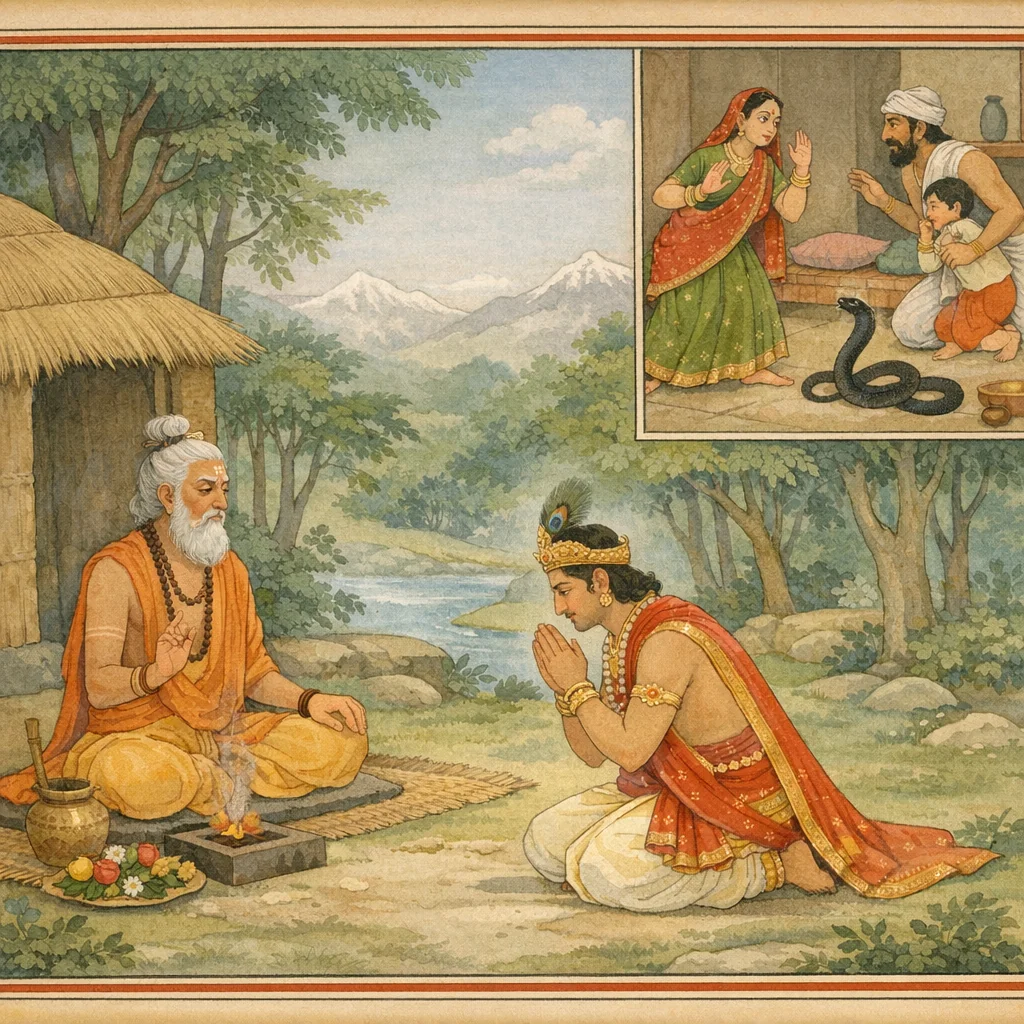
Chapter Arc: युधिष्ठिर के प्रश्न से अध्याय का द्वार खुलता है—धर्म, अर्थ और काम का मूल क्या है, इनकी उत्पत्ति कहाँ से है, और ये परस्पर कैसे जुड़ते-बिछुड़ते हैं? → भीष्म त्रिवर्ग की परस्पर-आश्रित प्रकृति बताते हुए राजधर्म की कठोर आवश्यकता की ओर मोड़ते हैं—यदि राजा दुष्टों को दण्ड से न रोके तो लोक भयभीत हो उठता है, जैसे घर में घुसा सर्प। फिर कथा-रूप में कामन्दक ऋषि और राजा का संवाद उठता है, जहाँ नीति का प्रश्न व्यक्तिगत सदाचार से राज्य-व्यवस्था तक फैलता है। → दण्ड की अनिवार्यता का निर्णायक प्रतिपादन—राजा का कर्तव्य है कि वह प्रदुष्टों को नियच्छित करे; अन्यथा धर्म, अर्थ, काम तीनों ही विकृत होकर समाज में आतंक और अव्यवस्था फैला देते हैं। → राजा के लिए आचार-संहिता दी जाती है—धर्माचरण में विशेष मन, उत्तम कुल में विवाह, उदार-क्षमाशील ब्राह्मणों की सेवा, जप-शीलता, सतत संयम; और सबसे ऊपर गुरुजनों के उपदेश का यथावत पालन, जिससे पाप-शमन और लोक-मान्यता दोनों प्राप्त होते हैं।
Shlokas
Verse 1
इस प्रकार श्रीमह्याभारत शान्तिपर्वके अन्तर्गत राजधर्मानुशासनपर्वमें दण्डकी उत्पत्तिकी कथाविषयक एक सौ बा:इसवाँ अध्याय प्रा हुआ ॥/ १२२ ॥/ ऑपन--#ह< बक। ] अति्शकशा:ह त्रयोविशत्यधिकशततमो< ध्याय: त्रिवर्गका विचार कक पापके कारण पदच्युत हुए राजाके पुनरुत्थानके विषयमें आंगरिष्ठ और कामन्दकका संवाद युधिछिर उवाच तात धर्मार्थकामानां श्रोतुमिच्छामि निश्चयम् । लोकयात्रा हि कार्त्स्न्येन तिछेत् केषु प्रतिष्ठिता,युधिष्ठिरने पूछा--तात! मैं धर्म, अर्थ और कामके सम्बन्धमें आपका निश्चित मत सुनना चाहता हूँ। किनपर अवलम्बित होनेपर लोकयात्राका पूर्ण रूपसे निर्वाह होता है?
Yudhiṣṭhira said: “Revered sir, I wish to hear your settled conclusion regarding dharma, artha, and kāma. Upon what foundations does the whole course of worldly life stand and find its full support?”
Verse 2
धर्मार्थकामा: किंमूलास्त्रयाणां प्रभवश्व कः । अन्योन्यं चानुषज्जन्ते वर्तन्ते च पृथक् पृथक्,धर्म, अर्थ और कामका मूल क्या है? इन तीनोंकी उत्पत्तिका कारण क्या है? ये कहीं एक साथ मिले हुए और कहीं पृथक्-पृथक् क्यों रहते हैं?
Yudhiṣṭhira asked: “What is the root of the three aims—dharma, artha, and kāma? What is the source from which they arise? And why do they sometimes cling together, mutually intertwined, and at other times proceed separately, each on its own?”
Verse 3
भीष्म उवाच यदा ते स्यु: सुमनसो लोके धर्मार्थनिश्चये । कालप्रभवसंस्थासु सज्जन्ते च त्रयस्तदा,भीष्मजीने कहा--राजन्! संसारमें जब मनुष्योंका चित्त शुद्ध होता है और वे धर्मपूर्वक किसी अर्थकी प्राप्तिका निश्चय करके प्रवृत्त होते हैं, उस समय उचित काल, कारण तथा कर्मनुष्ठानवश धर्म, अर्थ और काम-तीनों एक साथ मिले हुए प्रकट होते हैं
Bhishma said: “O king, when people in the world become clear-minded and well-disposed, and they set themselves to a firm resolve to pursue artha in accordance with dharma, then—through the right time, the proper causes, and the established conditions of action—dharma, artha, and kāma all come forth together, harmonized rather than opposed.”
Verse 4
धर्ममूल: सदैवार्थ: कामो<र्थफलमुच्यते । संकल्पमूलास्ते सर्वे संकल्पो विषयात्मक:,इनमें धर्म सदा ही अर्थकी प्राप्तिका कारण है और काम अर्थका फल कहलाता है, परंतु इन तीनोंका मूल कारण है संकल्प और संकल्प है विषयरूप
Bhishma said: Dharma is ever the root that leads to artha (material well-being and rightful gain). Kāma (desire) is said to be the fruit that arises from artha. Yet all these—dharma, artha, and kāma—have their root in saṅkalpa (intention/resolve); and saṅkalpa is shaped by its objects of sense and thought. Thus, the ethical direction of life depends ultimately on how one forms and governs one’s intentions toward objects.
Verse 5
विषयाश्नैव कार्त्स्नयेन सर्व आहारसिद्धये । मूलमेतत् त्रिवर्गस्य निवृत्तिमोक्ष उच्यते,सम्पूर्ण विषय पूर्णतः इन्द्रियोंके उपभोगमें आनेके लिये हैं। यही धर्म, अर्थ और कामका मूल है, इससे निवृत्त होना ही “मोक्ष” कहा जाता है
Bhishma said: “Sense-objects, in their entirety, exist for the fulfillment of all forms of ‘consumption’ and gratification. This is the very root of the three aims of life—dharma, artha, and kāma. Turning away from this dependence on sense-objects is what is called ‘mokṣa’ (liberation).”
Verse 6
धर्माच्छरीरसंगुप्तिर्धर्मार्थ चार्थ उच्यते । कामो रतिफल श्षात्र सर्वे ते च रजस्वला:,धर्मसे शरीरकी रक्षा होती है, धर्मका उपार्जन करनेके लिये ही अर्थकी आवश्यकता बतायी जाती है तथा कामका फल है रति। वे सभी रजोगुणमय हैं
Bhishma said: “From dharma comes the safeguarding of the body; and wealth (artha) is declared necessary precisely for the acquisition and practice of dharma. Desire (kāma) bears pleasure (rati) as its fruit. Yet all these—dharma, artha, and kāma—operate within the sphere of rajas (passionate activity).”
Verse 7
संनिकृष्टां क्वरेदेतान्ू न चैतान् मनसा त्यजेत् । विमुक्तस्तपसा सर्वान् धर्मादीन् कामनैष्ठिकान्,ये धर्म आदि जिस प्रकार संनिकृष्ट अर्थात् अपना वास्तविक हित करनेवाले हों, उसी रूपमें इनका सेवन करे अर्थात् इनको कल्याणसाधन बनाकर ही उपयोगमें लावे। मनद्वारा भी इनका त्याग न करे, फिर स्वरूपसे शरीरद्वारा त्याग करना तो दूरकी बात है। केवल तप अथवा विचारके द्वारा ही उनसे अपनेको मुक्त रखे अर्थात् आस्ति और फलका त्याग करके ही इन सब धर्म, अर्थ और कामका सेवन करना चाहिये
Bhishma said: One should employ these aims of life only in the way that is truly beneficial and close to one’s real good—using them as instruments of welfare. One should not abandon them even in the mind; how much less should one renounce them outwardly by bodily withdrawal. Rather, remaining inwardly free through austerity and disciplined reflection, one should engage in dharma and the rest (artha and kāma) without bondage—by relinquishing possessiveness and attachment to results.
Verse 8
श्रेष्ठे बुद्धिस्त्रिवर्गस्यथ यदयं प्राप्तुयान्नर: । कर्मणा बुद्धिपूर्वेण भवत्यर्थो न वा पुन:,आसक्ति और फलेच्छाको त्यागकर त्रिवर्गका सेवन किया जाय तो उसका पर्यवसान कल्याणमें ही होता है। यदि मनुष्य उसे प्राप्त कर सके तो बड़े सौभाग्यकी बात है। अर्थसिद्धिके लिये समझ-बूझकर धर्मानुष्ठान करनेपर भी कभी अर्थकी सिद्धि होती है, कभी नहीं होती है
Bhishma said: “The highest understanding concerning the three aims of life (dharma, artha, and kāma) is this: if a man can truly attain it, it is a great good fortune. Even when one performs one’s duties with deliberate, intelligent effort for the sake of material success, sometimes wealth is achieved—and sometimes it is not. Therefore, when the three aims are pursued without attachment and without craving for results, their culmination tends toward welfare and auspiciousness.”
Verse 9
अर्थार्थमन्यद् भवति विपरीतमथापरम् । अनर्थार्थमवाप्यार्थमन्यत्राद्योपकारकम् | बुद्धयाबुद्धिरिहार्थे न तदज्ञाननिकृष्टया,इसके सिवा, कभी दूसरे-दूसरे उपाय भी अर्थके साधक हो जाते हैं और कभी अर्थसाधक कर्म भी विपरीत फल देनेवाला हो जाता है। कभी धन पाकर भी मनुष्य अनर्थकारी कर्मामें प्रवृत्त हो जाता है और धनसे भिन्न जो दूसरे-दूसरे साधन हैं, वे धर्ममें सहायक हो जाते हैं। अतः धर्मसे धन होता है और धनसे धर्म, इस मान्यताके विषयमें अज्ञानमयी निकृष्ट बुद्धिसे मोहित हुआ मूढ़ मानव विश्वास नहीं रखता, इसलिये उसे दोनोंका फल सुलभ नहीं होता
Bhishma said: In the pursuit of wealth, one course of action may at times lead to wealth, while another—though intended for gain—may yield the opposite result. Sometimes, even after obtaining wealth, a person turns toward harmful and ruinous deeds; and sometimes other means, distinct from wealth itself, become helpful to dharma. Therefore, the relation ‘dharma gives rise to wealth, and wealth supports dharma’ is subtle; the foolish person, deluded by a low, ignorance-born understanding, does not place trust in it—and so fails to attain the fruits of either.
Verse 10
अपध्यानमलो धर्मो मलो<र्थस्य निगृहनम् । सम्प्रमोदमल: कामो भूय: स्वगुणवर्जित:,फलकी इच्छा धर्मका मल है, संगृूहीत करके रखना अर्थका मल है और अमोद-प्रमोद कामका मल है, परंतु यह त्रिवर्ग यदि अपने दोषोंसे रहित हो तो कल्याणकारक होता है
Bhishma said: Dharma is tainted by negligence and lack of mindful attention; wealth is tainted by hoarding and tight-fisted restraint; and desire is tainted by frivolous revelry and intoxicated delight. Yet, when these three aims of life are pursued without their respective defects and in harmony with their proper virtues, they become conducive to welfare and the good of life.
Verse 11
अत्राप्युदाहरन्तीममितिहासं पुरातनम् । कामन्दकस्य संवादमाड्रिष्ठस्थ चो भयो:,इस विषयमें जानकार लोग राजा आंगरिष्ठ और कामन्दक मुनिका संवादरूप प्राचीन इतिहास सुनाया करते हैं
Bhishma said: “Here too, the learned cite an ancient precedent. They recount the old narrative in the form of a dialogue between the sage Kāmandaka and King Āṅgariṣṭha.”
Verse 12
कामन्दमृषिमासीनमभिवाद्य नराधिप: । आडज््रिष्ठो5थ पप्रच्छ कृत्वा समयपर्ययम्,एक समयकी बात है, कामन्दक ऋषि अपने आश्रममें बैठे थे। उन्हें प्रणाम करके राजा आंगरिष्ने प्रश्नके उपयुक्त समय देखकर पूछा--
Bhishma said: Once, the sage Kāmanda was seated in his hermitage. A king, having approached and paid him respectful homage, and after judging the proper occasion, then questioned him—seeking counsel in a timely and disciplined manner.
Verse 13
यः पाप॑ कुरुते राजा काममोहबलात्कृतः । प्रत्यासन्नस्य तस्यर्षे कि स्थात् पापप्रणाशनम्,“महर्षे! यदि कोई राजा काम और मोहके वशीभूत होकर पाप कर बैठे, किंतु फिर उसे पश्चात्ताप होने लगे तो उसके उस पापको दूर करनेके लिये कौन-सा प्रायश्ित्त है?
Bhīṣma said: “O sage, if a king, overpowered by the force of desire and delusion, commits a sinful act, but afterward remorse arises in him, what means of expiation will bring about the destruction of that sin?”
Verse 14
अधर्म धर्म इति च योऊज्ञानादाचरेन्नर: । तं॑ चापि प्रथितं लोके कथं राजा निवर्तयेत्,“जो अज्ञानवश अधर्मको ही धर्म मानकर उसका आचरण कर रहा हो, उस लोकविख्यात सम्मानित पुरुषको राजा किस प्रकार उस अधर्मसे दूर हटावे?
Bhishma said: If a man, out of ignorance, practices what is unrighteous while taking it to be righteousness—and he is moreover well-known and respected in the world—how is a king to turn him back from that unrighteous course?
Verse 15
कामन्दक उवाच यो धर्मार्थो परित्यज्य काममेवानुवर्तते । स धर्मार्थिपरित्यागात् प्रज्ञानाशमिहा्च्छति,कामन्दकने कहा--राजन्! जो धर्म और अर्थका परित्याग करके केवल कामका ही सेवन करता है, उन दोनोंके त्यागसे उसकी बुद्धि नष्ट हो जाती है
Kāmandaka said: “O king, whoever abandons dharma and artha and follows only desire—by casting aside those two aims, he comes in this very life to the ruin of discernment.”
Verse 16
प्रज्ञानाशात्मको मोहस्तथा धर्मार्थनाशक: । तस्मान्नास्तिकता चैव दुराचारश्न॒ जायते,बुद्धिका नाश ही मोह है। वह धर्म और अर्थ दोनोंका विनाश करनेवाला है। इससे मनुष्यमें नास्तिकता आती है और वह दुराचारी हो जाता है
Delusion is of the very nature of the destruction of discernment; it also destroys both dharma and artha. From that arise disbelief in moral-spiritual truth (nāstikatā) and, in turn, corrupt conduct—so a person falls into wrongdoing when wisdom is eclipsed by confusion.
Verse 17
दुराचारान् यदा राजा प्रदुष्टानू न नियच्छति । तस्मादुद्धिजते लोक: सर्पाद् वेश्मगतादिव,जब राजा दुष्टों और दुराचारियोंको दण्ड देकर काबूमें नहीं करता है, तब सारी प्रजा घरमें रहनेवाले सर्पकी भाँति उस राजासे उद्विग्न हो उठती है
When a king fails to restrain and punish the corrupt and wicked, the people become anxious and fearful of that ruler—just as one is disturbed by a snake that has entered the house.
Verse 18
त॑ प्रजा नानुवर्तन्ते ब्राह्मयणा न च साधव: । ततः संशयमाप्रोति तथा वध्यत्वमेति च,उस दशामें प्रजा उसका साथ नहीं देती। साधु और ब्राह्मण भी उसका अनुसरण नहीं करते हैं। फिर तो उसका जीवन खतरेमें पड़ जाता है और अन्ततोगत्वा वह प्रजाके ही हाथसे मारा भी जाता है
When a ruler falls into such a condition, the people no longer follow him; neither do the brāhmaṇas nor the virtuous support his lead. Thereupon he becomes an object of suspicion, his life is put in peril, and in the end he even becomes liable to be slain—often by the very people he was meant to protect.
Verse 19
अपध्वस्तस्त्ववमतो दुःखं जीवितमृच्छति । जीवेच्च यदपध्वस्तस्तच्छुद्ध मरणं भवेत्,वह अपने पदसे भ्रष्ट और अपमानित होकर दुःखमय जीवन बिताता है। यदि पदश्रष्ट होकर भी वह जीता है तो वह जीवन भी स्पष्टरूपमें मरण ही है
Kāmandaka said: “One who has been cast down from his position and treated with contempt comes to a life filled with suffering. And if, though thus fallen, he continues to live on, that very life is, in truth, nothing but a clear form of death.”
Verse 20
अन्रैतदाहुराचार्या: पापस्य परिगर्हणम् | सेवितव्या त्रयी विद्या सत्कारो ब्राह्मणेषु च,इस अवस्थामें आचार्यगण उसके लिये यह कर्तव्य बतलाते हैं कि वह अपने पापोंकी निन्दा करे, वेदोंका निरन्तर स्वाध्याय करे और ब्राह्मणोंका सत्कार करे
Kāmandaka said: “In this regard, the teachers declare that one should censure and renounce one’s own sin; one should diligently cultivate the threefold Vedic learning through continual study; and one should honor Brahmins with due respect.”
Verse 21
महामना भवेद् धर्मे विवहेच्च महाकुले । ब्राह्मणांश्वापि सेवेत क्षमायुक्तान् मनस्विन:
Kāmandaka said: “Let a man be high-minded in matters of dharma; let him contract marriage into a noble lineage; and let him also attend upon and honor Brahmins—those who are self-possessed, strong in spirit, and endowed with forbearance.”
Verse 22
धर्मांचरणमें विशेष मन लगावे। उत्तम कुलमें विवाह करे। उदार एवं क्षमाशील ब्राह्मणोंकी सेवामें रहे ।। जपेदुदकशील: स्यात् सततं सुखमास्थित: । धर्मान्वितान् सम्प्रविशेद् बहि: कृत्वेह दुष्कृतीन्,वह जलमें खड़ा होकर गायत्रीका जप करे। सदा प्रसन्न रहे। पापियोंको राज्यसे बाहर निकालकर धर्मात्मा पुरुषोंका संग करे
Kāmandaka said: “Let him recite (the sacred mantra) while standing in water, maintaining purity and disciplined conduct. Let him remain continually content and established in happiness. Having expelled wrongdoers from the realm, let him associate with men devoted to dharma.”
Verse 23
प्रसादयेन्मधुरया वाचा वाप्यथ कर्मणा । तवास्मीति ददेन्नित्यं परेषां कीर्तयन् गुणान्,मीठी वाणी तथा उत्तम कर्मके द्वारा सबको प्रसन्न रखे, दूसरोंके गुणोंका बखान करे और सबसे यही कहे--मैं आपका ही हूँ---आप मुझे अपना ही समझें
Kāmandaka said: “One should win people over—either by sweet speech or by worthy action. One should always offer the assurance, ‘I am yours,’ while praising the good qualities of others.”
Verse 24
अपापो होवमाचार: क्षिप्रं बहुमतो भवेत् । पापान्यपि हि कृच्छाणि शमयेन्नात्र संशय:,जो राजा इस प्रकार अपना आचरण बना लेता है, वह शीघ्र ही निष्पाप होकर सबके सम्मानका पात्र बन जाता है। वह अपने कठिन-से-कठिन पापोंको भी शान्त (नष्ट) कर देता है--इसमें संशय नहीं है
Whoever thus fashions his conduct to be free of sin soon becomes blameless and worthy of honor in the eyes of all. Even the most difficult sins he can pacify and destroy—of this there is no doubt.
Verse 25
गुरवो हि परं धर्म यं ब्रूयुस्तं तथा कुरु । गुरूणां हि प्रसादाद वै श्रेय: परमवाप्स्यसि,राजन! गुरुजन तुम्हारे लिये जिस उत्तम धर्मका उपदेश करें, उसका उसी रूपमें पालन करो। गुरुजनोंकी कृपासे तुम परम कल्याणके भागी होओगे
Kāmandaka said: “The teachers indeed are the highest authority in dharma. Whatever dharma they instruct, practice it exactly in that manner. For by the gracious favor of the gurus, O king, you will attain the supreme good.”
Verse 123
इति श्रीमहाभारते शान्तिपर्वणि राजधर्मानुशासनपर्वणि कामन्दकाड्रिष्ठसंवादे त्रयोविंशत्यधिकशततमो<ध्याय:
Thus, in the Śrī Mahābhārata, within the Śānti Parva—specifically the section on the instruction of royal duty (Rājadharmānuśāsana Parva)—in the dialogue between Kāmandaka and Dṛṣṭha, this concludes the one-hundred-and-twenty-third chapter.
Frequently Asked Questions
The chapter addresses how a ruler or aspirant to prosperity should respond to comparative success: whether to pursue external gain through rivalry, or to cultivate śīla—ethical character—as the stable cause of authority and well-being.
Śīla is operationally defined as non-harm in action, mind, and speech, combined with beneficence and giving; one should avoid deeds that do not benefit others or that cause shame, and choose conduct that can be commended in public deliberative space.
Yes in effect: it states that even if the unvirtuous obtain prosperity temporarily, they do not enjoy it long and fall ‘with roots’; conversely, śīla is presented as the root from which dharma, truth, right conduct, strength, and Śrī coherently arise.